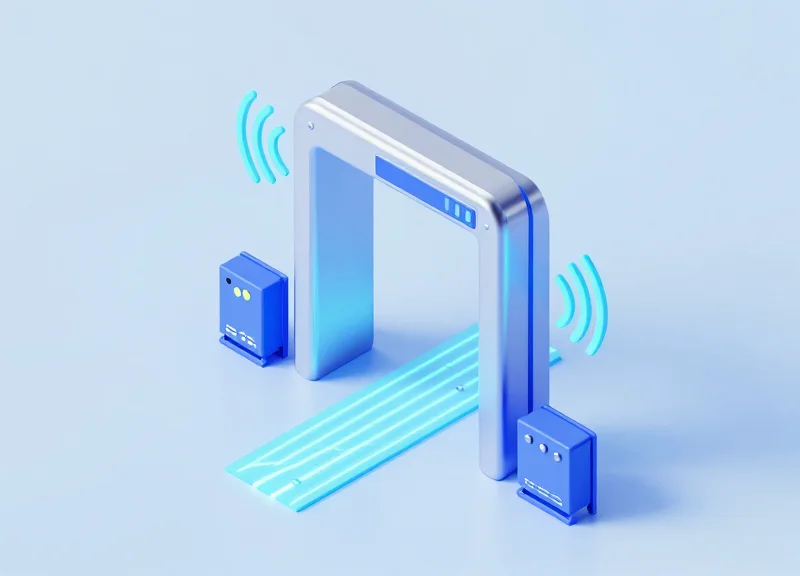
In the complex ecosystem of modern warehouse automation, RFID portals stand as the primary gatekeepers of inventory flow. However, as portal density increases, so does the risk of cross-talk—a phenomenon where signals from one lane bleed into another, causing ghost reads and data corruption. This technical guide explores the sophisticated directional sensing algorithms and physical shielding techniques required to maintain a high-integrity RFID environment. By understanding how to isolate specific signals and interpret spatial data, engineers can transform a chaotic RF environment into a precise, automated inventory asset.
The Physics of RFID Cross-Talk and Signal Bleed

RFID cross-talk and signal bleed occur when the electromagnetic energy emitted by an RFID reader’s antenna propagates beyond its intended coverage zone, triggering responses from tags in adjacent lanes or storage areas. This phenomenon is primarily driven by multipath propagation and signal diffraction, where RF waves bounce off metallic surfaces or 'bend' around obstacles, creating parasitic read zones. In high-density portal environments, these 'false positives' degrade data integrity, making it difficult to distinguish whether an asset is moving through the portal or simply sitting nearby.
To solve these issues at the algorithmic level, one must first understand the behavior of Ultra-High Frequency (UHF) waves. Unlike lower frequencies, UHF follows a line-of-sight path but is highly susceptible to the Inverse Square Law and environmental reflection. When an antenna radiates power, the energy density decreases as the square of the distance, but in warehouse environments—often referred to as 'RF-hostile'—conductive materials like steel racking and aluminum docks act as mirrors, maintaining signal strength far beyond the theoretical beamwidth.
| Phenomenon | Physical Mechanism | Impact on RFID Portals |
|---|---|---|
| Multipath Interference | Waves reflecting off metal surfaces and arriving at the tag out of phase. | Creates 'dead zones' or unexpected 'hot spots' where tags shouldn't be read. |
| Signal Diffraction | Waves bending around the edges of a portal structure or door frame. | Allows the signal to 'leak' into the next lane, causing cross-talk. |
| Absorption & Attenuation | Loss of signal energy as it passes through non-conductive materials like liquids. | Reduces read rates for tagged items containing water or high-density fluids. |
Expert Insight: The Fresnel Zone and the 'Whisper-to-Scream' Ratio. A common mistake is focusing solely on RSSI (Received Signal Strength Indicator). However, a veteran engineer looks at the 'Whisper-to-Scream' ratio—the delta between the background RF noise floor and the peak tag response. In high-density portals, the first 60% of the Fresnel Zone (the elliptical area around the line of sight) must be clear of obstructions to prevent phase-shifting. If the Fresnel Zone is encroached upon, the signal 'bleeds' out radially, making directional sensing algorithms struggle to calculate the tag's true vector.
What is the primary cause of signal bleed in warehouse portals?
The primary cause is typically RF reflection from metal floors or surrounding infrastructure, which redirects the antenna's side lobes into unintended areas.
Can software alone fix physical signal cross-talk?
While software can filter out 'noise' using RSSI thresholds and time-on-target logic, physical shielding (like RF-absorptive foam) is often required to maintain a high signal-to-noise ratio.
How does tag orientation affect cross-talk?
Tags oriented to match the antenna's polarization will respond at lower power levels, making them more susceptible to bleeding signals from adjacent lanes.
Principles of Directional Sensing in RFID Systems

Directional sensing in RFID systems is the computational ability to determine a tag's movement vector—specifically its direction of travel (Inbound vs. Outbound) and its lane-specific location—by analyzing time-sequential changes in signal parameters like RSSI and Phase Angle. Unlike basic detection, which merely confirms a tag is within the read zone, directional sensing uses algorithmic modeling to distinguish legitimate transitions through a portal from static stray reads or adjacent lane interference caused by cross-talk.
| Feature | Simple Presence Detection | Directional Vector Sensing |
|---|---|---|
| Primary Data Point | Single RSSI peak or 'Read Event' | RSSI Delta + Phase-Slope Analysis |
| Spatial Awareness | Binary (Is tag present?) | Vector (Trajectory, Velocity, Lane) |
| Cross-Talk Resilience | Low (Susceptible to signal bleed) | High (Filters non-linear movement) |
| Typical Logic | First-seen / Strongest-signal | Sequence-of-Arrival (SoA) / Phase-Wrap |
The Veteran's Insight: The Phase-Slope Advantage. While many entry-level systems rely on RSSI (Received Signal Strength Indicator) to guess direction based on signal growth, RSSI is notoriously unreliable in industrial environments due to multipath reflections. The most robust directional algorithms focus instead on 'Phase-Slope' analysis. Because the electromagnetic phase of a tag’s backscatter changes predictably as the distance between the antenna and the tag shifts, monitoring the rate of phase change (the slope) allows for sub-centimeter accuracy in determining whether a tag is truly entering the portal or just flickering on the edge of the read field.
- Phase-Wrap Identification: The system monitors the phase angle (0-180 or 0-360 degrees). As the tag moves, the phase 'wraps' around. The direction of this wrap indicates whether the tag is approaching or receding.
- RSSI Peak Centering: The algorithm identifies the 'Point of Closest Approach' (PCA) by finding the local maximum of the RSSI curve, synchronizing it with phase data.
- Time-of-Flight (ToF) Gating: Advanced readers calculate the nanosecond delays in signal return to establish a 'virtual fence,' ignoring signals that originate from outside the physical portal's footprint.
What is Lane Specificity in RFID?
Lane specificity is the ability of an algorithm to assign a tag read to a specific physical lane (e.g., Dock Door 1) while simultaneously ignoring that same tag in the antenna arrays of Dock Doors 2 and 3.
Why does cross-talk break simple directionality?
Cross-talk creates 'ghost reads' where a tag behind a reader or in an adjacent lane reflects off metal surfaces, creating a false RSSI peak that fools basic logic into thinking a transition occurred.
Can firmware alone fix directional errors?
While firmware is critical, true directional accuracy requires a 'Hardware-Software Synergy' where antenna polarization and tilt are optimized to provide the algorithm with clean, non-fragmented data.
if (current_phase > previous_phase && rssi_trend == 'increasing'):
    movement_vector = 'approaching'
elif (current_phase < previous_phase && rssi_trend == 'decreasing'):
    movement_vector = 'receding'
else:
    movement_vector = 'stray_read_noise'
Comparative Analysis: RSSI vs. Phase-Angle Algorithms
RSSI (Received Signal Strength Indicator) algorithms determine tag direction by monitoring the rise and fall of signal power as a tag passes an antenna's center-of-beam, whereas Phase-Angle algorithms track the continuous shift in the signal's electromagnetic phase (0 to 180 or 360 degrees) to calculate precise spatial displacement. While RSSI is the industry legacy standard due to its simplicity, Phase-Angle analysis is the superior choice for portal environments where shielding against cross-talk and 'stray' reads from adjacent lanes is critical.
| Metric | RSSI-Based Tracking | Phase-Angle Analysis |
|---|---|---|
| Primary Data Point | Signal Amplitude/Power (dBm) | Waveform Phase Offset (Radians/Degrees) |
| Multipath Resilience | Low (Highly susceptible to reflections) | High (Ignores amplitude fluctuations) |
| Lane Discrimination | Coarse (Relies on RSSI thresholds) | Fine (Tracks vector trajectories) |
| Computational Load | Minimal | Moderate to High |
| Environmental Stability | Poor in metal-heavy zones | Excellent in high-density areas |
The fundamental weakness of RSSI is its susceptibility to multipath fading. In a warehouse portal, signals bounce off metal forklifts, dock doors, and aluminum racking. These reflections can cause a tag in a neighboring lane to appear 'louder' than a tag directly in the portal, leading to false-positive reads. Phase-Angle algorithms mitigate this by focusing on the rate of change in the wave's phase. Since the phase shift is a function of the distance traveled relative to the wavelength, it remains consistent even if the signal power is dampened by physical obstructions or interference.
Why does RSSI fail in high-speed portals?
RSSI sampling rates are often too slow to capture the peak power curve of a tag moving at high speeds, leading to 'clipped' data that fails to confirm if a tag actually crossed the portal threshold or just brushed the edge of the zone.
Is Phase-Angle data always linear?
No. Phase data 'wraps' at 180 or 360 degrees, creating a sawtooth pattern. Sophisticated algorithms must 'unwrap' this data to reconstruct a linear path of travel, which requires higher processing overhead from the RFID reader's firmware.
Expert Insight: To achieve 99.9% portal accuracy, do not rely on a single metric. Silicon Valley's top tier integrators use 'Phase-Weighted RSSI.' In this hybrid model, the RSSI acts as a proximity gatekeeper (ensuring the tag is close enough to be relevant), while the Phase-Angle slope provides the definitive 'Vector of Intent.' This prevents 'ghost reads' where a tag might be stationary near a portal but its RSSI fluctuates due to environmental movement, which a phase-only system might interpret as slow motion.
Antenna Polarization and Spatial Isolation Strategies
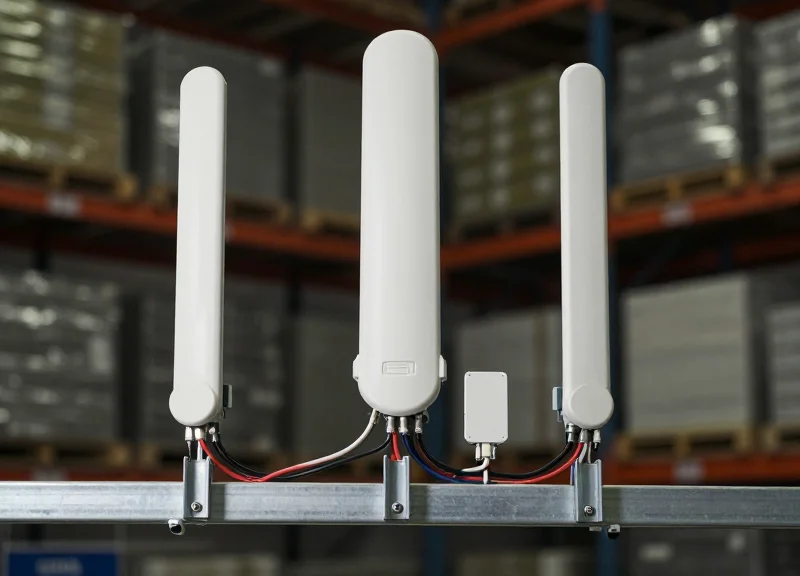
Antenna polarization and spatial isolation are the foundational hardware layers used to mitigate RFID cross-talk. While algorithms manage data interpretation, these strategies physically restrict the electromagnetic footprint of a portal. By aligning the electrical field of the antenna with the intended tag path and utilizing shielding or angular offsets, engineers can create 'RF silos' that prevent high-power signals from one portal from triggering tags in an adjacent lane.
| Feature | Circular Polarization | Linear Polarization | Impact on Cross-Talk |
|---|---|---|---|
| Tag Orientation | Reads tags in any orientation. | Requires alignment with antenna axis. | Circular is prone to more 'stray' reads. |
| Signal Range | Shorter, more diffuse field. | Longer, highly focused beam. | Linear offers tighter zone control. |
| Multipath Resilience | High (rejects odd-bounce reflections). | Low (susceptible to reflections). | Circular reduces noise in metal-rich areas. |
A common mistake in high-density warehouses is deploying identical circular antennas across all portals. To achieve true isolation, engineers should utilize the 'Orthogonal Offset' technique. By alternating the polarization sense (Left-Hand Circular vs. Right-Hand Circular) or the physical axis of linear antennas between adjacent docks, you can achieve up to 20dB of isolation simply through electromagnetic mismatch. This ensures that even if a signal 'bleeds' into the next lane, the tag-to-antenna coupling is too weak to trigger a false positive.
- Define the Geometric Read Zone: Map the physical boundaries where a tag must be read and identify 'forbidden zones' where adjacent antennas overlap.
- Implement Down-Tilting: Angle antennas at 15-30 degrees toward the floor to limit the horizon of the RF energy and utilize the ground as a natural attenuator.
- Apply Polarization Diversity: Assign LHCP (Left-Hand) and RHCP (Right-Hand) antennas to alternating portals to minimize co-channel interference.
- Install RF Shielding: Use carbon-loaded foam or metallic baffles between docks to absorb or reflect side-lobe energy away from neighboring portals.
Expert Tip: For directional sensing, use a dual-linear polarization setup. By monitoring the phase difference between two linearly polarized elements, your algorithm can distinguish between a tag moving through the center of the portal and one vibrating on a pallet in the neighboring lane, as the polarization 'signature' shifts predictably based on the angle of arrival.
Can I use shielding instead of changing polarization?
While shielding is effective, it is often bulky and expensive. Adjusting polarization provides an invisible, electronic layer of isolation that works in tandem with physical barriers.
Does circular polarization reduce read rates?
It can reduce the maximum theoretical range by 3dB compared to perfectly aligned linear antennas, but it increases the reliability of reads for tags on moving, unaligned assets.
What is the best distance between portals?
Ideally, portals should be separated by at least 1.5 times the maximum read range, but with polarization isolation and down-tilting, this distance can be reduced by 40%.
Advanced Software Filtering: Eliminating Ghost Reads
Advanced software filtering is the critical logic layer in an RFID system that identifies and removes 'ghost reads'—false tag detections caused by signal reflection, diffraction, or bleed from adjacent zones. By applying algorithms such as Received Signal Strength Indicator (RSSI) smoothing, time-of-flight analysis, and sliding window filters, developers can transform raw, noisy RF data into high-integrity business events. This programmatic approach ensures that only tags actually transiting through a portal are recorded, effectively shielding the system from the chaotic nature of dense RF environments.
While hardware adjustments like antenna positioning and shielding are vital, they cannot account for the dynamic nature of a warehouse where metal surfaces and moving machinery shift RF patterns in real-time. Software filtering acts as the final arbiter, using historical data and statistical probability to validate every read event before it hits the database.
- RSSI Moving Average (Smoothing): Raw RSSI values are notoriously volatile. By applying a moving average or a Kalman filter to incoming signals, the system can ignore momentary spikes (reflections) and focus on the overall energy trend of the tag.
- Dwell-Time and Persistence Thresholds: This logic requires a tag to be observed for a minimum duration (e.g., 200ms) or across a specific number of antenna cycles before it is classified as 'present'. Ghost reads are typically transient and fail this persistence test.
- Population Analysis: Analyzing the relative signal strength of a 'cluster' of tags. If one tag shows a significantly lower RSSI compared to the rest of the pallet population, it is flagged as a potential bleed-through from an adjacent lane.
| Filter Type | Primary Function | Typical Use Case |
|---|---|---|
| Static RSSI Threshold | Hard cutoff for signal strength | Basic zone exclusion in static environments |
| Sliding Window | Temporal validation of tag presence | High-speed conveyor belts and dock doors |
| Bayesian Logic | Probabilistic tag location modeling | Complex multi-lane portals with high cross-talk |
Expert Insight: The RSSI Gradient Rule. Most engineers set static RSSI floors, but the real secret to eliminating cross-talk is monitoring the gradient. A tag physically moving through a portal will show a distinct 'bell curve' RSSI signature. A ghost read, conversely, usually presents as a 'flat' signal or erratic jumps. Programming your algorithm to look for the Delta-RSSI (the rate of change) rather than just the absolute value is the most effective way to distinguish movement from leakage.
def is_valid_read(rssi_history, time_window):
    # Calculate the moving average to smooth noise
    avg_rssi = sum(rssi_history) / len(rssi_history)
    # Check for signal growth indicating approach
    is_approaching = rssi_history[-1] > rssi_history[0]
    # Ensure the tag persisted long enough to be a real transit
    if avg_rssi > -65 and len(rssi_history) > 5 and is_approaching:
        return True
    return False
What is a 'ghost read' in RFID?
A ghost read occurs when an RFID reader detects a tag that is not within its intended coverage area, often due to signal bouncing off metal objects or passing through thin walls.
How does software filtering improve accuracy?
It adds a layer of intelligence that can distinguish between a tag moving through a gate and a tag just sitting near the gate, based on signal patterns over time.
Can software filtering replace physical shielding?
Ideally, they should work together. While software can filter out 90% of noise, physical shielding reduces the 'computational load' on the reader and prevents receiver saturation in high-traffic areas.
Physical Shielding Materials and Portal Geometry
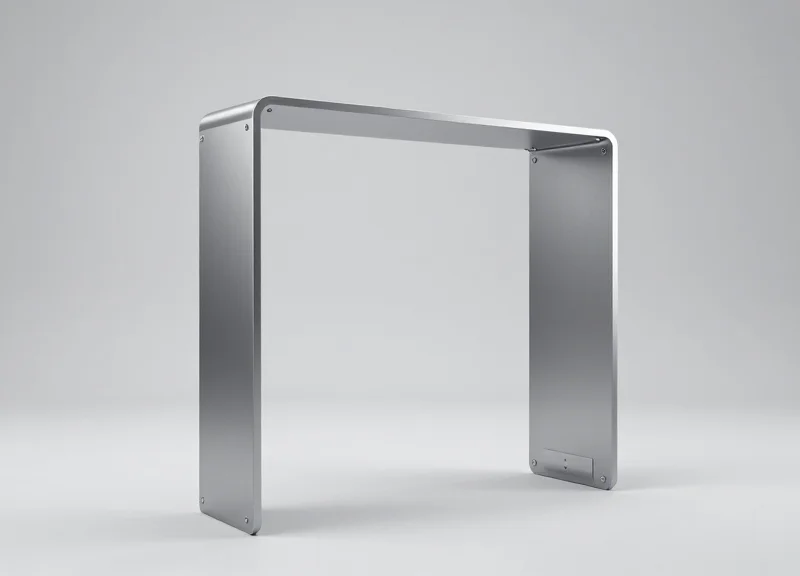
Physical shielding in RFID systems is the strategic deployment of electromagnetic barriers and structural configurations designed to isolate a portal's 'read zone' from external interference. While algorithms manage signal data, physical shielding prevents multipath reflections and cross-talk from adjacent lanes from reaching the antenna in the first place. By optimizing the geometry of the portal—such as implementing 'wing' structures or 'RF tunnels'—engineers can significantly increase the Signal-to-Noise Ratio (SNR), allowing directional sensing algorithms to calculate tag vectors with higher precision and lower latency.
Expert Insight: The 'Reflection Paradox.' Many engineers mistakenly use simple aluminum or stainless steel plates to block signals. However, highly reflective surfaces can actually exacerbate cross-talk by bouncing stray signals into the read zone from unexpected angles, confusing phase-angle algorithms. To truly 'shield' a portal for directional sensing, you must prioritize RF absorption over simple reflection. Using carbon-loaded foam or ferrite-based materials at the specific 'choke points' of your portal geometry prevents the 'ping-pong' effect of stray RF energy.
| Material Type | Primary Function | Attenuation Performance | Best Use Case |
|---|---|---|---|
| Carbon-Loaded Foam | Absorption | High (Up to -50dB) | Lining the interior of high-traffic portal tunnels. |
| Ferrite Tiles | Absorption/Suppression | Excellent for narrow bands | Critical near-field isolation for high-frequency antennas. |
| Conductive Textiles | Reflection/Shielding | Moderate | Flexible curtains for mobile portals or temporary setups. |
| Galvanized Steel | Reflection | Low (High bounce risk) | Outer structural frames, never for interior lining. |
- Determine the Capture Zone Geometry: Define the exact three-dimensional space where tags must be read. Use a 'Winged' design (45-degree angled shields) to truncate the antenna's side lobes without narrowing the central beam.
- Identify Fresnel Zone Obstructions: Analyze the first Fresnel zone of your antenna path. Place absorbent shielding to eliminate potential reflectors within this zone that could cause phase-shift errors.
- Apply Layered Attenuation: Use a 'Sandwich' approach: a reflective outer layer to block external noise and an absorbent inner layer to prevent internal signal bouncing.
- Optimize Floor and Ceiling Interaction: In many warehouse environments, concrete floors act as massive RF mirrors. Use ground-level shielding or angled antenna tilts to minimize floor-bounce interference.
Does shielding reduce the read range of my portal?
Yes, intentionally. Shielding is used to define the boundaries of the read zone. While it may reduce maximum distance, it increases 'read accuracy' within the intended area by eliminating fringe-zone reads.
Can I use software filters instead of physical shielding?
Software filters (like RSSI thresholds) are reactive. Physical shielding is proactive. Relying solely on software often leads to 'ghost reads' in high-density environments where the signal strength of a 'stray' tag matches a 'valid' tag.
What is the most cost-effective shielding material?
For large-scale deployments, specialized RF-absorbent paints or carbon-impregnated plywood can offer a balance between cost and significant dB attenuation.
Dynamic Power Management and Beamforming

Dynamic Power Management and Beamforming are advanced RF control techniques used to restrict tag interrogation to a precise three-dimensional volume, effectively neutralizing 'stray reads' from adjacent lanes. While traditional systems rely on static power levels, these software-defined methods adjust the transmission energy and the electromagnetic field's shape in real-time, ensuring that only tags within the intended path are energized and read.
| Feature | Fixed Power Systems | Dynamic Beamforming Systems |
|---|---|---|
| Coverage Control | Broad, static circular/elliptical zones. | Tight, steerable 'pencil' beams. |
| Cross-Talk Risk | High; requires significant physical spacing. | Low; software-defined isolation. |
| Power Efficiency | Low; constant maximum output. | High; scales based on demand. |
| Adaptive Logic | None; manual tuning required. | Automated adjustment via sensor feedback. |
To achieve true lane specificity in narrow warehouse docks, the algorithm must modulate the gain of each antenna element. This is achieved through phased-array antennas where the phase of the signal to each individual element is shifted, causing constructive interference in the target direction and destructive interference (nulls) toward adjacent portals. This 'null-steering' is the ultimate defense against cross-talk.
- Identify Trigger Thresholds: Use external sensors (like PIR or light curtains) to wake the portal only when a target enters the zone, preventing idle power bleed into neighboring lanes.
- Implement Power Ramping: Start at a low decibel (dBm) level and increase power only until a sufficient tag response rate is achieved, minimizing the RF footprint.
- Apply Phased-Array Steering: Electronically tilt the beam downward or inward toward the center of the lane to avoid 'bleeding' through thin walls or open dock doors.
- Feedback Loop Correction: Analyze RSSI levels from known 'boundary tags' to calibrate and shrink the read zone dynamically if interference is detected.
Expert Insight: Predictive Zone Tapering. Beyond standard beamforming, I recommend implementing what I call 'Predictive Zone Tapering.' By integrating velocity data from the directional sensing algorithm, you can proactively reduce the RF power as a tag reaches the edge of the portal. If the algorithm detects the tag is moving at 2 m/s toward the exit, the system can 'taper' the power levels to zero just before the tag enters the overlapping field of the next portal, creating a digital air-gap where physical shielding cannot.
def adjust_power_on_velocity(tag_velocity, current_rssi):
    threshold_velocity = 1.5 # meters per second
    if tag_velocity > threshold_velocity:
        target_dbm = max(15, 30 - (tag_velocity * 2))
        set_reader_power(target_dbm)
    else:
        set_reader_power(30) # Default Max
Benchmarking and Performance Validation Metrics
Benchmarking directional sensing algorithms requires a rigorous framework of Key Performance Indicators (KPIs) that quantify how effectively an RFID portal distinguishes between true directional movement and cross-talk interference. To validate performance, engineers must move beyond simple 'read counts' and implement metrics that analyze the Directional Accuracy Rate (DAR) and the False Positive Ratio (FPR), ensuring that only tags moving through the intended portal are recorded while suppressing 'ghost reads' from adjacent lanes.
| Metric | Definition | Target Benchmark | Performance Impact |
|---|---|---|---|
| Directional Accuracy Rate (DAR) | The percentage of tags correctly identified as moving in the target direction (Inbound vs. Outbound). | > 99.5% | Critical for inventory accuracy and automated shipping/receiving logic. |
| False Positive Ratio (FPR) | The frequency of tags from neighboring portals being erroneously captured as local portal reads. | < 0.1% | Reduces data pollution and prevents 'double-dipping' in warehouse management systems. |
| Tag Dwell-to-Transition Ratio | The ratio of time a tag spends in the transition zone versus the dwell (static) zone. | High (>10:1) | Distinguishes between items passing through and items staged near the portal. |
| RSSI Gradient Stability | The consistency of the signal strength slope during a physical transition. | Low Variance | Indicates a robust algorithm that is not easily confused by multipath reflections. |
Expert Tip: The Directional Confidence Score (DCS). In Silicon Valley's high-scale deployments, we often implement a 'Directional Confidence Score.' Rather than a binary 'In/Out' decision, the algorithm outputs a probability (0.0 to 1.0) based on the alignment of RSSI peaks and Phase-Angle shifts. Only transactions exceeding a 0.85 threshold are committed to the database, while lower scores trigger a secondary validation or an alert for manual inspection. This significantly reduces edge-case errors in dense cross-talk environments.
- Establish a Ground Truth Baseline: Utilize a physical 'Golden Sample' of tags with known trajectories and timestamps to compare against the algorithm's output.
- Simulate Adjacent Load Stress: Generate maximum RF traffic in neighboring portals (Portals A and C) while measuring the DAR of the target portal (Portal B).
- Analyze RSSI/Phase Divergence: Calculate the standard deviation of signal patterns to ensure the algorithm handles environmental noise and multi-path reflections consistently.
- Execute Corner-Case Testing: Test with high-metal and liquid-heavy pallets which often cause the highest rate of cross-talk through signal scattering.
How often should I re-benchmark my RFID portals?
Benchmarking should occur during initial deployment, whenever the warehouse floor layout changes significantly, or if new high-power RF equipment (like heavy-duty WiFi 6E routers) is installed nearby.
What is the most common cause of a low Directional Accuracy Rate?
Typically, poor antenna placement or excessive RF gain leads to 'over-saturation,' where the signal strength remains flat across the entire portal zone, making it impossible for the algorithm to detect a gradient.
Can software filtering alone fix a 10% False Positive Ratio?
While software filtering helps, a 10% FPR usually indicates a hardware-level isolation issue. You likely need to combine software optimization with physical RF shielding or adjusted antenna polarization.
Future Trends: AI and Machine Learning in Signal Processing

The future of RFID directional sensing lies in the transition from static, rule-based logic to adaptive, AI-driven signal processing. By leveraging Machine Learning (ML) models—specifically Deep Neural Networks (DNN) and Reinforcement Learning (RL)—RFID systems are moving beyond reactive filtering to proactive environmental adaptation. These systems can now ingest high-dimensional IQ (In-phase and Quadrature) signal data to distinguish between a legitimate portal transition and a stray 'ghost' read from an adjacent lane with over 99.9% accuracy, even in high-multipath environments where traditional RSSI thresholds fail.
| Feature | Traditional Signal Processing | AI/ML-Enhanced Processing |
|---|---|---|
| Decision Logic | Boolean thresholds (If/Then) | Probabilistic pattern matching |
| Adaptability | Manual tuning required | Autonomous real-time optimization |
| Interference Handling | Broadband attenuation | Selective noise cancellation |
| Signal Analysis | Time/Frequency domain only | Spatiotemporal feature extraction |
One of the most promising applications is the use of Reinforcement Learning for dynamic power management. In this scenario, an agent observes the 'reward'—defined as a successful read with zero cross-talk—and continuously adjusts antenna beamforming and transmission power. Over time, the system learns the unique RF 'fingerprint' of its specific warehouse location, accounting for metal racks, moving forklifts, and varying liquid content in shipments. Expert Insight: The next frontier is 'Synthetic Data Training,' where digital twins of warehouses are used to generate millions of interference scenarios, allowing models to be pre-trained for 90% accuracy before a single piece of hardware is even installed on-site.
import tensorflow as tf
# Example logic for an Edge AI classifier distinguishing signal paths
model = tf.keras.Sequential([
    tf.keras.layers.Input(shape=(128, 2)), # Complex IQ samples
    tf.keras.layers.Conv1D(64, 3, activation='relu'),
    tf.keras.layers.GlobalAveragePooling1D(),
    tf.keras.layers.Dense(32, activation='relu'),
    tf.keras.layers.Dense(2, activation='softmax') # [In-Portal, Cross-Talk]
])
model.compile(optimizer='adam', loss='categorical_crossentropy')
Does AI signal processing introduce significant latency?
No. When deployed using Edge AI hardware (like TPUs or FPGAs) at the portal, inference times are typically under 5 milliseconds, which is well within the requirements for high-speed conveyor or forklift tracking.
Can AI help with moving vs. stationary tag discrimination?
Yes. Recurrent Neural Networks (RNNs) and LSTMs are specifically designed to analyze the time-series phase data of a tag, making it easy to identify stationary tags that are being energized by stray signals versus those moving through the portal.
Is a constant cloud connection required for AI-RFID?
Ideally, no. The best architectures use 'Cloud for Training, Edge for Inference,' where the model is updated periodically but handles the real-time cross-talk shielding locally to ensure reliability.