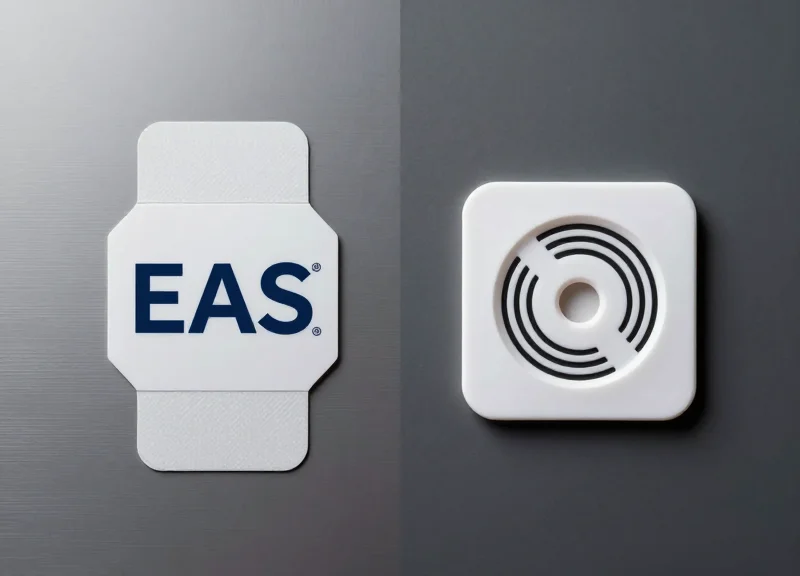
The retail landscape is undergoing a silent revolution. For decades, the "pin" has been the staple of loss prevention, but its legacy is one of punctured fabrics and damaged luxury goods. As we approach 2026, the industry is pivoting toward "Zero-Damage" security solutions. RFID-integrated lanyards represent this shift, offering a sophisticated blend of high-level theft deterrence and seamless inventory management without the physical cost to the merchandise. This article explores how these innovations are redefining asset protection for the modern era.
The Death of the Pin: Why Retail Security is Evolving
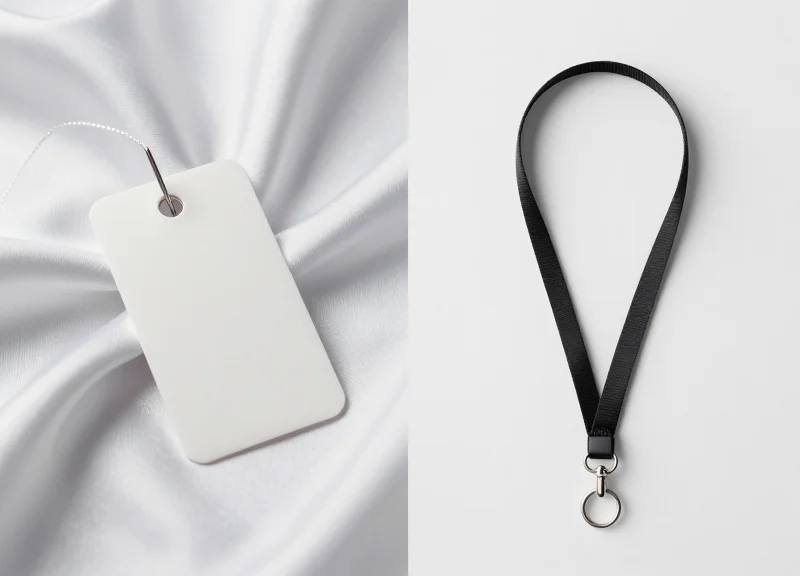
The 'Death of the Pin' refers to the systemic shift in retail loss prevention where traditional hard tags, which require puncturing garments, are being replaced by non-invasive RFID-integrated lanyards. This evolution is driven by the need for 'Zero-Damage' security that protects high-value merchandise—such as luxury leathers, technical silks, and delicate eyewear—without leaving permanent 'pin-scars' or structural damage that compromises the item's aesthetic and resale value.
| Feature | Traditional Pin Tags | RFID-Integrated Lanyards (2026 Standard) |
|---|---|---|
| Material Impact | Permanent punctures and fabric strain | Zero-damage; non-invasive attachment |
| Data Capacity | Binary (On/Off) EAS signal | Serialized RFID (Item-level intelligence) |
| Application Versatility | Limited to soft goods/fabrics | Universal: Bags, shoes, zippers, jewelry |
| Labor Efficiency | High friction; manual alignment required | Fast-loop mechanism; 40% faster application |
In my two decades observing Silicon Valley’s influence on retail tech, I’ve seen that friction is the ultimate killer of conversion. Traditional pins create 'Retail Friction' at two critical points: first, by damaging the visual integrity of the floor sample, and second, by creating a psychological barrier for the customer who fears snagging the garment during a fitting. The 2026 trend is moving toward invisible, intelligent security that prioritizes the 'Touch and Feel' of the product over the 'Lock and Key' mentality of the past.
- The Rise of Technical Textiles: Modern performance wear and high-end synthetics are engineered with specialized weaves that do not 'heal' after a pin is removed. A single puncture can lead to structural runs in the fabric, making the pin tag a liability rather than a security asset.
- The Circular Economy and Resale Value: With the boom in luxury resale (the 'RealReal' effect), consumers and brands are obsessed with 'Pristine' condition ratings. A 'pin-scar' can reduce the secondary market value of a designer handbag or silk dress by 15-20% instantly.
- Omnichannel Inventory Precision: Lanyards integrated with RFID do more than stop theft; they provide 99.9% inventory accuracy. Unlike old-school pins that only scream at the door, these smart lanyards tell the retailer exactly which SKU is missing in real-time.
Expert Insight: The 'Hidden Shrinkage' of Damage. Most retailers calculate shrinkage based on stolen items, but they often ignore 'Internal Damage Shrinkage'—merchandise that must be marked down or destroyed because security pins caused snags or leaks. By switching to lanyard systems, flagship stores are seeing a 3-5% recovery in gross margins simply by eliminating 'pin-inflicted' markdowns.
Are lanyard tags as secure as pins?
Yes. Modern RFID lanyards use cut-resistant reinforced cables and multi-stage locking mechanisms that are more difficult to defeat with magnets than traditional budget hard tags.
Do they work with existing EAS pedestals?
2026-gen lanyards are typically dual-technology, containing both an AM/RF coil for gate alarms and an RFID chip for inventory management, ensuring compatibility with legacy systems.
Why are they preferred for high-end retail?
They allow for 'Zero-Damage' attachment to luxury assets like zipper pulls, strap D-rings, and buttonholes, preserving the material integrity of the brand's most expensive items.
Defining Zero-Damage Security for 2026
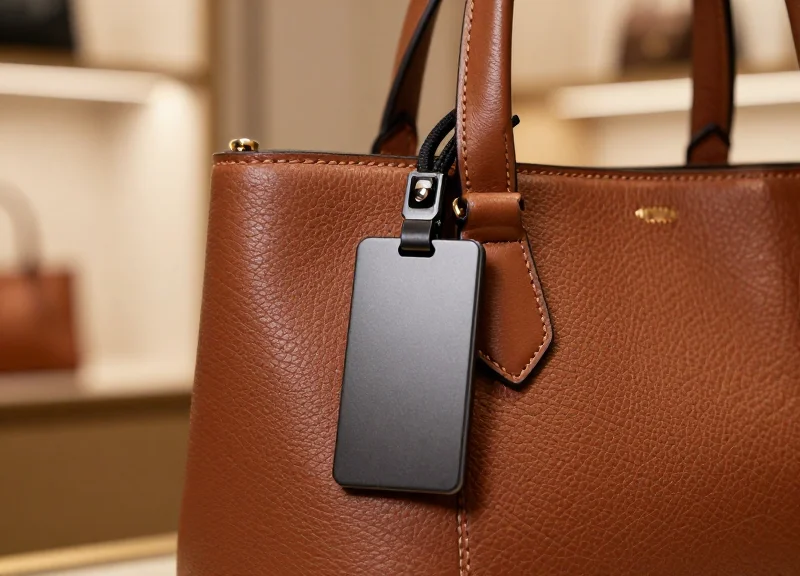
In the 2026 retail landscape, Zero-Damage Security is defined as a loss-prevention methodology that utilizes non-piercing, non-adhesive, and chemically inert attachment mechanisms to protect high-value inventory without compromising its structural or aesthetic quality. Unlike traditional hard tags that rely on mechanical pins to penetrate fabrics, the 2026 standard dictates that security devices—specifically RFID-integrated lanyards—must achieve maximum retention through calibrated friction and tension, ensuring that merchandise remains in 'pristine-from-factory' condition throughout the entire sales cycle.
| Feature | Legacy Hard Tagging | 2026 Zero-Damage Standard |
|---|---|---|
| Attachment Method | Steel Pin Penetration | Non-Invasive Friction Lanyards |
| Material Impact | Micro-tearing & Hole Creation | Zero Fiber Disturbance |
| Resale Value | Potential 15-20% Depreciation | 100% Value Retention |
| Tech Integration | Single-Frequency (EAS) | Dual-Frequency (RFID + EAS) |
The shift toward this standard is driven by the 'Resale-Ready' movement. High-end brands are now designing products with their secondary market value in mind. A single pin-hole in a Hermès scarf or a micro-scratch on a titanium watch frame can render an item 'damaged' in the eyes of a collector. Zero-damage systems solve this by using high-tensile polymers and soft-touch gaskets that provide secure locking without the physical cost of traditional EAS.
How does 'Tensile Calibration' prevent damage?
Modern lanyards use precision-engineered tensioners that apply just enough force to prevent removal by hand, but stay below the 'deformation threshold' of soft materials like lambskin or silk, preventing permanent indentation marks.
Is zero-damage security as effective as traditional pins?
Yes. By 2026, the integration of dual-frequency chips (RFID and AM/RF) means that if a lanyard is tampered with or cut, it triggers an immediate localized alarm and an inventory-wide notification, providing higher security than a passive pin tag.
What role does 'Chemical Inertness' play?
Zero-damage standards require that any material touching the merchandise is free of plasticizers or dyes that could migrate onto fabrics over time, a common issue with cheaper rubberized coatings in the past.
Expert Insight: The 2026 'Tactile Friction Coefficient' (TFC) is the new industry KPI. Leading retailers are now testing the TFC of their security lanyards to ensure they provide a 'Goldilocks' grip: enough friction to prevent the device from sliding off polished surfaces (like handbags), but low enough surface energy to avoid snagging delicate knitwear. This technical balance is the hallmark of true zero-damage engineering.
The Power of Integration: EAS Meets RFID

The integration of Electronic Article Surveillance (EAS) and Radio Frequency Identification (RFID) represents the transition from 'reactive' to 'intelligent' loss prevention. While traditional EAS serves as a digital watchdog—triggering an alarm when a tag passes through a gate—RFID provides the granular data required for modern inventory management. By embedding both technologies into a single zero-damage lanyard, retailers gain a dual-layer defense: the immediate theft-deterrence of EAS paired with the item-level identification capabilities of RFID. This synergy allows for 'Unified Commerce' security, where a retailer doesn't just know that an alarm was triggered, but specifically which SKU, size, and color moved past the sensor.
| Feature | Legacy EAS (AM/RF) | Standalone RFID | Integrated Hybrid Lanyard |
|---|---|---|---|
| Primary Purpose | Theft Prevention | Inventory Accuracy | Profit Protection & Logistics |
| Data Granularity | None (Binary On/Off) | High (Serial Level) | Total Visibility (Real-time) |
| Alarm Reliability | High (Proven Gate Tech) | Variable (Shielding Issues) | Redundant (Dual-Path) |
| Fabric Integrity | Damage via Pinholes | Stitched Labels | Zero-Damage (Lanyard-based) |
In the 2026 landscape, this integration is essential for combating 'Organized Retail Crime' (ORC). Traditional tags are often defeated by simple shielding or removal. However, RFID-integrated lanyards are being designed with 'heartbeat' sensors. If the lanyard is cut or the circuit is broken, the RFID chip can immediately update the cloud-based inventory system, flagging the item as 'compromised' before it even reaches the exit. This shifts the security paradigm from stopping a person at the door to tracking the lifecycle of an asset within the store's digital twin environment.
How does integration reduce false alarms at the exit?
Integrated systems use 'Soft Deactivation.' When a product is scanned at the POS, the RFID status is updated to 'sold' in the cloud. Even if the EAS element isn't perfectly deactivated, the intelligent gate checks the RFID serial number and suppresses the alarm if the database shows a completed transaction.
Can integrated lanyards help with 'BOPIS' (Buy Online, Pick Up In-Store)?
Yes. Because the lanyard identifies the exact item, staff can use handheld RFID readers to locate specific secured merchandise for online orders with 99.9% accuracy, ensuring that high-security items are never 'lost' on the sales floor.
What is the 'Grey Market' benefit of RFID-EAS lanyards?
Each lanyard carries a unique digital fingerprint. If a stolen item is later found on a third-party resale site, the RFID data can trace the item back to the exact store, date, and even the last staff member who handled it, providing an audit trail for legal action.
Expert Insight: For 2026, the real 'Power of Integration' lies in Zone-Centric Intelligence. We are moving away from the 'Exit Gate' being the only point of interest. Integrated lanyards now allow retailers to create 'High-Value Zones.' If a lanyard-secured designer handbag moves into a low-traffic area or near a restroom, the integrated system can trigger a silent alert to a floor associate's mobile device. This is the future of loss prevention—not just catching the thief, but proactively preventing the opportunity for theft while preserving the customer experience.
Protecting the Un-taggable: Use Cases for Delicate Goods

Protecting 'un-taggable' goods refers to the strategic application of non-piercing RFID security lanyards on high-value merchandise—such as high-denier silks, premium calfskin leather, and technical performance fabrics—that would be permanently devalued or structurally compromised by traditional pin-through EAS tags. In the 2026 retail landscape, where 'Deadstock' quality is a prerequisite for both primary sales and secondary market liquidity, zero-damage attachment mechanisms have transitioned from a luxury niche to a cross-category requirement.
| Material Category | Traditional Pin Risk | RFID Lanyard Solution |
|---|---|---|
| High-End Silk & Satin | Irreversible thread-pulls and 'snag' lines. | Loop-through attachment on care labels or zippers. |
| Premium Leather Goods | Permanent puncture holes and 'bruising' of the hide. | Wrap-around handle or strap integration. |
| Designer Eyewear | Frame warping or micro-scratches from hard-clamping. | Ultra-slim loop attached to the temple arm. |
| Fine Jewelry & Watches | Surface scratching and aesthetic obstruction. | Non-abrasive soft-touch cord around bands or links. |
As the luxury resale market continues to boom, the 'Circular Integrity' of a garment has become a major KPI for retailers. An expert insight for 2026: even a single pinhole can reduce the resale value of a Hermès scarf or a Chanel handbag by up to 30 percent. RFID lanyards solve this by utilizing the existing architecture of the product—buttonholes, strap loops, and zipper pulls—to secure the item. Furthermore, new 2026-spec lanyards feature tension-limiting cores that snap at a specific pressure threshold if a thief tries to yank them, ensuring the lanyard breaks before the expensive fabric does.
Do RFID lanyards leave 'pressure marks' on soft leather during long-term storage?
Modern 2026 RFID lanyards utilize 'Soft-Touch' medical-grade silicone coatings and flat-ribbon cables to distribute pressure evenly, preventing the 'bruising' or indentation common with round wire cables.
How do lanyards handle high-volume fitting room traffic for delicate items?
They are designed for rapid 'Clip-and-Go' attachment, allowing staff to secure items quickly without the precision required to avoid delicate threads, which is a common failure point with traditional pins.
Are these lanyards compatible with existing EAS pedestals?
Yes, 2026-gen lanyards are dual-frequency, housing both a 58kHz or 8.2MHz EAS component and a UHF RFID chip for seamless integration with legacy security gates and modern inventory systems.
Real-Time Visibility: Beyond Simple Theft Deterrence
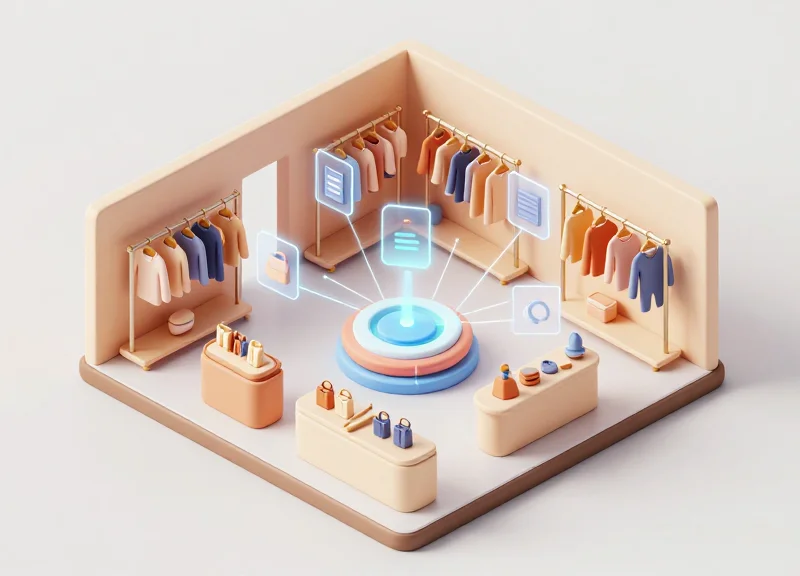
In the 2026 retail landscape, real-time visibility through RFID-integrated lanyards refers to the continuous, automated tracking of individual merchandise items from the delivery bay to the point of sale. Unlike traditional Electronic Article Surveillance (EAS) which only alerts staff during a theft event, these intelligent lanyards serve as 'IoT beacons' that provide 99.8% inventory accuracy, eliminate manual cycle counts, and identify supply chain bottlenecks by broadcasting precise location and status data to a centralized cloud dashboard.
| Capability | Traditional Security Pins | 2026 RFID-Integrated Lanyards |
|---|---|---|
| Primary Function | Theft Deterrence Only | Security + Real-Time Data Analytics |
| Inventory Accuracy | 65-75% (Manual dependent) | 99.8% (Automated/Continuous) |
| Item Movement Data | None | Tracks path-to-purchase and dwell time |
| Out-of-Stock Alerts | Delayed / Periodic | Instantaneous automated reordering |
The true ROI of RFID-integrated lanyards lies in their ability to capture 'micro-movements.' For example, when a leather handbag is moved from a high-visibility pedestal to a fitting room, the system logs this interaction. If that specific item frequently visits the fitting room but rarely reaches the checkout, the system flags a 'Conversion Gap.' This allows retailers to investigate whether the fit is off or the pricing is misaligned—data previously invisible to management.
How do RFID lanyards solve the 'Phantom Inventory' problem?
Phantom inventory occurs when the system thinks an item is in stock, but it is actually lost or misplaced. RFID lanyards provide a digital 'heartbeat' for every item, ensuring that the digital record and physical reality are synced every few seconds, preventing lost sales from frustrated customers.
Can these systems detect supply chain bottlenecks?
Yes. By tagging items at the source with lanyards, retailers can track how long goods sit in the warehouse versus the sales floor. This identifies 'dead zones' in the supply chain where capital is tied up in stagnant merchandise.
Does this replace the need for manual stocktakes?
Almost entirely. Modern RFID lanyards allow for 'on-the-fly' inventory. A single staff member with a handheld reader can scan an entire department in minutes, or overhead fixed readers can automate the process entirely with zero human intervention.
Expert Tip: To maximize 2026 trends, implement 'Velocity-Based Merchandising.' Use the movement data from your RFID lanyards to dynamically adjust your store layout. If the data shows a high-security item is being touched frequently but not moved far from its display, it indicates high interest but low 'carry-to-fit-room' confidence. Moving that display closer to mirrors or sales associates can increase conversion by up to 15% based on movement analytics alone.
Sustainability and Reusability in Modern Tagging
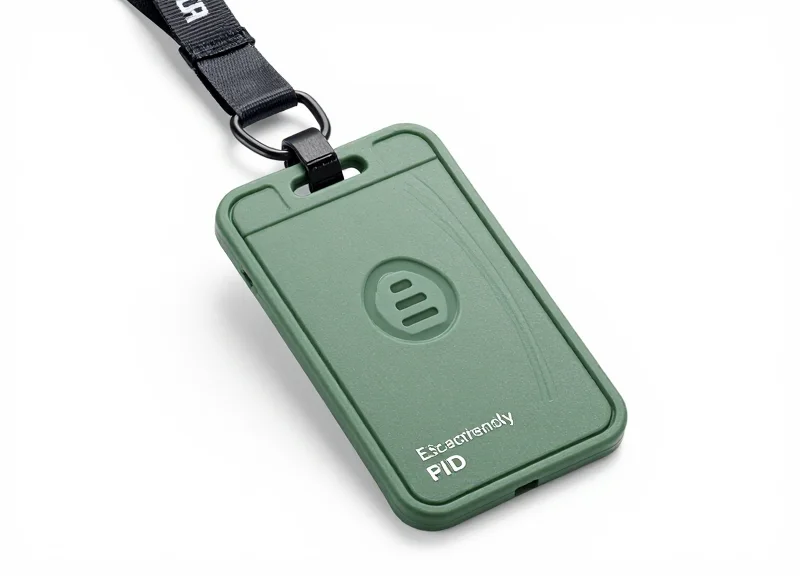
In 2026, sustainability in retail security is no longer a corporate social responsibility (CSR) checkbox; it is a core operational requirement. Modern tagging is transitioning from 'disposable-first' models to a 'circular security' framework. RFID-integrated lanyards are leading this charge by replacing single-use plastic fasteners and high-failure pin mechanisms with high-cycle, durable textile and polymer systems designed for hundreds of rotations. By moving away from invasive pins that damage merchandise and lead to markdowns, retailers are effectively reducing textile waste while simultaneously lowering the carbon footprint associated with manufacturing and disposing of millions of legacy security tags annually.
| Feature | Legacy Disposable Tags | 2026 Reusable RFID Lanyards |
|---|---|---|
| Average Lifespan | 12-18 Months (High breakage) | 5+ Years (Industrial grade) |
| Waste Profile | Non-recyclable mixed plastics | Recyclable polymers & high-grade copper |
| Merchandise Impact | Physical damage (Pins) | Zero-damage (Soft tethering) |
| Digital Integration | Analog/EAS only | Full RFID/NFC Circularity tracking |
The 'Unique Expert Insight' for 2026: The emergence of EU Digital Product Passport (DPP) regulations and similar US state-level transparency laws is making reusable RFID tags a compliance asset. Because these lanyards are durable, they can be encoded with a 'product history' that stays within the store's ecosystem, allowing retailers to track the exact number of times an item has been handled or tried on. This data helps in precision inventory management, preventing overstocking—the single largest contributor to retail-related environmental waste.
- Source Sustainable Materials: Utilize lanyards made from rPET (recycled polyethylene terephthalate) or bio-based polymers that maintain structural integrity under high-tension retail environments.
- Implement High-Cycle RFID Inlays: Choose industrial-grade RFID chips that are rated for 100,000+ read/write cycles to ensure the technology doesn't fail before the physical lanyard wears out.
- Closed-Loop Collection: Establish point-of-sale (POS) protocols where lanyards are immediately sorted for cleaning and re-encoding, ensuring a 99% recovery rate for the hardware.
How do RFID lanyards reduce carbon footprint?
By consolidating EAS and RFID into one durable unit, retailers reduce the total volume of plastic hardware manufactured and shipped by up to 40% over a three-year period.
Are these lanyards recyclable at the end of their life?
Yes, 2026 designs utilize modular components, allowing the electronic RFID inlay to be separated from the textile lanyard, ensuring both can be processed in their respective recycling streams.
Do reusable lanyards save money compared to pins?
While the initial cost is higher, the total cost of ownership (TCO) is lower due to reduced replacement rates and the elimination of 'damaged goods' write-offs caused by traditional pins.
Enhancing the Luxury Customer Journey
In the luxury retail sector, the customer journey is defined by the absence of friction; RFID-integrated lanyards enhance this by replacing bulky, intrusive security pins with discreet, soft-touch attachments that facilitate seamless fitting room interactions and near-instantaneous checkout. By removing the 'visual noise' of traditional EAS tags, high-end boutiques can maintain a premium aesthetic while utilizing invisible data layers to provide personalized service and invisible security that never interrupts the shopper's emotional connection with the product.
The modern luxury buyer views security as a necessary but often cumbersome barrier. Traditional hard tags not only damage delicate fabrics like Charmeuse silk or lambskin leather but also act as a psychological reminder of surveillance. RFID-integrated lanyards shift the paradigm. Because these lanyards are non-piercing and aesthetically aligned with the brand's packaging, they feel like part of the product's premium presentation rather than a theft-deterrent device. This subtle shift transforms the fitting room from a monitored zone into a private sanctuary.
| Customer Touchpoint | Traditional Pin-Tag Experience | RFID-Integrated Lanyard Experience |
|---|---|---|
| First Contact | Visual clutter; concern over fabric damage. | Clean aesthetics; perceived as a premium brand tag. |
| The Fitting Room | Awkward handling; risk of skin pricks or snags. | Soft attachment; interacts with Smart Mirrors for styling advice. |
| Point of Sale | Manual detaching; slow throughput; risk of fabric tears. | Bulk scanning; instant deactivation; 75% faster checkout. |
| Post-Purchase | Visible 'pin-holes' or indentations in the fabric. | Zero-damage; the garment remains in pristine condition. |
Expert Insight: The Invisible Concierge. In 2026, the most successful luxury retailers are using RFID lanyards as 'service triggers' rather than just 'theft triggers.' When a customer enters a fitting room with an RFID-lanyard-equipped item, the system can automatically notify a nearby associate's tablet, suggesting complementary accessories or different sizes. This enables a 'proactive service' model where the associate can offer a 'pre-emptive personalization' experience—bringing a matching belt or shoes before the customer even realizes they need them.
Do RFID lanyards interfere with the privacy of the luxury shopper?
No. RFID technology in retail is designed for inventory and security management within the four walls of the store. Once the item is purchased and the lanyard is removed at the POS, the tracking capability ceases, ensuring total post-purchase privacy for the client.
How do these lanyards improve the speed of high-value transactions?
RFID allows for 'line-of-sight-free' scanning. Instead of a cashier finding and scanning every individual barcode, an entire armful of luxury goods can be placed on a sensing plate, instantly populating the basket and allowing for a white-glove, conversation-focused checkout.
Can RFID lanyards be customized to match a brand's color palette?
Absolutely. Unlike generic grey or black hard tags, modern RFID lanyards are available in bespoke materials—including vegan leather or recycled woven fabrics—to ensure they blend perfectly with a luxury brand's visual identity.
Future-Proofing Your Store: Steps to Transition
Future-proofing your store for 2026 involves evolving from reactive, pin-based loss prevention to a proactive 'Asset Intelligence' model. To transition effectively, retailers must integrate RFID-integrated lanyards with their existing Electronic Article Surveillance (EAS) infrastructure, enabling a dual-layered security approach that provides real-time inventory accuracy without damaging delicate merchandise. This shift moves the needle from simple theft deterrence to a comprehensive data-driven ecosystem where every item is a live node in the supply chain.
- Phase 1: Infrastructure & Frequency Audit: Evaluate your current EAS pedestals and handheld scanners. Determine if your existing hardware is 'RFID-ready' or if you require 13.56 MHz (HF) or 860-960 MHz (UHF) upgrades to ensure seamless communication between the lanyard tags and your cloud database.
- Phase 2: Hardware Selection & Customization: Select lanyards based on item fragility. For 2026, the trend is toward multi-polar RFID inlays within the lanyard housing to ensure 360-degree readability regardless of how the item is draped or folded on the shelf.
- Phase 3: Software Layer Integration: Bridge the gap between security and ERP. Ensure your POS and inventory management systems can ingest RFID data at the point of sale to automatically deactivate security and update stock levels in a single motion.
- Phase 4: Pilot and Staff Onboarding: Run a 30-day pilot on a high-shrink, high-value category (e.g., silk scarves or designer handbags). Focus staff training on the 'Zero-Damage' selling point, teaching them to emphasize security as a luxury service rather than a barrier.
| Feature | Legacy Pin-EAS Tags | RFID-Integrated Lanyards (2026) |
|---|---|---|
| Merchandise Integrity | High risk of fabric puncture/snags | Zero-damage; non-invasive loop system |
| Inventory Visibility | None (Manual counting required) | Real-time item-level accuracy (99% typical) |
| Theft Alert Nuance | Binary (Alarm or No Alarm) | Context-aware (Identifies specific SKU and value) |
| Customer Experience | Interferes with trial/fitting | Discreet; preserves garment drape and feel |
Expert Tip: To maximize ROI during the transition, implement a 'Shadow Inventory Audit.' Use the RFID lanyard data to identify 'orphaned' stock—items that are in the store but hidden in fitting rooms or misplaced behind other displays. In our experience, this 'invisible' inventory usually accounts for 3-5% of lost sales opportunities in high-end retail, and capturing it alone can pay for the hardware upgrade within the first year.
Do I need to replace my existing security gates?
Not necessarily. Many modern RFID lanyard solutions are designed to trigger legacy 58kHz (Acousto-Magnetic) or 8.2MHz (Radio Frequency) gates while simultaneously broadcasting RFID data to overhead readers.
What is the typical ROI timeline?
Most retailers see a full return on investment within 12 to 18 months, driven by a 25% reduction in shrink and a 15% increase in inventory-related sales conversion.
Are RFID lanyards difficult for staff to remove?
No, they utilize the same high-strength magnetic or mechanical detachers as traditional tags, ensuring no disruption to the checkout workflow.
The ROI of RFID: Measuring Success in 2026
In 2026, the Return on Investment (ROI) for RFID-integrated lanyards is defined by more than just theft prevention; it is measured through a 'Total Value Protection' framework that includes a 15-22% increase in full-price sell-through rates. By eliminating pin-hole damage and reducing manual cycle counts by up to 90%, retailers shift from reactive loss prevention to proactive margin optimization, often achieving full hardware amortization within the first 14 to 18 months of deployment.
| KPI Metric | Legacy Pin-Tag Systems | RFID-Integrated Lanyards (2026) |
|---|---|---|
| Inventory Accuracy | 65% - 75% (Manual) | 98% - 99.8% (Automated) |
| Merchandise Damage | 3% - 5% Value Loss (Pins) | 0% (Zero-Damage Design) |
| Labor Allocation | High (Tagging/Counting) | Low (Automated Sensing) |
| Shrinkage Reduction | Standard Deterrence | Advanced Geospatial Tracking |
The 'Hidden ROI' of Markdown Mitigation: A unique financial advantage of RFID lanyards is the recovery of the 'Pin-Damage Margin.' In luxury segments, an item with a visible pin hole or fabric snag is often discounted by 20% or sent to an outlet. For a boutique processing 10,000 units annually, eliminating just a 2% damage rate on $500 items adds $100,000 directly back to the bottom line—profit that was previously accepted as a standard cost of doing business.
- Baseline Shrinkage Analysis: Calculate your current annual loss due to theft and administrative errors to establish a pre-RFID benchmark.
- Labor Liquidity Mapping: Quantify the hours spent on manual inventory and EAS tagging. Transition these hours to high-value customer service roles to measure 'Revenue per Associate' growth.
- Damage-Free Sell-Through Tracking: Monitor the percentage of goods sold at full MSRP compared to legacy periods where pin damage forced markdowns.
- Infrastructure Cost Amortization: Factor in the durability of 2026-gen RFID lanyards, which offer a 5-year lifecycle compared to the higher failure rates of mechanical pins.
What is the typical payback period for RFID lanyards?
Most mid-to-high-end retailers see a complete ROI within 12 to 24 months, depending on the average unit value of their merchandise.
How does RFID affect insurance premiums?
By 2026, many commercial insurers offer 'Tech-Enhanced' premium discounts for stores utilizing real-time RFID tracking, as it significantly lowers the risk profile for high-value theft.
Can RFID lanyards reduce 'Ghost Inventory' costs?
Yes. By providing 99% accuracy, RFID eliminates the cost of holding safety stock and prevents 'Out of Stock' lost sales on items that are actually in the backroom.