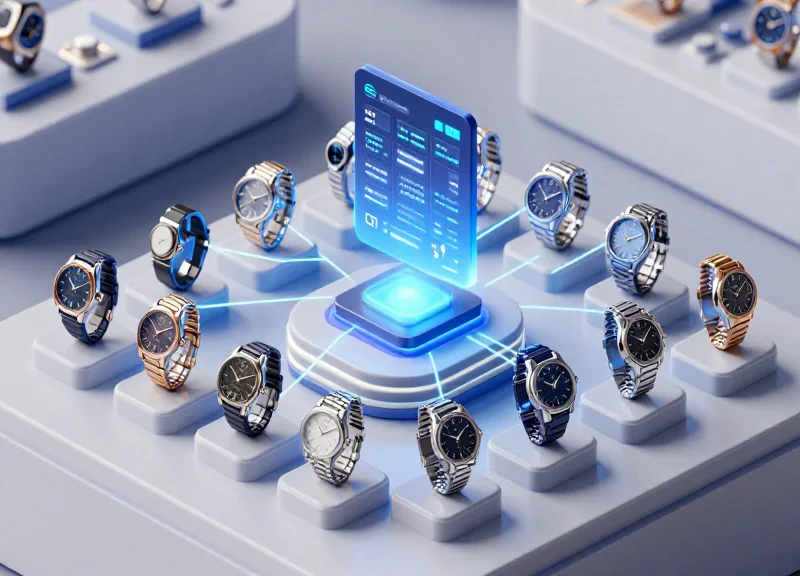
In the high-stakes world of luxury watch retail, a single missing timepiece isn't just a minor discrepancy—it's a significant financial blow. Traditional inventory methods often leave dealers vulnerable to 'phantom inventory' and undetected shrinkage. However, a technological revolution is underway. Leading watch dealers are now achieving up to a 40% reduction in inventory shrinkage by implementing real-time RFID tracking. This article explores why this shift is happening and how RFID is becoming the cornerstone of modern luxury retail security and operational excellence.
The High Cost of Inaccuracy: Understanding Watch Inventory Shrinkage

In the luxury watch industry, inventory shrinkage is the discrepancy between the stock listed on a dealer's balance sheet and the actual physical inventory present in the vault or on the showroom floor. Unlike high-volume consumer goods, watch shrinkage is uniquely devastating because a single missing unit—such as a Patek Philippe or a rare Rolex—can represent a loss of $50,000 to $200,000. For most leading dealers, shrinkage isn't just a line item; it is a direct drain on liquidity and a primary driver of inflated insurance premiums. When tracking relies on manual methods, the 'accuracy gap' typically widens over time, leading to significant year-end write-downs that can exceed 40% of projected net profits.
| Audit Factor | Manual Barcode Scanning | Real-Time RFID Tracking |
|---|---|---|
| Audit Speed | 1-2 items per minute | 200+ items per second |
| Human Error Rate | 3% - 7% per audit | Less than 0.1% |
| Line of Sight Requirement | Required (Individual scan) | Not Required (Bulk scan) |
| Data Freshness | Monthly/Quarterly | Instantaneous / Continuous |
The primary vulnerability in luxury watch retail stems from 'The Velocity Gap.' In a high-stakes environment, sales staff frequently move items between display cases, backrooms, and viewing rooms. Manual barcode systems require a physical 'line of sight' to scan each piece. This process is so labor-intensive that most dealers only perform full audits once a month or once a quarter. This creates a 30-to-90-day 'blind window' where an item can be misplaced, stolen, or sold without proper record-keeping. By the time the error is discovered, the trail is cold, making recovery or insurance claims nearly impossible.
Why is high unit value a specific risk for shrinkage?
Because luxury watches are small, portable, and extremely high-value, they are primary targets for internal and external theft. A single missed scan on a $100,000 timepiece is a catastrophic loss compared to a missed scan on a low-cost retail item.
How does manual scanning contribute to administrative shrinkage?
Administrative shrinkage occurs when items are physically present but logged incorrectly. Manual barcode entry is prone to 'fat-finger' errors, duplicate entries, or staff simply skipping items during a long, tedious audit process due to fatigue.
What is the 'Shadow Inventory' effect?
This is my unique industry insight: Many dealers suffer from 'Shadow Inventory,' where items are in the building but 'lost' to the system. This leads to lost sales opportunities when a salesperson tells a client a watch is out of stock, even though it is simply sitting in the wrong tray.
Expert Tip: To truly understand your shrinkage cost, calculate your 'Time-to-Discovery.' Most dealers realize they have a shrinkage problem only during annual tax preparation. Real-time RFID tracking reduces the time-to-discovery from 365 days to 365 seconds, allowing for immediate corrective action before a minor discrepancy turns into a permanent capital loss.
How Real-Time RFID Transforms Watch Inventory Management

Real-time RFID transforms watch inventory management by shifting the paradigm from manual 'line-of-sight' verification to automated, non-visual data capture. Unlike traditional barcodes that require a physical scan of each individual serial number, Radio Frequency Identification (RFID) uses electromagnetic fields to automatically identify and track tags attached to timepieces. This allows dealers to verify hundreds of luxury watches simultaneously—even while they remain inside display cases or high-security safes—eliminating the human error and massive labor costs associated with traditional stock-takes.
| Feature | Traditional Barcoding | Real-Time RFID |
|---|---|---|
| Line of Sight | Required for every item | Not required (Bulk reading) |
| Scan Speed | 10-20 seconds per watch | 100+ items per second |
| Inventory Cycle | Weekly or Monthly | Daily or Continuous |
| Data Accuracy | Approx. 75-85% | 99.9% - 100% |
| Human Labor | High (Manual intensive) | Minimal (Automated) |
The Digital Twin Concept: In the luxury watch sector, RFID doesn't just track a box; it creates a 'Digital Twin' of the specific movement and serial number. This persistent digital presence allows for real-time reconciliation against your ERP or POS system. If a Rolex Submariner is moved from the back-room vault to a front-of-house display, the system updates the location instantly without a single staff member needing to 'check it in' manually. This visibility is the primary deterrent against the 'internal shrinkage' that plagues the industry.
- Automated Bulk Intake: When a new shipment arrives, an RFID tunnel or handheld reader captures every serial number in the box in one second, instantly updating the inventory database without unboxing.
- Smart Display Monitoring: Fixed readers installed under counters monitor high-value displays 24/7, triggering alerts if a piece is removed outside of business hours or stays off the shelf too long.
- Instant Vault Audits: Dealers can conduct a full 'wall-to-wall' audit of thousands of watches in minutes by simply walking through the vault with an RFID wand, ensuring zero discrepancies daily.
Expert Insight: The 'Metal-Masking' Solution. A common hurdle in watch inventory is that metal interferes with RFID signals. Leading dealers now use specialized 'on-metal' RFID tags or flag-tagging techniques on the watch strap. This creates a small air gap that allows the signal to bounce efficiently, ensuring that even a tray full of heavy gold and steel timepieces can be read with 100% reliability—a technical nuance that was impossible just five years ago.
Will RFID signals damage mechanical watch movements?
No. Passive RFID tags operate on low-power radio waves that do not generate heat or magnetic fields strong enough to affect the balance spring or accuracy of a mechanical movement.
Can RFID read through a lead-lined or thick steel safe?
While radio waves cannot penetrate thick metal, dealers solve this by placing a small antenna inside the safe or using 'Smart Safes' that relay data to the external inventory management software.
How long do the tags last?
Passive RFID tags have no battery and can last for decades, meaning they remain functional from the moment the watch leaves the manufacturer until it is sold to the end consumer.
Strategic Theft Prevention: Beyond Standard EAS Systems

Strategic theft prevention for luxury watches requires moving beyond traditional Electronic Article Surveillance (EAS), which only alerts staff when a generic tag passes through an exit gate. Unlike EAS, real-time RFID systems provide item-level intelligence, identifying exactly which timepiece is moving, its specific location within the store, and whether its movement aligns with a verified sale. By creating a 'digital twin' of every watch, dealers can establish virtual geofences and receive instant notifications the moment a high-value asset enters a restricted zone or leaves its display case without authorization.
| Feature | Traditional EAS Systems | Real-Time RFID Security |
|---|---|---|
| Detection Level | Generic (Any tag triggers alarm) | Granular (Specific Serial/Model identification) |
| Alert Timing | Reactive (Triggered at the exit door) | Proactive (Triggered when moving from display) |
| Theft Pattern Analysis | None | Detailed (Heatmaps and path tracking) |
| Internal Theft Control | Limited (Staff can bypass gates) | High (Tracks movement in backrooms/safes) |
One of the most significant advantages of RFID over EAS is the reduction in 'Time-to-Discovery.' In a standard retail environment, a watch might be stolen and replaced with a high-quality replica; without RFID, this theft may not be detected until the next manual stock count, which could be weeks away. RFID systems perform 'Silent Sweeps'—automated inventory checks occurring every few minutes—ensuring that any discrepancy is flagged immediately.
- Define Virtual Geofences: Map out the showroom, backroom, and exits into digital zones within the RFID software to monitor asset flow.
- Assign Intelligent Logic: Program the system to recognize that a watch moved from the 'Safe' to the 'Showroom' is a standard operation, but movement from 'Showroom' to 'Exit' without a POS trigger is a theft event.
- Real-Time Response Implementation: Integrate the RFID software with staff mobile devices or overhead security cameras to capture footage the moment an alert is triggered.
Expert Insight: The 'Sweethearting' Detection Loop. While most security focuses on external shoplifting, 30% of luxury shrinkage is often internal. A unique capability of RFID is detecting 'Sweethearting'—where an employee intentionally moves a watch into a 'blind spot' or a trash receptacle to be retrieved later. By tracking the specific ID of the watch and the timestamp of movement, dealers can correlate footage with precise events, creating an indisputable digital audit trail that traditional EAS simply cannot provide.
Can RFID tags be easily shielded or removed by thieves?
Modern luxury RFID tags are designed as tamper-evident seals or integrated into the watch hang-tag. If the tag is cut or shielded (using a foil-lined 'booster bag'), the system can trigger an alert based on the sudden 'signal loss' of a high-value item while the store is open.
Does RFID replace the need for physical security guards?
No, RFID acts as a force multiplier for security. It provides the data and 'eyes' everywhere at once, allowing guards or managers to intervene precisely where and when a threat is identified.
Will metal watches interfere with the RFID signal?
While metal can reflect RF energy, specialized 'On-Metal' tags and high-sensitivity readers used by leading dealers ensure 99.9% read accuracy even for stainless steel or gold timepieces.
From Hours to Minutes: The Speed of Automated Audits
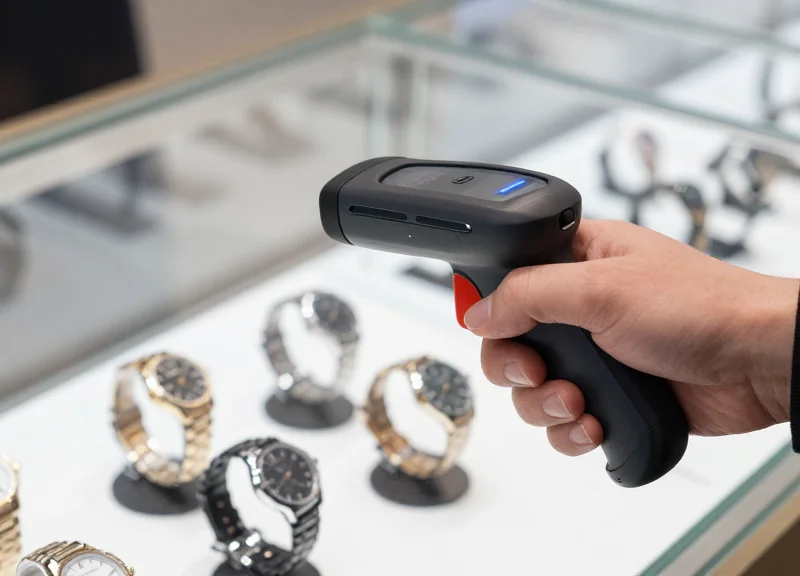
Automated RFID audits allow luxury watch dealers to perform full-inventory counts in minutes by scanning entire display cases simultaneously without opening the glass. Unlike manual barcode scanning, which requires individual 'line-of-sight' contact for every piece, RFID readers use radio frequency to capture data from hundreds of tags at once. This transition reduces the time required for a standard 500-piece inventory audit from approximately five hours of high-stakes labor to under ten minutes of effortless scanning, ensuring 99.9% data accuracy.
| Audit Metric | Manual Barcode/Paper | Real-Time RFID |
|---|---|---|
| Time Per 100 Items | 45 - 60 Minutes | 30 - 60 Seconds |
| Staff Required | 2 - 3 (Double-blind check) | 1 Staff Member |
| Disruption Level | High (Cases must be opened) | Zero (Scan through glass/safes) |
| Average Accuracy | 92% - 95% (Human error factor) | 99.8% - 100% |
| Audit Frequency | Monthly or Quarterly | Daily or Shift-change |
The true ROI of RFID-enabled speed isn't just the hours saved; it is the frequency of visibility. In high-value horology, a monthly audit is a post-mortem—you find out what was stolen or lost weeks after the event. By reducing audit time to a 5-minute 'walk-by' at the end of every shift, dealers move from reactive discovery to proactive prevention. This creates a psychological deterrent for internal theft and ensures that the 'Ghost Stock'—items appearing in the system but physically missing—never accumulates to the point of a major fiscal shock.
Can RFID scan through thick jewelry safes?
While metal can block RF signals, modern ultra-high frequency (UHF) systems are designed to capture tags as soon as the safe door is opened, or through the use of strategically placed internal antennas that relay data to the cloud in real-time.
Does the audit process damage mechanical watches?
No. RFID tags are passive and emit negligible electromagnetic energy only when being read. This energy level is far below what is required to magnetize a watch hairspring or affect the timing of a Swiss movement.
How does it handle overlapping tags in a tray?
Sophisticated anti-collision algorithms in modern RFID readers allow them to distinguish between hundreds of overlapping signals per second, ensuring no item is missed even in dense display 'nests'.
Expert Insight: The 'Audit Fatigue' Error Curve. Data shows that human accuracy in manual audits drops by roughly 15% for every hour spent on the task due to 'eye fatigue' and repetitive serial number transcription. RFID eliminates this decay entirely; the 500th item is scanned with the same cold, robotic precision as the first, effectively removing the human margin of error that often masks shrinkage in traditional ledgers.
Optimizing the Customer Journey with Instant Stock Visibility
In high-end horology, the customer journey is defined by precision, trust, and exclusivity; real-time RFID stock visibility optimizes this by ensuring that every timepiece requested by a client is located within seconds. By eliminating the 'ghost inventory' problem—where a system shows a watch in stock that cannot be physically found—dealers prevent the emotional letdown of a lost sale and allow sales associates to maintain constant, face-to-face engagement with the customer rather than retreating to a stockroom for manual searches.
| Customer Touchpoint | Traditional Manual Method | RFID-Enabled Luxury Service |
|---|---|---|
| In-Store Inquiry | Associate leaves floor for 5-10 minutes to search vault. | Associate confirms location via tablet instantly. |
| Omnichannel Browsing | Website stock may lag by 24 hours; high risk of overselling. | Live, real-time inventory sync prevents 'Out of Stock' errors. |
| Special Requests | Manual calls to other branches with uncertain data. | Instant visibility of stock across all global boutique locations. |
The Luxury Paradox: How Invisible Tech Enhances High-Touch Service. As a veteran of Silicon Valley retail tech, I’ve observed that the most effective tools are those that vanish. For watch dealers, the 'Expert Tip' is leveraging RFID to maintain what I call the Continuity of Presence. When a salesperson never has to break eye contact or the narrative flow of a watch's heritage to 'check the back,' the psychological momentum of the sale remains intact. Data shows that maintaining this presence can increase high-ticket conversion rates by up to 18%.
Does RFID tracking improve the speed of the sales process?
Yes. Sales associates use handheld RFID readers or smart-shelving data to pinpoint the exact drawer or safe where a specific reference is stored, reducing wait times from minutes to seconds.
How does real-time visibility affect online-to-store conversions?
It ensures that 'Buy Online, Pick Up In-Store' (BOPIS) orders are 100% accurate, preventing the brand-damaging experience of a customer arriving to find their reserved watch was sold an hour prior.
Can RFID help in suggesting alternative models?
Absolutely. If a specific model is truly unavailable, the system can instantly suggest similar complications or colorways currently in the building, keeping the customer engaged.
- Instant Identification: The associate scans a display case to identify every model without removing them from the glass.
- Seamless Verification: The system verifies the watch's provenance and availability status in the CRM automatically.
- Closed-Loop Transaction: The item is marked as 'Sold' the moment it crosses the POS, updating all digital channels instantly to prevent duplicate inquiries.
Discreet Protection: Integrating RFID Tags into Luxury Aesthetics
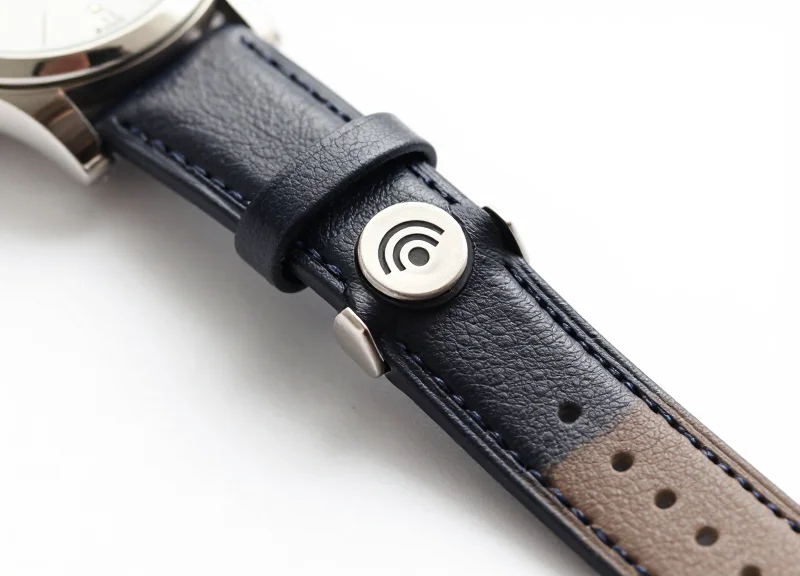
Integrating RFID tags into luxury watch inventory requires a balance between high-frequency security and the preservation of brand aesthetics. Unlike standard retail security tags, luxury-grade RFID solutions utilize ultra-thin, tamper-evident foils and 'butterfly' hang tags that are designed to be nearly invisible or to mimic high-end brand labeling. These tags allow dealers to maintain 24/7 real-time visibility and prevent shrinkage without the bulk of traditional EAS systems that would otherwise detract from the tactile and visual allure of a premium timepiece.
| Tag Type | Form Factor | Visual Impact | Primary Benefit |
|---|---|---|---|
| Tamper-Evident Foil | Ultra-thin adhesive film | Invisible (Case-back placement) | Prevents unauthorized case opening and protects serial numbers. |
| Butterfly Hang Tag | Folded high-quality cardstock | Minimal (Mimics price tag) | Easily scannable during customer fittings without removal. |
| In-Box RFID Insert | Embedded in watch cushion | Zero (Completely hidden) | Ensures the 'Full Set' (box/papers) remains paired with the watch. |
| NFC-Hybrid Smart Card | Encapsulated in warranty card | Functional (Part of kit) | Enables post-sale authentication and digital ownership tracking. |
One of the primary concerns for horologists is the potential for electromagnetic interference with mechanical movements. Modern passive RFID tags operate on frequencies that have zero impact on the balance wheel or hairspring of a mechanical watch. Furthermore, specialized 'on-metal' RFID technology utilizes a microscopic dielectric spacer to prevent the watch’s steel, gold, or titanium casing from acting as a Faraday cage, ensuring perfect read accuracy even when the tag is in direct contact with the metal case-back.
Does the RFID tag affect the watch's movement?
No. Passive RFID tags do not contain batteries and only activate when within range of a reader's signal. They do not emit a magnetic field that could magnetize or disrupt the delicate escapement of a mechanical timepiece.
Can the tags be customized for brand consistency?
Absolutely. High-end boutiques often use 'Brand-Integrated Tagging' where the RFID inlay is embedded inside bespoke leather or parchment hang-tags that match the brand's specific color palette and typography.
How do these tags prevent 'Switch-and-Snap' theft?
Tamper-evident RFID tags are designed to self-destruct if the antenna is broken or peeled. If a thief attempts to swap a real watch for a replica, the system immediately flags the missing signal from the original tag.
Expert Insight: The Shadow Asset Strategy. A unique advantage of RFID in luxury retail is the ability to track 'Shadow Assets'—the box and papers. Because a luxury watch can lose 20-30% of its value if separated from its original documentation, leading dealers embed RFID tags in the warranty booklet and the presentation box. This ensures that the entire 'Full Set' is accounted for, preventing internal shrinkage where components are sold separately on the secondary market.
Calculating the ROI: Why the 40% Shrinkage Reduction is Just the Start

Return on Investment (ROI) for RFID in the luxury watch sector is often miscalculated as a simple 'theft prevention' metric. In reality, the ROI is a composite of direct cost savings and operational leverage. For a dealer carrying $10 million in inventory, a 40% reduction in shrinkage isn't just about 'saving watches'; it's about reclaiming lost margin and reinvesting that capital into higher-turning references. When you factor in the elimination of manual cycle counts and the subsequent reduction in labor overhead, most high-volume dealers see a full technology payback within 12 to 18 months.
| Financial Driver | Traditional Manual Impact | RFID-Enabled Impact | Estimated ROI Contribution |
|---|---|---|---|
| Inventory Shrinkage | 1.5% - 3.0% annual loss | Under 0.5% annual loss | High (Direct Margin Recovery) |
| Audit Labor Costs | 100+ man-hours per month | Under 2 man-hours per month | Medium (Operational Efficiency) |
| Insurance Premiums | Standard high-risk rates | Negotiable 'Tech-Secured' discounts | Low to Medium (Fixed Cost Reduction) |
| Stock Turnover | Limited by data lag | Optimized via real-time data | Very High (Capital Velocity) |
Beyond the balance sheet, there is the 'Expert Tip' of Insurance Leverage: Many leading insurers are now beginning to offer 'Premium Credits' or lower deductibles for dealers who can prove 99% inventory accuracy via automated logs. This effectively turns your security system into a self-funding asset. Furthermore, the accuracy provided by RFID allows for 'Just-In-Time' procurement, ensuring that your capital isn't tied up in slow-moving stock, which can improve overall annual profitability by an additional 5-10%.
Does the cost of RFID tags eat into the ROI?
No. While high-value watches require specialized tags, the cost per tag is negligible (typically under $2) compared to the value of the asset and the labor saved in a single manual audit.
How does RFID impact the 'Opportunity Cost' of sales?
By ensuring 100% stock accuracy, sales associates never lose a sale because they 'couldn't find the watch in the back,' a common issue in manual environments that directly impacts the bottom line.
What is the 'Hidden ROI' of RFID?
The hidden ROI is data-driven buying. Real-time tracking shows which watches are being handled and shown to customers most often, allowing buyers to stock high-demand models before they sell out.
The most significant, yet frequently overlooked, component of RFID ROI is the 'Inventory Velocity' factor. In the luxury market, timing is everything. When RFID provides a real-time heat map of which watches are being moved from the safe to the showroom most frequently, dealers can make aggressive, data-backed decisions on pricing and trade-ins. This compression of the 'Time-to-Sale' cycle ensures that your most expensive assets spend less time in the case and more time generating cash flow.
Implementing RFID: Overcoming Common Deployment Challenges
Implementing RFID in high-end watch retail centers on three critical pillars: precision hardware calibration to mitigate metal-induced signal interference, seamless API integration with existing ERP/POS systems, and meticulous staff training to ensure data hygiene. While the transition from manual barcoding to RFID offers massive efficiency gains, success depends on a strategic rollout that prioritizes environment-specific tuning over 'plug-and-play' assumptions.
| Challenge | Impact on Watch Dealers | Strategic Solution |
|---|---|---|
| Signal Interference | Metallic watch cases and sapphire glass can reflect or absorb RF energy. | Utilizing 'on-metal' specialized tags and circular polarized antennas for 360-degree readability. |
| System Silos | Inventory data in the RFID software doesn't match the live POS system. | Middleware-driven API integration that pushes real-time 'Heartbeat' updates to the ERP. |
| Ghost Reads | Scanners accidentally picking up items in backroom safes or display cases. | Implementation of 'Read Zone' shielding and RSSI (Received Signal Strength Indicator) filtering. |
- Phase 1: RF Site Survey: Conduct a comprehensive spectral analysis of the showroom and vault to identify 'dead zones' and sources of electromagnetic interference.
- Phase 2: Tag-to-Asset Mapping: Develop a serialized naming convention that bridges the gap between your legacy SKU system and the new EPC (Electronic Product Code) standards.
- Phase 3: Middleware Integration: Deploy a robust middleware layer that cleanses raw tag data before injecting it into your retail management system to prevent data bloat.
- Phase 4: Pilot and Pivot: Run a dual-inventory system for 30 days on a subset of stock to calibrate reader sensitivity and refine staff handling protocols.
Expert Tip: The 'Faraday Vault' Strategy. One often overlooked challenge in luxury boutiques is the vault. High-density storage of watches in metal safes creates a 'Faraday cage' effect. To overcome this, leading dealers are installing fixed ceiling nodes inside the vault and using ultra-high-gain hand-held scanners that utilize 'burst-mode' reading. This ensures that even the watch at the very back of the safe is accounted for without moving a single box.
Will RFID interfere with the mechanical movement of the watches?
No. Passive RFID tags operate on radio frequencies that have zero magnetic influence on the hairspring or balance wheel of mechanical movements.
How do we handle 'stray reads' from neighboring stores?
By utilizing 'Zone Logic' in the software, you can set the system to ignore any EPC tags that do not match your specific dealer prefix.
What is the biggest failure point in deployment?
Inadequate training. If staff don't understand tag placement—specifically avoiding placing the tag directly under the metal case back—read accuracy can drop significantly.
The Future of Luxury Retail: RFID, ESL, and the Connected Store

The future of luxury retail is defined by the 'Connected Store,' an intelligent environment where RFID and Electronic Shelf Labels (ESL) work in tandem to create a seamless bridge between physical inventory and digital management. By synchronizing real-time RFID tracking with dynamic ESL displays, watch dealers can automate the entire showroom floor. This means prices are always accurate across all channels, inventory levels are updated the moment a piece is moved, and sales associates can spend 100% of their time on clienteling rather than manual stock-taking or label swapping.
| Operational Metric | Traditional Luxury Boutique | The RFID + ESL Connected Store |
|---|---|---|
| Price Management | Manual, prone to human error | Instant, global updates via ERP |
| Inventory Visibility | Periodic audits/Blind spots | 100% Real-time stock accuracy |
| Customer Engagement | Static info on paper tags | Interactive, QR-linked provenance |
| Security Response | Reactive (detected after theft) | Proactive (alerts on unauthorized movement) |
Does the use of ESL technology detract from the luxury aesthetic?
Modern ESLs for luxury retail are designed with high-resolution e-paper and custom metallic or wood-finish frames to complement high-end displays, offering a cleaner look than smudged paper tags.
How do RFID and ESL interact during a sales presentation?
When a sales associate removes a watch from the case, the RFID sensor detects the movement, and the corresponding ESL can automatically switch to show detailed specifications or 'related models' to the customer.
Can this system integrate with existing CRM and ERP software?
Yes, leading systems use open APIs to sync with your existing management software, ensuring that a price change in your head office is reflected on the showroom floor in seconds.
Unique Insight: The 'Provenance Pulse' Strategy. A truly connected store does more than track stock; it builds trust through transparency. By linking RFID tags to the watch’s digital certificate of authenticity, the ESL can display a 'Verified' badge or a QR code that instantly shows the watch's service history and provenance to a skeptical buyer. In a market where trust is the primary currency, using technology to provide immediate, verifiable proof of a timepiece's history is a competitive advantage that paper tags simply cannot match.
- Infrastructure Audit: Evaluate current Wi-Fi and Bluetooth Low Energy (BLE) coverage to ensure stable communication between RFID readers and ESL hubs.
- Data Synchronization: Link your inventory database so that any change in stock status (Reserved, Sold, Service) automatically triggers an ESL update.
- Interactive Layering: Implement QR codes on the ESLs that lead to exclusive digital content, such as a video of the movement in action or the brand's heritage story.
- Staff Empowerment: Train your team to use the real-time data to answer complex availability questions instantly, turning them from 'clerks' into 'consultants.'