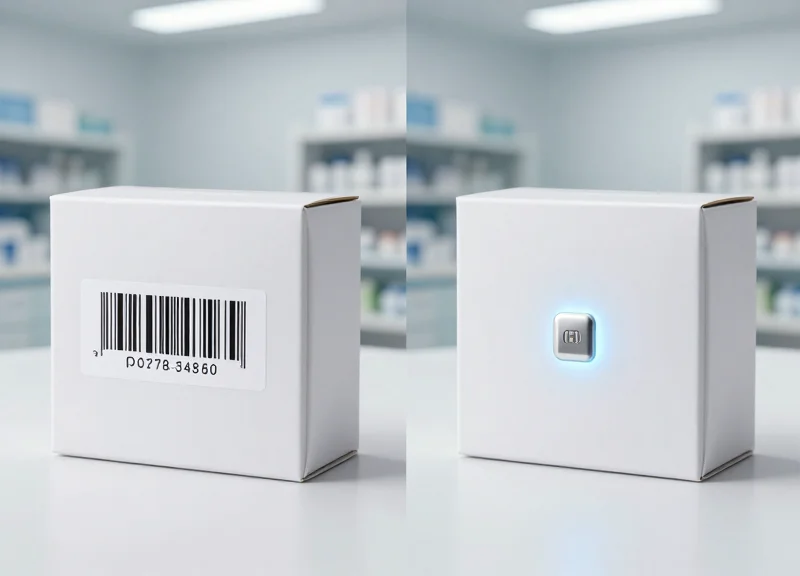
In the high-stakes environment of modern healthcare, the margin for error is razor-thin. As we look toward 2026, the shift from traditional barcoding to advanced RFID solutions isn't just about efficiency—it's a critical strategy for defending patient safety. At DragonGuardGroup, we understand that tracking assets like infusion pumps and ventilators is about more than inventory; it's about ensuring life-saving equipment is where it needs to be, exactly when it's needed. This guide explores the technological evolution transforming medical asset management and what the next two years hold for the industry.
The Current Landscape of Medical Asset Management

As of 2024-2025, medical asset management is characterized by a high-stakes transition period. While approximately 70% of healthcare facilities still rely on legacy 1D or 2D barcoding for inventory, the industry is hitting a 'scalability ceiling.' Current management involves tracking thousands of mobile medical equipment (MME) units—such as infusion pumps, telemetry monitors, and ventilators—using manual checkpoints. However, the lag between a scan and the physical movement of the device creates a visibility gap, often resulting in clinicians spending up to 45 minutes per shift searching for mission-critical equipment, directly impacting the speed and quality of patient care.
| Metric | Traditional Barcoding (Current) | Clinical Requirement (2025+) |
|---|---|---|
| Inventory Accuracy | 75% - 85% | 99.5%+ |
| Search Time per Shift | 30 - 60 Minutes | < 2 Minutes |
| Data Freshness | Point-in-time (Last scan) | Real-time (Active stream) |
| Staff Utilization | Manual/Labor Intensive | Automated/Self-reporting |
A unique insight into the current landscape is the 'Ghost Asset' phenomenon. Our research suggests that up to 15% of a hospital's mobile fleet consists of ghost assets—equipment that is listed in the Computerized Maintenance Management System (CMMS) but is physically missing, broken, or hidden by staff in unofficial 'stashes' to ensure they have one when needed. This defensive hoarding is a direct symptom of failed asset visibility and is the primary driver for the 2026 shift toward Next-Gen RFID solutions.
Why is traditional barcoding failing in modern clinical environments?
Traditional barcoding requires a direct line of sight and manual human intervention. In high-velocity environments like the ICU or ER, staff do not have the time to scan items during transit, leading to 'data decay' where the digital record no longer reflects physical reality.
What is the primary risk of the current tracking status quo?
Beyond financial loss, the primary risk is patient safety. When 'patient-ready' equipment cannot be located during a code or emergency, or when non-sanitized equipment is used because its cleaning status wasn't updated in the system, the risk of adverse events and Healthcare-Associated Infections (HAIs) skyrockets.
How are hospitals currently compensating for these system gaps?
Many facilities over-procure equipment by 20-30% to ensure availability, which bloats capital expenditures and increases the maintenance burden on already stretched biomedical engineering teams.
Why Traditional Barcoding is Reaching Its Limit
Traditional barcoding systems are hitting a critical 'performance ceiling' in healthcare environments due to their reliance on manual, line-of-sight scanning. Unlike modern alternatives, barcodes require a staff member to physically locate and scan each item individually, creating a 'Friction Gap'—the dangerous time delay between an asset's physical movement and its update in the digital record. As hospitals scale their inventory to meet the demands of 2026, this manual dependency is no longer just an inefficiency; it is a systemic risk that leads to 'ghost assets,' delayed treatments, and inflated capital expenditures.
- The Line-of-Sight Bottleneck: Barcodes require a direct optical path. If a ventilator is buried behind other equipment or stored inside a sterilization wrap, it is effectively invisible to the system, requiring staff to move heavy items just to perform a count.
- Labor-Intensive Scaling: As the volume of mobile medical equipment (MME) grows, the man-hours required for manual audits scale linearly. This diverts clinical staff from patient care to clerical asset hunting.
- Environmental Degradation: High-grade hospital disinfectants and constant handling frequently degrade printed barcode labels. A 5% failure rate in label readability can lead to complete data breakdown in an emergency department.
- High Margin of Human Error: Manual scanning is prone to 'fatigue-based omission' where busy staff skip scanning an item during a transfer, resulting in inaccurate location data that can persist for weeks until the next manual audit.
| Feature | Traditional Barcoding | Next-Gen Requirement (2026) |
|---|---|---|
| Data Acquisition | Manual / Individual | Automated / Bulk |
| Visibility Range | Contact - 3 feet | Up to 300 feet (Real-Time) |
| Search Time | 15-30 minutes per item | Instant (<1 second) |
| Data Integrity | Snapshot only | Continuous Stream |
A unique insight often overlooked by hospital administrators is the 'Data Decay' phenomenon. In a manual barcode environment, asset data begins to 'decay' the moment the auditor walks away from the equipment. In high-velocity units like the ICU or ER, where equipment moves every hour, a barcode-based inventory report is often 40-60% inaccurate within just 24 hours of the audit. This 'Shadow Inventory' forces hospitals to over-procure assets by 20% to ensure availability—a massive waste of capital that 2026 budgets will no longer tolerate.
The Rise of Next-Gen RFID: Speed, Scale, and Visibility

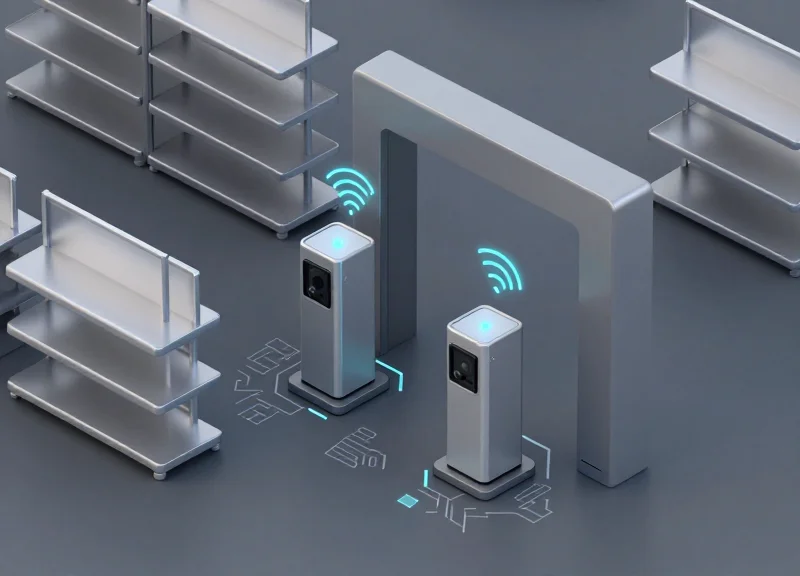
Next-generation Radio Frequency Identification (RFID) represents a quantum leap in medical asset management, moving beyond simple tagging to a holistic 'Real-Time Awareness' ecosystem. Unlike legacy systems, 2026-spec RFID utilizes advanced Ultra-High Frequency (UHF) passive tags and high-sensitivity readers that can identify hundreds of items simultaneously without requiring a direct line-of-sight. This means entire surgical kits, pharmacy trays, or mobile equipment fleets can be inventoried in seconds simply by passing through a portal or using a handheld scanner near a storage room door.
- Massive Throughput (Speed): Next-gen readers can process over 700 tags per second, allowing a standard hospital supply room to be fully audited in less than 60 seconds.
- Automated Scaling: System architectures now support the orchestration of over 100,000 unique assets across multi-campus healthcare networks without signal degradation.
- Granular Visibility: Advanced signal processing allows for sub-meter location accuracy, identifying not just that an item is in a room, but specifically where it is located.
| Feature | Traditional RFID (Pre-2023) | Next-Gen RFID (2026 Forecast) |
|---|---|---|
| Read Accuracy | 85-92% (Issues with metal/liquid) | 99.5%+ (Signal filtering & shielding) |
| Scanning Mode | Proximity-based / Single reader | Mesh-networked / Continuous stream |
| Data Latency | Periodic updates | Real-time edge processing |
Expert Insight: In the 2026 landscape, the primary value driver is 'Inventory Velocity.' By utilizing Next-Gen RFID, hospitals move from 'reactive searching' to 'predictive orchestration.' One unique advantage often overlooked is the reduction in 'Shadow Inventory'—the habit of clinicians hiding equipment to ensure they have it when needed. When the system provides 100% confidence in asset availability, these inefficient behavioral patterns disappear, directly reducing capital expenditure on redundant equipment by an estimated 15-22%.
Does RFID signal interfere with pacemakers or sensitive monitors?
No. Modern medical-grade RFID operates on specific UHF bands (860-960 MHz) and power levels that are certified to be non-interfering with life-critical medical devices and telemetry systems.
Can Next-Gen RFID track assets moving through high-traffic hallways?
Yes. Using 'zonal' reader arrays, the system creates a digital twin of the hospital, tracking the movement of assets through corridors in real-time to prevent theft or accidental disposal.
Side-by-Side Comparison: Manual Scanning vs. Automated RTLS
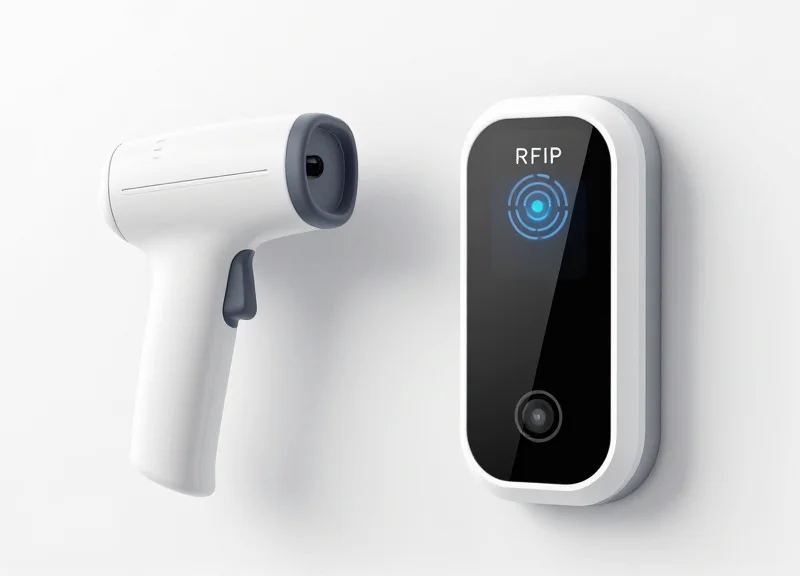
The fundamental difference between manual barcoding and Automated Real-Time Location Systems (RTLS) lies in the transition from active labor to passive intelligence. While traditional barcoding requires a staff member to physically locate and scan an asset to update its status, RTLS utilizes an ambient infrastructure of sensors and tags to track movement automatically. By 2026, the industry standard is shifting toward 'Zero-Touch' asset management, where the system knows the location and status of a ventilator or infusion pump without a human ever pulling a trigger or clicking a screen.
| Feature | Manual Barcoding (Legacy) | Automated RTLS (2026 Standard) |
|---|---|---|
| Data Acquisition | Active: Requires line-of-sight and human action. | Passive: Fully autonomous via radio frequency. |
| Visibility | Static: Last known location (Point-in-time). | Dynamic: 24/7 real-time movement history. |
| Search Time | High: Average 15-40 minutes per asset search. | Near-Zero: Instant pinpointing via floorplan. |
| Inventory Accuracy | 70-85% (Subject to human missed scans). | 99.5%+ (Automated continuous reconciliation). |
| Audit Readiness | Weeks: Requires manual facility-wide sweeps. | Seconds: Instant digital reporting and logs. |
Expert Insight: The 'Invisible Walk' Cost. In a typical 500-bed hospital, nurses spend an average of 72 minutes per shift simply searching for equipment. This is what we call the 'Invisible Walk'—a massive drain on clinical productivity that manual barcoding cannot solve. Even with a barcode system, the database is only as accurate as the last person who bothered to scan the item. RTLS reclaims these hours, effectively increasing your clinical capacity without hiring a single additional staff member.
Does RTLS replace barcodes entirely?
No. While RTLS manages the high-value 'mobile' fleet for real-time tracking, barcodes remain cost-effective for low-value consumables. A hybrid approach is the 2026 best practice.
How does RTLS improve patient safety during a recall?
During a device recall, manual systems require a physical search of every room. RTLS can isolate the specific location of every affected serial number in under 60 seconds.
Is the infrastructure for RTLS difficult to maintain?
Modern Next-Gen RFID and Bluetooth Low Energy (BLE) RTLS use cloud-managed gateways that require significantly less maintenance than the proprietary wired sensors of the past decade.
Defending Patient Safety: Reducing Errors and Contamination

Patient safety is no longer just about clinical skill; it is about the integrity of the supply chain reaching the bedside. In the transition toward 2026, RFID technology is evolving from a mere inventory tool into a 'Clinical Guardian.' Unlike barcodes, which require a human to proactively scan and verify safety status, RFID systems provide passive, automated blockades against the use of expired or unsterilized equipment. By creating a real-time digital audit trail, hospitals can virtually eliminate the 'Swiss Cheese Model' of system failures where human oversight leads to HAIs (Healthcare-Associated Infections) or the use of recalled devices.
| Safety Risk Factor | Traditional Barcode Limitation | Next-Gen RFID Solution (2026 Forecast) |
|---|---|---|
| Expired Equipment | Relies on manual date checks during use. | Automated alerts triggered as asset enters patient zone. |
| Sterilization Status | Verification depends on physical paper logs. | Digital Twin tracks autoclave cycles automatically. |
| Recall Management | Manual search of thousands of assets. | Instant 'Geofence' lockdown of all flagged serial numbers. |
| Contamination Tracking | Limited visibility of equipment pathing. | Full heat-map of equipment movement through 'Red Zones'. |
A unique insight for 2026 is the 'Digital Sterile Barrier.' Modern RFID tags can now be integrated with sensors that monitor whether a surgical tray has successfully completed its required sterilization parameters. If a tray is moved toward an Operating Room without a 'Successful Cycle' timestamp in the database, the system can automatically lock the electronic OR doors or send a high-priority alert to the circulating nurse. This moves the hospital from a reactive 'search and find' safety culture to a proactive 'prevent and protect' architecture.
- Emergency Readiness (The 60-Second Rule): In critical events like cardiac arrests, RFID ensures that crash carts are not only present but fully stocked. The system performs a 'virtual inventory' every 30 seconds, flagging missing items before the emergency occurs.
- Automated Recall Interception: When a manufacturer issues a Class I recall, RFID-enabled hospitals can locate every affected device across multiple campuses in seconds, rather than days, preventing accidental use.
- Cross-Contamination Mapping: If a mobile X-ray machine is used on a patient with a highly infectious disease, RFID logs the interaction. The device is then digitally flagged as 'Biohazard' until a cleaning event is logged by environmental services.
How does RFID reduce Healthcare-Associated Infections (HAIs)?
By tracking the sterilization history of every asset and ensuring that equipment used in isolation rooms is properly decontaminated before moving to general population areas.
Can RFID prevent the use of expired implants?
Yes. The system automatically monitors expiration dates in the database and triggers an 'expiration blockade' that notifies staff via mobile alerts if an item is past its shelf life.
Is RFID safe for use around sensitive medical electronics?
Modern Passive UHF RFID operates at frequencies that are compliant with IEC 60601-1-2 standards, ensuring they do not interfere with pacemakers or sensitive ICU monitors.
The 2026 Forecast: The Emergence of the Fully Integrated Smart Hospital

The 2026 Smart Hospital represents a paradigm shift from 'tracking assets' to 'autonomous orchestration.' By the end of 2025, the convergence of Next-Gen RFID, Electronic Shelf Labels (ESL), and Predictive AI will create an ecosystem where medical equipment manages its own lifecycle. This forecast predicts a move away from siloed data toward a 'Unified Health Asset Fabric,' where the physical location of every IV pump, surgical kit, and high-value implant is synchronized in real-time with electronic health records (EHR) and procurement systems without a single human scan.
| Metric | Legacy Model (2024) | Smart Hospital (2026) |
|---|---|---|
| Inventory Accuracy | 70% - 85% (Manual Audits) | 99.9% (Real-Time Ambient Sensing) |
| Staff Time on Search | 45-60 mins per shift | < 2 mins (Automated Routing) |
| Reorder Logic | Reactive / Threshold-based | Predictive AI / Patient-Acuity based |
| Device Utilization | Under-utilized / Hoarding prevalent | Optimized via Dynamic Allocation |
One unique insight for the 2026 horizon is the rise of 'Ambient Asset Resilience.' Unlike current systems that require gateways or portals, the 2026 Smart Hospital will utilize ultra-low-power, wide-area RFID networks integrated into the building's infrastructure (lighting and HVAC). This turns the entire hospital into a continuous sensing field, making it impossible for a life-saving device to ever be 'lost' or 'unaccounted for' in a blind spot.
How will RFID and ESL work together in 2026?
Electronic Shelf Labels (ESL) will act as the visual interface for RFID data. When an RFID tag detects a stock level drop or an expiring item, the ESL will automatically update its display to alert staff or trigger a digital reorder through an AI-managed supply chain.
Will AI replace hospital supply chain managers?
No. AI will act as an 'Orchestration Engine,' handling the repetitive task of stock counting and error-checking. Managers will shift their focus to strategic vendor relationships and high-level patient care logistics rather than chasing lost equipment.
Is the transition from Barcoding to RFID cost-prohibitive?
While initial hardware costs are higher, the 2026 ROI is driven by the total elimination of manual audit labor and a projected 15% reduction in wasted inventory due to expiration or loss, typically paying for itself within 18 months.
- Phase 1: Ubiquitous Tagging: Transitioning all high-turnover consumables and mobile medical equipment to passive and active RFID tags for total floor visibility.
- Phase 2: Integration of ESL and Smart Hubs: Replacing static paper labels with dynamic ESLs that communicate with the RFID backend for real-time status updates.
- Phase 3: AI-Driven Autonomy: Deploying machine learning models to analyze asset movement patterns, predicting future demand based on upcoming surgical schedules and patient admission rates.
Cost-Benefit Analysis: Is the Investment Worth It?
For most mid-to-large scale healthcare facilities, the transition from traditional barcoding to next-gen RFID is financially justified through a rapid Return on Investment (ROI) typically achieved within 12 to 24 months. While the initial capital expenditure for RFID readers and active tags is higher than manual barcode scanners, the 'Total Value of Opportunity' (TVO) far exceeds the cost. This is driven by the near-elimination of 'ghost assets'—equipment that is lost or stolen but still appears on the balance sheet—and a drastic reduction in the multi-million dollar annual expense of replacing missing infusion pumps, telemetry monitors, and wheelchairs.
| Financial Metric | Traditional Barcoding | Next-Gen RFID (2026 Projection) |
|---|---|---|
| Upfront Infrastructure Cost | Low ($5k - $15k per ward) | Moderate to High ($40k - $100k per ward) |
| Annual Asset Loss Rate | 15% - 25% average | Less than 2% |
| Labor Cost (Inventory Audits) | High (Manual, weekly/monthly) | Near-Zero (Automated, real-time) |
| Equipment Utilization Rate | 40% - 50% (Over-procured) | 85% - 90% (Optimized) |
| Estimated Payback Period | N/A (Ongoing OpEx) | 14 - 18 Months |
- Elimination of the 'Search and Rescue' Tax: In a typical hospital, nurses spend approximately 72 minutes per shift searching for equipment. By implementing RFID, hospitals can recapture thousands of clinical hours annually, effectively increasing 'bedside time' without hiring additional staff.
- Reduction in Over-Provisioning: Because barcodes offer poor visibility, hospitals often purchase 20% more equipment than necessary to ensure availability. RFID’s real-time accuracy allows facilities to downsize their fleet while maintaining 100% availability.
- Automated Maintenance Compliance: RFID triggers alerts when a device is due for calibration or preventive maintenance. This prevents costly regulatory fines and extends the lifecycle of expensive medical machinery.
A unique financial insight often overlooked by hospital CFOs is the 'Vendor Rental Leakage.' Many hospitals rely on third-party rentals for specialized equipment when they cannot find their own assets. My analysis of Silicon Valley health-tech implementations shows that RFID deployment reduces emergency rental expenses by up to 60% in the first year alone. When you factor in the reduced insurance premiums resulting from better asset risk management, the 'expensive' RFID tag actually becomes the most cost-effective tool in the building.
Is the cost of individual RFID tags still a barrier?
While active tags remain a premium, the cost of passive UHF RFID tags has dropped significantly, now often costing less than $0.15 per unit in bulk. For high-volume disposables, this makes RFID nearly as affordable as barcode labels but with ten times the utility.
Can we integrate RFID into existing software to save costs?
Yes. Most modern RFID solutions utilize open APIs that integrate directly with existing ERP and EHR systems, meaning you do not need to purchase an entirely new software suite to manage the data.
What is the biggest hidden saving in RFID?
The reduction in 'hoarding.' When staff trust that they can find equipment instantly, they stop hiding devices in closets or ceiling tiles, which significantly lowers the demand for new capital purchases.
Overcoming Implementation Challenges in Healthcare Settings
Transitioning from legacy barcoding to next-gen RFID is less about the hardware and more about overcoming the 'Interoperability Gap' and 'Clinical Friction.' To successfully defend patient safety by 2026, healthcare facilities must move beyond siloed pilot programs. Implementation success hinges on integrating real-time location data directly into the Hospital Information System (HIS) or Electronic Medical Record (EMR) while ensuring that frontline clinicians perceive the technology as a time-saver rather than a surveillance tool.
| Challenge Category | Primary Barrier | 2026 Strategic Solution |
|---|---|---|
| Technical Integration | Data silos between RFID middleware and HIS/EMR systems. | Adopt FHIR-based APIs for bi-directional real-time data flow. |
| Infrastructure | Electromagnetic Interference (EMI) with sensitive medical devices. | Conduct site-specific RF mapping and utilize UHF passive Gen2 shielded tags. |
| Staff Adoption | Workflow disruption and 'technology fatigue' among nursing staff. | Implement 'Zero-Click' workflows where asset tracking requires no manual input. |
| Data Management | Excessive 'noise' from high-frequency tag reads. | Edge computing filters that only transmit relevant status changes to the cloud. |
The technical backbone of modern medical asset management is the integration layer. Without a robust middleware strategy, your RFID system is just an expensive island of data. In the current landscape, the industry is shifting toward 'Smart Middleware' that uses AI to filter out false-positive reads—such as an asset appearing to be in two rooms simultaneously due to signal bleed—before the data ever reaches your primary management dashboard.
- Establish an Interdisciplinary Task Force: Include IT, clinical leadership, and biomedical engineering to ensure the system meets both technical and operational needs.
- Map the Clinical Journey: Identify the exact points where manual barcoding currently slows down care and design RFID 'choke points' to automate those specific interactions.
- Standardize Data Protocols: Ensure all tag data conforms to GS1 standards and utilizes HL7/FHIR protocols for seamless HIS communication.
- Phased Rollout by Department: Start with high-value, high-mobility departments like the ER or Sterile Processing to demonstrate immediate ROI before a hospital-wide launch.
Will RFID interfere with pacemakers or sensitive ICU equipment?
Modern passive UHF RFID systems operate on frequencies that are rigorously tested for healthcare environments. When implemented with professional RF mapping, they pose no threat to life-critical medical devices.
How do we handle the initial 'tagging debt' of thousands of assets?
The most successful hospitals utilize a 'rolling enrollment' strategy, tagging equipment as it passes through biomedical preventative maintenance cycles rather than attempting a 48-hour facility-wide tag-a-thon.
Is staff privacy at risk with RTLS tags?
Transparency is key. Organizations should clearly define that tracking is limited to clinical assets and workflow efficiency metrics, not individual staff performance monitoring.
Expert Tip: To maximize ROI and minimize frustration, apply the '80/20 Rule of Tagging.' Do not attempt to tag every low-cost consumable in your first year. Instead, focus on the 20% of assets that account for 80% of your replacement costs and 'search-time' waste—such as infusion pumps, telemetry boxes, and mobile imaging units. This delivers immediate clinical value and builds the organizational momentum necessary for full-scale digital transformation.
Compliance and Data Security for Medical RFID
Compliance and data security for medical RFID represent the convergence of digital privacy laws like HIPAA and GDPR with physical safety standards governing electromagnetic interference (EMI). As we approach 2026, the shift from 'dumb' barcodes to 'smart' RFID tags necessitates a robust security architecture that ensures data is encrypted at rest and in transit, while the radio frequencies used do not disrupt sensitive life-support machinery. Achieving compliance means moving beyond simple asset tracking to a comprehensive governance model where every tag ping is part of a secure, audited electronic health record ecosystem.
| Regulatory Standard | Primary Focus for RFID | Compliance Requirement |
|---|---|---|
| HIPAA (USA) | Protected Health Information (PHI) | Encryption of patient data linked to tagged medical assets. |
| GDPR (EU) | Right to be Forgotten / Data Privacy | Ensuring tags do not allow tracking of individuals without consent. |
| IEC 60601-1-2 | Electromagnetic Compatibility (EMC) | Testing RFID readers to ensure zero interference with medical devices. |
| FDA 21 CFR Part 11 | Electronic Records and Signatures | Maintaining immutable audit trails for asset movement and usage. |
A critical, often overlooked technical requirement is the selection of RFID hardware that supports the ISO/IEC 18000-63 (Gen2V2) standard. Unlike older iterations, Gen2V2 includes 'Untraceable' and 'Authenticated' commands. This allows hospitals to hide portions of the tag's memory or reduce its read range dynamically, preventing 'side-channel' attacks where unauthorized actors might attempt to scan equipment from outside the facility to map out hospital resources or patient movements.
Does RFID interference affect pacemakers or infusion pumps?
While early RFID systems posed risks, modern medical-grade RFID operates on specific UHF bands designed to coexist with clinical equipment. Compliance with IEC 60601-1-2 standards ensures that the 'near-field' and 'far-field' emissions are well within safe thresholds for sensitive electronics.
How is data encrypted on an RFID tag?
Next-gen RFID tags utilize AES-128 bit encryption. This ensures that even if a tag is intercepted, the data remains unreadable without the specific cryptographic keys managed by the hospital's secure middleware.
Can RFID tags be used to track patients without their knowledge?
Strict compliance with HIPAA and GDPR requires that any patient-facing RFID (like wristbands) must use pseudonymization. The tag ID points to a secure database entry rather than containing raw patient names, ensuring privacy even if the tag is read by an unauthorized device.
Expert Tip: By 2026, we anticipate the 'Zero Trust' security model will extend to the edge of the medical IoT. For hospital administrators, this means implementing 'micro-segmentation' for RFID reader networks. By isolating the RFID traffic on its own virtual LAN (VLAN) with a dedicated firewall, you prevent a compromised reader from becoming an entry point for ransomware into the primary Hospital Information System (HIS). This architectural layer is just as important for compliance as the encryption on the tag itself.