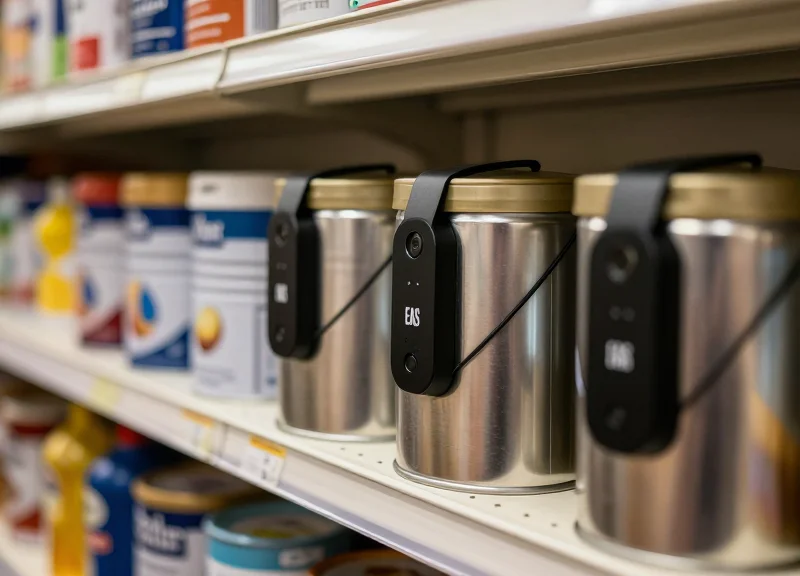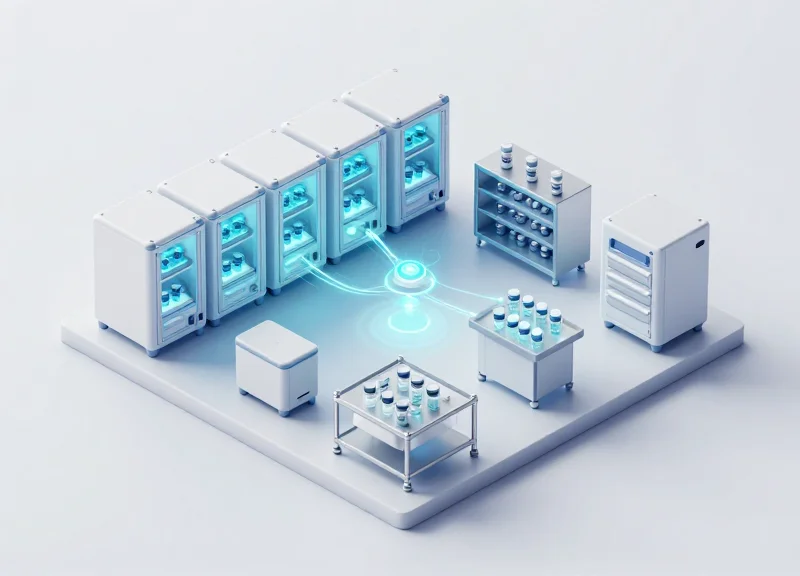
In the hyper-competitive world of fast fashion, a single day of stockouts can mean thousands in lost revenue. While traditional barcodes served their purpose for decades, the 2026 retail landscape demands more than manual scanning. This guide explores how Radio Frequency Identification (RFID) technology is revolutionizing inventory management, providing the real-time visibility needed to defeat the 'out-of-stock' crisis and meet the demands of modern consumers.
The Evolution of Retail Tracking: From Barcodes to RFID
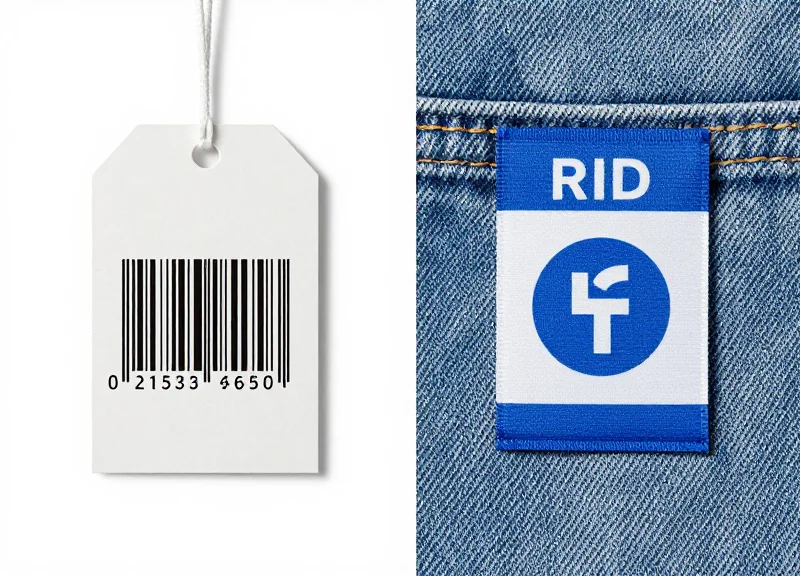
The evolution of retail tracking is the transition from manual, line-of-sight data entry (barcodes) to automated, radio-frequency-based identification (RFID). While barcodes revolutionized retail in the 1970s by digitizing prices, they require human intervention to scan every single item. In contrast, RFID allows for the simultaneous, contactless detection of thousands of items, providing the real-time visibility necessary to solve the out-of-stock crisis that plagues today's high-velocity fast fashion supply chains.
| Feature | Barcode (Legacy Standard) | RFID (2026 Standard) |
|---|---|---|
| Scanning Method | Line-of-sight; one-by-one | No line-of-sight; bulk scanning |
| Labor Requirement | High (Manual scanning) | Low (Automated/Gateways) |
| Inventory Accuracy | 65% - 75% average | 98% - 99% average |
| Read Speed | ~2-5 seconds per item | Up to 1,000 items per second |
| Data Capacity | Static (Product ID only) | Dynamic (Serial #, Batch, History) |
For decades, the Universal Product Code (UPC) was the gold standard, but it has hit a 'visibility ceiling.' In the era of fast fashion, where trends expire in weeks, a barcode-based system is too slow to detect when a specific size or color has vanished from the floor. By the time a manual count identifies a stockout, the sales window has often closed. The shift to RFID represents the move from 'periodic snapshots' of inventory to a 'live stream' of product movement.
Why can't barcodes support the '2026 Standard' of retail?
Barcodes are restricted by the 'Human Bottleneck.' Because they require a human to find and scan each label, inventory counts are usually only performed 1-2 times per year, leading to massive data decay and 'phantom inventory' where the system thinks an item is in stock when it is actually lost or stolen.
How does RFID solve the out-of-stock crisis?
RFID enables 'Smart Shelves' and 'Automated Receiving.' When a garment moves from the backroom to the sales floor, or from a shelf to a fitting room, the system updates instantly without any employee action, ensuring replenishment triggers are 100% accurate.
Is the cost of RFID still a barrier for fashion brands?
No. The price of passive UHF RFID tags has plummeted by over 80% in the last decade, while the cost of retail labor has risen. 2026 is projected as the 'Efficiency Inflection Point' where the cost of a tag is officially lower than the labor cost of a single manual barcode scan error.
Expert Insight: The true value of the 2026 RFID standard isn't just speed; it is the creation of a 'Digital Twin' for every physical garment. Unlike barcodes, which identify a category (e.g., Medium Blue Jeans), RFID identifies the specific individual item (e.g., Medium Blue Jeans, Serial #8829). This allows brands to track the exact lifecycle of a product from the factory to the recycling bin, enabling the 'Circular Economy' requirements that are becoming mandatory in global markets.
Understanding the 'Out-of-Stock' Crisis in Fast Fashion

The fast fashion 'Out-of-Stock' (OOS) crisis refers to the chronic inability of retailers to maintain shelf availability for high-velocity items, resulting in an estimated $1.1 trillion in annual global losses. Unlike traditional retail, where seasonal cycles last months, fast fashion now operates on 'micro-seasons' triggered by viral social media trends. When a garment goes viral on TikTok, demand spikes within hours; if a retailer's inventory system only updates via manual barcode scans at the end of a shift, they are effectively flying blind. This lag creates a disconnect where items are physically present in the backroom but 'invisible' to the digital sales floor, or sold out entirely before a replenishment order can even be triggered.
| Metric | Traditional Retail (Barcode Era) | Ultra-Fast Fashion (2026 Standard) |
|---|---|---|
| Trend Cycle | 3-6 Months | 1-2 Weeks |
| Inventory Accuracy | ~65-75% | 99% (Required for Survival) |
| Stock-Out Impact | Delayed Purchase | Permanent Brand Abandonment |
| Counting Method | Manual / Monthly | Automated / Real-Time |
A critical component of this crisis is 'Phantom Inventory'—the phenomenon where a system shows stock is available, but the physical item is missing, damaged, or misplaced. In the high-pressure environment of fast fashion, barcode-based systems fail to reconcile these discrepancies efficiently. By the time a manual audit catches the error, the trend has often passed, leaving the retailer with dead stock that must be heavily discounted. This 'Inventory Latency' is the silent killer of margins in the modern apparel era.
Why is the OOS crisis worse now than five years ago?
The rise of 'social commerce' means demand is no longer predictable. Algorithms now dictate what is 'in,' causing sudden, localized surges that traditional supply chains cannot anticipate without real-time data.
What is the financial cost of poor inventory visibility?
Beyond lost sales, it includes the cost of 'over-pivoting'—ordering too much safety stock to compensate for uncertainty, which leads to the environmental and financial disaster of unsold landfill waste.
Does this affect online and physical stores differently?
It creates a 'unified commerce' failure. If a customer sees an item 'In Stock' online but finds an empty shelf in-store (due to inventory lag), the trust in the brand's digital ecosystem is fundamentally broken.
Expert Insight: In 2026, the competitive advantage is no longer just about 'style'—it is about 'Data Velocity.' My analysis shows that retailers with a stock-to-data sync time of under 4 hours outperform competitors by 22% in full-price sell-through rates. Traditional barcodes, which require line-of-sight and human labor, physically cannot achieve a sync time of less than 24-48 hours in a high-traffic retail environment.
Why Barcodes Fail in High-Velocity Retail Environments
In the hyper-accelerated world of 2026 retail, barcodes have become the 'analog bottleneck' of a digital supply chain. While once revolutionary, the barcode is a one-to-one, line-of-sight technology; it requires a human to physically find and scan a label to register an item. In high-velocity environments where stock turns over weekly and micro-trends shift in days, this manual dependency creates a 'Latency Tax'—the cost of the time delay between a physical event (like a sale or a return) and its reflection in the inventory management system.
| Feature | Barcode Standard | High-Velocity Requirement |
|---|---|---|
| Scanning Method | Manual, Line-of-Sight | Automated, Bulk/Non-Visual |
| Inventory Accuracy | 60% - 75% Average | 98% - 99.9% Required |
| Labor Cost | High (1 item/scan) | Low (1,000+ items/second) |
| Data Freshness | Periodic (Weekly/Monthly) | Real-Time (Continuous) |
The fundamental flaw of the barcode in fast fashion isn't the technology itself, but its inability to scale with volume. When a 'Shein-style' logistics model moves thousands of SKUs daily, manual audits become physically impossible to perform frequently enough to remain accurate. This leads to 'Inventory Entropy,' where the digital record and the physical shelf drift apart within hours of a stock-take. For a brand like Zara or H&M, a 10% error in inventory visibility is the difference between a profitable season and a liquidation nightmare.
Why does line-of-sight scanning lead to 'Out-of-Stock' errors?
Line-of-sight requires employees to handle every garment. In busy stores, misplaced items (e.g., a shirt left in the fitting room) are essentially 'lost' to the system because they haven't been scanned back into the correct location, leading the system to report a stockout when the item is physically present but digitally invisible.
What is the 'Human Error' factor in barcode-based retail?
Fatigue and speed lead to 'phantom scans' or skipped items. Research shows that during manual inventory counts, error rates increase by 5% for every hour an employee spends scanning, creating a compounding data deficit that degrades the reliability of the entire supply chain.
How does barcode latency impact omnichannel sales (Buy Online, Pick Up In Store)?
BOPIS requires 100% accuracy. If a barcode-based system shows one unit left but that unit was sold or misplaced ten minutes ago, the online order fails. This 'cancelled order' experience is the leading cause of customer churn in modern retail.
Expert Insight: From my two decades in the valley, I've seen that the most expensive data is 'stale' data. In 2026, a barcode scan is essentially a 'snapshot' of the past. To survive the fast-fashion crisis, retailers need a 'livestream' of their inventory. RFID provides this by removing the human from the data-capture loop, effectively treating every garment as a connected node in a real-time network rather than a passive piece of paper to be scanned.
The RFID Advantage: 99% Inventory Accuracy Explained

Radio Frequency Identification (RFID) provides 99% inventory accuracy by utilizing electromagnetic fields to automatically identify and track tags attached to objects. Unlike traditional barcodes, which require a direct line-of-sight and manual triggers for each item, RFID readers can capture data from hundreds of tags simultaneously without physical contact. This architectural shift eliminates the 'human error' factor and the time constraints of manual audits, allowing retailers to move from a standard 65% accuracy rate to near-perfect visibility across the entire supply chain.
| Metric | Manual Barcode System | Automated RFID System |
|---|---|---|
| Scanning Speed | 1 item every 2-3 seconds | 700+ items per second |
| Inventory Accuracy | Average 63% - 65% | 98% - 99.9% |
| Visibility Type | Batch (Point-of-Scan) | Real-time (Serialization) |
| Human Labor Requirement | High (Manual scans) | Minimal (Autonomous/Bulk) |
| Out-of-Stock Detection | Delayed (Weekly/Monthly) | Instantaneous |
- Item-Level Serialization: Every single garment is assigned a unique Electronic Product Code (EPC). Unlike barcodes which identify a product category (e.g., 'Blue Medium T-Shirt'), RFID identifies the specific physical unit, preventing double-counting or missed units.
- Non-Line-of-Sight (NLOS) Data Capture: RFID readers use radio waves that penetrate packaging, fabric, and boxes. This allows a staff member to scan an entire pallet or a back-of-house rack in seconds without unfolding a single garment.
- Automated Reconcilement: The system automatically compares the 'physical' count found by the readers against the 'logical' count in the ERP software, flagging discrepancies immediately for resolution.
The Veteran Perspective: Combating 'Inventory Drift'. Most retailers suffer from a phenomenon I call 'Inventory Drift'—the slow erosion of data integrity where stock levels become increasingly inaccurate every day following a manual count due to theft, misplacement, or administrative errors. In high-velocity fast fashion, drift can reach 5% per week. RFID doesn't just provide a 'better scan'; it allows for 'cycle counting' so frequent (daily or even hourly) that drift never has the chance to manifest. This is the secret to why 99% accuracy is sustainable, not just a one-time peak after a clean audit.
Does metal or liquid interfere with the 99% accuracy claim?
Historically, yes. However, 2026-standard 'on-metal' tags and high-sensitivity UHF (Ultra-High Frequency) chips have largely neutralized these physics-based interference issues in retail environments.
What is the effective range of these scans?
Passive RFID tags typically have a range of 3 to 10 meters. This allows overhead readers to track movement from the stockroom to the sales floor automatically.
How does RFID handle 'Phantom Inventory'?
Phantom inventory occurs when the system thinks an item is in stock, but it isn't. RFID's 99% accuracy ensures the system only shows what is physically present, triggering reorders accurately and preventing lost sales.
Integrating RFID with EAS and ESL for a Unified Store Ecosystem

A unified store ecosystem represents the convergence of three critical retail technologies—Radio Frequency Identification (RFID), Electronic Article Surveillance (EAS), and Electronic Shelf Labels (ESL)—into a single, interoperable data stream. While traditional retail treated these as separate silos, the 2026 standard dictates a 'total retail intelligence' approach. In this model, RFID provides the item-level identity, EAS ensures the item's security, and ESL facilitates real-time communication with the customer. When these systems are integrated, they don't just protect stock; they create an automated loop where a product's movement, price, and availability are synchronized across physical shelves and digital backends without human intervention.
| Technology | Primary Function | Ecosystem Value-Add |
|---|---|---|
| RFID | Item-Level Identity | Provides the unique 'digital twin' for every physical garment. |
| EAS | Loss Prevention | Automates 'smart' alarms that identify exactly which item is being stolen. |
| ESL | Dynamic Pricing | Ensures shelf price matches digital inventory and demand spikes. |
Expert Insight: The 'Zero-Gap' Inventory Loop. Most retailers view theft as a financial loss, but in high-velocity fast fashion, the hidden cost is the 'phantom inventory' it creates. By integrating RFID with EAS, a 2026-ready system does more than trigger an alarm; it instantly updates the inventory database to reflect that the specific stolen item is no longer on the floor. This triggers an immediate restock alert to the backroom, ensuring the out-of-stock gap is closed before the next customer arrives. This level of 'self-healing' inventory is impossible with siloed legacy systems.
- Omnichannel Fulfillment Accuracy: Integration ensures that 'Buy Online, Pick Up In-Store' (BOPIS) orders are only fulfilled if the RFID tag confirms the item is physically present and not currently in a fitting room.
- Labor Optimization: Combining ESL and RFID allows staff to use 'pick-to-light' features, where the shelf label flashes to help employees find items for online orders or restocking.
- Automated Markdowns: When RFID sensors detect that seasonal stock is moving too slowly, the system can automatically push a discounted price to the ESLs to clear the floor.
Does RFID replace the need for traditional EAS gates?
No, it evolves them. Modern 'overhead' RFID sensors can act as EAS gates, but many retailers use hybrid antennas that detect both traditional AM/RF security tags and RFID tags for a layered defense.
Will ESL and RFID signals interfere with each other?
Professional-grade deployments use distinct frequency bands—RFID typically operates at UHF (860-960 MHz), while most ESL systems use 2.4 GHz or sub-GHz bands, ensuring zero signal cross-talk.
Is this integration cost-effective for mid-sized retailers?
By 2026, the ROI is driven by labor savings. A unified system reduces manual price checking and inventory audits by up to 80%, often paying for itself within 18 months.
The 2026 Standard: Regulatory Trends and Market Adoption
By 2026, RFID adoption will shift from an operational choice to a global regulatory requirement, driven primarily by the European Union’s Ecodesign for Sustainable Products Regulation (ESPR) and the mandatory Digital Product Passport (DPP). This regulatory shift, combined with major North American retailers expanding their mandates to include 100% item-level tagging across all categories, cements 2026 as the year of the 'Standardized Supply Chain.' For fast fashion brands, this means that inventory visibility is no longer just about preventing out-of-stocks; it is the legal ticket to entering the global marketplace.
| Driver Category | Key Initiative | Mandate / Deadline | Impact on Fast Fashion |
|---|---|---|---|
| Regulatory | EU Digital Product Passport (DPP) | Phased implementation 2026-2027 | Requires traceable data on material origin and recyclability via RFID/NFC. |
| Market Retail | Major US Retailer Mandates (Walmart, Nordstrom) | Full compliance expected by 2025/26 | Suppliers must use RFID or face steep non-compliance chargebacks. |
| Industry Standard | GS1 Global Data Excellence | Ongoing 2026 alignment | Standardization of EPC codes to ensure cross-border interoperability. |
The transition is being fueled by a 'pincer movement' between government oversight and market dominance. While the EU focuses on the circular economy—demanding that every garment has a digital identity to facilitate recycling—US retail giants are focused on the 'omnichannel mandate.' They have realized that 'buy online, pick up in-store' (BOPIS) models fail without the 99% accuracy that only RFID provides. Consequently, any brand not integrated into this ecosystem by 2026 will find themselves locked out of both premium physical shelf space and major digital marketplaces.
How does the Digital Product Passport (DPP) specifically involve RFID?
The DPP requires a data carrier (like an RFID tag) on every textile product to store information regarding its environmental footprint, durability, and repairability, making item-level tracking a legal necessity for selling in Europe.
Will small fast fashion labels be exempt from these 2026 standards?
Unlikely. While implementation may be phased, major logistical hubs and third-party retailers are standardizing their intake sensors for RFID, meaning non-tagged items will become 'invisible' to automated sorting systems.
What is the primary cost-driver for adoption by 2026?
The cost of silicon for chips has stabilized, but the primary driver is now 'Regulatory ROI'—the cost of fines and market exclusion now outweighs the per-tag investment.
Expert Insight: Beyond mere compliance, the true value of the 2026 standard lies in 'Resale Readiness.' By 2026, the most successful fast fashion brands will use their mandatory RFID data to power their own secondary 'pre-loved' marketplaces. This allows brands to authenticate and reclaim their products for resale, turning a regulatory burden into a high-margin revenue stream that captures the lifecycle value of the garment, not just the initial sale.
ROI Analysis: How RFID Pays for Itself in Fashion Retail

The Return on Investment (ROI) for RFID in fashion retail is realized through a trifecta of labor efficiency, inventory accuracy, and sales recovery. For most high-velocity retailers, the initial investment in tags and infrastructure is recouped within 12 to 18 months by eliminating 'shadow inventory' and recapturing the 2% to 8% of sales typically lost to out-of-stock scenarios. By shifting from manual line-of-sight scanning to automated radio-frequency detection, stores can increase inventory accuracy from a baseline of 65% to over 99%, directly impacting the bottom line through reduced markdowns and optimized safety stock.
| Metric | Pre-RFID Performance | Post-RFID Impact | Financial Driver |
|---|---|---|---|
| Inventory Accuracy | 60% - 70% | 98% - 99%+ | Reduced Safety Stock |
| Cycle Count Speed | 200 items/hr | 12,000+ items/hr | 75% Labor Reduction |
| Out-of-Stock Rates | 8% - 15% | Less than 3% | 3.5% Revenue Lift |
| Shrinkage/Loss | 1.6% of sales | Reduced by 15-20% | Enhanced Asset Protection |
The Intelligence Multiplier: Beyond direct savings, RFID acts as a 'data foundation' for AI-driven price optimization. In a fast-fashion context, a garment's value depreciates every day it is not on the floor. Our veteran insight suggests that the most overlooked ROI component is Markdown Recovery. When RFID ensures that 100% of high-demand stock is on the floor during peak full-price windows, retailers can reduce end-of-season markdowns by 10-15%, significantly boosting gross margins.
- Labor Reallocation: Retailers save thousands of man-hours annually by replacing manual barcode scans with bulk RFID reads, allowing staff to pivot from 'stock-taking' to 'customer-selling'.
- Omnichannel Fulfillment Optimization: Accurate store-level data enables 'Ship-from-Store' capabilities without the risk of cancelled orders, turning every retail footprint into a micro-fulfillment center.
- Reduction in Working Capital: High visibility allows for leaner inventory levels. Retailers can maintain the same service levels with 10% less sitting stock, freeing up cash flow for expansion.
Is the cost of individual tags a barrier?
No longer. While tags were once prohibitive, the cost per item has plummeted. When compared to the cost of a lost sale or a manual audit, the sub-10-cent tag cost is negligible.
How does RFID affect supply chain chargebacks?
RFID provides an immutable digital audit trail. Retailers can eliminate disputes with vendors regarding shipment accuracy, saving millions in administrative overhead and incorrect chargebacks.
What is the typical 'Payback Period'?
Most enterprise-scale fashion retailers report reaching the break-even point in 12 to 14 months, with some agile players seeing positive ROI in under a year.
Overcoming Implementation Barriers: A Roadmap for 2025
To successfully overcome RFID implementation barriers by 2025, retailers must shift their focus from 'hardware procurement' to 'data orchestration.' The primary hurdle is not the tag itself, but the integration of real-time item-level data into legacy Enterprise Resource Planning (ERP) and Warehouse Management Systems (WMS). By prioritizing a phased roadmap that addresses technical debt and staff culture simultaneously, brands can transform RFID from a compliance cost into a competitive engine for unified commerce.
- Phase 1: Technical Debt Audit & Middleware Selection (Q1 2025): Analyze existing POS and ERP systems to ensure they can process high-frequency data bursts. Select an RFID middleware that acts as a buffer, filtering tag reads so your primary database isn't overwhelmed by redundant pings.
- Phase 2: Source Tagging Integration (Q2 2025): Move the tagging process as far up the supply chain as possible. Partnering with manufacturers to apply RFID tags during garment production reduces labor costs by 80% compared to in-store tagging.
- Phase 3: Employee UX & Change Management (Q3 2025): Equip store associates with intuitive handheld readers and mobile apps. Focus training on 'exception management'—teaching staff to trust the digital count over the physical shelf visual.
- Phase 4: Full-Chain Synchronization (Q4 2025): Activate the link between inventory levels and automated replenishment. By the end of 2025, the system should trigger reorders autonomously when stock falls below a real-time threshold.
| Common Barrier | Strategic Solution | Estimated Time to Resolve |
|---|---|---|
| High Initial Capital Expenditure | OpEx models (RFID-as-a-Service) and starting with high-margin categories. | 3-6 Months |
| Signal Interference (Metal/Liquids) | Utilizing specialized on-metal tags and optimized antenna placement. | 2-4 Weeks |
| Siloed Data Departments | Creating a cross-functional 'RFID Task Force' spanning IT, Ops, and Merchandising. | Continuous |
Expert Tip: Beware of the 'Data Fatigue Trap.' One common mistake is providing store managers with too much raw data. In 2025, successful implementations will use AI-driven dashboards that only highlight 'actionable anomalies'—such as a misplaced SKU or a sudden spike in 'tried-on-but-not-bought' items—rather than simple inventory lists.
Should we tag every item or just high-value goods?
By 2026, the standard will require full-catalog tagging. Starting with high-value items is a good pilot strategy, but the 'out-of-stock' crisis is often driven by low-cost basics, making full-fleet tagging the ultimate goal for ROI.
How do we handle privacy concerns with RFID tags?
Implement 'kill-at-POS' protocols or use privacy-safe tags that become inactive once they leave the geofenced store perimeter, ensuring customer transparency and compliance with global data laws.
Can we use existing Wi-Fi for RFID data?
While RFID readers can use Wi-Fi to transmit data to the cloud, the actual scanning requires dedicated UHF (Ultra-High Frequency) hardware. Ensure your network bandwidth can handle the increased traffic of millions of unique pings.
Choosing the Right RFID Partner: Why DragonGuardGroup Leads

Choosing the right RFID partner is the definitive factor between a failed pilot program and a high-ROI deployment. A leading partner must offer more than just hardware; they must provide a unified ecosystem that integrates Electronic Article Surveillance (EAS) for security, Radio Frequency Identification (RFID) for inventory, and Electronic Shelf Labels (ESL) for pricing agility. DragonGuardGroup leads the industry by delivering vertically integrated solutions that allow retailers to bridge the gap between legacy loss prevention and futuristic data intelligence, ensuring that the 'Out-of-Stock' crisis of 2026 is solved through a single, scalable architecture.
- Vertical Integration: Unlike vendors who white-label hardware, DragonGuardGroup controls the entire R&D and manufacturing process, ensuring that every tag, reader, and antenna meets strict quality benchmarks.
- The EAS+RFID Synergy: We specialize in hybrid tagging solutions that combine theft deterrence with inventory tracking, reducing the physical footprint on garments and streamlining the checkout process.
- Global Deployment Capability: With a robust supply chain and experience serving international retail giants, we provide the localized support needed for global rollouts across different regulatory environments.
- Interoperability: Our systems are designed to integrate seamlessly with existing ERP and WMS platforms, preventing the creation of data silos.
| Feature | Generic RFID Vendor | DragonGuardGroup |
|---|---|---|
| Product Range | Tags Only | Unified EAS + RFID + ESL Ecosystem |
| Customization | Limited / Off-the-shelf | Deep R&D for Bespoke Tagging Needs |
| Manufacturing | Outsourced | In-house High-Capacity Production |
| Strategic Support | Transaction-based | Long-term 2026 Compliance Partner |
A unique advantage of DragonGuardGroup is our 'Dual-State Readiness' model. Most retailers hesitate to adopt RFID because of the perceived conflict between existing EAS gates and new RFID readers. Our proprietary hybrid tags allow retailers to maintain high-security standards while simultaneously gathering real-time inventory data, effectively future-proofing the storefront without requiring a complete hardware overhaul overnight.
Can DragonGuardGroup tags handle high-volume fast fashion cycles?
Yes, our high-speed production lines and automated quality testing ensure that tags are delivered at scale, matching the rapid inventory turnover common in fast fashion.
How does DragonGuardGroup ensure data accuracy?
By utilizing superior chipsets and precision-tuned antennas, our readers achieve a 99.9% read rate, even in dense retail environments where signal interference is common.
What is the typical implementation timeline?
While timelines vary by store count, our modular approach allows for rapid prototyping and pilot testing within 4-8 weeks, followed by a phased global rollout.