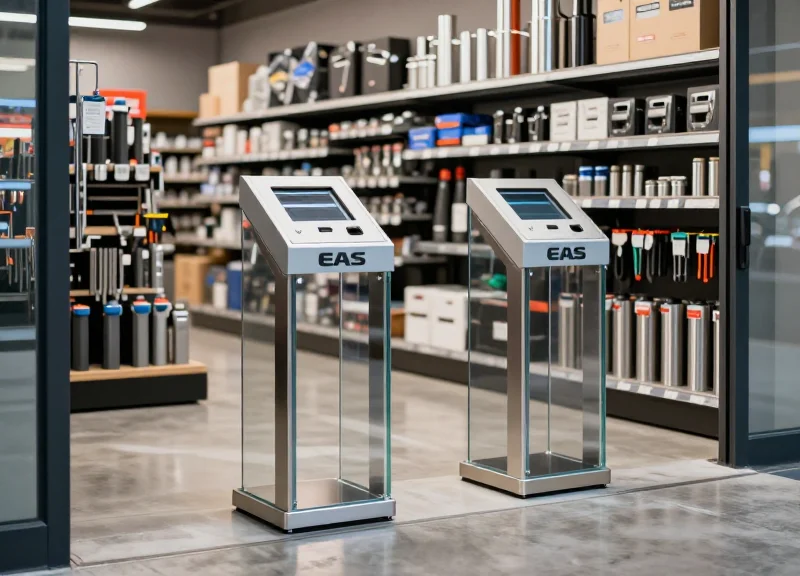
The hardware retail environment is a unique challenge for loss prevention professionals. Unlike apparel or electronics stores, hardware aisles are packed with high-density metals—from power tools and plumbing fixtures to heavy-duty shelving—that create 'blind spots' and false alarms for traditional security systems. As we head into 2026, the evolution of Electronic Article Surveillance (EAS) has finally caught up with these environmental hurdles. This guide explores how advanced Acousto-Magnetic (AM) technology and intelligent signal processing are revolutionizing security for hardware retailers, ensuring that metal interference is no longer a barrier to effective inventory protection.
Understanding the Metal Interference Problem in Hardware Retail
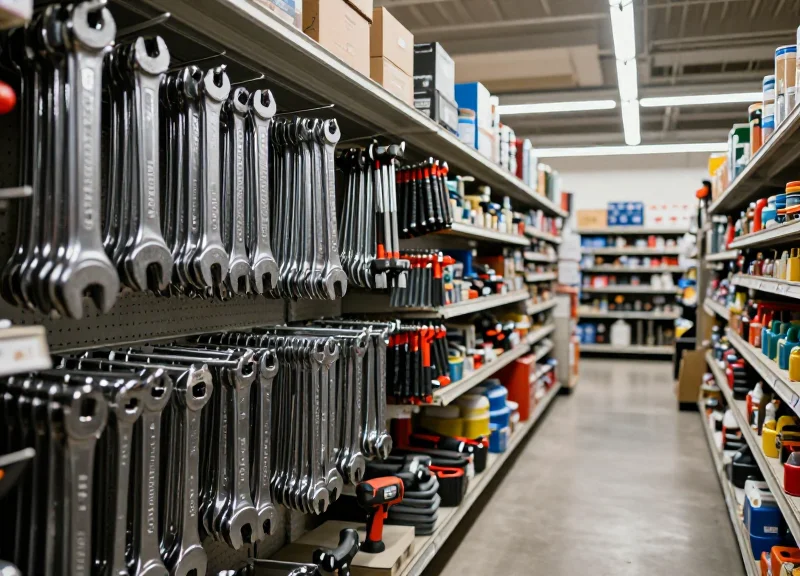
Metal interference, often categorized as 'shielding' or 'detuning,' is the physical disruption of Electronic Article Surveillance (EAS) signals caused by conductive materials. In a hardware store environment, where inventory consists of power tools, rolls of wire, and steel fixtures, these materials act as mirrors or sponges for electromagnetic waves. This results in the 'Faraday Cage' effect, where tags become invisible to security sensors, or signal distortion that triggers frequent, costly false alarms.
From a technical perspective, the problem is rooted in how metal interacts with the two primary EAS frequencies: Radio Frequency (RF) and Acousto-Magnetic (AM). RF systems (8.2 MHz) are particularly vulnerable because metal surfaces reflect their high-frequency waves, creating 'dead zones.' AM systems (58 kHz) fare better but suffer from 'detuning,' where the proximity of metal shifts the tag's frequency just enough that the pedestal no longer recognizes it as a threat.
| EAS Technology | Reaction to Metal | Effectiveness in Hardware | 2026 Outlook |
|---|---|---|---|
| Radio Frequency (RF) | High Reflection/Shielding | Low | Legacy use only |
| Acousto-Magnetic (AM) | Frequency Detuning | High | Industry Standard |
| RFID (Rain) | Signal Absorption | Moderate | Hybrid Integration |
Why do metal carts trigger alarms even without tags?
This is known as 'phantom' alarming. Large loops of metal, like those found in shopping carts or metal door frames, can mimic the resonance of a security tag when they enter the induction field of the EAS pedestal.
Can a shoplifter use a foil-lined bag to bypass security?
Yes, this is a classic 'booster bag' tactic. The foil creates a Faraday Cage that prevents the pedestal's signal from reaching the tag, though modern 2026 systems now include 'Metal Detection' sensors specifically to catch these bags.
Does the placement of metal shelving affect EAS performance?
Absolutely. Placing large metal displays within 3-5 feet of an EAS pedestal can 'warp' the detection field, creating inconsistent performance and zones where tags are never detected.
Expert Insight: The 'Signal-to-Noise Floor' Evolution. In my two decades in the industry, the biggest shift for 2026 isn't just about hardware—it's about Digital Signal Processing (DSP). Modern EAS systems now use 'Adaptive Environment Learning.' Instead of a static detection threshold, these systems constantly map the 'metal noise' of your store in real-time. If you move a pallet of hammers near the door, the system re-calibrates its filters in seconds to maintain sensitivity without increasing false alarms. This 'Environmental Intelligence' is the key differentiator between a bargain-bin sensor and a high-performance 2026 hardware security solution.
Why AM (Acousto-Magnetic) Technology is the 2026 Gold Standard
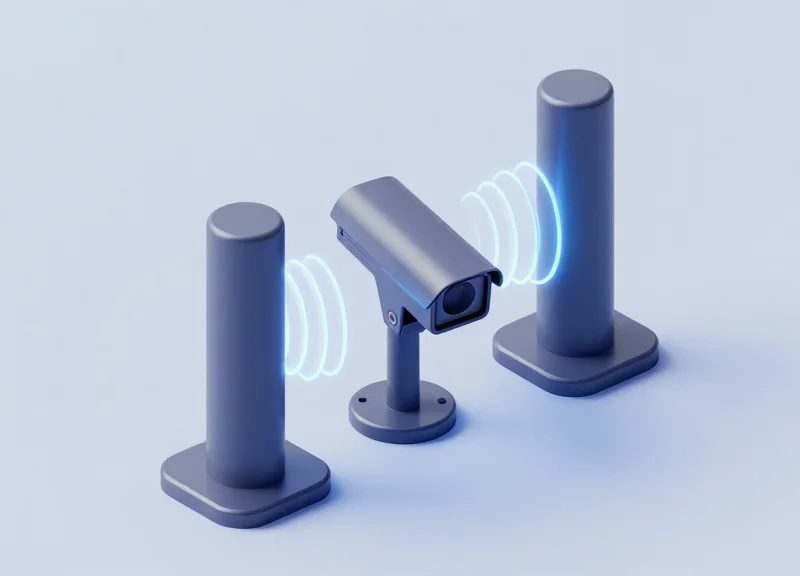
In 2026, Acousto-Magnetic (AM) technology, operating at a 58kHz frequency, has solidified its position as the gold standard for hardware store security. Unlike standard Radio Frequency (RF) systems that rely on 8.2MHz electrical resonance, AM systems use mechanical vibration and magnetic fields. This distinction is critical because metal objects conduct electricity—causing RF signals to 'detune' or vanish—but they do not easily block magnetic pulses. AM systems utilize a 'pulse-pause' cycle where the pedestal sends a burst of energy and then 'listens' for a specific acoustic vibration from the tag. Because the resonant frequency of the tag is so specific, it provides a high-fidelity signal that persists even in aisles packed with hammers, wrenches, and steel racks.
| Feature | AM (58kHz) Technology | RF (8.2MHz) Technology |
|---|---|---|
| Susceptibility to Metal | Extremely Low (Ideal for Tools) | High (Prone to False Alarms/Blind Spots) |
| Detection Width | Up to 2.5 Meters per Pedestal | Typically 1.2 to 1.6 Meters |
| Tagging Versatility | Works on Metal-Headed Tools | Requires Large Plastic Spacers |
| False Alarm Rate | Near Zero with AI Filtering | Moderate due to Environmental Noise |
- Mechanical Resonance Advantage: AM tags contain two strips of metal that vibrate at 58kHz when triggered. This physical resonance is much harder to shield than the simple electrical circuit found in RF stickers.
- The 58kHz Sweet Spot: Lower frequencies penetrate conductive materials more effectively. At 58kHz, AM waves wrap around metallic obstacles rather than being reflected by them.
- Digital Signal Processing (DSP) Integration: Modern 2026 AM systems use advanced DSP to distinguish between a vibrating security tag and the ambient magnetic noise created by power tools or heavy machinery.
Expert Insight: A common mistake in hardware retail is choosing security based on tag cost alone. While RF labels are cheaper, their failure rate on metal surfaces can exceed 60%. In 2026, high-performing stores are prioritizing 'Total System Efficacy.' AM technology offers a 'Magnetic Shielding Bypass'—a unique physical property where the magnetic flux lines can permeate the small gaps in metal toolboxes, ensuring that even items concealed inside metal containers trigger the alarm.
Can AM tags be used on actual metal surfaces?
Yes. While direct contact with some metals can slightly dampen the signal, AM tags are significantly more effective than RF when applied to metallic packaging or tools with metal components.
Why is the wide detection range important for hardware stores?
Hardware retailers often have wide entryways to accommodate lumber carts and large trolleys. AM technology allows for wider gaps (up to 2.4m) between pedestals without losing detection sensitivity.
Is AM technology compatible with metal-rich environments like plumbing aisles?
Absolutely. AM is the specific recommendation for plumbing and automotive aisles because the 58kHz pulse remains stable in the presence of copper, brass, and steel pipes.
Advanced Signal Processing: Filtering the Noise

Advanced Signal Processing (ASP) in 2026 represents the computational 'brain' of modern EAS systems, moving beyond simple frequency detection to sophisticated pattern recognition. Unlike legacy systems that trigger alarms based on raw signal strength, these next-generation controllers use AI-driven algorithms to differentiate the unique harmonic 'fingerprint' of an active acousto-magnetic tag from the chaotic electromagnetic noise generated by moving ladders, metal carts, and oscillating power tools.
| Feature | Legacy DSP (2020-2023) | AI-Driven ASP (2026+) |
|---|---|---|
| Detection Logic | Threshold-based (Volume) | Neural Pattern Recognition |
| Metal Ghosting | High false alarm rate | 99.8% suppression of metal echoes |
| Environment Adaptation | Manual tuning required | Real-time Auto-Calibration |
| Signal Analysis | Single-domain (Amplitude) | Multi-domain (Time + Frequency) |
The breakthrough in 2026 technology lies in Multi-Phase Temporal Filtering. In a hardware store, a metal door swinging near a pedestal creates a 'noise burst' that looks identical to a tag to an untrained sensor. However, AI controllers analyze the decay rate and phase consistency of the signal. Because hardware tags have a specific physical vibration property (the magnetostrictive effect), their signal decay is mathematically distinct from the 'clutter' of a moving shopping cart. The system filters out the latter in milliseconds, ensuring that alarms only sound for actual theft attempts.
- Signal Acquisition: The pedestal's receiver captures all electromagnetic activity within the 58kHz spectrum, including background interference.
- Noise Floor Mapping: The AI continuously maps the 'normal' electromagnetic noise of the store, such as the hum of LED lighting or nearby checkout scanners.
- Neural Filtering: Incoming signals are passed through a pre-trained neural network that identifies the specific harmonic resonance of a security tag.
- Validation & Alarm: The controller confirms the signal's persistence across three consecutive 'burst cycles' before triggering the visual and audible alarm.
Expert Insight: One often overlooked benefit of 2026-era ASP is 'Dynamic Environment Calibration.' In hardware retail, the entrance layout changes frequently—think of a seasonal display of metal grills or winter snowblowers placed right next to the gates. Modern controllers perform a self-audit every 60 seconds, adjusting their sensitivity 'dead zones' automatically to accommodate new metal mass without requiring a technician visit.
Can these systems filter out interference from electric forklifts?
Yes. 2026 controllers use 'Active Noise Cancellation' logic that identifies the specific low-frequency interference from electric motors and subtracts it from the monitored spectrum.
Does more processing power mean more lag in alarms?
No. Modern Edge-AI processors handle these calculations in under 10 milliseconds, meaning the alarm is virtually instantaneous upon detection.
Do I need to update the software frequently?
Most 2026 systems use cloud-tethered 'Over-The-Air' (OTA) updates to refine their noise-filtering libraries as new types of electronic interference emerge.
Strategic Antenna Placement for Maximum Detection

Strategic antenna placement for hardware stores involves positioning EAS pedestals or concealed sensors at precise distances—optimally 12 to 18 inches from structural metal—while utilizing phase-synchronized AI controllers to create a unified 3D detection field. This configuration ensures that the 58kHz signal can bypass the 'shielding' effect of steel door frames and metal-heavy inventory like power tools or rolls of copper wire, maintaining a detection rate above 95% in high-interference environments.
- Site Survey & Magnetometry: Before drilling, use a magnetometer to identify the highest concentrations of ambient electromagnetic noise. Map out the 'invisible' magnetic fields generated by metal sliding door motors and concrete reinforcement rebar.
- The 12-Inch Buffer Rule: Never mount an AM pedestal directly against a metal door frame. A minimum 12-inch gap prevents 'inductive coupling,' where the frame itself becomes part of the antenna, causing false alarms or sensitivity dead zones.
- Aisle Alignment Optimization: Align the antenna axis perpendicular to metal shelving rows. Placing antennas parallel to steel racking creates a 'tunneling effect' that can carry the signal too far into the store, triggering on tagged items still on the shelves.
- AI Phase-Synchronization: Program the EAS controller to synchronize the pulse phase of multiple antennas. This ensures that the detection fields overlap constructively rather than canceling each other out near metal obstructions.
| Installation Type | Best Use Case | Metal Tolerance | Detection Width |
|---|---|---|---|
| Visual Pedestals | Main Entrances | Moderate (requires buffering) | Up to 2.4m (8ft) |
| Concealed Floor Loops | High-End Showrooms | Low (sensitive to rebar) | Up to 2.0m (6.5ft) |
| Overhead Sensors | Wide Loading Bays | High (avoids floor metal) | Variable (height dependent) |
### The 'Coupled Loop' Insight: Breaking the Phantom Signal An expert tip often overlooked by generic installers is the 'Metal Loop Phenomenon.' In hardware stores, metal door handles or window frames often form a continuous conductive loop. When an EAS system emits a pulse, these loops can pick up and re-emit the energy, creating a 'phantom' signal that causes constant false alarming. To defy this, 2026-grade installations utilize insulating gaskets or 'breaks' in the metal trim of the door frame. By simply adding a 2mm plastic spacer to break the continuity of a metal frame, you can increase system sensitivity by up to 40% without increasing the noise floor.
Can we install EAS near automatic sliding doors?
Yes, but the antenna must be placed at least 18 inches from the motor. We recommend using 'Shielded' antennas that direct the signal toward the store interior and away from the door electronics.
Do metal carts interfere with the detection field?
Standard carts do not cause false alarms with AM systems, but they can temporarily 'block' a signal if they sit directly between the tag and the antenna. Proper spacing between pedestals (no more than 6 feet) mitigates this.
What is the benefit of a floor-mounted system in a tool shop?
Floor systems are excellent for wide-open 'pro-desk' exits where pedestals might be hit by forklifts or heavy lumber carts, provided the rebar in the concrete is at least 3 inches below the sensor loop.
Tagging Solutions for High-Value Hardware Items
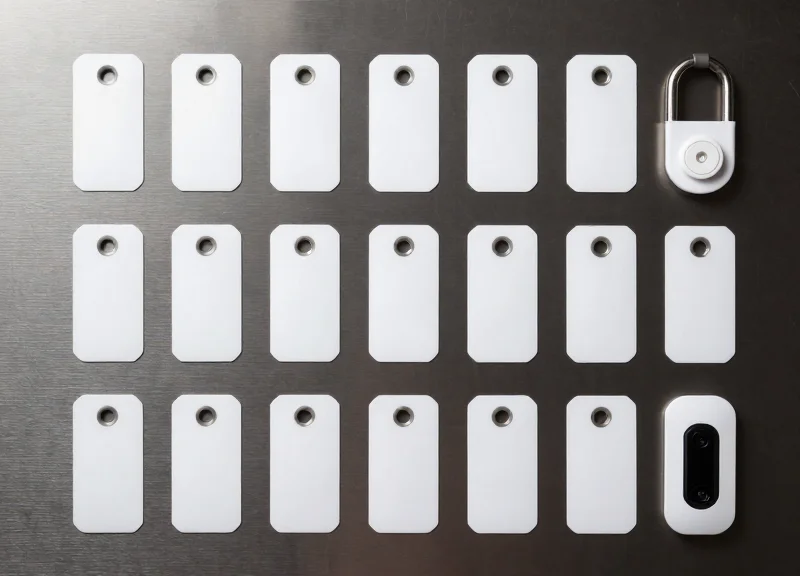
Tagging high-value hardware requires moving beyond standard retail security; it necessitates 'Metal-Mount' EAS technology that utilizes physical offsets or magnetic flux concentrators. Unlike standard soft labels that fail when applied directly to conductive surfaces, 2026-generation hardware tags are designed to maintain a resonant frequency of 58kHz even when surrounded by steel, brass, or aluminum, ensuring that power tools and copper fittings trigger alarms reliably.
| Hardware Category | Recommended Tag Type | Anti-Interference Mechanism | Best Application |
|---|---|---|---|
| Power Tools | Standoff Hard Tags | Integrated Air-Gap Spacer | Triggers and handles of drills/saws |
| Plumbing (Copper/Brass) | Ferret-Backed Labels | Magnetic Flux Concentrators | Flat surfaces of valves or manifolds |
| Outdoor/Garden Gear | IP67 Weatherproof Tags | Hermetic Sealing + AM Core | Lawnmowers and heavy metal chains |
| Hand Tools (Wrenches) | Steel Lanyard Tags | Remote Signal Coupling | Looped through hanging holes |
Expert Insight: The 'Air-Gap' Revolution. The most significant advancement in 2026 is the 'Signal-Offset' architecture. By integrating a 3mm to 5mm polymer spacer into the base of a hard tag, manufacturers create a physical buffer that prevents the metal object from acting as a ground plane. This small gap allows the Acousto-Magnetic (AM) signal to resonate freely, increasing detection rates by up to 40% compared to legacy tags that sit flush against the metal.
- Identify Metal Interference Zones: Before tagging, categorize items by metal density. Solid steel items like anvils or heavy vises require 'Active-Standoff' tags, while hollow items like pipe segments may work with high-bond AM labels.
- Optimize Tag Orientation: Apply tags perpendicular to the largest metal surface area. This reduces the 'shielding' effect where the metal absorbs the signal before it reaches the EAS pedestal.
- Utilize Reinforced Lanyards: For items where adhesive or pins are impractical, use 1.5mm aircraft-grade steel lanyards that integrate the EAS element directly into the cable loop.
Can I use standard RF stickers on power tools?
No. Radio Frequency (RF) stickers are highly susceptible to 'detuning' when near metal. In a hardware environment, they result in high false-alarm rates or complete signal failure.
Will AM labels damage the finish of high-end brass fittings?
Modern security labels use non-corrosive, high-tack adhesives designed to be removed without leaving residue or causing oxidation on metallic finishes.
What is a 'Ferrite-Loaded' tag?
This is a specialized tag containing a magnetic material that actively pulls the EAS signal toward the sensor, overcoming the signal-dampening effect of thick metal containers or parts.
Integrating EAS with RFID and ESL for Unified Retail

Unified retail integration in 2026 involves the convergence of Electronic Article Surveillance (EAS) for security, Radio Frequency Identification (RFID) for inventory precision, and Electronic Shelf Labels (ESL) for dynamic pricing into a single, interoperable ecosystem. For hardware stores, this integration allows AM-based security systems to act as the frontline of loss prevention while RFID sensors provide the granular data needed to track specific high-value tools through the supply chain and onto the sales floor.
The challenge for hardware retailers has always been the 'Metal Interference Paradox': RFID is excellent for inventory but struggles near metal, while AM EAS is the king of metal-resistant security. By deploying hybrid pedestals from DragonGuardGroup, retailers can now utilize AM technology for the primary security trigger while simultaneously capturing RFID data at the exit to identify exactly which SKU has left the building, instantly updating the inventory database and triggering ESL updates if stock levels fall below critical thresholds.
| Feature | Siloed Security Systems | Unified Integrated Ecosystem |
|---|---|---|
| Data Visibility | Alarm only; unknown item | Real-time SKU identification |
| Inventory Impact | Manual cycle counts required | Automatic stock adjustments |
| Pricing Agility | Paper tags; manual updates | Dynamic ESL synchronization |
| Labor Efficiency | High (manual tagging/auditing) | Low (automated tracking/pricing) |
Expert Insight: The Digital Twin of the Aisle. A unique advantage of 2026-era integration is the ability to create a 'digital twin' of your hardware aisles. When an ESL tag senses a product has been removed from the shelf but the EAS system doesn't detect an exit, the system flags a potential 'concealment event' in real-time. This predictive analytics approach moves loss prevention from a reactive 'chase' to a proactive 'service intervention,' where staff can offer assistance to a customer in a high-theft zone, effectively deterring theft through presence.
- Phase 1: Hybrid Tagging: Apply dual-technology tags (AM + RFID) to high-value power tools. This ensures 58kHz AM security protects against metal shielding while the RFID chip tracks the item's movement.
- Phase 2: Gateway Synchronization: Install DragonGuard hybrid pedestals that communicate with both the security alarm and the back-end ERP system to log 'Verified Sales' versus 'Shrink Events'.
- Phase 3: ESL Loop Integration: Connect Electronic Shelf Labels to the inventory feed. When an item is flagged as 'stolen' at the EAS gate, the ESL can trigger an automated restock alert for the floor manager.
Does RFID replace the need for AM EAS in 2026?
No. While RFID is superior for inventory, it is still vulnerable to shielding in metal-dense hardware environments. AM technology remains the reliable standard for triggering alarms, while RFID adds the necessary data layer.
Can ESLs help reduce hardware store theft?
Yes. ESLs integrated with weight sensors or shelf-pull trackers can alert staff to 'shelf sweeping'—when a thief clears an entire row of drill bits or saw blades—before they even reach the exit.
Is it expensive to integrate these three technologies?
The initial CAPEX is higher, but the ROI is typically realized within 14-18 months through a 30% reduction in labor costs and a significant decrease in 'out-of-stock' lost sales.
Durability and Environmental Resilience Standards
In 2026, the benchmark for hardware store EAS systems has shifted from mere aesthetic integration to industrial-grade survivability. Unlike soft-goods retail, a hardware environment subjects security pedestals to high-velocity impacts from lumber carts, heavy-duty vibrations from nearby machinery, and abrasive dust from bulk building materials. To ensure a return on investment, these systems must meet the International Electrotechnical Commission (IEC) standards for both Ingress Protection (IP) and Impact Protection (IK), specifically targeting enclosures that can withstand the physical rigors of a warehouse-style floor.
| Feature | Standard Retail EAS | Hardware-Grade EAS (2026) |
|---|---|---|
| Impact Rating | IK06 (Minor bumps) | IK10 (Vandal-proof/Heavy impact) |
| Ingress Protection | IP40 (Indoor only) | IP65 (Dust-tight/Water-resistant) |
| Chassis Material | Lightweight ABS Plastic | Reinforced Polycarbonate or Aviation-Grade Aluminum |
| Baseplate Design | Surface-mounted screws | Anchor-bolted with recessed reinforcement |
Beyond physical impacts, environmental resilience is critical for stores with garden centers or outdoor loading zones. Moisture ingress can cause signal drift in AM (Acousto-Magnetic) systems, leading to false alarms. Leading 2026 manufacturers now utilize conformal coating on internal PCBAs (Printed Circuit Board Assemblies), ensuring that even if humidity spikes or fine dust penetrates the outer shell, the electronics remain hermetically sealed and functional.
Why is the IK10 rating essential for hardware stores?
An IK10 rating ensures the pedestal can withstand a 20-joule impact. This is roughly equivalent to a 5kg weight dropped from 40cm, which is the force often generated by a heavy flat-bed cart hitting the antenna in a high-traffic aisle.
Can EAS systems operate in unheated outdoor garden centers?
Yes, but only if they are rated for extended temperature ranges. Hardware-grade systems for 2026 are designed to operate between -20°C and +60°C, utilizing internal thermal regulators to prevent component fatigue.
How does dust affect EAS performance?
In hardware stores, conductive dust (such as fine metal shavings or damp sawdust) can settle on non-sealed circuits, causing short circuits or signal interference. IP65-rated enclosures prevent this particulate matter from entering the housing.
Expert Insight: The 2026 Modular 'Sacrificial Shield' Trend. A major innovation for 2026 is the adoption of modular chassis designs. Instead of replacing a $2,000 pedestal when a forklift clips the base, modern systems feature a 'sacrificial' lower impact shield. This high-density polyethylene (HDPE) wrap absorbs the kinetic energy and can be replaced for less than $100, protecting the expensive internal copper coils and AI processors from structural deformation.
The ROI of High-Performance Anti-Interference Systems
The Return on Investment (ROI) of high-performance anti-interference EAS systems is calculated by the significant reduction in 'shrinkage' (inventory loss) paired with the elimination of 'alarm fatigue' costs. In hardware environments where metal interference is prevalent, standard systems often yield a 30-40% false alarm rate; upgrading to interference-defying tech can reduce this to under 1%, resulting in a typical hardware store payback period of 12 to 18 months through saved inventory and optimized labor allocation.
Beyond simple theft prevention, the primary economic driver for 2026 is the 'Hidden Labor Tax.' In a hardware store, every time an EAS system triggers a false alarm due to a nearby metal display or power tool shipment, a staff member must stop their current task—often high-value sales assistance or inventory management—to perform a security check. This disruption doesn't just annoy customers; it actively erodes the store's operational margin. High-performance systems use advanced Digital Signal Processing (DSP) to distinguish between a metal ladder moving near the door and an actual security tag, ensuring that your security measures don't become an operational bottleneck.
| Metric | Standard EAS System | Anti-Interference High-Perf System |
|---|---|---|
| Average Shrinkage Reduction | 15-25% | 45-65% |
| False Alarm Frequency | High (8-12 per day) | Near Zero (<1 per week) |
| Staff Labor Waste (Annual) | $4,500 - $7,000 per store | < $500 per store |
| System Lifespan | 3-5 Years (Tech Obsolescence) | 7-10 Years (Software Upgradable) |
How does anti-interference tech improve the customer experience?
False alarms create a 'guilty until proven innocent' atmosphere that drives away high-spending professional contractors. By ensuring alarms only trigger for actual theft, you maintain a frictionless, welcoming environment that encourages repeat business.
Is the higher upfront cost of AM or RFID systems justified?
Yes. While the initial capital expenditure is 20-30% higher, the Total Cost of Ownership (TCO) is lower because these systems require fewer service calls for re-calibration and significantly reduce the loss of high-margin items like copper piping and lithium-ion batteries.
What is 'Expert Insight' regarding 2026 EAS ROI?
The 'Second-Order ROI' of these systems is insurance premium mitigation. Many modern commercial insurers are now offering 'Safe-Store' credits for hardware retailers who can demonstrate the use of AI-driven, low-interference security systems that minimize liability claims related to false detentions.