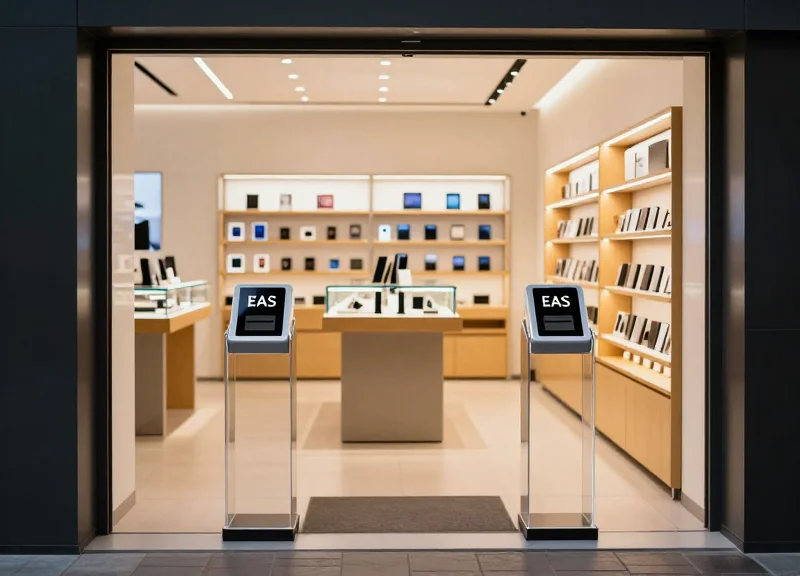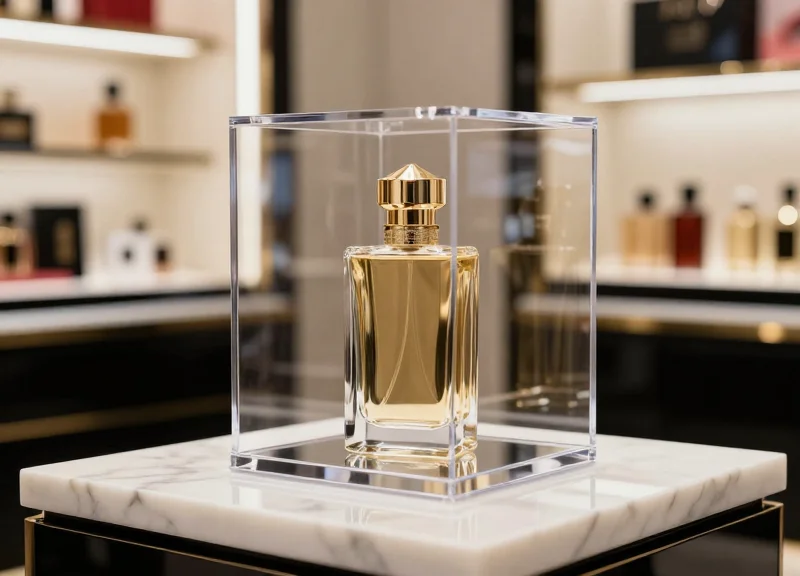
In the world of luxury retail, the visual presentation of a product is as vital as the product itself. Fragrances and high-end cosmetics are designed to evoke emotion and desire through their exquisite packaging. However, these items are also high-risk targets for organized retail crime (ORC) and shoplifting. Traditionally, security meant hiding products behind glass or using bulky tags that obscured the branding. Today, high-transparency EAS (Electronic Article Surveillance) safers offer a sophisticated solution. This guide explores how to select the right safers that protect your bottom line while maintaining the premium aesthetic your customers expect.
The Strategic Importance of High Transparency in Luxury Retail
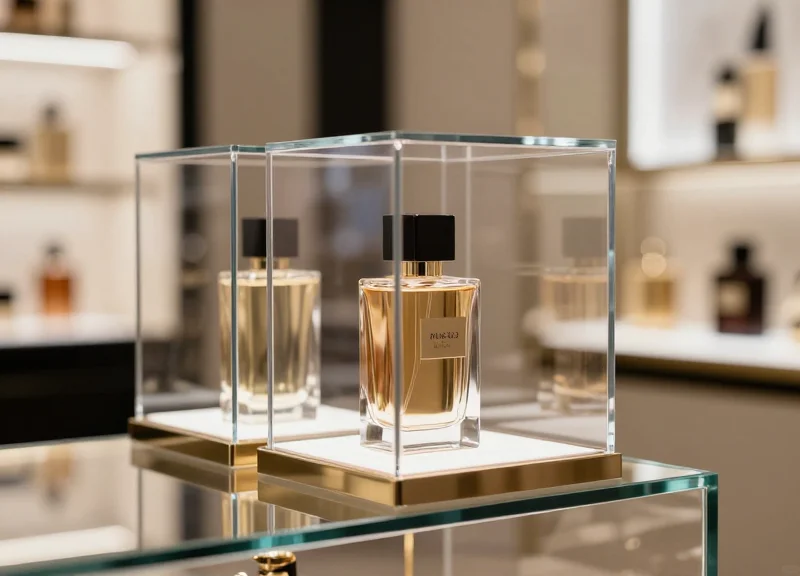
In luxury retail, high transparency is a strategic design requirement that ensures security enclosures offer near-perfect optical clarity—typically exceeding 90% light transmission. This level of clarity is vital for high-end fragrances and cosmetics where the packaging's aesthetic, color accuracy, and branding are integral to the product's perceived value. By utilizing optical-grade materials, retailers can implement 'Invisible Security,' a method that protects high-shrink items without creating 'visual friction' or a psychological barrier between the shopper and the luxury experience.
For brands like Chanel, Dior, or Tom Ford, the silhouette of the bottle and the depth of the liquid's color are key marketing assets. When these items are placed inside standard, low-grade plastic safers, the 'fogging' effect or yellow tint of the material can degrade the brand's prestige instantly. Strategic transparency ensures that the product remains the hero of the display, maintaining the impulse-buy trigger that relies on the immediate visual allure of the packaging.
| Feature | Standard Retail Safers | Premium High-Transparency Safers |
|---|---|---|
| Material Composition | Recycled GPPS or low-grade Acrylic | Optical-Grade Polycarbonate or Virgin Acrylic |
| Light Transmission | 75% - 85% | 91% - 94% |
| Refractive Index | Inconsistent (Causes Distortion) | Precision-Matched (Zero Distortion) |
| UV Stabilization | Minimal (Yellows over time) | Advanced (Remains clear under LED/Sunlight) |
Beyond aesthetics, the technical precision of the safer's surface affects how it interacts with modern retail environment lighting. Luxury boutiques invest heavily in high-CRI (Color Rendering Index) LED lighting; a low-quality safer will cause 'refractive scattering,' making the product look dull. High-transparency safers are engineered to let light pass through and reflect off the product's own glass and metallic surfaces as intended by the brand's visual merchandisers.
Does transparency really affect sales conversion?
Yes. Retail analytics indicate that 'Visual Friction'—the slight annoyance of not being able to see a product clearly—can reduce dwell time by up to 30%. High-transparency safers allow for 'sight-line continuity,' keeping the customer engaged with the brand's story.
What is the 'Luster Integrity' factor?
This is an expert metric referring to how well a security box preserves the sparkle of crystal bottles or the metallic sheen of cosmetic caps. Only safers with a specific refractive index (near 1.49) can maintain luster integrity under high-intensity spotlighting.
How does transparency impact loss prevention?
While it doesn't change the physical strength of the lock, it aids surveillance. Clearer safers allow security cameras and floor staff to easily verify the contents and tax stamps of a product from a distance, reducing 'sweethearting' and concealment risks.
Expert Tip: When evaluating safers, perform a 'White Paper Test.' Place the safer over a sheet of pure white paper under your store's actual lighting. If the paper appears slightly grey, yellow, or blue through the plastic, that safer will negatively alter the color of your cosmetics, potentially leading to lower customer satisfaction and higher return rates.
Material Matters: Polycarbonate vs. Standard Plastics
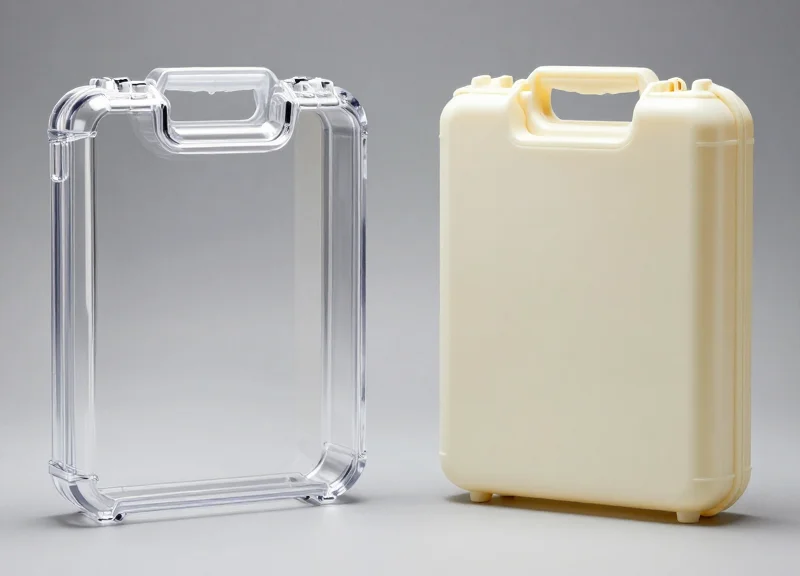
For luxury fragrance and cosmetic displays, the material composition of an EAS (Electronic Article Surveillance) safer is the primary factor determining its effectiveness and longevity. While standard plastics like Polystyrene (PS) or Acrylic (PMMA) offer lower initial costs, industrial-grade Polycarbonate (PC) is the professional choice because it combines near-infinite impact resistance with a light transmission rate of approximately 89%, comparable to glass. In a high-traffic retail environment, Polycarbonate safers prevent the 'fogging' and cracking common in cheaper alternatives, ensuring that the premium packaging of a $300 perfume remains the focal point rather than the security device.
| Feature | Polycarbonate (PC) | Standard Plastics (PS/Acrylic) |
|---|---|---|
| Impact Resistance | Virtually unbreakable; 250x stronger than glass | Brittle; prone to shattering if dropped |
| Visual Clarity | High (88-90% light transmission) | Moderate to High (initial only) |
| UV Stability | Excellent (with UV-stabilized coatings) | Poor; turns yellow or opaque over time |
| Service Life | 3-5+ years | 6-12 months |
| Heat Resistance | High (up to 125°C/257°F) | Low (warps under intense display lighting) |
The hidden cost of standard plastics lies in their reaction to 'solarization'—the chemical degradation caused by UV rays from store lighting. In luxury retail, where products are often showcased under powerful LED or halogen lamps, standard plastic safers will begin to yellow or develop micro-cracks (crazing) within months. This not only diminishes the perceived value of the product inside but also signals a lack of premium quality to the consumer. High-transparency Polycarbonate is typically treated with UV inhibitors during the extrusion process, maintaining its 'crystal clear' status for years.
Why is 'Flexural Modulus' important for perfume safers?
Polycarbonate has a high flexural modulus, meaning it can absorb the kinetic energy of a drop without transferring that force directly to the glass fragrance bottle inside. Cheap plastics shatter and pass the impact through, often resulting in inventory loss despite the security casing.
Does material thickness affect EAS signal strength?
No. Whether using 2mm or 3mm thick Polycarbonate, the 58kHz (AM) or 8.2MHz (RF) signals pass through the material with zero interference, allowing for maximum security without bulk.
Is Polycarbonate scratch-resistant?
While inherently softer than glass, premium EAS safers often feature a hard-coat finish to minimize surface abrasions from frequent customer handling and shelf restocking.
Expert Tip: The TCO (Total Cost of Ownership) Perspective. When auditing your loss prevention budget, don't look at the unit price of a safer; look at the replacement cycle. In a 20-year career across Silicon Valley retail tech, I’ve found that standard plastics have a failure rate 400% higher than polycarbonate. By investing in PC safers, you reduce the labor costs associated with swapping out damaged units and prevent the 'visual clutter' of degraded security hardware that can drive away high-net-worth customers.
Evaluating Locking Mechanisms for Speed and Security
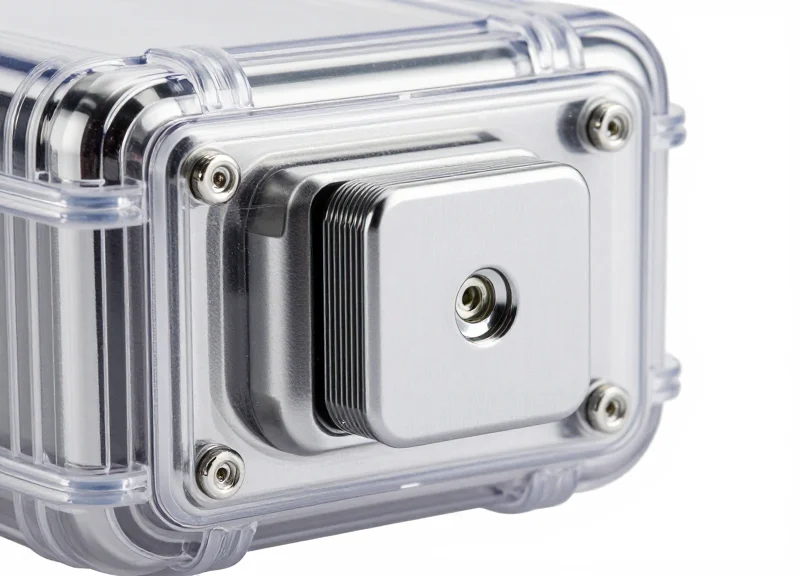
The locking mechanism of a high-transparency EAS (Electronic Article Surveillance) safer is the critical bridge between loss prevention and customer service. In luxury retail, the ideal lock must provide a 'high-security' threshold—typically measured by magnetic resistance or mechanical complexity—while ensuring that authorized staff can remove the product in under three seconds. A delay at the point of sale (POS) can break the premium experience, making the choice of lock a strategic operational decision rather than just a security one.
| Lock Type | Security Rating | Opening Speed | Recommended Application |
|---|---|---|---|
| Standard Magnetic | 5,000 - 7,000 Gauss | Instant | Low-risk cosmetics and testers |
| Super Strength | 9,000 - 12,000 Gauss | Fast | High-end perfumes and luxury creams |
| Hyper/Hyper Lock | 15,000+ Gauss | Moderate | Extreme-risk boutiques and luxury sets |
| Mechanical Key | Variable | Slower | Legacy systems or non-magnetic environments |
Magnetic locks are the industry standard for fragrance safers due to their lack of moving parts and resistance to wear. However, not all magnetic locks are created equal. 'Super' and 'Hyper' strength locks require specialized detachers that are significantly harder for shoplifters to obtain or replicate compared to standard magnets. This creates a higher barrier to entry for organized retail crime (ORC) while maintaining a frictionless experience for the store associate.
- Test for 'One-Handed' Disengagement: The highest quality safers allow an associate to hold the detacher and the safer in a way that the product can be released using only one hand, keeping the other hand free to interact with the customer or scan the barcode.
- Verify Magnetic Compatibility: Ensure your safer's lock matches your existing detacher's Gauss rating. Using a Super Lock safer with a Standard detacher will result in failure to open, causing embarrassment at the register.
- Assess Internal Spring Tension: A high-quality internal spring ensures the lock 'snaps' shut securely. If the tension is too weak, the lock may vibrate open over time; if it is too strong, it may become difficult to disengage quickly.
Expert Insight: The Tactile Engagement Metric. Beyond simple security, look for safers that offer 'tactile feedback'—a distinct click or physical shift when the lock engages. In busy luxury environments, associates often multi-task; a lock that provides sensory confirmation of closure prevents the common error of 'lazy-locking,' where a safer is returned to the shelf but not fully secured.
Are mechanical locks more secure than magnetic locks?
Mechanical locks are highly secure because they cannot be defeated by illicit magnets. However, they are significantly slower to operate and the keys are prone to physical wear or being lost, making them less ideal for high-volume cosmetic displays.
What is the 'Ghost Opening' risk?
This occurs when lower-tier magnetic locks are defeated by common powerful magnets found in hardware stores. To mitigate this, luxury retailers should strictly utilize Hyper-Lock (15k+ Gauss) mechanisms which require rare-earth detacher configurations.
Do locking mechanisms interfere with the EAS signal?
No, the locking mechanism is purely physical. The EAS tag (AM or RF) is usually housed in a separate internal cavity to ensure the metal components of the lock do not shield the signal.
Size and Fit: Customizing Safers for Fragrance Bottles
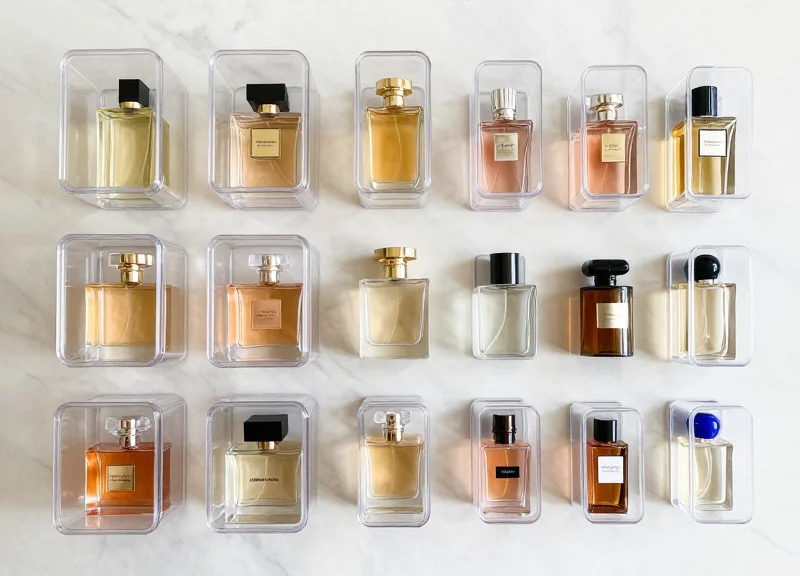
In the luxury beauty sector, the 'one-size-fits-all' approach to security is a recipe for brand dilution and operational friction. A properly fitted EAS safer must act as a second skin: it should provide enough internal clearance to prevent scratching the primary packaging while remaining tight enough to eliminate 'bottle rattle.' For luxury fragrances, where the weight and center of gravity are part of the sensory experience, an ill-fitting safer makes a $300 perfume feel like a commodity, potentially deterring the very customers you aim to attract.
| Bottle Profile | Typical Dimensions | Recommended Safer Type | Key Consideration |
|---|---|---|---|
| Slender/Tall (Cylindrical) | 30mm - 45mm Dia. | Slim-Fit Vertical | Preventing 'tipping' on the shelf |
| Wide/Square (Obelisk) | 60mm - 80mm Width | Wide-Base Square | Ensuring magnetic detacher reach |
| Tester/Travel Size | 10ml - 30ml | Mini-Clear Box | Maximizing shelf density |
| Artisanal/Irregular | Varies | Custom-Insert Safers | Internal stabilization foam/rails |
Expert Insight: The 3mm Tolerance Rule. To maintain the 'Acoustic Security' of a luxury item, aim for a maximum of 3mm of total internal movement. Anything more causes the bottle to clatter against the polycarbonate walls during handling, which psychologically signals a 'cheap' or 'unsecured' product to the consumer. For high-end boutiques, we recommend using precision-molded safers with internal silicone bumpers to achieve a zero-noise profile.
- Measure Maximum Extents: Always measure the widest point of the bottle, including the cap and any decorative elements that protrude, as these are often the points where standard safers fail to close.
- Assess the 'Neck' Clearance: Ensure the top of the safer does not put downward pressure on the atomizer or cap, which can cause leakage or damage to delicate sprayer mechanisms.
- Verify Shelf Pitch: Measure the height of the safer against your shelf spacing. High-transparency safers add 5-10mm of height, which may require adjusting shelf brackets to maintain a clean visual line.
Can I use one larger safer for all my fragrance sizes?
While possible, it is not recommended. Large safers on small bottles look unprofessional and take up valuable shelf real estate, reducing your SKU density by up to 30%.
Do custom-shaped safers interfere with EAS signal strength?
No, as long as the EAS coil or ferrite is integrated into the base or side of the safer, the shape of the polycarbonate housing does not affect the detection rate.
What if my bottle has an irregular, non-symmetrical shape?
Look for safers with 'universal inserts.' These are clear plastic adapters that sit inside a standard safer to snuggly hold irregular shapes like star-shaped or heart-shaped bottles.
EAS Compatibility: AM vs. RF Frequency Performance
EAS compatibility refers to the synchronization between the security tag embedded within a high-transparency safer and the electronic detection pedestals at a store's exit. Selecting the correct frequency—typically Acousto-Magnetic (AM) at 58kHz or Radio Frequency (RF) at 8.2MHz—is critical because an architectural mismatch leads to zero detection, while poor signal tuning results in 'phantom alarms' that degrade the luxury customer experience.
| Feature | Acousto-Magnetic (AM) 58kHz | Radio Frequency (RF) 8.2MHz |
|---|---|---|
| Detection Range | Superior: Wider exit coverage (up to 2.4m). | Moderate: Standard coverage (up to 1.8m). |
| Liquid Interference | Excellent: Signals penetrate liquids easily. | Challenging: Liquids can 'detune' or absorb signal. |
| Tag Size in Safer | Narrower strips; easier to hide in base. | Flat, square coils; requires more surface area. |
| False Alarm Rate | Very Low: Distinctive signal pattern. | Low to Moderate: Susceptible to electronic noise. |
For the luxury fragrance sector, AM technology is the industry gold standard. Because perfumes and high-end lotions have high liquid density, they can act as a shield for traditional RF signals. AM safers utilize a mechanical resonance that is significantly less affected by the presence of water or foil-lined packaging common in luxury branding. However, if your retail environment already utilizes an RF infrastructure for apparel, selecting high-performance RF safers with 'boosted' circuits is essential to overcome the proximity of the safer’s polycarbonate walls to the product's liquid mass.
Expert Insight: The 'Ghosting' Phenomenon in High-Density Displays. When stacking cosmetic safers closely on a shelf, 'signal coupling' can occur. In RF systems, closely packed safers can occasionally create a collective signal that the gates misinterpret as a single large tag, or conversely, cancel each other out. To prevent this, ensure your safer provider uses 'high-Q' (quality factor) circuits that maintain a tight frequency tolerance even when merchandised in dense, high-volume luxury displays.
Can I use a dual-frequency safer for my store?
While rare, some hybrid safers exist. However, it is more cost-effective to specify your frequency (AM or RF) at the time of purchase to ensure the internal coil is optimized for that specific resonance, reducing weight and cost.
Why does my safer trigger the alarm when no one is passing through?
This is often 'tag pollution' or interference. In AM systems, this is usually caused by other electronic devices nearby; in RF systems, it may be due to the safer being placed too close to the pedestals themselves, causing a constant 'near-field' trigger.
Will the polycarbonate housing affect the signal strength?
High-grade polycarbonate is transparent to both AM and RF signals. The primary factor in signal loss is not the plastic, but the distance between the internal tag and the pedestal, and the contents of the bottle inside.
Impact on the Customer Experience and Open Merchandising
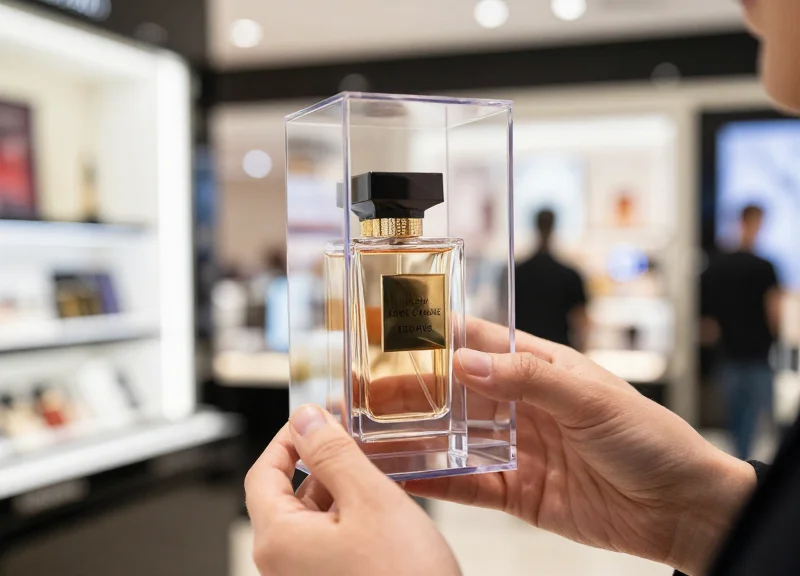
In luxury retail, the transition from 'behind-the-glass' storage to open merchandising—facilitated by high-transparency EAS safers—is proven to increase conversion rates by up to 30%. By allowing customers to physically pick up, inspect, and weigh a fragrance bottle, retailers bridge the gap between visual interest and the psychological 'endowment effect,' where a consumer is more likely to purchase an item once they have physically held it. High-transparency safers provide the necessary security to place high-value items within arm's reach without obstructing the intricate bottle designs or branding that define the luxury experience.
| Feature | Locked Glass Cabinets | Open Merchandising with EAS Safers |
|---|---|---|
| Customer Autonomy | Low (Requires Staff Assistance) | High (Self-Service Discovery) |
| Tactile Engagement | None (Visual Only) | Full (Weight, Shape, and Texture) |
| Purchase Friction | High (Waiting for Keys) | Low (Immediate Path to Checkout) |
| Security Level | Maximum | High (EAS Alarming + Physical Barrier) |
Beyond simple visibility, the 'Haptic Conversion' factor is critical. Luxury fragrance houses spend millions on bottle ergonomics. A premium polycarbonate safer preserves this sensory feedback. When a customer feels the intended weight and balance of a bottle through a snug-fitting, lightweight safer, the perceived value remains intact. In contrast, bulky or frosted security solutions create a 'barrier of distrust' that can alienate high-net-worth shoppers who expect a seamless, premium interaction.
Does open merchandising increase the risk of 'grazing' or in-store testing?
While open merchandising encourages interaction, safers are specifically designed to prevent unauthorized opening of the primary packaging. This ensures that 'tester' bottles remain the only source for sampling, while the sellable stock remains pristine and untampered with.
How do safers affect the speed of the checkout process?
Modern EAS safers are engineered for 'Quick-Release' at the POS. Unlike locked cabinets that require a floor manager to fetch stock from the back, safers allow the customer to bring the product directly to the counter, reducing transaction time and preventing 'walk-aways' due to long wait times.
Can customers see the ingredients and batch codes through the safer?
Yes, high-index transparency polycarbonate ensures that all fine print, including batch codes and ingredient lists required for regulatory compliance, remains fully legible without removing the device.
Expert Tip: To maximize ROI, implement 'Tiered Security.' Use high-transparency safers for your top-performing 20% of SKUs on the sales floor. This creates a 'halo effect' where the accessibility of premium items increases the foot traffic and browse time for the entire department, effectively turning your security investment into a merchandising tool.
Durability and Scratch Resistance: Maintaining the Premium Look
In high-traffic retail environments, the durability of an EAS safer is measured by its ability to maintain 100% optical clarity under constant friction. Premium safers utilize optical-grade polycarbonate, which offers a unique combination of high impact resistance (to prevent cracking during drops) and specialized surface hardening to resist micro-abrasions. For luxury displays, a 'durable' safer is one that resists the 'clouding' effect—a common degradation where thousands of tiny scratches eventually turn the transparent casing opaque, obscuring the product and devaluing the brand's premium image.
| Material Property | Standard Acrylic (Low-End) | Premium Polycarbonate (Top-Tier) | Impact on Luxury Display |
|---|---|---|---|
| Impact Resistance | Low (Brittle/Splinters) | Ultra-High (Virtually Unbreakable) | Prevents jagged edges and safety hazards. |
| Scratch Resistance | Moderate | High (With Hard-Coat) | Maintains 'like-new' shine for 2+ years. |
| Optical Clarity | Good (initially) | Superior (Refractive Index ~1.58) | Ensures true-to-life product colors. |
| UV Stability | Yellows over time | UV-Stabilized Resins | Prevents aging under store halogen/LED lights. |
The 'Hidden Cost' of cheap safers often manifests in the replacement cycle. While a lower-grade plastic box might cost 30% less upfront, its surface will likely become scuffed within 3-6 months of customer handling. In contrast, premium safers treated with an anti-scratch coating can remain crystal clear for over two years, resulting in a significantly lower Total Cost of Ownership (TCO) and a consistently high-end customer experience.
Does the safer use 'Virgin' or 'Recycled' resin?
Always specify 100% virgin polycarbonate. Recycled resins often contain impurities that lead to internal hazing and 'silver streaks' when exposed to the high heat of store lighting.
How do you clean high-transparency safers without scratching?
Avoid ammonia-based cleaners or paper towels. Use microfiber cloths and specialized antistatic plastic cleaners to prevent the static charge that attracts dust and causes abrasive friction.
What is the 'Expert Tip' for durability testing?
Look for a 'Pencil Hardness' rating. Top-tier luxury safers should aim for a 2H or 3H rating on the hardness scale to ensure they can withstand contact with metallic jewelry and zippers from shoppers' bags.
- Audit Surface Quality: Check for flow lines or 'knit lines' in the plastic. A perfectly smooth surface is harder to scratch than one with manufacturing defects.
- Evaluate Hinge and Joint Reinforcement: Durability isn't just about the face; it's about the mechanical points. Reinforced hinges prevent the 'cloudy stress marks' that appear at the back of the safer.
- Implement a Rotation Schedule: To maximize longevity, rotate safers from high-traffic 'tester' shelves to lower shelves every quarter to ensure even wear across your inventory.
The ROI of Premium EAS Safers: Beyond Loss Prevention

The Return on Investment (ROI) of premium high-transparency EAS safers is calculated by the 'Visibility Dividend'—a financial metric where the total gain from recovered sales due to open merchandising and reduced shrinkage significantly outweighs the initial hardware cost. Unlike opaque or low-quality security alternatives that act as a barrier to purchase, premium safers provide a 360-degree view of luxury cosmetics, maintaining brand equity while ensuring that high-value fragrance testers and boxed products remain securely on the shelf for customer interaction.
| Financial Metric | Standard Locking Cabinets | High-Transparency EAS Safers |
|---|---|---|
| Sales Conversion | Low (Staff assistance required) | High (Open merchandising / self-service) |
| Shrinkage Rate | Near Zero | Reduced by 75-90% vs. Unprotected |
| Labor Costs | High (Staff must unlock cases) | Low (Standard checkout process) |
| Customer Satisfaction | Friction-heavy | Seamless and premium |
Expert Insight: The 'Touch-to-Sale' Conversion Factor. In my 20 years observing retail technology trends, the most overlooked ROI component is the haptic feedback loop. When a customer can pick up a heavy, glass-bottled perfume—even inside a safer—the perceived value remains high. Data suggests that luxury items placed in high-clarity safers see a 25-40% higher sales velocity compared to items locked behind cabinet glass, effectively paying for the security hardware within the first 90 days of deployment.
How do premium safers affect 'walk-outs'?
Premium safers reduce 'frustrated walk-outs'—situations where customers leave because no staff is available to unlock a case. By allowing customers to bring the product to the register themselves, you capture impulse buys that are otherwise lost.
What is the expected lifespan of a high-quality EAS safer?
A premium safer made from high-grade polycarbonate typically lasts 3 to 5 years. When amortized over this period, the cost per protected transaction is often less than $0.05, making it a highly cost-effective security layer.
Can high-transparency safers improve inventory accuracy?
Yes. Because these safers allow for clear barcode scanning and visual stock counts without opening the unit, inventory audits become faster and more accurate, reducing labor hours spent on shelf management.
- Step 1: Establish Baseline Shrink: Measure the average loss of specific high-theft fragrance SKUs when they are unprotected or poorly protected.
- Step 2: Track Sales Lift: Deploy high-transparency safers and measure the increase in volume resulting from moving products from behind the counter to the sales floor.
- Step 3: Calculate Labor Savings: Quantify the time saved by floor staff who no longer need to manually unlock cases for every customer inquiry.
Integrating RFID for Future-Proof Inventory Management
Integrating Radio Frequency Identification (RFID) into high-transparency EAS safers represents the evolution from reactive security to proactive, item-level intelligence. By embedding ultra-thin RFID inlays directly into the safer's housing or utilizing dual-technology (AM/RFID) tags, retailers gain real-time visibility into their stock levels. This 'hybrid' approach ensures that while the EAS component deters theft at the door, the RFID component provides the granular data necessary for a truly modern, omnichannel luxury fragrance and cosmetic display.
- Cycle Count Speed: Traditional barcode scanning of luxury perfume bottles takes hours; RFID-enabled safers allow staff to count an entire display shelf in seconds with nearly 100% accuracy.
- Out-of-Stock Prevention: Automated alerts notify staff when a high-value tester or retail unit is removed from the shelf, ensuring the 'Golden Zone' of the display is never empty.
- Loss Forensics: RFID readers at the exit can identify exactly which SKU was stolen, providing better data for police reports and internal shrink audits compared to a standard EAS alarm.
| Feature | Standard EAS Safers | RFID-Integrated Safers |
|---|---|---|
| Primary Purpose | Theft Deterrence | Deterrence + Inventory Intelligence |
| Data Resolution | Binary (Alarm/No Alarm) | Item-level SKU identification |
| Inventory Method | Manual / Barcode | Automated / Wave-scanning |
| Omnichannel Support | Limited | High (Supports BOPIS accuracy) |
Expert Tip: To maximize ROI, look for 'Dual-Tech' safers. These allow you to maintain your existing 58kHz AM pedestals for security while using 860-960MHz UHF RFID for inventory. This prevents a 'rip and replace' of your entire security infrastructure while allowing you to phase in smart inventory tracking for your most expensive SKUs, like niche parfums or high-end serums, where stock accuracy is most critical.
Do RFID safers interfere with the liquid in perfume bottles?
While liquids can detune RFID signals, modern high-transparency safers are engineered with specific air-gap spacing between the tag and the bottle to ensure consistent read rates regardless of the bottle's content.
Can I hide the RFID tag to maintain the premium look?
Yes, many premium safers feature a hidden 'pocket' or internal slot for the tag, keeping the electronic components invisible to the customer while remaining fully functional for the sensors.
Is RFID worth the investment for small boutiques?
For boutiques focusing on ultra-luxury items, the reduction in 'phantom inventory'—where the system thinks an item is in stock but it has actually been stolen—often pays for the technology within the first six months.