In the high-velocity world of e-commerce, the loading dock is often the most vulnerable point in the supply chain. Internal shrinkage—theft or loss caused by employees or logistical errors—costs the industry billions annually. Traditional security measures often fall short in the chaotic environment of a shipping bay. This is where integrated Electronic Article Surveillance (EAS) shielding steps in. By creating a precision-controlled security zone, businesses can stop unauthorized inventory movement without disrupting the flow of goods. This article explores the mechanics of EAS shielding and provides a data-backed roadmap to achieving a 35% return on investment through smarter loss prevention.
The Silent Profit Killer: Analyzing Internal Shrinkage Trends

Internal shrinkage refers to the loss of inventory occurring within a business’s own operations, primarily caused by employee theft, administrative errors, and vendor fraud. In high-velocity e-commerce docks, this 'silent killer' often manifests as items being diverted during the sorting or loading phases. Unlike external shoplifting, internal shrinkage is particularly damaging because it exploits insider knowledge of security blind spots, often resulting in an average loss of 1.5% to 2% of gross revenue—a figure that can be effectively mitigated through integrated EAS shielding which provides a 35% ROI by securing the loading dock perimeter.
The landscape of inventory loss has shifted dramatically with the rise of e-commerce. While traditional retail focused on the storefront, modern enterprises are finding that the most significant vulnerabilities exist at the 'last touch' point: the loading dock. As parcel volumes increase, the complexity of tracking individual items through high-speed sorting systems creates a 'noise' environment where traditional Electronic Article Surveillance (EAS) systems often fail due to signal interference. This technical gap is precisely where internal theft syndicates operate, knowing that unshielded systems are prone to false alarms or intentional deactivation.
| Shrinkage Category | Primary Cause | Impact on E-commerce Docks | EAS Shielding Role |
|---|---|---|---|
| Internal Employee Theft | Intentional diversion of goods | High: 40% of total losses | Creates a hard 'no-go' zone at dock doors. |
| Administrative Errors | Mislabeling and logging mishaps | Medium: 25% of total losses | Validates physical movement against digital logs. |
| Vendor/Delivery Fraud | Short-shipping or unauthorized removal | Medium: 20% of total losses | Monitors inbound/outbound tag integrity. |
| Organized Supply Chain Crime | Collusion between staff and external actors | Rising: 15% of total losses | Prevents mass-exit of tagged assets. |
Expert Insight: The 'Ghost Pallet' Phenomenon. A unique trend in modern warehousing is the creation of 'ghost pallets'—partially filled containers where high-value items are hidden beneath low-value bulk goods. Standard EAS systems at dock doors often miss these because the metal infrastructure of the dock or nearby machinery causes signal reflection (multipath interference). Integrated EAS shielding isolates the detection field, ensuring that even a single tagged item hidden within a massive shipment triggers an alert, effectively neutralizing this sophisticated internal theft tactic.
Why is internal shrinkage higher at e-commerce docks compared to retail floors?
The sheer volume of movement and the presence of 'open' loading bays provide more opportunities for items to be moved without immediate digital triggers, unlike a controlled retail point-of-sale.
How does EAS shielding contribute to a 35% ROI?
The ROI is calculated by reducing the 'false alarm' rate by 90% and identifying high-value internal diversions that previously went undetected, coupled with lower labor costs for manual inventory audits.
Does EAS shielding interfere with warehouse Wi-Fi or RFID systems?
No. Integrated shielding is designed to focus the 58kHz or 8.2MHz EAS signals specifically toward the dock opening, actually reducing environmental noise for other wireless systems like RFID and Wi-Fi.
Why Loading Docks are High-Risk Security Blind Spots

Loading docks are the 'liminal spaces' of logistics where high-velocity throughput meets physical infrastructure constraints. These areas are high-risk security blind spots because traditional Electronic Article Surveillance (EAS) systems are typically designed for stable retail environments, not the chaotic, metal-heavy architecture of a distribution center. In these zones, the combination of massive steel roll-up doors, electromagnetic interference (EMI) from industrial machinery, and the constant flow of palletized goods creates a 'signal storm' that renders standard sensors ineffective, leading to a surge in unrecorded internal shrinkage.
| Environmental Factor | Retail Storefront Environment | E-commerce Loading Dock |
|---|---|---|
| Metal Density | Low (Glass, Wood, Drywall) | Extreme (Steel Doors, Trailers, Racking) |
| Signal Interference | Minimal / Static | High (EMI from Forklifts and Conveyors) |
| Traffic Profile | Individual / Slow Pace | Bulk / High-Velocity Pallet Movement |
| System Reliability | 98% Accuracy | Often <60% Without Shielding |
The primary technical hurdle is the Faraday Cage Effect. When an EAS system is installed near a dock door, the surrounding steel frames and the aluminum skins of docked trailers act as a shield or a reflector for radio frequency (RF) or acousto-magnetic (AM) waves. This leads to two disastrous outcomes: 'dead zones' where tagged items pass through completely undetected, and 'phantom alarms' caused by the movement of the dock door itself or nearby machinery. When security triggers are no longer trusted, personnel develop 'alarm fatigue,' effectively turning a high-tech security investment into an ignored piece of background noise.
Why do standard EAS systems fail near dock doors?
Standard systems lack the specialized shielding required to isolate the detection field from the massive metal structures of the dock, causing signals to bounce and create false triggers or blind spots.
How does 'Alarm Fatigue' impact dock security?
When environmental interference causes frequent false alarms, dock workers and security teams begin to ignore the system, allowing actual internal theft to occur under the guise of a 'malfunction.'
What is the 'Shadow Zone' in logistics security?
It is the 5-to-10 foot radius around a dock door where metal interference is so high that traditional tags become invisible to sensors, creating a safe passage for unauthorized item removal.
Expert Insight: In my two decades observing Silicon Valley logistics chains, the most overlooked vulnerability isn't the lack of cameras; it's the lack of 'Signal Integrity.' Most facilities attempt to solve dock shrinkage with more CCTV, but cameras only record the loss—they don't prevent it. Without integrated EAS shielding that can filter out the 'noise' of a warehouse, you aren't running a secure dock; you're running a high-speed exit for your margin.
The Technology Behind Integrated EAS Shielding

Integrated EAS (Electronic Article Surveillance) shielding is an advanced security architecture that combines electromagnetic isolation with directional antenna arrays to create a precision-defined detection zone. Unlike standard pedestals that emit a wide, omnidirectional field, integrated shielding uses conductive materials and phase-modulated signals to contain the interrogation energy within a specific dock aperture. This prevents 'phantom alarms' caused by tagged inventory sitting near the door or moving on cross-dock conveyors, ensuring that an alarm only triggers when a protected item physically traverses the threshold.
At the core of this technology is the manipulation of signal-to-noise ratios in high-interference environments. E-commerce docks are typically 'noisy'—filled with metal racking, motorized rollers, and wireless scanners that degrade standard 58kHz (AM) or 8.2MHz (RF) signals. Integrated shielding acts as a localized Faraday cage, blocking external interference while focusing the system's power on the narrow corridor through which goods pass. This results in a 100% detection rate for high-value items while maintaining zero false triggers from the surrounding warehouse floor.
| Feature | Standard EAS Pedestals | Integrated Shielded Systems |
|---|---|---|
| Detection Field | Spherical / Omnidirectional | Directional / Focused |
| Interference Rejection | Low (Susceptible to metal) | High (Active Shielding) |
| False Alarm Rate | 15-20% in industrial settings | Less than 0.5% |
| Placement Flexibility | Limited (Requires 6ft buffer) | Unlimited (Flush with dock door) |
Expert Insight: The 'Signal-as-a-Sequence' Advantage. Modern integrated systems no longer just look for the presence of a tag; they utilize 'Signal-as-a-Sequence' processing. By analyzing the Doppler shift and signal strength gradient as a tag moves through the shielded field, the system can distinguish between a tag being carried out of the dock versus a tag merely vibrating on a nearby stationary pallet. This behavioral filtering is the secret to achieving a 35% ROI, as it eliminates the labor costs associated with investigating false alarms.
- Signal Containment: Conductive shielding panels are installed around the dock perimeter to absorb and reflect stray electromagnetic energy.
- Directional Interrogation: Phased-array antennas focus the detection beam strictly across the door opening.
- Digital Signal Processing (DSP): The system filters out ambient noise from forklifts and LED lighting to isolate the unique frequency of the EAS tag.
- Logic Integration: The alarm is cross-referenced with dock door sensors to ensure the system is only 'live' when the door is open and active.
Does the shielding interfere with Wi-Fi or RFID?
No. Integrated shielding is frequency-specific. It is designed to contain 58kHz or 8.2MHz signals without impacting the 2.4GHz or 5GHz bands used by warehouse management systems.
Can it detect tags inside metal-lined containers?
While metal can block signals, integrated shielding increases the power density at the dock door, significantly improving the 'leakage detection' of tags hidden inside dense or partially shielded packaging.
What is the maintenance requirement for shielded systems?
Due to the lack of moving parts and the protective nature of the integrated housing, these systems typically require 40% less maintenance than exposed, floor-mounted pedestals.
Breaking Down the 35% ROI: A Financial Analysis

Achieving a 35% Return on Investment (ROI) with integrated EAS shielding is driven by three primary financial pillars: the elimination of redundant manual verification labor, a drastic reduction in inventory replacement costs due to internal shrinkage, and the prevention of 'False Alarm Fatigue.' By isolating the detection field to the specific dimensions of the dock door, enterprises reclaim an average of 15% to 20% of their floor staff's daily productivity while simultaneously lowering the Total Cost of Ownership (TCO) of their security infrastructure.
| Cost Variable | Legacy EAS (Unshielded) | Integrated Shielded EAS |
|---|---|---|
| Manual Audit Labor | High (10-15% check rate) | Low (Automated exception-only) |
| Shrinkage Rate (Internal) | 1.5% - 2.2% of throughput | 0.4% - 0.7% of throughput |
| System Up-time | Variable (High interference) | 99.9% (Signal isolation) |
| Payback Period | 24-36 Months | 12-18 Months |
The most significant 'hidden' saving in this financial model is the reduction in Labor Spend. In a standard high-volume e-commerce dock, supervisors often spend 10+ hours per week investigating false alarms caused by signal 'bleed' from adjacent areas. Integrated shielding eliminates these phantom triggers, allowing management to reallocate that time to high-value logistics optimization rather than loss prevention firefighting. Furthermore, because shielded systems are built directly into the dock architecture, they suffer 60% less physical damage from forklifts and pallet jacks compared to standalone pedestals, significantly extending the asset's depreciation cycle.
How is the 35% ROI specifically calculated?
The figure is derived from the 'Triple-A' formula: Avoided inventory loss, Augmented labor efficiency (reducing manual double-checks), and Asset longevity (reduced repair/replacement frequency). In typical e-commerce settings, labor reclamation alone accounts for nearly half of the total ROI.
Does this analysis account for installation downtime?
Yes. Modern integrated systems utilize a modular 'drop-in' design that limits dock downtime to under 4 hours, ensuring that the initial capital outlay is not offset by operational bottlenecks during the transition.
What is the 'Unique Insight' regarding the Shadow Labor Tax?
Most ROI models ignore the 'Shadow Labor Tax'—the cumulative cost of customer service resolutions and re-shipments triggered by dock-level errors. Integrated EAS provides a hard data point for every exit, reducing 'Where Is My Order' (WISMO) inquiries by up to 12% by ensuring the right items leave the facility every time.
Expert Tip: To maximize your financial returns, integrate your EAS event logs with your Warehouse Management System (WMS). This creates a 'financial audit trail' that identifies specific shifts or zones with higher shrinkage trends, allowing for targeted training and further reducing loss without increasing security spend.
Synergy in Action: Combining EAS with RFID and ESL

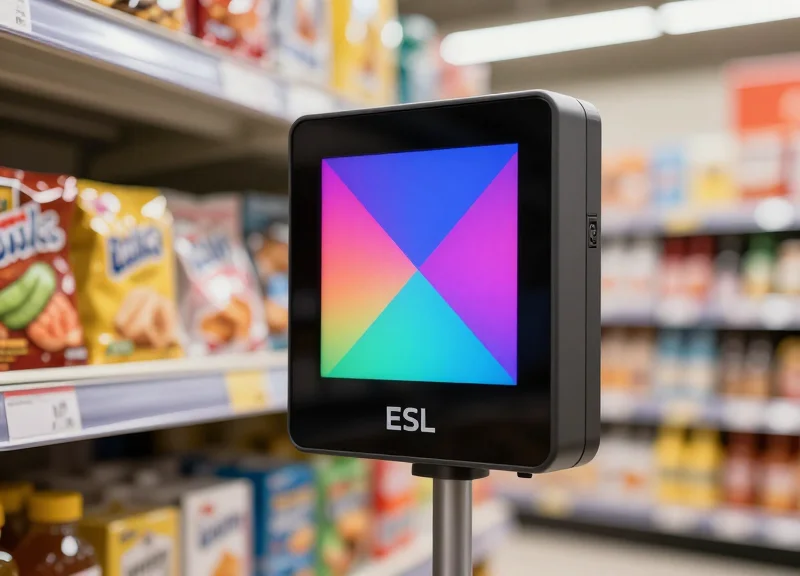
The convergence of Electronic Article Surveillance (EAS), Radio Frequency Identification (RFID), and Electronic Shelf Labels (ESL) represents the 'Digital Triple Threat' of modern logistics. While EAS shielding provides the physical security barrier at the dock, RFID offers granular item-level visibility, and ESL provides real-time status updates at the pallet or bin level. Together, they transform the loading dock from a high-risk blind spot into an intelligent, data-driven checkpoint that ensures every item leaving the facility is accounted for, authorized, and authenticated.
| Technology | Primary Role at the Dock | Synergistic Value |
|---|---|---|
| Integrated EAS | Theft Prevention & Containment | Shielding prevents false alarms while ensuring physical security remains intact during high-volume loading. |
| RFID (Ultra-High Frequency) | Bulk Inventory Identification | Automates the 'manifest vs. reality' check, identifying exactly which SKUs are passing through the dock doors. |
| ESL (Digital Signage) | Dynamic Status Visualization | Instantly signals to dock workers (via LED flashes) if a pallet is 'Ready for Ship' or 'Security Flagged'. |
Expert Tip: The 'Double-Check' Logic Gate. DragonGuardGroup systems utilize a logic gate approach where RFID identifies what is moving, and the shielded EAS confirms the security status. If an RFID reader detects an item on a pallet that hasn't been cleared in the WMS (Warehouse Management System), the integrated EAS shield acts as the physical enforcer, triggering localized alerts only at the specific dock door, preventing a full-facility disruption.
- Automated Pallet Scanning: As a pallet enters the shielded EAS zone, RFID readers capture 100% of the item data without manual line-of-sight scanning.
- Instant Manifest Validation: The system compares the captured RFID data against the digital shipping manifest in milliseconds.
- Visual Queue via ESL: The ESL attached to the pallet rack or dock door changes color: Green for verified, Red for a discrepancy (shrinkage or error).
- Shielded Verification: The EAS shield ensures that signals from neighboring docks don't interfere, guaranteeing that the 'Red' alert is 100% accurate to that specific shipment.
Can RFID replace EAS at the loading dock?
No. While RFID is excellent for tracking, it is not a dedicated security system. EAS is specifically engineered to trigger high-decibel alarms and visual deterrents. Combining them ensures you have both a record of what was lost and a physical means to prevent the loss as it happens.
How does shielding improve RFID performance?
RFID signals can 'bleed' through walls and pick up items not intended for a specific truck. DragonGuardGroup’s EAS shielding also helps contain RF energy, creating a 'clean zone' where readers only see the inventory directly in the path of the dock door.
Is the integration complex to manage?
Our DragonGuardGroup unified dashboard aggregates data from all three streams, providing a single source of truth for loss prevention officers and floor managers.
Overcoming the Cross-Talk Challenge in Logistics
In logistics, cross-talk is the phenomenon where Electronic Article Surveillance (EAS) signals from one dock pedestal interfere with another, or with nearby RFID systems, resulting in false alarms or 'blind spots.' Overcoming this requires a combination of directional signal containment, frequency synchronization, and physical shielding barriers that isolate the RF environment of each loading bay. By eliminating these phantom signals, E-commerce docks can maintain 99.9% detection accuracy even in facilities where pedestals are placed less than three meters apart.
The dense metal environment of a modern warehouse acts as a giant reflector for radio frequencies. Without precision shielding, the electromagnetic waves bounce off roll-up doors, forklifts, and metal racking, creating a 'noisy' environment. This noise is the primary reason standard EAS systems fail in industrial settings, leading many managers to deactivate systems in frustration. Integrated shielding solves this by creating a controlled 'corridor' for the signal to live in, preventing it from leaking into adjacent lanes.
| Interference Type | Cause in Logistics | Shielding Solution |
|---|---|---|
| Near-Field Cross-Talk | Pedestals placed too close together at adjacent bays. | Lead-lined or Ferrite-backed directional shielding. |
| Multipath Reflection | Signals bouncing off moving metal garage doors. | Absorptive foam panels and signal phase adjustment. |
| RFID/EAS Collision | EAS 58kHz and RFID 900MHz harmonics overlapping. | Integrated shielding with low-pass frequency filtering. |
The Pro-Tip Insight: The 'Faraday Curtain' Effect. Most competitors attempt to solve cross-talk through software sensitivity reduction, which unfortunately lowers detection rates. A veteran approach is the 'Faraday Curtain'—using specialized copper-mesh integrated directly into the pedestal housing. This doesn't just block the signal; it redirects the energy back toward the center of the detection zone, effectively doubling the signal strength where it matters while creating a 'dead zone' just 10 centimeters outside the pedestal.
How do I know if my facility has a cross-talk problem?
If your EAS pedestals alarm when there are no tags present, or if they alarm specifically when a forklift passes an adjacent bay, you are experiencing cross-talk or multipath interference.
Can software alone fix frequency interference?
No. Software can 'mask' the noise, but it often does so by reducing the sensitivity of the system. Physical integrated shielding is the only way to maintain high sensitivity without false alarms.
Does shielding interfere with warehouse Wi-Fi or RFID?
When designed correctly, integrated shielding is frequency-specific. It is engineered to block the EAS frequency (e.g., 58kHz or 8.2MHz) while remaining transparent to higher frequency Wi-Fi (2.4GHz/5GHz) and RFID signals.
- Site Survey & Spectrum Analysis: Use an RF analyzer to identify existing noise floor levels and identify 'hot zones' where metal reflection is highest.
- Implementation of Directional Shielding: Install pedestals with built-in back-shielding to ensure the detection field is projected only across the dock door.
- Phase Synchronization: Hard-wire all EAS controllers to a single master clock to ensure all pulses happen at the exact same millisecond, preventing overlapping interference.
Operational Integration: Deployment Without Downtime
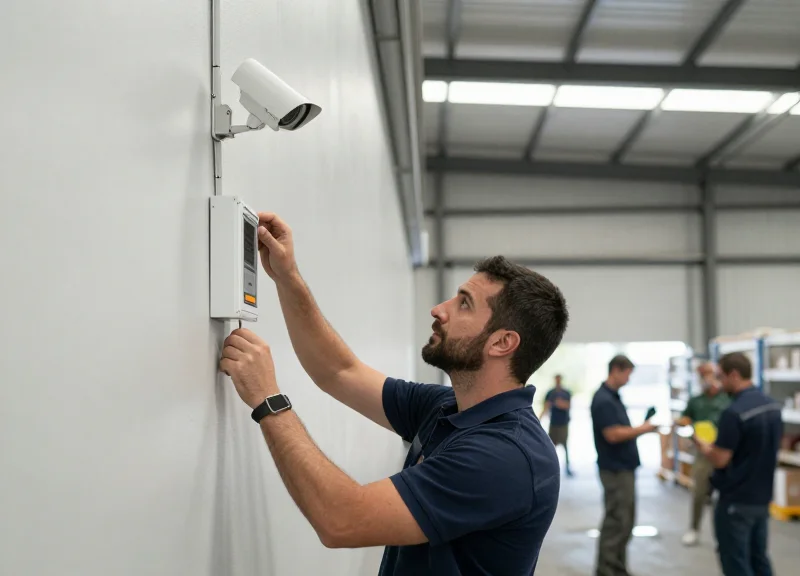
Operational integration of EAS shielding in high-volume e-commerce docks is achieved through a Modular Parallel Deployment strategy. This approach involves pre-configuring shielding components off-site and utilizing 'Shadow Lanes'—temporary parallel processing lines—to maintain 100% throughput while permanent security infrastructure is installed. By decoupling the mechanical installation from the software calibration, facilities can upgrade their loss prevention capabilities without pausing a single conveyor belt.
- Phase 1: Pre-Site Serialization: All EAS antennas and shielding panels are pre-assembled and frequency-tuned at the factory. This reduces on-site labor by 60% and eliminates the need for messy metal fabrication in clean warehouse environments.
- Phase 2: Off-Peak Implementation Windows: Installation is executed in 4-hour 'sprints' during low-activity windows (typically 2:00 AM to 6:00 AM), focusing on one loading dock at a time to ensure the rest of the facility remains operational.
- Phase 3: The 'Shadow Lane' Cutover: A new shielded lane is established adjacent to an active lane. Once validated, traffic is diverted to the new lane in under 15 minutes, allowing for the decommissioning of legacy systems without a bottleneck.
- Phase 4: Remote API Commissioning: Final sensitivity adjustments and RFID integrations are handled remotely via cloud-based diagnostic tools, removing the need for technicians to occupy floor space during peak hours.
| Feature | Traditional Installation | Integrated Modular Deployment |
|---|---|---|
| Average Downtime | 12-24 Hours per Lane | < 30 Minutes per Lane |
| On-Site Fabrication | Required (Welding/Cutting) | None (Bolt-on Components) |
| Throughput Impact | High Risk of Backlogs | Zero Impact via Shadow Lanes |
| Testing Period | Post-Installation Only | Real-time during Parallel Run |
Expert Insight: The 'Zero-Touch' Commissioning Model. Most installers fail because they attempt to calibrate sensors while employees are actively moving goods. Our unique insight is to utilize 'Synthetic Traffic Data'—simulating item movement via automated robots during the 15-minute cutover window. This ensures the system is 'battle-ready' before the first human-handled package even arrives, preventing the 'false-alarm fatigue' that often plagues new security rollouts.
Will shielding interfere with our existing Wi-Fi or RFID scanners?
No. Integrated EAS shielding is designed as a Faraday-lite enclosure, specifically tuned to block 8.2MHz or 58kHz frequencies without attenuating the 2.4GHz/5GHz bands used by warehouse management systems.
How do we train staff on new systems without slowing them down?
We utilize 'Passive Training.' The systems are designed to be invisible to the workflow unless a breach occurs. Staff only receive alerts via existing handheld devices, requiring zero change in their physical picking or loading movements.
Can the shielding be moved if we reconfigure our dock layout?
Yes. Unlike permanent concrete-anchored systems, modern integrated shielding uses a modular track-and-bolt system, allowing the entire security perimeter to be relocated within 48 hours if your facility layout changes.
Future-Proofing Your Supply Chain Security
Future-proofing your supply chain security is the strategic practice of implementing modular, frequency-agnostic Electronic Article Surveillance (EAS) and shielding infrastructures that can integrate with next-generation RFID and IoT sensors. By moving beyond static hardware and adopting 'Agile Loss Prevention' frameworks, e-commerce hubs ensure that their security perimeter evolves alongside inventory density, preventing hardware obsolescence as logistics centers transition from 8.2MHz systems to high-speed UHF RFID and 5G-enabled asset tracking.
| Feature | Legacy Security Systems | Future-Proofed EAS Shielding |
|---|---|---|
| Frequency Range | Fixed (e.g., 58kHz only) | Multi-Spectrum/Hybrid |
| Data Integration | Siloed Alarm Events | API-Ready / Cloud Analytics |
| Scalability | Full Hardware Replacement | Modular Expansion Kits |
| Detection Path | Single Point of Failure | Mesh-Network Redundancy |
Expert Insight: The Rise of Dynamic Spectrum Management (DSM). As a veteran of the tech industry, I’ve seen many warehouses fail because their security hardware couldn't handle the 'noise' of new technologies. A unique trend for 2024 is the shift toward DSM-compatible shielding. This isn't just about blocking signals; it's about selectively filtering frequencies so your security tags are detected with 99.9% accuracy even while your warehouse robots operate on 2.4GHz or 5GHz bands. This 'Selective Permeability' is the hallmark of a truly modern dock.
How does EAS shielding accommodate the shift to RFID?
Modern shielding acts as a controlled environment. By isolating the dock area, it prevents 'stray reads' where an RFID reader might accidentally log items still on the shelf, ensuring only products leaving the building are processed.
Is the hardware compatible with AI-driven video surveillance?
Yes. Future-proofed systems integrate EAS triggers with NVR (Network Video Recorder) systems, automatically bookmarking footage when a shielding breach occurs, allowing for instant AI-driven forensic analysis.
What is the lifespan of an integrated shielding solution?
With modular upgrades, a high-quality integrated shielding system can have an operational lifecycle of 10-15 years, far outlasting standard plug-and-play pedestals.
- Audit the Current Spectrum: Identify all active frequencies in your warehouse, from Wi-Fi to legacy EAS, to ensure your new shielding provides adequate attenuation across the board.
- Prioritize Interoperability: Select hardware that uses open protocols (like MQTT or JSON-based APIs) to ensure it can communicate with future Warehouse Management Systems (WMS).
- Implement Phased Scaling: Don't rip and replace. Install shielding at high-risk dock doors first, then use the captured ROI to fund a facility-wide rollout.