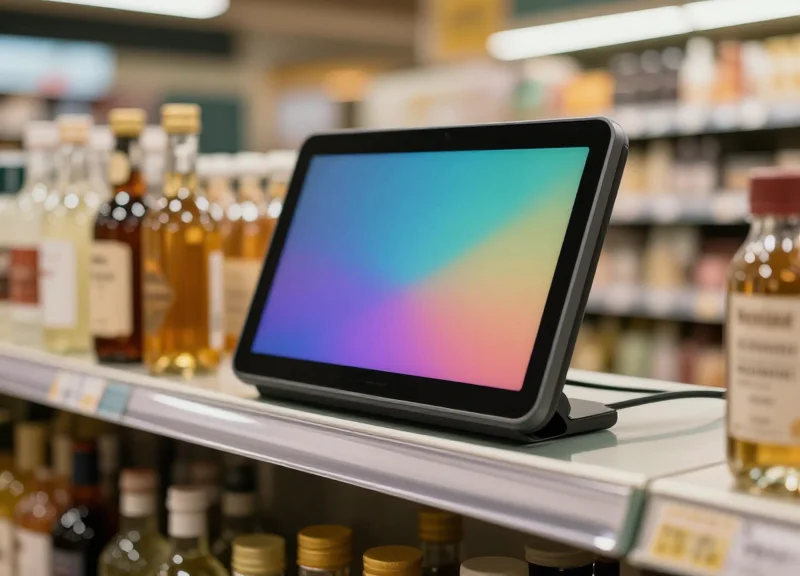
The luxury watch industry is currently navigating a pivotal transformation where heritage craftsmanship meets cutting-edge security. As we look toward 2026, the 'Great Shift' is becoming clear: high-end boutiques are moving away from bulky, intrusive security pedestals in favor of integrated ESL-RFID hybrid systems. This transition is driven by a need for invisible yet impenetrable security that complements the high-aesthetic demands of luxury horology. By merging Electronic Shelf Labels (ESL) with Radio Frequency Identification (RFID), retailers are finding a solution that offers real-time inventory precision and loss prevention without compromising the customer's sensory experience.
The Death of the Pedestal: Why Aesthetics Define 2026 Luxury Retail

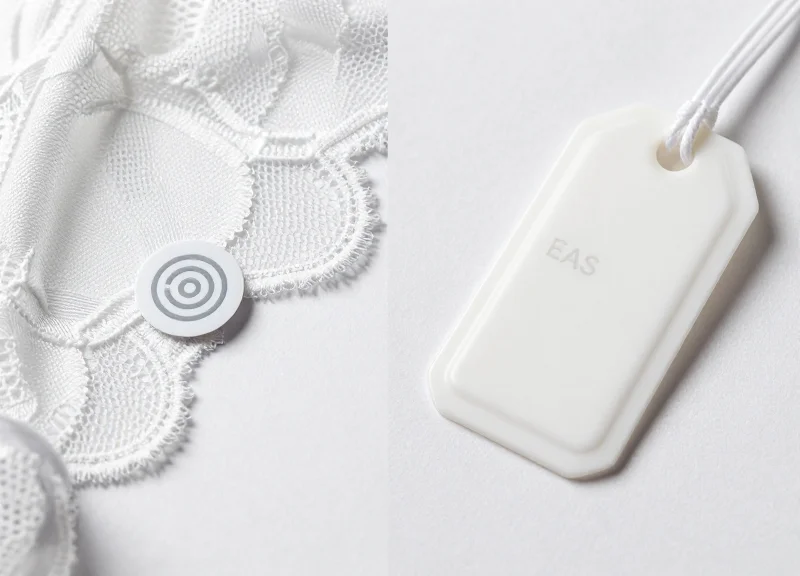
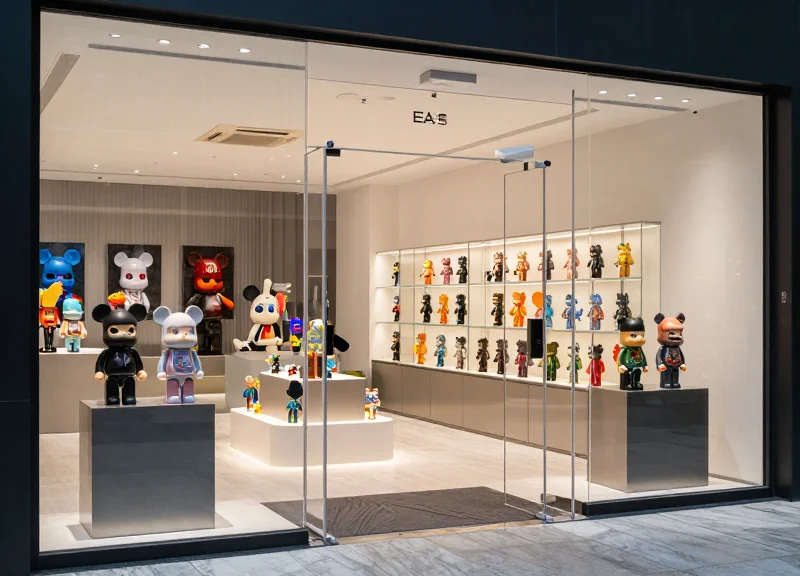
In 2026, the 'Death of the Pedestal' refers to the strategic removal of bulky Electronic Article Surveillance (EAS) gates from luxury storefronts to eliminate visual friction and restore brand prestige. High-end horology boutiques are replacing these intrusive plastic towers with integrated Electronic Shelf Label (ESL) and RFID hybrid systems that provide 360-degree security coverage without compromising the architectural integrity of the store entrance. This shift is driven by a 'frictionless' retail philosophy where security is treated as an invisible digital layer rather than a physical barrier.
| Feature | Traditional EAS Pedestals | 2026 ESL-RFID Hybrids |
|---|---|---|
| Visual Impact | High: Clutters entrance, creates 'security gate' feel. | Zero: Invisible sensors integrated into store design. |
| Customer Psychology | Defensive: Implies distrust toward the patron. | Welcoming: Promotes open-entry luxury exploration. |
| Functionality | Reactive: Alarms only when a tag passes the gate. | Proactive: Real-time inventory and location tracking. |
| Spatial Design | Restricted: Limits entryway width and layout. | Flexible: Enables wide, 'seamless' architectural flows. |
Luxury horology relies on 'Threshold Psychology'—the emotional state of a client as they step from the street into a curated world of craftsmanship. For decades, traditional pedestals have acted as a psychological speed bump, subtly signaling a environment of surveillance that clashes with the hospitality-first approach of modern retail. Industry data suggests that visible security gates can reduce 'impulse entry' from high-net-worth individuals by up to 18%, as the physical barrier creates an unconscious association with high-traffic, low-value retail environments. By migrating security to the ESL-RFID hybrid level, brands can maintain 99.9% inventory accuracy while presenting a completely unobstructed facade.
Why are luxury watch brands leading this shift?
The high price point and low physical volume of luxury watches make them ideal for RFID tracking. Unlike fast fashion, where volume makes individual tracking difficult, a watch boutique can monitor every high-value asset in real-time without needing a physical gate.
Does the removal of pedestals increase theft?
Counter-intuitively, no. ESL-RFID hybrids provide 'Total Store Visibility,' alerting staff the moment a piece is moved out of its designated zone, which is a more effective deterrent than a gate that only triggers at the exit.
What is the primary aesthetic benefit for 2026 store design?
Architects can now utilize 'Infinite Thresholds,' where the flooring and lighting design can continue seamlessly from the sidewalk into the store without being broken by the mounting bolts and cables required for traditional EAS towers.
Expert Tip: To maximize the 2026 aesthetic shift, retailers should look for 'Invisible Gate' solutions that hide RFID readers within the ceiling or floor joists. This creates a geofenced 'safe zone' that triggers silent alerts to floor staff's haptic devices, allowing for a discreet security response that preserves the luxury atmosphere during an incident.
Understanding the Hybrid Advantage: What is an ESL-RFID Tag?
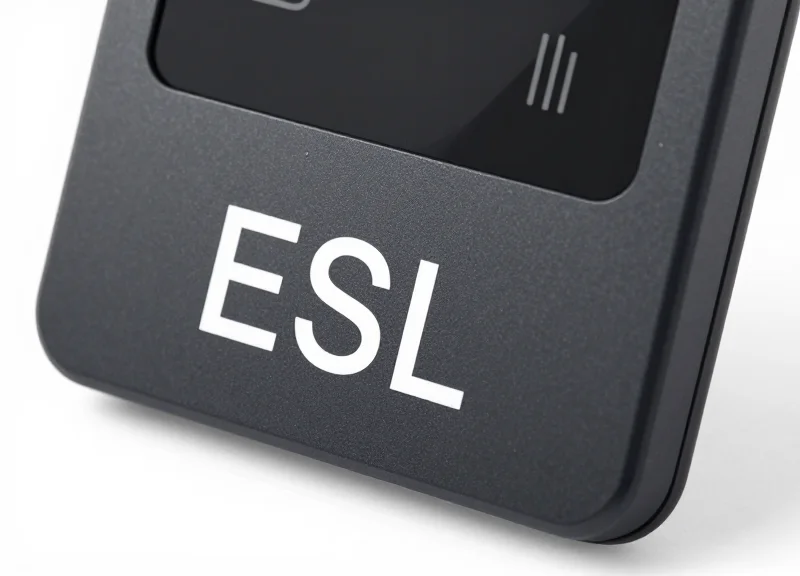
An ESL-RFID tag is a converged hardware solution that combines Electronic Shelf Label (ESL) technology with Radio Frequency Identification (RFID) into a single, sleek device designed for the high-stakes environment of luxury retail. By integrating a high-contrast E-ink display for consumer-facing price and provenance data with a hidden ultra-high frequency (UHF) antenna, these hybrids allow horology boutiques to maintain a 'digital twin' of every timepiece. This ensures that the physical display on the watch's stand is always perfectly synchronized with the global inventory database, the brand's e-commerce pricing, and the store's invisible security perimeter.
| Feature | Traditional ESL | Standalone RFID | Hybrid ESL-RFID |
|---|---|---|---|
| Visual Interface | Dynamic E-ink | None (Internal) | High-Res E-ink Display |
| Inventory Tracking | Manual/Slow | Automated/Fast | Real-Time/Continuous |
| Security Protocol | Visual Only | Exit Pedestals | Spatial 'Tethering' |
| Omnichannel Sync | Partial | Backend Only | Full 1:1 Integration |
The technical synergy between these two technologies solves a long-standing friction point in luxury watch sales: the need to choose between aesthetic elegance and operational security. In a hybrid system, the ESL component manages the front-end experience (showing currency-adjusted prices or 'limited edition' statuses), while the RFID component handles the back-end logistics. Because both share a single power source and logic board, the footprint of the tag is small enough to fit inside a watch case or clip discreetly onto a leather strap without detracting from the timepiece's craftsmanship.
How does the tag communicate without Wi-Fi?
Most next-gen hybrids utilize Sub-GHz or BLE (Bluetooth Low Energy) for display updates and UHF for inventory tracking. This 'dual-mode' approach ensures the signal can penetrate glass displays and metallic watch safes without the interference issues common with standard Wi-Fi.
Is the battery life sufficient for high-end retail?
Yes. Because E-ink only consumes power during a state change (refreshing the price) and modern RFID chips are incredibly efficient, these devices typically offer a 5 to 7-year battery life, making them a 'set-and-forget' infrastructure investment.
Does it interfere with mechanical watch movements?
No. The low-energy pulses used for RFID pings are non-magnetic and operate at frequencies that do not affect the delicate hairsprings or escapements of mechanical movements.
Expert Insight: The 'Silicon Valley' breakthrough for 2026 is the implementation of 'Active Spatial Tethering.' Unlike traditional tags that only alert you at the door, hybrid tags use the ESL's microcontroller to monitor the RFID signal strength relative to store-wide sensors. If a watch is moved from its designated 'VIP Room' to a 'High-Risk Zone' without a sales associate's digital handshake, the E-ink display itself can flash a 'Secure Mode' warning, turning the product into its own security guard.
Eliminating 'Ghost Stock' with Real-Time Inventory Precision

Ghost stock—inventory that appears in the system but is physically missing or misplaced—is the silent killer of luxury horology sales. When a client requests a specific reference and the salesperson cannot locate it despite the ERP showing availability, the brand suffers both a lost commission and a significant blow to prestige. ESL-RFID hybrids solve this by replacing periodic manual counts with a 'live' inventory state. By integrating the Electronic Shelf Label (ESL) for visual pricing with a high-sensitivity RFID inlay, every watch becomes a node in a real-time network, ensuring 99.9% accuracy from the moment a piece leaves the secure vault until it is cleared at the point of sale.
| Feature | Traditional Manual Audits | ESL-RFID Hybrid Tracking |
|---|---|---|
| Inventory Accuracy | 70% - 85% (Due to human error) | 99.9% (Automated verification) |
| Audit Frequency | Daily or Weekly | Continuous / Real-Time |
| Labor Requirement | High (2+ hours per session) | Near-Zero (Autonomous) |
| Shrinkage Detection | Delayed (Post-audit) | Instantaneous (Real-time alerts) |
Expert Insight: The '30-Second Pulse' Audit. In 2026, the industry standard is shifting from active scanning to 'Pulse Polling.' Unlike traditional RFID where staff walk around with a handheld reader, next-gen boutique setups utilize overhead fixed readers that poll every ESL-RFID tag every 30 seconds. This creates a digital 'tether'—if a Breguet or Vacheron Constantin leaves its designated zone without an authorized sales trigger, the system flags the anomaly before the piece even reaches the exit.
- Vault Entry: As a timepiece arrives, a hybrid tag is assigned. The RFID component logs the serial number into the cloud while the ESL displays the correct SKU and regional pricing.
- Automated Reconciliation: The system constantly cross-references the physical location of the tag against the digital sales record, ensuring 'Ghost Stock' never populates the web-store or boutique displays.
- Display Transition: Moving a watch from the vault to the window triggers an automatic update in the inventory ledger, reflecting 'On-Display' status without manual data entry.
Does the system work inside lead-lined safes?
Modern luxury safes are being retrofitted with internal RFID antennas. This allows for 'Closed-Door Auditing,' where the system can verify every piece inside the vault without ever opening the heavy security doors.
How does it handle 'Timepiece in Hand' scenarios?
When a sales associate removes a watch for a client viewing, the system recognizes the movement. If the tag is not returned to a sensor-equipped tray or vault within a set timeframe, a discrete notification is sent to management.
Can it prevent mis-shelving in the vault?
Yes. The ESL component can be triggered to 'Flash' an LED light, helping staff find specific references or identify pieces that are stored in the wrong compartment during high-volume periods.
Invisible Geofencing: The Future of High-Value Loss Prevention
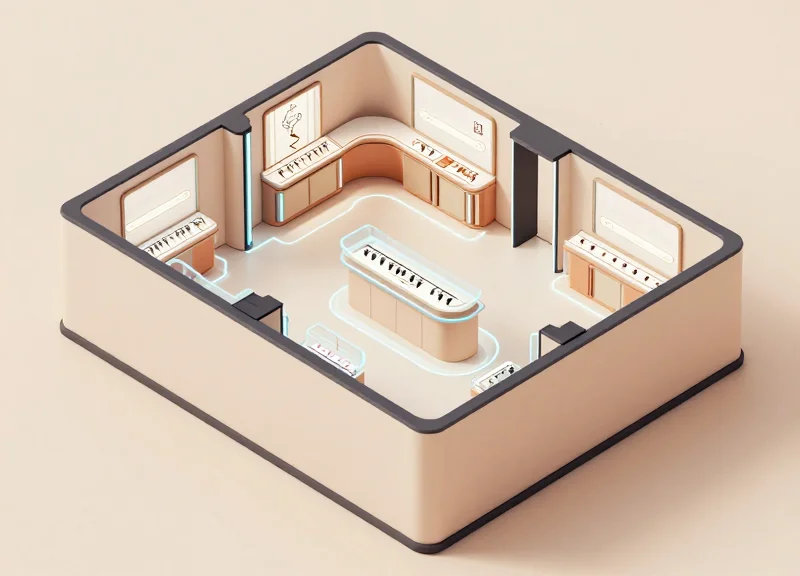
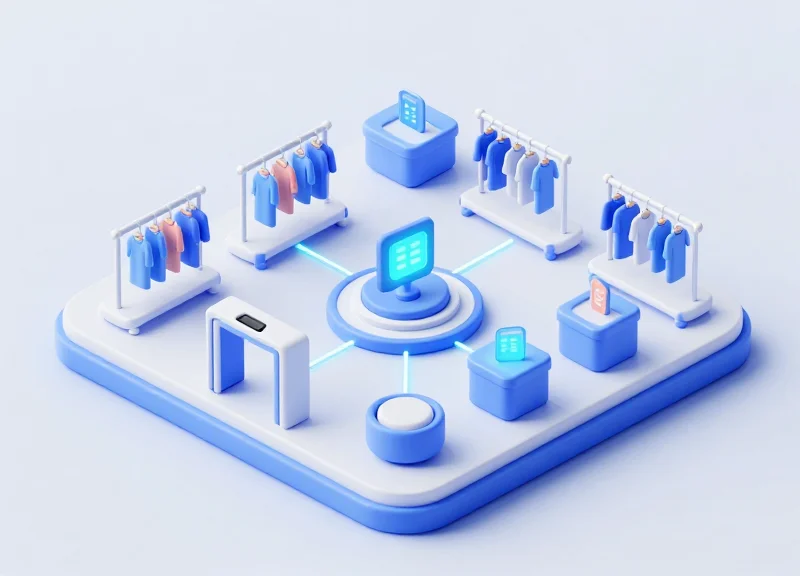
Invisible geofencing is a software-defined security architecture that utilizes ceiling-mounted RFID sensors and hybrid ESL-RFID tags to create precise, virtual perimeters around a retail space. Unlike traditional Electronic Article Surveillance (EAS) which relies on physical pedestals at exits, invisible geofencing monitors the coordinates of every timepiece in real-time. By mapping the store's floor plan into digital zones, the system can differentiate between a watch being moved to a private viewing room and one approaching an unauthorized exit, triggering silent alerts or locking electronic doors before a loss occurs.
| Feature | Traditional EAS Pedestals | Invisible Geofencing (ESL-RFID) |
|---|---|---|
| Visual Impact | Bulky physical barriers at entrances | Completely hidden (ceiling-mounted) |
| Detection Range | Strict 3-6 foot gate width | Wide-area 3D spatial monitoring |
| Alert Logic | Binary (Tag present / Not present) | Context-aware (Directional & Zonal) |
| Customer Experience | Creates 'Security Anxiety' at entry | Frictionless, open-concept luxury |
Expert Insight: The 'Micro-Zoning' Strategy. While standard security focuses on the exit, the true power of invisible geofencing in luxury horology lies in micro-zoning. You can designate high-value display cases as 'Primary Zones' and the client lounge as a 'Service Zone.' If a watch moves from Primary to Service, no alarm triggers. However, if that same watch moves toward a 'Blind Spot' or 'Threshold Zone' without an associated staff member's wearable tag nearby, the system initiates a 'Soft Alert' to staff devices. This proactive intervention is impossible with legacy pedestals.
- Spatial Mapping: The store’s layout is digitized into a coordinate system, defining safe, transition, and high-risk zones.
- Continuous Polling: Overhead RFID readers poll hybrid tags hundreds of times per second, maintaining a 'Digital Chain of Custody'.
- Contextual Analysis: AI algorithms determine if the movement is legitimate (e.g., a sale in progress) or suspicious (e.g., rapid movement toward the door).
- Automated Response: The system triggers haptic alerts on staff smartwatches, updates CCTV focus to the item's coordinates, or activates smart locks.
Can geofencing handle 'shielding' attempts?
Yes. Modern ESL-RFID hybrids utilize high-sensitivity antennas and 'tag-is-missing' logic. If a tag's signal is suddenly lost (shielded) within the store, an immediate localized alert is triggered.
Will ceiling sensors interfere with store aesthetics?
No. Most high-gain RFID sensors are designed to look like standard smoke detectors or are recessed into the ceiling, maintaining the minimalist look required for luxury boutiques.
Is the system prone to false alarms from passersby?
Unlike pedestals that alarm when someone walks too close to the gate, geofencing uses directional logic to only trigger when an item actually crosses the digital threshold from the inside out.
Enhancing the Collector's Journey through Interactive ESL
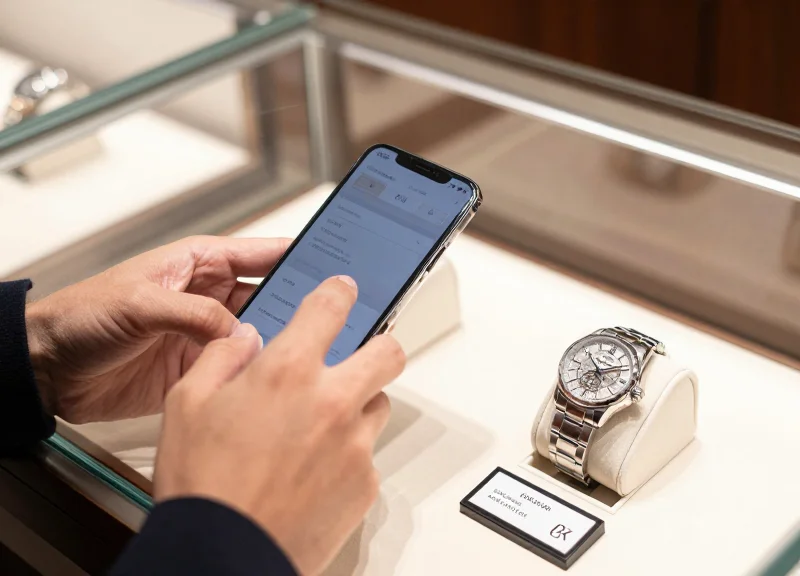
Interactive ESL-RFID hybrids act as the digital bridge between a physical timepiece and its digital narrative, allowing collectors to unlock a watch's provenance, caliber specifications, and limited-edition status through a simple smartphone tap. By integrating NFC (Near Field Communication) and QR technologies into the security tag itself, luxury horology brands are replacing the static, 'look-but-don't-touch' environment with a frictionless, self-guided discovery phase that empowers the modern, tech-savvy collector before they even engage a sales associate.
- Provenance on Demand: Collectors can instantly verify the manufacturing history, artisan details, and 'Swiss Made' certifications via secure blockchain links embedded in the tag.
- Real-Time Technical Specs: Access deep-dive data including power reserve, vibration frequency (Hz), water resistance, and movement blueprints without waiting for a printed catalog.
- Augmented Reality (AR) Integration: Scanning the ESL can trigger an AR experience on the customer's phone, showing an exploded view of the watch's complications or an 'on-wrist' virtual try-on.
- Personalized Concierge Linking: With one tap, a customer can request a private viewing or signal a specialist that they are interested in a specific complication.
| Feature | Traditional Security Pedestal Model | Next-Gen ESL-RFID Hybrid Model |
|---|---|---|
| Customer Role | Passive observer limited by glass barriers. | Active participant with digital autonomy. |
| Information Flow | Dependent on sales staff availability. | Instant, on-demand digital technical specs. |
| Security Feel | Intrusive; physical alarms and visible tags. | Invisible; integrated into a high-res display. |
| Engagement Data | Unknown until a sale is made. | Captures 'intent data' when tags are scanned. |
Expert Insight: The true power of the 2026 shift lies in 'Contextual Retargeting.' When a collector scans an ESL-RFID tag, the boutique captures anonymized intent data. If the collector leaves without purchasing, the brand can leverage that interaction to provide personalized digital content or invitations to exclusive horology events centered around that specific model. This turns a security device into a top-of-funnel lead generation tool, effectively extending the boutique experience into the collector's digital life.
Does the tag require an app to be downloaded?
No. Modern ESL-RFID hybrids utilize native NFC capabilities and web-based AR (WebAR), meaning collectors can access all features through their phone's default browser or wallet app.
How does this impact the role of the sales associate?
It elevates the associate from a 'fact-provider' to a 'relationship-builder.' Since the client has already accessed basic specs, the associate can focus on the emotional storytelling and heritage of the brand.
Is the digital content secure?
Yes. Most luxury brands use encrypted URLs and tokens to ensure that the provenance data accessed via the ESL is authentic and cannot be spoofed by third parties.
The ROI of Integration: Labor Savings and Reduced Shrinkage
The Return on Investment (ROI) for next-gen ESL-RFID hybrids is driven by 'Infrastructure Convergence'—the replacement of disparate, high-maintenance security pedestals and manual paper labeling with a single, unified digital ecosystem. By consolidating electronic shelf labeling and long-range asset tracking into one device, luxury watch retailers can achieve a financial break-even point within 14 to 18 months. This is primarily achieved through the total elimination of manual inventory audits and a significant reduction in 'shrinkage' (inventory loss) which, for luxury horology, represents an average of 1.4% of total retail value annually.
| Financial Metric | Legacy Systems (Pedestals + RFID) | Next-Gen Hybrid (ESL-RFID) |
|---|---|---|
| Hardware Capex | High (Dual systems + Entrance Pedestals) | Medium (Single infrastructure + Overhead sensors) |
| Annual Maintenance | Estimated $5k-$12k per boutique | Estimated $1k-$2k (Cloud-managed) |
| Inventory Labor Time | 12-16 hours per week (Manual count) | Near Zero (Real-time automated audit) |
| Shrinkage Reduction | Reactive (Alarm sounds at exit) | Proactive (Geofencing alerts before exit) |
The most significant 'hidden' ROI comes from the elimination of what I call 'Phantom Labor.' In luxury retail, every minute a high-commission sales professional spends scanning barcodes or manually updating price tags for a currency fluctuation is a minute they aren't engaging with a client. By automating the sync between the ERP and the display case, stores recover hundreds of high-value labor hours per year. Furthermore, the 2026 shift removes the recurring cost of security pedestal calibration and false-alarm troubleshooting, which often requires expensive on-site technician visits.
How does the hybrid system reduce internal shrinkage?
The system creates a permanent digital audit trail for every employee interaction. If a Patek Philippe is moved from the display to the back room without a corresponding sales record, the system logs the specific employee credential near the sensor, drastically reducing 'sweethearting' and internal theft.
Can I repurpose the savings for marketing?
Absolutely. Retailers using these systems typically reallocate the 15% budget previously spent on security maintenance and manual labor into personalized customer relationship management (CRM) and private viewing events.
What is the lifespan of these hybrid tags?
Modern ESL-RFID hybrids are designed for a 5-to-10-year battery life, ensuring that the ROI is not eroded by frequent hardware replacements or battery maintenance cycles.
Expert Insight: The 'Provenance Premium'. Beyond labor and shrinkage, there is a quantifiable 'Provenance Premium' ROI. In the 2026 market, the hybrid tag acts as a digital birth certificate. By maintaining a 100% accurate, real-time record of a timepiece's location and handling history from the moment it enters the boutique, you increase the secondary market trust and the initial sales velocity, as collectors increasingly demand a documented, secure chain of custody.
Case Study: The 2026 Transition Strategy for Horology Boutiques
The 2026 transition strategy for horology boutiques is a modular three-phase framework designed to decommission legacy Electronic Article Surveillance (EAS) pedestals in favor of a unified ESL-RFID infrastructure. This strategy focuses on migrating high-value inventory to hybrid tags that combine 433MHz active signaling for price updates with UHF RFID for invisible, overhead security sensing. By implementing this shift, boutiques can eliminate floor-standing security gates that obstruct store aesthetics while achieving 99.9% real-time inventory visibility and enhanced digital clienteling capabilities.
| Phase | Strategic Objective | Key Deliverable |
|---|---|---|
| Phase 1: Audit & Infrastructure | Map boutique blind spots and network capacity for overhead RFID arrays. | Digital Twin of boutique floorplan with sensor heatmaps. |
| Phase 2: Hybrid Shadowing | Deploy ESL-RFID tags while maintaining legacy pedestals for 'shadow' testing. | Loss Prevention (LP) accuracy validation report. |
| Phase 3: Full Cutover | Physical removal of EAS pedestals and full API integration with ERP/CRM. | Seamless 'Open-Concept' boutique environment. |
- Infrastructure Overhaul: Install discreet overhead RFID readers (fixed at entry/exit and display points) to create a continuous monitoring zone that replaces the 'gate' model.
- Hybrid Tag Deployment: Attach next-gen ESL-RFID tags to timepiece cushions or bracelets, enabling immediate pricing updates and real-time movement alerts.
- Software Synchronization: Connect the RFID middleware to the store's POS and ERP to ensure that an 'unpaid' status triggers an invisible alert if the watch leaves its zone.
- Pedestal Decommissioning: Once the overhead system reaches 100% detection reliability, remove the visual barriers at the store front to enhance the luxury entry experience.
Expert Insight: The 'Shadow Inventory Protocol' In my 20 years of tech integration, the biggest mistake I see is a 'hard' cutover. To ensure 0% shrinkage during the 2026 shift, I recommend the Shadow Inventory Protocol. This involves running the new ESL-RFID system in 'silent mode' for 90 days. During this period, security alerts go to staff tablets rather than store-wide alarms. This allows you to calibrate the sensitivity of overhead sensors against 'safe' customer behaviors—like trying on a watch at the lounge—before the legacy gates are physically removed. This turns a security upgrade into a precision-tuned data operation.
Will ESL-RFID tags affect the watch movement?
No. Modern hybrid tags use low-power, passive UHF and shielded active frequencies that do not emit electromagnetic interference (EMI) capable of affecting mechanical or quartz movements.
Is the system compatible with vintage timepieces?
Yes. Specialized non-adhesive hybrid tags are designed for delicate vintage bracelets and straps, ensuring security without compromising material integrity.
What is the average timeline for a boutique rollout?
A complete transition—from initial site audit to the physical removal of security pedestals—typically takes 4 to 6 months per location.
Standardization and Global Compliance in Luxury Security
Standardization in luxury security is the transition from proprietary, localized anti-theft systems to a unified global framework governed by EPCglobal Class 1 Gen 2 (ISO/IEC 18000-63) protocols. For the 2026 shift, this means ESL-RFID hybrids must operate on a universal frequency architecture that allows a timepiece protected in Geneva to be tracked, authenticated, and secured in Shanghai or New York without hardware reconfiguration. DragonGuardGroup leads this transition by ensuring all hybrid tags meet strict international regulatory requirements, providing a 'frictionless' security layer that complies with both telecommunications laws and data privacy mandates.
| Region | Frequency Band | Compliance Standard | Role of Hybrid ESL-RFID |
|---|---|---|---|
| North America | 902–928 MHz | FCC Part 15 | High-speed bulk inventory & exit security. |
| Europe | 865–868 MHz | ETSI EN 302 208 | GDPR-compliant consumer privacy & item tracking. |
| Japan | 916–921 MHz | TELEC / ARIB | High-precision localization in dense boutiques. |
| Global | Agile/Hopping | EPC Gen2 V2 | Unified data handshake for cross-border logistics. |
Expert Insight: The Rise of 'Frequency Agility' in Luxury Assets. A common pitfall for international boutiques is the 'dead zone' created when shipping high-value stock between regions with different UHF regulations. DragonGuardGroup’s next-gen hybrids utilize Dynamic Frequency Tuning (DFT). This original technology allows the ESL-RFID tag to automatically calibrate its resonance to the local authorized spectrum the moment it connects to a store's local gateway. This eliminates the need for region-specific SKUs for security hardware, drastically simplifying global supply chain management.
How does EPC Gen2 V2 protect customer privacy?
The Gen2 V2 standard includes 'Untraceable' commands that allow retailers to hide portions of the memory or reduce the read range after a sale, ensuring the luxury watch cannot be tracked by unauthorized parties once it leaves the boutique.
Is DragonGuardGroup hardware compatible with existing ERP systems?
Yes. By adhering to global GS1 standards, our ESL-RFID hybrids communicate via standard APIs, allowing seamless integration with SAP, Oracle, and bespoke luxury inventory platforms without custom middleware.
What is the impact of the EU Digital Product Passport (DPP) on security?
The 2026 shift aligns with the EU's mandate for digital passports. Our hybrid tags serve as the physical carrier for this data, combining mandatory sustainability compliance with high-end loss prevention in a single silicon chip.
In conclusion, standardization is no longer just a technical requirement—it is a strategic asset. By adopting globally compliant ESL-RFID hybrids, horology brands future-proof their operations against evolving regulations while ensuring that their security infrastructure enhances, rather than hinders, the global movement of their most precious assets.