In the precision-driven world of biobanking and clinical research, the integrity of sample data is as critical as the biological material itself. Managing thousands of vials at -196℃ in liquid nitrogen presents a unique challenge: traditional labeling fails, and manual logging is prone to error. This 2026 procurement guide dives into the advanced RFID technologies designed to survive extreme thermal shock, ensuring seamless traceability from the lab to the freezer.
The Evolution of Cryogenic Tracking: Why RFID is Non-Negotiable in 2026

In the 2026 landscape of biobanking and clinical logistics, the transition from manual barcode scanning to automated RFID tracking is complete. RFID technology is no longer an optional luxury; it is a non-negotiable requirement for high-stakes cryogenic environments. Unlike traditional labeling methods, RFID allows for the simultaneous identification of hundreds of vials at -196℃ without requiring a direct line-of-sight. This capability is critical because it prevents the 'thermal shock' that occurs when samples are repeatedly pulled from liquid nitrogen for manual identification. By enabling batch processing and real-time inventory updates through frost and storage containers, RFID ensures that the cold chain remains unbroken and data integrity remains absolute.
| Feature | Legacy Barcoding | 2026 Cryo-RFID Standards |
|---|---|---|
| Scanning Method | One-by-one, Line-of-sight | Bulk/Batch, Non-line-of-sight |
| Frost Tolerance | Scanning fails if frosted | Signal penetrates frost/ice |
| Data Capacity | Static ID Only | Up to 2KB Read/Write storage |
| Processing Speed | 30-60 seconds per rack | Sub-second rack scanning |
| Durability | Prone to ink degradation | Encapsulated for -196℃ stability |
Why is Line-of-Sight no longer acceptable?
In modern high-density storage, moving a sample to align it with a laser scanner introduces ambient heat. RFID allows 'in-situ' scanning, meaning samples are identified while remaining deep within the nitrogen vapor phase, preserving sample viability.
How does RFID improve regulatory compliance?
With the 2026 updates to global biobanking standards (ISO 20387), automated audit trails are now prioritized. RFID provides a time-stamped digital footprint of every sample movement, reducing the risk of 'lost' samples that plague manual entry systems.
What about the cost-to-value ratio?
While unit costs for RFID are higher than paper labels, the 98% reduction in labor hours for inventory counts and the elimination of sample loss through thermal degradation offer a ROI that typical barcode systems cannot achieve.
Expert Insight: In 2026, we are seeing the rise of 'Signal-Adaptive Substrates'. Advanced cryogenic RFID labels now utilize specialized antenna geometries that actually leverage the dielectric properties of liquid nitrogen to stabilize signal resonance. This means that instead of the cold hindering the signal, the label's construction is specifically tuned to be most efficient at -196℃, a technical breakthrough that has finally solved the 'detuning' issues found in first-generation cryo-tags.
Understanding the Physics: Survival at -196℃

Survival at -196℃ (the boiling point of liquid nitrogen) requires RFID labels to overcome the 'Glass Transition' point, where standard polymers become ultra-brittle and lose their adhesive properties. For an RFID tag to remain functional, it must be engineered with a matched Coefficient of Thermal Expansion (CTE) across all layers—substrate, adhesive, and inlay—to prevent the violent physical contraction that typically causes delamination or micro-cracking of the silicon chip.
| Material Property | Standard RFID Labels | 2026 Cryo-Spec RFID |
|---|---|---|
| Substrate Base | Standard Polyester (PET) | Specialized Polyimide or Cast Film |
| Adhesive Type | General Purpose Acrylic | High-Tack Cross-linked Cryo-Acrylic |
| Glass Transition (Tg) | -20℃ to -40℃ | Engineered for -196℃ stability |
| Thermal Shock Resistance | Poor (Cracks on immersion) | High (Vapor phase to LN2 ready) |
When a label is plunged into liquid nitrogen, it undergoes an instantaneous temperature drop of nearly 220℃. This 'Thermal Shock' causes materials to contract at different rates. If the adhesive is too rigid, it will 'pop' off the vial. If the film is too stiff, it will shatter like glass. Modern 2026 procurement standards now mandate 'Z-axis elasticity,' allowing the label to move with the expansion and contraction of the plastic or glass storage vessel without breaking the delicate silver ink or copper antenna trace.
What exactly is the 'Pop-Off' effect?
The 'Pop-Off' effect occurs when the adhesive's bond strength is overtaken by the internal shear stress caused by rapid contraction. Cryogenic labels use adhesives that flow into the microscopic pores of the container before freezing into a permanent mechanical lock.
Does the RFID chip itself freeze?
The silicon IC (Integrated Circuit) is naturally resistant to cold, but the connection points (bumps) between the chip and the antenna are vulnerable. Cryo-tags use underfill encapsulates to protect these junctions from mechanical stress.
Why is 'Vapor Phase' storage different from 'Liquid Phase'?
Liquid phase immersion (-196℃) is more demanding than vapor phase (-150℃ to -190℃) because the liquid acts as a more efficient thermal conductor, accelerating the shock to the material's molecular structure.
Expert Insight: The CTE Mismatch Factor. As a 20-year veteran of hardware sourcing, I can tell you that the #1 cause of RFID failure in biobanking isn't the cold—it's the rate of recovery. In 2026, we are seeing a shift toward 'Anisotropic Conductive Films' (ACF) in tag construction. These films manage the Coefficient of Thermal Expansion (CTE) mismatch between the rigid silicon chip and the flexible tag substrate, ensuring that even as the tag shrinks at -196℃, the electrical connection remains unbroken. Always ask your vendor for the CTE delta between their substrate and typical polypropylene labware.
Key Components of a High-Performance Cryogenic RFID Tag
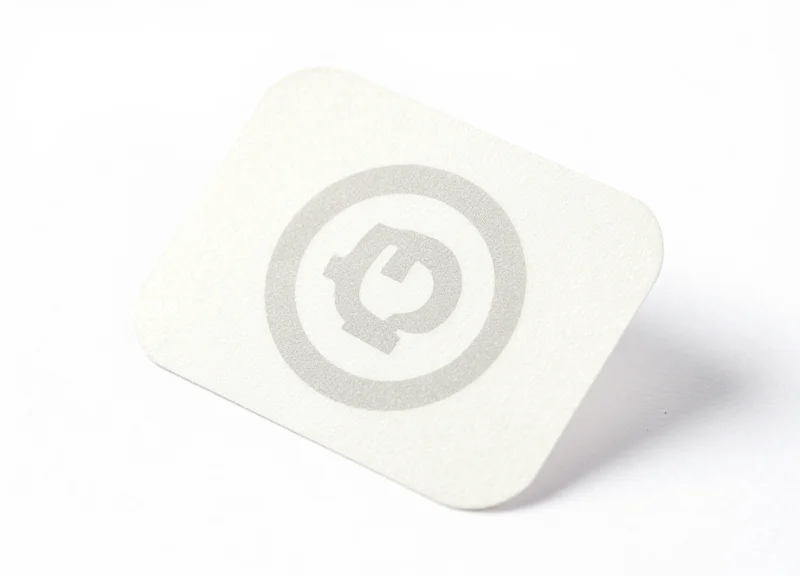
A high-performance cryogenic RFID tag is a multi-layered assembly engineered to maintain electrical conductivity and physical adhesion at -196°C. Unlike standard RFID labels, which shatter or lose data in extreme cold, these specialized tags utilize low-temperature stable Integrated Circuits (ICs), precision-etched antennas, and cryogenic-grade substrates with matched coefficients of thermal expansion. The synergy of these components ensures that the tag can survive the violent 'thermal shock' of being moved from room temperature directly into liquid nitrogen (LN2) without delaminating or suffering circuit failure.
| Component | Recommended Material/Spec | Cryogenic Benefit |
|---|---|---|
| Integrated Circuit (IC) | Monza R6-P or UCODE 9 | High sensitivity and reliable memory retention at sub-zero temperatures. |
| Antenna | Etched Aluminum or Copper | Maintains conductivity and resists cracking better than printed silver ink. |
| Substrate | Polyimide (Kapton) or Cryo-PET | Extreme flexibility; does not become brittle or crack at -196°C. |
| Adhesive | High-Tack Acrylic (Solvent-based) | Aggressive bond that prevents 'flagging' when plastic vials contract. |
Expert Insight: The CTE Matching Factor. The secret to a 2026-grade cryo-tag isn't just the materials, but their 'Coefficient of Thermal Expansion' (CTE). When a tag drops 215 degrees in seconds, the metal antenna and the plastic substrate contract at different rates. If the CTE is not matched, the internal 'bumps' (the microscopic solder points connecting the chip to the antenna) will shear off, rendering the tag dead. Always specify tags that use 'Stress-Relief Bridge' designs in their antenna geometry to absorb this mechanical strain.
Why can't I use standard thermal transfer ribbons with these tags?
Standard wax or resin ribbons will flake off at -196°C. High-performance cryo-tags require specialized high-resin ribbons that chemically bond with the topcoat to ensure the human-readable text remains legible after years in LN2 storage.
Do all RFID chips work at -196°C?
No. While most silicon chips can survive the cold, many experience 'frequency shifting' where the electrical properties change, making them unreadable. Only ICs tested for cryogenic consistency should be used in lab environments.
What is the role of the protective laminate?
A high-quality over-laminate protects the inlay from moisture ingress during the thawing process, which is the primary cause of short-circuits and signal degradation.
Adhesion Science: Preventing Label Migration in Liquid Nitrogen Tanks
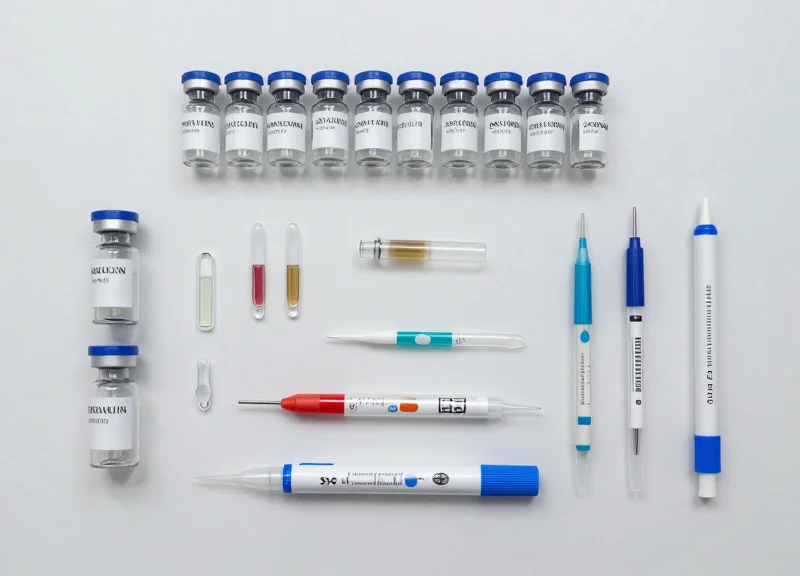
Label migration in cryogenic environments is the physical separation or sliding of a tag from its substrate, often caused by the 'glass transition' of standard adhesives. At -196℃, most commercial glues become brittle and lose their polymer chain mobility, leading to delamination. High-performance cryogenic RFID labels utilize specialized cross-linked acrylic adhesives that are engineered to remain 'pliable' at ultra-low temperatures, ensuring that the bond between the RFID inlay and the curved surface of a cryovial or straw remains intact despite the massive thermal contraction of plastic and glass substrates.
| Property | Standard Adhesive | Cryogenic-Grade (2026 Spec) |
|---|---|---|
| Glass Transition (Tg) | -20℃ to -40℃ | Below -110℃ |
| Mandrel Hold | Poor (Peels on curves) | Excellent (High initial tack) |
| Chemical Resistance | Low | High (DMSO, Ethanol, Xylene) |
| Application Temp | Room Temperature only | Cold-surface compatible (-20℃) |
The Mandrel Challenge: One of the most common points of failure is the 'mandrel' effect—the tendency of a label to straighten out when applied to a curved surface. Because liquid nitrogen tanks often store small diameter vials (1.0ml to 5.0ml), the adhesive must possess a high 'ultimate peel' strength to counteract the constant spring-back force of the label face stock. If the adhesive is too rigid, the edges will 'flag,' potentially causing the RFID tag to snag or become unreadable during automated retrieval.
- Surface Decontamination: Ensure the substrate is free of frost or moisture; even a microscopic layer of ice can prevent the adhesive from 'wetting out' on the surface.
- Dwell Time: Allow the label to sit at room temperature for at least 24 hours before immersion in LN2 to reach maximum bond strength.
- Overlap Technique: Whenever possible, use a wrap-around label design where the tail end overlaps the start, creating a structural 'self-bond' that is nearly impossible to migrate.
Expert Insight: The Coefficient of Thermal Expansion (CTE) Mismatch. Most procurement officers overlook the fact that the RFID chip, the label substrate, and the vial all shrink at different rates. In 2026, the gold standard is 'balanced-stress' adhesives. These act as a shock absorber between the rigid RFID silicon chip and the expanding/contracting plastic vial, preventing the internal antenna connections from snapping during the rapid transition from -196℃ back to room temperature.
Can I apply labels directly to frozen vials?
Most cryogenic adhesives require a dry, room-temperature surface. However, 'high-tack' variants exist for -20℃ application, provided the frost is wiped away immediately before bonding.
Will the adhesive affect the sample inside?
Ensure you select 'low-outgassing' and 'non-migratory' adhesives to prevent any chemical leeching through plastic vial walls, which can compromise sensitive biological samples.
How does LN2 immersion affect the RFID inlay?
The adhesive must seal the edges of the inlay perfectly; if LN2 seeps behind the tag, the resulting gas expansion during thawing (the Leidenfrost Effect) can literally blow the tag off the vial.
Frequency Selection: Why UHF Rain RFID Dominates Cryogenic Logistics

In the world of cryogenic logistics, UHF (Ultra-High Frequency) RAIN RFID is the undisputed gold standard for 2026. While High Frequency (HF) and Near Field Communication (NFC) have their place in localized laboratory settings, only UHF provides the long-range reading and high-speed bulk data capture required to manage thousands of bio-samples stored at -196°C. The ability to scan an entire nitrogen dewar or a freezer rack in under two seconds without opening the lid is the primary driver for UHF adoption, as it preserves the cold chain and prevents dangerous thermal fluctuations.
| Feature | HF (13.56 MHz) | NFC (Smartphone Compatible) | UHF RAIN (860-960 MHz) |
|---|---|---|---|
| Read Range | Up to 10cm | Up to 5cm | Up to 10 Meters |
| Bulk Reading | Limited (Low Speed) | Single Tag Only | Excellent (1,000+ Tags/Sec) |
| Penetration | Good through liquids | Good through liquids | High (Vapor Phase optimized) |
| Primary Use Case | Medical device tracking | End-user verification | Enterprise Inventory & Logistics |
Expert Insight: The 2026 Shift to 'Autotune' ICs. A common challenge with RFID at -196°C is dielectric loading—where the accumulation of frost and the change in material density at ultra-low temperatures shift the antenna's resonant frequency. Generic tags often fail because they go 'off-tune.' The latest 2026-spec cryogenic labels utilize self-tuning integrated circuits (ICs) that automatically compensate for these environmental changes, ensuring a 99.99% read rate even when the label is encased in a thin layer of ice or nitrogen vapor.
Can UHF signals penetrate liquid nitrogen?
No, liquid nitrogen (LN2) is a dielectric fluid that reflects and refracts UHF signals. However, labels are typically read in the vapor phase or through the walls of stainless steel dewars using specialized portal antennas, which is far more efficient than manual scanning.
Is NFC useful in cryogenic environments?
NFC is primarily used as a secondary interface. It allows lab technicians to verify individual sample data using a standard smartphone without specialized hardware, making it a great 'last-mile' solution but unsuitable for bulk inventory.
Why is it called 'RAIN' RFID?
RAIN is an acronym for RAdio Frequency IdentificatioN. It refers specifically to the passive UHF RFID standard (ISO/IEC 18000-63) used globally for enterprise-grade supply chain management.
Durability Testing Standards: What to Look for in a Datasheet
A professional-grade cryogenic RFID datasheet serves as a performance contract, moving beyond simple temperature ranges to define how a tag survives the mechanical and electrical stresses of liquid nitrogen (LN2) immersion. For 2026 procurement, procurement teams must prioritize 'Thermal Shock Resistance' (TSR)—the ability of a label to transition from +23°C to -196°C in under 10 seconds without delamination or IC failure. A reliable datasheet doesn't just list the storage temperature; it quantifies the tag's physical and functional integrity through repeated freeze-thaw cycles and standardized adhesion metrics.
| Standard/Metric | Requirement for -196℃ | Significance |
|---|---|---|
| ISO 18000-63 (EPC Gen2v2) | Protocol Compliance | Ensures global interoperability and air interface security. |
| FINAT FTM-1 / FTM-2 | Peel Adhesion > 15 N/25mm | Measures bond strength to prevent label migration during storage. |
| MIL-STD-810H Method 503.7 | Multi-cycle Thermal Shock | Validates survivability of the IC-to-antenna bond under contraction. |
| ISO/IEC 15459 | Unique Identifier Quality | Ensures the serialized data is globally unique and uncorrupted. |
- Phase 1: Deep Freeze Saturation: Tags are submerged in liquid nitrogen (-196℃) for 72 hours to evaluate the substrate's brittleness and adhesive crystallization point.
- Phase 2: High-Speed Centrifugation: Simulates clinical lab handling; tags are spun at 10,000+ RCF to test if the physical mass of the IC causes the antenna to shear away from the label.
- Phase 3: Automated Read-Range Audit: Post-freeze, the tag's RSSI (Received Signal Strength Indicator) is measured against a baseline to ensure less than 10% signal degradation.
Expert Insight: In my two decades of Silicon Valley engineering, the most overlooked metric is 'Cryogenic Frequency Drift.' At -196℃, the dielectric constant of label materials changes and the physical dimensions of the antenna shrink. This causes the resonant frequency to shift. A premium 2026 datasheet should specify 'Frequency-Compensated Antennas,' which are tuned to perform optimally at cryogenic temperatures rather than just room temperature, preventing 'blind spots' when reading labels directly inside a nitrogen dewar.
What does 'Minimum Application Temperature' mean?
This is the lowest temperature at which the label can be applied to a surface. For cryo-labels, this is usually room temperature or -20℃, even if the service temperature is -196℃.
Is 'Waterproof' the same as 'Cryogenic'?
No. While cryo-labels are waterproof, they also require specialized acrylic adhesives that do not vitrify (turn into a glass-like brittle state) which causes standard labels to fail.
How many freeze-thaw cycles should a tag survive?
High-end procurement specs require survival through at least 20 rapid cycles without more than a 3dB loss in sensitivity.
Integrating RFID with Laboratory Information Management Systems (LIMS)

Integrating RFID with a Laboratory Information Management System (LIMS) creates a seamless digital thread that links physical biological samples stored at -196°C to their metadata. This synchronization eliminates manual logging errors and provides real-time chain-of-custody tracking by automating the data handshake between the cryogenic RFID reader and the central database. In a modern 2026 lab environment, this integration is the critical path to achieving 'Closed-Loop Sample Management,' where every freeze-thaw cycle and location change is logged without human intervention.
| Integration Protocol | Best Use Case | Key Advantage for Cryo-Labs |
|---|---|---|
| RESTful API | Web-based LIMS & Cloud Platforms | Easiest to implement with modern SaaS LIMS providers. |
| MQTT | IoT Edge Devices & Low-Bandwidth Areas | Ultra-low overhead; ideal for sensors inside nitrogen dewars. |
| OPC UA | Industrial Automation & Biobanking | Ensures high-level security and GLP/GMP compliance. |
| Webhooks | Real-time Alerting & Notifications | Triggers instant alerts if a sample moves to an unauthorized zone. |
Expert Insight: The 2026 'Edge Buffer' Strategy. A common pitfall in high-volume biobanking is 'database throttling'—where the LIMS cannot process thousands of simultaneous tag reads during a bulk dewar scan. We recommend implementing an 'Edge Gateway' that de-duplicates and buffers data locally before pushing it to the LIMS. This ensures that even if your laboratory Wi-Fi fluctuates or the LIMS experiences latency, no critical sample data is lost during the transfer from ultra-low temperatures to the digital record.
- Data Mapping & Schema Alignment: Define which RFID EPC (Electronic Product Code) memory banks map to specific LIMS fields, such as Patient ID, Batch Number, or Expiration Date.
- Middleware Selection: Deploy middleware that translates raw RFID hex data into human-readable formats and manages reader hardware settings remotely.
- Automated Transaction Logic: Program the system to automatically trigger 'Check-In' or 'Check-Out' events based on the signal strength and directionality detected by the RFID portal.
- Validation and Audit Trail: Verify that every automated entry includes a timestamp and user ID to satisfy 21 CFR Part 11 requirements for electronic records.
Can RFID work with legacy LIMS that don't have APIs?
Yes, using 'Keyboard Wedge' software, RFID reader data can be injected directly into the active text field of any legacy application, though this lacks the robust bidirectional sync of an API.
How do we handle duplicate reads in bulk storage?
Implement RSSI (Received Signal Strength Indicator) filtering in your middleware to ignore 'ghost' reads from adjacent racks or dewars.
What happens if the LIMS goes offline during a retrieval?
Modern RFID readers feature internal 'Store-and-Forward' memory that caches scan data and automatically uploads it once the LIMS connection is restored.
Cost vs. ROI: Calculating the Value of Error-Free Cold Chain Tracking
Calculating the ROI of cryogenic RFID goes beyond the unit price of a label; it centers on preventing the catastrophic loss of irreplaceable biological assets, where a single failed vial can represent between $5,000 and $50,000 in lost R&D value. While a high-performance -196℃ RFID tag may cost 5 to 10 times more than a standard cryogenic barcode, the Return on Investment (ROI) is typically realized within the first 12 months through a 90% reduction in manual inventory labor and the near-elimination of 'lost-in-storage' sample events.
| Metric | Manual Barcode System | Cryogenic RFID (UHF) |
|---|---|---|
| Inventory Speed (1,000 Samples) | 4 - 6 Hours | Under 5 Minutes |
| Data Accuracy | ~92-95% (Human Error) | >99.9% (Automated) |
| Sample Exposure Risk | High (Vials removed from LN2) | Zero (Read through dewar) |
| Labor Cost per Scan | $0.15 - $0.45 | <$0.01 |
- Identify the 'Cost per Sample Loss': Calculate the total investment in a single sample, including donor acquisition, processing labor, and storage overhead. In clinical trials, this cost is often 10x the physical processing cost due to regulatory implications.
- Quantify Labor Reclamation: Measure the hours spent by PhD-level staff performing manual inventory counts. Transitioning this to an automated RFID sweep allows high-value personnel to focus on research rather than logistics.
- Assess 'Thaw Stress' Depreciation: Every time a dewar is opened for manual barcode scanning, the thermal gradient shifts. RFID allows for 'closed-lid' auditing, extending the viability of sensitive specimens and reducing the risk of 'silent' sample degradation.
Expert Insight: The 2026 'Hidden Rework' Metric. In modern biobanking, the most significant hidden cost is not the loss of the sample itself, but the 'rework' required when a sample's chain-of-custody is questioned during an audit. RFID provides a cryptographically secure timestamp and location log that satisfies 21 CFR Part 11 requirements instantly, potentially saving hundreds of thousands of dollars in legal and regulatory validation costs.
Does the high upfront cost of RFID readers affect the ROI?
While hardware requires an initial investment, 2026-era handheld and fixed-portal readers have a 5-year lifecycle. When amortized across millions of sample reads, the hardware cost becomes negligible compared to the labor savings.
Can RFID labels reduce insurance premiums for biobanks?
Yes, many underwriters are beginning to offer 'best-practice' discounts for facilities that implement automated tracking, as it significantly lowers the probability of a total-loss claim due to inventory mismanagement.
Future Trends: Sustainability and Sensor-Integrated RFID for 2026
By 2026, the selection of cryogenic RFID labels will move beyond simple identification into the realm of 'intelligent sustainability.' Procurement strategies are shifting to favor labels that combine eco-friendly materials with passive sensing capabilities. This evolution is driven by the global 'Green Lab' movement and the need for more granular cold-chain data without the environmental footprint of battery-powered data loggers. The next generation of labels utilizes energy-harvesting RFID ICs to monitor temperature fluctuations directly at the vial surface, ensuring that a sample's thermal history is recorded without ever needing an internal power source.
Expert Insight: In 2026, we expect to see the rise of 'Digital Twin' bio-banking. This involves a passive RFID sensor label that doesn't just store a serial number, but a real-time calibrated offset of the sample's internal temperature based on the ambient nitrogen vapor. This allows for predictive stability modeling, alerting lab managers to potential sample degradation before the vial even leaves the dewar.
| Feature | Standard Cryogenic RFID (Current) | 2026 Trend: Next-Gen Labels |
|---|---|---|
| Material Base | Petrochemical-based Polyester | Bio-based or Recycled PE (PCR) |
| Sensing Ability | None (Identification only) | Passive Temperature Telemetry |
| Adhesive Tech | Solvent-based Acrylic | Solvent-free, High-tack Bio-adhesives |
| Data Capacity | 96-128 bit EPC | User Memory for Thermal Logs |
| Eco-Impact | High Plastic Waste | Compostable or Circular Ready |
- Transitioning to Bio-Substrates: Look for labels utilizing PolyLactic Acid (PLA) or recycled content that maintains dimensional stability at -196℃ without becoming brittle.
- Implementing Battery-Free Sensing: Prioritize ICs like the latest NXP or Impinj sensor-enabled chips that harvest energy from the RFID reader to perform a temperature check.
- Adopting Circular Logistics: Source labels with 'wash-off' adhesives that allow for easier recycling of glass and plastic vials during high-volume de-commissioning.
Do sustainable labels really stick at -196℃?
Yes. 2026-spec bio-adhesives are engineered with higher cross-linking densities that provide superior wet-stick performance on frosted surfaces compared to older petroleum-based versions.
How accurate are passive RFID temperature sensors?
Current benchmarks for 2026 indicate an accuracy of ±0.5°C within the -40°C to +20°C range, with specialized cryogenic calibration curves providing ±1.0°C accuracy at liquid nitrogen temperatures.
Are sensor tags significantly more expensive?
While sensor tags carry a 20-30% premium over standard RFID labels, they eliminate the need for expensive external data loggers, resulting in a 40% net reduction in total cold-chain monitoring costs.