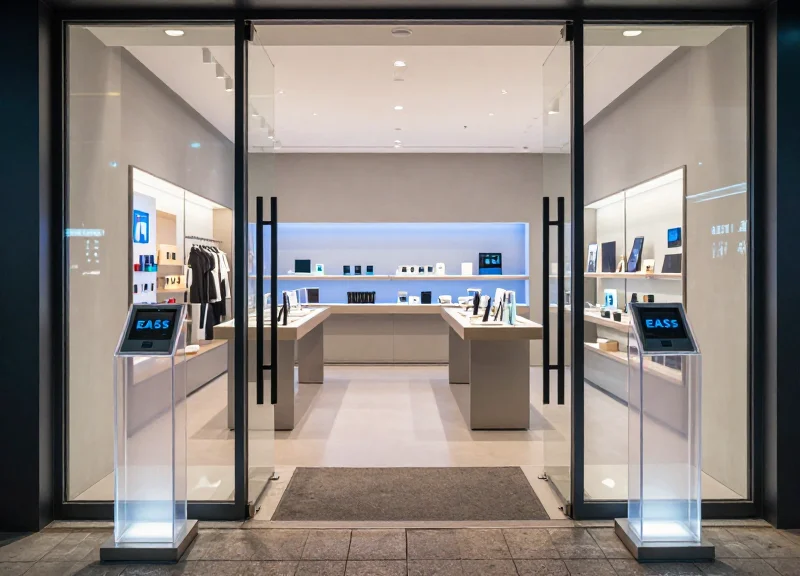
In an era where retail shrinkage is reaching unprecedented heights, traditional Electronic Article Surveillance (EAS) pedestals alone are no longer enough. While these legacy systems remain the backbone of store defense, they lack the intelligence to distinguish between accidental tag triggers and sophisticated organized retail crime. By integrating advanced Human Behavior Recognition technology through Cloud APIs, retailers can breathe new life into their existing hardware, transforming passive alarms into proactive, data-driven security hubs that anticipate threats before they reach the exit.
The Evolution of Retail Loss Prevention: From Passive to Proactive
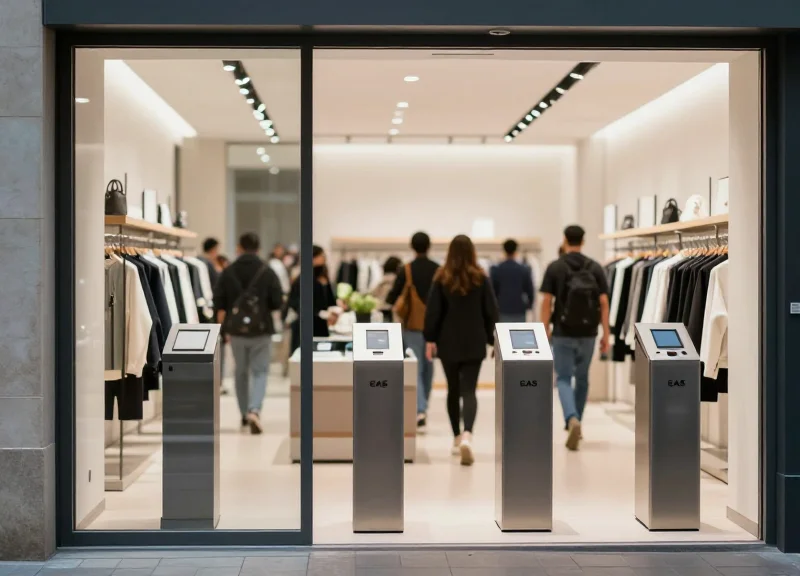
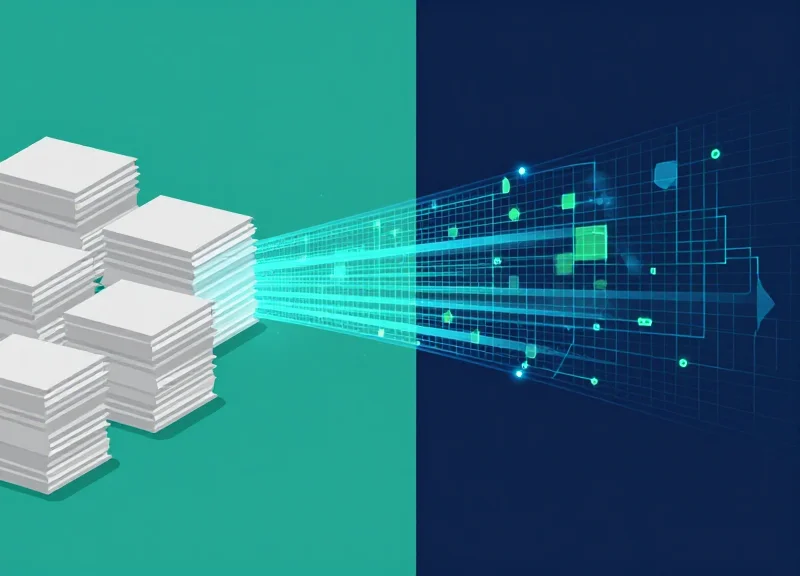
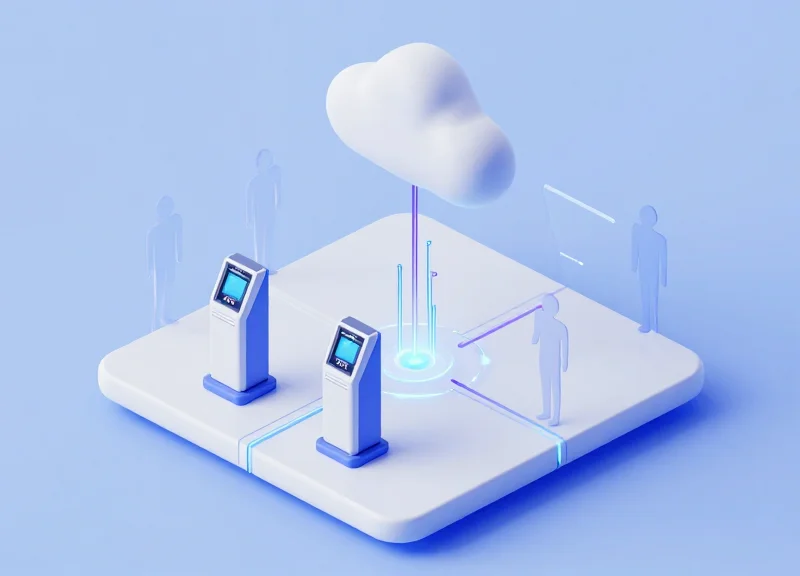
The evolution of retail loss prevention is defined by a transition from Passive Deterrence—relying on physical barriers and exit alarms—to Proactive Intelligence, where computer vision and cloud-based behavior recognition identify theft markers before the suspect reaches the exit. Traditionally, Electronic Article Surveillance (EAS) pedestals acted as a final, reactive gatekeeper. Modern systems, however, leverage legacy hardware as IoT edge sensors, integrating them with Cloud APIs to provide a multi-layered defense that analyzes intent, not just inventory movement.
| Feature | Legacy Passive Systems (EAS) | Modern Proactive Systems (AI + Cloud) |
|---|---|---|
| Detection Trigger | Physical tag crossing a magnetic field. | Anomalous human behavior and dwell patterns. |
| Response Time | Reactive (After the theft has occurred). | Real-time (Before the exit or during the act). |
| Data Utilization | Siloed; alarm logs often ignored. | Integrated; alerts pushed to staff mobile devices. |
| Cost Efficiency | High replacement cost for new hardware. | High ROI by extending legacy hardware life. |
In the early 2000s, the goal of retail security was simply to increase the 'friction' of theft. Today, with the rise of organized retail crime (ORC), friction is no longer enough. Retailers are now focusing on the 'Behavioral Signature' of a shoplifter—specific movements like rapid shelf-sweeping, frequent looking over shoulders, or 'staging' items in blind spots. By feeding these visual cues through Cloud APIs, the legacy EAS pedestal at the front door becomes part of a broader, intelligent ecosystem rather than a standalone buzzer.
Why is the shift to proactive prevention happening now?
The convergence of low-latency Cloud APIs and advanced Computer Vision (CV) has made it cost-effective to upgrade existing cameras and pedestals without a total 'rip-and-replace' of infrastructure.
Can legacy RF/AM pedestals really support AI?
Yes. By using a bridge controller to feed pedestal trigger data into a cloud environment, you can correlate physical alarms with video metadata to filter out false positives.
What is the primary benefit of behavior recognition?
It moves the point of intervention from the sidewalk back into the aisle, allowing staff to offer 'aggressive hospitality' which often deters theft without a confrontation.
Expert Insight: The 'Digital Twin' of the Pedestal. A common misconception is that legacy EAS pedestals are 'dumb' metal. In reality, they are rich data sources. By assigning a 'Digital Twin' to your legacy hardware in the cloud, you can map physical alarm events against real-time heatmaps and behavior recognition software. This creates a 'contextual alarm'—if a pedestal rings but the AI confirms the customer never touched high-risk merchandise, your security team can ignore the false positive, reducing 'alarm fatigue' by up to 60%.
Understanding Human Behavior Recognition (HBR) in Retail

Human Behavior Recognition (HBR) in retail is a sophisticated application of computer vision and deep learning that interprets human motion patterns to determine intent. By analyzing video frames in real-time, HBR systems go beyond simple movement detection to identify complex sequences of actions associated with theft, such as concealment, shelf sweeping, or 'tailgating' through secure exits. This technology effectively grants your existing security infrastructure the ability to 'understand' what it sees, transitioning from passive recording to active behavioral analysis.
| Feature | Legacy Motion Detection | Advanced HBR Systems |
|---|---|---|
| Core Logic | Pixel change thresholds | Skeletal mapping & temporal analysis |
| Detection Focus | Object presence | Specific actions (e.g., reaching into a coat) |
| False Alarm Rate | High (triggered by shadows/pets) | Low (context-aware processing) |
| Security Value | Reactive (post-event review) | Proactive (real-time intervention) |
To implement HBR effectively, AI models are trained on thousands of hours of retail footage to recognize the 'posture dynamics' of shoplifting. Unlike a standard customer who places an item in a cart, a person intending to steal often exhibits distinct ergonomic signatures—such as the 'up-and-in' motion of concealment or the erratic 'head-swivel' of a lookout. Modern cloud APIs now allow these heavy compute tasks to be processed off-site, making it possible to add this intelligence to legacy Electronic Article Surveillance (EAS) pedestals without replacing the physical hardware.
- Concealment Detection: Identifying when an item is moved from a shelf and hidden inside clothing or a personal bag rather than a shopping basket.
- Tailgating/Piggybacking: Detecting when unauthorized individuals follow closely behind staff or customers through secure entry/exit points to bypass EAS sensors.
- Shelf Sweeping: Recognizing the rapid removal of multiple high-value items from a single display, a hallmark of Organized Retail Crime (ORC).
- Staging Behaviors: Spotting individuals who move items to a 'blind spot' or low-traffic area for later theft or concealment.
Expert Insight: The 'Micro-Hesitation' Signature. A unique indicator that advanced HBR systems are now beginning to exploit is the 'micro-hesitation.' Empirical data shows that professional shoplifters often exhibit a 0.5 to 1.5-second break in natural movement flow immediately before a concealment action—a physiological 'stop-check' to ensure they aren't being watched. While invisible to the human eye in real-time, skeletal tracking APIs can flag these rhythmic anomalies as high-probability risk events, providing a split-second head start for store security.
Does HBR require high-resolution 4K cameras?
Not necessarily. Most cloud-based HBR APIs are optimized for 1080p or even 720p streams, as they focus on skeletal joints and temporal patterns rather than fine facial details.
Is HBR compliant with privacy regulations like GDPR?
Yes. Leading HBR solutions focus on 'anonymized skeletal data'—tracking movement vectors rather than storing biometric facial templates—ensuring security without compromising personal identity.
How does HBR connect to my existing EAS pedestals?
Integration typically occurs via a Cloud API that sends a trigger signal to an IoT-enabled controller on the pedestal, allowing the alarm to sound or the gate to lock based on detected behavior.
The Technical Bridge: How Cloud APIs Connect Legacy EAS to AI
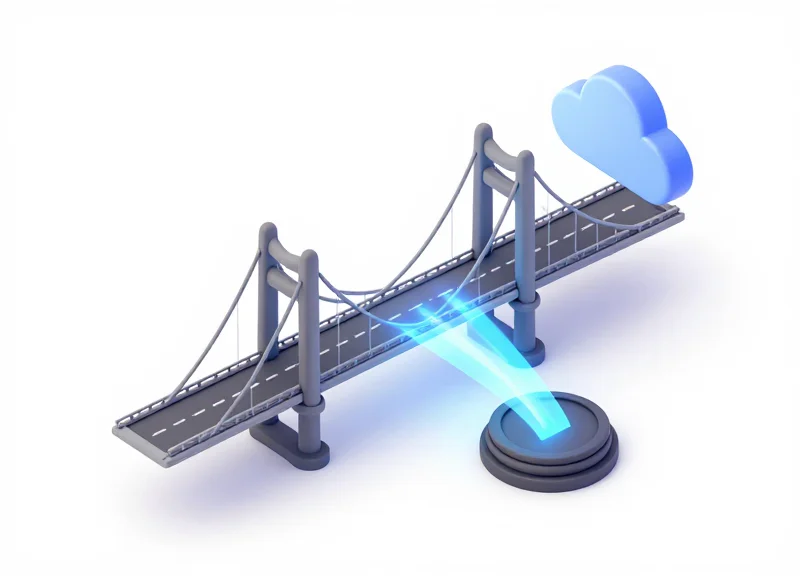
The technical bridge between legacy Electronic Article Surveillance (EAS) systems and Human Behavior Recognition (HBR) is a middleware layer that transforms simple electrical signals into rich, data-driven API requests. By utilizing a local IoT gateway or a network-enabled controller, the 'dry contact' relay closures of a traditional pedestal—originally designed only to trigger a buzzer—are converted into digital payloads. These payloads are transmitted via Cloud APIs to an AI engine, which then cross-references the alarm event with real-time video analytics to determine if the behavior preceding the alarm matches known theft patterns.
| Feature | Legacy EAS (Standalone) | AI-Integrated Bridge (Cloud API) |
|---|---|---|
| Data Output | Simple Audio/Visual Alarm | Structured JSON / Metadata |
| Contextual Awareness | Zero (Binary Detection) | High (Behavioral Correlation) |
| Connectivity | Analog Relay / GPIO | RESTful API / Webhooks / MQTT |
| Response Logic | Immediate/Fixed | Dynamic/Rule-Based |
- Signal Interception: A physical interface (such as a Raspberry Pi or an industrial PLC) is connected to the EAS pedestal's relay output to capture trigger events.
- Protocol Translation: The local gateway converts the high/low voltage signal into a digital message using protocols like MQTT or HTTP POST.
- Cloud API Authentication: The gateway sends an authenticated request to the HBR Cloud API, including a unique Store ID and Pedestal ID for location mapping.
- AI Computer Vision Sync: The Cloud API triggers a look-back on the associated camera feed, using AI to analyze the 10-20 seconds of footage preceding the alarm.
{ "event_id": "EAS_9921", "timestamp": "2023-10-27T14:22:01Z", "device_id": "pedestal_front_01", "trigger_type": "relay_close", "meta": { "voltage_peak": 4.8, "duration_ms": 500 }, "ai_hook": "https://api.security-cloud.com/v1/analyze-behavior" }Expert Tip: To minimize latency, use a 'Fog Computing' approach. Perform initial data filtering at the edge (the store level) to ensure the Cloud API is only pinged for valid alerts. This prevents your network from being flooded with 'noise' from false tags while ensuring that critical behavioral data reaches the AI model in under 200 milliseconds, which is vital for real-time security intervention.
Do I need to replace my 10-year-old pedestals?
No. Most legacy systems have an auxiliary relay or GPIO port. A simple IoT adapter can bridge these to the cloud without hardware replacement.
What happens if the store's internet goes down?
The legacy pedestal will still function as a local alarm. The bridge should be configured with a local buffer to sync behavioral data once connectivity is restored.
Is the API connection secure?
Yes, standard implementations use TLS 1.3 encryption and API key rotation to ensure that security data cannot be intercepted or spoofed.
Key Benefits of Modernizing Existing EAS Pedestals
Modernizing existing Electronic Article Surveillance (EAS) pedestals allows retailers to bridge the gap between physical security and digital intelligence without the capital expenditure of a full 'rip-and-replace' project. By integrating Human Behavior Recognition (HBR) via cloud APIs, legacy hardware is transformed from a simple perimeter alarm into a sophisticated data point. This hybrid approach delivers immediate ROI by enhancing threat detection accuracy, extending the lifecycle of expensive physical assets, and providing granular insights into store shrink patterns that passive systems simply cannot capture.
| Feature | Legacy Retrofit (Cloud API + HBR) | Full Hardware Replacement |
|---|---|---|
| Initial Capital Outlay | Low (Software/Integration focus) | High (New pedestals + Wiring) |
| Implementation Speed | Rapid (Weeks) | Slow (Months across locations) |
| Operational Disruption | Minimal (No floor drilling) | Significant (Store construction) |
| Data Capabilities | AI-driven behavioral insights | Dependent on specific model |
| Sustainability | High (Repurposes existing assets) | Low (E-waste generation) |
- Maximized Asset Lifecycle: Retailers often have millions invested in AM (Acousto-Magnetic) or RF (Radio Frequency) pedestals. Retrofitting allows you to extract another 5-10 years of value from these assets while gaining 'Gen-AI' level security capabilities.
- Reduction in False Positives: Legacy systems are notorious for 'ghost alarms' caused by interference. By layering HBR, the system only alerts staff when a physical tag alarm is synchronized with suspicious behavioral triggers, such as rapid movement or concealment gestures.
- Unified Security Ecosystem: Cloud APIs allow legacy pedestals to talk to your VMS (Video Management System), mobile alerts, and inventory databases, creating a single source of truth for loss prevention teams.
Expert Insight: The 'Visual Verification' Multiplier. In my 20 years of Silicon Valley retail tech consulting, I've found that the biggest hidden cost isn't the hardware—it's 'alarm fatigue' among staff. Modernizing legacy pedestals with HBR introduces 'Visual Verification.' When an alarm triggers, the cloud API can instantly push a 5-second behavioral clip to a floor manager's handheld device. This changes the interaction from a confrontational 'Can I see your receipt?' to a data-backed 'I noticed you might have forgotten to scan this item.' This nuanced approach preserves the customer experience while significantly increasing recovery rates.
Step-by-Step Integration Workflow for Store IT Managers

Integrating Human Behavior Recognition (HBR) with legacy Electronic Article Surveillance (EAS) requires a structured approach that maps hardware-level GPIO signals to cloud-native RESTful APIs, transforming a silent perimeter alarm into an intelligent data event. This workflow ensures that store IT managers can modernize security infrastructure with minimal downtime by leveraging an edge-to-cloud bridge that treats legacy hardware as a standard I/O source.
| Phase | Key Action | IT Requirement |
|---|---|---|
| Audit | Identify EAS Relay Ports | Verify Dry Contact availability on pedestal boards. |
| Connectivity | Deploy IoT Edge Gateway | Standard Linux-based gateway with GPIO support. |
| Cloud Setup | API Authentication | Provisioning of OAuth2.0 tokens for the HBR endpoint. |
| Calibration | Signal Debouncing | Configuring software filters to prevent false triggers. |
- Hardware Interfacing via Edge Gateway: Connect the physical relay output of the EAS pedestal to an IoT gateway. This device converts the analog 'alarm' signal into a digital event message. Using a gateway prevents the need for replacing the entire pedestal.
- Cloud API Handshake: Configure the gateway to transmit JSON payloads to your behavior recognition provider. Use secure webhooks to ensure that when a 'tag' is detected, the cloud instance is notified to cross-reference the event with the live video stream.
- Logic Mapping: The ‘AND’ Gate: Establish the logic in your cloud dashboard: IF (EAS Alarm = TRUE) AND (AI Detection = 'High-Speed Exit' or 'Concealment Behavior'), THEN (Alert Store Manager). This reduces 'noise' and focuses staff on high-probability theft.
- Zero-Downtime Deployment: Execute the rollout during off-peak hours using a 'Shadow Mode' where the system records events without triggering physical alarms. This allows for fine-tuning of the AI sensitivity before going live.
{
  "event_type": "EAS_TRIGGER",
  "store_id": "NY_042",
  "pedestal_id": "A1_NORTH",
  "timestamp": "2023-10-27T10:15:30Z",
  "metadata": {
    "signal_strength": "0.85",
    "hbr_correlation_id": "behavior_99821"
  }
}
Expert Tip: Implement Signal Debouncing. One of the biggest challenges with legacy EAS is 'signal noise'—brief, false electrical pulses. For a robust integration, implement a 250ms debouncing logic at the edge gateway. This ensures that only sustained physical alarms are transmitted to the Cloud API, drastically reducing cloud processing costs and preventing API throttling.
How long does a typical single-store integration take?
With the hardware audit complete, the physical installation and API configuration usually take less than 4 hours per store.
Does this require a high-bandwidth connection?
No. Because the AI processing happens in the cloud and only metadata is sent from the EAS, the bandwidth footprint is negligible—roughly equivalent to sending a text message.
Can we use existing IP cameras for the HBR component?
Yes, as long as the cameras provide an RTSP feed that can be ingested by the cloud behavior recognition engine.
Overcoming Implementation Challenges: Latency and Data Privacy
To successfully modernize legacy Electronic Article Surveillance (EAS) systems with Human Behavior Recognition (HBR), organizations must bridge the gap between high-speed physical security and cloud-based intelligence. Overcoming these hurdles requires a 'Hybrid-Cloud' architecture that minimizes the round-trip time (RTT) for API calls to ensure alarms trigger while a suspect is still within the detection zone, alongside a 'Privacy-by-Design' framework that anonymizes biometric data at the edge to comply with GDPR, CCPA, and other local mandates.
Latency is the primary technical barrier in cloud-integrated security. In a retail environment, the window for intervention is measured in seconds. If a Cloud API takes 500ms to process a frame and another 300ms to send a trigger back to the legacy pedestal, the shoplifter may have already cleared the exit. To combat this, we recommend implementing Predictive Buffering. By analyzing movement trajectories locally, the system can pre-warm the cloud connection or initiate an 'early-warning' state before a concealment event is even finalized, effectively masking the network overhead.
| Architecture Type | Typical Latency | Privacy Profile | Recommended Use Case |
|---|---|---|---|
| Pure Cloud API | 800ms - 1.5s | Data sent to external servers | Low-traffic stores; non-critical analytics |
| Edge-Gateway Hybrid | 150ms - 300ms | Local filtering & anonymization | High-volume retail; legacy EAS retrofits |
| On-Device Processing | < 50ms | Maximized privacy; no visual data leaves site | Mission-critical loss prevention |
Privacy concerns are equally paramount. Modern computer vision can inadvertently capture PII (Personally Identifiable Information). To navigate this, IT managers should employ Vectorized Anonymization. Instead of sending raw video streams to the cloud, the edge device converts human silhouettes into mathematical coordinate sets (skeletal meshes). This ensures that even if a data packet is intercepted, it contains no recognizable human faces or features, making the system 'compliance-proof' by default.
Does using Cloud APIs for EAS violate GDPR?
Not if implemented correctly. By using local edge processing to blur faces or convert video to metadata before it reaches the cloud, you ensure that no PII is stored or processed externally, keeping you within 'data minimization' requirements.
How do we handle internet outages?
Legacy EAS pedestals function independently for basic tag detection. The AI integration should be designed as a 'fail-safe' overlay; if the cloud is unreachable, the pedestal reverts to standard RF/AM alarming without AI behavioral insights.
What is the 'Golden Threshold' for latency in retail security?
Industry experts target a total system response time of under 200ms. This includes detection, cloud inference, and the physical relay trigger to the pedestal.
Expert Tip: To further optimize performance, utilize 'WebSockets' instead of standard REST API calls for the communication bridge. WebSockets maintain an open, bi-directional connection, eliminating the 'handshake' overhead required for every individual event and shaving critical milliseconds off the response time.
Cost-Efficiency: Extending the Lifecycle of Your EAS Infrastructure
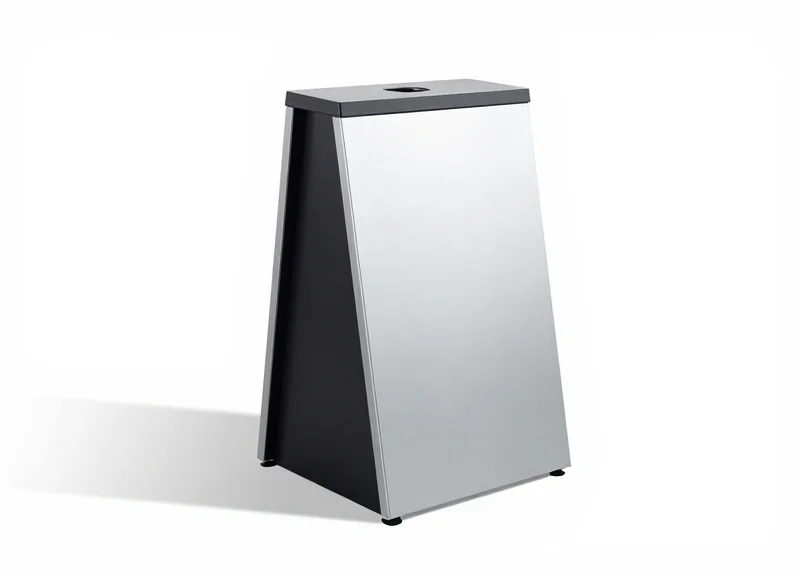
Extending the lifecycle of EAS infrastructure through Cloud APIs shifts the retail security model from a capital-heavy 'rip-and-replace' strategy to a scalable, software-defined approach. By decoupling the physical detection hardware from the analytical intelligence, retailers can reduce Total Cost of Ownership (TCO) by up to 60% while gaining advanced Human Behavior Recognition capabilities. This transformation allows legacy pedestals to remain functional as entry/exit sensors while the heavy lifting of behavior analysis is offloaded to the cloud, effectively neutralizing the hardware's technical obsolescence.
| Financial Metric | Traditional Hardware Refresh | Cloud-AI Retrofit |
|---|---|---|
| Initial Investment (CapEx) | High: Full system replacement | Low: API integration and sensor add-ons |
| Installation Downtime | Days per store (Construction required) | Hours per store (Software-led) |
| Functional Longevity | Fixed (3-5 years) | Dynamic (Ongoing via cloud updates) |
| Maintenance Structure | On-site technician visits | Remote diagnostics and patches |
| Scalability | Slow: Geographic hardware rollout | Instant: Global cloud deployment |
- Audit Existing Assets: Identify pedestals that are structurally sound but technologically outdated. Most RF or AM pedestals can serve as the 'trigger' for secondary AI confirmation.
- Calculate TCO vs. ROI: Contrast the $5,000-$10,000 cost of new pedestals against the nominal monthly OpEx of a Cloud API subscription.
- Execute Phased Rollouts: Prioritize high-shrink locations for AI integration, using the cost savings to fund the expansion across the fleet.
Does this integration help with ESG goals?
Yes. By extending the life of physical hardware, retailers significantly reduce e-waste and the carbon footprint associated with manufacturing and shipping new steel and plastic pedestal frames.
How does this impact the depreciation schedule?
Upgrading via Cloud APIs allows retailers to move security spending from a Capital Expenditure (CapEx) to an Operating Expenditure (OpEx), which is often more tax-efficient and flexible for yearly budgeting.
Will the legacy hardware still provide basic alerts?
Absolutely. The cloud integration enhances the existing system; it does not disable the native 'beeping' function. It adds a layer of intelligence that validates those alarms.
Expert Tip: The 'Hidden' Saving of Technical Debt Prevention. In my 20 years in Silicon Valley, I've seen 'hardware lock-in' kill more retail budgets than actual theft. By moving to a Cloud API model, you are effectively future-proofing your store against the next 10 years of AI evolution. When a new behavior recognition algorithm is released, you don't need a ladder or a screwdriver to install it; you simply update your API endpoint. You are buying the ability to stay modern without ever touching your floorboards again.
Real-World Use Cases: Identifying Shoplifting Patterns in Real Time
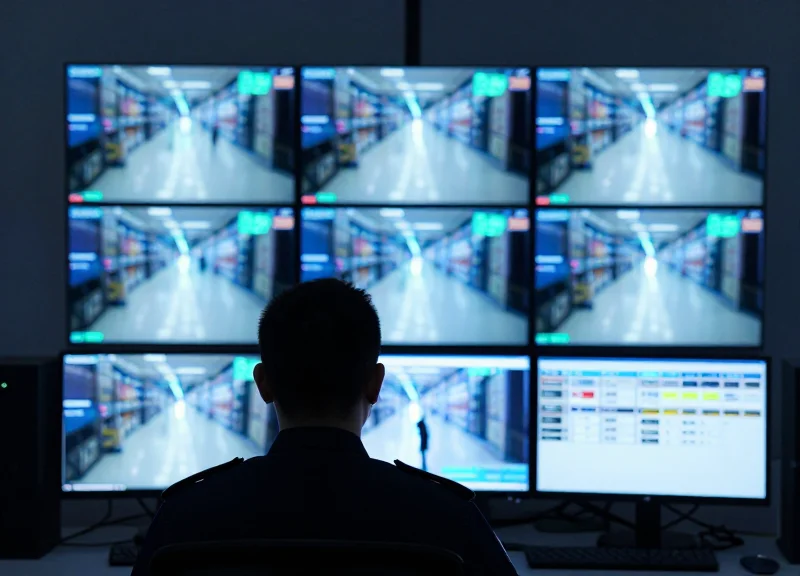
Integrating Human Behavior Recognition (HBR) with legacy Electronic Article Surveillance (EAS) pedestals shifts the security paradigm from reactive alarms to proactive intervention. By utilizing cloud-based APIs to analyze video feeds in real-time, retailers can now identify specific 'pre-theft' behavioral signatures—such as shelf-sweeping or erratic loitering—and sync these insights with existing gateway hardware. This creates a multi-layered defense where the legacy pedestal is no longer just a 'beep' at the door, but a strategic endpoint in a sophisticated AI-driven ecosystem.
| Shoplifting Pattern | Legacy EAS Performance | AI-Augmented EAS Performance |
|---|---|---|
| Shelf Sweeping (ORC) | Triggers only at exit; items often already gone. | Alerts staff the moment multiple items are cleared into a bag. |
| Booster Bags (Shielding) | Metal lining blocks 8.2MHz/58KHz signals. | HBR detects 'heavy lifting' and 'unnatural bag stiffening'. |
| Staging Tactics | No detection until item crosses the gate. | Identifies items being hidden in low-traffic corners via HBR. |
| Push-outs | Delayed reaction; difficult to stop once at the curb. | Pedestal 'locks' or pulses a warning as the cart approaches high-speed. |
- The 'Sweep-and-Run' Prevention: In a high-end liquor store trial, HBR identified a 'sweeping' motion on top-shelf inventory. The Cloud API immediately signaled the legacy EAS pedestal to emit a low-volume 'pre-alert' tone. This subtle notification signaled to the perpetrator that they were being watched, causing them to abandon the items and exit empty-handed.
- Detecting the 'Lookout' Pattern: Organized Retail Crime (ORC) often involves a lookout. HBR algorithms can identify individuals dwelling near entrances while maintaining eye contact with floor staff. By linking this behavior to the EAS pedestal's telemetry, managers receive a 'High Risk' notification before the actual theft occurs.
- High-Velocity Push-Outs: In large-format retail, 'push-outs' involve filling a cart and sprinting through the exit. Cloud-integrated HBR calculates the velocity of an approaching cart. If the speed exceeds a normal walking pace and no transaction is logged, the legacy pedestal is triggered to emit a full alarm 5 seconds before the thief reaches the door.
Expert Insight: The 'Decision Perimeter' Shift. Most retailers define their security perimeter at the physical gate. However, by using Cloud APIs to bridge HBR and EAS, you effectively expand your 'Decision Perimeter' deep into the store aisles. This allows for 'De-escalation by Presence'—where a staff member approaches a suspect to offer 'customer service' based on AI behavioral alerts—preventing the theft without a physical confrontation at the exit.
How does HBR distinguish between a shopper and a thief?
HBR focuses on 'skeletal kinetics'—the specific biomechanics of concealing an item versus placing it in a basket. Thieves exhibit higher cortisol-driven movements, such as frequent 'head-swivels' and unnatural shielding of the torso, which the AI recognizes as high-probability theft indicators.
Can legacy pedestals really handle real-time AI data?
Yes. The legacy pedestal doesn't process the AI data; the Cloud API does. The pedestal simply receives a 'trigger' command (via a retrofitted IoT relay or controller update) to activate its alarm or lighting system based on the AI's remote decision.
Does this reduce false alarms from 'dead' tags?
Significantly. By cross-referencing a pedestal alarm with HBR visual data, the system can determine if a person is actually carrying unpurchased goods or if the alarm was a 'phantom' trigger caused by environmental interference.
DragonGuard's Vision for an Integrated Security Ecosystem
DragonGuard’s vision for an integrated security ecosystem is built on the principle of 'Active Interoperability,' where legacy EAS pedestals are no longer isolated hardware endpoints but intelligent nodes within a unified retail intelligence cloud. By leveraging Cloud APIs to bridge the gap between physical loss prevention and digital inventory management, DragonGuard enables a seamless transition from traditional 'detect-and-alarm' models to a sophisticated 'identify-and-predict' framework. This ecosystem synchronizes Electronic Article Surveillance (EAS), Radio Frequency Identification (RFID), and Electronic Shelf Labels (ESL) to provide retailers with a 360-degree view of store activity in real time.
- Loss Prevention (EAS): Utilizing legacy pedestals as the first line of defense, enhanced with AI to reduce false positives and identify sophisticated shielding tactics.
- Inventory Intelligence (RFID): Integrating item-level tracking to ensure that when an alarm sounds, the system knows exactly which SKU is leaving the building.
- Dynamic Operations (ESL): Connecting electronic shelf labels to the security grid to prevent 'shelf-sweeping' through vibration and proximity alerts.
| Feature | Legacy Siloed Systems | DragonGuard Integrated Vision |
|---|---|---|
| Data Flow | One-way (Alarm only) | Bi-directional (API-driven) |
| Theft Prevention | Reactive (at the door) | Proactive (aisle-to-exit tracking) |
| Inventory Sync | Manual / Weekly | Real-time Automated Updates |
| Infrastructure | High CapEx (Total replacement) | Optimized OpEx (Retrofit + Cloud) |
Expert Insight: The 'Contextual Awareness Gap' is the primary reason traditional retail security fails to stop organized retail crime (ORC). DragonGuard’s unique approach uses ESL as a physical-digital anchor. By monitoring 'dwell time' via ESL sensors and correlating it with Human Behavior Recognition (HBR) data, the system creates a 'Pre-Alarm' state. This allows security personnel to intervene before a theft even occurs, fundamentally shifting the ROI of legacy EAS hardware from simple deterrence to active loss prevention.
Does this require replacing my current EAS antennas?
No. DragonGuard's vision is centered on retrofitting legacy pedestals with cloud-connected controllers, allowing you to keep your existing hardware while gaining modern AI capabilities.
How does RFID integration improve the security response?
By combining RFID with HBR, the system can distinguish between a customer carrying a high-value item and a shoplifter concealing one, providing security teams with visual confirmation and SKU details simultaneously.
Can ESLs really help with security?
Absolutely. Modern ESLs integrated into the DragonGuard ecosystem can detect unusual product movements (like rapid shelf clearing) and automatically trigger nearby cameras to prioritize that zone.