As we approach 2026, the Industry 4.0 vision is evolving into a high-stakes reality where precision and resilience are non-negotiable. For decades, barcodes were the standard for tracking, but in the grueling environments of modern manufacturing, their limitations—such as line-of-sight requirements and physical fragility—are becoming costly liabilities. To achieve true error-proofing for critical components, leading smart factories are migrating to next-generation rugged RFID solutions. This shift represents a move toward total data integrity, ensuring that every part is accounted for even in the presence of heat, chemicals, and mechanical stress.
The Evolution of Industrial Identification: Why Barcodes are No Longer Sufficient
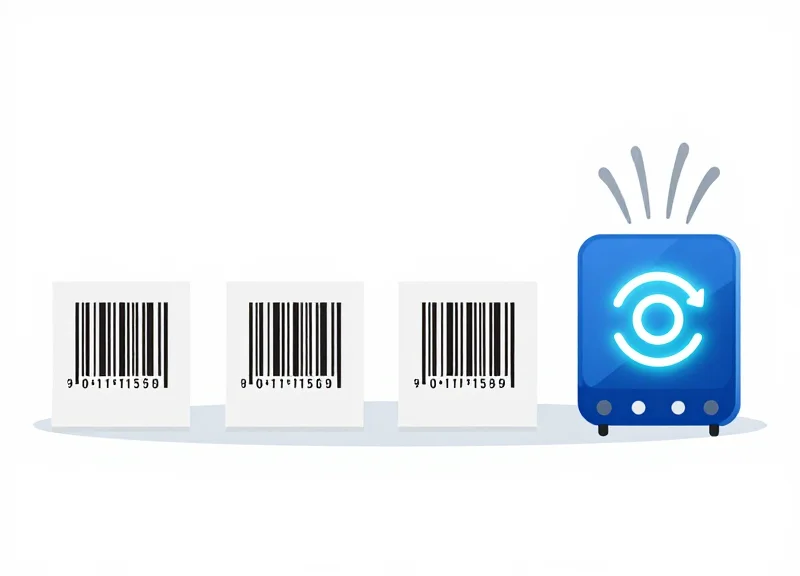
The evolution of industrial identification is hitting a critical inflection point where traditional barcodes can no longer support the sub-millisecond data requirements of 2026 smart factories. While barcodes revolutionized logistics in the late 20th century, their reliance on optical line-of-sight and physical cleanliness makes them a significant bottleneck in automated, high-velocity production lines. Today's error-proofing strategies require identification methods that are not only durable enough to survive chemical washes and high-heat curing but also capable of 'batch reading' hundreds of items simultaneously without human intervention.
| Feature | Legacy Barcodes (1D/2D) | Next-Gen Rugged RFID |
|---|---|---|
| Read Requirement | Direct Line-of-Sight | Non-Line-of-Sight (Proximity) |
| Data Capacity | Low (Fixed Strings) | High (Rewritable Memory) |
| Durability | Fragile (Tear/Dirt Risk) | High (Resistant to Oil/Heat/Acid) |
| Read Speed | One-at-a-time (Sequential) | Batch Reading (Parallel) |
| Automation Fit | Limited/Manual Alignment | Seamless Integration |
As we move toward 2026, the 'Smart Factory' isn't just a buzzword—it's a high-stress environment characterized by robotic precision and extreme conditions. In these settings, a barcode obscured by a single drop of hydraulic fluid or a slight tear from a conveyor belt creates a 'No-Read' event. These events force manual overrides, stopping production lines that cost thousands of dollars per minute. The industry is shifting from 'passive identification' (simply knowing what an item is) to 'dynamic data tracking' (knowing where an item has been and its current state) without the fragility of paper or plastic labels.
Why is 'line-of-sight' a failure point in 2026 automation?
Modern robotics move components at speeds exceeding 5 meters per second. Aligning an optical scanner to a 2D matrix at these speeds requires perfect orientation, which is rarely possible in complex 3D assembly, leading to frequent read failures.
Can barcodes survive chemical or thermal processing?
No. Standard thermal or inkjet barcodes degrade rapidly when exposed to industrial degreasers, paint ovens, or ultrasonic cleaning, rendering the component untraceable during critical production stages.
What is the hidden cost of barcode 'No-Reads'?
A 1% failure rate in a factory producing 10,000 units a day results in 100 manual interventions. This 'Shadow Cost' includes labor for manual scanning, data entry errors, and the risk of shipping defective components.
Expert Insight: The Concept of 'Data Gravity at the Edge'. In veteran Silicon Valley manufacturing circles, we are seeing a shift toward 'Data Gravity.' Instead of a component being a silent object that a database looks up, Next-Gen Rugged RFID allows the component to carry its own history. This 'edge data' means that even if the factory's central network experiences a micro-outage, the robotic cell can read the RFID tag and know exactly which process step comes next. Barcodes, being read-only and static, cannot support this decentralized intelligence model.
The Rugged RFID Advantage: Built for the Modern Factory Floor
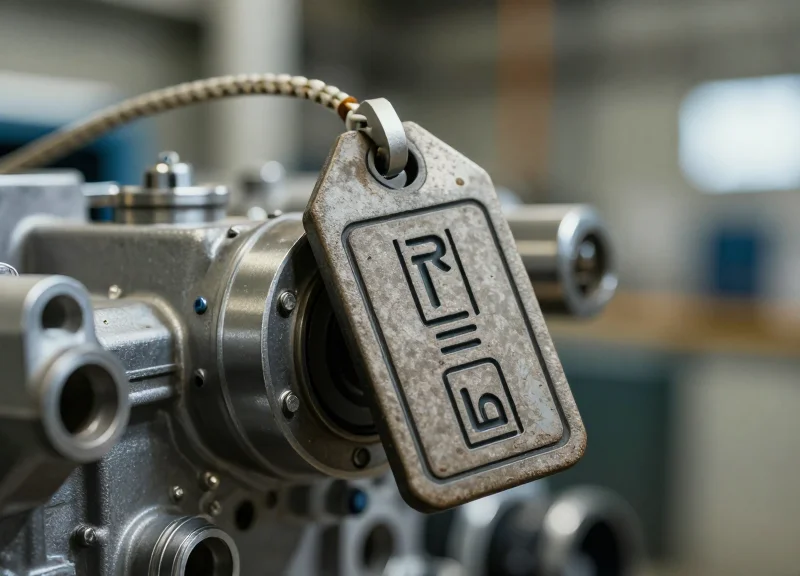
Rugged RFID is a specialized class of identification technology engineered to maintain 100% read/write integrity in environments that would instantly compromise standard labels. Unlike traditional paper or plastic RFID tags, ruggedized variants are encapsulated in industrial-grade materials like ceramic, FR4, or high-performance polymers (PPS). In the 2026 smart factory, these tags serve as the 'indestructible digital twin' of critical components, ensuring that data survivability is maintained even during high-pressure washdowns, chemical degreasing, or extreme thermal cycling.
| Feature | Standard RFID | Rugged RFID (Next-Gen) |
|---|---|---|
| Temperature Range | -20°C to +70°C | -50°C to +250°C (Autoclave ready) |
| Ingress Protection | IP54 (Dust/Splashes) | IP69K (High-pressure steam/Submersion) |
| Attachment Method | Adhesive backing | Mechanical (Screw, Weld, or Embedded) |
| Chemical Resistance | Low (Corrodes easily) | High (Resistant to acids, oils, and fuels) |
The engineering secret behind 2026 rugged tags lies in Thermal Expansion Coefficient (TEC) Matching. A common failure point in industrial RFID is the internal fracture of the bond between the chip and the antenna due to rapid temperature changes. Next-gen rugged tags use substrates that expand and contract at the same rate as the silicon chip itself, preventing internal mechanical stress. This 'structural elasticity' allows tags to survive the transition from a cryogenic storage unit to a high-heat curing oven without a single byte of data loss.
- Phase 1: Encapsulation Selection: Engineers select housing materials based on the specific chemical footprint of the factory floor, such as PEEK for aerospace or Nylon for heavy machinery.
- Phase 2: Vibration Dampening: Internal components are 'potted' or vacuum-sealed in resin to neutralize the effects of high-frequency mechanical vibration from robotic assembly lines.
- Phase 3: Surface Tuning: Next-gen tags are 'on-metal' tuned, using spacers or specific antenna geometries to prevent the metal substrate from interfering with the RF signal.
Will rugged RFID tags survive a paint shop's curing oven?
Yes. Specifically designed high-temperature tags can withstand 250°C for multiple cycles, making them ideal for automotive paint lines where barcodes would melt or char.
Can these tags be embedded directly inside metal components?
Through a process called 'in-metal' mounting, tags can be flush-mounted or fully embedded within a component, protecting the tag from external physical impact entirely.
How do rugged tags handle chemical cleaning?
Rugged tags are often tested against caustic soda, sulfuric acid, and industrial degreasers, maintaining structural integrity thanks to non-porous polymer shells.
Critical Component Error-Proofing: Beyond Simple Tracking
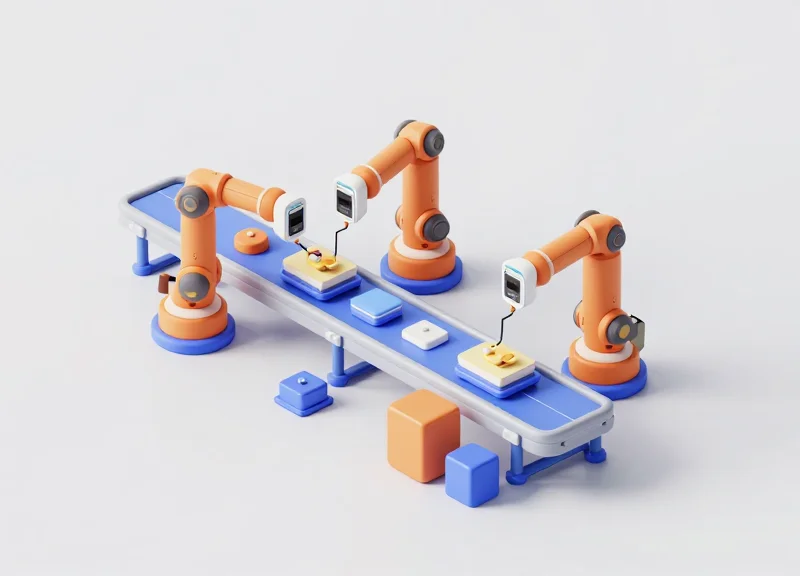
Critical component error-proofing with rugged RFID is an automated Poka-Yoke methodology that ensures the right part is paired with the right assembly at the exact right moment without manual scanning. Unlike legacy tracking, which merely records where a part has been, next-gen RFID creates an 'intelligent component' that interacts with the assembly line's PLC (Programmable Logic Controller) to physically prevent incorrect operations before they occur. This migration from passive visibility to active enforcement is the cornerstone of the 2026 smart factory, eliminating the 'human factor' in high-stakes manufacturing environments.
In traditional manufacturing, error-proofing often relies on visual cues or barcode scans that require line-of-sight and human initiative. If a worker forgets to scan or misreads a label, the error propagates down the line, leading to expensive rework or safety recalls. Rugged RFID flips this script. By embedding high-memory, heat-resistant tags into critical components—such as engine blocks, aerospace fasteners, or EV battery modules—the assembly station itself can detect the component's presence and configuration requirements automatically. If the wrong component enters a cell, the RFID system triggers an immediate interlock, halting the machine before a single bolt is tightened.
| Feature | Barcode Verification | Next-Gen Rugged RFID Poka-Yoke |
|---|---|---|
| Operation Type | Passive / Manual Check | Active / Automated Enforcement |
| Failure Point | Missed scans or damaged labels | None (automated non-line-of-sight detection) |
| System Feedback | Reactive (after the error occurs) | Proactive (prevents the error from occurring) |
| Data Capacity | Limited to a serial number | High-capacity (stores assembly state & QC data) |
The true power of this technology lies in the 'Dynamic Assembly Script.' In a modern high-mix production environment, one line might handle twelve different product variants. Rugged RFID allows the product to 'tell' the robot which program to run. This level of granularity ensures that even if a sub-component looks identical to its neighbor, the digital signature on the RFID tag confirms its specific tolerance and metallurgical properties, ensuring a 100% match every time.
- The RFID Handshake: As the component enters the workspace, the RFID reader performs a 'handshake' with the tag, verifying the part's identity and its current assembly state against the MES (Manufacturing Execution System).
- Automated Interlock: If the tag data does not match the scheduled build for that station, the PLC triggers a physical interlock, preventing the assembly tools from powering on.
- Write-Back Validation: Once the step is successfully completed (e.g., specific torque achieved), the reader writes the success code directly to the tag's memory, creating a portable, immutable birth certificate for the part.
Expert Tip: To maximize ROI in 2026, implement 'Edge-to-Tag' validation. Instead of waiting for a round-trip query to the central database, store critical 'Go/No-Go' status bits directly on the rugged RFID tag. This enables sub-millisecond error-proofing decisions at the machine edge, ensuring that even if the factory network experiences a momentary lag, your assembly integrity remains uncompromised.
Can RFID error-proofing work in metal-heavy environments?
Yes. Next-gen rugged tags are designed with specialized spacers and 'on-metal' tuning to ensure 100% read accuracy even when embedded in or mounted directly to steel and aluminum components.
What is the primary cost-saving of this shift?
The elimination of 'Hidden Factory' costs—the labor and materials wasted on identifying and fixing errors that occurred several steps back in the production process.
Real-Time Visibility and the 2026 Data Ecosystem

By 2026, real-time visibility has evolved from a 'nice-to-have' operational metric into the backbone of the industrial data ecosystem. In this environment, rugged RFID acts as the primary sensory input for Digital Twins, providing a continuous stream of high-fidelity data from the physical factory floor to cloud-based analytics platforms. Unlike legacy systems that rely on periodic scanning, the 2026 ecosystem utilizes an 'Always-On' architecture where every critical component is a live node within a decentralized network, ensuring that Enterprise Resource Planning (ERP) and Manufacturing Execution Systems (MES) reflect the literal truth of the shop floor in sub-second latency.
| Feature | Legacy Data Silos (Pre-2024) | 2026 Integrated Ecosystem |
|---|---|---|
| Data Capture | Manual or line-of-sight barcode scans | Autonomous, passive RFID sensing |
| Latency | Batch updates (minutes to hours) | Real-time event streaming (milliseconds) |
| Cloud Integration | Fragmented middleware/manual uploads | Direct Edge-to-Cloud API orchestration |
| Contextual Detail | Location only | Location, history, and status (Digital Twin) |
The true power of the 2026 data ecosystem lies in its ability to facilitate 'Contextual Intelligence.' Beyond mere tracking, rugged RFID tags now store and transmit metadata regarding the component's environmental exposure, maintenance history, and assembly compatibility. This allows the factory's AI-driven brain to make autonomous decisions—such as rerouting a part if the downstream assembly line detects a micro-deviation, or automatically triggering a procurement order when a critical buffer threshold is reached. This shift from reactive monitoring to proactive orchestration is what defines the next generation of industrial efficiency.
How does RFID integrate with 2026 IoT platforms?
Modern RFID readers function as edge computing nodes, filtering raw tag data locally before pushing structured JSON payloads to cloud platforms like AWS IoT or Azure IoT Central via MQTT protocols.
Is the data flow secure across the factory ecosystem?
Yes, 2026 standards utilize hardware-level encryption on the RFID tags themselves and mutual authentication between the tag, reader, and cloud gateway to prevent 'man-in-the-middle' attacks.
Can RFID sustain the data requirements of a Digital Twin?
Rugged RFID tags now offer expanded memory banks (User Memory), allowing them to carry the 'Universal Asset Passport' which synchronizes instantly with the cloud-based digital twin upon every scan point.
Expert Insight: The Shift to Event-Driven Architecture (EDA). In my two decades in Silicon Valley, I've seen many 'visibility' trends, but the 2026 shift is different because it moves away from 'polling' systems. Instead of the server asking 'Where is this part?', the rugged RFID infrastructure is now 'Event-Driven.' The part tells the system 'I have arrived at Station B and my temperature is nominal.' This reduces network noise by up to 70% and allows for hyper-scalable deployments that were previously impossible with barcode-based logic.
RFID vs. Barcodes: A Comparative ROI for Smart Manufacturing
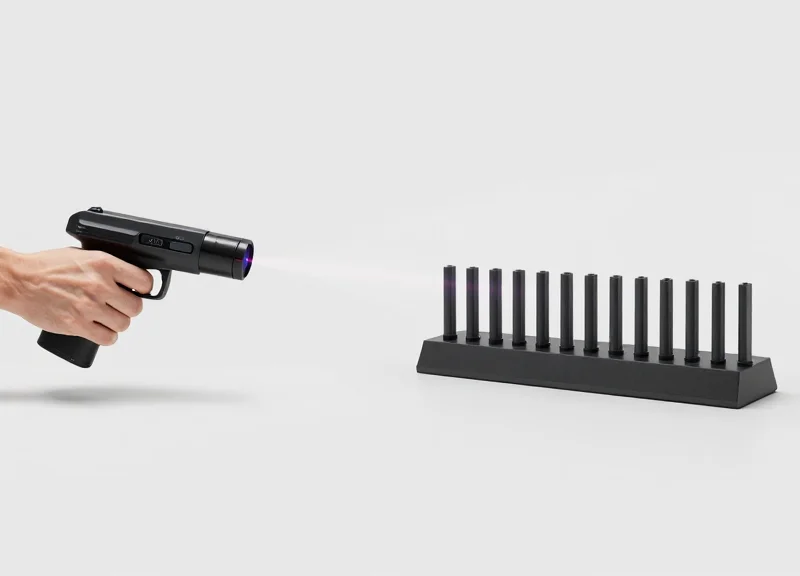
The Return on Investment (ROI) for RFID in smart manufacturing is calculated by moving beyond the unit cost of a tag and analyzing the Total Cost of Ownership (TCO) over the product lifecycle. While a barcode remains the cheapest way to label a part, its 'operational friction'—the cost of line-of-sight scanning, manual labor, and error correction—creates a hidden tax on production. In 2026 factory models, RFID achieves ROI through a 'Zero-Touch' data strategy, allowing for bulk reading of components in milliseconds, which can reduce labor-associated scanning costs by up to 92% compared to traditional 1D or 2D barcode systems.
| Metric | Barcode (1D/2D) | Next-Gen Rugged RFID | ROI Impact |
|---|---|---|---|
| Read Rate | 1 item at a time | Up to 1,000 items/sec | 99% Speed Increase |
| Line of Sight | Required (Manual) | Not Required (Automated) | Eliminates Human Labor |
| Data Capacity | Limited / Static | High / Rewritable | Enables Dynamic Workflow |
| Durability | Low (Easily damaged) | High (Ruggedized) | Zero Failed Scan Events |
| Error Rate | 1 in 10,000 (Human error) | 1 in 10,000,000 (Automated) | Eliminates Rework Costs |
Expert Insight: The 'Ghost Cost' of barcodes often goes unmeasured. In high-speed assembly lines, a single unreadable barcode label caused by grease, abrasion, or poor lighting can halt an entire cell, costing thousands of dollars per minute in downtime. Rugged RFID eliminates these failure points. Furthermore, because RFID tags can be written to, they act as a 'decentralized database' that travels with the component, reducing the overhead of constant server-side lookups required by barcodes.
How long does it take to see a positive ROI when switching to RFID?
Most smart factories see a break-even point within 12 to 18 months. This is driven primarily by the reduction in manual labor and the avoidance of 'shipping errors' or 'component mismatches' which carry heavy financial penalties in Tier-1 automotive and aerospace sectors.
Is the higher initial cost of RFID tags a barrier to adoption?
In 2026, the cost of rugged tags has stabilized while the cost of manufacturing errors has risen. When you factor in that RFID tags can often be recycled or reused in closed-loop manufacturing environments, the per-use cost frequently drops below that of high-quality industrial barcode labels.
Can RFID and barcodes coexist during the transition?
Yes, many facilities utilize 'hybrid' labels that feature both a printed 2D barcode and an embedded RFID inlay. This allows for an incremental ROI realization while legacy systems are phased out over time.
Implementing Rugged RFID: Overcoming Common Deployment Challenges
Deploying rugged RFID in a 2026 smart factory environment demands a strategic approach to both physical physics and data orchestration. Unlike standard logistics tags, rugged RFID must perform on metal-heavy assembly lines and through high-temperature coatings. The transition from barcodes to RFID involves overcoming signal attenuation, multipath interference, and the complexity of integrating high-velocity data streams into existing ERP and MES frameworks.
| Challenge | Technical Root Cause | Rugged Solution Strategy |
|---|---|---|
| Metal Interference | RF signal absorption or reflection by metallic components. | Utilize 'on-metal' tags with specialized spacers or ceramic cores. |
| Extreme Heat | Thermal expansion compromising tag circuitry. | Deploy high-temp PPS or PEEK encapsulated tags rated for 200°C+. |
| Read-Rate Latency | Data bottlenecks at the gateway level during high-speed transit. | Implement Edge-computing readers to filter and process data locally. |
| Environmental Stress | Chemical exposure or high-pressure washdowns (IP69K). | Use ultrasonic welding for tag enclosures to prevent liquid ingress. |
Expert Tip: Avoid the 'One-Size-Fits-All' Fallacy. In Silicon Valley's most advanced pilot lines, we've observed that the most common point of failure is selecting a single tag type for the entire factory. Smart factories in 2026 succeed by using a 'Hybrid Tagging' strategy—matching specific tag form factors to the material composition of the individual component, rather than the assembly line as a whole.
- Electromagnetic Site Survey: Conduct a comprehensive RF audit to map out existing interference from CNC machines, robotic arms, and wireless networks.
- Pilot Tag Characterization: Test multiple rugged tag prototypes under actual stress conditions—including thermal cycling and vibration—to establish a baseline for read reliability.
- Antenna Polarization Optimization: Align reader antennas (circular vs. linear) based on the orientation of components moving through the production gate.
- Middleware Abstraction: Deploy a middleware layer to translate raw RFID pings into actionable business logic for your MES, preventing data overload.
How do I handle RFID tags on curved metal surfaces?
Use flexible rugged tags with specialized adhesives or mechanical fasteners that maintain the necessary air gap between the antenna and the metal surface.
What is the best way to prevent 'Stray Reads'?
Implement RSSI (Received Signal Strength Indicator) filtering and shielded reading zones to ensure the system only captures tags within the intended work cell.
Will 2026 RFID systems interfere with Wi-Fi 7?
No, next-gen rugged RFID operates on specific UHF bands (860-960 MHz) that are physically separated from the high-frequency bands used by Wi-Fi 7 and 5G/6G private networks.
The Role of ESL and RFID Synergy in Agile Production
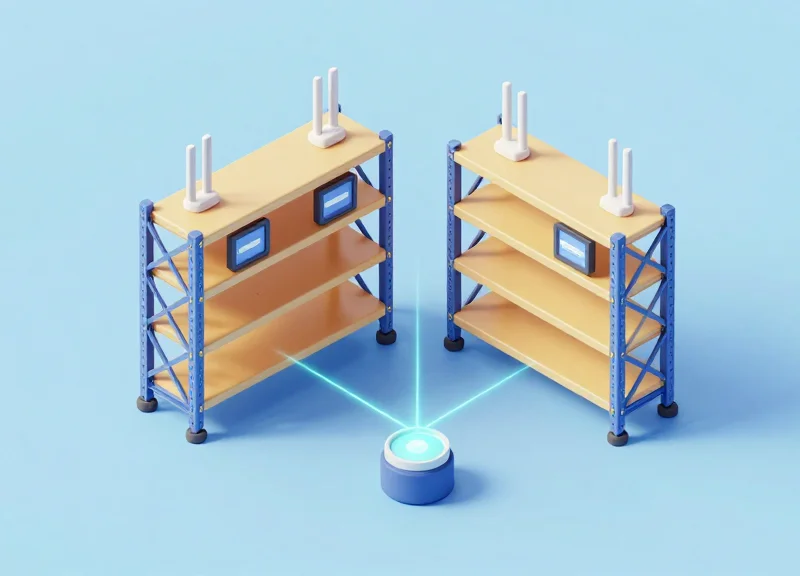
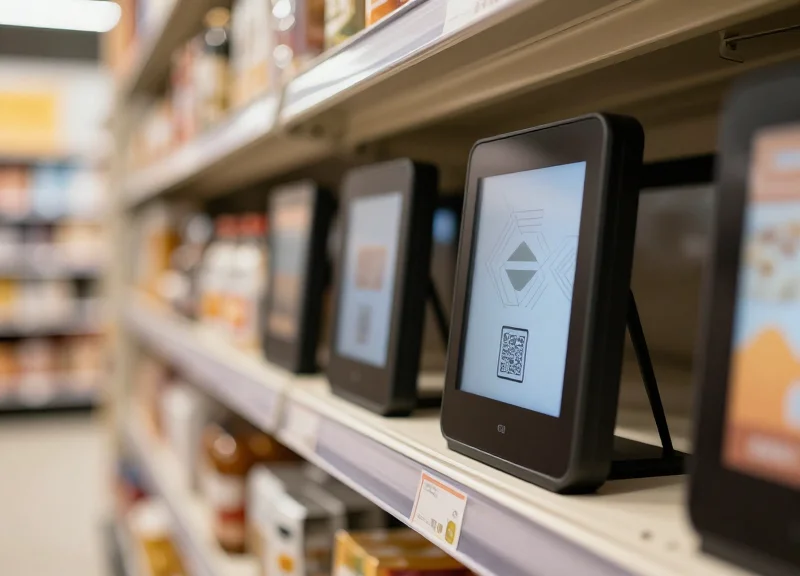
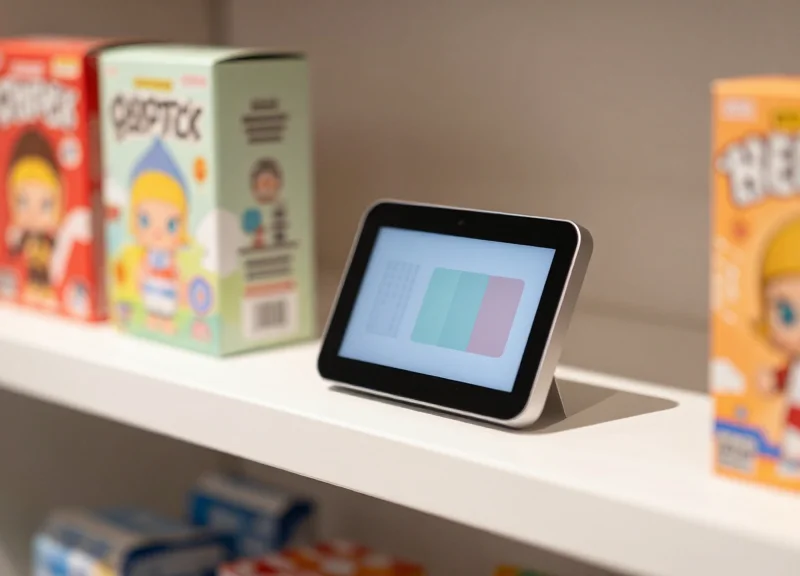
The synergy between Electronic Shelf Labels (ESL) and Rugged RFID in agile production creates a bidirectional data loop where RFID provides the 'identity and location' of assets while ESL provides the 'real-time visual instruction' for workers. By 2026, this combination is the gold standard for eliminating paper travelers, enabling sub-second updates to assembly instructions as components move through the smart factory, effectively bridging the gap between digital ERP systems and physical floor operations.
In an agile manufacturing environment, production lines must shift from one product variant to another with zero downtime. While RFID handles the automated tracking of these variants, ESLs serve as the human interface. When a 'Smart Pallet' equipped with a rugged RFID tag enters a workstation, the localized RFID reader identifies the specific SKU and triggers the associated ESL to display custom assembly steps, torque requirements, or safety warnings tailored to that specific unit. This eliminates the 'search and verify' time that typically plagues manual assembly processes.
| Feature | Legacy Static Labeling | RFID + ESL Synergy |
|---|---|---|
| Update Speed | Minutes/Hours (Manual) | Milliseconds (Automated) |
| Data Accuracy | Prone to human error | Direct ERP synchronization |
| Worker Guidance | Static/Generic | Dynamic/Context-Aware |
| Reconfigurability | Physical replacement | Software-defined |
Expert Insight: The 'Frictionless Changeover' Framework. In my two decades in Silicon Valley tech-manufacturing, the biggest bottleneck I've seen is 'Information Latency'—the gap between a system update and a worker knowing about it. The 2026 'Frictionless Changeover' utilizes ESLs not just as price tags, but as dynamic 'Digital Travelers.' By using an ESL to display a QR code that updates based on the RFID-read status, you can link legacy non-connected tools to the smart grid, ensuring a wrench only activates if the ESL shows the correct assembly stage is active.
How do ESLs and RFID communicate without interference?
Modern smart factories use frequency hopping and distinct protocols (such as Sub-Ghz for ESL and UHF for RFID) to ensure that high-density tag environments do not suffer from signal collision or cross-talk.
Can ESLs survive the same rugged conditions as industrial RFID?
Yes, next-gen industrial ESLs are now rated IP67 or higher, featuring reinforced glass and high-impact polymers designed to withstand vibrations, dust, and chemical exposure common in critical component manufacturing.
What is the primary ROI driver for this dual-technology approach?
The primary driver is the total elimination of 'Work-in-Progress' (WIP) stagnation. When workers always have the correct, real-time info via ESL triggered by RFID, rework rates drop by an average of 35% in high-complexity assembly.
Future-Proofing for 2026: Preparing Your Infrastructure Today
Future-proofing your manufacturing facility for 2026 requires moving beyond simple hardware replacement; it demands a comprehensive infrastructure audit that focuses on data orchestration, edge computing, and environmental resilience. To stay ahead, decision-makers must transition from passive barcode scanning to an automated, 'always-on' RFID ecosystem that integrates directly with existing ERP and MES platforms while ensuring the physical layer—the tags and readers—can withstand the harsh industrial conditions of modern high-speed production lines.
- Phase 1: The 'Dark Asset' Audit: Identify critical components that currently require manual scanning or frequently 'go dark' during the production cycle. This audit defines the required read-range and tag durability for your specific environment.
- Phase 2: Network Density Assessment: Rugged RFID systems generate significantly more data than barcodes. Evaluate your current Wi-Fi 6 or 5G industrial private network capacity to ensure it can handle high-frequency pings from thousands of moving parts.
- Phase 3: Middleware Selection: Deploy an abstraction layer (middleware) that can filter raw RFID 'noise' at the edge, sending only actionable events (e.g., 'Component A entered Station B') to your central database.
- Phase 4: Hybrid Pilot Deployment: Run a dual-track system where next-gen RFID tags carry barcode backups. This allows for stress-testing the rugged hardware without risking immediate production downtime.
| Infrastructure Component | Legacy Status (Barcode) | 2026 Readiness (Rugged RFID) |
|---|---|---|
| Data Capture | Manual / Line-of-sight required | Automated / Bulk reading at 30+ feet |
| Environmental Tolerance | Sensitive to grease, heat, and dirt | High-temperature and chemical resistant |
| Data Throughput | Low (Single-point scanning) | High (Continuous real-time stream) |
| Error Handling | Reactive (Catch after the fact) | Proactive (Instant error-proofing at the source) |
Expert Insight: The '90/10 Rule' of Data Orchestration. In my 20 years in the Valley, I've seen many factories fail by trying to pipe every single RFID 'ping' into their ERP. For 2026, the real value isn't the tag; it's the edge-level filtering. A successful infrastructure must be designed to discard 90% of the redundant data at the reader level, only transmitting the 10% that represents a meaningful change in state. This prevents 'data swamp' and ensures your 2026 smart factory remains agile.
Can we reuse our existing barcode labels during the transition?
Yes. Most next-gen rugged tags support hybrid labeling, where an RFID inlay is embedded within a traditional barcode label, allowing for backward compatibility with legacy scanners while you scale.
How long does a typical full-scale infrastructure migration take?
For a mid-sized factory, expect a 6 to 9-month window, covering the initial site survey, hardware installation, and software integration phases.
Will metal interference still be an issue in 2026?
Next-gen 'on-metal' rugged tags use specialized spacers and frequency-tuning to virtually eliminate interference, making them reliable even in heavy engine or chassis assembly.