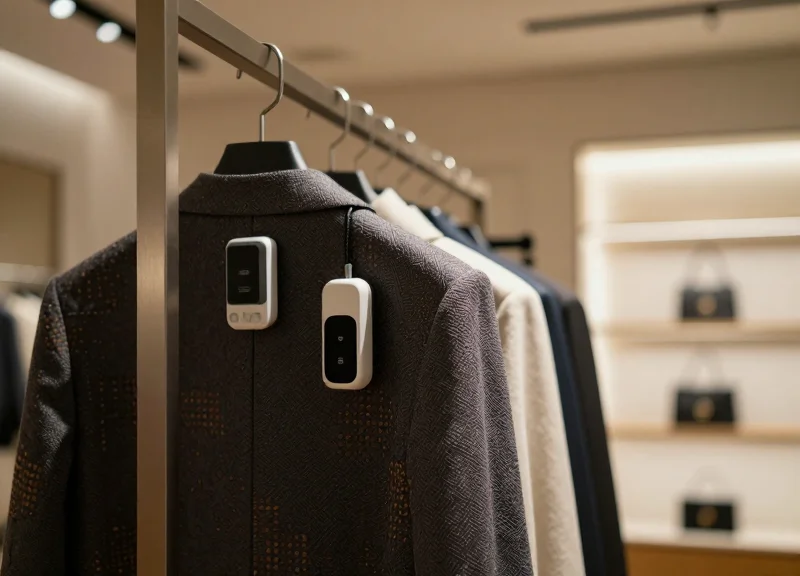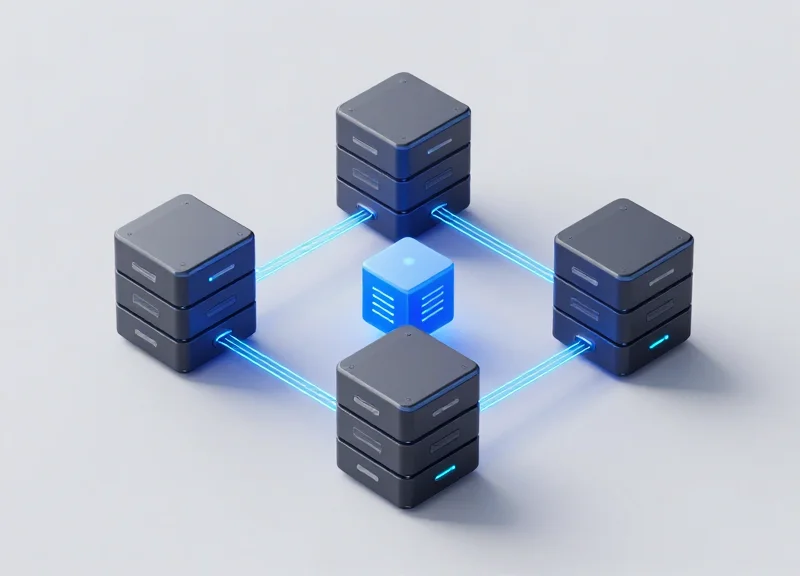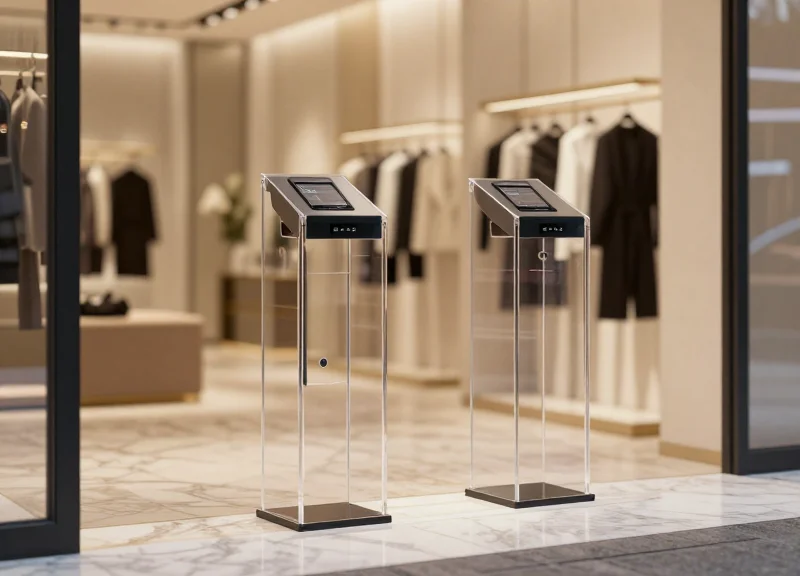
For luxury boutiques, the threat of retail theft has evolved far beyond simple shoplifting. Professional theft rings now utilize sophisticated electronic 'jammers' to neutralize traditional Electronic Article Surveillance (EAS) signals, allowing high-value goods to walk out the door undetected. To safeguard your brand's reputation and bottom line, implementing an EAS system with integrated jammer detection is no longer optional—it is a strategic necessity. This guide provides an authoritative roadmap to selecting the best security technology that blends seamlessly with high-end retail environments while providing uncompromising protection.
Understanding the Threat: How Signal Jammers Compromise Luxury Retail

Professional shoplifting syndicates increasingly utilize signal jammers—compact, battery-operated devices designed to flood the specific radio frequencies used by Electronic Article Surveillance (EAS) systems. By emitting a 'noise' signal at 58kHz (for Acousto-Magnetic systems) or 8.2MHz (for Radio Frequency systems), these devices effectively 'blind' the security pedestals at a store's entrance. When a high-value item with an active security tag passes through this saturated field, the pedestal's receiver is unable to distinguish the tag's signal from the jammer's interference, resulting in a total failure to alarm. For luxury boutiques, where a single undetected exit can result in five-figure losses, this 'electronic blindfolding' represents a critical vulnerability in traditional security infrastructure.
| EAS Technology | Operating Frequency | Jammer Disruption Method |
|---|---|---|
| Acousto-Magnetic (AM) | 58 kHz | Floods the pulse-listen cycle with continuous ultrasonic noise. |
| Radio Frequency (RF) | 8.2 MHz | Sweeps the frequency band to create a constant 'busy' signal for the receiver. |
| RFID | 860-960 MHz | Emits wide-band interference to prevent reader-to-tag communication. |
- Reconnaissance: Thieves enter the boutique to identify the type of EAS system in use and locate high-value items positioned near exits.
- Activation: A pocket-sized jammer is activated several meters before the thief reaches the security pedestals, creating a portable 'dead zone'.
- The Silent Exit: The perpetrator walks through the pedestals with the stolen goods; the system remains silent because its sensors are overwhelmed by the jammer's output.
The Shadow Masking Effect: An original insight into this threat is what experts call 'Shadow Masking.' Unlike booster bags (lead-lined bags) which are physical and can be spotted by vigilant staff, jammers exploit the psychological 'False Negative' bias. Because the EAS system remains silent, floor staff assume no theft is occurring. Without integrated jammer detection, a luxury store's most expensive security asset becomes an unintentional accomplice by providing a false sense of security while a crime is actively in progress.
Do standard EAS pedestals alarm when jammed?
No. Most standard systems are designed only to detect the specific 'echo' of a security tag. They interpret jamming signals as environmental noise and remain silent.
How small are modern retail jammers?
Modern jammers can be as small as a smartphone or a car key fob, making them virtually impossible to detect through physical observation alone.
Is jammer detection a standard feature?
No. Jammer detection is a premium feature found only in high-end, 'intelligent' EAS systems specifically designed for high-risk environments like luxury retail.
What is Integrated Jammer Detection and How Does it Work?

Integrated Jammer Detection (IJD) is a sophisticated security layer embedded within Electronic Article Surveillance (EAS) pedestals designed to identify the presence of illegal signal-blocking devices. Unlike traditional security systems that only react when a tagged item passes through the gates, IJD acts as a proactive shield by sensing the 'silent' interference generated by jammers used by professional shoplifting rings. By continuously scanning the local radio frequency (RF) environment, the system can trigger a discrete or audible alarm the moment a jammer enters the detection zone, allowing staff to intercept potential threats before a single product is touched.
- Ambient Spectrum Monitoring: The EAS system constantly monitors the 8.2 MHz (RF) or 58 kHz (AM) frequency bands for any abnormal levels of electromagnetic noise that could drown out tag signals.
- Signal Pattern Recognition: Advanced algorithms analyze the incoming noise. Malicious jammers typically emit a continuous wave or a swept frequency that differs significantly from standard environmental interference like Wi-Fi or LED lighting.
- Threshold Verification: To prevent false positives, the system verifies that the signal strength and duration meet specific 'malicious intent' criteria established by the manufacturer's security protocols.
- Instantaneous Alerting: Once a jammer is confirmed, the system triggers an alert—often a silent notification to a manager’s smartphone or a specific LED color change on the pedestal—rather than a standard theft alarm.
| Feature | Standard EAS System | EAS with Integrated Jammer Detection |
|---|---|---|
| Detection Trigger | Physical tag passing through gate | Proximity of an active jamming device |
| Security Posture | Reactive (Alarm after theft attempt) | Proactive (Alert before theft attempt) |
| Signal Analysis | Listens for specific tag resonance | Monitors entire frequency band for anomalies |
| ORC Effectiveness | Low (Easily bypassed by jammers) | High (Specifically designed to counter ORC) |
Expert Insight: In luxury retail environments, the greatest challenge isn't just detecting a jammer, but differentiating it from 'Electronic Noise Pollution.' Modern boutiques are filled with high-end LED drivers, digital displays, and motorized racks that generate significant EMI (Electromagnetic Interference). The best-in-class IJD systems utilize Digital Signal Processing (DSP) to create a 'fingerprint' of your store's unique background noise, ensuring that the jammer alert only fires when a truly external, malicious signal is introduced. This precision is what prevents 'alarm fatigue' among boutique staff.
Does the system alert the shoplifter?
Most luxury installations are configured for 'silent alerts.' This notifies security via wearable tech or mobile apps, allowing for a discreet approach rather than alerting the thief that their jammer has been detected.
Can it detect jammers hidden in bags or pockets?
Yes. Because jammers must emit a signal stronger than the EAS system to be effective, IJD can detect them even if they are concealed inside 'booster bags' or thick clothing.
Is IJD effective against all types of jammers?
It is highly effective against broadband and swept-frequency jammers. However, the system must be matched to the specific frequency of your EAS (AM or RF) to ensure maximum coverage.
Acousto-Magnetic (AM) vs. Radio Frequency (RF) for Jammer Resistance

Acousto-Magnetic (AM) systems operating at 58 kHz are inherently more resistant to signal jamming than traditional Radio Frequency (RF) systems at 8.2 MHz because their lower frequency requires significantly higher power to disrupt and is less susceptible to environmental interference. While both can be equipped with jammer detection, AM technology offers a more stable platform for luxury boutiques because it is less prone to 'shielding'—the practice of using foil-lined bags—and provides a clearer signal-to-noise ratio that makes unauthorized interference easier for internal sensors to identify.
| Feature | Acousto-Magnetic (AM) - 58 kHz | Radio Frequency (RF) - 8.2 MHz |
|---|---|---|
| Jammer Resistance | High (Low frequency is harder to saturate) | Moderate (High frequency is easier to noise-flood) |
| Detection Consistency | Excellent around metals/foils | Poor near metallic luxury goods |
| Signal Integrity | Resistant to most electronic noise | High susceptibility to LED/LCD interference |
| Typical Application | Luxury fashion, electronics, cosmetics | Supermarkets, apparel discounters |
In a luxury environment, the 'physics of the frequency' matters. RF systems operate on a wider bandwidth, which makes them a larger target for broad-spectrum jammers. Conversely, AM systems use a pulse-echo technology. The pedestal sends a burst of energy and listens for a specific mechanical resonance from the tag. Because jammers typically emit a continuous wave of noise, a high-end AM system's Digital Signal Processing (DSP) can quickly identify that the noise floor has risen without a corresponding 'echo,' triggering a jammer alert with much higher precision than an RF counterpart.
Why is AM preferred for luxury items like jewelry or metallic handbags?
AM tags are highly resistant to 'detuning' near metal. Since luxury goods often feature metal hardware or foil packaging, AM provides a stable detection environment where the jammer detection sensor can distinguish between a blocked signal and a legitimate tag response.
Can RF jammers be detected as easily as AM jammers?
Detection is possible for both, but RF environments are naturally 'noisier.' This means RF jammer detectors often require higher thresholds to avoid false alarms caused by nearby electronics, which can inadvertently create small 'blind spots' that professional thieves exploit.
Is there a 'Hybrid' solution for maximum security?
Some elite boutiques utilize dual-technology pedestals, but for pure jammer resistance, a dedicated AM system with integrated Intelligent Pulse Monitoring is considered the gold standard in the industry.
Expert Insight: The 'Waveform Fingerprint' Advantage. One unique advantage of modern AM integrated detection is its ability to perform 'Phase Analysis.' While a cheap jammer simply floods the 58 kHz or 8.2 MHz band with noise, a luxury-grade AM system analyzes the structure of that noise. If the system detects a signal that mimics the frequency but lacks the specific decay pattern of a legitimate acousto-magnetic tag, it recognizes the 'waveform fingerprint' of a jammer. This allows the system to alert security before the thief even enters the store, a level of proactive defense that standard RF systems struggle to replicate.
Aesthetic Integration: Discreet Security for High-End Design

Aesthetic integration in luxury retail security is the strategic selection of Electronic Article Surveillance (EAS) hardware that maintains a boutique's architectural integrity while providing robust protection. For high-end environments, this typically involves choosing ultra-clear acrylic pedestals, concealed floor systems, or custom-finished antennas that house jammer detection sensors without creating a 'fortress' atmosphere that can alienate affluent clientele.
| System Configuration | Aesthetic Impact | Jammer Detection Performance | Best Use Case |
|---|---|---|---|
| Clear Acrylic Pedestals | Low - Blends with glass and light | Excellent - Antenna placement is optimal | Modern minimalist boutiques with wide entrances |
| Concealed Floor Loops | Zero - Completely invisible | Moderate - Requires specialized tuning | Historic buildings or ultra-luxury 'open' concepts |
| Custom-Wrapped Antennas | Variable - Matches decor/branding | High - Standard pedestal performance | Concept stores with specific color palettes |
| Under-Floor Mat Systems | Near-Zero - Hidden under carpet/rugs | High - Proximity to floor detects portable jammers | Small luxury footprints and high-traffic doorways |
Can jammer detection sensors be hidden behind metal store fixtures?
No. Metallic finishes (like chrome or brass) can shield the antenna from receiving signals, creating blind spots. For integrated jammer detection, antennas must be placed at least 30cm away from large metallic structures to ensure the RF field can accurately identify interference signatures.
Do acrylic pedestals show wear and tear over time?
High-quality, UV-stabilized acrylic used in luxury EAS systems will not yellow. However, to maintain the 'discreet' look, they require microfiber cleaning to prevent scratches that could catch store lighting and make the system more visible.
Is it possible to integrate jammer alerts without a loud siren?
Yes. For luxury environments, we recommend 'Silent Alerts' where jammer detection triggers a discrete notification to staff via wearable devices (pagers) or mobile apps, allowing for a professional intervention without disrupting the shopping experience.
Expert Insight: The 'Visual Deterrence Paradox' in luxury retail suggests that while you want security to be invisible to customers, you want its presence to be known to professional shoplifters. To achieve this, we often recommend 'Ghost Branding'—placing a very small, backlit LED indicator at the base of a clear pedestal. To a customer, it looks like architectural lighting; to a professional thief using a jammer, the specific LED pulse indicates an active, jammer-aware system, often causing them to bypass the store entirely without an incident ever occurring.
Essential Features of Premium Jammer-Detection EAS Systems
A premium jammer-detection EAS (Electronic Article Surveillance) system is defined by its ability to identify malicious signal interference—designed to 'blind' security tags—before a thief even enters the shop floor. These elite systems utilize high-fidelity Digital Signal Processing (DSP) to distinguish between environmental electronic noise and the specific wide-band frequencies used by illegal jamming devices. For luxury retailers, the hallmark of a top-tier system is the shift from reactive alarming to proactive intelligence, ensuring that security staff are alerted to a threat while the suspect is still at the threshold, without creating a scene that disrupts the high-end shopping atmosphere.
| Core Feature | Technical Capability | Boutique Benefit |
|---|---|---|
| Multi-Band Sensing | Scans 58kHz and 8.2MHz simultaneously | Protects against both AM and RF jamming attempts. |
| Silent Notification | Integration with pagers, mobile apps, or CCTV | Informs security discreetly without alarming VIP clients. |
| Cloud Diagnostics | Remote 24/7 system health monitoring | Reduces downtime and minimizes the need for visible technicians. |
| Adaptive Sensitivity | Auto-adjusts to store's ambient noise | Eliminates embarrassing false alarms from consumer tech. |
Beyond basic detection, a truly premium system must offer 'Shadow Logging.' This is my expert recommendation for luxury boutiques: Choose a system that logs 'near-misses' or low-level interference patterns. Professional shoplifters often 'case' a store by carrying a jammer in a pocket to see if it triggers any visible reaction from the system. Shadow logging allows your security team to review these events via a dashboard, identifying suspicious patterns and individuals days before a high-value heist is actually attempted.
Can these systems detect jammers hidden in foil-lined 'booster bags'?
Yes. Premium systems include Metal Detection (MD) capabilities alongside jammer detection. This dual-sensing approach identifies both the physical shield (foil) and the active electronic interference (jammer) simultaneously.
How does the system distinguish a jammer from a high-end smartphone?
Advanced systems use specific algorithms that look for 'Constant Wave' (CW) or 'Swept Frequency' patterns typical of jammers, which differ significantly from the burst-based data packets used by 5G and Wi-Fi devices.
What is the recommended notification method for a luxury setting?
We recommend a 'Tiered Response' protocol. A jammer detection should trigger a silent haptic alert on security staff wearables and automatically cue the nearest PTZ camera to zoom in on the entrance for forensic documentation.
Synergy with RFID and ESL: Building a Unified Security Ecosystem
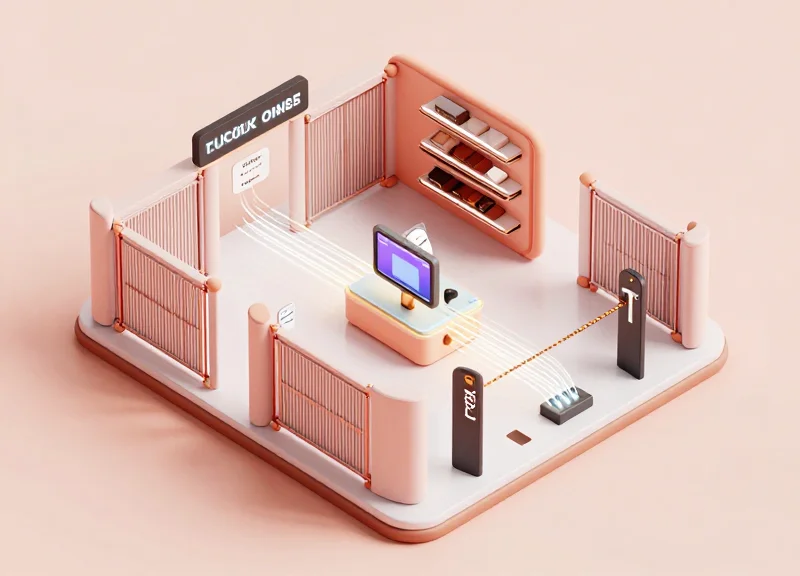
A unified security ecosystem in luxury retail represents the convergence of Electronic Article Surveillance (EAS) with jammer detection, Radio Frequency Identification (RFID), and Electronic Shelf Labels (ESL) into a single, interoperable intelligence layer. By synchronizing these technologies, boutiques transition from reactive 'alarm-only' security to a proactive environment where inventory visibility and threat detection work in tandem to eliminate blind spots.
In a luxury setting, the primary challenge of jammer-based theft is that the 'thief' remains invisible until they exit. However, when EAS is paired with RFID, the system gains 'item-level awareness.' While the jammer attempts to mask the EAS signal, the RFID sensors can simultaneously track the movement of specific high-value SKUs toward the door. This creates a data-backed alert: staff are notified not just that a jammer is present, but exactly which $5,000 handbag is currently in motion near the entrance.
| Technology | Primary Function | Strategic Contribution to Ecosystem |
|---|---|---|
| EAS + Jammer Detection | Exit Security | Detects professional ORC tools and prevents unauthorized removal of goods. |
| RFID | Inventory Intelligence | Provides real-time item-level tracking and automated 'Stock-to-Sales' accuracy. |
| ESL (Electronic Shelf Labels) | Dynamic Communication | Displays pricing and can serve as a visual alert system for staff during security events. |
Expert Insight: The 'Active Deterrence' Loop. A unique advantage of integrating ESL with jammer-detection EAS is the ability to use shelf labels as silent indicators. For example, when an EAS pedestal detects a jammer signal, it can trigger a specific color flash on ESLs in the backroom or at the concierge desk. This allows staff to implement 'discreet concierge' service—approaching the suspect to offer 'assistance'—without ever sounding a loud, brand-damaging alarm.
Can RFID tags be jammed the same way as EAS tags?
While RFID operates on different frequencies, professional jammers can disrupt them. However, a unified system detects the 'noise' of the jammer itself, triggering a security protocol regardless of which tag type is being suppressed.
Does integrating these systems require a full IT overhaul?
Most premium EAS platforms now offer API-based integration or 'all-in-one' pedestals that house both AM/RF and RFID antennas, significantly reducing the hardware footprint.
What is the biggest operational benefit of this synergy?
The reduction in 'false positives.' By cross-referencing EAS alarms with RFID data, the system can distinguish between a technical glitch and an actual item passing through the gates.
Evaluating ROI: The Cost of Theft vs. the Value of Prevention
Evaluating the Return on Investment (ROI) for advanced EAS systems with integrated jammer detection requires moving beyond simple replacement costs to a 'Total Loss' model. In luxury retail, a single successful heist using a signal jammer can result in the loss of six figures in inventory within minutes. The ROI is realized when the system prevents just one professional 'sweep,' as the cost of the technology is typically less than the retail value of two or three high-end leather goods or a single timepiece. Investing in jammer detection transforms security from a sunk cost into a strategic asset that preserves gross margins and protects the brand's 'exclusive availability' promise.
| Metric | Reactive Approach (Standard EAS) | Proactive Approach (Jammer Detection) |
|---|---|---|
| Theft Mitigation | High risk of 'blind spots' from ORC jammers. | Real-time alerts for sophisticated interference. |
| Shrinkage Impact | Higher annual loss (1.5% - 3% of sales). | Reduced shrinkage (under 0.5% targeted). |
| Operational Focus | Staff spends time on post-theft reports. | Staff focuses on high-touch sales/prevention. |
| Insurance Premiums | Steady or rising due to claim frequency. | Potential for reduced premiums/lower deductibles. |
One unique insight often overlooked by boutique owners is the 'Opportunity Cost of Out-of-Stock.' When a high-demand luxury item is stolen, the loss is not just the cost of the item, but the lost opportunity to sell that item to a loyal client. In a world of limited supply chains, replacing a stolen 'it-bag' can take months, leading to lost sales and diminished client trust. Jammer detection ensures your most valuable assets remain on the floor for the people actually intending to buy them.
How long does it take to see a positive ROI on jammer-detection systems?
Most luxury boutiques achieve a break-even point within 12 to 18 months. However, if the system thwarts a single major Organized Retail Crime (ORC) event, the ROI becomes instantaneous.
Does jammer detection impact the customer experience?
No. Modern systems use silent alerts sent directly to staff mobile devices or discrete wearables, allowing for a 'soft' intervention that doesn't disrupt the shopping environment for legitimate clients.
Is the investment worth it for smaller boutiques?
Smaller boutiques are often targeted specifically because they are perceived to have weaker security. Protecting a smaller, high-value inventory makes each individual item more critical to the store's survival.
Expert Tip: When presenting the business case for this technology, calculate your 'Breakeven Recovery Unit Count.' Divide the total cost of the EAS upgrade by the average margin of your top-selling items. You will often find that preventing the theft of just 3-5 units pays for the entire multi-year system lifecycle.
Selecting a Vendor: Why Expert Support and Proven Pedigree Matter
Selecting a vendor for premium jammer-detection EAS systems is a strategic decision where the vendor's pedigree—defined by their track record in high-stakes environments—and their ability to provide proactive expert support directly determine the effectiveness of your retail loss prevention strategy. In the luxury sector, a security failure isn't just a lost item; it is a breach of the brand's exclusive atmosphere and a compromise of the high-margin bottom line. A vendor with a proven pedigree, such as DragonGuardGroup, understands that luxury boutiques require more than just hardware; they require a partner capable of integrating sophisticated signal intelligence into a seamless, high-end shopping experience.
Why does a vendor's 'pedigree' matter for luxury boutiques?
Pedigree represents a vendor's history of solving complex security challenges for high-value brands. Experienced vendors understand the specific tactics used by Professional Shoplifting Gangs, such as 'booster bags' and signal jammers, and have refined their technology through years of real-world retail deployments.
What constitutes 'Expert Support' in the context of jammer detection?
Expert support goes beyond installation; it includes remote system health monitoring, real-time sensitivity calibration to avoid false alarms, and the ability to update firmware to counter new frequencies used by modern jamming devices.
Can a vendor help with aesthetic integration?
Yes, premium vendors offer bespoke finishes—ranging from polished chrome to custom acrylics—that ensure the EAS pedestals complement the boutique's interior design rather than clashing with it.
| Feature | Generic Equipment Vendor | Premium Security Partner (e.g., DragonGuardGroup) |
|---|---|---|
| Jammer Logic | Basic 'noise' detection; high false-alarm rate. | Advanced Digital Signal Processing (DSP) to distinguish jammers from EMI. |
| Technical Support | Third-party contractors with limited EAS knowledge. | Direct access to specialized engineers and remote diagnostics. |
| System Longevity | Fixed hardware that becomes obsolete quickly. | Software-defined architecture with frequent security patches. |
| Boutique Aesthetics | Standard industrial designs only. | Customizable form factors and materials for high-end design. |
Expert Tip: Look for 'Software-Defined Security.' In my 20 years in the technology sector, the most resilient systems are those where the detection logic is controlled by software rather than hard-coded into the chips. A vendor like DragonGuardGroup provides systems that can be updated over the air. As organized retail crime (ORC) groups develop new, more stealthy jamming frequencies, your system can be patched to recognize them without requiring a total hardware replacement. This 'future-proofing' is what separates a true luxury security partner from a mere equipment supplier.
- Audit the Vendor's Portfolio: Ask for case studies specifically within the luxury or high-fashion segment. Ensure they have experience working with the unique materials (glass, marble, high-frequency lighting) common in boutiques.
- Test Remote Capabilities: Verify that the vendor can perform remote diagnostics. For a boutique, having a technician on the floor during business hours is a disruption; remote fixes are the gold standard for luxury service.
- Evaluate the Supply Chain: Ensure the vendor has full control over their manufacturing. This guarantees that replacement parts and matching pedestals will be available for years to come, maintaining visual consistency across your global footprint.
Installation and Maintenance Best Practices
To ensure an EAS system with integrated jammer detection functions at peak performance, installation must go beyond simple hardware placement. In luxury boutiques, the goal is 'Invisible Protection'—where the system effectively identifies intentional RF interference from professional thieves while ignoring the dense ambient noise of a modern retail environment, such as mobile devices and high-end LED lighting systems. Proper installation requires a 'Zero-Interference' strategy, utilizing dynamic threshold tuning to create a baseline of the boutique's unique electromagnetic signature.
- Site RF Environment Audit: Before drilling, technicians must use a spectrum analyzer to map existing radio frequencies. This identifies potential 'noise' from nearby mall electronics or store-side Wi-Fi that could trigger false jammer alerts.
- Discreet Pedestal Anchoring: For boutiques, aesthetics are paramount. Pedestals should be installed with sub-floor cabling and anchored to ensure they remain perfectly vertical, preventing 'signal drift' caused by physical misalignment.
- Jammer-Specific Sensitivity Tuning: Technicians must calibrate the detection 'window.' It needs to be sensitive enough to catch a low-power jammer hidden in a coat pocket, but smart enough to ignore legitimate smartphone signals near the entrance.
- Silent Notification Integration: Configure the jammer alarm to trigger a silent notification (via pager or mobile app) rather than a loud siren. This allows security personnel to observe the suspect discreetly without causing a scene in a high-end environment.
| Maintenance Task | Frequency | Impact on Jammer Detection |
|---|---|---|
| Functional Tag Testing | Daily (Opening) | Ensures the basic EAS functionality is active and pedestals are powered. |
| Environmental Shift Audit | Quarterly | Checks if new store displays or holiday lighting are creating RF interference. |
| Firmware & Logic Updates | Bi-Annually | Updates detection algorithms to recognize newer, more sophisticated jamming devices. |
| Antenna Recalibration | Annually | Corrects for electronic component aging to maintain tight detection tolerances. |
Expert Tip: The Seasonal Shift Audit. Luxury boutiques are dynamic; high-density metallic art installations or elaborate holiday window displays can significantly alter the RF environment of your storefront. We recommend a mandatory recalibration of your jammer detection system every time the floor layout or major lighting arrays are changed. A system calibrated for a minimalist summer layout may generate false positives or create blind spots when surrounded by foil-backed winter decorations or high-powered LED festive lights.
Why is my jammer alarm going off when no one is there?
This is often caused by 'Environment Noise' from poorly shielded electronic transformers or neighboring store equipment. A sensitivity adjustment or the addition of ferrite chokes to power cables usually resolves this.
Does the system detect 'Booster Bags' as well?
While jammer detection focuses on active signals, many premium systems also include 'Metal Detection' logic to identify the presence of large amounts of aluminum foil used in professional shoplifting bags.
Can maintenance be done remotely?
Yes, high-end systems like those from DragonGuardGroup often feature remote diagnostics, allowing technicians to adjust sensitivity and check system health via the cloud without an on-site visit.