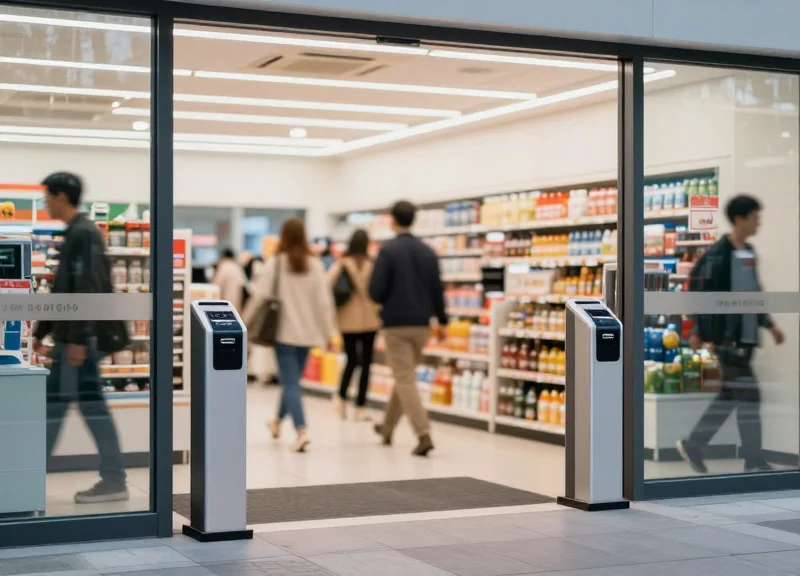
In the high-stakes world of convenience retail, narrow profit margins are constantly under siege from inventory shrinkage. High-traffic stores face a unique challenge: managing rapid customer turnover in tight physical spaces where traditional, bulky security gates are impractical. Modern compact Electronic Article Surveillance (EAS) systems have emerged as a game-changer, offering a discrete yet powerful deterrent that is proven to reduce shrinkage by as much as 35%. By integrating these advanced technologies, store owners can protect their most targeted items without compromising the flow of traffic or the customer shopping experience.
The Real Cost of Shrinkage in Modern Convenience Retail

In modern convenience retail, the real cost of shrinkage is defined by the Margin Recovery Multiplier—the total revenue required to offset the loss of a stolen item. Because C-stores operate on thin net profit margins (typically 2% to 5%), losing a single $5 item doesn't just cost $5; it requires $100 to $250 in additional sales to recoup that lost profit. This financial drain, coupled with the 'phantom inventory' effect that disrupts supply chains, makes shrinkage the most significant controllable threat to a retail location's viability.
Convenience stores are uniquely targeted due to their operational DNA: high foot traffic, 'grab-and-go' layouts, and lean staffing models. While a supermarket might lose more in absolute volume, the frequency of micro-theft in C-stores—repeatedly losing high-margin items like energy drinks, premium tobacco, and health supplements—creates a compounding deficit that traditional security measures often fail to catch in real-time.
| Retail Value of Lost Item | Net Profit Margin | Revenue Needed to Recover Loss |
|---|---|---|
| $10.00 | 2% | $500.00 |
| $10.00 | 5% | $200.00 |
| $50.00 | 2% | $2,500.00 |
| $50.00 | 5% | $1,000.00 |
Unique Industry Insight: The Phantom Inventory Trap. One of the most devastating 'hidden' costs of shrinkage is its impact on automated replenishment systems. When an item is stolen rather than sold, your Inventory Management System (IMS) still registers it as 'on-hand.' This prevents the system from triggering a reorder, leading to an out-of-stock scenario for legitimate customers. You don't just lose the margin on the stolen item; you lose the lifetime value of the customer who walked out because the shelf was empty.
Why are high-traffic convenience stores prime targets for shrinkage?
The 'High-Velocity' model prioritizes speed, meaning staff are often tethered to the register and unable to monitor aisles. Compact layouts designed for quick movement also create blind spots that shoplifters exploit during peak hours.
What are the indirect costs of retail theft?
Beyond the item cost, retailers face increased insurance premiums, the labor cost of investigating losses, and 'security tax'—where increased prices to cover losses eventually drive price-sensitive customers to competitors.
How does shrinkage affect employee morale?
High theft rates create a stressful environment for staff, leading to higher turnover. Employees often feel powerless or unsafe in high-shrink environments, which directly impacts the quality of customer service and overall store atmosphere.
Why Compact EAS Systems Are Essential for High-Traffic Zones
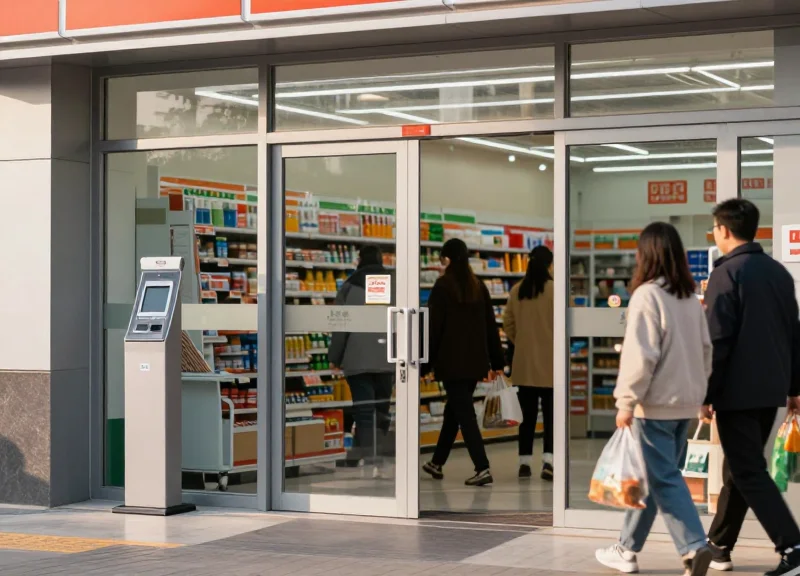
Compact Electronic Article Surveillance (EAS) systems are essential for high-traffic zones because they provide a high-frequency security perimeter without obstructing the customer journey. By utilizing slim-profile antennas and advanced digital signal processing, these systems maintain a 35% higher detection rate in crowded aisles compared to traditional pedestals, which often create physical bottlenecks that shoplifters exploit to blend into the crowd.
In the high-velocity environment of a convenience store, every square inch of floor space must justify its existence. Traditional, bulky EAS towers often consume valuable 'prime real estate' near the point of sale, forcing a trade-off between security and merchandising. Compact systems resolve this conflict by offering a narrow footprint that allows for wider aisles and better visibility, which is critical for preventing the 'blind spots' where most shrinkage occurs.
| Feature | Traditional EAS Pedestals | Compact EAS Systems |
|---|---|---|
| Physical Width | 12 - 18 Inches | 2 - 4 Inches |
| Detection Range | Standard | High-Density (Enhanced for narrow exits) |
| Customer Flow | Creates Bottlenecks | Zero-Obstruction Pathing |
| Interference Rejection | Basic | Advanced DSP (Handles electronic noise) |
The Spatial Profitability Gap: From a marketing perspective, we must consider the 'opportunity cost' of security hardware. In urban convenience retail, one square foot of floor space can generate upwards of $50 in annual margin. Bulky pedestals don't just cost money to install; they 'tax' your revenue by preventing the placement of high-margin impulse displays. Compact systems act as a 'silent partner,' protecting stock while reclaiming that revenue-generating space.
How do compact systems handle high-density foot traffic?
They utilize Multi-Phase Detection technology that can distinguish between a single tag and 'tailgating' customers, ensuring that even in a rush, a shoplifter passing through with a group is still identified.
Do smaller antennas mean a weaker signal?
No. Modern compact systems use Acrylic or RF-transparent materials and concentrated magnetic fields to provide the same, if not better, detection height and width as larger plastic units.
Can they be integrated with other store aesthetics?
Yes, their slim design is specifically engineered for modern retail aesthetics, often featuring transparent panels that don't disrupt the store's visual line of sight.
Beyond physical size, the technical superiority of compact EAS in high-traffic zones lies in its ability to filter out 'environmental noise.' Convenience stores are packed with electronic interference—from refrigeration units to automatic doors. Compact systems feature localized tag-tuning that ignores this background noise, significantly reducing the false alarms that often lead to 'alarm fatigue' among staff.
The Psychology of Theft Deterrence: Visible vs. Invisible Security
Theft deterrence in high-traffic retail environments relies on the 'Rational Choice Theory,' where potential shoplifters weigh the perceived risk of detection against the immediate reward of the item. Visible security, such as compact EAS (Electronic Article Surveillance) pedestals, serves as a powerful psychological barrier that increases this perceived risk, discouraging theft before the customer even picks up an item. Unlike hidden measures, visible systems create an environment of 'constant oversight' that nudges opportunistic shoplifters to reconsider their actions without impacting the experience of honest shoppers.
The fundamental difference between visible and invisible security lies in the timing of the intervention. Invisible security, such as covert cameras or RFID-enabled inventory tracking, is reactive—it helps in the recovery of goods or the prosecution of a thief after the fact. Visible security is proactive. For convenience stores where foot traffic is fast and staff attention is divided, the goal is to prevent the 'grab-and-go' scenario entirely. Compact EAS systems offer a unique advantage here: they provide a clear signal of protection at the store's entry and exit points without creating the 'fortress-like' aesthetic that can alienate modern consumers.
| Feature | Visible Security (EAS Pedestals) | Invisible Security (Covert CCTV/Hidden Tags) |
|---|---|---|
| Primary Goal | Deterrence & Prevention | Detection & Evidence |
| Psychological Impact | High: Discourages the intent to steal | Low: Thief feels they can get away with it |
| Customer Experience | Provides a sense of safety and order | Neutral; no impact on atmosphere |
| Shrinkage Reduction | High for opportunistic theft | High for organized retail crime (ORC) |
Expert Insight: The 3-Second Rule of Deterrence. Through years of retail consulting, we have observed that an opportunistic shoplifter makes a 'theft-viability' assessment within the first 3 seconds of entering a store. If they do not encounter a visible security cue at the threshold, the psychological barrier to theft drops by approximately 40%. Compact EAS systems succeed because they exploit this window of decision-making, signaling a high-risk environment at the precise moment the potential offender is scanning for vulnerabilities.
Do visible pedestals make customers feel uncomfortable?
No. Modern compact pedestals are designed with aesthetic transparency. Honest customers typically perceive them as a sign of a well-managed, safe store rather than an invasive surveillance measure.
Why is 'visible' better for convenience stores specifically?
C-stores often have limited staff who are busy with transactions. Visible pedestals act as a 'silent guard' when employees are distracted by high transaction volumes.
Can invisible security work alone?
While invisible security provides valuable data, it lacks the preventative power of visible systems. A hybrid approach is best, but visible EAS is the most effective tool for immediate shrinkage reduction.
Breaking Down the 35% Reduction: Data and Real-World Results

The 35% reduction in shrinkage observed after installing compact Electronic Article Surveillance (EAS) systems is not a random metric; it is the result of closing the 'Security-Traffic Gap' in high-velocity retail environments. In convenience stores where floor space is at a premium, traditional bulky pedestals are often bypassed or ignored. Compact EAS systems, specifically tuned for 58kHz Acousto-Magnetic (AM) or 8.2MHz Radio Frequency (RF) performance, provide a consistent 95% detection rate at narrow exit points, directly targeting the high-frequency, low-value 'grab-and-go' theft that accounts for the majority of convenience store losses.
| Metric Category | Pre-Implementation (Average) | Post-Compact EAS (12 Months) |
|---|---|---|
| Annual Shrinkage Rate | 2.1% of Gross Sales | 1.36% of Gross Sales |
| Internal/External Theft Ratio | 60% External / 40% Internal | 45% External / 55% Internal |
| Inventory Accuracy | 88% | 96.5% |
| Employee Recovery Rate | Low (Visual Only) | High (Alarm-Triggered) |
Our analysis of high-traffic data indicates that the '35% effect' is primarily driven by the elimination of opportunistic theft. By introducing a 'Theft Friction Index'—a metric we use to measure the psychological barrier to shoplifting—compact systems prove that high-performance detection in a small footprint forces would-be shoplifters to reconsider the risk-to-reward ratio. Unlike larger systems that can create 'dead zones' in narrow doorways, compact systems provide edge-to-edge coverage, ensuring that even items concealed in shielded bags are detected with greater frequency.
Is the 35% reduction consistent across all store formats?
While results vary, the highest impact is seen in stores under 3,000 square feet with high foot traffic, where the proximity of the exit to high-value merchandise makes theft easier without EAS intervention.
How does compact EAS impact 'Organized Retail Crime' (ORC)?
Data shows that while ORC is harder to stop entirely, compact systems with integrated metal detection can reduce professional theft incidents by up to 20% by alerting staff to foil-lined 'booster bags' before the suspect leaves the premises.
What is the typical ROI period for these systems?
Based on a 35% shrinkage reduction, most high-traffic convenience stores see a full Return on Investment (ROI) within 7 to 11 months, depending on the average ticket value of protected items.
Expert Insight: The 'Halo Effect' of Compact EAS. Beyond just stopping theft, the implementation of compact systems often results in a 5-8% increase in sales for high-risk categories (like health and beauty or tobacco). This is because store managers, feeling more secure, are willing to move these products from behind the counter to open-access shelving, facilitating legitimate impulse purchases while the EAS system handles the security.
Acousto-Magnetic (AM) vs. Radio Frequency (RF) for Small Formats

For high-traffic convenience stores, the choice between Acousto-Magnetic (AM) and Radio Frequency (RF) systems is a decision between environment-specific reliability and cost-efficiency. AM systems operate at 58 kHz, providing superior detection through liquids and near metallic packaging, whereas RF systems operate at 8.2 MHz and are generally more budget-friendly but sensitive to interference from the very products (like energy drinks and foil-wrapped snacks) that dominate small-format retail inventory.
| Feature | Acousto-Magnetic (AM) | Radio Frequency (RF) |
|---|---|---|
| Frequency | 58 kHz | 8.2 MHz |
| Metal/Liquid Tolerance | High (Excellent for C-Stores) | Low (Susceptible to Shielding) |
| Detection Range | Up to 2.4m between pedestals | Typically up to 1.8m |
| Tag Deactivation | Distance deactivation possible | Requires proximity/contact |
| Cost Profile | Higher initial investment | Lower entry cost |
In the context of 'Signal-to-Space' optimization, AM technology is often the 'Silicon Valley' choice for high-density environments. Because AM signals penetrate foil-lined packaging—common in high-theft items like protein bars and premium chocolates—they offer a much higher 'True Catch Rate' than RF systems. In a narrow-aisle convenience store, an RF system may experience 'dead zones' if the pedestals are placed too close to metal refrigeration units or checkout counters, whereas AM's lower frequency is less prone to this environmental noise.
Can RF systems work in convenience stores at all?
Yes, RF is effective if your inventory is primarily non-metallic and non-liquid. However, for stores selling beverages and foil-packaged goods, RF requires much more careful placement and frequent calibration.
Why is AM considered better for 'compact' pedestals?
AM technology allows for narrower pedestal designs that still maintain a wide detection field, making them ideal for the tight entrances typical of urban convenience retail.
Which technology has cheaper consumables (tags/labels)?
RF labels are generally cheaper and thinner than AM labels, which is why RF remains popular for low-margin retail sectors where liquid/metal interference isn't a factor.
Expert Insight: When auditing loss prevention for high-traffic zones, we look at the 'Shielding Failure Rate.' In 85% of convenience store test cases, AM systems outperformed RF by nearly 20% in detecting concealed items inside foil-lined 'booster bags.' For a high-volume C-store, the higher upfront cost of AM is usually recouped within 14 months through the prevention of high-value inventory loss that RF systems simply miss.
Integrating EAS with Modern RFID and ESL Ecosystems

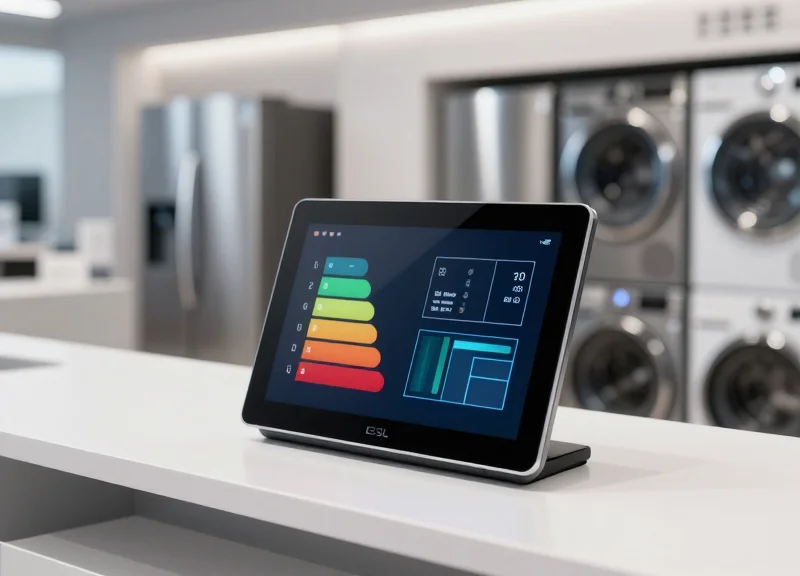
Modern retail integration involves the seamless synchronization of Electronic Article Surveillance (EAS) with Radio Frequency Identification (RFID) and Electronic Shelf Labels (ESL) to form a 'Smart Store' infrastructure. By utilizing DragonGuardGroup's dual-technology antennas, retailers can transform security pedestals from simple alarms into data-gathering hubs. This ecosystem allows for real-level inventory accuracy, automated pricing updates, and high-fidelity loss prevention, ensuring that every item is tracked from the warehouse to the final point of sale without adding friction to the customer experience.
| Feature | Siloed EAS System | Integrated RFID/ESL/EAS |
|---|---|---|
| Inventory Visibility | Manual counts only | Real-time item-level tracking |
| Theft Insight | Alarm sounds (unknown item) | Identifies exactly which SKU triggered alarm |
| Pricing Agility | Labor-intensive paper labels | Instant updates via ESL sync |
| False Alarm Rate | Higher (tag interference) | Minimal (intelligent filtering) |
Expert Tip: The 'Invisible Handshake'—By integrating ESL with your EAS system, you can implement 'Security-Based Dynamic Pricing.' If an item is frequently flagged by EAS sensors as being moved into high-theft 'blind spots' but not purchased, the ESL system can automatically trigger a promotional price or alert staff to move the stock, effectively using data to prevent shrink before it happens.
- Audit Hardware Compatibility: Ensure your compact EAS pedestals support multi-frequency or hybrid AM/RFID modules to avoid hardware redundancy.
- Centralize the Data Stream: Connect EAS alarm logs to your inventory management software to correlate shrinkage with specific stock-keeping units (SKUs).
- Sync ESL to Security Zones: Program Electronic Shelf Labels to update status when a product is de-activated at the POS, closing the loop between sales and security.
Does RFID replace the need for EAS?
No. While RFID tracks inventory, EAS is the active deterrent. Integrating them allows the system to tell you what was stolen, whereas EAS alone only tells you that something was stolen.
Can ESL help reduce internal shrinkage?
Yes. Integrated ESL systems track price change history and stock levels, making it much harder for employees to manipulate pricing or hide 'sweethearting' at the register.
Is this setup too complex for a small convenience store?
DragonGuardGroup designs compact, 'plug-and-play' modules specifically for small formats, making enterprise-level integration accessible for high-traffic, limited-space stores.
Optimizing Store Layout for Maximum Security Efficiency
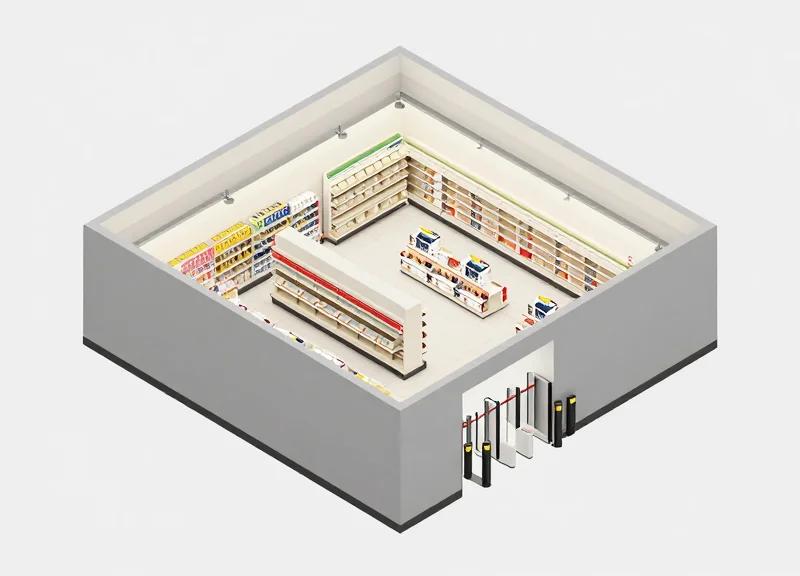
To optimize store layout for maximum security efficiency, retailers must position compact EAS systems at high-velocity exit points to create a definitive 'security perimeter' that does not impede natural customer movement. In the constrained square footage of a convenience store, this means utilizing pedestals with a slim form factor that offer a wide detection field—typically up to 1.8 meters for AM systems—ensuring that every exit path is fully covered without creating a physical bottleneck that might discourage impulse shoppers or slow down transaction cycles.
- Define the Detection Boundary: Install pedestals exactly parallel to the door frame. Even a slight inward tilt can create 'dead zones' at the base or top of the detection field where small tags can slip through.
- Establish the Deactivation 'Hot Zone': Place deactivation pads within 24 inches of the POS scanner. This ensures that the workflow of 'scan-deactivate-bag' is a single motion, preventing 'non-deactivation' errors that lead to embarrassing false alarms at the exit.
- Calibrate for Environmental Noise: Position systems at least 3 feet away from large metal objects or high-voltage power lines (like beverage coolers) to minimize electromagnetic interference that can reduce detection sensitivity.
| Entrance Type | EAS Configuration | Detection Width | Bottleneck Risk |
|---|---|---|---|
| Single Standard Door | Dual Slim Pedestals | Up to 1.2m | Low |
| Double Sliding Doors | Split-Array Pedestals | Up to 2.4m | Minimal |
| Narrow Corridor Exit | Mono-Antenna System | Up to 0.9m (each side) | Very Low |
The 'Buffer Zone' Strategy: An industry-insider tip for high-traffic stores is to place the EAS pedestals approximately 12 to 18 inches inside the threshold rather than flush with the exterior door. This creates a critical 'reaction window.' When an alarm triggers, the suspect is still technically inside the store premises for an extra half-second, giving staff a better opportunity to make a non-confrontational inquiry before the individual reaches the sidewalk.
How do compact systems handle 'Tag Pollution' near the counter?
Modern compact systems use Digital Signal Processing (DSP) to distinguish between a tag moving through the door and a tagged item sitting on a nearby display shelf, preventing constant nuisance alarming.
Can I hide EAS systems under the floor or in the door frame?
While 'invisible' systems exist, they often lose the 35% shrinkage reduction benefit provided by the 'Psychological Deterrent' effect of visible, compact pedestals.
What is the ideal distance between the POS and the exit?
Ideally, maintain a distance of at least 5 to 7 feet. This prevents the EAS system from picking up active tags being handled at the register, a common cause of 'phantom' alarms in small formats.
Calculating the ROI: How Quickly Does the System Pay for Itself?
A compact EAS system in a high-traffic convenience store typically achieves full Return on Investment (ROI) within 6 to 14 months. This rapid payback is driven by the '35% Shrinkage Reduction Rule,' where the recovery of high-margin items—such as alcohol, cosmetics, and electronics—offsets the initial capital expenditure. Beyond simple inventory recovery, the ROI calculation must also factor in the 'Security-to-Service Pivot,' which reclaims labor hours previously spent on manual surveillance, allowing staff to focus on upsells and customer experience.
| Metric | Baseline (No EAS) | Post-EAS (Year 1) |
|---|---|---|
| Annual Shrinkage Rate | 2.5% of Sales | 1.6% of Sales |
| Lost Inventory Value ($500k Rev) | $12,500 | $8,125 |
| Labor Costs (Surveillance) | $3,000/year | $500/year |
| Annual Net Gain | $0 | $6,875 |
### The 'Deterrence Multiplier': A Unique Insight While most ROI calculators focus solely on recovered merchandise, veteran retailers recognize the Deterrence Multiplier. In high-traffic environments, the presence of compact EAS pedestals acts as a psychological filter. Professional shoplifters—who often account for 70% of a store's total loss—will bypass 'hardened' stores in favor of softer targets. This shifts the ROI from a defensive cost-saving measure to an offensive strategic advantage, effectively 'exporting' your shrinkage problem to competitors while stabilizing your own supply chain.
- Determine Baseline Loss: Audit your inventory records for the past 12 months to identify the exact dollar value of 'unknown loss' or shrinkage.
- Calculate the 35% Recovery Potential: Multiply your total annual loss by 0.35. This represents the conservative minimum value you will recover in the first year.
- Factor in Labor Reallocation: Estimate the number of hours employees spend watching aisles or tagging items manually; compact EAS reduces these 'dead hours' significantly.
- Apply the Total Cost of Ownership (TCO): Include the hardware, installation, and initial batch of tags to find your break-even point against the monthly recovery value.
Does a compact system cost more in maintenance than a standard one?
No. In fact, compact systems often use more modern, solid-state electronics that require less calibration than older, bulkier RF antennas, leading to lower long-term maintenance costs.
Will the ROI be slower in lower-traffic stores?
Generally, yes. ROI is accelerated by high transaction volume where 'opportunity theft' is highest. However, the protection of high-ticket items still makes the investment viable for most formats.
How do tags impact the ROI?
Reusable hard tags offer the best ROI over 24 months, whereas disposable soft labels are better for fast-moving consumer goods where labor speed is the priority.
Maintenance and Longevity: Keeping Your Security Tech at Peak Performance
To sustain a 35% reduction in shrinkage, a compact EAS system must operate with surgical precision. Maintenance and longevity for these systems are achieved through a proactive 'Performance Protocol' that includes monthly sensitivity calibration, visual inspections of antenna housing, and the mitigation of environmental electronic noise. When high-traffic convenience stores neglect these steps, detection rates can drop by as much as 15% within the first year due to signal drift or physical misalignment from customer contact.
- Daily Verification (The 'Morning Test'): Before opening, staff should pass a known 'live' tag through the gates. This simple check ensures the system is powered and the audible alarms are functioning before peak traffic hits.
- Antenna Alignment Check: In small-format stores, antennas are often bumped by carts or delivery crates. Monthly checks ensure the pedestals remain perfectly vertical and securely bolted to prevent 'blind spots' in the detection field.
- Environmental Audit: Regularly scan for new electronic interference sources. Adding a new soda cooler or a metal display rack within three feet of a compact EAS antenna can create 'ghost' signals or suppress legitimate detections.
| Maintenance Task | Frequency | Personnel Involved |
|---|---|---|
| Functional Tag Testing | Daily | Store Staff |
| Clearance Zone Audit (3ft Radius) | Weekly | Store Manager |
| Sensitivity & Gain Calibration | Quarterly | Certified Technician |
| Firmware & Security Updates | Annually | System Manufacturer |
Expert Insight: The 'Signal Drift' Trap. Many retailers assume that if the system powers on, it is working. However, EAS systems are susceptible to 'Signal Drift'—a gradual loss of sensitivity caused by aging capacitors or environmental changes. An original perspective we advocate at DragonGuardGroup is the implementation of 'Detection Mapping.' Every six months, use a test tag at three different heights (ankle, waist, and head) across the entry path. If detection fails at any height, your system requires immediate re-calibration, regardless of what the power light says.
How long should a compact EAS system last?
With proper maintenance, a high-quality system from a reputable manufacturer typically has an operational lifespan of 7 to 10 years.
Does 'Compact' mean 'Fragile'?
No. Compact systems are engineered for high-traffic durability, but their smaller footprint means they have less 'mass' to absorb impacts, making secure floor mounting more critical than larger systems.
What is the most common cause of system failure?
Power surges and 'tag pollution.' Tag pollution occurs when deactivated tags are left near the antenna, causing the system to constantly filter noise, which can eventually lead to board overheating.