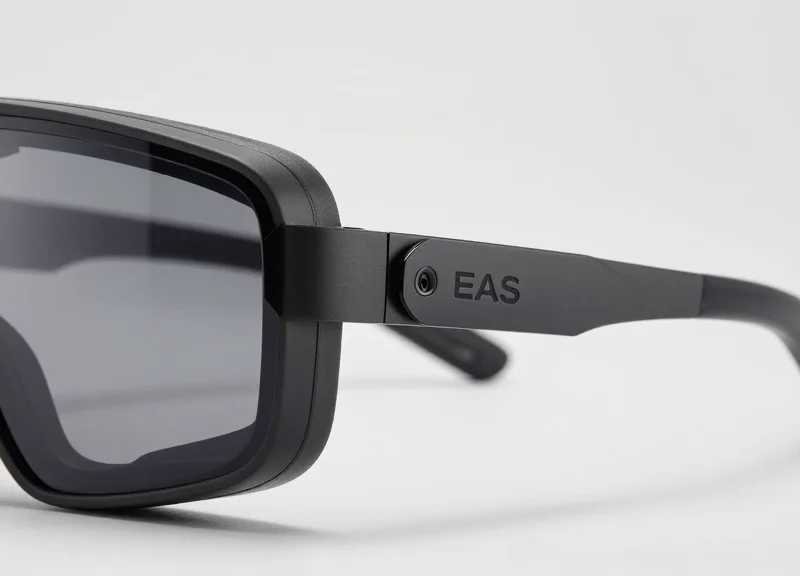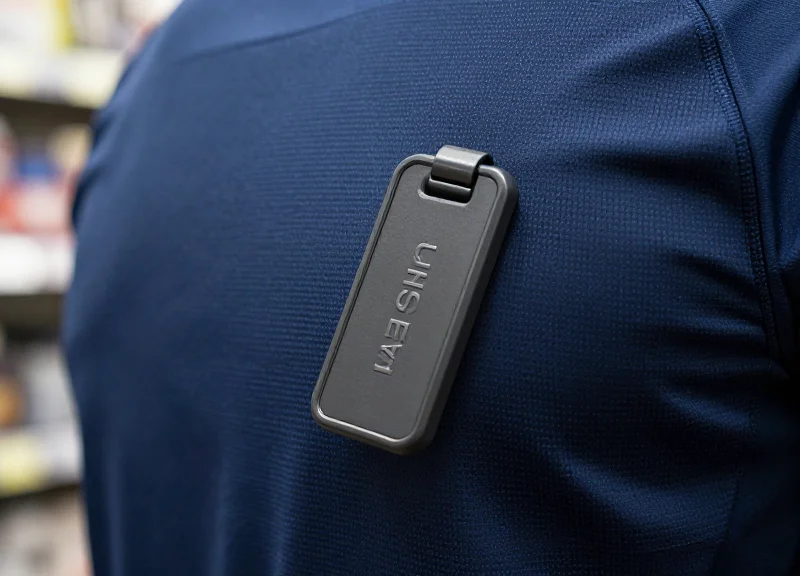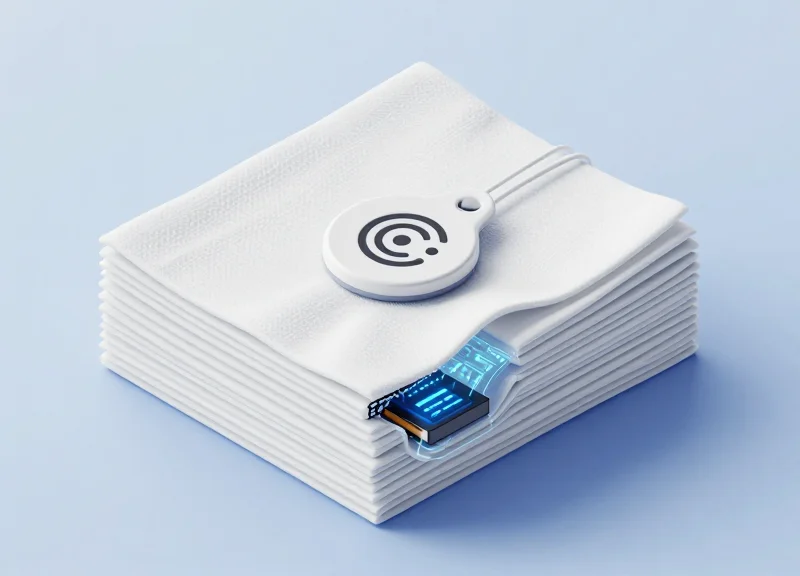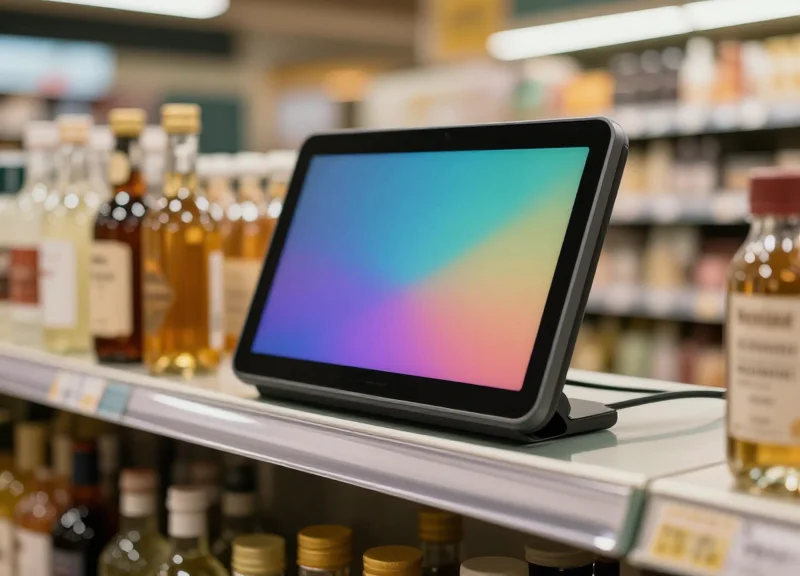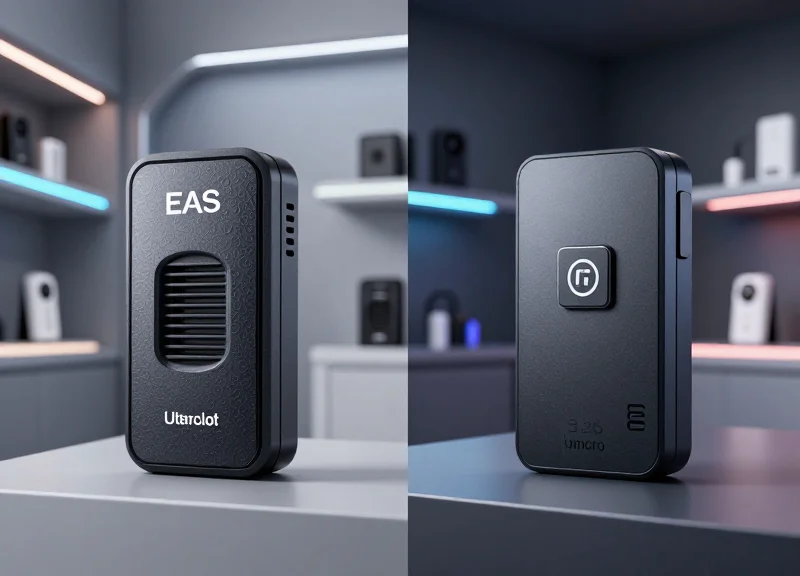
As we approach 2026, the retail landscape is undergoing a radical downsizing. The rise of urban micro-stores, automated kiosks, and high-density fulfillment centers has created a unique challenge: how to secure and track inventory when every millimeter of shelf space is at a premium. This shift toward micro-retail demands a new generation of loss prevention and inventory management. This article examines the critical differences between ultra-compact Electronic Article Surveillance (EAS) and Radio Frequency Identification (RFID) systems, helping business leaders navigate the complexities of space-constrained supply chains while maximizing operational efficiency and security.
The Rise of Micro-Retail: Defining the 2026 Landscape

In 2026, micro-retail is defined as the strategic deployment of autonomous or semi-automated storefronts, typically under 500 square feet, located in high-density urban environments to satisfy 'instant-need' consumer behavior. These environments—ranging from robotic kiosks to unattended 'grab-and-go' neighborhood hubs—rely on space-constrained supply chains where every square centimeter of shelf space is optimized. This shift necessitates a move away from bulky traditional security hardware toward ultra-compact Electronic Article Surveillance (EAS) and high-density Radio Frequency Identification (RFID) solutions that provide invisible, yet robust, loss prevention and inventory accuracy.
| Feature | Legacy Retail (2021) | Micro-Retail (2026) |
|---|---|---|
| Average Footprint | 2,500 - 15,000 sq. ft. | 50 - 500 sq. ft. |
| Staffing Model | Full-time on-site staff | Autonomous or Remote-Monitored |
| Inventory Depth | Deep stock rooms | Just-in-time 'Nano-Distribution' |
| Security Priority | Visual Deterrence | Invisible Frictionless Tracking |
The transition to micro-retail is not merely a downsizing of footprint; it is a fundamental re-engineering of the retail physics. In these confined spaces, traditional EAS pedestals are often too intrusive, leading to the rise of 'invisible perimeters'—security sensors embedded directly into door frames or floor mats. Furthermore, because inventory turnover in these units is exceptionally high, the supply chain must function with near-zero buffer, making real-time RFID tracking a non-negotiable requirement for operational viability.
- Urban Density Drivers: Skyrocketing real estate costs in '15-minute cities' make large-format stores unsustainable, pushing brands toward modular, micro-store clusters.
- The Convenience Paradox: Consumers now prioritize proximity over variety, expecting premium products to be available within a 3-minute walk of their residence or office.
- Hardware Miniaturization: Advances in silicon and antenna design now allow for EAS tags that are 60% smaller than 2020 standards, fitting on high-value, small-form cosmetics and electronics.
Expert Insight: The 'Signal Collision' Challenge. In 2026, the biggest hurdle for micro-retail isn't theft—it's physics. In such small spaces, high-density RFID environments face massive signal interference. Success in this landscape requires 'Shielded-Field' hardware that can distinguish between a product leaving the door and a product sitting on a shelf just 12 inches away.
What is the primary difference between a micro-store and a vending machine?
Unlike vending machines, micro-stores allow for physical interaction with products and typically use computer vision or RFID-enabled shelves to track items picked up by the consumer.
Why can't micro-retailers rely solely on cameras for security?
Cameras struggle with 'blind spots' in high-density shelving and cannot provide the item-level serialized data required for automated inventory restocking that EAS and RFID provide.
How does space-constrained supply chain logic work?
It utilizes 'Nano-Hubs' where deliveries are made multiple times daily via small electric vehicles, requiring instantaneous check-in of goods through bulk RFID scanning.
Anatomy of Space-Constrained Supply Chains

A space-constrained supply chain is defined by its extreme volumetric density, typically found in urban micro-fulfillment centers (MFCs), autonomous kiosks, and ultra-small format retail stores. Unlike traditional logistics, these environments prioritize SKU density over aisle accessibility, often requiring item-level tracking solutions that occupy less than 0.5% of the total product packaging volume to avoid displacing revenue-generating inventory.
| Metric | Traditional Retail Logistics | Micro-Retail (2026 Vision) |
|---|---|---|
| Inventory Density | Low to Medium (Standard Shelving) | Hyper-Dense (Vertical Robotics/Bins) |
| Tagging Volume | Bulky EAS or Standard RFID Labels | Ultra-Compact/Embedded Hardware |
| Turnover Rate | Daily or Weekly Restock | Real-time or Hourly replenishing |
| Error Tolerance | Moderate (Backstock buffer) | Near-Zero (No onsite storage) |
In these environments, every millimeter matters. When dealing with 'micro-SKUs'—such as high-end cosmetics, electronics, or premium pharmaceuticals—traditional security tags create a 'Hardware Overhead' problem. This isn't just about the cost of the tag; it's about the physical displacement of goods. In a 200-square-foot autonomous storefront, using legacy EAS tags can reduce the total displayable inventory by as much as 15% due to the increased spacing required to prevent tag entanglement and signal interference.
What is Signal Shadowing in high-density logistics?
Signal Shadowing occurs when tightly packed metal or liquid-filled products block the RF or AM signals of security tags. In micro-retail, where items are stacked inches apart, this leads to 'blind spots' in inventory visibility and security breaches.
Why can't we use standard warehouse RFID for micro-retail?
Standard RFID tags are designed for long-range pallet reads. In a micro-retail cabinet, these tags often suffer from 'over-reading' (picking up items on different shelves) or 'null zones' caused by the metallic structure of the compact cabinets themselves.
How does packaging design influence tag selection?
With the 2026 move toward sustainable, thin-film packaging, bulky tags can tear containers or cause aesthetic damage that devalues the product, making ultra-compact, low-profile form factors a necessity.
Expert Insight: The Volumetric Efficiency Threshold. As a rule of thumb for 2026 supply chains, we are tracking a new KPI: the Tag-to-Product Ratio (TPR). In space-constrained environments, any security solution with a TPR higher than 1:100 (where the tag is larger than 1% of the product size) is increasingly viewed as a liability. The goal is 'invisible security'—hardware so small it exists within the existing packaging footprint, effectively solving the physics problem of high-density storage.
Ultra-Compact EAS: Traditional Security Reimagined
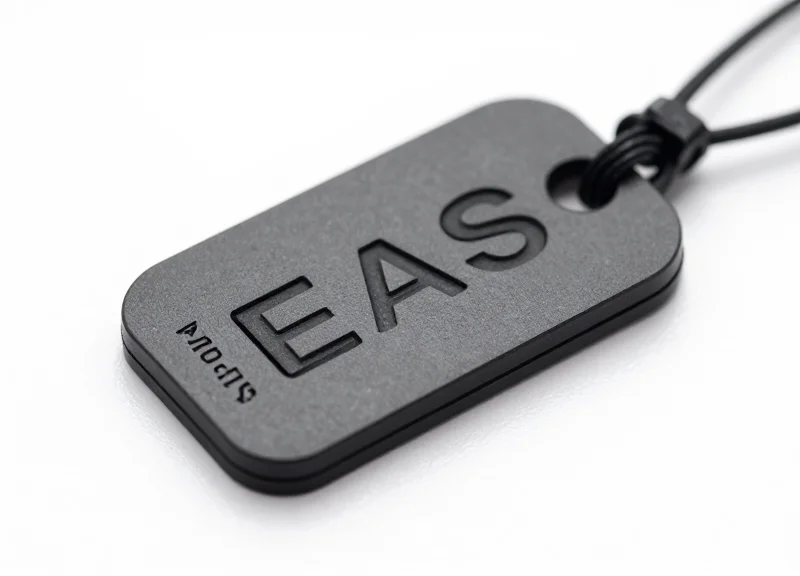
Ultra-Compact Electronic Article Surveillance (EAS) is the 2026 evolution of shrinkage prevention, characterized by security tags reduced by up to 70 percent in size and detection systems hidden within store architecture. Unlike the bulky plastic pedestals of the past, modern ultra-compact EAS utilizes flexible resonators and low-profile ferrite cores that can be embedded directly into primary packaging or thin-film labels, ensuring that high-value inventory in space-constrained supply chains remains protected without obstructing the customer experience or limiting shelf density.
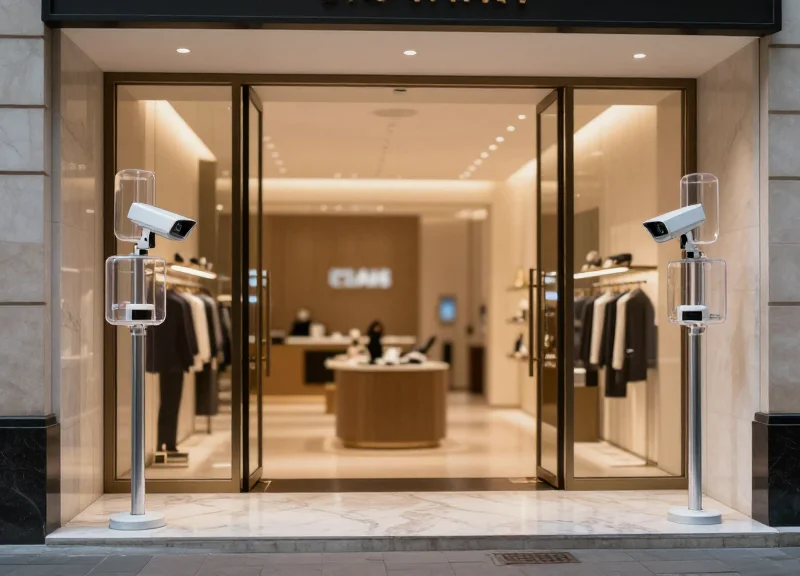
In the micro-retail landscape of 2026, the 'security pedestal' is effectively dead. To accommodate the high-density layouts of urban micro-stores, technology providers have moved toward concealed 'Invisible Gates.' These systems use floor-mat antennas or overhead sensors that create a 360-degree detection zone at the point of exit. This reimagining of EAS allows retailers to reclaim approximately 5 to 10 square feet of high-value entrance space that was previously occupied by traditional hardware.
| Feature | Legacy EAS (Pre-2022) | Ultra-Compact EAS (2026) |
|---|---|---|
| Tag Profile | Bulky plastic hard tags (50mm+) | Micro-labels and flexible resonators (<15mm) |
| Antenna Design | Visible floor-bolted pedestals | Concealed floor/ceiling/doorframe arrays |
| Signal Accuracy | Prone to 'ghost alarms' from interference | AI-filtered narrow-band frequency matching |
| Packaging Integration | Manual application post-manufacturing | Source-tagging embedded during production |
- Zero-Footprint Detection: Concealed antennas are integrated into door frames or under flooring, eliminating the need for bulky gates in tight urban storefronts.
- Flexible Form Factors: New microwave-frequency resonators are thin enough to be printed onto price tags or hidden inside garment seams, maintaining aesthetic integrity.
- Energy-Efficient Pulsing: 2026 systems use 40 percent less power by utilizing smart-sensing tech that only activates the detection field when motion is detected near the exit.
Expert Insight: The 'Signal Purity' Breakthrough. A common failure in micro-retail was signal interference from nearby high-density electronics like refrigeration units or smart-lockers. By 2026, ultra-compact EAS has transitioned to Software-Defined Radio (SDR) backends. This allows the system to 'learn' the electrical noise of a specific micro-store and digitally subtract it, resulting in a 99.9% reduction in false alarms compared to the hardware-only filters used a decade ago.
Are ultra-compact tags reusable?
While micro-labels are typically disposable and deactivated at checkout, a new class of eco-friendly, miniaturized hard tags is available for high-end micro-boutiques, designed for over 100 cycles of use.
How does this interact with metal-heavy packaging?
2026 systems utilize multi-frequency hopping to bypass the 'Faraday cage' effect of foil packaging, which was a significant limitation for older 58kHz AM systems.
Is the cost barrier high for small retailers?
Actually, the shift toward 'Security-as-a-Service' models and the use of cheaper, printed resonators has lowered the initial CAPEX for micro-retailers by nearly 30 percent compared to legacy gate installations.
RFID for Micro-Retail: Data Intelligence at Scale

In the context of 2026 micro-retail, Radio Frequency Identification (RFID) transcends its traditional role as a security tool to become the foundational data layer for autonomous operations. Unlike standard EAS, which provides a binary 'present or absent' signal, RFID utilizes item-level serialization to track the exact identity, location, and movement of products within space-constrained environments. This allows micro-stores to maintain near 100% inventory accuracy without manual counting, enabling automated replenishment cycles that are critical when storage space is at a premium.
- Real-Time Stock Transparency: Continuous monitoring of shelf levels prevents 'out-of-stock' scenarios in high-traffic, small-footprint locations where every square inch must generate revenue.
- Frictionless Checkout Integration: RFID enables 'grab-and-go' consumer experiences by identifying all items in a basket simultaneously, removing the need for line-of-sight barcode scanning.
- Dynamic Expiry Management: For micro-retailers selling perishables, RFID tags store batch and expiration data, automatically flagging items nearing their end-of-life for promotional discounting.
| Feature | Ultra-Compact EAS | Next-Gen RFID |
|---|---|---|
| Primary Function | Theft Deterrence | Inventory Intelligence & Security |
| Data Granularity | None (On/Off) | Unique Item ID (EPC) |
| Read Capability | Proximity-based | Massive Bulk Reading (200+ items/sec) |
| Supply Chain Value | Store-level only | End-to-End Visibility |
The true 'Silicon Valley' insight for 2026 lies in 'Item-Density Intelligence.' In micro-retail, products are often packed so tightly that signal interference (cross-talk) becomes a major hurdle. Modern UHF Gen2v3 chips now incorporate 'Self-Interference Cancellation,' allowing readers to distinguish between a tag on a shelf and a tag in a customer's hand with sub-centimeter precision. This level of spatial awareness is what differentiates a 'smart' kiosk from a simple vending machine.
Is RFID too expensive for low-margin micro-retail?
By 2026, the 'total cost of ownership' has flipped. While tag costs remain higher than EAS, the reduction in labor for inventory audits and the elimination of phantom stock-outs result in a typical ROI within 14 months for high-density urban formats.
How does RFID handle metal or liquid packaging in tight spaces?
Advanced 'On-Metal' and 'Flag' tag designs, combined with circular polarized antennas, have largely mitigated the physics-based limitations of early RFID, ensuring 99.9% read rates even in refrigerated micro-units.
Can RFID replace EAS entirely for security?
Yes. RFID overhead readers can trigger alarms based on 'unpaid' status in the database, offering a more discrete and data-rich security perimeter than traditional EAS pedestals.
Technical Face-Off: Tag Size, Range, and Interference

The technical divide between ultra-compact EAS and RFID for 2026 micro-retail centers on the balance between physical footprint and data depth. While EAS excels at low-cost, one-bit presence detection with superior performance around liquids and metals, RFID offers granular, item-level data but requires sophisticated antenna tuning to overcome signal interference common in densely packed, metal-heavy micro-supply chains. Choosing between them requires a trade-off: EAS provides a robust but silent security barrier, whereas RFID delivers a rich data stream that is more sensitive to its physical environment.
| Technical Metric | Ultra-Compact EAS (AM) | RAIN RFID (UHF) |
|---|---|---|
| Minimum Tag Footprint | ~10mm x 30mm (Form-factor limited) | < 5mm x 5mm (Chip-on-Antenna possible) |
| Read Range Efficiency | 0.8m - 1.5m (Consistent) | 1.0m - 10.0m (Highly variable) |
| Liquid/Metal Resilience | Very High (Magnetic coupling) | Low (Requires specialized on-metal tags) |
| Data Complexity | Binary (Alarm/No Alarm) | Unique ID, Expiry, Batch No. |
| Signal Collision | Minimal (Simple frequency) | High (Requires anti-collision logic) |
A critical, often overlooked factor in micro-retail is 'Dielectric Loading.' As we move into 2026, the industry is shifting toward 'Environment-Aware' RFID tags. Unlike traditional tags that detune when placed on cosmetics or chilled beverages, these next-gen micro-tags use high-permittivity substrates that leverage the item's surface to actually enhance antenna gain. This turns the historical weakness of RFID—interference from liquids—into a structural advantage for reading tightly packed shelves where traditional EAS tags would simply occupy too much prime real estate.
How do these technologies handle 'Near-Field Nulls' in micro-kiosks?
RFID systems in micro-kiosks utilize circular polarization and beam-steering to eliminate dead zones (nulls). EAS systems rely on phase-shifted magnetic fields, which are less prone to nulls but offer no way to distinguish which specific item is being moved.
Can EAS and RFID coexist on the same small-format packaging?
Yes. Hybrid tags are the 2026 standard for high-value micro-retail. While they carry a 15-20% size premium, they combine the un-shieldable security of Acousto-Magnetic (AM) EAS with the inventory intelligence of UHF RFID.
Which technology is more resilient to signal 'shadowing' from metal shelves?
EAS is natively more resilient because magnetic fields 'wrap' around obstacles more effectively. RFID requires strategic antenna placement or 'leaky cable' antennas to bounce signals into the shadows created by metal shelving.
For space-constrained supply chains, the decision ultimately hinges on 'Read Density.' In a 2026 micro-fulfillment center where 500 items may sit in a single cubic meter, RFID's ability to process 1,000 tags per second via anti-collision algorithms outweighs the shielding risks, provided the infrastructure is tuned for the specific dielectric constant of the product mix.
ROI Analysis: Balancing CAPEX and OPEX in Small Formats

In the context of 2026 micro-retail, Return on Investment (ROI) is no longer calculated solely by shrink reduction; it is measured by the Total Cost of Ownership (TCO) relative to the store's 'Labor-to-Footprint' ratio. While ultra-compact EAS remains the superior choice for minimizing initial Capital Expenditure (CAPEX) in low-margin environments, RFID technology shifts the financial burden from high Operating Expenditure (OPEX)—such as manual inventory counts and high-touch tagging—to an upfront investment that unlocks automated replenishment and 99% inventory accuracy.
| Cost/Benefit Factor | Ultra-Compact EAS | RFID (Item-Level) |
|---|---|---|
| Initial CAPEX | Low (Pedestals & Deactivators) | High (Readers, Antennas, Software) |
| Tag Unit Cost (OPEX) | $0.02 - $0.05 (Labels) | $0.07 - $0.15 (Smart Tags) |
| Labor Efficiency | Neutral (Manual Tagging/Audits) | High (Auto-counting/Restock) |
| Shrink Reduction | Primary Value Proposition | Secondary to Inventory Visibility |
| Breakeven Point | 6-12 Months | 18-24 Months |
The 'Micro-Retail Overhead' Insight: In spaces under 1,000 square feet, the cost of labor per square foot is disproportionately high. Our 2026 projections suggest that while RFID has a higher entry price, it eliminates the need for periodic manual stock-takes, which typically consume 15% of a micro-retailer’s labor budget. For unmanned kiosks or 'grab-and-go' modules, RFID isn't just a security cost; it is the core operating system that justifies the CAPEX by enabling zero-staff operations.
Is EAS or RFID better for high-turnover, low-value goods?
EAS is significantly more cost-effective for high-turnover items like snacks or basic toiletries. The OPEX of an RFID tag can often exceed the net profit margin of a $2.00 item, whereas EAS labels provide basic protection at a fraction of the cost.
What is the hidden cost of RFID in small formats?
The 'Shielding Requirement.' In tight quarters, RFID signals can cause 'false reads' from adjacent units or backstock. Budgeting for RF-shielding paint or localized antenna tuning is a critical, often overlooked CAPEX item for micro-retailers.
How does 'Source Tagging' impact the ROI equation?
Source tagging (applying tags at the factory) shifts labor costs back to the manufacturer. By 2026, we expect 60% of apparel and electronics to be RFID-pre-tagged, drastically lowering the retailer's internal OPEX and accelerating RFID's ROI.
Ultimately, the decision hinges on the 'Data Value.' If your supply chain requires real-time stock levels to trigger automated drone or robot replenishment, the data generated by RFID makes the CAPEX mandatory. If the goal is simply to prevent 'walk-outs' in a staffed pop-up shop, the ultra-compact EAS offers a leaner, faster path to profitability.
The Hybrid Approach: When EAS and RFID Work Together
The hybrid approach in 2026 micro-retail refers to the deployment of dual-technology labels that integrate both Acousto-Magnetic (AM) or Radio Frequency (RF) EAS components with Ultra-High Frequency (UHF) RFID inlays. This strategy provides a 'Best of Both Worlds' solution: the reliable, long-range gate detection of EAS for theft prevention and the item-level intelligence of RFID for inventory management. For micro-retailers, this is the definitive transition path, allowing them to protect high-shrink items with legacy security systems while building the data foundation for autonomous checkout and real-time replenishment.
| Capability | Ultra-Compact EAS | Pure RFID | Hybrid Dual-Tech |
|---|---|---|---|
| Primary Use Case | Loss Prevention | Inventory Visibility | Security + Analytics |
| Theft Deterrence | High (Active Alarms) | Medium (Silent Alarms) | Highest (Active + Data) |
| Inventory Accuracy | None (Manual) | 99.9% (Automated) | 99.9% (Automated) |
| Space Efficiency | Excellent | Good | Moderate (Single Label) |
Why is the hybrid model gaining dominance in space-constrained supply chains? It solves the 'all-or-nothing' infrastructure dilemma. Retailers can deploy dual-tech tags at the source, ensuring products are protected by existing EAS pedestals today, while the RFID component remains 'dark' until the back-end infrastructure (readers and software) is ready to be switched on. This avoids the logistical nightmare of re-tagging thousands of small-form-factor items when upgrading systems in 2026.
Can dual-tech tags fit on micro-retail items like cosmetics or electronics?
Yes. By 2026, manufacturing advancements have enabled 'stacked' inlays where the RFID chip sits directly over the EAS resonator, maintaining a footprint as small as 40mm x 15mm, ideal for lipstick tubes or small gadget packaging.
Does the EAS signal interfere with the RFID read rate?
Modern hybrid tags use frequency decoupling. The low-frequency EAS signal and high-frequency RFID signal operate on disparate wavelengths, ensuring that the metallic components of the EAS element do not 'mask' the RFID antenna.
What is the ROI timeframe for hybrid implementation?
Most micro-retailers see a return within 14–18 months by reducing shrink by 30% via EAS and increasing sales by 15% through RFID-driven stock availability.
Expert Insight: The 'Silent Signal' Strategy. In 2026, leading Silicon Valley retailers are using hybrid tags to solve the 'Shielding Problem' in micro-fridges and metallic kiosks. While metal can occasionally cause RFID 'blind spots' during rapid movement, the EAS component acts as a physical fail-safe at the exit point. My recommendation: Use hybrid tags as a data-bridge—collecting RFID movement data to identify 'hot zones' where items are frequently picked up but not bought, while relying on the EAS for the hard-stop security that micro-retail margins depend on.
Future-Proofing Your Strategy: Implementation Steps for 2026
Future-proofing a micro-retail strategy for 2026 means moving beyond basic loss prevention to a philosophy of 'interoperable modularity.' Success requires implementing ultra-compact EAS or RFID solutions that do not just secure the perimeter but serve as data-gathering nodes within a wider, automated supply chain ecosystem. By prioritizing hardware that is backward-compatible and software that is cloud-native, retailers can ensure that their 2026 investments remain relevant through the end of the decade.
- Conduct a Volumetric Bottleneck Audit: Analyze your micro-retail footprint to identify where physical space limits inventory turnover. Determine if traditional EAS pedestals impede customer flow or if RFID readers require specialized shielding in high-density metallic environments.
- Define Data Latency Tolerance: Determine how 'real-time' your inventory needs to be. If your business model relies on instant automated replenishment (like high-turnover fresh food kiosks), prioritize RFID. If you only require theft deterrence, ultra-compact EAS remains the cost-effective leader.
- Validate API-First Partner Ecosystems: Select technology partners that offer open API access. The micro-retail tech stack of 2026 must allow your security tags, POS, and inventory management software to speak to each other without proprietary middleware friction.
- Execute a 'Dark-Store' Pilot: Test your chosen technology in a controlled, non-customer-facing environment first. This allows you to calibrate read-rates and interference patterns for ultra-compact tags in a space-constrained setting before a full-scale rollout.
Expert Insight: Beware of 'Shadow Shrinkage' in micro-retail. Unlike traditional retail, where items are lost to theft, micro-retail often suffers from inventory that is physically present but digitally invisible due to poor tag resolution in cramped spaces. Solving this requires tags with specialized 'near-field' antenna designs optimized for 2026 density standards.
| Selection Criteria | Legacy EAS Partners | Next-Gen RFID Partners | Hybrid Solution Providers |
|---|---|---|---|
| Integration Ease | High (Standalone) | Medium (Requires Network) | Medium |
| Data Granularity | Low (On/Off) | High (Item-Level) | High |
| Hardware Footprint | Small | Ultra-Small/Invisible | Medium |
| Future Scalability | Limited | Excellent | Maximum |
Can I upgrade from EAS to RFID without replacing my entire infrastructure?
Yes, by utilizing 'bridge' hardware that supports both 58kHz/8.2MHz frequencies and UHF RFID, though the initial CAPEX is higher.
What is the biggest risk in 2026 implementations?
Vendor lock-in. Ensure your tags are compliant with global standards (like GS1) to avoid being forced into a single supplier's ecosystem as you scale.
How does 5G affect micro-retail tag selection?
Increased 5G density can cause interference with some active RFID systems; ensure your 2026 partner conducts frequency hopping or uses shielded sub-GHz bands.