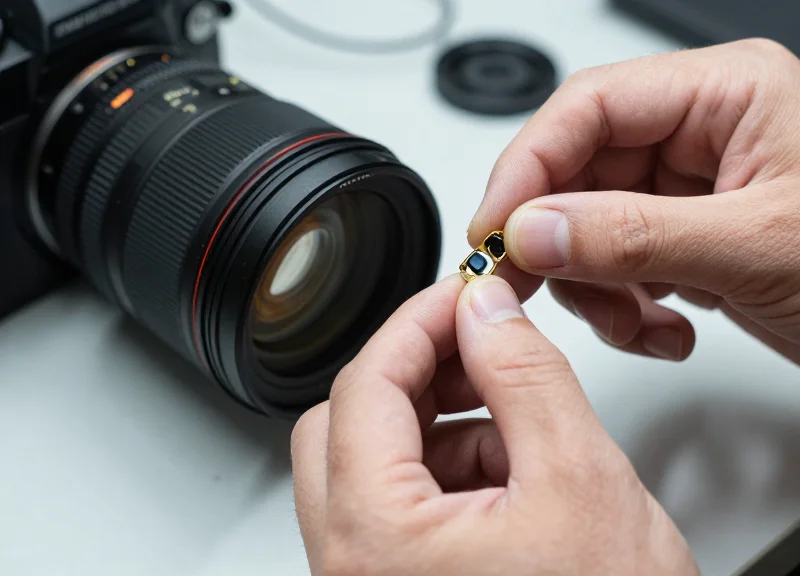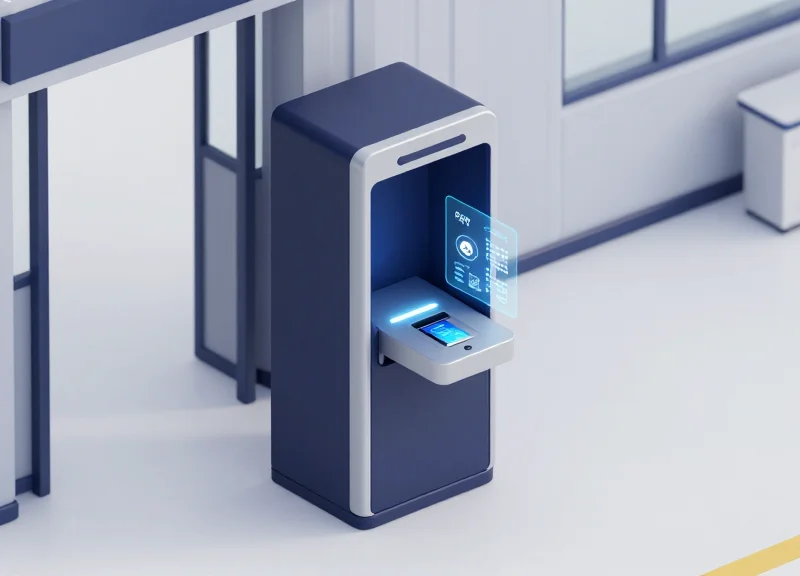
Museums are the custodians of human history, but protecting physical artifacts in an increasingly complex world requires more than just glass cases and security guards. As we look toward 2026, Radio Frequency Identification (RFID) technology has evolved from simple inventory tracking to a sophisticated, invisible shield for cultural heritage. This guide explores how curators and security directors can leverage the latest RFID innovations to ensure museum exhibits remain safe, accounted for, and perfectly preserved for future generations.
The Evolution of Museum Security: Why RFID is Non-Negotiable in 2026

By 2026, museum security has evolved from passive perimeter monitoring to an 'intelligent object' paradigm. Radio Frequency Identification (RFID) is the cornerstone of this shift, providing a non-line-of-sight, automated tracking layer that ensures every artifact is accounted for in real-time. Unlike traditional cameras or manual logs, modern RFID systems offer immediate detection of unauthorized movement and environmental changes, making them the non-negotiable standard for institutions managing high-value collections in an increasingly mobile and high-traffic exhibition landscape.
| Feature | Legacy Security (Pre-2020) | RFID-Integrated Security (2026) |
|---|---|---|
| Tracking Method | Manual barcodes / Visual checks | Automated UHF & BLE real-time pings |
| Theft Response | Reactive (Reviewing footage) | Proactive (Instant gate/exit alerts) |
| Inventory Audits | Weeks or months of labor | Minutes with hand-held or ceiling readers |
| Data Granularity | Location only (at time of scan) | Location, orientation, and movement history |
The 2026 landscape demands 'Contextual Security.' This means the system doesn't just know where an item is, but understands if its movement is authorized based on digital work orders. As museums face evolving risks—ranging from professional theft syndicates to accidental damage in interactive exhibits—RFID provides an invisible safety net that does not interfere with the visitor’s aesthetic experience.
Is RFID strictly for anti-theft?
No. In 2026, RFID serves a dual purpose: security and preservation. Modern tags often include environmental sensors that monitor light exposure, humidity, and vibration, protecting the item from 'silent' degradation as well as physical theft.
Why can't we just use high-resolution AI cameras?
While AI cameras are powerful, they suffer from 'blind spots' and high bandwidth costs. RFID provides 100% item-level visibility even through packing crates, walls, or crowded galleries where cameras may be obstructed.
How does RFID improve the visitor experience?
It allows for 'open-display' concepts where barriers are minimized. Because curators have the confidence of instant-alerts if an object is touched or moved, they can create more immersive, barrier-free environments.
Expert Insight: The 'Digital Twin' Defense Strategy. A unique trend for 2026 is the integration of RFID with Digital Twins. Every physical artifact is mapped to a digital counterpart. When the RFID tag detects a physical change (movement or environmental shift), the Digital Twin updates instantly. This allows security teams to run predictive simulations—identifying which pieces are most 'at risk' during specific high-traffic events—allowing for dynamic security staffing that was impossible just five years ago.
Understanding RFID Technology for Cultural Heritage: Active vs. Passive Tags
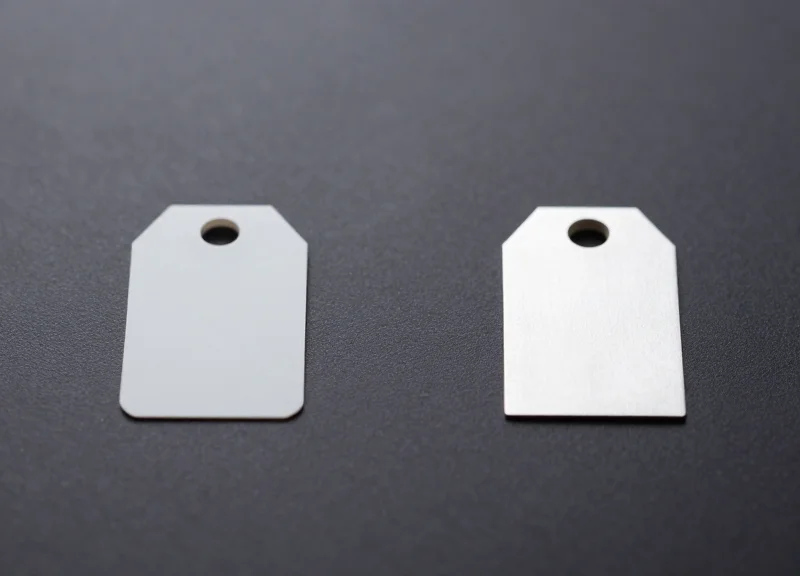
Radio Frequency Identification (RFID) in cultural heritage management is categorized into two primary systems: Passive RFID, which operates without an internal power source by drawing energy from the reader's signal, and Active RFID, which utilizes an internal battery to broadcast signals autonomously. In the context of 2026 museum security, Passive tags are the standard for high-volume inventory and discreet mounting on small artifacts, while Active tags provide the high-fidelity, real-time tracking necessary for high-value 'moving' exhibits or perimeter breach alerts.
| Feature | Passive RFID (UHF/HF) | Active RFID (BLE/WiFi) |
|---|---|---|
| Power Source | Energy harvesting (No battery) | Internal Battery (3-5 year life) |
| Read Range | Up to 10-12 meters | Up to 100+ meters |
| Tag Size | Paper-thin to coin-sized | Typically larger (pager size) |
| Primary Use | Daily inventory & check-in/out | Real-time location (RTLS) & anti-theft |
| Cost per Tag | $0.10 - $2.00 | $15.00 - $50.00 |
Selecting the right frequency is as critical as the tag type. While Ultra-High Frequency (UHF) is the 2026 industry standard for rapid inventory, it can struggle with 'detuning' when placed directly on metallic or liquid-based artifacts. For these sensitive materials, High-Frequency (HF) or specially shielded 'On-Metal' passive tags are required to ensure data integrity without compromising the artifact's aesthetic or physical state.
Can RFID signals damage delicate organic materials?
No. The non-ionizing electromagnetic radiation used in RFID is well below levels that would cause molecular agitation or thermal damage to parchment, textiles, or biological specimens.
Which technology is better for 'Open Display' security?
Active RFID is superior here. Because it broadcasts a heartbeat signal every few seconds, the system can trigger an immediate alarm if the signal is lost or the item is moved beyond a geofenced zone.
How does 2026 hardware handle interference in old stone buildings?
Modern 'Mesh' readers and Bluetooth Low Energy (BLE) active tags are designed to overcome multi-path interference common in thick-walled historical architecture.
Expert Insight: The 'Archival Ghosting' Prevention. A common mistake in museum RFID deployment is the use of high-tack adhesives on passive tags. For 2026, we recommend 'barrier-layer' tagging—where a pH-neutral, reversible archival film is placed between the artifact and the RFID inlay. Furthermore, always opt for 'Inorganic' chip substrates to ensure that the tag itself does not off-gas or degrade within a sealed micro-climate display case, a factor often overlooked by standard commercial vendors.
Key Criteria for Selecting Museum-Grade RFID Tags: Aesthetics and Sensitivity
In 2026, the benchmark for museum-grade RFID selection is 'Visual Silence.' This principle dictates that security hardware must provide robust, real-time tracking and tamper detection while remaining completely invisible to the visitor's eye. Achieving this requires a dual-focus strategy: selecting ultra-miniaturized form factors that blend into artifact substrates and ensuring high-sensitivity chipsets that can penetrate dense display materials like marble, specialized glass, or antique hardwoods without signal loss.
When evaluating aesthetics, curators must look beyond mere size. The material compatibility of the tag determines whether it can be safely integrated into an object’s mount or housing. For instance, an adhesive that is safe for a 19th-century gilded frame might be catastrophic for a contemporary textile. Sensitivity, conversely, is about the 'link budget'—the ability of the tag to wake up and transmit data even when obscured by the very materials used to protect the art.
| Tag Type | Primary Material | Visibility Profile | Typical Application |
|---|---|---|---|
| Inlay-on-Film | Clear PET | Near-Invisible | Archival documents, backing of canvases |
| Micro-Ceramic | Hardened Ceramic | Discreet (3mm x 3mm) | Sculptures, ceramics, and stone artifacts |
| RFID Thread | Conductive Fiber | Zero Visibility | Historical garments and tapestries |
| On-Metal PCB | FR4 / Composite | Integrated into mount | Armor, coins, and metallic installations |
Expert Insight: The 'Shadow Factor' in Heritage Materials. A common pitfall in museum RFID deployment is failing to account for 'RF-opaque' materials common in antiquity. Many 18th-century paints contain heavy metal pigments (like lead or cadmium), and many display cases use high-iron content glass. We recommend 'Tuned Sensitivity' tags—hardware specifically calibrated to resonate at slightly offset frequencies to compensate for the detuning effect of these dense historical materials. This ensures a 99.9% read rate even when the tag is hidden deep within a pedestal.
Can RFID tags be painted over to match an artifact?
Yes, provided you use non-metallic, acrylic-based paints. Any paint containing metallic flakes (common in golds and silvers) will act as a Faraday cage and kill the signal.
What is the minimum read distance required for exhibit security?
For asset protection, a 'bubble' of 3 to 5 meters is standard. This allows the system to trigger an alert the moment an item leaves its designated zone without requiring a choke point.
Do high-sensitivity tags interfere with other museum electronics?
Modern 2026-spec RFID systems operate on the UHF Gen2v2 protocol, which features improved anti-collision and frequency hopping to avoid interference with audio guides or Wi-Fi.
- Material Audit: Identify if the artifact or its display case contains metal, liquid, or high-density stone that impacts RF waves.
- Placement Testing: Test tags in 'worst-case' orientations to ensure the antenna pattern provides coverage from all angles.
- Adhesion Protocol: Work with conservators to select pH-neutral, reversible adhesives that leave no residue on the heritage surface.
Enhancing Asset Protection: Real-Time Location Systems (RTLS) for High-Value Items

Real-Time Location Systems (RTLS) represent the pinnacle of museum security, acting as 'Invisible Sentinels' that provide constant, sub-meter spatial coordinates for high-value artifacts. Unlike standard RFID which only logs data at fixed checkpoints, RTLS utilizes active signals—typically via Ultra-Wideband (UWB) or Bluetooth Low Energy (BLE)—to create a persistent digital umbilical cord between the exhibit and the security operations center. In 2026, this technology is no longer a luxury; it is the essential defensive layer required to prevent theft and unauthorized handling of irreplaceable cultural heritage.
| Technology | Precision Level | Ideal Use Case | Battery Life |
|---|---|---|---|
| Ultra-Wideband (UWB) | 10cm - 30cm | Small, high-risk items (jewelry, coins) | 1-3 Years |
| Bluetooth Low Energy (BLE) | 1m - 3m | Large sculptures, general gallery flow | 5-7 Years |
| Wi-Fi RTLS | 3m - 10m | Large-scale facility management | 6-12 Months |
- Geofencing & Micro-Zones: Establish digital perimeters around specific pedestals. If an object moves even five inches outside its designated 'safe zone,' an alarm triggers instantly.
- Integrated Accelerometers: Modern RTLS tags include 3-axis motion sensors that detect micro-vibrations, alerting security if someone touches or attempts to pry an object before it is actually moved.
- Digital Twin Synchronization: RTLS data feeds directly into a 3D digital map of the museum, allowing staff to visualize the exact location and orientation of every asset in real-time.
Expert Insight: The Adaptive Sensitivity Metric. One original advancement for 2026 is 'Crowd-Aware Geofencing.' By integrating RTLS with visitor flow data, security systems can automatically tighten the sensitivity of an artifact's geofence during peak hours. When the gallery is crowded, the 'alarm threshold' for movement drops to near-zero, providing higher protection when the risk of 'snatch-and-run' theft is statistically at its highest.
Does RTLS interfere with other museum electronics?
No. Modern UWB and BLE systems operate on specific frequencies designed to coexist with Wi-Fi and cellular signals without causing electromagnetic interference.
What happens if the tag signal is blocked?
High-end RTLS software includes 'Dark Signal' alerts. If a tag's signal is suddenly lost or shielded, the system treats it as a high-priority security breach.
Is the hardware too bulky for delicate items?
By 2026, RTLS tags have been miniaturized to the size of a postage stamp, allowing them to be discreetly mounted on the underside of frames or inside display cases.
Streamlining Collection Management: Automating Inventories and Audits
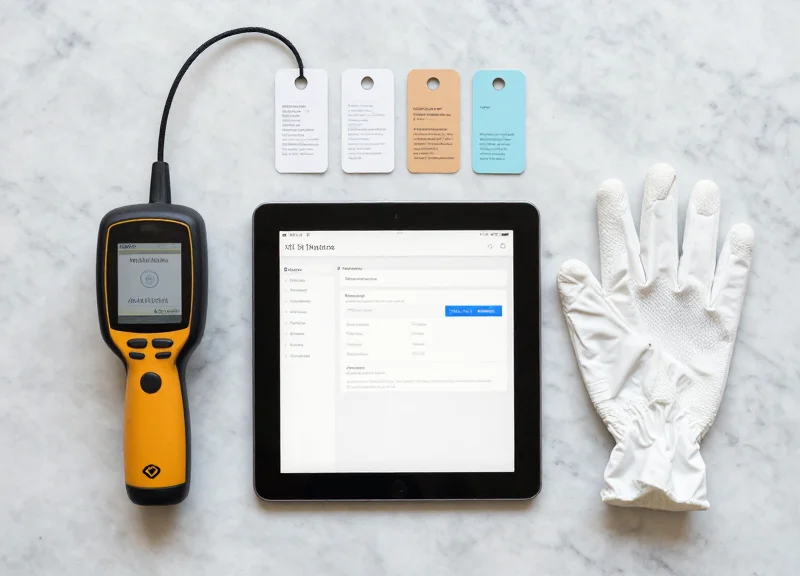
Automating museum inventories involves deploying RFID handheld readers or fixed portals that communicate with tagged artifacts, allowing curators to reconcile physical holdings against digital databases in seconds. This shift from 'sight-and-verify' to 'ping-and-validate' eliminates human error and provides a real-time snapshot of collection health. In 2026, the integration of long-range UHF (Ultra High Frequency) readers allows for entire storage rooms to be inventoried without moving a single crate, ensuring that every asset is accounted for with zero physical contact or risk to delicate materials.
- Tag Synchronization: Each artifact is paired with a unique EPC (Electronic Product Code) in the Museum Management System (MMS), creating a permanent digital twin.
- Rapid Batch Scanning: Curators use mobile RFID sleds to scan shelves at a rate of up to 700 items per second, capturing data through wood, glass, and acid-free archival housing.
- Automated Reconciliation: The system compares the live scan against the expected 'Last Known Location' data, instantly highlighting discrepancies such as missing or misplaced items.
- Resolution and Update: Misplaced items are located using 'Geiger-counter' mode on the handheld reader, and the database is updated automatically with a new, verified timestamp.
| Metric | Manual Method | RFID Automation (2026) |
|---|---|---|
| Audit Time (1,000 items) | 24-48 Hours | 15-30 Minutes |
| Accuracy Rate | 85-92% | 99.9% |
| Labor Requirement | 2-3 Staff Members | 1 Staff Member |
| Physical Handling | High (Touch required) | Zero (Non-line-of-sight) |
Expert Insight: The 2026 standard has moved beyond simple counting to 'Shadow Inventorying.' By utilizing Received Signal Strength Indication (RSSI), modern systems can detect if an object has been shifted even slightly within its case. This provides an early warning system for structural stability or micro-vibrations in the gallery—data points that traditional manual audits would never capture. It is no longer just about confirming that an item is present, but rather auditing the physical orientation and stability of the history we protect.
Can RFID scan through metal cabinets?
Radio waves are shielded by solid metal. For metal storage, we recommend external antennas or specialized 'On-Metal' tags combined with glass-fronted storage to maintain signal integrity during audits.
How often should automated audits be performed?
With RFID, 'Cycle Counting' can be performed weekly or even daily for high-value zones, ensuring a significantly tighter security posture than traditional annual audits.
Does the signal interfere with other museum electronics?
No, museum-grade RFID systems operate on regulated frequencies (860-960 MHz) specifically tuned to avoid interference with Wi-Fi, Bluetooth, or common security sensors.
Integration Strategies: Connecting RFID with EAS and ESL Systems

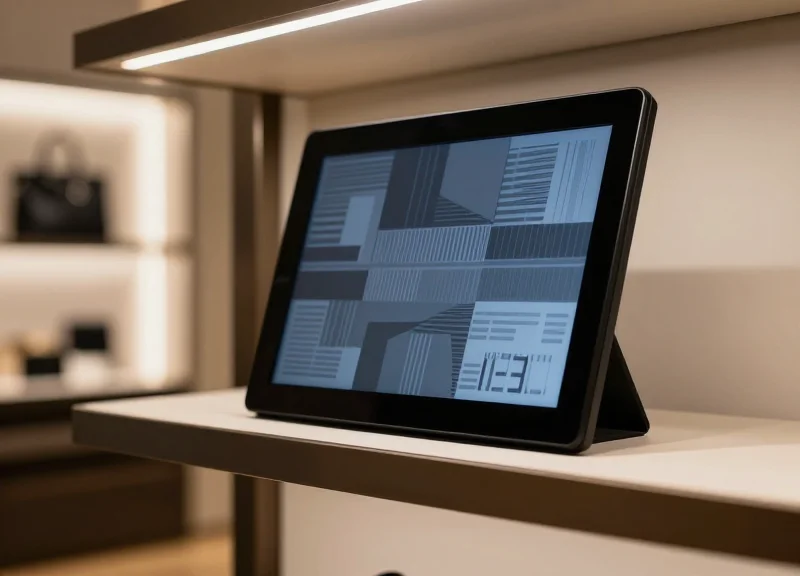
A modern museum security architecture achieves maximum efficiency by integrating three core technologies into a single ecosystem: Electronic Article Surveillance (EAS) for immediate perimeter defense, Radio Frequency Identification (RFID) for granular asset tracking, and Electronic Shelf Labels (ESL) for dynamic information management and tamper detection. By connecting these systems through a centralized management platform like the DragonGuard ecosystem, museums can transition from reactive security to a proactive 'Intelligent Defense Layer' that provides real-time alerts the moment an artifact is touched, moved, or approached by an unauthorized individual.
| Technology | Primary Security Role | Integration Value | Management Focus |
|---|---|---|---|
| EAS (AM/RF) | Perimeter Protection | Triggers immediate exit alarms | Loss Prevention |
| RFID (UHF) | Item-Level Visibility | Identifies exactly which item is moving | Inventory & Tracking |
| ESL (Bluetooth/Infrared) | Display & Tamper Sensing | Provides visual status and vibration alerts | Data Synchronization |
- Establish a Unified Software Gateway: Utilize a middleware solution that supports multi-protocol communication (MQTT, REST API) to ensure that when an RFID tag detects movement, the EAS system increases its sensitivity and the ESL display updates its 'Secure' status.
- Deploy Dual-Technology Tags: Standardize on tags that house both an RFID chip for tracking and an EAS resonator for exit security. This eliminates the need for multiple visible labels on delicate artifacts.
- Implement 'Logic-Based' Alerting: Configure the system so that an EAS alarm only triggers a 'lockdown' if the RFID system confirms the item is missing from its designated pedestal, reducing false positives caused by visitor interference.
Expert Tip: The 'Digital Twin' Verification. In 2026, the gold standard is no longer just an alarm; it is the immediate synchronization of a 'Digital Twin.' When an ESL unit (used as a digital plaque) detects a vibration via its onboard G-sensor, it should automatically trigger a nearby RFID reader to perform a 'targeted scan' of the localized area to verify the presence of the asset within 500 milliseconds. This localized verification prevents the 'alarm fatigue' common in high-traffic museum environments.
Will ESL and RFID signals interfere with each other?
No, if designed correctly. Most modern ESL systems operate on Bluetooth Low Energy (2.4GHz) or proprietary Infrared, while museum-grade RFID typically uses UHF (860-960MHz), ensuring zero frequency overlap.
Can I use existing EAS pedestals with new RFID tags?
Yes, many modern 'Hybrid Pedestals' are designed to house both EAS antennas and RFID readers, allowing you to upgrade your tracking capabilities without replacing your physical exit gates.
What is the primary benefit of adding ESL to museum security?
Beyond displaying artifact history, ESLs act as 'active nodes.' They can flash LEDs to guide security personnel to a specific disturbed item during a night-shift alarm, significantly reducing response time.
Overcoming Challenges: Metal Interference and Delicate Surface Mounting
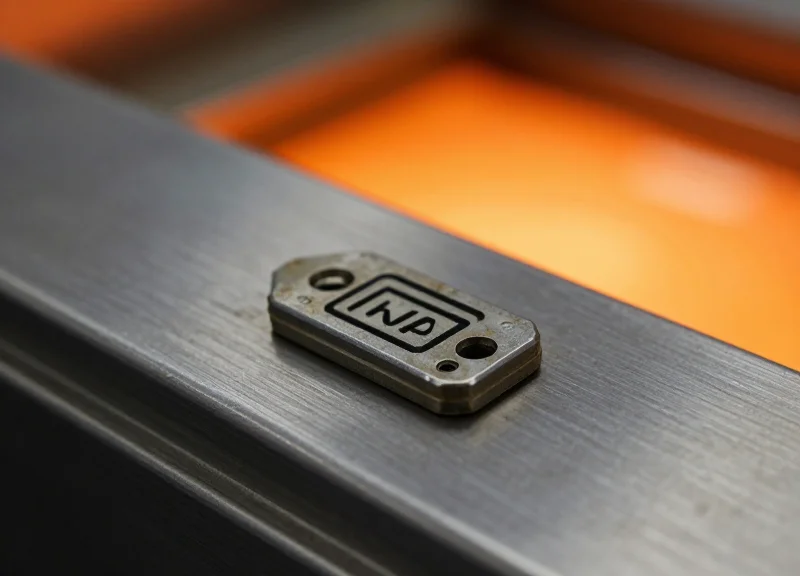
In the world of museum security, metal artifacts like bronze statues, silver coins, and gold-leafed frames present a dual challenge: the 'Faraday Cage' effect, where metal surfaces reflect or absorb radio frequency energy, and the risk of chemical or physical damage from standard adhesives. To ensure 100% readability in 2026, curators must transition from generic labels to specialized 'On-Metal' RFID tags that utilize a physical spacer or a ceramic substrate to create a mandatory air gap between the antenna and the metallic surface.
| Tag Type | Material Suitability | Interference Resistance | Mounting Method |
|---|---|---|---|
| Ceramic On-Metal | Bronze, Steel, Gold | High (Stable on conductive surfaces) | Mechanical or Epoxy |
| Flexible PCB Tags | Curved metal surfaces | Medium (Optimized for contour) | Archival-grade tape |
| pH-Neutral Spacers | Priceless/Fragile Metal | High (Physical isolation) | Non-invasive tension |
Beyond signal integrity, the preservation of the substrate is paramount. Modern museum standards dictate that any security tag must be 'reversible'—meaning it can be removed without leaving a trace. For 2026, the industry is moving toward micro-suction adhesives and acid-free archival-grade buffers that prevent the 'ghosting' effect often seen with industrial-grade RFID adhesives.
- Surface Assessment: Analyze the patina or finish of the artifact to ensure the mounting medium will not cause oxidation or chemical leaching over time.
- Signal Path Calibration: Position the on-metal tag on the least visible side that still maintains a direct line of sight to the RFID reader or gateway.
- Isolation Layer Application: Apply a micro-thin layer of Paraloid B-72 or a similar archival barrier before attaching the RFID adhesive to ensure 100% reversibility.
Expert Tip from the Field: For high-value gold or silver exhibits, avoid direct adhesion entirely. Instead, integrate the RFID tag into the display mount or use a 'shadow tag'—a secondary, non-contact sensor that triggers an alarm if the artifact is lifted from its specific RF-enabled pedestal.
Can RFID tags work through thick glass or metal display cases?
While UHF RFID can penetrate glass, metal cases act as shields. In these scenarios, internal 'Relay Antennas' or active BLE (Bluetooth Low Energy) tags are recommended for consistent signal transmission.
Will the adhesive damage ancient patinas?
Standard adhesives will. You must use pH-neutral, archival-safe adhesives specifically tested for museum environments to prevent long-term surface discoloration.
What is the best frequency for metal-heavy galleries?
While UHF is standard for inventory, specialized 13.56 MHz HF tags are sometimes preferred for close-range metal sensing as they are less prone to the erratic reflections found in dense metallic environments.
Cost-Benefit Analysis: ROI of Modern Museum Security Investments
The Return on Investment (ROI) for modern museum security is measured by the total cost of ownership (TCO) savings realized through a 90% reduction in manual audit labor and the mitigation of 'Museum Shrinkage' costs, which include asset value, insurance surcharges, and reputational damage. By 2026, advanced RFID systems like DragonGuard are expected to provide a break-even point within 18 to 24 months for institutions with collections exceeding 5,000 items. This fiscal shift transforms security from a traditional 'sunk cost' into a strategic operational asset that protects both the balance sheet and the historical record.
| Financial Metric | Traditional Manual Security (Annual) | RFID-Integrated Security (Annual) |
|---|---|---|
| Inventory Labor Costs | $40,000 - $60,000 (Based on 2,000 man-hours) | $1,500 - $3,000 (Automated scans) |
| Asset Misplacement Risk | Moderate (Human error in documentation) | Near-Zero (Real-time location data) |
| Insurance Premium Impact | Standard rates with high deductibles | 5% to 12% premium discounts available |
| Security Response Time | Delayed (Discovery upon manual check) | Instantaneous (Automated alerts) |
Expert Insight: The Restoration Cost Multiplier. A common mistake in museum budgeting is evaluating security ROI solely on the auction value of an artifact. In reality, the 'Restoration Cost Multiplier' includes the massive PR expenses, legal fees, and the permanent loss of donor trust that follows a security breach. We have seen that a single prevented incident often pays for the entire RFID infrastructure twice over by avoiding these invisible costs.
- Quantify Current Labor Drain: Document the hours spent by curators and security staff on manual piece-counts and audits. RFID typically reduces this specific overhead by over 85%.
- Project Insurance Savings: Consult with underwriters regarding 'Risk Mitigation Credits' for implementing real-time asset tracking and electronic article surveillance (EAS).
- Calculate the Cost of 'Dark' Collections: Evaluate the value of items currently in storage that are 'lost' due to poor records. RFID brings 100% visibility, effectively increasing the usable collection size without new acquisitions.
- Amortize Hardware Longevity: Factor in the 5-10 year lifespan of passive RFID tags and readers, which minimizes the long-term maintenance budget compared to active systems.
What is the average payback period for a museum RFID system?
Most mid-to-large scale institutions see a full return on investment within 1.5 to 2 years, primarily driven by labor savings and lower insurance premiums.
Does RFID technology help with grant and loan approvals?
Yes. Demonstrating military-grade security often makes an institution more eligible for federal grants and high-value loans from private collectors who require guaranteed protection.
Can RFID reduce the number of security personnel needed?
Rather than reducing headcount, RFID allows security staff to shift from 'passive watching' to 'proactive response,' greatly increasing the effectiveness of the existing team.
Future-Proofing Your Institution: Trends to Watch Beyond 2026
Future-proofing your institution beyond 2026 means moving past simple asset tracking toward 'Cognitive Preservation.' This paradigm shift involves integrating sustainable, biodegradable RFID substrates with multi-modal sensors that monitor light, humidity, and atmospheric pressure alongside security. By investing in modular systems that support both RAIN RFID and emerging Ambient IoT protocols, museums can ensure their security infrastructure remains relevant as the industry moves toward zero-waste hardware and AI-driven predictive analytics.
- Green RFID & Biodegradable Tags: The next generation of tags will replace plastic substrates with paper-based or compostable materials and printed silver-ink antennas to minimize the carbon footprint of large-scale collection audits.
- Ambient IoT Energy Harvesting: Look for tags that power themselves using ambient radio waves or indoor light, eliminating the need for batteries in active security sensors while maintaining a continuous signal for high-value items.
- Edge-AI Enhanced Readers: Readers will move from data conduits to decision-makers, using onboard AI to distinguish between a routine cleaning movement and an actual theft attempt in milliseconds.
| Feature | 2026 Standard | 2030 Vision (Future-Proof) |
|---|---|---|
| Primary Substrate | PET/Plastic | Cellulose/Paper-based |
| Power Source | Passive or Coin Battery | Ambient RF/Light Harvesting |
| Data Scope | ID & Location | ID, Location & Real-time Telemetry |
| Interconnectivity | Cloud-Dependent | Edge-Native Mesh Networks |
Expert Insight: The Zero-Trace Exhibition. A significant emerging trend is the 'Zero-Trace' tag designed specifically for traveling exhibitions. These tags are engineered to be fully compostable, allowing museums to tag thousands of temporary loans without contributing to long-term electronic waste. This aligns with the increasing mandate for 'Green Museums' globally, where environmental impact is weighted as heavily as security efficacy.
Will my 2026 RFID hardware be obsolete by 2030?
No, provided you choose hardware that supports OTA (Over-The-Air) firmware updates and adheres to global GS1 standards, which ensure backward compatibility even as new protocols emerge.
Does sustainable RFID hardware compromise security?
On the contrary, printed antennas on paper substrates are harder to peel off without destroying the circuit, making them more tamper-evident than traditional plastic-encased tags.
What is the role of 5G/6G in future museum security?
Higher bandwidth will allow for massive IoT density, enabling museums to track not just the artifacts, but every interaction a visitor has with a display, creating a fully digitalized floor plan.