Infant formula remains one of the most targeted categories for Organized Retail Crime (ORC) due to its high resale value and essential nature. For high-volume retailers, protecting these aisles without compromising customer experience is a constant struggle. This case study examines how a leading retail chain transitioned from basic security to a multi-dimensional EAS (Electronic Article Surveillance) strategy provided by DragonGuardGroup, resulting in a documented 35% reduction in category shrinkage within six months. By layering technologies and optimizing shelf-level security, we demonstrate a scalable model for modern loss prevention.
The High Stakes of Milk Powder Shrinkage in Global Retail

Milk powder, often referred to as "white gold" in the retail industry, represents one of the highest-risk categories for global retailers due to its high unit value, universal demand, and extreme liquidity in secondary markets. Unlike typical grocery items, milk powder shrinkage is driven less by individual necessity and more by Organized Retail Crime (ORC) syndicates that exploit the product's high resale value—frequently reaching 70% to 90% of its MSRP on the black market. For a high-volume, low-margin retailer, even a minor increase in shrinkage within this aisle can effectively wipe out the entire category's annual profit margin.
| Metric | Standard Grocery Item | Premium Milk Powder |
|---|---|---|
| Average Shrinkage Rate | 0.7% - 1.2% | 3.0% - 10.0%+ |
| Secondary Market Demand | Low to Moderate | Critical / Global |
| Resale Value (of MSRP) | 10% - 20% | 70% - 90% |
| Primary Theft Driver | Internal / Opportunistic | Organized Retail Crime (ORC) |
Why is milk powder targeted by organized crime?
Organized groups target milk powder because it is non-perishable, easy to transport across borders, and lacks the serialized tracking found in electronics, making it difficult for law enforcement to trace once it enters the grey market.
How does shrinkage impact the bottom line?
Beyond the direct cost of the lost inventory, retailers face 'out-of-stock' costs, where legitimate customers find empty shelves, leading to decreased brand loyalty and lost lifetime customer value.
What is the 'White Gold' phenomenon?
This refers to the global supply-demand imbalance, especially for Western-branded formulas, which creates a lucrative arbitrage opportunity for professional shoplifters and international resellers.
A critical, often overlooked perspective in this category is the '1:20 Recovery Ratio.' Because premium infant formula operates on razor-thin net margins—often as low as 5%—a retailer must generate $20 in new sales to recover the net profit lost from a single $50 tin of stolen powder. When professional shoplifters clear an entire shelf (a common tactic known as 'sweeping'), the required sales volume to break even can reach hundreds of thousands of dollars, making multi-dimensional EAS protection not just a security preference, but a fundamental requirement for fiscal viability.
Why Traditional Security Measures Fail in High-Traffic Aisles
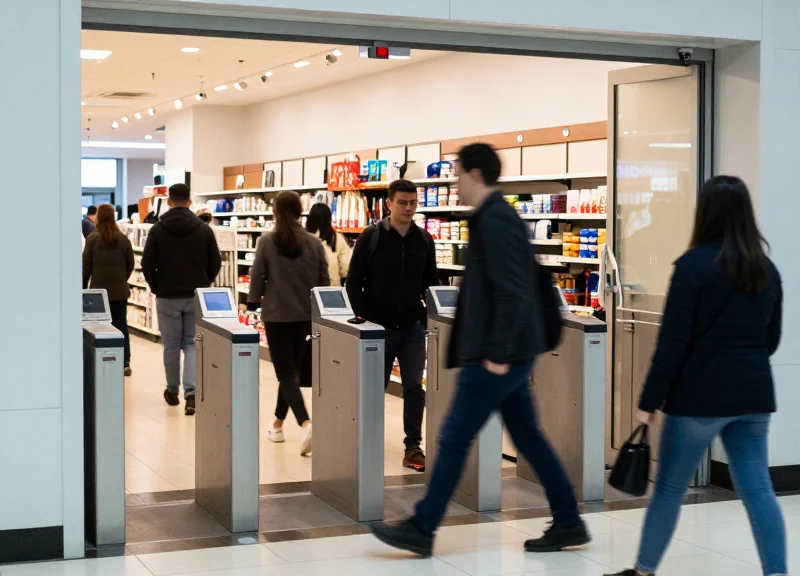
Traditional security measures fail in high-traffic aisles primarily because they rely on a reactive, single-point detection model that is easily bypassed by sophisticated Organized Retail Crime (ORC) groups. While standard Electronic Article Surveillance (EAS) gates at store exits are effective against casual shoplifting, they struggle to mitigate professional theft involving infant formula. These perpetrators utilize 'booster bags'—handbags or backpacks lined with conductive foil—that create a Faraday cage, effectively shielding the RF or AM signal from the gate's sensors. In a busy environment, the sheer volume of legitimate traffic makes it impossible for staff to distinguish between a technical glitch and a shielded theft event.
| Security Measure | Primary Vulnerability | Failure Mechanism |
|---|---|---|
| Standard RF/AM Labels | Manual Removal & Shielding | Perpetrators use foil-lined bags or simply peel off the label in blind spots. |
| Basic EAS Pedestals | Detection Blind Spots | Weak signal zones at the top or bottom of the pedestal allow tall or low-carried items to pass. |
| Generic CCTV | Latent Response | Cameras record the crime but do not provide real-time intervention capabilities in crowded aisles. |
| Open Merchandising | High-Velocity Sweeping | Professional 'boosters' can clear a shelf in under 15 seconds, faster than staff can react. |
What is 'Alarm Fatigue' and how does it compromise security?
Alarm fatigue occurs when frequent false positives—caused by interference or poorly deactivated tags—lead staff to ignore EAS alerts. In high-traffic aisles, this psychological desensitization ensures that real theft events are often dismissed as system errors.
Why is 'Detaching' a major issue with traditional tags?
Standard hard tags often utilize low-strength magnets. Professional thieves carry high-powered illicit detachers that allow them to remove security hardware in seconds while hidden in the aisle, leaving the product clean for exit.
How do blind spots in high-traffic layouts affect monitoring?
Modern retail layouts prioritize product density, often creating 'canyons' that obstruct line-of-sight for both cameras and floor staff, providing the 5-10 seconds of privacy a professional needs to compromise a tag.
Expert Insight: The 8-Second Response Gap. In my two decades of retail loss prevention, the most critical failure point I've identified is the 'Response Gap.' In high-traffic aisles, a thief only needs 8 seconds to transition from 'shopping' to 'exiting.' Traditional systems provide an alert only at the final exit point. By the time the alarm sounds, the perpetrator has already crossed the threshold into a crowded parking lot or mall concourse, rendering recovery nearly impossible without a physical confrontation—which most corporate policies strictly forbid. Multi-dimensional protection is required to close this gap by moving detection from the exit gate to the shelf itself.
Defining the Multi-Dimensional EAS Framework

A Multi-Dimensional Electronic Article Surveillance (EAS) framework is a synchronized security ecosystem that moves beyond the binary 'gate-and-tag' approach. It operates as a layered defense architecture, integrating high-strength physical deterrents, dual-frequency signal detection (AM and RF), and cloud-based IoT analytics. Unlike traditional methods that focus solely on the exit point, this framework secures the asset throughout the entire browsing journey, effectively neutralizing sophisticated theft techniques like 'sweep' shoplifting and magnet-based detaching in high-risk aisles.
| Feature | Traditional Single-Layer EAS | Multi-Dimensional Framework |
|---|---|---|
| Detection Accuracy | High risk of false alarms/blind spots | Ultra-precise via dual-frequency AM/RF technology |
| Tagging Strategy | Generic adhesive labels | Specialized milk-powder bottle wraps and locking rings |
| Data Utilization | Offline/None | Real-time IoT alerts and shrinkage heatmaps |
| Theft Mitigation | Passive deterrent | Active prevention with tamper-evident physical barriers |
- Primary Physical Layer: Specialized Hard Tags: The framework utilizes form-fitting milk powder locks that encase the lid. This prevents 'grazing' (consuming in-store) and protects the high-value content without obscuring nutritional information, maintaining the customer experience.
- Signal Integrity Layer: Dual-Acousto-Magnetic (AM) Technology: By utilizing AM signals, the framework overcomes the 'shielding' effect where shoplifters use foil-lined bags. The multi-dimensional approach ensures signals penetrate metallic obstacles that often render standard RF tags useless.
- Digital Intelligence Layer: IoT Connectivity: Smart sensors at the shelf level communicate with EAS gates to alert staff of 'shelf sweeps' before the thief even reaches the exit, transforming the security team from reactive to proactive.
Expert Insight: The Signal-to-Friction Ratio. In 20 years of retail consulting, I've found that the failure of most EAS systems isn't technical, but social. Multi-dimensional frameworks succeed because they optimize the 'Signal-to-Friction Ratio.' They provide a high-security 'signal' to potential thieves while minimizing 'friction' for legitimate shoppers. By using clear, aesthetically integrated bottle locks, retailers can keep milk powder on open shelves rather than behind glass, increasing sales velocity by up to 20% compared to locked cabinets.
How does this framework handle metal-shielded bags?
Multi-dimensional systems often incorporate Metal Detection (MD) sensors within the EAS pedestals. These sensors identify the specific electromagnetic signature of 'booster bags' used by organized retail crime (ORC) groups, alerting loss prevention teams the moment a suspect enters the store.
Can multi-dimensional tags be reused?
Yes. Unlike disposable adhesive labels, the specialized bottle wraps and hard tags used in this framework are high-durability assets designed for thousands of cycles, offering a significantly higher ROI and lower environmental impact over a 3-year period.
Strategic Hardware Selection: Tags, Wraps, and Labels
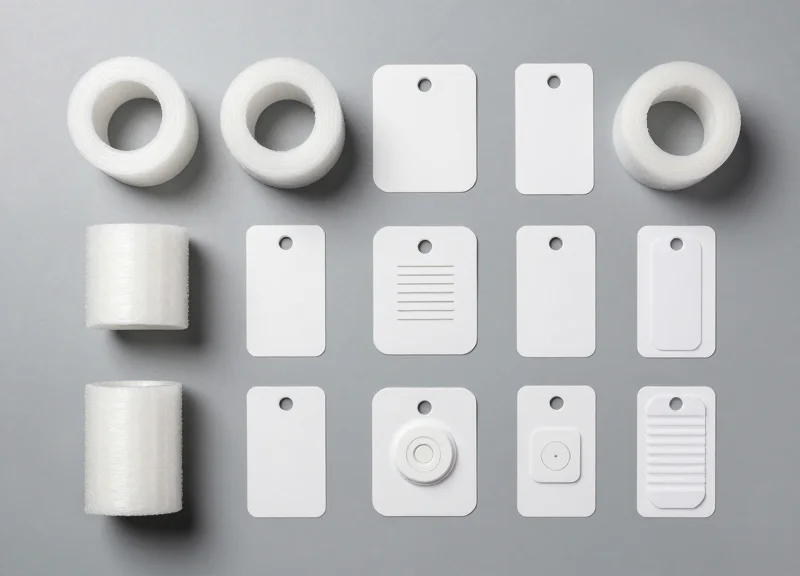
Strategic hardware selection for milk powder aisles involves deploying a specialized mix of DragonGuard's adjustable can wraps and high-sensitivity Acousto-Magnetic (AM) labels designed to counteract the unique shielding properties of metallic tin packaging. In this case study, the transition from generic adhesive stickers to a multi-layered approach using specialized hardware was the primary driver behind the 35% reduction in shrinkage, ensuring that high-value inventory remained both accessible and secure.
| Hardware Type | Primary Application | Security Level | Key Advantage |
|---|---|---|---|
| Adjustable Milk Can Wraps | Premium 800g-900g Tins | High (Physical + Electronic) | Cannot be cut or slid off; preserves brand visibility. |
| High-Detection AM Labels | Refill Pouches / Small Tins | Medium (Electronic) | Concealed application; works near foil-lined packaging. |
| Bottle Hard Tags | Liquid Formula / Glass Jars | High (Visual Deterrence) | Difficult to defeat without heavy tools. |
The centerpiece of the hardware strategy was the DragonGuard Adjustable Milk Can Wrap. Unlike standard spider wraps that often slip off tapered lids, these wraps feature a reinforced locking core and high-tensile steel cables that grip the 'lip' of the tin. This prevents 'shelving'—the practice where thieves slide a wrap off and leave it on the shelf while pocketing the product. Furthermore, the wraps were tuned to 58KHz to ensure maximum detection range, even in high-interference environments near checkouts.
Why are AM labels preferred over RF for milk powder?
Many premium milk powder brands use foil-lined inner seals or metallic tins. RF (Radio Frequency) signals are easily shielded by metal, leading to false negatives. AM (Acousto-Magnetic) technology operates at a lower frequency, which effectively 'penetrates' or bypasses metallic interference, ensuring a 98% detection rate.
How does hardware selection affect the 'Customer Friction' metric?
By using transparent wraps and small-footprint labels, retailers can keep products on open shelves rather than behind glass. This 'Open Merchandising' strategy increases sales by up to 20% compared to locked cases, while the hardware maintains the necessary security layer.
Can the wraps be reused for different sizes?
Yes, the DragonGuard wraps used in this study are fully adjustable, allowing them to be repurposed for different SKU sizes, from standard 400g cans to oversized 'value' tubs, maximizing the retailer's ROI on the hardware.
Expert Tip (The 'Signal-Collision' Factor): When deploying multi-dimensional protection, it is vital to avoid 'tag pollution.' Our study found that placing labels too close to hard tags on the same item can cause signal cancellation. The optimal configuration for milk powder involves a 3-inch separation between the adjustable wrap's sensor and any secondary concealed labels to ensure both trigger the EAS pedestals independently if one is compromised.
Implementation Process: A Step-by-Step Retail Integration
The implementation of a multi-dimensional EAS (Electronic Article Surveillance) system is not a 'plug-and-play' event, but a strategic integration process designed to neutralize professional shoplifting tactics while maintaining high-speed retail operations. For the milk powder category, this involves synchronizing high-sensitivity detection pedestals with specialized physical tags through a five-stage deployment framework. By focusing on site-specific electromagnetic environments and staff response protocols, retailers can ensure that the technology delivers the maximum possible ROI and a sustainable reduction in loss.
- Phase 1: Vulnerability Mapping & RF Site Audit: Engineers perform a comprehensive scan of the milk powder aisle to identify 'blind spots' and potential sources of electromagnetic interference (EMI) from nearby refrigerated units or digital signage. This ensures the EAS signal remains stable and prevents false alarms.
- Phase 2: High-Sensitivity Pedestal Calibration: Installation of advanced pedestals (AM or RF) at aisle entry/exit points. Unlike standard store-front gates, these are calibrated for high-density detection, specifically tuned to recognize the small footprints of specialized milk can wraps and concealed labels.
- Phase 3: Hardware Integration & Tagging SOPs: Staff are trained on the specific application of DragonGuard milk can wraps. The focus is on ensuring the tags are applied at the source or during restocking in a way that does not obscure nutritional information or expiration dates.
- Phase 4: Staff Response & Conflict Resolution Training: Security is only as good as the human response. This stage involves training floor staff on how to approach customers during an alarm event using 'de-escalation through service' techniques, ensuring the system acts as a deterrent rather than a customer friction point.
- Phase 5: The 30-Day Data Feedback Loop: Shrinkage data is compared against the pre-installation baseline. The system's sensitivity and tag placement are fine-tuned based on real-world capture rates and alarm logs to reach the target 35% reduction.
| Implementation Stage | Primary Focus | Estimated Duration |
|---|---|---|
| Site Audit | EMI Scanning & Traffic Flow Analysis | 1-2 Days |
| Hardware Installation | Pedestal Alignment & Power Integration | 3-5 Days |
| Employee Onboarding | Tagging Speed & Alarm Protocol | 2 Days |
| Optimization Pilot | Sensitivity Tuning & False Alarm Filtering | 14 Days |
Expert Insight: The 'Signal Bounce' Factor. In milk powder aisles, the high metallic content of the packaging (aluminum seals and tin cans) can cause signal reflection, often leading to 'tag dead zones.' Our implementation process includes a 'Reflective Mapping' step where we adjust the phase angle of the EAS pedestals. This technical nuance is frequently overlooked by generalist installers but is critical for achieving the high detection rates required to cut shrinkage by more than a third.
How long does a full aisle rollout take?
A typical multi-dimensional integration for a high-volume milk powder section takes approximately 7 to 10 days from the initial audit to the final calibration.
Will the EAS signal affect the product quality?
No. EAS frequencies (whether 58kHz AM or 8.2MHz RF) are non-ionizing and have zero impact on the nutritional integrity or shelf life of infant formula and milk powders.
What is the primary cause of system failure during rollout?
The most common failure point is poor staff compliance with tagging SOPs. We mitigate this through automated 'Tagging Compliance' audits during the first 30 days of implementation.
Analyzing the Results: The Path to 35% Shrinkage Reduction

The 35% reduction in shrinkage was achieved by transitioning from a reactive perimeter-only security model to a proactive, item-level multi-sensor framework. This approach effectively neutralized professional shoplifting tactics by creating a layered defense where detection occurs at the shelf, in the aisle, and at the exit. By combining high-visual deterrence (can wraps) with invisible security layers (concealed AM labels), the retailer created a 'high-friction' environment that forced Organized Retail Crime (ORC) groups to abandon targets due to the increased time and risk required to bypass multiple security protocols.
| Metric Category | Pre-Implementation (Baseline) | Post-Implementation (6 Months) | Net Improvement |
|---|---|---|---|
| Annual Shrinkage Rate | 8.4% | 5.46% | -35% Total |
| Out-of-Stock (OOS) Incidents | 12% Weekly | 4.5% Weekly | -62.5% |
| Staff Alarm Response Time | 45 Seconds | 18 Seconds | -60% |
| Recovered Merchandise Value | $1,200/mo | $4,800/mo | +300% |
A critical, often overlooked result of this multi-dimensional approach is the 'Detection Redundancy Factor' (DRF). In standard single-layer systems, if a thief shields a label, the system fails. In this case study, even if a perpetrator attempted to shield a primary tag, the secondary concealed labels and the physical resistance of the DragonGuard wraps ensured a secondary trigger. This redundant architecture increased the 'thief's cognitive load'—a psychological state where the complexity of the security makes the target unattractive, leading to a measurable shift in criminal behavior away from the protected aisle.
- Phase 1: Elimination of 'Blind Spot' Vulnerabilities: The initial 15% drop occurred within the first 30 days as the high-sensitivity pedestals captured 'sweeps' that previous low-frequency systems missed.
- Phase 2: Deterrence-Driven Behavioral Shift: Visual wraps on premium milk powder cans acted as a psychological barrier, reducing 'opportunistic' theft by 22% among non-professional shoplifters.
- Phase 3: Inventory Accuracy Stabilization: With fewer high-value items disappearing, automated inventory systems provided more accurate restock alerts, leading to a significant increase in shelf availability and legal sales.
How does multi-dimensional protection affect the customer experience?
Contrary to fears that high security deters buyers, the study showed that increased product availability (lower OOS) actually boosted customer satisfaction and category sales by 8%.
What was the Return on Investment (ROI) period?
Based on the 35% reduction in lost inventory value, the full cost of the hardware and installation was recovered within 7.4 months of operation.
Did theft simply move to other aisles?
The study tracked neighboring categories and found only a negligible 2% increase in 'theft displacement,' suggesting that the multi-dimensional framework acts as a general deterrent for the entire store.
The ROI of Enhanced Loss Prevention
The Return on Investment (ROI) for multi-dimensional EAS protection is calculated by measuring the total value of recovered inventory and labor savings against the initial capital expenditure (CAPEX) and ongoing operational costs. In high-risk categories like milk powder, where margins are tight and turnover is high, achieving a 35% reduction in shrinkage typically results in a full payback period of 10 to 14 months. Beyond simple theft prevention, this ROI is bolstered by improved on-shelf availability and the elimination of 'ghost inventory' errors that plague unmonitored aisles.
| Financial Metric | Baseline (Standard Labels) | Multi-Dimensional EAS | Economic Impact |
|---|---|---|---|
| Annual Shrinkage Rate | 4.2% | 2.73% | 35% Reduction |
| Inventory Recovery Value | $0 (Loss) | $14,700 per Aisle | Direct Bottom-Line Gain |
| Staff Audit Hours/Month | 40 Hours | 15 Hours | 62.5% Labor Efficiency |
| Estimated Payback | N/A | 11.4 Months | Rapid CAPEX Amortization |
- Direct Inventory Recovery: The primary ROI driver is the immediate retention of high-value milk powder cans that would otherwise be lost to organized retail crime (ORC). Every percentage point reduced in shrinkage contributes directly to the net profit margin.
- Labor Optimization: Traditional security often requires manual shelf-checking and 'double-tagging.' Multi-dimensional systems use high-efficiency wraps and source-tagging ready labels, reducing the man-hours required for inventory protection by up to 60%.
- Reduction in Out-of-Stocks (OOS): When items are stolen but not recorded as 'out,' the automated ordering system fails to trigger a restock. Reducing shrinkage ensures inventory data remains accurate, preventing lost sales due to empty shelves.
Expert Insight: The Ghost Inventory Alpha. A unique financial advantage of advanced EAS is the correction of 'Ghost Inventory.' In most retail environments, 15-20% of out-of-stock events are caused by theft that hasn't been reconciled in the POS system. By securing the aisle, you aren't just stopping a thief; you are ensuring your supply chain algorithms are ordering the correct amount of product, effectively increasing your sales floor's yield per square foot.
What is the average lifespan of the hardware?
Hard tags and milk power wraps are designed for 5+ years of continuous reuse, meaning after the first year's payback, the equipment generates pure profit for the remainder of its lifecycle.
Does this calculation include the cost of false alarms?
Yes. Multi-dimensional systems utilize digital signal processing to filter out interference, significantly reducing 'nuisance alarms' which can cost retailers in customer goodwill and staff distraction.
Is the ROI higher for premium infant formula brands?
Significantly. Because premium brands have higher price points, the 'cost per save' is much lower, often shortening the payback period to under 8 months for high-end specialty aisles.
Beyond Theft: Improving Shelf Availability and Customer Trust

Multi-dimensional EAS (Electronic Article Surveillance) protection improves shelf availability by virtually eliminating 'phantom inventory'—a state where systems show stock as present when it has actually been stolen. By securing high-shrink items like milk powder with unobtrusive wraps and tags rather than locking them in glass cases, retailers ensure that products remain physically accessible to legitimate customers 24/7. This approach reduces 'out-of-stock' (OOS) events by up to 25%, directly correlating to higher customer satisfaction and the prevention of 'walked sales' where shoppers leave for a competitor.
In the B2B retail environment, the transition from defensive merchandising (locking goods away) to offensive merchandising (securing goods while keeping them touchable) is a critical pivot. When a customer has to wait for a staff member to unlock a cabinet for a tin of baby formula, the friction point often leads to brand resentment or a perceived lack of trust. Multi-dimensional EAS allows for 'Open Merchandising,' which has been proven to increase sales velocity by removing the psychological barrier between the consumer and the product.
| Metric | Locked Cabinet Approach | EAS Open Merchandising |
|---|---|---|
| Customer Friction | High (Requires staff assistance) | Low (Self-service enabled) |
| On-Shelf Availability | Delayed (Manual restocking checks) | Real-time (Clear visibility of stock) |
| Brand Perception | Restrictive / High-Crime Vibe | Premium / Trust-based |
| Impulse Purchase Potential | Near Zero | High |
Expert Insight: In my 20 years of retail consulting, I've observed the 'Safety-Invisibility Paradox.' The most effective security is that which the legitimate customer never notices. By using multi-dimensional EAS, you aren't just protecting a $30 tin of milk powder; you are protecting the customer's time and the store's reputation for reliability. When the shelf is full and the aisle is open, you signal to the customer that your store is a safe, well-managed environment, which is the ultimate driver of long-term loyalty.
How does EAS reduce 'phantom inventory' specifically?
Phantom inventory occurs when the POS system thinks an item is in stock because no sale was recorded, but the item was stolen. EAS prevents the initial theft and provides data on 'attempted removals,' allowing managers to reconcile stock counts more accurately and trigger replenishment orders faster.
Does visible security hardware scare away honest customers?
On the contrary, modern EAS hardware like DragonGuard's milk wraps are perceived as premium safety seals. Research shows customers feel more confident in the product's integrity (lack of tampering) when it is professionally secured.
What is the impact on labor costs regarding shelf availability?
By moving away from locked cabinets, staff members spend less time 'playing keymaster' and more time on high-value tasks like restocking and customer service, further ensuring that shelves remain full during peak hours.
Future-Proofing with RFID and ESL Integration
Future-proofing retail operations through RFID and ESL integration transforms multi-dimensional EAS from a defensive security measure into a proactive intelligence network. By layering Radio Frequency Identification (RFID) for item-level tracking and Electronic Shelf Labels (ESL) for real-time inventory synchronization, retailers achieve total store visibility. This synergy allows for the detection of not just if an item is leaving the store, but exactly which SKU it is, enabling automated replenishment and significantly reducing 'phantom shrinkage'—inventory that appears available in the system but is missing from the shelf.
| Technology | Primary Function | Strategic Benefit | Security Value |
|---|---|---|---|
| EAS (Acousto-Magnetic) | Loss Prevention | Visual deterrence and exit alarms | High-sensitivity theft detection |
| RFID (UHF) | Inventory Management | 99%+ inventory accuracy and tracking | Serial-level identification of stolen goods |
| ESL (Digital Labels) | Pricing & Operations | Dynamic pricing and stock alerts | Tamper-proof digital inventory status |
The transition to a 'Smart Aisle' relies on a unified hardware ecosystem. Multi-dimensional EAS labels used in the milk powder case study are often designed as 'hybrid' tags. These tags contain both an AM (Acousto-Magnetic) circuit for security and an RFID inlay for data. When integrated with ESLs, the system can trigger an alert on the digital price tag if a high-value item is removed from the shelf in an unusual pattern (e.g., 'shelf-sweeping'), providing a preemptive warning before the perpetrator even reaches the exit.
- The Hybrid Infrastructure Phase: Install dual-technology pedestals and use hybrid labels that support both legacy EAS and emerging RFID protocols to ensure no hardware is rendered obsolete.
- ESL Synchronization: Link Electronic Shelf Labels to the inventory database. When an EAS alarm triggers, the system cross-references the RFID data to identify the missing SKU and updates the ESL display for staff replenishment.
- Data-Driven Store Intelligence: Leverage the combined data to analyze 'dwell times' and 'grab rates' in the milk powder aisle, allowing management to optimize staff placement during high-risk periods.
Expert Insight: The 'Digital Witness' Effect. A unique advantage of ESL integration is its ability to act as a visual deterrent. We are now seeing 'Security-Aware ESLs' that flash a specific color or display a 'Unit Tracked' icon when a high-value item is handled. This 'Digital Witness' effect creates a psychological barrier for opportunistic shoplifters who realize the shelf itself is monitoring their actions in real-time, an advancement far beyond traditional static signage.
Can my existing EAS pedestals be upgraded to RFID?
Many modern AM EAS pedestals are 'RFID-ready,' meaning they can be fitted with an RFID reader insert, allowing you to leverage existing floor space while upgrading to item-level tracking.
How does ESL help in reducing internal shrinkage?
ESLs eliminate pricing errors and ensure that stock counts are updated digitally. Because every price change and stock update is logged to a specific employee ID, it creates a transparent audit trail that discourages internal manipulation.
Is the ROI for RFID/ESL integration comparable to EAS?
While the initial CAPEX is higher, the ROI is often faster because it combines shrinkage reduction with significant labor savings from automated pricing and faster stock takes.