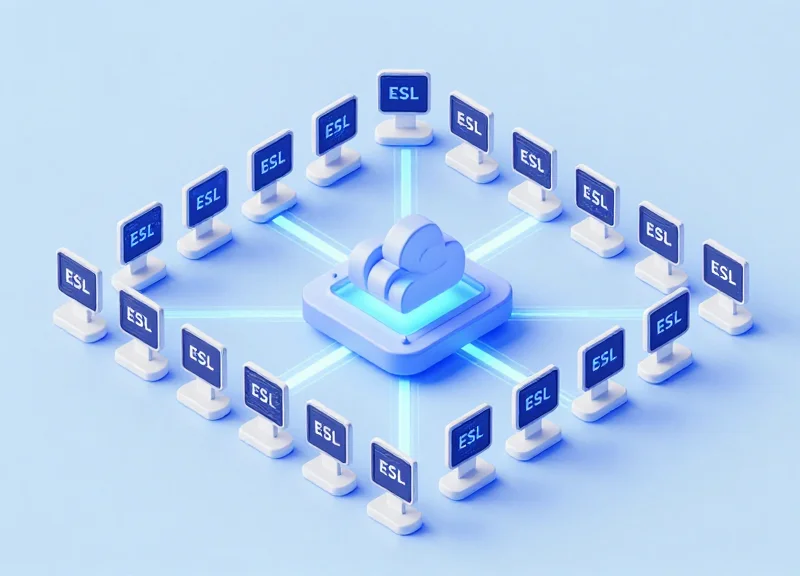
In the fast-paced world of modern retail, the ability to adjust prices in real-time is no longer a luxury—it is a competitive necessity. For businesses managing thousands of SKUs across multiple locations, manual updates are obsolete. The solution lies in a robust, API-driven Electronic Shelf Label (ESL) integration. This technical guide explores the architecture and implementation strategies required to synchronize inventory and pricing data seamlessly, ensuring your digital labels reflect your back-end database with millisecond precision.
The Evolution of Digital Pricing: Why API-Driven ESL is Essential
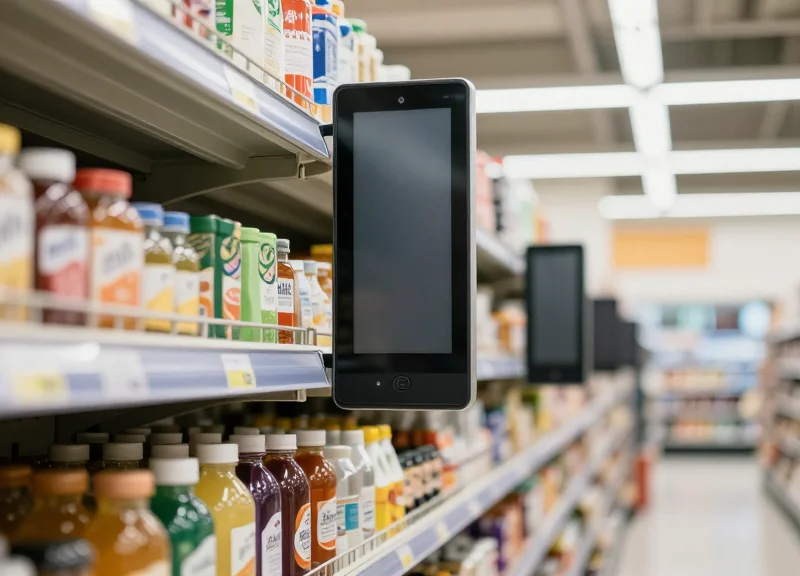
Digital pricing evolution represents the shift from static, manual paper labeling to an agile, API-integrated infrastructure where Electronic Shelf Labels (ESL) serve as intelligent IoT endpoints. Unlike traditional digital tags that require localized updates, API-driven ESL systems leverage RESTful or GraphQL interfaces to synchronize physical shelf prices with centralized ERP and e-commerce databases in sub-second latency. This automation is essential for modern retailers to maintain price parity across omnichannel touchpoints while drastically reducing the operational overhead of manual price adjustments.
| Feature | Paper Labels | Legacy Digital Tags | API-Driven ESL |
|---|---|---|---|
| Update Frequency | Weekly/Monthly | Daily (Manual) | Real-Time/High-Frequency |
| Error Rate | High (Human Error) | Moderate | Near-Zero (Systemic) |
| Labor Cost | Extremely High | Moderate | Low/Automated |
| Data Source | Print Queue | Handheld Scanner | Centralized API/Cloud |
The fundamental driver behind this evolution is the 'Latency Tax.' In a competitive landscape, the time gap between a price change in the cloud and its reflection on the physical shelf is lost revenue. For high-velocity categories like electronics or fresh produce, API integration transforms the shelf edge from a passive display into an active participant in the supply chain, capable of responding to competitor price drops or inventory surpluses instantly.
Why has paper pricing become a liability for modern retailers?
Paper labels create a 'desynchronization gap' where the physical price fails to match the online price, leading to customer distrust and potential legal compliance issues. Furthermore, the labor cost of manually swapping tags can consume up to 20 percent of store operational hours.
How does API integration solve the 'High-Frequency' challenge?
API-driven systems use webhooks and automated triggers. When a price changes in the ERP, the API pushes an update packet to the ESL gateway, which broadcasts the change to the specific display ID. This allows for thousands of updates per hour without adding a single task to floor staff schedules.
What is the primary technical advantage of API-driven ESL?
The primary advantage is bidirectional communication. The API not only pushes prices but also pulls status reports (battery life, signal strength, acknowledgement of update), ensuring the retailer has a 100 percent accurate view of store pricing status.
Expert Insight: Beyond mere price changes, the next frontier for API-driven ESL is 'Contextual Edge Intelligence.' We are moving toward a model where the API feeds the label not just a price, but dynamic QR codes based on stock levels (e.g., 'Low Stock - Order Online') or personalized pricing for loyalty members, effectively turning the shelf edge into a personalized marketing engine.
{ "action": "UPDATE_PRICE", "sku": "ESL-9920-B", "new_price": "29.99", "currency": "USD", "display_template": "promo_red", "timestamp": "2023-10-27T10:00:00Z" }Understanding the Technical Architecture of ESL Systems
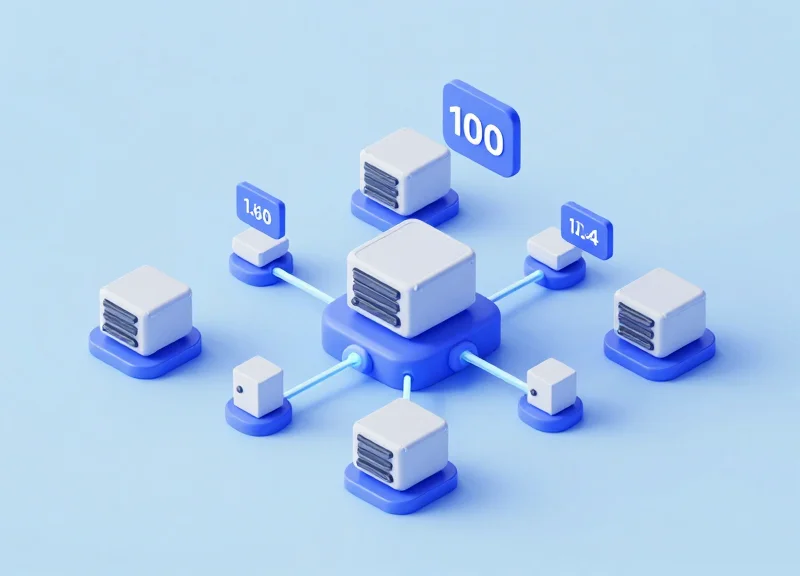
The technical architecture of an Electronic Shelf Label (ESL) system is a three-tier ecosystem designed for high availability and low energy consumption. It consists of a Central Management System (CMS) for data orchestration, a wireless Gateway or Access Point (AP) layer for signal transmission, and the E-ink display tags at the edge. By decoupling the heavy data processing at the server level from the low-power communication at the shelf level, retail enterprises can scale to thousands of labels per store without overwhelming local network infrastructure.
| Architectural Tier | Primary Function | Key Technologies |
|---|---|---|
| Central Server (CMS) | Data orchestration, API integration, and label management. | RESTful APIs, SQL/NoSQL DBs, Webhooks |
| Access Point (AP) | Translates TCP/IP packets into proprietary RF or standard wireless signals. | Zigbee, BLE, Sub-GHz, PoE |
| ESL End-Device | Low-power display of pricing and inventory metadata. | E-Paper (EPD), NFC, SoC Microcontrollers |
Modern ESL systems operate through a bidirectional communication loop. When a price change occurs in the ERP or POS system, the Central Server pushes a payload to the specific Access Point assigned to that store zone. The AP then wakes the relevant labels via a 'heartbeat' signal—a scheduled interval where the label checks for pending updates—ensuring the tag remains in deep sleep mode 99% of the time to maximize battery life.
How do ESL systems handle signal interference in crowded retail environments?
Most enterprise-grade APs utilize frequency hopping spread spectrum (FHSS) or operate on the 2.4GHz/Sub-GHz bands with intelligent channel selection to bypass Wi-Fi congestion and ensure a 99.9% packet delivery rate.
What is the typical latency for a price update across 1,000 tags?
Depending on the protocol (e.g., Zigbee vs. proprietary Sub-GHz), a bulk update for 1,000 tags can be completed in under 5 minutes, though high-frequency API-driven systems can achieve sub-minute latency for individual SKU changes.
Can these systems operate offline if the cloud connection drops?
Yes, many architectures include an 'edge-cache' at the Access Point level, allowing the labels to maintain their current state even if the primary connection to the Central Server is temporarily lost.
Expert Insight: To truly optimize high-frequency updates, look for systems that support 'State-Aware Delta Updates.' Instead of pushing a full image file (which is power-intensive), the server only transmits the specific pixel segments that have changed (e.g., just the price digits). This approach can extend battery life by up to 30% while reducing the data payload size, allowing more tags to be updated within the same wireless window.
Choosing the Right API Protocol: RESTful vs. Webhooks

For high-frequency Electronic Shelf Label (ESL) updates, the choice between RESTful APIs and Webhooks is determined by the data flow direction: RESTful APIs utilize a Pull model where the ESL server requests data from the ERP, while Webhooks utilize a Push model where the ERP notifies the ESL server of changes immediately. In a high-velocity retail environment, Webhooks are generally superior for minimizing latency, whereas RESTful APIs are essential for bulk data reconciliation and maintaining state consistency.
| Feature | RESTful API (Pull) | Webhooks (Push) |
|---|---|---|
| Communication Type | Synchronous / Request-Response | Asynchronous / Event-Driven |
| Latency | Higher (dependent on polling interval) | Near Real-Time |
| Server Overhead | High (constant polling checks) | Low (only triggers on change) |
| Reliability | Excellent for bulk syncs | Requires robust retry logic |
| Primary Use Case | Initial inventory load & Audits | Flash sales & Dynamic pricing |
Expert Insight: Beware the 'Thundering Herd' Problem. While Webhooks are more efficient for individual price changes, triggering a global price update via thousands of simultaneous Webhooks can overwhelm local Access Point (AP) bandwidth. I recommend a 'Jittered' push strategy: utilize a Webhook to notify the ESL system of a change, but implement a randomized 50-200ms delay in the dispatch queue to prevent packet collisions at the store-level gateway.
{
  "event": "price_update",
  "timestamp": "2023-10-27T10:00:00Z",
  "data": {
    "sku": "ULTRA-HD-TV-001",
    "new_price": 899.99,
    "currency": "USD",
    "store_id": "NY-05"
  },
  "signature": "sha256=..."
}
Can I use RESTful APIs for real-time updates?
Technically yes, through 'Long Polling,' but it is highly inefficient for ESL systems as it consumes excessive battery life on the labels and increases load on the central server.
What happens if a Webhook delivery fails?
You must implement an idempotent consumer and a Dead Letter Queue (DLQ). If the ESL server is down, the ERP should retry using an exponential backoff strategy until delivery is confirmed.
Which is more secure for price data?
REST is often easier to secure behind a standard firewall, but Webhooks can be equally secure by using HMAC signatures to verify that the 'push' payload originated from your trusted ERP.
Database Schema Design for Real-Time Inventory Sync
Designing a database for real-time ESL (Electronic Shelf Label) synchronization requires moving beyond static inventory tables to a highly responsive, event-driven schema. To ensure high-frequency price updates, the schema must incorporate atomic versioning, delta tracking, and status flags that allow the API to distinguish between 'local data changes' and 'successfully transmitted hardware updates.' This architecture prevents redundant radio frequency (RF) transmissions, which is critical for preserving ESL battery life and maintaining network bandwidth across thousands of display points.
| Feature | Traditional Schema | ESL-Optimized Schema |
|---|---|---|
| Update Logic | Full Row Overwrite | Differential/Delta Update |
| State Tracking | Current State Only | Versioned State with Sync Status |
| Concurrency | Row Locking | Optimistic Locking (Hash/Timestamp) |
| Audit Trail | Separate Log Table | Integrated Event Stream/CDC |
A robust ESL database must track the relationship between the Product SKU, the physical Label ID (MAC address), and the specific Gateway (Access Point). By implementing a 'Sync State' enumeration, developers can build efficient polling or webhook triggers that only target records where the state is 'PENDING_UPDATE'.
CREATE TABLE esl_inventory_sync (
  id UUID PRIMARY KEY DEFAULT gen_random_uuid(),
  sku_id VARCHAR(50) NOT NULL,
  label_id VARCHAR(50) UNIQUE NOT NULL,
  current_price DECIMAL(10, 2) NOT NULL,
  pending_price DECIMAL(10, 2),
  sync_status ENUM('synchronized', 'pending', 'failed') DEFAULT 'pending',
  version_hash VARCHAR(64), -- MD5 or SHA of price + promotion data
  last_updated_at TIMESTAMP WITH TIME ZONE DEFAULT NOW(),
  last_synced_at TIMESTAMP WITH TIME ZONE
);

-- Index for high-frequency polling
CREATE INDEX idx_pending_sync ON esl_inventory_sync (sync_status) WHERE sync_status = 'pending';
Veteran Expert Tip: The Hash-Based Differential Check. To avoid overwhelming your ESL gateways during massive price-rebalancing events, never trigger a sync based solely on a timestamp update. Instead, generate a 'version_hash' (a simple MD5 or CRC32) of the display-critical fields (Price, Unit, Promo Code). The integration layer should only fire the API update if the new hash differs from the previously synced hash. This 'Content-Aware Sync' can reduce gateway traffic by up to 40% during batch processes where non-display metadata (like back-stock counts) changes but the customer-facing price does not.
How do I handle race conditions when prices change during a sync?
Implement optimistic locking using a version column. If the price changes again while the first update is being transmitted to the hardware, the version mismatch will trigger a retry with the most recent data, ensuring the label never displays stale information.
Should I use a relational or NoSQL database for ESL sync?
Relational databases (PostgreSQL/MySQL) are generally superior for ESL management due to strict ACID compliance and robust indexing on SKU-Label mappings. NoSQL is only recommended if you are handling globally distributed stores with billions of labels requiring eventual consistency.
How long should I retain historical sync data?
Keep active sync logs for 7 days to troubleshoot hardware communication failures. Move older data to a cold-storage analytical table to keep the production sync table lean and high-performing.
Managing High-Frequency Updates: Throttling and Batching
In the context of API-driven ESL systems, managing high-frequency updates involves balancing real-time data accuracy with the physical constraints of the IoT network. Throttling acts as a governor, limiting the number of API calls per second to prevent server and Access Point (AP) crashes. Batching, conversely, is the practice of aggregating hundreds of individual price changes into a single network payload. Without these mechanisms, a sudden promotional event across 50,000 SKUs would create a 'broadcast storm,' leading to packet collisions, massive latency, and severe degradation of label battery life.
| Strategy | Primary Goal | Key Benefit | Implementation Layer |
|---|---|---|---|
| Throttling | Prevent AP Overload | System Stability | API Gateway / Middleware |
| Batching | Reduce Network Overhead | Lower Battery Consumption | Database / Application Logic |
| Delta-Updates | Minimize Payload Size | Fast Refresh Rates | Firmware / Protocol |
Expert Tip: The most efficient ESL architectures utilize 'Sleep-Cycle Alignment.' Most e-ink labels wake up at specific intervals (e.g., every 30 seconds) to check for updates. Rather than pushing updates immediately, your middleware should buffer changes and release them in a burst that coincides with these wake-up windows. This ensures the radio stays active for the shortest possible duration, potentially extending label battery life by up to 25%.
def sync_prices_in_batches(price_queue, batch_size=500):
    while price_queue:
        batch = [price_queue.pop() for _ in range(min(len(price_queue), batch_size))]
        payload = {'updates': batch, 'timestamp': time.time()}
        response = esl_api.post('/v1/bulk-update', json=payload)
        if response.status_code == 429:
            time.sleep(int(response.headers.get('Retry-After', 5)))
        else:
            process_next_batch()
How does batching affect the customer experience?
While batching introduces a slight delay (usually measured in seconds), it ensures that all tags in a specific department update simultaneously, preventing confusing price discrepancies between adjacent products.
What is the 'throttling limit' for most ESL Access Points?
Limits vary by manufacturer, but a standard enterprise-grade AP typically handles between 1,000 and 5,000 tag updates per hour. Exceeding this via the API will trigger a 429 'Too Many Requests' error.
Can I prioritize specific updates over others?
Yes. Implementing a Priority Queue allows you to bypass standard batching for 'critical' updates, such as fixing an incorrect high-ticket price error, while lower-priority promotional updates remain throttled.
Data Integrity and Error Handling in ESL Integrations
Data integrity in ESL systems refers to the absolute synchronization between the source of truth—the central inventory database—and the visual output on the physical shelf label. In high-frequency environments, errors such as packet loss, RF interference, or battery depletion can lead to 'price mismatch,' a critical failure that erodes customer trust and violates consumer protection laws. To mitigate this, a multi-layered verification strategy involving idempotent API calls and state-confirmation signals is essential for any enterprise-grade deployment.
| Error Type | Cause | Mitigation Strategy |
|---|---|---|
| Partial Payload Delivery | Network latency or buffer overflow during batch updates. | Implement CRC (Cyclic Redundancy Check) or MD5 checksums on every transmission. |
| Tag Acknowledgement Timeout | Physical obstruction of the Access Point or dead battery. | Exponential backoff retry logic with a maximum attempt threshold before alerting. |
| Ghost Updates | System marks update as 'Success' but display fails to refresh. | Bidirectional verification: The tag must return a 'Screen Refreshed' status code. |
def update_esl_price(tag_id, new_price, checksum):
    attempts = 0
    max_retries = 3
    while attempts < max_retries:
        response = api.put(f'/tags/{tag_id}', json={'price': new_price, 'hash': checksum})
        if response.status_code == 200 and response.json().get('status') == 'ACK':
            return True
        attempts += 1
        time.sleep(2 ** attempts) # Exponential backoff
    log_critical_error(tag_id, 'Update Failed after 3 attempts')
A unique insight gained from large-scale retail deployments is the implementation of 'Visual State Hashes.' Standard systems only confirm if a data packet was received. However, advanced integrations now require the ESL hardware to generate a hash of its current display buffer and send it back to the server. By comparing the server’s expected display hash with the tag’s reported hash, developers can detect hardware-level display failures that traditional software logs would miss, such as a damaged e-ink driver or a partial screen freeze.
What happens if a tag misses an update during a store-wide price change?
The system should flag the tag as 'Out of Sync' in the dashboard. If the retry logic fails, the Access Point (AP) continues to broadcast the update in the background while an alert is sent to store staff to check the physical label for hardware failure.
How does idempotency help in ESL integrations?
Idempotency ensures that if an API call is sent multiple times due to a network glitch, the result remains the same. This prevents duplicate pricing logs or unnecessary screen refreshes that drain the tag's battery life.
Can low battery affect data integrity?
Yes, a low battery might provide enough power for the RF chip to acknowledge a message but not enough power for the e-ink screen to physically flip the capsules. This is why battery-status telemetry is a prerequisite for reliable integrity checks.
Security Protocols for Wireless Price Transmission

Security in wireless price transmission is a multi-layered defense-in-depth strategy designed to protect the integrity of retail pricing data. It involves securing the API-to-Server communication via OAuth 2.0 or Mutual TLS (mTLS), encrypting the server-to-Access Point (AP) backhaul, and utilizing AES-128/256 bit encryption for the final sub-GHz or 2.4GHz wireless hop to the label. By combining these cryptographic standards with frequency-hopping spread spectrum (FHSS) technology, retailers can effectively mitigate risks like signal sniffing, replay attacks, and unauthorized price injections.
| Security Layer | Primary Protocol | Threat Mitigated |
|---|---|---|
| Cloud / API Gateway | OAuth 2.0 / HMAC Signing | Unauthorized API Access |
| Network Backhaul | TLS 1.3 / mTLS | Man-in-the-Middle (MitM) |
| Wireless Air Interface | AES-128 & Rolling Keys | Replay Attacks / Sniffing |
| Device Physical Layer | Secure Boot / UID Binding | Device Cloning / Replacement |
Expert Insight: The 'Rolling Key' Requirement. While many systems rely on standard AES encryption, high-security ESL deployments should utilize a rolling key or challenge-response mechanism. In a retail environment, a sophisticated attacker could record an encrypted 'price update' packet and replay it later when prices are higher. Rolling keys ensure that every wireless transmission is unique, rendering recorded packets useless for future replay attempts. This is the same logic used in modern automotive keyless entry systems and is critical for high-stakes pricing environments.
import hmac
import hashlib
import base64

def generate_secure_payload_hash(api_secret, payload_body):
    # Using HMAC-SHA256 to sign price update payloads
    # This ensures the ESL gateway only accepts verified updates
    signature = hmac.new(
        api_secret.encode('utf-8'),
        msg=payload_body.encode('utf-8'),
        digestmod=hashlib.sha256
    ).digest()
    return base64.b64encode(signature).decode()
Is Bluetooth Low Energy (BLE) secure enough for price updates?
BLE is secure only if implemented with 'Security Mode 1, Level 4' (Authenticated LE Secure Connections with ECDH). Without this, standard BLE is susceptible to sniffing. Most top-tier ESL vendors use proprietary sub-GHz protocols or highly hardened BLE stacks to ensure enterprise-grade security.
How do we prevent a rogue employee from spoofing the API?
Implementing Role-Based Access Control (RBAC) combined with mandatory HMAC payload signing ensures that even if an internal network is compromised, an attacker cannot push price changes without the secret cryptographic keys stored in a Hardware Security Module (HSM).
What happens if the wireless signal is jammed?
Security protocols include integrity checks that flag 'Network Interference' or 'Label Offline' status. If the wireless link is jammed, the ESL will maintain its last verified price (Fail-Safe), and the system will trigger an administrative alert via the API monitoring dashboard.
Monitoring and Analytics: Tracking Update Latency

Update latency in Electronic Shelf Label (ESL) systems is defined as the 'Glass-to-Glass' duration: the elapsed time from a price change being committed in the ERP or inventory database (the first glass) to the moment the physical e-ink display refreshes on the shelf (the second glass). For high-frequency environments, monitoring this metric is critical because stale pricing—even for a few minutes—can lead to legal compliance issues and customer friction during checkout. Effective monitoring requires a distributed tracing approach that benchmarks every hop, from API ingestion and transmission to the wireless gateway and the final hardware acknowledgement.
| Metric Type | Target KPI | Description | Monitoring Tool |
|---|---|---|---|
| Ingestion Latency | < 500ms | Time from ERP webhook trigger to API database commit. | Datadog / New Relic |
| Queue Dwell Time | < 2s | Time a price update spends in the message broker before processing. | Prometheus / RabbitMQ |
| Transmission Latency | < 10s | Time taken for the Gateway to broadcast the update to the ESL. | ESL Manager Console |
| Ack Rate (L7) | 99.9% | Percentage of labels providing a successful return handshake. | Custom Dashboard |
Expert Insight: The 99th Percentile (P99) Trap. In retail automation, average latency is a deceptive metric. If your average update time is 5 seconds but your P99 is 15 minutes, 1% of your store is displaying incorrect prices for a quarter of an hour—a massive liability. To truly optimize for high-frequency updates, focus your alerts on the P99 latency. This forces you to identify 'dead zones' in your wireless infrastructure or labels with low battery that are struggling to wake from deep sleep, which are the real causes of systemic price drift.
{
  "trace_id": "esl-550e8400-e29b",
  "event": "price_update_acknowledged",
  "label_id": "00:1A:2B:3C:4D:5E",
  "durations": {
    "erp_to_api_ms": 120,
    "api_to_gateway_ms": 850,
    "gateway_to_label_ms": 4200
  },
  "total_glass_to_glass_ms": 5170,
  "signal_strength": "-65dBm",
  "battery_v": 3.0
}
Why should I track battery voltage alongside latency?
As battery levels drop, the internal resistance increases, which can lead to slower wake-up times for the display driver and more frequent packet retries, directly inflating your update latency.
How do I monitor 'Ghost Labels' that stop updating?
Implement a 'Heartbeat' monitor. If a label fails to check-in or acknowledge an update within two consecutive sync windows, it should be automatically flagged in your analytics dashboard for manual inspection.
Can I use Prometheus for ESL monitoring?
Yes, by exporting gateway logs into Prometheus, you can visualize real-time throughput and use Alertmanager to notify staff if the P99 latency exceeds a predefined threshold (e.g., 60 seconds).
Future-Proofing Your Retail Stack with RFID and ESL Synergy

The synergy between Radio Frequency Identification (RFID) and Electronic Shelf Labels (ESL) represents the pinnacle of the 'Autonomous Store' vision. While ESLs manage the digital communication of price and product information to the consumer, RFID provides the ground-truth data of physical inventory location and quantity. By integrating these two technologies via a unified API layer, retailers can move beyond simple price updates to a 'self-healing' shelf model: where the ESL automatically triggers a price drop or a 'Limited Stock' alert the moment the last few RFID-tagged items leave the shelf area.
| Feature | RFID Contribution | ESL Contribution | Synergistic Outcome |
|---|---|---|---|
| Inventory Accuracy | Real-time item counting | Visual 'Out of Stock' display | Automatic 'Back in Stock' label updates |
| Loss Prevention | Tracks item movement | Dynamic pricing based on risk | Real-time price adjustments for high-theft items |
| Omnichannel Pick | Pinpoints item location | LED flashing for pickers | 60% reduction in order fulfillment time |
Expert Insight: The Shadow Inventory Trap. A common retail failure occurs when inventory is 'in-store' but 'not-on-shelf.' By utilizing the ESL's sub-GHz flash capability triggered by RFID-detected misplaced stock, stores can eliminate 'Ghost Inventory'—items that are in the system but invisible to the customer. This direct API link between the RFID middleware and the ESL controller ensures that if an item is moved to the wrong aisle, the local ESL can alert staff via a specific LED color sequence, essentially making the shelves 'talk' to the maintenance crew.
{
  "event": "RFID_STOCK_LEVEL_CHANGE",
  "payload": {
    "zone_id": "Aisle_4_Shelf_B",
    "product_id": "SKU-99281",
    "count": 2,
    "action": "TRIGGER_ESL_FLASH",
    "flash_color": "ORANGE",
    "new_price_logic": "MARKDOWN_15_PERCENT"
  }
}
Will RFID and ESL signals interfere with each other?
Generally, no. Most enterprise-grade ESLs operate on 2.4GHz (proprietary protocols) or sub-GHz bands, while UHF RFID operates in the 860-960 MHz range. Strategic channel planning ensures zero crosstalk.
Is the infrastructure investment redundant?
On the contrary, it is additive. Modern IoT gateways often house both RFID readers and ESL communicators, allowing you to share power-over-ethernet (PoE) backhaul and mounting hardware, reducing total cost of ownership by up to 30% compared to separate installations.
Can RFID automate ESL price updates for expiring goods?
Yes. When RFID identifies tags nearing their expiration date, the system can instruct the specific ESL to apply a 'Quick Sale' discount automatically, minimizing waste without manual staff intervention.