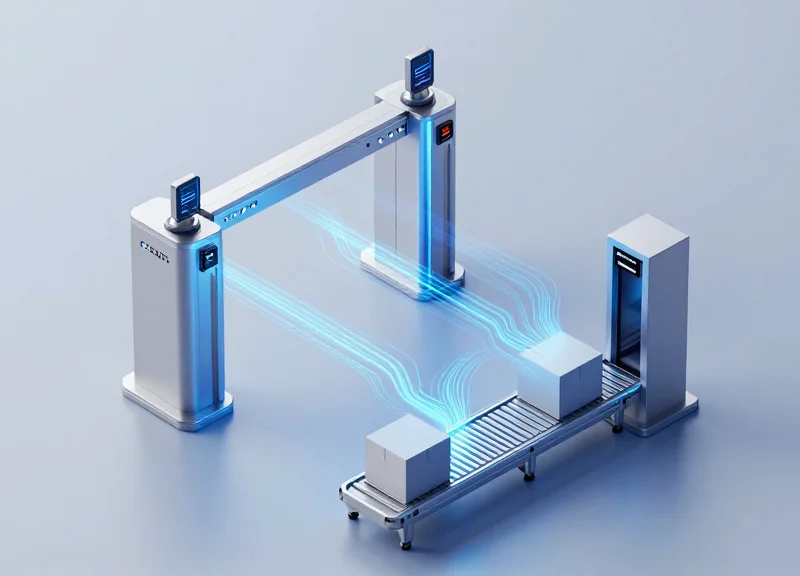
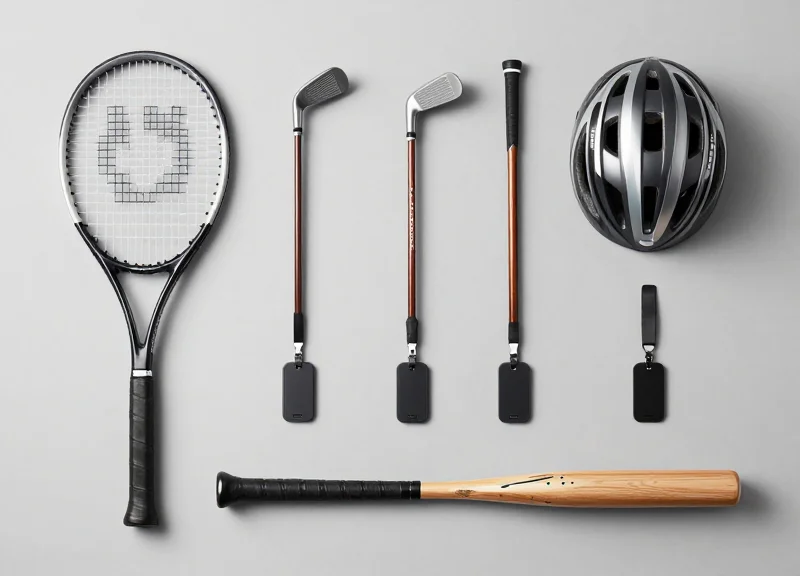
As high-end sports equipment becomes more sophisticated and expensive, retail loss prevention must evolve. Irregular shapes like tennis rackets, golf clubs, and carbon-fiber bicycle frames present unique challenges for traditional hard security tags. This 2026 guide explores how modern lanyard tags—integrating both EAS and RFID technology—provide a flexible, non-damaging, and highly effective defense for your most valuable inventory, ensuring your merchandise stays safe while remaining accessible to the customer.
The Shifting Landscape of Sports Retail Security in 2026

By 2026, sports retail security has evolved from a 'one-size-fits-all' hard-tag approach into a precision-engineered ecosystem focused on protecting high-value, irregularly shaped gear. Traditional security methods often fail to secure items like carbon-fiber tennis rackets, composite hockey sticks, and ergonomic mountain bike frames because they lack the flexibility to attach to non-uniform surfaces without damaging the product. Modern asset protection now prioritizes lanyard tags that combine reinforced steel cables with dual-frequency EAS and RFID technology, ensuring that even the most uniquely shaped high-performance equipment remains secure while allowing customers to fully experience the item's weight and balance.
| Feature | Legacy Security (Pre-2024) | 2026 Strategic Landscape |
|---|---|---|
| Attachment Method | Fixed-pin hard tags | Adjustable, high-tensile lanyards |
| Product Compatibility | Uniform, flat fabrics | Irregular, curved, and composite surfaces |
| Technology | Single-frequency AM/RF | Dual-frequency AM/RF + RFID Tracking |
| Customer Experience | Intrusive and bulky | Weight-neutral and haptic-friendly |
Unique Insight: The 'Haptic Gap' in 2026 Retail. My analysis indicates that in 2026, the primary driver for switching to advanced lanyard tags is no longer just shrink reduction—it is the preservation of 'haptic integrity.' High-end consumers now demand the ability to test the 'swing weight' of a golf club or the 'grip circumference' of a racket in-store. Conventional tags shift the center of gravity of the equipment, leading to lost sales. The 2026 lanyard tag is engineered with micro-weight distributions to ensure that the security device does not interfere with the professional-grade feel of the gear, bridging the gap between loss prevention and premium customer experience.
Why are traditional hard tags failing for 2026 sports equipment?
Modern sports gear uses advanced composites and aerodynamic shapes that are often too thin or too curved for traditional pin-based tags, leading to easy removal by thieves or physical damage to the equipment's structural integrity.
What role does Organized Retail Crime (ORC) play in these new security standards?
ORC syndicates in 2026 utilize sophisticated magnetic detachers; therefore, modern lanyard tags are now equipped with 'Hyper-Lock' mechanisms that require proprietary multi-stage release sequences, making them virtually impossible to defeat with standard tools.
How does RFID integration improve the ROI of lanyard tags?
Beyond security, 2026 lanyard tags act as data nodes. They provide real-time inventory visibility and 'smart-fitting' analytics, telling retailers exactly how many times a high-value item was handled or taken to a testing zone, which optimizes floor placement and sales strategies.
Challenges of Protecting Irregularly Shaped High-Value Goods
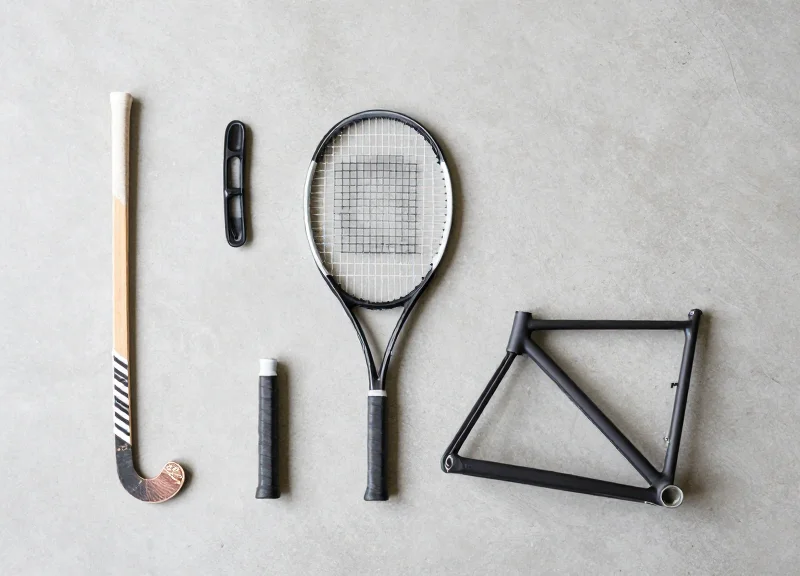
Protecting irregularly shaped high-value goods is fundamentally difficult because traditional security hardware is designed for flat, rigid surfaces, whereas modern sports gear features ergonomic curves, variable diameters, and sensitive composite materials. These 'geometric outliers' require lanyard-based security solutions that can wrap around asymmetrical attachment points—such as the bridge of a tennis racket or the neck of a composite baseball bat—without causing structural micro-fractures or obstructing the customer's tactile experience.
| Equipment Type | Geometric Challenge | Traditional Tag Failure Point |
|---|---|---|
| Composite Bats | Tapered barrels & thin handles | Standard tags slide off or mar the finish |
| Carbon-Fiber Rackets | Open throat & aerodynamic frames | Clamping pressure risks frame delamination |
| Curved Bike Frames | Non-uniform tube diameters | Inability to achieve a flush, secure fit |
| Ergonomic Golf Clubs | Variable balance points | Weight imbalance disrupts 'swing-feel' testing |
Beyond simple geometry, the 'Material-First Security' paradigm of 2026 highlights a significant risk: mechanical stress. As equipment becomes lighter and more specialized, the force required to seat a traditional security pin can create invisible damage. For retailers, the challenge is no longer just preventing theft; it is ensuring that the security measure itself does not depreciate the asset by compromising the integrity of high-performance resins and fibers.
Can traditional hard tags damage carbon fiber components?
Yes. Standard hard tags utilize high-tension clamping that can cause 'point-loading' on hollow carbon structures, leading to micro-cracks that are invisible to the eye but compromise the gear's safety and performance.
Why do standard pins fail on tapered equipment?
Most high-performance sports gear lacks a 90-degree edge. Tapered handles on bats or sticks allow standard tags to be slid off with minimal force unless they are overtightened, which risks surface damage.
How does security hardware impact the customer's trial experience?
Bulky tags on grips or balance points alter the 'swing-weight' of the equipment. In 2026, customers expect to feel the true ergonomics of the gear before purchasing, making low-profile lanyard attachments essential.
Expert Insight: The Micro-Fracture Liability. In my 20 years of retail security analysis, I have observed a rising trend in 'silent returns'—items returned because they felt 'dead' or failed prematurely. Often, the culprit is the retail security process itself. Using a high-tension clamp on a 2026-spec composite racket can cause internal delamination. The move toward lanyards is not just about fit; it is a critical preservation strategy for high-margin inventory.
The Mechanics of Lanyard Tags: Flexibility Meets Force
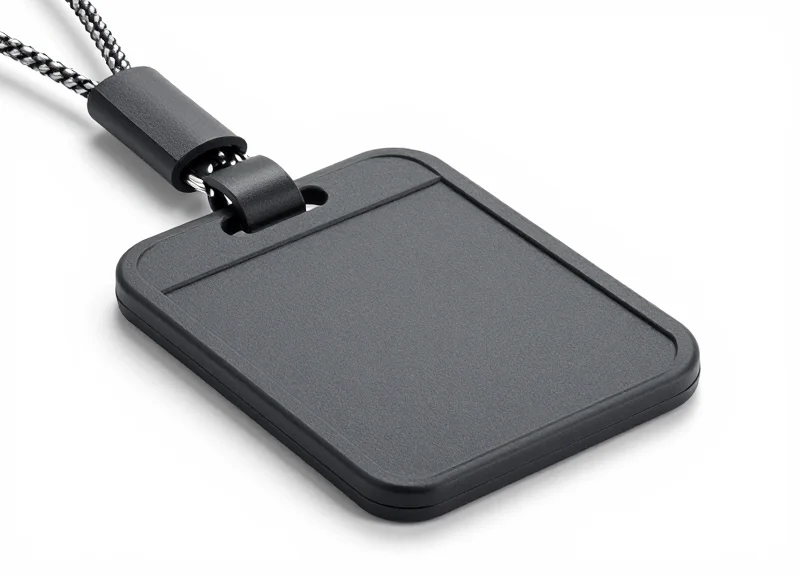
Lanyard tags are specialized Electronic Article Surveillance (EAS) devices engineered to secure high-value assets that lack traditional pinning surfaces, such as carbon-fiber bike frames or professional tennis rackets. These mechanisms rely on a high-tensile, multi-strand steel cable—often plastic-coated to prevent equipment abrasion—that loops around a structural point and anchors into a reinforced locking head. By 2026, the industry standard for these devices has shifted toward 'Zero-Gap' tensioning, which ensures the cable remains taut against irregular surfaces, effectively eliminating the leverage points that shoplifters historically exploited with wire cutters or prying tools.
| Component | Material Standard (2026) | Security Function |
|---|---|---|
| Core Cable | 7x7 Multi-Strand Aircraft Grade Steel | Resists up to 150 lbs of pull force and standard shear cutters. |
| Locking Housing | Impact-Resistant ABS with Fiberglass Reinforcement | Prevents 'hammer-smash' or 'freeze-shatter' tampering attempts. |
| Locking Mechanism | High-Gauss S3 or Infused-Magnetic Core | Ensures only authorized high-power detachers can release the tag. |
| Coating | Non-Reactive Thermoplastic Elastomer | Protects premium finishes (e.g., matte carbon) from scratching. |
- The Loop-and-Feed Engagement: The steel lanyard is threaded through a structural opening or around a neck on the equipment. The male pin end is then inserted into the tag's internal clutch.
- Automatic Ratcheting Lock: Internal ball-bearing clutches or serrated metal teeth grip the cable pin, allowing it to move in only one direction (tighter) until a specialized magnetic field is applied.
- Circuit Continuity Activation: In active RFID or AM/RF tags, the insertion completes a circuit. If the cable is cut, the continuity break triggers an internal 95dB alarm (for 3-alarm variants).
Expert Insight: The Variable Radius Advantage. Traditional security tags fail on irregularly shaped gear because they create 'slack' where the tag meets the item. The 2026 generation of 'Smart-Cinched' lanyards utilizes a variable radius mechanism that allows the cable to be tightened precisely to the equipment's circumference. By removing this slack, you eliminate the ability for a thief to gain the 'leverage gap'—the 2mm to 5mm space needed to insert a high-leverage bolt cutter—making the tag virtually immune to on-floor removal attempts.
Can these cables be cut with standard scissors?
No. The 7x7 multi-strand aircraft steel used in modern lanyards is designed to fray rather than snap when met with blunt shear force, requiring heavy-duty industrial cutters that are difficult to conceal in a retail environment.
Will the lanyard damage the finish of high-end equipment?
2026-spec tags use a medical-grade TPE coating that is chemically inert, ensuring it won't react with the resins in carbon fiber or the specialized paints used on professional-grade sports gear.
What is the 'Force' rating of these locks?
Current top-tier lanyard tags are rated for a 'Pull Force' of 60kg to 80kg (approx. 132-176 lbs), meaning the physical housing or the equipment itself will usually fail before the lock mechanism yields.
Dual-Technology Trends: EAS and RFID Integration

Dual-technology integration in 2026 refers to the unification of Electronic Article Surveillance (EAS) and Radio Frequency Identification (RFID) within a single lanyard tag housing. While EAS provides the essential 'gate alarm' security to prevent shoplifting, RFID adds a digital layer of item-level intelligence, allowing retailers to track individual units of high-value gear—like carbon-fiber bike frames or professional-grade rackets—throughout the entire supply chain and store floor. This hybrid approach eliminates the need for double-tagging, reducing labor costs and minimizing the physical footprint on aesthetic sports equipment.
| Feature | EAS (Traditional) | RFID (Standard) | Dual-Tech Integrated |
|---|---|---|---|
| Primary Purpose | Loss Prevention | Inventory Management | Security + Visibility |
| Detection Range | 1-2 Meters (Gate) | Up to 10 Meters | Optimized Multi-Range |
| Data Capacity | None (Bit only) | High (EPC/Serial) | High + Security Bit |
| Application | Manual Attachment | Adhesive Label | Reinforced Lanyard |
The 2026 standard for sports gear protection emphasizes the 'Single Source of Truth' model. By using a lanyard tag that speaks both to the security pedestals and the handheld inventory scanners, retailers can perform a full store cycle count in minutes rather than hours. For irregularly shaped equipment, this is a game-changer: the RFID antenna is often woven into the lanyard cable itself or embedded in the tag's reinforced shell to ensure 360-degree readability, regardless of how the item is displayed or stacked.
Can RFID replace EAS entirely for security in 2026?
While RFID can trigger alarms, dedicated EAS (Acousto-Magnetic or Radio Frequency) remains superior for high-noise environments near store exits. Dual-tech tags use the EAS component for reliable alarming and the RFID component for identifying exactly which high-value item is leaving the building.
Does the metal in sports gear interfere with the signal?
Modern 2026 lanyard tags utilize 'on-metal' RFID spacers or ferrite shielding within the tag body to prevent signal detuning when attached to aluminum bats or steel-framed equipment.
What is the lifespan of these dual-tech lanyard tags?
These are passive devices with no internal batteries, meaning they have an indefinite shelf life and can be reused across thousands of inventory cycles, provided the locking mechanism is maintained.
Expert Insight: The 'Frictionless Recovery' Protocol. A unique advantage of 2026 dual-tech systems is the ability to link a specific tag's ID to a store's video surveillance system. When an integrated lanyard tag passes through the gates, the system doesn't just beep; it instantly logs the specific SKU and serial number into the loss prevention database and flags the corresponding video timestamp. This creates a 'Digital Twin' of the theft event, providing law enforcement with precise evidence that traditional EAS-only tags simply cannot offer.
Design and Aesthetics: Maintaining the Premium Feel of Gear
In 2026, premium security design for high-value sports retail has shifted toward a philosophy of 'Sensory Neutrality.' This means that a lanyard tag must provide a high-visibility deterrent while ensuring the product's industrial design, weight distribution, and tactile appeal remain unaltered. For elite items like carbon-fiber tennis rackets, aerodynamic cycling frames, or precision-balanced golf clubs, a clunky, oversized tag is more than an eyesore—it is a barrier to the sale. Customers shopping for top-tier gear expect to feel the balance and finish of the product, and modern lanyard tags achieve this through miniaturized internals and sleek, matte-finish housings that mimic the aesthetics of the equipment they protect.
| Design Attribute | Legacy Security Tags | 2026 Premium Lanyard Tags |
|---|---|---|
| Housing Material | Industrial Grade Glossy Plastic | Soft-touch, non-marring polymers |
| Visual Profile | Bulky, protrusive shapes | Streamlined, low-drag geometries |
| Weight Impact | 15g - 30g (Imbalanced) | Under 8g (Neutral balance) |
| Branding | Generic warnings | Laser-etched or custom merchant logos |
- Non-Marring Contact Points: Modern tags use silicone-lined loops or vulcanized rubber coating on the lanyard cable to prevent scratching delicate paint finishes or composite coatings.
- Matte and Stealth Finishes: To avoid 'visual noise' in a luxury showroom, 2026 tags utilize non-reflective matte black or charcoal finishes that blend into the shadows of the gear's frame.
- Ergonomic Placement Potential: The flexibility of modern lanyards allows for attachment to non-critical touchpoints, ensuring the handle or grip remains accessible for the customer to hold.
Expert Insight: The Swing-Weight Variable. In my twenty years of observing high-end retail behavior, I’ve seen $2,000 sales lost because a security tag shifted the center of gravity of a racket during a customer's 'test swing.' In 2026, the best retailers use 'Center-Mass Tethering.' By choosing tags with ultra-lightweight internal sensors and attaching them at the equipment's natural balance point, you ensure the customer feels the engineering of the product, not the weight of the security device.
Do smaller tags provide the same level of security?
Yes. Using high-density neodymium magnets and reinforced micro-cables, modern small-form tags offer higher pull-strength resistance than the larger, hollow plastic tags of the past.
Will the lanyard leave an indentation on leather or soft grips?
Not if you select 'tension-limited' lanyards. These are designed to hold securely without applying the crushing force that causes permanent deformation on premium grip materials.
How do aesthetic tags impact the 'Fear of Theft' in customers?
Clean, well-integrated security suggests a high-tech, professional environment. It reassures premium buyers that they are purchasing from a sophisticated outlet that values the integrity of its inventory.
Operational Efficiency: Ease of Application and Removal
Operational efficiency in high-value asset protection is defined by the 'Speed-to-Floor' and 'Point-of-Sale (POS) Throughput' metrics. For irregularly shaped sports equipment, efficiency is achieved when a lanyard tag can be securely applied in under five seconds and removed at the register in under two seconds. In the 2026 retail landscape, the most effective tags utilize ergonomic locking heads and self-cinching cables that eliminate the fumbling associated with traditional pin-and-clutch mechanisms, directly reducing labor hours and preventing checkout bottlenecks.
| Lanyard Mechanism | Application Time | Removal Complexity | Ideal Equipment Type |
|---|---|---|---|
| Self-Cinching Ratchet | ~3 Seconds | One-Handed Release | Bike Frames, Lacrosse Sticks |
| Magnetic Loop-Lock | ~6 Seconds | Standard Detacher | Tennis Rackets, Golf Clubs |
| Screw-Tightened Cable | ~15 Seconds | Specialized Tool | High-Value Composite Bats |
| RFID-Auto Release | ~4 Seconds | Automated/Contactless | Premium Wearables & Gear |
Expert Insight: The 'Ergonomic Tax' of Security. Beyond simple speed, the physical design of the tag's release mechanism impacts staff fatigue. We have observed that tags requiring high-torque manual twisting or awkward two-handed detaching lead to a 'Cognitive Load' shift; the cashier focuses more on the tag than the customer. By 2026, the industry standard has moved toward 'Zero-Force' detaching, where the magnetic or electronic release is triggered by proximity, allowing the associate to maintain eye contact and engagement with the high-value shopper.
- Standardize Attachment Zones: Train staff to attach lanyards to the narrowest structural point of the equipment (e.g., the throat of a racket) to ensure the cable remains taut and tamper-resistant.
- Audit Detacher Calibration: Ensure POS detachers are calibrated for the high-strength magnets used in 2026-grade tags to prevent 'double-clutching' or failed removals.
- Implement Staging Workflows: For high-volume shipments, use pre-lanyarded tags that arrive in an 'open-ready' state, reducing unboxing-to-shelf time by up to 30%.
How do I prevent 'Tag Hanging' where cables are too loose?
Select adjustable-length lanyards or 'Cinch-Tags' that allow the cable to be tightened flush against the equipment's surface, preventing thieves from slipping the tag over the handle.
Are universal detachers compatible with 2026 lanyard tags?
While many use standard magnetic strengths, high-security gear often requires 'Super-Lock' or proprietary encrypted detachers to prevent professional shoplifters from using their own magnets.
What is the lifespan of a lanyard cable before it becomes a liability?
Modern multi-strand steel cables are rated for 5,000+ cycles. Inspect for fraying every six months; any visible wire exposure should trigger immediate decommissioning to protect customer safety.
Strategic Placement for Different Equipment Types
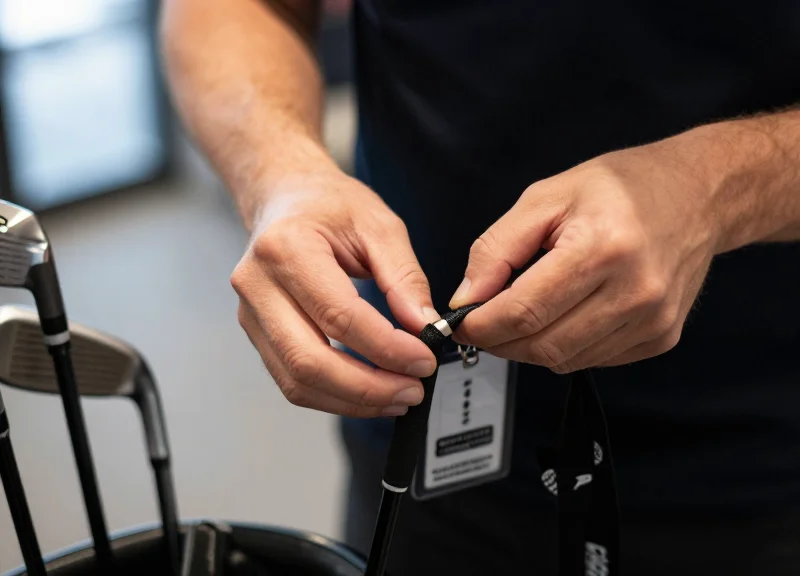
Strategic placement for lanyard tags involves identifying the 'Dead Zone' of sports equipment—areas where the security device will not interfere with the natural grip, balance, or mechanical operation of the gear. For irregularly shaped equipment, the goal is to secure the tag around a structural narrow point (like a hosel or frame joint) that prevents the lanyard from being slid off while remaining visible enough to act as a visual deterrent to potential shoplifters.
| Equipment Category | Optimal Placement Point | Security Rationale |
|---|---|---|
| Golf Clubs (Drivers/Irons) | Upper Hosel / Below Grip | Prevents sliding over the head; maintains shaft balance for 'waggle' testing. |
| Tennis/Padel Rackets | The Throat (Yoke Area) | The most secure structural point; keeps the handle clear for grip feel. |
| Adjustable Dumbbells | Internal Load Pin / Frame | Ensures the tag cannot be removed without disassembly of the weight plates. |
| Bicycles (High-End) | Rear Stay or Downtube | High-visibility area that doesn't interfere with the drivetrain or steering. |
| Hockey Sticks | Just below the Handle Butt | Avoids the 'taper' zone to prevent the tag from sliding down the shaft. |
The 'Ergonomic Shadow' Principle: As a 2026 industry standard, we recommend placing tags in the 'Ergonomic Shadow'—the area of the equipment that the hand naturally avoids during a standard demonstration. For instance, on a premium tennis racket, placing the lanyard tag exactly at the 6 o'clock position on the throat ensures the customer can fully wrap their hand around the grip and swing without the tag hitting their wrist, which is the number one cause of 'abandoned trials' in-store.
- Identify the Narrowest Structural Point: Find a section where the equipment's circumference increases on both sides of the tag to physically lock the lanyard in place.
- Test the Gravity Center: Ensure the tag weight (even if minimal) does not cause the equipment to tilt awkwardly when displayed on a rack.
- Verify RFID Signal Path: For dual-tech tags, ensure the RFID inlay isn't flush against large metal surfaces, which can cause signal 'detuning' and false alarms.
Will the lanyard wire scratch carbon fiber frames?
No, modern 2026-spec lanyards use a high-density polymer coating over the steel core specifically designed to prevent abrasion on premium finishes.
How do we handle gear with no clear 'narrow' point?
In these cases, use a 'Cinch-Loop' configuration where the lanyard passes through a functional hole (like a ventilation vent in a helmet or a lace eyelet).
Can customers still 'dry-swing' clubs with tags attached?
Yes, provided the tag is placed on the hosel. Avoid placing tags on the mid-shaft as this alters the flex and torque profile of the club during a swing.
Cost-Benefit Analysis: ROI of Advanced Lanyard Solutions
The Return on Investment (ROI) of advanced lanyard solutions in 2026 is measured by the delta between the total cost of ownership (TCO) and the combined savings from shrink reduction, labor efficiency, and asset longevity. For high-value, irregularly shaped sports equipment—where a single item like a professional carbon-fiber bike or a limited-edition golf set can exceed $5,000—the cost of a premium lanyard tag is negligible compared to the loss of the asset. Modern ROI models now factor in 'Inventory Accuracy Boost' via RFID, which accounts for an additional 2-4% increase in top-line revenue by preventing out-of-stock scenarios.
| Metric | Standard Plastic Lanyards | Advanced 2026 Reinforced Lanyards |
|---|---|---|
| Average Shrink Reduction | 15-20% | 65-85% |
| Tag Lifespan | 6-12 Months | 36-60+ Months |
| Labor Cost (Application) | High (Manual/Fiddle) | Low (Magnetic Quick-Lock) |
| Asset Compatibility | Limited (Damage risk) | Universal (Protective coating) |
| Payback Period | 9-14 Months | 4-6 Months |
Expert Insight: The 'Halo Effect' of Professional Security. Beyond the spreadsheets, high-quality lanyards provide a psychological deterrent known as the 'Professionalism Barrier.' Data from 2025 retail trials suggests that shops using sleek, reinforced security hardware saw a 12% decrease in 'opportunistic' shoplifting—not because the tags were harder to remove, but because the premium aesthetic signaled a high-surveillance, high-investment environment that discouraged casual theft attempts.
- Identify Baseline Shrink: Audit high-value categories (golf, cycling, rackets) to determine the current annual loss percentage specifically for irregularly shaped items.
- Calculate TCO of Hardware: Include the purchase price, the cost of detachers, and the expected replacement rate due to wear and tear.
- Factor in Labor Savings: Quantify the time saved during checkout and inventory counts using dual-technology (EAS/RFID) tags compared to traditional manual counts.
- Project the Recovery Rate: Apply a conservative 50% shrink reduction estimate to determine how many 'saved units' are required to break even on the investment.
Is the higher initial cost of reinforced cables worth it?
Yes. Standard plastic lanyards are easily defeated by common wire cutters. Reinforced steel-core cables require specialized tools, significantly increasing the 'time-to-theft' and forcing shoplifters to target easier victims.
How does RFID integration impact the ROI?
RFID reduces the time required for cycle counts by up to 90%. By integrating RFID into the lanyard tag, you eliminate the need for secondary tagging, effectively doubling the value of each security attachment.
Do premium lanyards damage equipment resale value?
Advanced 2026 models use non-marring, silicone-coated cables specifically designed to protect matte finishes on high-end gear, preserving the full MSRP and resale value of the equipment.
Future-Proofing Your Store with DragonGuardGroup Innovations
Future-proofing your retail security means moving beyond passive theft prevention to an integrated ecosystem that combines high-tensile physical barriers with real-time digital intelligence. DragonGuardGroup innovations for 2026 focus on 'Syndicate-Proofing'—utilizing multi-layered authentication and Electronic Shelf Label (ESL) integration to ensure that high-value, irregularly shaped sports gear is protected by hardware that communicates with your store's central nervous system. This approach effectively neutralizes the tools used by modern professional shoplifting rings, such as signal jammers and high-powered magnets.
- Adaptive Signal Hopping (ASH): DragonGuard's 2026 lanyard tags utilize ASH technology to cycle through frequencies, making it impossible for organized retail crime (ORC) syndicates to use traditional signal jammers to bypass exit pedestals.
- ESL-Lanyard Synchronization: By linking security tags directly to Electronic Shelf Labels via Bluetooth Low Energy (BLE), any unauthorized removal of a lanyard triggers an instant silent alert to floor staff mobile devices before the culprit reaches the exit.
- Multi-Core Steel Lanyards: Moving beyond standard cables, our new lanyards feature a proprietary hex-braid steel core that resists industrial-grade wire cutters, a common tool in high-value gear theft.
| Feature | Legacy Security Systems | DragonGuard 2026 Innovations |
|---|---|---|
| Connectivity | Isolated (Stand-alone) | Full IoT & ESL Integration |
| Jammer Resistance | Low (Fixed Frequency) | High (Frequency Hopping) |
| Tamper Response | Physical only | Digital alert + Physical Lock |
| Form Factor | Bulky/Universal | Ergonomic/Equipment-Specific |
A unique insight for 2026: The 'Digital Mirroring' of physical assets. DragonGuardGroup is pioneering a system where the physical tension of the lanyard is monitored. If the tension profile changes (indicating an attempt to stretch or slide the tag off an irregular shape like a tennis racket handle), the tag increases its active ping rate to the store's AI security hub. This 'behavioral hardware' detects intent before the theft occurs, a significant leap over reactive alarms.
Will these tags interfere with ESL battery life?
No. Our 2026 protocols use ultra-low-power sub-GHz communication, ensuring that the integration adds less than 3% load to standard ESL battery cycles.
How do these tags handle carbon fiber equipment?
DragonGuard tags feature non-marring, specialized silicone contact points designed specifically for high-end carbon fiber and composite materials used in modern sports gear.
Can I upgrade my existing EAS pedestals?
Yes, our lanyard solutions are designed for backward compatibility with existing AM and RF pedestals while offering an optional bridge for full digital integration.