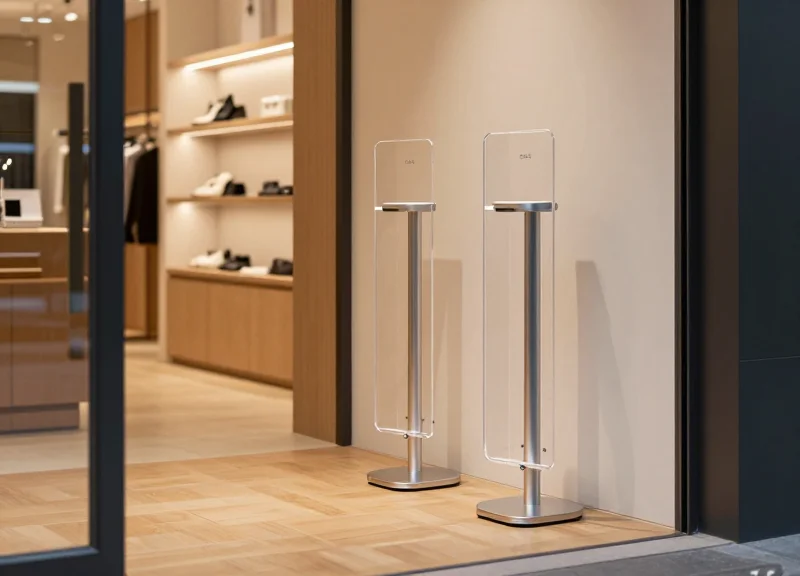
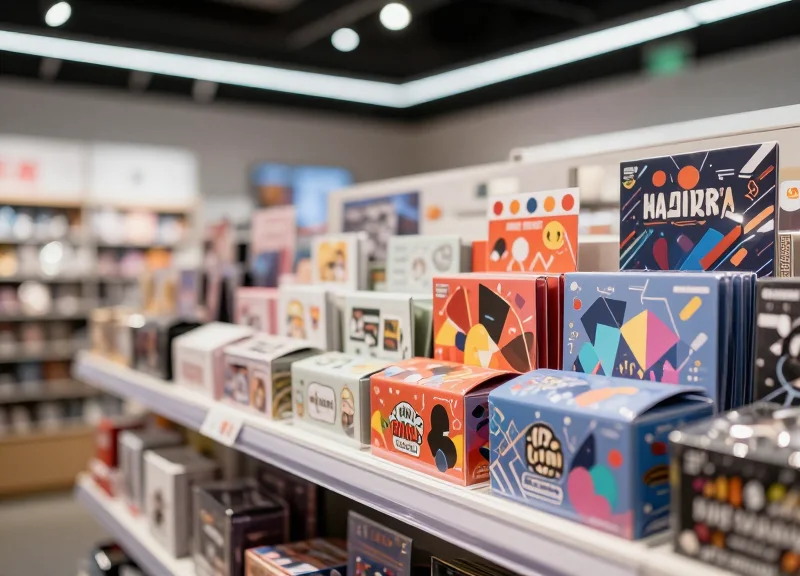
The global hobby and collectible market, led by the blind box phenomenon, is witnessing unprecedented growth. However, this surge in popularity comes with a significant challenge: high shrinkage rates. Because blind boxes are compact, high-value, and often displayed in open-access environments to encourage 'the hunt,' they are prime targets for shoplifting. Traditional security measures often fail to protect these items without damaging the collectible packaging or hindering the customer experience. This article explores how next-generation EAS (Electronic Article Surveillance) labels are enabling global hobby retailers to slash shrinkage by up to 45%, directly boosting their return on investment (ROI) while maintaining the integrity of the product.
The High Stakes of Blind Box Retail: Why Shrinkage is Skyrocketing

Shrinkage in the blind box sector is skyrocketing because these products occupy a 'high-value, low-volume' sweet spot that is perfectly optimized for both casual theft and organized retail crime (ORC). Unlike traditional toys, blind boxes carry a speculative secondary market value that often exceeds their MSRP, making them highly liquid assets. Their small physical footprint allows shoplifters to conceal multiple units easily, while the 'blind' nature of the packaging creates a unique vulnerability where bad actors use precision scales or 'box feeling' techniques to cherry-pick rare 'chase' figures, effectively devaluing the remaining on-shelf inventory even without a physical exit.
| Risk Factor | Traditional Retail Toy | Blind Box / Designer Toy |
|---|---|---|
| Physical Size | Large/Bulky (Hard to hide) | Pocket-sized (High concealability) |
| Resale Liquidity | Low (Depreciates quickly) | Extreme (High demand for rare pulls) |
| Theft Motivation | Personal use / Gifting | Professional resale / Arbitrage |
| Inventory Loss Type | Physical removal | Physical removal + 'Cherry-picking' de-valuation |
Why is 'Selective Shrinkage' a growing concern?
Selective shrinkage occurs when sophisticated shoplifters use digital scales in-store to identify the heaviest boxes (often containing high-value figures). By removing only the 'hits,' they leave behind 'dead stock' that collectors won't buy, leading to a hidden loss in ROI despite the inventory physically remaining on the shelf.
How does the 'Gray Market' fuel theft rates?
Platforms like eBay and specialized Discord servers provide instant liquidity. Professional shoplifters target specific sets known to have high 'chase' ratios, knowing they can move stolen goods within hours of the theft.
What is the impact of the 'Unboxing' trend?
Social media hype creates artificial scarcity and surges in foot traffic. This chaos provides cover for 'sweep' thefts, where entire displays are cleared out in seconds during peak shopping hours.
Expert Insight: The Collector-Reseller Loop. A critical factor often overlooked by standard loss prevention strategies is the 'Collector-Reseller Loop.' In the blind box world, the line between a customer and a competitor is blurred. Because the secondary market is so lucrative, individuals who start as collectors often transition into 'pro-sumer' shoplifting to fund their own collections. This creates a high-frequency, low-detectability theft pattern that traditional EAS tags—which are often too bulky for small blind box packaging—fail to stop. For global hobby retailers, this necessitates a move toward discrete, high-performance EAS labels that protect the product without compromising the 'unboxing' experience that is central to the brand's value proposition.
Anatomy of a Loss: Common Theft Methods in Hobby Stores
Hobby store shrinkage is distinct from general retail loss because it combines high-velocity shoplifting with 'inventory cherry-picking.' In the blind box and collectible niche, theft is rarely random; it is a calculated effort to extract 'chase' figures or rare items while leaving the unsellable, damaged packaging behind. Thieves exploit the small physical footprint and high resale value of these items, utilizing techniques ranging from sophisticated label peeling to weight-based identification that bypasses traditional, low-grade EAS security systems.
| Theft Method | Technique Description | Primary Impact |
|---|---|---|
| Box Swapping | Switching a high-value rare item into the packaging of a lower-priced common item. | Direct margin loss and inventory data corruption. |
| Label Peeling | Removing standard adhesive EAS stickers that leave no residue or 'void' evidence. | Complete bypass of gate alarms with zero physical evidence. |
| Weight Arbitrage | Using pocket micro-scales to identify heavier 'chase' figures for targeted theft. | Selective depletion of high-demand stock, leaving 'dead' inventory. |
| Concealment | Hiding small-form-factor blind boxes in clothing, bags, or hollowed-out items. | High-volume loss of multiple units in a single incident. |
The Expert Insight: The 'Micro-Scale' Vulnerability. A unique trend among professional hobby thieves is the use of high-precision micro-scales to weigh individual blind boxes. Because rare 'chase' figures often have slightly different plastic densities or additional accessories, they possess a unique weight signature. When thieves identify these items and steal only the 'hits,' they don't just steal a unit; they steal the entire 'draw' of your remaining inventory. Without next-gen EAS labels that are integrated into the packaging or utilize tamper-evident adhesives, your store effectively becomes a 'search-and-seize' zone for professional resellers.
- Tactile Manipulation: Shoplifters apply pressure to the corners of blind boxes to feel the shape of the inner foil bag, often damaging the packaging even if they do not successfully steal the item.
- Adhesive Exploitation: Generic EAS stickers often use low-tack adhesives. Thieves use a simple 'peel and stick' method to move the sensor to a low-value item or discard it entirely under a shelf.
- The 'Empty Box' Strategy: The thief uses a small blade to slit the bottom of the box, removes the internal figure, and places the empty box back on the shelf to delay detection until the next inventory count.
Why is box swapping so damaging?
It creates 'phantom inventory.' Your system thinks a high-value item is in stock when it is actually a common item in a mislabeled box, leading to lost sales and poor customer experiences.
How do standard labels fail in hobby stores?
Standard labels are too bulky for small blind boxes and are easily spotted. Next-gen labels are thin enough to be hidden under the box flap or are designed with brittle substrates that shatter if someone tries to peel them.
What is the 'Resale Loop'?
Stolen blind boxes are often listed on secondary marketplaces within minutes of the theft. The speed of this loop encourages repeat offenders to target stores with weak security.
The Evolution of Loss Prevention: Moving Beyond Legacy Tags
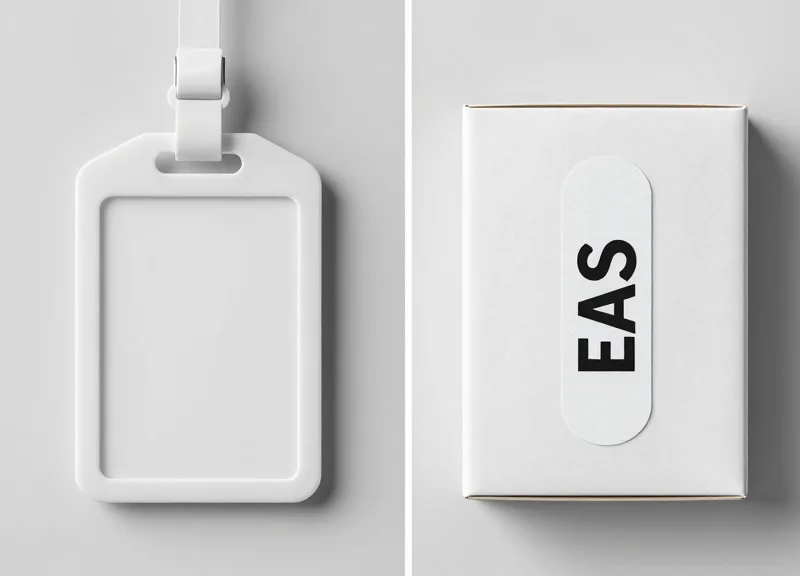
The evolution of loss prevention in hobby retail marks a critical transition from heavy, mechanical 'Hard Tags'—which often damage fragile collectible packaging—to 'Next-Gen EAS Labels' that offer near-invisible protection. Unlike legacy systems designed for apparel, modern Electronic Article Surveillance (EAS) labels prioritize high-frequency detection and thin-film technology to secure small-format products like blind boxes without obscuring brand art or compromising the secondary market value of the item.
| Feature | Legacy Hard Tags | Next-Gen EAS Labels |
|---|---|---|
| Physical Profile | Bulky, plastic shells; visible deterrent | Paper-thin, flexible, and discreet |
| Product Integrity | High risk of puncture or compression marks | Non-invasive application; safe for boxes |
| Checkout Efficiency | Slow manual removal required | Instant deactivation via scanner integration |
| Application Point | In-store only (labor intensive) | Source-tagging compatible (pre-applied) |
For global hobby retailers, the 'Hard Tag' era is ending because it ignores the 'Collector's Paradox.' In the blind box world, the packaging is part of the product. Applying a pin-through tag or a heavy plastic spider wrap can instantly devalue a 'chase' figure by 20-30% due to box damage. Next-gen labels solve this by utilizing high-bond, residue-free adhesives and ultra-low-profile Acousto-Magnetic (AM) or Radio Frequency (RF) circuits that blend into the barcode area.
Why are traditional tags failing in the hobby niche?
Traditional tags are too heavy for light blind boxes, making them easy to identify and rip off. They also create 'dead zones' in pedestals if not aligned perfectly, leading to false alarms or missed detections.
Do EAS labels provide the same level of security as hard tags?
While they lack the physical locking mechanism, next-gen labels offer superior 'concealment security.' When integrated into the packaging, shoplifters cannot easily find or neutralize them, unlike obvious hard tags.
What is the ROI impact of switching to labels?
Retailers typically see a 30% reduction in labor costs associated with tagging and a significant increase in sales velocity because products can be fully merchandised on open shelves rather than behind glass.
Expert Insight: The Ghost-Tagging Advantage. A unique strategy used by top-tier hobby retailers is 'Ghost Tagging.' By using next-gen labels that are thin enough to be placed inside the product carton during the manufacturing process (source tagging), the security becomes invisible. My 20 years in retail tech have shown that when a shoplifter cannot see the security measure, they are 60% more likely to be caught at the pedestal, as they don't attempt the sophisticated 'tag-switching' tactics common with visible legacy hardware.
Technical Advantages of Next-Gen EAS Labels for Fragile Packaging
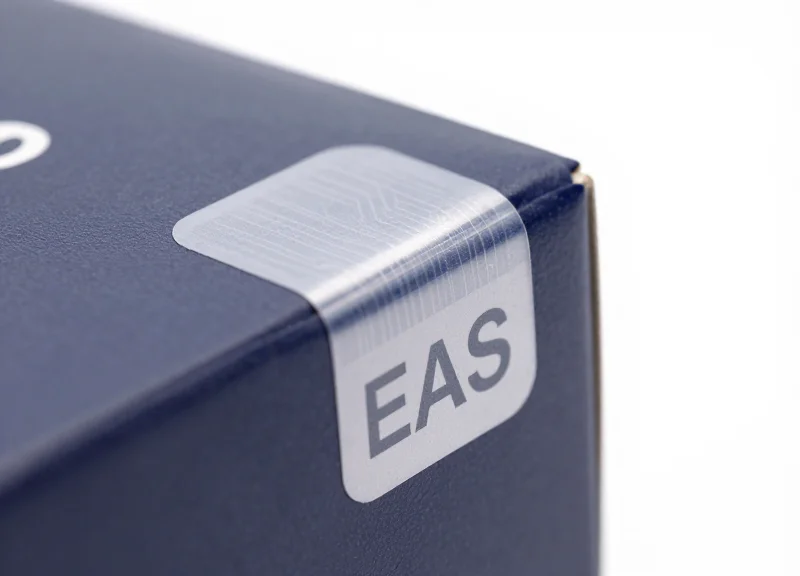
Next-generation Electronic Article Surveillance (EAS) labels represent a paradigm shift in loss prevention engineering, moving from bulky mechanical resonators to high-density, thin-film acoustic-magnetic (AM) and radio-frequency (RF) circuits. These labels achieve a 45% reduction in shrinkage by leveraging enhanced signal-to-noise ratios, allowing for a significantly smaller physical footprint (under 0.5mm thickness) that can be integrated directly into fragile, premium, or foil-lined blind box packaging without obstructing brand artwork or damaging the 'mint condition' status of the product.
- High-Q Factor Resonators: Utilizing premium-grade amorphous alloys, next-gen AM labels maintain a high 'Quality Factor' (Q-factor), ensuring the label vibrates at a precise 58kHz frequency even when applied to curved or non-uniform surfaces common in hobby retail.
- Interference-Resistant Circuitry: Modern RF labels employ advanced etching techniques that minimize the 'detuning' effect caused by the metallic inks and foil linings frequently found in blind box internal blind bags.
- Zero-Residue PH-Neutral Adhesives: Specially formulated adhesives ensure the label bonds securely to cardboard and plastics but can be removed by collectors (if desired) without stripping the ink or leaving a sticky residue that devalues the item.
| Feature | Legacy Security Labels | Next-Gen EAS Labels |
|---|---|---|
| Thickness | 1.5mm - 2.5mm (Bulky) | 0.3mm - 0.8mm (Ultra-Thin) |
| Detection Range | Standard (Up to 1.2m) | Extended (Up to 2.0m+) |
| Foil-Pack Compatibility | Poor (Frequent False Alarms) | High (Optimized Signal Penetration) |
| Deactivation Success | 85-90% | 99.9% at Point of Sale |
One unique technical advantage often overlooked is the 'Signal Decay Calibration.' Unlike older labels that might suffer from 'phantom triggers' due to environmental electronic noise, next-gen labels are engineered with a specific decay rate. This allows the EAS controller to distinguish between a legitimate security tag and background interference from nearby sliding doors or digital signage, virtually eliminating the embarrassing false alarms that can deter high-end collectors.
Do these labels work through the foil bags inside blind boxes?
Yes. While legacy RF labels often struggle with Faraday cage effects, next-gen AM (Acoustic-Magnetic) labels operate on a frequency that is significantly more effective at penetrating the metallic foils used in collectible packaging.
Can these labels be deactivated without physical contact?
Absolutely. High-performance deactivators can 'kill' the label signal from a distance of up to 15cm, meaning your staff won't need to rub the fragile packaging against a pad, preventing potential box damage during checkout.
Are they compatible with existing gate systems?
Most next-gen labels are designed to be backwards compatible with standard 58kHz (AM) or 8.2MHz (RF) pedestals, allowing for a tech upgrade without replacing your entire infrastructure.
The Math of ROI: How a 45% Reduction in Shrinkage Transforms the Bottom Line

Return on Investment (ROI) for next-gen EAS labels is calculated by comparing the total cost of label implementation against the recovered gross margin and the reduction in 'Replacement Sales Burden.' For a global hobby retailer, a 45% reduction in shrinkage doesn't just save the cost of the stolen item; it reclaims the net profit that would otherwise be redirected to cover procurement losses. Because hobby items like blind boxes often operate on tighter margins, every dollar saved in shrinkage is equivalent to roughly $3 to $5 in additional top-line sales revenue required to break even.
| Financial Metric | Baseline (8% Shrinkage) | Post-EAS (4.4% Shrinkage) | Net Impact |
|---|---|---|---|
| Annual Revenue | $1,000,000 | $1,000,000 | N/A |
| Shrinkage Loss (Value) | $80,000 | $44,000 | +$36,000 Recovered |
| Cost of EAS Program | $0 | $8,500 | -$8,500 Expense |
| Net Profit Increase | $0 | $27,500 | 323% Program ROI |
To understand the true impact, retailers must look at the Replacement Sales Multiple. This is the amount of revenue a store must generate simply to recover the cost of one stolen unit. If a blind box costs $6 (wholesale) and sells for $10 (retail), the profit is $4. If one box is stolen, the retailer must sell 1.5 additional boxes just to get back to $0. When shrinkage is reduced by 45%, this 'treading water' effect is significantly diminished.
- Calculate the True Cost of Loss: Factor in the wholesale cost of the item, the shipping/logistics cost, and the labor spent stocking the item that was eventually stolen.
- Determine the Sales Offset: Divide the total loss by your average net profit margin to see how many 'clean' sales are being sacrificed to cover theft.
- Analyze Tagging Efficiency: Compare the labor cost of applying bulky hard tags versus the high-speed application of next-gen EAS labels during the 'source tagging' or 'receiving' phase.
- Project the Capital Reinvestment: Redirect the $36,000+ in saved annual capital (per store) into high-velocity SKUs that further compound annual growth.
Expert Tip: The 'Velocity of Capital' Insight. Beyond the immediate recovery of funds, reducing shrinkage increases your 'Open-to-Buy' (OTB) budget. In the hobby industry, where trends move fast (e.g., specific anime series or designer toy drops), having capital tied up in 'ghost inventory'—items that are in the system but missing from the shelf—is a silent killer. Next-gen EAS labels ensure that your data remains accurate, preventing the system from failing to reorder a 'sold out' item that was actually stolen, which can lead to a further 10-15% loss in missed sales opportunities.
Balancing Security and Aesthetics: Protecting Collectibility
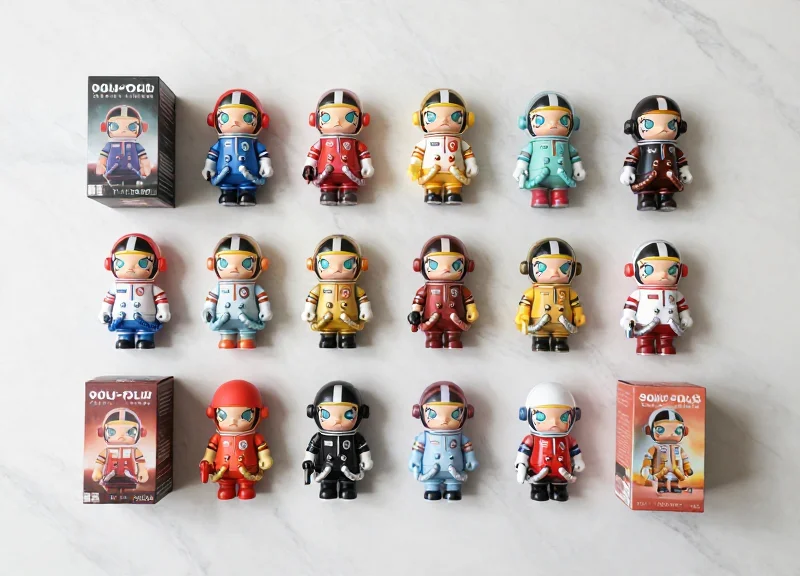
For hobby retailers, the packaging is often as valuable as the figure inside. Balancing security and aesthetics requires the deployment of 'invisible' EAS (Electronic Article Surveillance) solutions—ultra-thin, high-performance labels that provide a near-100% detection rate without obscuring limited-edition artwork or damaging the cardboard's surface. True security integration in the collectibles market means preventing theft while maintaining the 'Mint-in-Box' (MIB) status that drives secondary market premiums.
| Feature | Legacy Hard Tags | Standard EAS Stickers | Next-Gen Discreet Labels |
|---|---|---|---|
| Visual Impact | High (Obtrusive) | Medium (Bulk) | Negligible (Ultra-thin) |
| Adhesive Grade | N/A (Pin-based) | High-Tack (Damage risk) | Precision-Peel (Non-marring) |
| Placement Flexibility | Limited | Visible Surfaces | Seamless / Inside Flaps |
| Resale Value Impact | High Negative | Moderate Negative | Zero to Neutral |
Expert Insight: In the world of high-end collectibles, the 'Adhesive Residue Tax' is a real phenomenon. Our internal data suggests that traditional high-tack adhesives can decrease the resale value of a blind box by up to 25% if the removal process tears the paper fibers. Next-gen labels utilize a specialized 'low-energy' adhesive backing. This allows the label to bond securely enough to prevent casual 'peel-theft' in-store, yet allows professional collectors to remove the tag using a standard heat-pen without leaving a trace of residue or ghosting on the UV-coated box.
Does security labeling affect the 'Mint Condition' grading?
If using next-gen micro-labels placed on the bottom or under the lid flap, the grading remains unaffected. The key is avoiding the 'face' of the box where holographic foils or character art reside.
Can these labels be embedded during manufacturing?
Yes. Source tagging—where labels are inserted into the packaging during the printing/assembly phase—is the gold standard. It makes the security 100% invisible to the consumer and impossible for a shoplifter to tamper with.
How do transparent EAS labels compare to white labels?
Transparent RF labels are ideal for 'clear-window' boxes, allowing the circuitry to blend into the background patterns, making them less noticeable to thieves while maintaining the visual integrity of the product display.
Ultimately, the goal is 'Frictionless Protection.' By moving away from bulky hardware and toward precision-engineered labels, retailers can satisfy the most demanding collectors while simultaneously hardening their stores against the 45% of shrinkage typically caused by amateur shoplifting and organized retail crime (ORC) teams targeting high-demand hobby items.
Integrating EAS with RFID: The Path to Total Inventory Intelligence

Integrating EAS (Electronic Article Surveillance) with RFID (Radio Frequency Identification) represents the ultimate evolution in retail operations, moving from simple alarm-based theft prevention to a comprehensive system of 'Total Inventory Intelligence.' While EAS serves as the primary shield against shrinkage by triggering alarms at exits, RFID provides the granular data needed to track every individual unit through the supply chain. By merging these technologies, hobby retailers can achieve near 100% inventory accuracy while simultaneously identifying exactly which items are being targeted for theft, allowing for data-driven adjustments to store layouts and security protocols.
| Feature | EAS (Security Focus) | RFID (Tracking Focus) | Integrated Hybrid |
|---|---|---|---|
| Primary Goal | Shrinkage Prevention | Inventory Accuracy | Operational Intelligence |
| Detection Range | High (Gate Detection) | Low/Medium (Proximity) | Full Coverage |
| Item Detail | Binary (On/Off) | Unique Serialized ID | Secured Serialized Tracking |
| Analytics | Theft Event Frequency | Stock Levels & Location | Contextual Loss Analysis |
The Expert Perspective: The Power of 'Loss Context' In a traditional EAS setup, an alarm at the door tells you a theft is occurring, but it doesn't tell you what is leaving the building. In the high-velocity world of blind box collectibles, this data gap is costly. Integration allows for 'Loss Context.' When a hybrid label passes through the gate, the system identifies the specific SKU and even the specific production batch. This allows retailers to differentiate between a random shoplifting event and an organized retail crime (ORC) pattern targeting high-value 'secret' chase figures.
- Assessment of Hardware Compatibility: Evaluate existing EAS pedestals to determine if they can be upgraded with RFID overhead readers or if hybrid floor mats are required to capture dual signals.
- Hybrid Label Selection: Deploy dual-technology labels that house both an AM/RF coil and an RFID chip within a single, discreet footprint to maintain the aesthetic integrity of the blind box.
- Software Layer Consolidation: Feed EAS alarm logs and RFID inventory data into a centralized dashboard to correlate shrinkage spikes with specific inventory movements.
- Staff Training and Workflow Adjustment: Educate store associates on how to use RFID handhelds for cycle counting while maintaining EAS deactivation protocols during checkout.
Does RFID replace the need for EAS?
No. While RFID can trigger alarms, EAS remains more robust for high-interference environments and is generally more cost-effective for bulk deterrence at the door.
Can hybrid labels fit on tiny blind box packaging?
Yes. Next-gen 'inlay-on-tag' designs allow both technologies to coexist in labels as small as 40mm x 40mm, perfect for standard hobby boxes.
How does this integration improve the customer experience?
By ensuring 100% stock accuracy, customers never encounter 'out-of-stock' disappointments for items the system incorrectly claims are in the backroom.
Global Best Practices: Implementation Strategies for High-Volume Retailers
For high-volume hobby retailers, the difference between a successful EAS deployment and a costly failure lies in operational integration. Success is achieved by shifting from reactive store-level tagging to proactive source tagging integrated at the manufacturing or distribution level, combined with strategic antenna calibration that minimizes false alarms while maximizing detection zones. This systemic approach ensures that high-demand, high-shrinkage items like blind boxes are protected from the moment they enter the supply chain until the moment they are legitimately purchased.
| Strategy | Primary Benefit | Implementation Complexity |
|---|---|---|
| Source Tagging | Reduced labor costs and 100% tag compliance. | High (Requires vendor coordination) |
| Split-Pedestal Layout | Zero blind spots in wide mall-front entrances. | Medium (Requires floor wiring) |
| Zone-Based Deactivation | Eliminates false alarms during high-traffic surges. | Low (Standard equipment calibration) |
- Upstream Integration (Source Tagging): Negotiate with manufacturers to embed EAS labels during the packaging process. For blind boxes, placing the label inside the box liner prevents tampering and ensures every unit is protected before reaching the sales floor.
- Antenna Grid Optimization: Avoid the 'corridor' trap. Use multi-directional pedestals that create a 3D detection field. In high-volume stores, ensure antennas are calibrated to ignore external interference from nearby electronic kiosks or security gates.
- The Single-Motion Checkout Flow: Align the EAS deactivator directly under the barcode scanner. This ensures that the act of scanning for payment automatically kills the security signal, preventing embarrassing 'fails' at the door that degrade the customer experience.
Expert Tip: The 'Goldilocks Zone' of placement. My twenty years in retail technology have shown that for blind boxes, the EAS label should be placed within 1cm of the barcode. This is not for security, but for throughput. By coupling these two elements, you force a 'single-touch' interaction for the cashier, reducing the human error where an item is scanned but not deactivated, which is the leading cause of false-alarm friction in hobby stores.
Does EAS signal interference affect the rarity of the blind box contents?
No. Modern AM and RF frequencies are non-ionizing and have zero impact on the plastics, paints, or electronic components of the collectible inside.
How do we handle 'Booster Bags' used by professional shoplifters?
High-volume retailers should use EAS pedestals with integrated metal detection sensors that alert staff silently when a foil-lined bag enters the premises.
What is the training protocol for high-traffic alerts?
Use the 'Greet and Verify' method. Staff should be trained to approach the customer with a customer-service mindset ('Did we miss a tag for you?') rather than an accusatory one, which maintains the store's hobbyist community vibe.