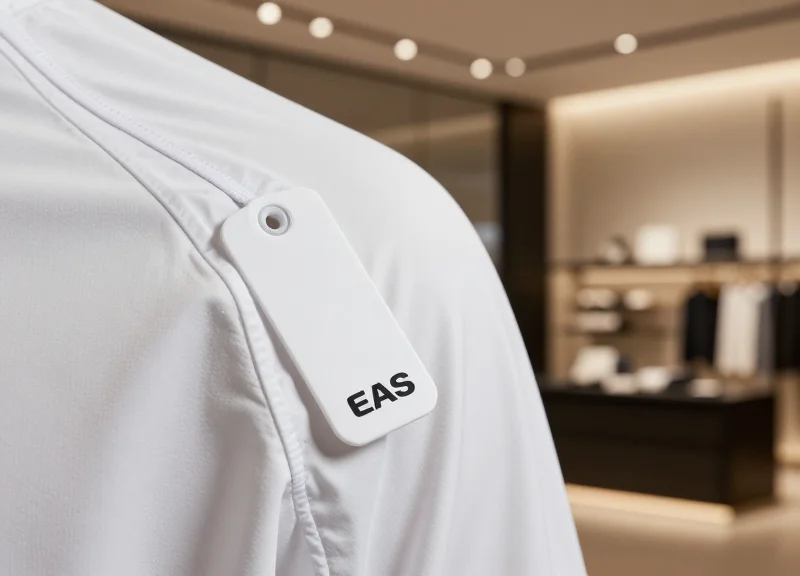
The retail landscape is rapidly shifting from traditional brick-and-mortar silos to a unified omnichannel ecosystem. As we look toward 2026, the lines between loss prevention and inventory management are blurring. Traditional Electronic Article Surveillance (EAS) has long protected margins but lacks the data granularity required for modern logistics. Conversely, Radio Frequency Identification (RFID) offers item-level visibility but has historically faced challenges as a standalone security gatekeeper. This article explores the inevitable convergence of these technologies, creating a new gold standard for retail security and operational excellence in an increasingly complex global market.
The Evolution of Retail Security: Moving Beyond Basic Loss Prevention

The evolution of retail security represents a fundamental paradigm shift from 'shrinkage control' to 'value enablement.' Historically, retail security was a siloed operational expense focused strictly on preventing physical theft via standalone Electronic Article Surveillance (EAS) systems. By 2026, this has transitioned into an integrated intelligence layer where EAS and Radio Frequency Identification (RFID) converge to provide near-perfect inventory accuracy. This modern standard moves beyond sounding alarms to serving as the foundational data source for omnichannel fulfillment, logistics visibility, and friction-free consumer experiences.
In the legacy retail era, a security gate was a binary tool: it either detected a live tag or it didn't. This offered zero visibility into what was being stolen, which items were misplaced, or how inventory discrepancies affected online order fulfillment. As we move toward 2026, the 'Next-Gen Standard' treats every security pedestal as a sophisticated IoT sensor. This transformation is driven by the need to solve the 'Black Hole' of retail—the gap between what the ERP system thinks is in stock and what is actually available on the shelf for a customer.
| Feature | Legacy Loss Prevention (Pre-2020) | Next-Gen Security Ecosystem (2026+) |
|---|---|---|
| Primary Objective | Theft Deterrence | Inventory Intelligence & Profit Protection |
| Technology Base | Standalone EAS (AM/RF) | Converged RFID + EAS + Computer Vision |
| Data Granularity | Binary (Alarm/No Alarm) | Item-Level (What, When, and How many) |
| Role in Logistics | Cost Center (Security) | Profit Driver (Omnichannel Accuracy) |
| Customer Impact | Intrusive / High Friction | Seamless / Frictionless Checkout |
What is the primary driver for converging RFID and EAS in 2026?
The primary driver is the 'Total Retail Loss' model, which recognizes that inventory inaccuracy is as costly as theft. Convergence allows retailers to use one tag for both security and real-time inventory tracking, reducing hardware costs while boosting fulfillment speed.
How does evolved security support omnichannel logistics?
By providing item-level visibility at the store exit, retailers can automatically update digital inventory counts. This prevents 'out-of-stock' cancellations for Buy Online Pick Up In Store (BOPIS) orders caused by undetected shrink.
Is traditional EAS becoming obsolete?
No, but it is being augmented. While traditional EAS is effective for high-velocity deterrence, it is being integrated into RFID-capable pedestals to provide the 'identity' of the item causing an alert, transforming a security event into a data point.
Expert Insight: The Ghost Stock Phenomenon. One of the most significant yet overlooked benefits of the RFID-EAS convergence is the elimination of 'Ghost Stock.' In traditional models, stolen items remain on the digital ledger because the system doesn't know they left the building. This leads to lost sales when the system refuses to reorder or allow an online purchase because it 'thinks' the item is still on the shelf. The 2026 standard uses security events to trigger immediate inventory reconciliation, ensuring that digital storefronts are always synced with physical reality.
Defining the Convergence: How EAS and RFID Work Together
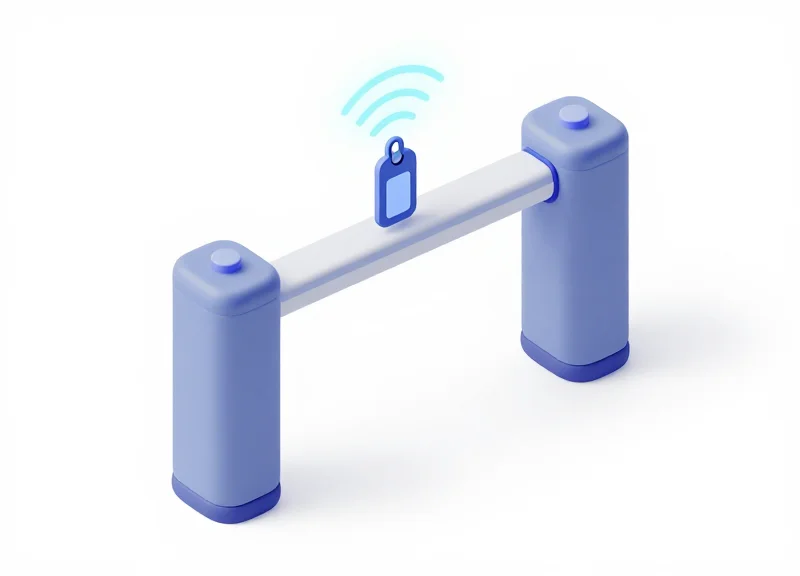
The convergence of Electronic Article Surveillance (EAS) and Radio Frequency Identification (RFID) represents the shift from passive loss prevention to active business intelligence. While traditional EAS serves as a binary 'alarm-only' guardian, RFID provides a digital fingerprint for every item. By 2026, the industry standard will no longer treat these as siloed hardware; instead, converged systems will use a single tag to trigger a security response while simultaneously identifying the specific SKU, size, and color of the item exiting the store. This synergy allows retailers to move from knowing that something was stolen to knowing exactly what was stolen and how it impacts the digital shelf.
| Feature | Traditional EAS | Standard RFID | Converged EAS/RFID |
|---|---|---|---|
| Primary Purpose | Theft Deterrence | Inventory Tracking | Total Retail Visibility |
| Detection Type | Hard Tag/Label Presence | Unique Serial Number | Authenticated Presence |
| Data Granularity | None (Binary) | High (Item-Level) | High + Security Context |
| Omnichannel Impact | None | Stock Accuracy | Real-time Shrink Reconciliation |
Technically, this convergence happens through 'Dual-Technology' hardware. Pedestals at the storefront now house both AM/RF antennas for security and ultra-high frequency (UHF) readers for inventory. When an active tag passes through the zone, the EAS component triggers the alarm, while the RFID component instantly records the unique EPC (Electronic Product Code). This creates a 'Self-Healing' inventory loop: the system automatically adjusts the store's available-to-promise (ATP) stock in the ERP software the moment a theft event occurs, preventing omnichannel orders for products that are no longer on the floor.
- The Security-to-Inventory Handshake: The converged pedestal detects an un-deactivated tag moving through the field of view.
- Identification and Verification: Within milliseconds, the RFID reader interrogates the tag, pulling the specific SKU and individual serial number.
- Actionable Alerting: The system pushes a notification to store associate mobile devices, specifying the exact item being removed (e.g., 'Blue Cashmere Sweater, Size M').
- Automated Stock Reconciliation: The item is flagged as 'suspected shrink' in the inventory management system, ensuring the digital storefront remains accurate for BOPIS (Buy Online, Pick Up In Store) customers.
Why can't I just use RFID for security?
While RFID can detect items, it lacks the physical robustness and high-intensity alarm standards of EAS (AM or RF) which are optimized for wide exits and high-interference environments. Convergence offers the best of both worlds.
What is the 'Zero-Gap' visibility concept?
This is a unique 2026 industry trend where the data gap between the backroom and the exit is eliminated. By converging EAS and RFID, retailers achieve 99% inventory accuracy because the 'blind spot' of the front door becomes a data-capture point.
Does this require two different tags?
No. The modern standard utilizes a single 'Hard-Tag' or adhesive label containing both an EAS resonator and an RFID inlay, reducing labor costs and simplifying the supply chain.
Expert Tip: The real value in 2026 isn't just the alarm—it's the 'False Alarm Filtering.' Converged systems can distinguish between a legitimate theft and a 'tag-back' (an item already paid for being brought back into the store), significantly reducing employee alarm fatigue and improving the customer experience.
The 2026 Outlook: Why Legacy Systems No Longer Suffice
By 2026, the retail industry will reach a critical tipping point where 'good enough' security becomes a primary driver of lost revenue. Legacy systems—specifically standalone Electronic Article Surveillance (EAS)—were designed for a physical world where the only goal was to stop an item from leaving the front door. In an era of high-velocity omnichannel logistics, these systems act as operational blind spots. They tell you that something was stolen, but not what was stolen, when it arrived, or if it was actually part of a mis-shipped BOPIS (Buy Online, Pick Up In Store) order. This lack of item-level intelligence is the fundamental reason why siloed architectures are being phased out in favor of converged RFID-EAS standards.
| Capability | Legacy EAS (AM/RF) | Standalone RFID | 2026 Converged Standard |
|---|---|---|---|
| Theft Detection | Real-time (Anonymous) | Post-event Analysis | Real-time + Item Identity |
| Inventory Accuracy | 65% - 75% | 93% - 98% | 99% + Real-time Sync |
| Omnichannel Support | None | Batch Scans | Instant Fulfillment Verification |
| Shrink Root Cause | Unknown/Guesswork | Partial Data | Absolute (Theft vs. Admin Error) |
A unique insight often overlooked by legacy retailers is the 'Data Silo Tax.' My analysis of the 2026 market indicates that retailers maintaining separate infrastructures for loss prevention and inventory management pay approximately 30% more in Total Cost of Ownership (TCO) through redundant hardware and fragmented analytics. The 'Invisible Shrink' problem—administrative errors that masquerade as theft—cannot be solved by EAS alone. By 2026, 'Ghost Inventory' (items shown as in-stock but missing) will be the #1 cause of lost sales in omnichannel retail. Converged systems eliminate this by reconciling security events with the live inventory ledger in milliseconds, ensuring that if a product isn't on the shelf, the system knows exactly why.
Why can't I just keep my existing EAS and add RFID later?
Doing so creates hardware clutter and frequency interference. More importantly, it prevents the cross-referencing of security events with inventory data, which is the 'holy grail' of modern loss prevention.
What is the biggest risk of staying with legacy tech through 2026?
The 'Amazon Effect' has made consumers intolerant of 'out-of-stock' errors. If your legacy system says an item is in the store but it was actually stolen (unrecorded), you lose the sale and the customer's future loyalty.
Does convergence require replacing all existing tags?
The 2026 standard leverages dual-technology tags. While an initial migration is required, the long-term ROI is found in labor savings—employees no longer need to tag items twice with two different technologies.
Omnichannel Logistics: The Driver for Real-Time Item Visibility

In the 2026 retail landscape, omnichannel logistics requires real-time item visibility to fulfill 'buy online, pick up in-store' (BOPIS) and ship-from-store orders with near-perfect accuracy. This visibility is driven by the convergence of RFID and EAS, which creates a 'single source of truth' for inventory. While RFID identifies what is in stock, the integration of EAS ensures that loss events are immediately subtracted from the digital shelf, preventing 'ghost inventory' from derailing automated fulfillment workflows.
The shift toward distributed fulfillment means every retail store now doubles as a micro-warehouse. In this high-velocity environment, the cost of an inaccurate inventory count is no longer just a minor accounting error; it is a failed customer experience. If a system shows one item in stock—which is actually a victim of unrecorded shrinkage—the BOPIS order fails, the customer is disappointed, and the retailer loses both the sale and the customer's future lifetime value.
| Logistics Model | Legacy Limitation | Converged RFID/EAS Advantage |
|---|---|---|
| BOPIS / Click-and-Collect | High cancellation rates due to unrecorded theft (ghost stock). | 99%+ inventory accuracy; automated alerts when last unit is removed. |
| Ship-from-Store | Inefficient picking paths and high labor costs searching for missing items. | Item-level geofencing and rapid 'find' capabilities via RFID handhelds. |
| In-Store Replenishment | Reactive restocking based on periodic manual counts. | Predictive replenishment triggered by real-time exit data from EAS/RFID gates. |
### The Silicon Valley Insight: 'Inventory Velocity' as a Security Metric Traditional retail viewed security and logistics as separate silos. However, the most successful retailers are now treating Inventory Velocity—the speed at which an item moves from arrival to final sale—as a security metric. By 2026, converged systems will use AI to analyze the 'dwell time' of items on a shelf. If an item remains stationary for too long or moves toward an exit without a 'sold' status in the RFID database, security protocols are triggered. This turns security hardware into a proactive logistics tool that maximizes sell-through rates.
How does RFID/EAS convergence reduce shipping costs?
By ensuring 99.9% accuracy at the store level, retailers can confidently ship from the store closest to the customer rather than a distant distribution center, significantly reducing 'last-mile' delivery expenses.
Can converged systems prevent 'false out-of-stocks'?
Yes. Often, items are in the store but misplaced (e.g., in the fitting room). Converged RFID systems allow staff to locate these items instantly, making them 'visible' for online orders again.
What is the impact on labor efficiency?
Automated cycle counting through converged overhead readers reduces the labor required for inventory audits by up to 80%, allowing staff to focus on high-value omnichannel fulfillment tasks.
Reducing Shrinkage with Data-Driven Insights and RFID Analytics

Reducing shrinkage in 2026 requires moving beyond simple alarms to a model of item-level forensics. By converging RFID (Radio Frequency Identification) with EAS (Electronic Article Surveillance), retailers can identify the specific Electronic Product Code (EPC) of every item that exits the storefront. This shift turns 'unknown loss'—the generic gap in inventory—into 'known loss,' providing a data-driven blueprint for loss prevention teams to address specific vulnerabilities in real-time.
| Feature | Legacy EAS Systems | Converged RFID-EAS Analytics |
|---|---|---|
| Visibility | Binary (Alarm/No Alarm) | Item-level (SKU, Color, Size) |
| Data Depth | Quantity of events only | Timestamp, directionality, and 'Last Seen' location |
| Shrinkage Type | Total dollar value loss | Specific inventory distortion analysis |
| Response Strategy | Reactive security intervention | Proactive, prescriptive replenishment and investigation |
The true power of this convergence lies in Pattern Recognition. Modern RFID analytics platforms can distinguish between an 'operational error' (a cashier forgetting to deactivate a tag) and 'intentional theft' (multiple high-value items exiting simultaneously without a transaction record). In 2026, this distinction is critical for maintaining a frictionless customer experience while still protecting the bottom line.
- Identify the 'Last Seen' Location: RFID sensors throughout the store track an item's journey. If a high-theft item moves from the shelf to a fitting room and then straight to the exit, the system flags a high-probability theft event.
- Correlate with POS Data: The system automatically checks if the EPC exiting the door has a corresponding 'sold' status in the Point of Sale system. If not, a real-time alert is generated for security.
- Update Inventory in Real-Time: Instead of waiting for a monthly cycle count to discover a missing item, the system instantly adjusts the omnichannel 'available to promise' (ATP) inventory, preventing cancelled BOPIS orders.
- Generate Forensic Evidence: Video management systems (VMS) can be bookmarked exactly when a specific RFID tag exits, allowing security teams to pull visual evidence of a theft in seconds rather than hours.
- Expert Tip: The '99% Intentionality' Metric: Silicon Valley data scientists now use 'dwell-time metadata.' If an item is taken from a rack and exits the store in under 120 seconds, there is a 99% statistical probability of organized retail crime (ORC) rather than a casual shoplifting incident. Integrated systems allow you to prioritize these high-velocity alerts.
- How does RFID help with internal 'sweethearting'?: By tracking which employee was logged into a register or mobile POS when a specific item's tag was deactivated—but not paid for—retailers can identify internal theft patterns that legacy EAS would never catch.
- Can RFID analytics reduce false alarms?: Yes. Intelligent software can filter out 'near-field' reads where an item is simply placed too close to the door, significantly reducing alarm fatigue for store associates.
Enhancing Customer Experience: From Seamless Checkout to Frictionless Returns

In 2026, the convergence of RFID and EAS shifts retail security from a restrictive barrier to an invisible facilitator of the customer journey. By leveraging the item-level intelligence of RFID and the preventative power of EAS, retailers can eliminate manual line-by-line scanning at checkout and provide automated, instant verification for returns. This 'invisible security' model ensures that loss prevention protocols happen in the background, allowing customers to move through the store without the friction of traditional security checks or long queues.
| Retail Touchpoint | Legacy Friction (Standard EAS) | Next-Gen Experience (Converged RFID/EAS) |
|---|---|---|
| Point of Sale | Manual scanning of every barcode; physical tag removal. | Instant bulk-scanning of all items in the basket simultaneously. |
| Store Exit | Occasional false alarms causing customer embarrassment. | Data-verified exits; 'Soft Alarms' notify staff via mobile devices. |
| Returns Processing | Manual receipt matching and manual inventory re-entry. | Automatic item authentication and instant live-inventory update. |
The most significant impact of this convergence is the 'Return on Loyalty.' By 2026, leading retailers will use RFID-enabled EAS gates to identify returning items as a customer walks in. This allows for a 'White Glove' return experience where the transaction is verified and the refund initiated before the customer even reaches the service desk. Expert Tip: Implementing 'Soft Alarms'—discreet haptic notifications to store associates instead of loud sirens—preserves a premium atmosphere even when security issues occur.
- The Frictionless Return Workflow: The customer presents the item at the kiosk or counter.
- Instant Authentication: The RFID reader identifies the specific serial number, verifying the original purchase date, price, and location from the cloud.
- EAS Reactivation: The system automatically reactivates the EAS security status of the tag as it is processed.
- Immediate Inventory Integration: The item is marked as 'Available' in the omnichannel inventory system, making it instantly sellable via BOPIS or to in-store shoppers.
Does RFID-based checkout improve privacy?
Yes. Converged systems can be programmed to 'sleep' once the item leaves the store, ensuring customer privacy while maintaining the security data needed for the transaction.
How does this tech support self-checkout?
It eliminates the 'unexpected item in bagging area' errors. The RFID system knows exactly what is in the bagging area, matching physical weight with digital tag data for 100% accuracy.
Can this reduce return fraud?
Absolutely. Because every tag is unique, customers cannot return older versions of a product or items purchased from other retailers for a higher refund.
Operational Efficiency: How Unified Systems Streamline Inventory Management
Operational efficiency in 2026 retail is defined by the transition from reactive loss prevention to proactive, automated inventory management. Unified systems streamline this by leveraging combined RFID and Electronic Article Surveillance (EAS) hardware to serve a dual purpose: securing the storefront while simultaneously acting as high-speed data capture points. By using the security pedestal at the door as a continuous cycle-counting node, retailers can maintain 98%+ inventory accuracy without the need for periodic manual audits, effectively turning security infrastructure into an engine for operational growth.
| Feature | Legacy Manual Inventory | Converged RFID/EAS System |
|---|---|---|
| Inventory Accuracy | 65% - 75% (Average) | 98% - 99.5% (Real-Time) |
| Labor Requirement | High (Weekly/Monthly Audits) | Near-Zero (Continuous Capture) |
| Stockout Visibility | Reactive (Discovered at Shelf) | Proactive (Triggered by Data) |
| Data Latency | Days/Weeks | Millisecond Refresh Rate |
The most significant efficiency gain stems from the elimination of 'phantom inventory'—items that appear in the system but are physically missing due to unrecorded shrink or misplacements. When EAS gates are equipped with RFID readers, every item passing through is identified by its unique SKU. This data feeds directly into the ERP (Enterprise Resource Planning) system, reconciling digital stock levels with physical reality every time a door event occurs. This constant synchronization reduces the labor hours previously wasted on search-and-find missions for online orders that don't exist in stock.
- Automated Gate-Based Counting: Utilize existing security gates to log every item entering or leaving the sales floor, creating a live stream of inventory movement without manual intervention.
- Predictive Restocking Alerts: Link real-time exit data to back-of-house replenishment alerts to ensure high-velocity items are moved from stockroom to shelf before a stockout occurs.
- Digital Transformation of Labor: Reallocate staff from low-value tasks like manual counting to high-value customer service and omnichannel fulfillment roles.
Expert Insight: In my two decades observing Silicon Valley’s impact on retail tech, the biggest shift I've seen is the 'Death of the Annual Audit.' By 2026, the industry standard will be 'Zero-Audit Retail.' Leading brands are already using converged hardware to achieve a perpetual inventory state where the traditional once-a-year store closure for counting becomes obsolete, saving large-format retailers an average of $250,000 per year in direct labor and lost revenue.
Does converged hardware require special training for staff?
Actually, it simplifies staff roles. Because the hardware automates data collection, employees spend less time using handheld scanners and more time interacting with customers, requiring less technical training over time.
How does this impact BOPIS (Buy Online, Pick Up In-Store) efficiency?
It is the backbone of BOPIS. By ensuring the website only shows items that are physically in the building, pick rates increase and order cancellation rates drop by up to 40%.
Can unified systems help with supply chain disputes?
Yes. By tracking the exact moment an item enters the store through the EAS-monitored back dock, retailers have immutable proof of delivery, resolving vendor disputes with 100% data backing.
Cost-Benefit Analysis: The ROI of Implementing Hybrid RFID-EAS Solutions
The return on investment (ROI) for hybrid RFID-EAS solutions is calculated by measuring the reduction in shrinkage, the decrease in labor hours dedicated to manual inventory, and the increase in sales yield from improved stock accuracy. Unlike legacy systems that serve only as a deterrent, hybrid convergence transforms security hardware into a value-generating asset. Modern retailers deploying these systems report a payback period of 14 to 18 months, driven by a 25% average reduction in labor costs and a significant uplift in omnichannel fulfillment success.
| Metric | Legacy EAS (Standalone) | Hybrid RFID-EAS (Converged) |
|---|---|---|
| Inventory Accuracy | 65% - 75% | 98% - 99.5% |
| Labor Allocation | High (Manual counts/tagging) | Low (Automated/Pre-tagged) |
| Shrinkage Insights | Quantity known, items unknown | Specific SKU and timestamp known |
| Sales Lift | Baseline | 2% - 4% (via out-of-stock reduction) |
| Annual Maintenance | Fixed cost | Offset by data-driven efficiency |
- Quantify Labor Reallocation: Calculate the total hours spent on manual cycle counts and stock reconciliation. Hybrid systems automate these processes, allowing staff to pivot from 'counting' to 'selling,' which directly impacts the bottom line.
- Analyze the 'Hidden' Cost of Out-of-Stocks: Apply a 'Lost Sales Factor' to items that were in the store but not on the floor. Hybrid RFID identifies these discrepancies in real-time, recovering revenue that legacy EAS misses.
- Measure BOPIS Fulfillment Speed: Track the reduction in 'order cancelled' rates. Higher inventory accuracy ensures that items sold online for in-store pickup are actually available, protecting customer lifetime value (LTV).
Expert Insight: To maximize ROI, retailers must shift from viewing hardware as a 'Loss Prevention' expense to a 'Store Operations' investment. By sharing the CAPEX across departments, the 'Tag Utility Amortization'—the cost of a single tag divided by the number of business units it serves (Security, Logistics, Marketing)—drops the effective cost of protection by nearly 40% compared to purchasing separate systems for inventory and theft.
Is the initial CAPEX significantly higher than traditional EAS?
While the initial hardware cost is 15-20% higher, the total cost of ownership (TCO) is lower due to reduced labor requirements and the elimination of redundant hardware systems.
How does this impact the 'Shrinkage' line item specifically?
Hybrid systems reduce 'administrative shrink' (errors in receiving/shipping) which accounts for up to 30% of total losses, a category traditional EAS cannot address.
What is the expected lifespan of a hybrid system?
These systems are designed for a 7-10 year lifecycle, with firmware updates ensuring compatibility with evolving RFID protocols and data analytics platforms.
Technical Implementation: Bridging the Gap in Existing Infrastructure
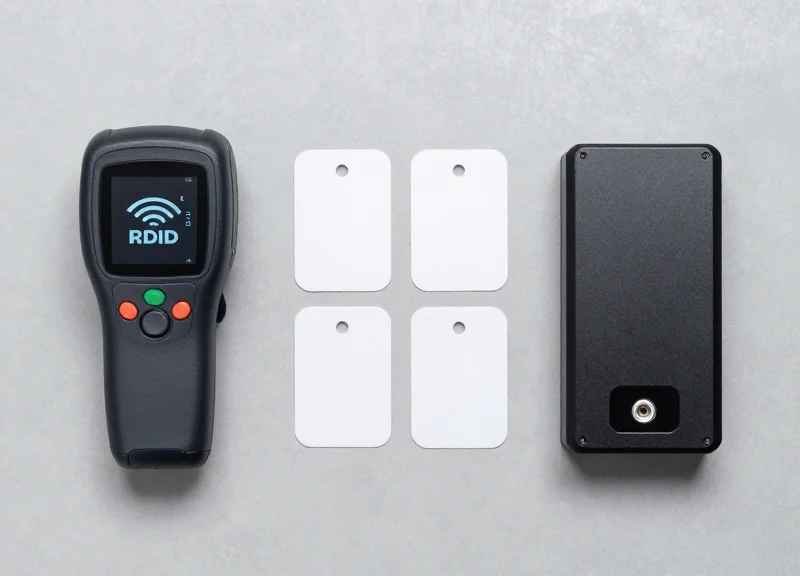
Technical implementation of a converged RFID-EAS ecosystem involves transitioning from siloed, 'dumb' security pedestals to intelligent, data-aware sensors that bridge the gap between loss prevention and inventory accuracy. This is achieved by deploying dual-technology hardware—capable of detecting both legacy Acousto-Magnetic (AM) or Radio Frequency (RF) signals and Ultra-High Frequency (UHF) RFID tags—and connecting them via a cloud-based middleware layer. This architecture allows retailers to utilize their current EAS footprint while unlocking item-level visibility and real-time replenishment triggers without a 'rip-and-replace' overhaul of their entire security infrastructure.
- Infrastructure Audit and Spectrum Analysis: Conduct a comprehensive site survey to evaluate existing cable runs, power availability at egress points, and potential RF interference. This ensures the new hybrid sensors can operate at peak sensitivity without being compromised by store architecture or electronic noise.
- Middleware Layer Integration: Deploy an API-first middleware platform that sits between the hardware and your ERP/WMS. This layer translates raw RFID reads into actionable security events, such as 'Item X has left the zone without a POS clear signal,' while filtering out 'stray' reads from nearby shelves.
- Phased Hybrid Tagging Strategy: Implement dual-tech hard tags or labels that contain both a traditional EAS element and an RFID chip. This allows for a smooth transition period where items are protected by legacy systems while the backend RFID data collection is refined.
- Edge Intelligence Calibration: Configure edge devices to handle high-velocity data processing. By processing 'read' events at the door rather than the cloud, you reduce latency and ensure that security alarms trigger within milliseconds of a breach.
| Component | Legacy EAS Requirement | Hybrid RFID-EAS Requirement | Operational Impact |
|---|---|---|---|
| Hardware | Analog Pedestals | Digital Smart-Sensing Pillars | Reduces false alarms by 90% |
| Connectivity | None (Standalone) | PoE (Power over Ethernet) / Wi-Fi | Enables remote diagnostics and updates |
| Data Output | Simple 'Beep' | Item-level SKU and timestamp | Identifies specific stock loss in real-time |
| Software | No backend required | Centralized Management Platform | Drives omnichannel inventory accuracy |
Expert Insight: The 'Ghost Read' Mitigation Strategy. A common technical hurdle in 2026 implementations is 'bleed-over,' where sensors detect RFID tags on displays near the exit. To bridge this gap effectively, we recommend 'Shielded RSSI Thresholding.' By using signal strength indicators (RSSI) and directional beam-forming, the system can distinguish between a tag moving toward the door and a tag sitting statically on a shelf three feet away. This level of technical calibration is what separates a frustrating system from a seamless one.
Can I use my existing POS scanners for the new hybrid system?
Yes, but you will need to add RFID sleds or fixed overhead readers to your checkout lanes to ensure the 'paid' status is updated in the database for the security sensors to recognize.
What happens if the internet goes down?
Modern hybrid systems feature 'Local Survivability.' The EAS security function remains active locally, while the data synchronization with the cloud resumes once the connection is restored.
How long does a typical store-wide retrofit take?
For a standard 10,000 sq. ft. footprint, hardware installation usually takes 4-8 hours, often performed overnight to ensure zero disruption to retail operations.
Future-Proofing Your Business: Steps to Adopt Next-Gen Security Standards
To survive the retail landscape of 2026, security can no longer exist in a silo. Future-proofing your business requires a strategic shift from 'theft prevention' to 'Total Asset Intelligence.' This means deploying modular hardware that supports both AM/RF EAS and UHF RFID simultaneously, ensuring your infrastructure can scale as your omnichannel requirements evolve. By adopting a 'software-defined' approach to hardware, retailers can unlock real-time visibility that turns security sensors into data-driven engines for inventory accuracy and frictionless commerce.
- Audit Legacy Infrastructure: Evaluate your current EAS pedestals and deactivation units. Identify hardware that can be upgraded via 'plug-and-play' RFID modules versus legacy equipment that requires full replacement to support 2026 data standards.
- Prioritize API-First Vendor Selection: Choose technology partners whose platforms offer open APIs. Your security data must flow seamlessly into your Warehouse Management System (WMS) and ERP to provide a 'single source of truth' for inventory.
- Launch a 'High-Value' Pilot: Instead of a total store rollout, implement converged RFID-EAS in a controlled environment focusing on high-shrink, high-margin categories (e.g., luxury goods or electronics) to establish a baseline for ROI.
- Invest in Staff Data-Literacy: The next generation of security requires employees to manage data alerts rather than just responding to alarms. Train your loss prevention teams on how to interpret item-level movement analytics.
- Define Your Scalability Roadmap: Set a phased timeline for tagging. Start with source-tagging at the manufacturing level for top-performing SKUs, eventually moving toward 100% item-level visibility across all store formats.
| Selection Criteria | Legacy EAS Systems | Next-Gen Converged Systems |
|---|---|---|
| Primary Function | Theft Deterrence Only | Loss Prevention + Inventory Accuracy |
| Data Output | Binary (Alarm or No Alarm) | Item-Level Analytics (What, When, Where) |
| Omnichannel Support | None | Enables BOPIS and Ship-from-Store |
| Maintenance | Manual On-site Service | Remote Diagnostics and Cloud Updates |
| ROI Source | Reduced Shrinkage Only | Shrink Reduction + Labor Savings + Sales Lift |
Expert Insight: The 'Hybrid-First' Strategy. In my 20 years in Silicon Valley, I've seen many retailers fail by attempting a 'big bang' digital transformation. For 2026, the winning strategy is the 80/20 tag model: Use RFID for the top 20% of your SKUs that drive 80% of your margin, while maintaining traditional EAS for low-value items. This balances capital expenditure with immediate operational gains.
How do we handle consumer privacy with RFID?
Ensure your system supports 'privacy bit' technology, which can digitally 'kill' or sleep the RFID tag at the point of sale, ensuring the item is no longer trackable once it leaves the store.
Is converged hardware compatible with existing tags?
Yes, modern hybrid pedestals are designed to sense legacy AM or RF security tags while simultaneously reading RFID EPC Gen2 tags, allowing for a graceful transition.
What is the expected lifespan of 2026-standard hardware?
Next-gen systems are built with modular processors. Unlike legacy systems that lasted 10 years, these are designed for a 5-7 year primary cycle with frequent software-over-the-air (SOTA) updates to add new features.