In the rapidly evolving landscape of 2026 data center management, the density of server racks has reached unprecedented levels, creating a complex environment for asset tracking. Metal surfaces, which naturally reflect RF energy, present a significant hurdle for traditional RFID systems, leading to signal interference and read errors. Choosing the right anti-metal RFID tags is no longer a luxury but a technical necessity for maintaining 99.9% inventory accuracy. This guide provides an authoritative roadmap for IT managers and procurement specialists to navigate the selection of high-performance RFID solutions designed specifically for the unique challenges of high-density server environments.
The Evolution of Asset Tracking: Why 2026 Demands Specialized RFID

As of 2026, specialized anti-metal RFID tags have become the mandatory standard for data center asset management because traditional RFID labels are rendered non-functional when applied directly to metallic surfaces. Standard tags suffer from 'detuning' where the metal surface reflects and absorbs RF energy, effectively short-circuiting the antenna. To solve this, 2026-grade anti-metal tags utilize a specialized physical spacer or a ceramic dielectric substrate to create a precise standoff, ensuring that the tag remains readable even in the most electromagnetically crowded, high-density server racks.
The landscape of data centers has shifted drastically over the last few years. The explosion of AI-ready infrastructure has led to a transition from 10kW per rack to upwards of 100kW per rack. This increase in power density means more metal shielding, more cabling, and significantly higher electromagnetic interference (EMI). Legacy asset tracking methods, such as barcodes or standard RFID, simply cannot survive the signal shadowing and physical congestion present in modern high-density configurations.
| Feature | Legacy RFID Tags (Pre-2022) | 2026 Anti-Metal Specialized Tags |
|---|---|---|
| Surface Compatibility | Non-metallic only | Optimized for metal, liquid-cooled, and high-EMI surfaces |
| Read Range on Metal | 0 cm (Fails) | Up to 10 meters on metallic surfaces |
| Size/Form Factor | Large, bulky spacers | Ultra-low profile (under 1mm) using ceramic tech |
| Durability | Standard adhesive | Chemical-resistant, heat-stable for AI-rack temperatures |
How does liquid cooling affect RFID in 2026?
Modern liquid cooling systems introduce conductive fluids and more metal piping. Specialized 2026 tags are designed with higher IP ratings and antenna tuning that accounts for the dielectric constant changes caused by proximity to cooling manifolds.
Why is 'Signal Shadowing' a problem in high-density racks?
In racks packed with H100 or B200 GPUs, the sheer volume of metal creates 'dead zones.' Specialized tags now use 3D-isotropic antenna designs that can capture signals from multiple angles, overcoming the physical shadows cast by dense server hardware.
Can I use standard tags with a foam spacer?
While possible in low-density areas, foam spacers often fail in 2026 environments due to heat-induced adhesive failure and the lack of precision tuning required to maintain signal integrity in high-EMI server rows.
Expert Insight: In the current 2026 market, the 'Skin Effect' has become a primary hurdle. As server components get smaller and frequencies higher, the way RF currents move across metal surfaces changes. Modern anti-metal tags now utilize the metal surface itself as a 'parasitic element' to actually boost the signal, a technique known as 'surface-wave coupling.' This turns the metal rack from an enemy of the signal into an accidental amplifier, providing the long-range reads necessary for automated robotic inventory audits.
Understanding the Physics: The 'Metal Problem' in RFID

The 'metal problem' in RFID is an electromagnetic phenomenon where conductive surfaces interfere with radio frequency (RF) signals through two primary mechanisms: signal reflection and the induction of eddy currents. When a standard passive UHF RFID tag is placed directly on a metal surface, the metal acts as a ground plane that short-circuits the tag's antenna. This interaction creates an opposing magnetic field that 'detunes' the antenna, shifting its resonant frequency away from the reader's operating frequency and effectively rendering the tag invisible to the system.
| Physical Mechanism | Standard RFID Tag | Anti-Metal RFID Tag |
|---|---|---|
| RF Interaction | Signal cancellation through reflection | Controlled reflection used for gain |
| Antenna State | Detuned (Impedance Mismatch) | Resonant (Impedance Matched) |
| Eddy Currents | Dampens tag power significantly | Isolated via dielectric spacer |
| Read Reliability | Near-zero on metal surfaces | High-performance (3m to 10m+) |
Expert Insight: In the 2026 high-density data center, the challenge has evolved from simple 'metal interference' to 'multi-path scattering.' Modern server racks use specialized galvanized alloys and perforated venting patterns that create a complex RF environment. A critical technical tip often overlooked: do not just look for 'thick' tags. The efficiency of an anti-metal tag in 2026 depends on the 'Permittivity' of the internal dielectric spacer. High-density environments benefit from 'Ceramic-core' tags which maintain a stable dielectric constant even as server temperatures fluctuate between 20°C and 65°C.
How does a dielectric spacer solve the metal problem?
A dielectric spacer creates a physical and electromagnetic buffer between the tag's antenna and the metal surface. By maintaining a specific distance (usually a fraction of the RF wavelength), it prevents the metal from dampening the antenna's magnetic field, allowing the tag to harvest power effectively.
Why can't I just use a thicker plastic sticker?
Thickness alone does not solve detuning. Anti-metal tags are engineered with specific impedance matching. A standard thick sticker doesn't account for the shift in resonant frequency caused by the metal's proximity; only a tag designed with an integrated ground-plane or specialized antenna geometry can maintain performance.
Does the type of metal (Aluminum vs. Steel) matter?
Yes. Conductivity and permeability vary between metals. While most 2026 anti-metal tags are 'metal-agnostic,' high-performance applications in data centers (where racks may be aluminum or steel) require tags tuned to handle the different 'skin depths'—the distance the RF signal penetrates the metal surface.
Essential Technical Specifications for Server Environments
For 2026 high-density server environments, the essential technical specifications for anti-metal RFID tags center on three pillars: a chip sensitivity of -20dBm to -24dBm, a controlled read range of 2.5 to 4 meters, and precision frequency tuning (860-960 MHz) that accounts for the capacitive coupling of the metal server chassis. Unlike standard tags, these specifications ensure that signals penetrate the 'RF jungle' of cables and metal enclosures without causing crosstalk or missed reads.
In high-density configurations, 'Read Range' is often a secondary metric to 'Read Reliability.' If a tag has too much range, a handheld reader may pick up assets three racks away; if it has too little, the server at the back of the cabinet remains invisible. The 2026 standard emphasizes high-gain internal antennas paired with the latest generation ICs (Integrated Circuits) that offer auto-tuning capabilities to compensate for the specific metallic composition of the mounting surface.
| Specification | Standard Anti-Metal (Legacy) | High-Density Optimized (2026) |
|---|---|---|
| Chip Sensitivity | -17dBm to -19dBm | -21dBm to -24dBm |
| Frequency Range | Fixed (902-928MHz) | Broadband Global (860-960MHz) |
| Read Range (on metal) | 1.0 - 2.0 Meters | 3.0 - 5.0 Meters |
| Memory Retention | 10 Years | 20+ Years (High Temp Rated) |
| Interference Rejection | Low | Advanced (Digital Self-Tuning) |
Expert Tip: The 'Thermal Drift' Factor. A common failure point in 2026 data centers is frequency drift caused by the extreme heat in 'Hot Aisles' (reaching up to 45C or higher). High-end anti-metal tags now utilize ceramic or high-grade polymer substrates with a low Coefficient of Thermal Expansion (CTE). This ensures that as the server rack heats up, the physical dimensions of the tag antenna do not shift, preventing the frequency from 'drifting' out of the readable range.
Why is chip sensitivity more important than raw power?
In dense racks, signal path loss is high. A more sensitive chip (-24dBm) can be 'woken up' by a much weaker signal than a standard chip, allowing it to communicate through narrow gaps between server blades where RF energy is heavily attenuated.
What role does the 'Inlay-to-Metal' spacer play?
The spacer creates a dielectric gap that prevents the metal surface from short-circuiting the tag's antenna. For 2026, we look for ultra-thin spacers (under 1mm) that use high-permittivity materials to maintain performance while remaining flush with the server faceplate.
Is Global Frequency (860-960MHz) necessary?
Yes. Modern supply chains move assets across regions. A true 2026-spec tag uses a broadband antenna design that performs consistently across both ETSI (Europe) and FCC (US) frequency bands without losing sensitivity on metal.
Form Factor and Miniaturization for High-Density Racks
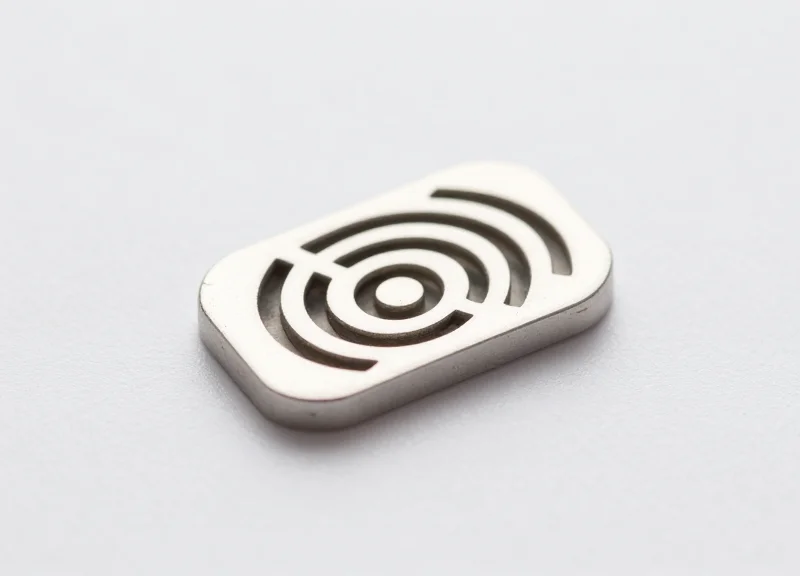
In the 2026 data center environment, the 'Form Factor' of an RFID tag is no longer just about aesthetics; it is a critical mechanical requirement. High-density server racks, particularly 1U and 2U configurations, provide less than 2mm of clearance between the chassis edge and the rack post. To ensure seamless asset tracking without interfering with sliding rails or blocking critical airflow, modern anti-metal tags must utilize 'slim' profiles (under 1.5mm thickness) or 'nano' footprints (smaller than 5mm x 5mm) that leverage high-dielectric ceramics to maintain signal integrity despite their diminutive size.
| Tag Category | Typical Dimensions | Ideal Application | Estimated Read Range |
|---|---|---|---|
| Ultra-Slim PCB | 45 x 6 x 1.2 mm | Server Chassis Side/Top | 4 - 6 Meters |
| Nano Ceramic | 5 x 5 x 3 mm | Internal Blade/Component | 1 - 2 Meters |
| Rugged Miniature | 10 x 4 x 3 mm | Network Switch Ports | 2.5 - 3.5 Meters |
| Flexible On-Metal | 50 x 20 x 0.8 mm | Curved Surfaces/PDUs | 3 - 5 Meters |
Expert Insight: The Airflow Shadow Effect. A common mistake in high-density deployments is ignoring 'Airflow Shadowing.' Even a slightly protruding tag can create micro-turbulences in high-velocity cooling corridors. In 2026, we recommend 'Recessed Mounting'—selecting tags designed to sit flush within the small indentations of the server bezel. This prevents the tag from becoming a snag point for fiber optic cables and eliminates the risk of it being sheared off during hot-swap maintenance.
- Identify the 'Dead Zone': Locate areas on the server chassis that do not overlap with ventilation holes or LED indicators. The leading edge of the chassis is usually the primary target.
- Verify Rail Clearance: Ensure the tag's thickness (Z-height) is at least 0.5mm thinner than the gap between the server and the rack rail to prevent mechanical friction.
- Select High-Bond Adhesives: At small scales, surface area for adhesion is limited. Use 3M VHB or specialized industrial epoxies that can withstand the constant 40°C+ ambient temperatures of a server exhaust.
Does miniaturization reduce the reliability of the tag?
While smaller antennas naturally have shorter read ranges, the 2026 generation of RFID ICs features enhanced sensitivity (down to -24 dBm), allowing nano-tags to perform as reliably as the larger tags of five years ago.
Can these small tags be used for automated inventory via drones or robots?
Yes, but it requires higher-gain reader antennas. For robotic scanning in high-density aisles, 'Slim' PCB tags are preferred over 'Nano' tags due to their wider radiation pattern.
Are ceramic tags better than PCB tags for small form factors?
Ceramics offer a higher dielectric constant, allowing for smaller sizes, but they are brittle. For external server surfaces where impacts are possible, thin PCB-based anti-metal tags are generally more durable.
Thermal Resistance: Managing High-Heat Data Center Zones

Thermal resistance in RFID technology is the capacity of a tag's internal circuitry, housing, and adhesive to maintain structural and functional integrity under high-heat conditions. In 2026 high-density server environments, where liquid cooling and air-cooled racks often operate at the edge of thermal limits, anti-metal tags must be rated for sustained exposure to temperatures exceeding 85°C (185°F). Standard commercial tags often suffer from 'adhesive creep' or chip-to-antenna bond failure when placed near high-TDP (Thermal Design Power) CPUs or power supply exhaust zones, making specialized thermal-grade selection a mandatory requirement for uptime.
| Component | Standard Grade Tag | 2026 High-Density Grade | Max Sustained Temp |
|---|---|---|---|
| Housing Material | ABS or standard PVC | PPS (Polyphenylene Sulfide) or Ceramic | 220°C (Ceramic) |
| Adhesive Type | General Purpose Acrylic | Thermally Stable Silicone/3M VHB Series | 150°C+ |
| IC Attachment | Standard Flip-Chip | High-Temp Underfill Encapsulation | 125°C |
Expert Insight: The Danger of Thermal Expansion Mismatch. A common point of failure overlooked in many procurement guides is the Coefficient of Thermal Expansion (CTE). In high-heat zones, the metal server chassis expands at a different rate than the plastic RFID tag housing. This creates mechanical shear stress on the adhesive. To ensure a 10-year lifespan, 2026 specifications should favor tags with flexible high-tack adhesives that act as a buffer, or ceramic-core tags that mirror the stability of metallic substrates.
- Thermal Zone Mapping: Identify the 'hot spots' on your server chassis, typically near the rear exhaust and directly above the PSU. Avoid placing tags directly on heat sinks unless using ultra-high-temp ceramic tags.
- Outgassing Verification: Ensure tags are rated for low outgassing. In enclosed, high-heat racks, cheap adhesives can release volatile organic compounds (VOCs) that may coat sensitive optical transceiver lenses over time.
- Thermal Cycling Testing: Verify that tags are tested for rapid temperature fluctuations (e.g., -40°C to +85°C). Servers undergo frequent power cycles, and the resulting expansion/contraction is more damaging than steady heat.
Does high heat affect RFID read range?
Yes. Extreme heat can cause a temporary 'frequency shift' in the antenna's resonance. High-quality 2026 tags are tuned with a wide bandwidth to remain readable even when the physical dimensions of the antenna expand slightly due to heat.
Are 'Rugged' tags always heat resistant?
Not necessarily. 'Rugged' often refers to impact resistance or IP-rating for moisture. Always check the specific 'Operating Temperature' vs. 'Storage Temperature' in the datasheet.
Is mechanical fastening better than adhesive in heat?
For the highest heat zones (near 100°C+), rivets or screws are superior, but for 95% of server rack applications, modern high-temp acrylic or silicone adhesives are sufficient and much faster to deploy.
Attachment Methods: Balancing Security and Scalability
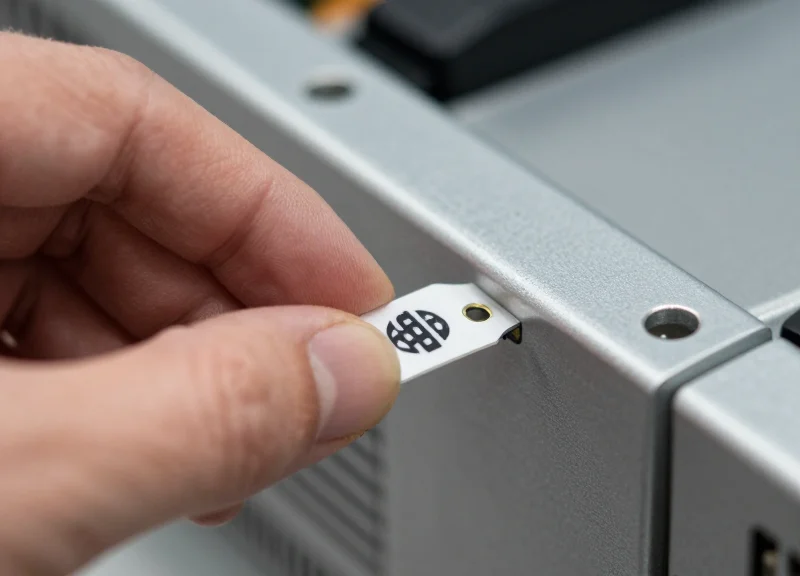
For 2026 data center deployments, the choice of RFID tag attachment is no longer a secondary consideration; it is a critical engineering decision that affects both the structural integrity of the server chassis and the scalability of asset management. The ideal attachment method must withstand the high-vibration environment of cooling fans, resist chemical degradation from fire suppression systems, and ensure the tag remains flush with the hardware to avoid obstructing airflow in ultra-dense racks.
| Attachment Method | Security Level | Installation Speed | Best Use Case |
|---|---|---|---|
| Industrial Adhesive | Medium | Very High | High-volume deployments on flat chassis surfaces. |
| Mechanical (Screws/Rivets) | Very High | Low | Permanent assets requiring tamper-evident security. |
| Magnetic Mounts | Low | High | Temporary assets or test-bench equipment. |
| Cable Ties / Tethering | Medium | Medium | Irregularly shaped power units or networking cables. |
A critical, often overlooked factor in 2026 is the 'Outgassing' risk. Many standard industrial adhesives release volatile organic compounds (VOCs) when subjected to the sustained 50°C to 70°C temperatures found at the rear of high-performance AI server nodes. This outgassing can lead to microscopic residue buildup on sensitive optical transceivers. Experts now recommend using low-outgassing, acrylic-based adhesives that meet NASA-grade ASTM E595 standards to ensure long-term hardware health while maintaining a strong bond to powder-coated metal surfaces.
- Surface Preparation: Clean the metal surface with 90% isopropyl alcohol to remove manufacturing oils. Even a microscopic film can reduce adhesive lifespan by 40%.
- Curing Time Optimization: For high-density projects, allow adhesive tags to cure for 24 hours at room temperature before sliding servers into high-heat zones.
- Mechanical Redundancy: In mission-critical zones, utilize 'Hybrid Tags' that offer both an adhesive back and a single-point screw hole for secondary security.
Will magnetic mounts interfere with my HDDs or SSDs?
Modern SSDs are largely immune to the low-intensity static magnetic fields used in RFID mounts, but for legacy rotating platters (HDDs), magnets should be avoided or placed at least 5cm from the drive bays.
Can I reuse tags if I change the attachment method?
Adhesive tags are generally destroyed upon removal to prevent fraud. However, mechanical and magnetic tags can be redeployed, provided the tag antenna hasn't been bent or compromised during the move.
What happens if a tag falls off inside a rack?
In high-density 2026 racks, a loose tag can block airflow or get sucked into a fan intake. This is why high-tack, heat-stabilized adhesives are the industry standard over generic alternatives.
Future-Proofing with EPC Gen2 and IoT Integration

Future-proofing your server rack infrastructure in 2026 requires adopting the EPC Gen2v2 (ISO/IEC 18000-63) standard, which ensures that anti-metal tags provide the cryptographic security and memory scalability necessary for modern IoT ecosystems. By bridging the gap between physical hardware and digital management layers, Gen2-compliant tags allow high-density server environments to feed real-time data into AI-driven inventory platforms, transforming static assets into 'intelligent nodes' within a broader automated facility.
- Enhanced Security Protocols: EPC Gen2v2 supports advanced authentication and encryption, preventing unauthorized tag cloning or data interception in sensitive government or enterprise data centers.
- User Memory Scalability: Modern tags offer expanded user memory (up to 512 bits or more), allowing for the storage of maintenance logs or installation dates directly on the server chassis.
- Untraceability Features: Dynamic privacy controls allow administrators to hide specific data portions during transit, revealing them only when the tag is within the secure data center perimeter.
| Feature | Legacy ERP Systems | 2026 AI-Driven IoT Platforms |
|---|---|---|
| Data Frequency | Batch updates (daily/weekly) | Real-time streaming (millisecond latency) |
| Asset Visibility | Point-in-time location | Predictive movement and health tracking |
| Integration Type | Flat file / Manual CSV upload | RESTful APIs and MQTT streams |
| Logic Layer | Human-dependent auditing | Automated AI reconciliation and anomaly detection |
Expert Insight: The Digital Twin Bridge. A unique advantage of 2026-spec RFID tags is their role in building 'Digital Twins.' By using the tag's RSSI (Received Signal Strength Indicator) values, AI platforms can now map the precise 3D orientation of a server within a high-density rack. If a tag's signal pattern changes subtly, AI models can predict if a server is vibrating due to fan failure or if it has been improperly seated, offering a layer of 'telemetry-lite' without the cost of active sensors.
Will my 2022-era RFID readers work with 2026 Gen2v2 tags?
Yes, Gen2v2 is backward compatible with Gen2 readers, though a firmware update is typically required to unlock advanced cryptographic and file management features.
How do I integrate RFID data with SAP or Oracle ERPs?
Most modern RFID middleware uses standardized connectors (like LLRP) to translate tag reads into JSON or XML formats that can be ingested via standard ERP APIs.
Is EPC Gen2v2 necessary for passive tags?
Absolutely. It is the global standard that ensures your tags remain readable as you upgrade your reader infrastructure and transition to edge computing architectures.
Cost vs. Reliability: Calculating the Total Cost of Ownership
In high-density server environments, the Total Cost of Ownership (TCO) for RFID tags is defined as the sum of initial procurement, installation labor, and the cumulative cost of operational failures over a five-year lifecycle. While budget-grade anti-metal stickers may offer a low entry price, their susceptibility to detuning in high-heat zones and adhesive failure often results in a 'Hidden Tagging Tax' that can triple the initial investment. A reliable 2026 strategy prioritizes high-sensitivity silicon and industrial-grade encasements to ensure a 99.9% read rate, which is the baseline required to eliminate manual 'ghost asset' reconciliation.
| Cost Variable | Budget Anti-Metal Labels | Premium Ceramic/PC Hard Tags |
|---|---|---|
| Initial Unit Price | $0.60 - $1.20 | $2.50 - $5.00 |
| 5-Year Failure Rate | 15% - 25% | < 0.5% |
| Replacement Labor Cost | High (Manual re-tagging) | Negligible |
| Audit Accuracy | 85% - 92% (Inconsistent) | 99.9% (Real-time) |
| Signal Stability | Drifts with heat | Static/Resonant |
Expert Insight: The Recalibration Tax. A unique risk often overlooked in 2026 data center planning is 'frequency drift' in low-cost tags. As servers cycle through extreme thermal loads, cheaper tag antennas can physically expand or degrade, shifting their resonant frequency. This doesn't cause the tag to 'die'—it simply makes it invisible to your standard handheld or portal readers. You aren't just paying for a tag; you are paying for the stability of the data link between your physical asset and your digital twin.
- Baseline Procurement: Calculate the volume discount for high-memory EPC Gen2 tags. Don't skimp on memory if you plan to store maintenance logs locally on the tag.
- Installation and Commissioning: Factor in the cost of professional 'slap-and-ship' labor versus high-precision placement. High-density racks require precise alignment for consistent wave propagation.
- Operational Audit Savings: Subtract the cost of traditional manual audits (typically 4-6 hours per rack) from the automated RFID scan time (approx. 15 seconds per rack).
- Risk Mitigation Value: Assign a dollar value to the prevention of lost assets. In regulated industries, one 'lost' server containing sensitive data can result in fines exceeding the cost of an entire RFID deployment.
Is it worth tagging low-value components?
Generally, TCO favors tagging any field-replaceable unit (FRU) valued over $500 or any component that requires regulatory compliance tracking.
How does tag lifespan affect ROI?
Most premium anti-metal tags are rated for 10 years. Since the average server lifecycle is 3-5 years, these tags can often be decommissioned and data-wiped for reuse, significantly lowering the TCO for the next hardware refresh.
What is the biggest hidden cost in RFID?
Middleware integration. Ensure your tag choice is compatible with your existing DCIM (Data Center Infrastructure Management) software to avoid custom API development costs.