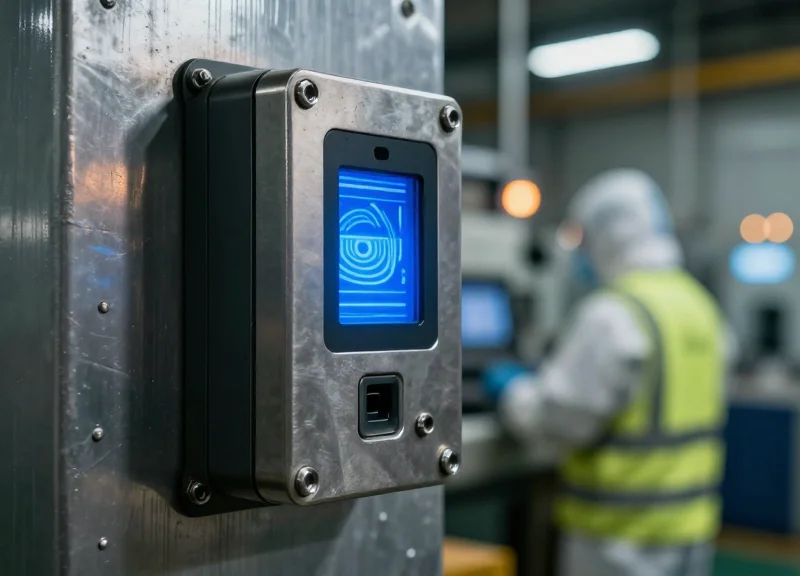
As university campuses transition toward 24/7 automated retail environments, traditional security gateways are failing to meet the complex needs of modern student consumers. The integration of RFID for inventory intelligence and EAS for robust loss prevention—known as a hybrid system—is no longer a luxury but a strategic necessity. By 2026, these systems will become the gold standard for campus bookstores and convenience stores, bridging the gap between security and seamless user experience while providing unprecedented data insights.
The Evolution of Campus Retail: From Manual Checkouts to Automated Hubs
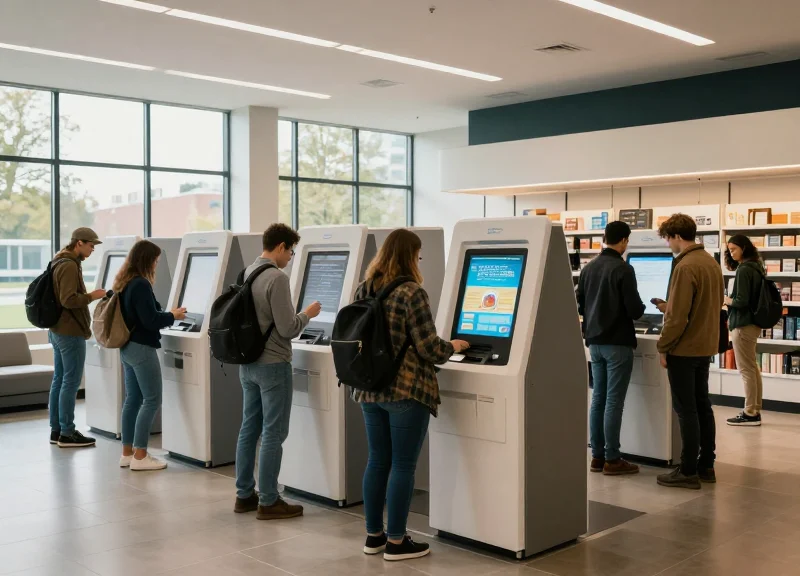
The evolution of campus retail is defined by a shift from transactional physical stores to 'frictionless' automated hubs that prioritize student speed, 24/7 availability, and technological integration. Historically, university bookstores and convenience shops relied on manual point-of-sale (POS) systems that created long queues and high labor costs. Today, the sector is moving toward RFID-EAS hybrid systems that enable students to pick up items and walk out, merging loss prevention with unparalleled convenience. This transition is not merely a hardware upgrade but a fundamental response to the behavioral shift of Gen Z and Gen Alpha students who view wait times as a barrier to purchase.
| Feature | Legacy Manual Store | Intermediate Self-Checkout | Next-Gen Automated Hub |
|---|---|---|---|
| Wait Times | High (Peak hours depend on staff) | Medium (User-error bottlenecks) | Near-Zero (Grab-and-go flow) |
| Security | Visual/Manual EAS | Weight Sensors/CCTV | RFID-EAS Hybrid Tracking |
| Availability | Limited Operating Hours | Limited Operating Hours | 24/7 Autonomous Access |
| Staff Role | Cashier/Transaction-based | Technical Support/Greeter | Brand Ambassador/Student Success |
The primary driver behind this evolution is the 'Zero-Friction Mandate.' Unlike previous generations, today’s students are digital natives who equate convenience with value. In Silicon Valley terms, we are seeing the 'Uber-fication' of campus retail. If a student cannot acquire a protein shake or a notebook within 60 seconds between classes, the retail opportunity is lost. This has forced campus administrators to look beyond traditional Electronic Article Surveillance (EAS) towards systems that provide both high-fidelity inventory data and theft prevention without the physical barrier of a checkout counter.
Why are traditional security gateways becoming obsolete on campus?
Traditional gateways create psychological barriers and physical bottlenecks. They focus purely on loss prevention rather than the user experience. Hybrid RFID systems provide the same security but allow for invisible, frictionless exit monitoring.
How does automation impact student employment in retail?
Contrary to fears of job loss, automation allows student workers to shift from repetitive scanning tasks to higher-value roles, such as inventory management, community building, and technical store maintenance.
What role does Gen Z's preference for 'Invisible Tech' play?
Gen Z prefers technology that works in the background. Automated hubs use sensors and RFID tags that require no active 'scanning' by the student, aligning with their desire for seamless digital-to-physical transitions.
Expert Insight: The Social ROI of Automation. While most universities focus on the direct ROI of reduced labor costs, the true value lies in 'Social ROI.' By removing registers, campus stores transform from crowded corridors into community 'third spaces.' In my two decades of observing tech adoption, the most successful campus retail deployments are those that use automation to free up floor space for seating, collaboration, and student engagement, effectively turning a shop into a hub of campus life.
Defining RFID-EAS Hybrid Systems: How the Technology Works Together

An RFID-EAS hybrid system is a unified retail security framework that merges Radio Frequency Identification (RFID) for item-level visibility with Electronic Article Surveillance (EAS) for theft deterrence. While traditional EAS gateways only trigger a generic alarm when an active tag passes through, a hybrid system identifies exactly which item is leaving the store, its SKU, and its payment status. By 2026, this technology will be the standard for campus retail, allowing universities to bridge the gap between 'frictionless' student experiences and robust asset protection.
| Feature | Traditional EAS | Standard RFID | RFID-EAS Hybrid |
|---|---|---|---|
| Primary Purpose | Loss Prevention | Inventory Management | Unified Security & Logistics |
| Identification | Binary (Alarm/No Alarm) | Unique Item ID (EPC) | Item ID + Security Status |
| Data Feedback | None | Stock levels only | Real-time 'What' and 'When' of theft |
| Infrastructure | Bulky Pedestals | Handheld/Fixed Readers | Slim, Integrated Gateways |
- The Unified Tagging Process: Merchandise is equipped with a dual-function tag (often a single RFID inlay) that contains a unique Electronic Product Code (EPC) and a 'soft' security bit that can be toggled at the point of sale.
- Automated Status Update: During checkout, whether at a self-service kiosk or via a mobile app, the system marks the item's EPC as 'sold' in the cloud database, effectively 'deactivating' the alarm status without needing physical demagnetizers.
- Intelligent Gateway Surveillance: As the student exits, overhead or pedestal-mounted RFID-EAS readers scan the tags. If a tag is detected with an 'unpaid' status, the system triggers an alert, logs the specific SKU stolen, and can even send a photo of the incident to campus security.
Expert Insight: The 'Ghost Inventory' Solution. The most significant advantage of hybrid systems for campus bookstores is the elimination of 'ghost inventory.' In traditional retail, when an item is shoplifted, the system still thinks it is on the shelf, leading to lost sales when online orders for that item are placed and cannot be fulfilled. Hybrid systems automatically deduct stolen items from the inventory in real-time, triggering an immediate restock alert and ensuring that the campus 'Buy Online, Pick Up in Locker' (BOPIL) systems remain 100% accurate.
Do hybrid systems interfere with student mobile devices?
No. Hybrid systems operate on the UHF (Ultra-High Frequency) band for RFID (860-960 MHz) and standard EAS frequencies (typically 58 kHz or 8.2 MHz), which are designed to coexist with Wi-Fi and 5G signals without interference.
Can these systems work with metal or liquid items?
While liquids and metals can reflect or absorb RF signals, modern 'On-Metal' and 'Flag-Tags' have been perfected for the campus environment, ensuring high read rates for everything from canned energy drinks to tech accessories.
Is a full hardware overhaul required for 2026 compliance?
Many existing RFID readers can be upgraded via firmware or software integration to act as EAS deterrents, though modern overhead 'halo' readers are recommended for the best aesthetic and coverage.
The Decline of Traditional Security Gateways in High-Traffic Education Environments
Traditional security gateways, primarily legacy Electronic Article Surveillance (EAS) systems using Acousto-Magnetic (AM) or Radio Frequency (RF) technology, are entering a period of obsolescence in the university sector. These systems are declining because they function as binary 'dumb' sensors—they can trigger an alarm, but they cannot identify what is being stolen or why a tag is malfunctioning. In the high-velocity environment of a modern campus store, where hundreds of students may pass through a gate in a ten-minute window between classes, these limitations create operational bottlenecks and significant security blind spots that legacy hardware can no longer bridge.
| Feature | Legacy EAS (Traditional) | RFID-EAS Hybrid (Next-Gen) |
|---|---|---|
| Data Granularity | Binary (Alarm/No Alarm) | Item-Level (SKU, Color, Size) |
| Detection Accuracy | Susceptible to interference/shielding | High precision with directional sensing |
| Throughput Capacity | Low (Chokepoints frequent) | High (Supports mass-transition flow) |
| False Alarm Rate | High (Caused by non-deactivated tags) | Near Zero (Filters known sold items) |
The primary catalyst for this decline is 'Alarm Fatigue.' In campus environments, legacy EAS systems frequently trigger false positives due to 'tag pollution'—tags from external retailers or improperly deactivated stickers on textbooks. My observation from working with high-volume tech campuses is what I call the 'Class-Break Surge Failure': legacy gates lack the processor speed to resolve multiple tags simultaneously during the 10-minute peak between lectures. This leads to security staff ignoring alarms altogether, effectively rendering the multi-thousand-dollar gateway a mere psychological deterrent rather than a functional security tool.
Why is 'blind shrink' a problem for legacy systems?
Legacy EAS tells you that something left the store, but not what. This prevents retailers from understanding if they are losing high-margin electronics or low-cost stationery, making inventory reconciliation impossible without a full manual audit.
How does student psychology impact gateway effectiveness?
Modern students prioritize frictionless experiences. Visible, bulky legacy gates that frequently beep incorrectly create a 'guilty until proven innocent' atmosphere, which negatively impacts brand loyalty and student NPS scores.
What is the financial impact of legacy system maintenance?
Maintaining aging AM/RF pedestals becomes cost-prohibitive as they require frequent manual tuning to account for environmental noise, whereas hybrid systems utilize self-optimizing digital signals.
Ultimately, the decline of standalone EAS is driven by the shift toward data-driven retail. University administrators are no longer satisfied with just stopping theft; they require the heat-mapping, inventory accuracy, and automated replenishment data that only RFID-enabled systems provide. By 2026, a security gate that doesn't also update your inventory database in real-time will be considered a legacy liability.
Enhanced Loss Prevention: Identifying Exactly What is Being Stolen

Unlike traditional Electronic Article Surveillance (EAS) which merely triggers an anonymous alarm, RFID-EAS hybrid systems provide item-level visibility by reading the unique Electronic Product Code (EPC) of every tagged item as it passes through the gateway. This shift from 'presence detection' to 'identity detection' allows campus retail managers to know exactly which SKU, color, and size triggered an alert, enabling precise inventory reconciliation and forensic analysis of theft trends.
| Feature | Traditional EAS Gateways | Hybrid RFID-EAS Systems |
|---|---|---|
| Alert Type | Generic audible alarm | Data-rich notification (SKU/Price/Qty) |
| Inventory Impact | Unknown until manual cycle count | Real-time digital inventory subtraction |
| Theft Analytics | None (only frequency of alarms) | Heatmaps of high-theft items/times |
| Recovery Potential | Low (hard to prove ownership) | High (unique ID matches store records) |
For a university bookstore or high-traffic campus convenience shop, the ability to identify the specific product being stolen is a game-changer for shrinkage mitigation. Instead of general security increases, managers can deploy 'surgical' interventions. If data shows that premium university-branded hoodies are being targeted during the 15-minute window between classes, staff can be repositioned strategically or merchandising can be adjusted without affecting the shopping experience for the broader student body.
How does SKU-level data prevent 'Phantom Inventory'?
When an item is stolen and not recorded, the system thinks it is still in stock. By identifying the specific SKU at the exit, hybrid systems can automatically update the inventory database, preventing students from trying to order 'ghost' items via mobile apps for in-store pickup.
Can these systems distinguish between a theft and a clerical error?
Yes. If an item triggers an alarm but was previously marked as 'sold' in the POS system, the software flags a potential 'failed deactivation' rather than a theft, reducing friction between security staff and students.
What is the 'Shrinkage Intelligence' advantage?
It allows retailers to calculate the exact ROI of their security spend by quantifying the total dollar value of intercepted or lost goods in real-time, rather than waiting for end-of-semester audits.
Expert Insight: The 'Digital Witness' Protocol. In 2026, the value isn't just in stopping the thief; it's in the data trail. RFID-EAS systems act as a digital witness that integrates with CCTV. When an alarm triggers, the system can automatically bookmark the video feed with the specific metadata of the item (e.g., 'Blue XL North Face Jacket'). This creates a searchable database of theft events, allowing campus security to identify repeat offenders across multiple retail locations using specific product theft patterns.
Inventory Visibility: The Hidden ROI of Hybrid RFID Technology

In traditional campus retail, security gates are a sunk cost—an insurance policy that only provides value when it prevents a theft. Hybrid RFID-EAS systems flip this script by transforming the gateway from a passive alarm into a high-speed data capture node. By reading the unique electronic product code (EPC) of every item passing through the portal, campus stores achieve real-time inventory visibility that traditional systems cannot match. This automated tracking shifts the Return on Investment (ROI) from simple loss prevention to comprehensive operational efficiency, reducing manual inventory labor by up to 80% while ensuring that high-demand university merchandise is always on the shelf.
| Metric | Traditional EAS Gateways | Hybrid RFID-EAS Systems |
|---|---|---|
| Inventory Accuracy | 65% - 75% (Manual dependent) | 98% - 99.8% (Automated) |
| Stock-Out Rates | High (Lagging data) | Near-Zero (Real-time triggers) |
| Inventory Audit Time | Weeks/Months (Full staff) | Minutes/Hours (Single user) |
| Primary Value | Theft Deterrence Only | Loss Prevention + Inventory Intelligence |
Expert Insight: The 'Rush Week' Elasticity Factor. During peak periods like Move-in Week or Graduation, campus stores experience demand spikes that traditional manual inventory cycles cannot track. A hybrid system allows for 'Dynamic Re-ordering.' Instead of discovering a stock-out of $80 branded hoodies three days too late, the hybrid gateway logs every exit in real-time, allowing the ERP system to trigger an immediate restock from the warehouse. This ensures that the limited window of peak student foot traffic is fully monetized.
- Automated Cycle Counting: Eliminate the need for seasonal manual audits by using the hybrid gates and handheld RFID readers to sync stock levels daily.
- Omnichannel Integration (BOPIS): Enable reliable 'Buy Online, Pick Up In-Store' for students by ensuring the digital inventory precisely matches what is on the physical shelf.
- Shrinkage Root-Cause Analysis: Differentiate between administrative errors, vendor short-ships, and actual theft to optimize supply chain logistics.
Does hybrid RFID help with 'Phantom Stock'?
Yes. Phantom stock occurs when the system thinks an item is available, but it is actually lost or misplaced. Hybrid RFID identifies exactly which items have exited the store, cleaning your data automatically.
How quickly can we see an ROI on the inventory side?
Most campus retailers see a break-even point within 12 to 18 months, driven primarily by reduced labor costs and a 2-4% lift in sales due to improved item availability.
Does this replace the need for an ERP?
No, it enhances it. The hybrid system acts as the 'eyes' for your ERP, feeding it high-fidelity data so your procurement and sales modules work with 100% accuracy.
Improving the Student Experience with Frictionless Security

Frictionless security in campus retail refers to the strategic deployment of RFID-EAS hybrid systems to protect assets through non-intrusive monitoring, effectively removing the physical bottlenecks and 'false alarm anxiety' associated with traditional pedestal gateways. By moving security to the background, campus bookstores and markets can adopt 'grab-and-go' or unmanned store models that align with the digital-first expectations of Gen Z students. These systems replace the intimidating, high-friction environment of the past with an open, trust-based shopping experience that prioritizes speed and convenience without compromising on loss prevention.
- Support for Unmanned and 24/7 Markets: Hybrid systems allow university retail to operate beyond standard business hours by providing a security layer that works autonomously with mobile-payment or kiosk-based checkouts.
- Reduction of False Alarms: Unlike traditional EAS that triggers on any magnetic interference, RFID-EAS hybrid gates identify specific tags, drastically reducing the 'embarrassment factor' of false alarms for students who have paid for their items.
- Improved Aesthetic and Flow: Modern overhead or under-floor RFID sensors replace bulky pedestals, creating wider entryways that accommodate high-traffic periods between classes and make the store more accessible for students with disabilities.
| Feature | Traditional Security Gateways | Frictionless Hybrid Systems |
|---|---|---|
| Student Checkout Speed | Slow (Manual tag removal/deactivation) | Instant (Bulk scanning and automatic tag clearing) |
| Store Layout Flexibility | Restricted (Must funnel traffic through gates) | High (Supports open-concept and multi-exit designs) |
| Alarm Response | Generic (Beep only; staff must search bags) | Specific (Alert shows exactly which item triggered exit) |
| Consumer Psychology | High-friction / Defensive | Low-friction / Invisible & Trust-based |
Expert Tip: To maximize ROI on student experience, use the RFID data collected at the exit to analyze 'dwell time vs. purchase.' By understanding which items are frequently picked up but eventually abandoned near the door, retailers can identify friction points in the checkout process or pricing hurdles that are turning away student buyers.
Does frictionless security actually lead to higher theft on campus?
Counter-intuitively, no. By utilizing item-level RFID tracking, campus police and store managers have better data to identify repeat offenders, making the 'hidden' security more effective than a visible but easily bypassed gate.
How does this technology integrate with student ID cards?
Most hybrid systems can be linked to the campus ERP, allowing the store to recognize the student via their mobile credential or ID card, creating a personalized shopping loop from entry to exit.
Is the privacy of the student protected?
Yes. RFID tags in these systems are typically used only for SKU identification and inventory movement. No personal student data is stored on the physical tag itself, ensuring compliance with student privacy regulations.
Data Analytics: Leveraging Security Hardware for Retail Insights

Modern campus retailers are shifting from reactive security to proactive intelligence by utilizing RFID-EAS hybrid gateways as sophisticated data collection points. Unlike traditional gateways that only trigger an audible alarm during a theft event, hybrid systems continuously stream data regarding every tagged item that enters or exits the read zone. This transforms the store entrance into a strategic 'IoT node' that measures not just shrinkage, but the heartbeat of the entire retail environment, including footfall accuracy, conversion ratios, and real-time inventory velocity.
| Data Point | Legacy EAS Capability | Hybrid RFID-EAS Insight |
|---|---|---|
| Traffic Monitoring | Simple beam break (no directionality) | Bi-directional counting with item correlation |
| Product Velocity | None | Real-time tracking of which SKUs leave during peak hours |
| Shrinkage Depth | Alarm only (quantity unknown) | Exact item identification (Model, Color, Size) |
| Conversion Analytics | Requires separate sensor system | Integrated data syncing with POS transaction logs |
The integration of RFID technology allows campus store managers to move beyond anecdotal evidence. For example, by analyzing peak traffic data alongside 'Read-Not-Sold' events, administrators can identify 'hot zones' or popular product categories that students are engaging with but perhaps abandoning at the last minute. This granular visibility into the student journey enables data-driven decisions on floor layouts, staffing levels during university events, and inventory replenishment cycles that were previously based on guesswork.
How does hybrid data improve labor allocation?
By mapping heat maps generated from gateway traffic against transaction times, managers can identify precisely when the store is 'busy but not buying,' allowing them to redeploy staff to high-engagement areas or open additional self-checkout kiosks.
Can these systems help with merchandising?
Yes. Hybrid systems identify which specific items are frequently moved near the exit but not purchased, providing a unique 'near-miss' metric that helps buyers understand if a product's price point or placement is hindering its sale.
Is the data collection privacy-compliant for students?
Absolutely. The system tracks anonymous EPC (Electronic Product Code) data tied to merchandise, not personal student information, ensuring GDPR and FERPA compliance while still providing actionable business intelligence.
Expert Insight: Use 'Shadow Stock Identification' to maximize ROI. One of the most powerful hidden benefits of hybrid gateways is the ability to spot 'shadow stock'—items that are physically in the store but located in 'dead zones' where students cannot find them. If an item is read by the back-room RFID sensor but never by the front-gate sensor despite high demand, it triggers an immediate restock alert to the floor, ensuring that security hardware is directly contributing to a reduction in lost sales opportunities.
Implementation Strategies for 2026: Transitioning from Legacy EAS
Transitioning from legacy Electronic Article Surveillance (EAS) to a hybrid RFID-EAS system by 2026 involves retrofitting campus retail points with dual-frequency pedestals that support both traditional theft detection and item-level data capture. This strategy enables university bookstores and convenience shops to maintain current security protocols while unlocking the inventory visibility required for modern frictionless or self-checkout experiences. The core objective is a 'Dual-Mode' environment where existing hardware is augmented with Ultra-High Frequency (UHF) sensors, bridging the gap between basic detection and intelligent analytics.
| Migration Component | Legacy EAS Status | Hybrid Requirement (2026) |
|---|---|---|
| Gate Hardware | Single-Frequency (AM or RF) | Dual-Frequency Integrated Pedestals |
| Tagging Strategy | Bulk/Category Hard Tags | Serialized RFID Labels (Item-Level) |
| Data Integration | Disconnected/Alarm-Only | Cloud-API Connected to ERP/POS |
| Detection Range | Gate-to-Gate Only | Directional Area Monitoring |
- Phase 1: Spectrum and Infrastructure Audit: Conduct a site survey to identify potential interference between existing Wi-Fi 6E/7 campus networks and the 860-960 MHz RFID bands. Ensure current gate placements meet ADA requirements for the wider detection zones offered by hybrid systems.
- Phase 2: Hybrid Hardware Retrofitting: Replace legacy AM or RF antennas with dual-technology pedestals. These units function as traditional EAS gates while simultaneously acting as RFID 'readers' that identify specific Electronic Product Codes (EPCs) during an alarm event.
- Phase 3: Back-End API Integration: Connect the hybrid gateways to the campus retail management system. This ensures that when a tag is 'killed' or 'deactivated' at the POS, the RFID database updates in real-time to prevent false positives.
- Phase 4: Staff Training and Data Utilization: Train facility managers to interpret the new data streams. Instead of simply responding to a 'beep,' staff will now receive mobile alerts specifying exactly which SKU is exiting the store without a 'sold' status.
Will hybrid systems interfere with campus IT infrastructure?
No. Modern hybrid RFID-EAS systems operate on specific UHF bands (typically 902-928 MHz in the US) that are distinct from standard 2.4GHz and 5GHz Wi-Fi frequencies used by students.
Do we need to re-tag all existing inventory immediately?
No. The 'Hybrid' nature allows you to keep legacy tags on old stock while applying RFID labels to new arrivals. The system will detect both during the transition period.
What is the primary cost-saving during implementation?
The biggest saving comes from reducing 'False Alarm' labor. By identifying precisely what triggered an alarm, staff spend 60% less time on manual bag checks and reconciliation.
Expert Tip: Leverage the 'Shadow Tagging' Strategy. One of the most effective ways to prepare for 2026 is to begin applying hybrid RFID/EAS labels to high-value items twelve months before installing the new gateways. By 'shadow tagging' inventory early, you populate your retail database with item-level history. When the hybrid pedestals are finally activated, you immediately gain a full year of year-over-year shrinkage analytics, rather than starting from zero. This data-first approach proves ROI to university stakeholders significantly faster than a standard hardware rollout.
Sustainability and Cost-Effectiveness of Hybrid Security Solutions
Hybrid RFID-EAS systems achieve sustainability and cost-effectiveness by merging two distinct security functions into a single hardware footprint, reducing total energy consumption by up to 30% and eliminating the need for redundant 'double-tagging' (applying both an EAS tag and an RFID label) which cuts consumable waste in half. This consolidation allows university retailers to transition from energy-heavy legacy antennas to modern, low-voltage gateways that align with institutional Net-Zero carbon goals while significantly lowering the Total Cost of Ownership (TCO) over a five-year lifecycle.
| Metric | Legacy EAS Systems | Next-Gen Hybrid Systems |
|---|---|---|
| Average Power Draw | 150W - 250W (Constant) | 45W - 90W (Dynamic) |
| Labeling Strategy | Dual (EAS + RFID Barcode) | Single (Hybrid Smart Label) |
| Waste Generation | High (Two backings/liners) | Minimal (Consolidated liner) |
| Maintenance Needs | Frequent (Analog tuning) | Remote (Digital diagnostics) |
The 'Adaptive Power Logic' Insight: One original advantage of 2026-ready hybrid gateways is their ability to utilize integrated PIR (Passive Infrared) sensors to modulate power output. Unlike traditional gates that emit a constant 24/7 electromagnetic field, hybrid systems enter a ultra-low-power 'heartbeat' mode when campus foot traffic is low. During late-night hours or term breaks, these systems consume less electricity than a standard LED bulb, potentially saving large-scale university stores thousands of dollars in annual utility expenses.
How do hybrid systems reduce physical waste in campus retail?
By using a single chip that handles both the 8.2MHz or 58kHz EAS signal and the UHF RFID data, retailers no longer need to apply two separate security tags. This reduces the plastic and adhesive waste generated by tag production and simplifies the recycling process for product packaging.
Is the initial investment in hybrid technology higher than traditional gates?
While the upfront hardware cost can be 15-20% higher, the reduction in labor costs for tagging items and the elimination of duplicate tag inventory usually result in a break-even point within 14 months.
Can existing legacy tags be used with these hybrid systems?
Yes, hybrid systems are backward compatible. This allows universities to phase out their old stock of tags sustainably without having to discard current inventory, ensuring a zero-waste transition to the new technology.
- Audit Legacy Infrastructure: Measure the current energy draw of old pedestals to establish a baseline for sustainability reporting.
- Consolidate Tag Procurement: Switch to single-source hybrid labels to reduce shipping-related carbon emissions and packaging waste.
- Enable Eco-Mode Firmware: Configure hybrid gates to utilize schedule-based power scaling aligned with campus store operating hours.