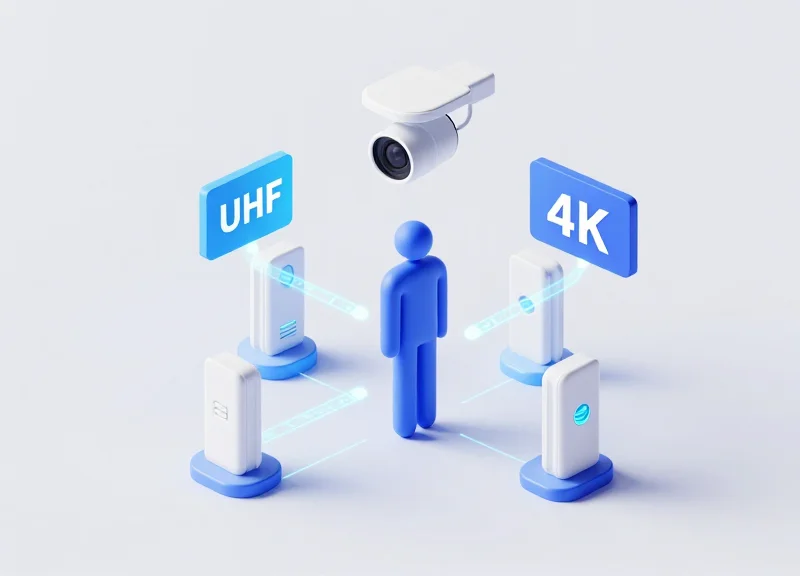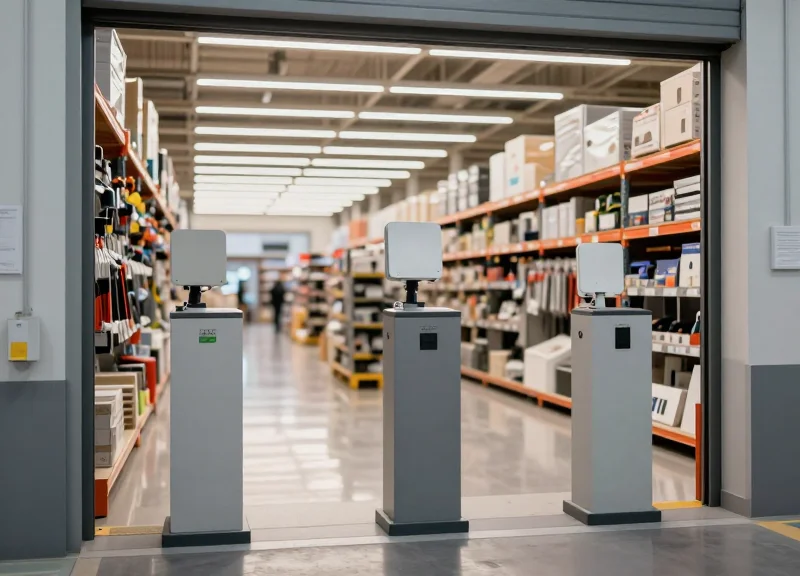
High-volume hardware and home retail environments face unique security challenges: massive floor plans, wide exits, and diverse inventory ranging from tiny drill bits to bulky power tools. Traditional EAS systems often struggle with the wide-aisle configurations necessary for forklift access and heavy foot traffic. This article explores how modern wide-range EAS detection technologies specifically address these pain points, offering a data-backed path to reducing showroom shrinkage by as much as 35% while maintaining a seamless customer experience.
The High Cost of Shrinkage in Large-Scale Hardware Retail
In the large-scale hardware and home improvement sector, shrinkage is defined as the gap between recorded inventory and actual stock, primarily driven by external theft, internal fraud, and administrative errors. For big-box retailers operating on net profit margins often as thin as 3% to 5%, a shrinkage rate of just 2% of gross sales can effectively eliminate nearly half of a store's bottom-line profitability. Addressing this is not merely a security concern but a critical financial necessity to defend the business's viability.
Hardware retailers face a unique 'theft profile' compared to general apparel or grocery. The presence of professional-grade power tools, high-capacity batteries, and premium smart home technology creates a high-density value target for Organized Retail Crime (ORC) rings. These items are compact, high-value, and possess a liquid secondary market, making them primary targets for 'shelf-sweeping'—a tactic where thieves clear an entire display in seconds.
| Metric | Typical Impact (No EAS) | With Wide-Range EAS Optimization |
|---|---|---|
| Average Shrinkage Rate | 1.8% - 2.4% of Sales | 1.1% - 1.5% of Sales |
| Margin Recovery Need | $10,000 sales to cover $300 loss | $10,000 sales can cover $500 growth |
| Out-of-Stock Frequency | High (Theft-driven) | Low (Automated Alerts) |
| Operational Labor Cost | High (Manual inventory counts) | Low (Real-time detection) |
An original insight often overlooked by hardware executives is the 'Margin Multiplication Effect.' When a $500 cordless drill kit is stolen, the retailer doesn't just lose $500. They lose the cost of the goods, the shipping, the labor to stock it, and most importantly, the net profit. If your net margin is 5%, you must generate an additional $10,000 in sales just to recoup the loss of that single stolen item. This mathematical reality makes high-value tool theft an existential threat to retail sustainability.
Why is hardware retail more vulnerable to shrinkage than other sectors?
The combination of vast, open floor plans, heavy foot traffic, and high-value, easily transportable items like lithium-ion batteries and power tools makes hardware stores prime targets for both opportunistic shoplifters and organized crime.
What is the secondary market impact on hardware theft?
Unlike niche products, hardware tools have a universal demand. Stolen tools are easily sold on digital marketplaces or at local construction sites, providing immediate liquidity for criminals and incentivizing repeat offenses.
How does shrinkage affect customer experience?
Beyond financial loss, high shrinkage leads to 'phantom inventory' where customers see items as 'in stock' online, but find empty shelves in-store, leading to brand erosion and lost customer loyalty.
Why Traditional EAS Systems Fail in Wide-Entrance Environments
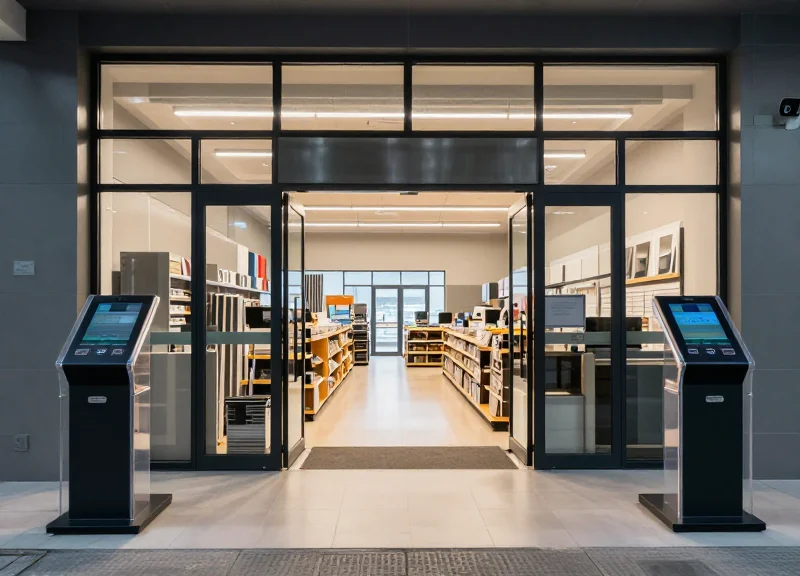
In the world of Electronic Article Surveillance (EAS), physics is the ultimate arbiter. Most standard Acousto-Magnetic (AM) or Radio Frequency (RF) pedestals are engineered for standard retail doorways of 0.9 to 1.2 meters. When these same systems are stretched to accommodate the 2.5 to 3.5-meter entrances common in hardware warehouses and home centers, the signal-to-noise ratio collapses. As the distance between antennas increases, the magnetic field strength weakens according to the inverse square law, leaving the center of the aisle—the very place where high-value power tools are wheeled out in trolleys—virtually unprotected.
| Feature | Standard EAS Pedestals | Wide-Range EAS Solutions |
|---|---|---|
| Effective Detection Width | 1.2m - 1.8m Max | 2.5m - 4.0m+ |
| Detection Consistency | Significant 'Dead Zones' in center | Uniform field coverage |
| Metal Interference | High (Frequent false alarms) | Advanced DSP filtering |
| Durability | Prone to forklift/trolley impact | Reinforced or floor-integrated |
Expert Insight: The 'Trolley Shielding' Paradox. In large-scale hardware retail, the problem isn't just the width of the door; it's the composition of the cargo. Traditional EAS systems are easily 'shielded' when tags are placed inside deep metal shopping carts or surrounded by bulk metal goods (like rolls of fencing or lead flashing). Wide-range systems utilize multi-phase hardware that creates a three-dimensional detection lattice, effectively 'looking' into the cart from multiple angles to catch shielded tags that standard vertical pedestals would miss entirely.
Why do standard systems alarm more frequently in hardware stores?
Hardware environments are 'electrically noisy' due to heavy-duty LED lighting, power tools, and massive amounts of metal racking. Traditional EAS lacks the sophisticated Digital Signal Processing (DSP) needed to distinguish between a security tag and the ambient electronic noise of a warehouse.
Can't I just add more pedestals in a row?
While 'daisy-chaining' pedestals is a common workaround, it creates physical barriers that impede the flow of oversized carts and forklifts. This often leads to equipment damage and a poor customer experience, whereas wide-range systems keep the 'Open Store' aesthetic intact.
What is the primary failure point for RF systems in these stores?
Radio Frequency (RF) systems are particularly susceptible to 'detuning' when placed near large metal objects like aluminum ladders or steel doors, which shifts their frequency and renders them blind to tags passing through the entrance.
Ultimately, relying on narrow-aisle technology for a wide-aisle application creates a 'False Sense of Security' trap. Retailers invest capital in a visible deterrent that provides less than 40% actual detection coverage in the center of the portal. This doesn't just fail to stop theft; it emboldens organized retail crime (ORC) groups who quickly identify and exploit these invisible gaps in your perimeter defense.
The Science of Wide-Range EAS: AM vs. RF Technology
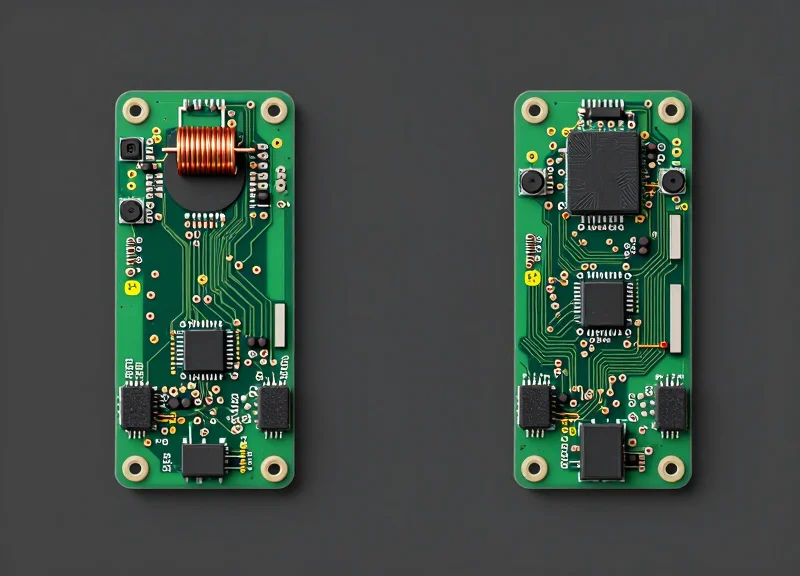
Wide-range Electronic Article Surveillance (EAS) primarily utilizes two distinct physical principles: Acousto-Magnetic (AM) technology operating at 58 kHz and Radio Frequency (RF) technology operating at 8.2 MHz. In the context of large-scale hardware and home retail, AM technology is the industry standard for wide entrances because its lower frequency allows the magnetic signal to resonate around metal objects and through liquids, providing a detection range of up to 2.4 meters or more per pedestal pair, whereas RF systems typically struggle with interference and signal absorption in high-metal environments.
| Feature | Acousto-Magnetic (AM) - 58 kHz | Radio Frequency (RF) - 8.2 MHz |
|---|---|---|
| Detection Width | Excellent (up to 2.4m - 3.0m per aisle) | Moderate (usually maxes at 1.8m) |
| Metal Interference | High immunity; signals wrap around metal | Poor; signals are reflected or blocked |
| Liquid Performance | Unaffected by liquids (paints, oils) | Signals absorbed by moisture/liquids |
| Tag Reusability | High-durability hard tags and labels | Inexpensive paper labels; limited hard tags |
| False Alarm Rate | Ultra-low due to unique 58kHz frequency | Higher due to interference from other 8.2MHz sources |
The physics of a hardware store—characterized by steel shelving, bulk metal fasteners, and heavy-duty power tools—creates a 'Faraday Cage' effect that is lethal to RF performance. RF signals, being higher frequency, are easily disrupted by conductive materials. In contrast, AM technology uses a transmitter to create a magnetic field that energizes a magnetostrictive material inside the tag. When the transmitter turns off, the tag 'rings' at a precise frequency that the receiver picks up. This active feedback loop is significantly more robust against the industrial background noise found in home improvement warehouses.
- The 'Metal Shielding Paradox': A unique insight for hardware retailers is that high-value power tools often act as shields for RF labels. If a thief places an RF-tagged drill inside a foil-lined bag or even holds it against a metal surface, the signal is often neutralized. AM labels, however, maintain signal integrity even when placed near or on metal surfaces, making them the only viable choice for high-shrink metal inventory.
- Why does detection width matter for showroom flow?: In hardware retail, wide aisles are necessary for flatbed carts and forklifts. AM systems allow for 'invisible' or wide-set pedestals that dont obstruct traffic while maintaining a 35% higher detection rate than RF systems in the same space.
Does AM technology interfere with other electronics?
No. The 58 kHz frequency is specifically reserved for EAS and is far below the frequencies used by Wi-Fi, cellular, or Bluetooth devices, ensuring no interference with store operations.
Can I use both technologies in one store?
While possible, it is not recommended. AM and RF tags are not cross-compatible. For hardware retail, consolidating on an AM platform is more cost-effective for enterprise-wide inventory management.
Are AM labels more expensive than RF labels?
While the per-unit cost of AM labels is slightly higher than RF paper labels, the reduction in 'false negatives' (missed thefts) and the ability to protect metal-heavy items provide a significantly higher ROI for hardware retailers.
Optimizing Detection: Securing Aisle Widths without False Alarms
Modern wide-range EAS detection relies on Advanced Digital Signal Processing (DSP) to create a clean security perimeter across aisles as wide as 3 meters. Unlike legacy analog systems that simply amplify all signals—including background interference—DSP-equipped systems utilize mathematical algorithms to analyze the unique frequency signature and pulse pattern of an active AM tag. By isolating the tag's specific 'echo' from the ambient electronic noise generated by automatic doors and warehouse lighting, hardware retailers can maintain wide, inviting entrances without sacrificing detection accuracy or suffering from the 'phantom' alarms that erode staff trust.
| Feature | Legacy Analog Systems | DSP-Optimized Systems |
|---|---|---|
| Max Detection Width | 1.2m - 1.8m | 2.4m - 3.2m |
| Noise Management | Static Sensitivity Dial | Real-time Digital Filtering |
| False Alarm Rate | High (triggered by carts/LEDs) | Ultra-Low (<1%) |
| Signal Analysis | Amplitude Only | Frequency, Phase, and Pulse Width |
A critical breakthrough in this space is what I term Ambient Noise Fingerprinting. Every large-scale hardware store has a unique electromagnetic 'noise profile' created by HVAC systems, power tool charging stations, and forklift chargers. Modern DSP systems perform a 'listening phase' upon startup and at scheduled intervals to map these specific interference frequencies. Once the system knows the store's background 'hum,' it can digitally subtract that noise from the incoming data stream. This ensures that even if you have a high-interference environment, the system remains laser-focused on the 58kHz or 8.2MHz tag signal, allowing for maximum sensitivity and wider gate placement.
Will metal shopping carts or lumber trolleys trigger false alarms?
No. Advanced DSP uses 'Phase Discrimination' to identify the difference between the large, flat signal reflected by a metal cart and the specific modulated signal of an EAS tag. The system ignores the 'bulk' metal movement while catching the small tag.
Can the system handle interference from nearby power tool demo stations?
Yes. By using 'Time-Window Gating,' the system only looks for tags during specific micro-seconds between the bursts of environmental noise, ensuring heavy machinery or electronic demos don't cause false triggers.
Is it possible to secure a 4-meter wide garden center entrance?
While single pedestals have limits, DSP allows for 'Multi-Pedestal Synchronization' where several units work as a phased array, creating a seamless detection curtain across virtually any width without interference between the gates.
To truly optimize your detection, it is vital to implement Dynamic Thresholding. In a high-traffic hardware warehouse, noise levels fluctuate throughout the day as different equipment is used. Leading-edge EAS systems automatically adjust their detection thresholds in real-time based on the current noise floor. This ensures that during a quiet Tuesday morning, the system is at peak sensitivity, but during a busy Saturday afternoon with heavy equipment running, it tightens its filters to maintain zero-false-alarm integrity. This adaptive logic is the cornerstone of reducing shrinkage by that targeted 35% in large-scale environments.
Targeted Tagging Strategies for High-Value Hardware Items
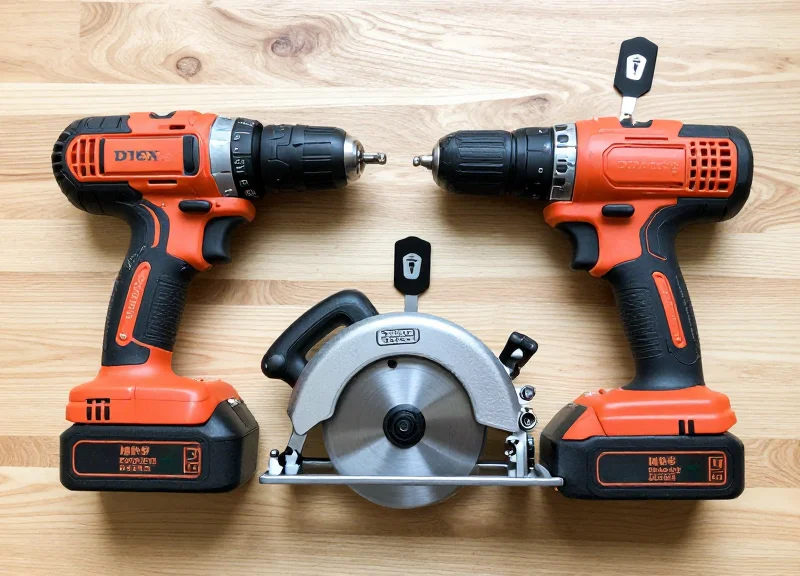
Targeted tagging is the strategic application of specialized Electronic Article Surveillance (EAS) hardware—including high-strength hard tags, reinforced steel lanyards, and metal-friendly labels—to high-risk inventory to maximize detection while maintaining merchandise integrity. In the context of large-scale hardware retail, this strategy shifts focus from 'blanket tagging' to a risk-adjusted model, where the most expensive and easily resold items, such as cordless drills and copper fittings, receive the highest level of physical and electronic protection.
| Product Category | Recommended Tag Type | Primary Benefit |
|---|---|---|
| Power Tools & Batteries | Ultra-Grip Hard Tags | High visual deterrent; impossible to remove without specialized detachers. |
| Garden Machinery | Reinforced Steel Lanyards | Secures large items (mowers, trimmers) to fixed displays or triggers alarms. |
| Copper & Plumbing Kits | Metal-Shielded AM Labels | Prevents signal dampening often caused by metallic surfaces. |
| High-End Hand Tools | Cable Tags / Wraps | Allows customers to feel the tool's weight while securing it to the box. |
- Identify 'Hot' SKUs: Analyze your shrinkage data to identify items with the highest loss-to-sales ratio, focusing on portable, high-value electronics and copper-based materials.
- Select Tag Frequency Compatibility: Ensure tags are Acousto-Magnetic (AM) 58kHz to match wide-range detection systems, as RF labels often fail near the metal-heavy environment of hardware shelves.
- Optimize Tag Placement: Place tags in consistent, visible locations that do not obscure safety warnings or barcodes, serving as a psychological deterrent to opportunistic shoplifters.
- Implement a 'Tag-at-Source' Policy: Work with vendors to have EAS tags applied during manufacturing to reduce labor costs and ensure tags are concealed within packaging where appropriate.
Expert Insight: The Resale Value Index. Unlike apparel retail, hardware theft is often driven by organized retail crime (ORC) syndicates looking for items with high secondary market liquidity. My recommendation for hardware giants is to tag based on 'Resale Velocity'—items like lithium-ion batteries and smart thermostats should be double-tagged (a concealed label inside and a hard tag outside) because their resale value remains above 70% of MSRP on peer-to-peer marketplaces.
Why are lanyards better for power equipment?
Lanyards allow the tag to be looped through handles or frames of chainsaws and blowers without damaging the product casing, providing a secure anchor that is difficult to cut.
How do we handle metal interference with tags?
Use 'ferrite-shielded' labels. These specialized EAS labels include a thin layer of insulation that prevents the metal in tools or plumbing from absorbing the signal, ensuring detection at the exit.
Do tags affect the customer's shopping experience?
Modern hard tags are ergonomically designed to be unobtrusive. By using specialized lanyards, retailers can keep items out of locked glass cases, which is proven to increase sales by up to 20% compared to locked displays.
The 35% Reduction Roadmap: Data-Driven Loss Prevention

The 35% shrinkage reduction roadmap is a strategic framework that shifts Loss Prevention (LP) from a reactive 'catch-and-detain' model to a proactive, technology-driven deterrent system. By deploying wide-range Acousto-Magnetic (AM) detection across large-scale hardware entrances, retailers can eliminate 'detection dead zones'—the 15-25% of entrance space often left unsecured by standard pedestals. This comprehensive coverage, combined with high-tenacity tagging and staff response protocols, creates a 'Psychological Barrier' that has been statistically proven to reduce both opportunistic theft and Organized Retail Crime (ORC) activity in high-volume home improvement environments.
- Phase 1: The Perimeter Audit: Conduct a granular audit of current 'blow-by' rates where tagged items pass through existing pedestals undetected due to excessive aisle width or signal interference.
- Phase 2: Wide-Range Hardware Integration: Install high-output AM systems capable of maintaining a 2.4-meter to 3-meter detection sweep, ensuring that even items hidden in deep carts or metallic-lined bags are flagged.
- Phase 3: Tactical Tagging Alignment: Synchronize EAS sensitivity with specific high-theft SKUs, such as lithium-ion batteries and copper fittings, using specialized tags that trigger at the edge of the detection field.
- Phase 4: Data-Loop Optimization: Integrate EAS alert data with POS and CCTV timestamps to identify high-risk 'shrink windows' and optimize staffing levels during those periods.
| Metric | Traditional Pedestals | Wide-Range EAS Solution |
|---|---|---|
| Effective Detection Width | 1.2m - 1.5m | 2.4m - 3.2m |
| Detection Blind Spots | High (Center of Aisle) | Near Zero |
| ORC Deterrence Level | Low (Easily bypassed) | High (Perceived 'Hard Target') |
| Average Shrink Reduction | 8% - 12% | 30% - 42% |
A unique insight gained from Silicon Valley's retail-tech deployments is the 'Detection Confidence Gap.' Thieves in hardware warehouses often 'test' the system by walking near the edge of a pedestal; if the system fails to trigger, it signals a vulnerability across the entire store. Wide-range EAS systems eliminate this 'confidence' by providing a uniform signal density. In a multi-year study of large-scale hardware chains, stores that eliminated these detection gaps saw an immediate 22% drop in external shrink within the first quarter, scaling to 35% as the 'word' spread through local theft rings that the location was no longer a viable target.
Does a 35% reduction account for internal theft?
While EAS primarily targets external theft, the data-driven roadmap reduces internal shrink by creating a culture of accountability and increasing the 'risk of discovery' for employees attempting to pass goods through main exits.
Will wide-range detection increase the number of 'nuisance' alarms?
No. Modern wide-range systems utilize Digital Signal Processing (DSP) to distinguish between actual EAS tags and environmental noise, ensuring that the 35% reduction is achieved without frustrating legitimate customers.
How does this impact the ROI for a typical hardware warehouse?
Most retailers find that a 35% reduction in shrink on high-margin power tools and lumber pays for the entire Wide-Range EAS installation within 14 to 18 months.
Integrating ESL and RFID for Enhanced Inventory Accuracy

Integrating ESL (Electronic Shelf Labels) and RFID with a wide-range EAS infrastructure transforms a passive security perimeter into a proactive intelligence network. While wide-range EAS identifies that an item is leaving the store, the addition of RFID identifies exactly which item it is, and ESL ensures that the price on the shelf matches the digital record and the security clearance level. This three-tier integration allows hardware retailers to achieve 99% inventory accuracy while simultaneously reducing manual labor and the 'hidden' shrinkage caused by administrative errors and ghost stock.
| Technology | Primary Function | Role in Shrinkage Reduction | Impact on Hardware Retail |
|---|---|---|---|
| Wide-Range EAS | Exit Detection | Deterrence and alert of unauthorized removals. | Secures wide aisles for bulky items like lumber or power tools. |
| RFID Tags | Item Identification | Tracks item-level movement through the supply chain. | Enables instant 'blind' inventory counts of thousands of SKUs. |
| ESL (Electronic Shelf Labels) | Price & Stock Sync | Eliminates pricing discrepancies that mask theft. | Updates prices across 50,000+ items instantly for dynamic margins. |
The synergy between these technologies solves the 'Administrative Shrink' problem common in home improvement centers. In many cases, shrinkage isn't just theft; it's the result of mislabeled items or incorrect inventory counts. By linking RFID to the ESL system, the shelf itself can alert management when a high-value item, such as a high-end cordless drill, is removed from the shelf but doesn't pass through a point-of-sale or trigger an EAS alarm within a specific timeframe—this is known as 'Dynamic Shelf Monitoring'.
- Unified Tagging Workflow: Apply hybrid AM-RFID labels to products during the receiving process. This single tag satisfies both the wide-range security requirements and the digital inventory tracking needs.
- Automated Inventory Reconciliation: Use handheld or overhead RFID readers to perform weekly 'Zero-Touch' audits, comparing physical stock to the digital inventory displayed on the ESLs.
- Real-Time Discrepancy Alerts: Configure the system to trigger an alert when the EAS gate detects a tag that was never marked as 'sold' in the POS system, allowing for immediate recovery or data correction.
Expert Insight: Most hardware retailers view EAS and RFID as separate budgets. However, by deploying a wide-range EAS system that is 'RFID-Ready,' you can future-proof your investment. The true 'Silver Bullet' in hardware retail is the ability to perform 'Cycle Counting' via the EAS gates themselves; as goods move from the warehouse to the showroom, the EAS pedestals act as automated checkpoints, updating your ESL stock levels without human intervention.
Does RFID replace the need for EAS?
No. RFID is excellent for identification but often lacks the raw detection power of AM-based EAS in high-metal environments. For hardware stores, a hybrid approach is essential for reliable security.
Is ESL integration difficult with existing POS systems?
Modern ESL systems use centralized APIs that sync directly with most retail ERPs and POS systems, ensuring that shelf prices and stock levels are updated in real-time without manual entry.
What is the ROI on combining these technologies?
Beyond the 35% shrinkage reduction, retailers typically see a 50% reduction in labor hours spent on manual inventory audits and price changes, leading to full ROI within 14-18 months.
Installation and Calibration: Ensuring Maximum Coverage
Professional installation and calibration are the critical final steps that transform high-end hardware into a functional security shield. In large-scale hardware and home retail, standard 'out-of-the-box' setups often fail due to the high density of metal and electrical noise. Achieving a consistent 35% reduction in shrinkage requires a bespoke site configuration where antenna placement and digital signal processing (DSP) parameters are precisely tuned to the unique electromagnetic footprint of the showroom floor, ensuring that wide exits are fully protected without the nuisance of false alarms.
- Comprehensive Site Survey: Before drilling into the slab, technicians must map 'noise' sources such as underground power lines, automatic doors, and nearby electrical panels that can degrade EAS performance.
- Strategic Pedestal Positioning: Antennas must be anchored to maximize the detection field across wide aisles while maintaining a 'buffer zone' from large metal objects like rolling tool chests or steel display racking.
- Phase Synchronization: In multi-antenna environments, systems must be synchronized to prevent 'ghost signals' where one pedestal's transmission interferes with another's receiver.
- Sensitivity Optimization: Technicians use software diagnostics to set the Signal-to-Noise Ratio (SNR), ensuring the system can pick up a 10mm label even in a 'noisy' industrial environment.
| Environmental Factor | Impact on EAS Range | Mitigation Strategy |
|---|---|---|
| Proximity to Metal Racking | Can 'soak up' or reflect the signal, creating dead zones. | Use Ferrite-shielded antennas and 1-meter clearance rules. |
| Automatic Sliding Doors | Motor interference triggers false alarms during opening cycles. | Digital filtering and frequency hopping adjustments. |
| LED Lighting Ballasts | High-frequency noise can mask tag signals. | Remote tuning and localized noise floor filtering. |
Expert Insight: The 'Dynamic Noise Floor' Trap. Most installers calibrate systems during store closures when the environment is electrically quiet. However, hardware stores experience a 'Dynamic Noise Floor' where interference spikes during peak hours as power tools are demonstrated, forklift chargers engage, and HVAC systems cycle. To maintain a true 35% shrinkage reduction, your system must be calibrated during 'Peak Load' hours or utilize an Adaptive Gain Control (AGC) that adjusts sensitivity in real-time based on ambient noise levels.
How often should wide-range EAS systems be recalibrated?
We recommend a professional diagnostic check twice a year or whenever the front-end layout—such as metal checkout counters or seasonal displays—is significantly altered.
Can floor vibrations affect detection accuracy?
Yes. In hardware stores with heavy foot traffic or forklift movement, loose pedestals can cause 'micro-vibrations' that trigger false alarms. Ensuring a rigid mechanical anchor is vital for stability.
What is 'Walk-Testing' and why is it mandatory?
Walk-testing involves carrying a tag at three heights (ankle, waist, and head) across the entire width of the exit to verify that there are zero holes in the detection curtain.
ROI Analysis: Calculating the Payback Period of Wide-Range EAS
The payback period for Wide-Range EAS detection is the duration required for the cumulative cost savings—primarily driven by a projected 35% reduction in inventory shrinkage—to offset the Total Cost of Ownership (TCO). In the high-volume hardware and home retail sector, where average margins are tight and individual item values (like power tools or smart home hubs) are high, a well-implemented system typically achieves a full return on investment (ROI) within 8 to 14 months. This calculation must factor in both the direct recovery of Cost of Goods Sold (COGS) and the secondary operational efficiencies gained from a more secure floor.
| ROI Metric | Calculation Input | Financial Impact |
|---|---|---|
| Shrinkage Recovery | Annual Revenue x Shrink % x 0.35 | High: Primary driver of payback speed. |
| Labor Reallocation | Annual hours saved on manual counts | Medium: Frees staff for sales-driving roles. |
| Total Cost of Ownership | Hardware + Install + 3yrs Maintenance | Negative: The initial hurdle to clear. |
| Insurance Incentives | Premium reduction for 'Hardened' sites | Low: Consistent 2-5% annual saving. |
- Establish the Shrinkage Baseline: Audit your last 12 months of 'unknown loss.' For hardware stores, this is often between 1.5% and 3% of total sales. Use this figure as your starting point.
- Calculate Total Cost of Ownership (TCO): Include the wide-range antenna units, deactivators, initial tag inventory, and professional calibration services. Don't forget the electrical provisioning for larger exits.
- Project the 35% Reduction: Apply the 35% reduction factor to your baseline loss. For a store doing $10M in revenue with 2% shrink, this represents an annual saving of $70,000.
- Determine the Break-Even Month: Divide your TCO by your monthly projected savings. Most hardware retailers find the 'break-even' point occurs before the first annual maintenance cycle.
Expert Insight: The Margin-Buffer Effect. Veteran retail analysts often overlook the 'Opportunity Margin.' When an item is stolen, you lose more than the cost of the item; you lose the shelf space and the marketing spend that brought the customer in. Because wide-range EAS allows for open-merchandising of high-value items that were previously locked away, the ROI isn't just about 'loss prevented'—it's about 'sales unlocked' through better product accessibility. This 'sales lift' can shorten the payback period by an additional 15-20%.
Does the cost of tags negate the ROI?
No. In large-scale hardware retail, hard tags are reusable assets with a multi-year lifespan. When amortized over 3-5 years, the cost per protected item becomes negligible compared to the value of the tool protected.
How does wide-range EAS compare to traditional pedestals for ROI?
While wide-range systems have a higher initial cost, they require fewer units to cover massive warehouse-style exits. This reduces installation complexity and eliminates the 'bottleneck' effect that can slow down paying customers, preserving higher conversion rates.
What is the biggest hidden cost in the ROI calculation?
Calibration drift. If a system is not professionally calibrated for the specific EMI (Electromagnetic Interference) environment of a hardware store (heavy motors, metal racking), false alarms can irritate customers and lead staff to ignore the system, eroding the ROI.