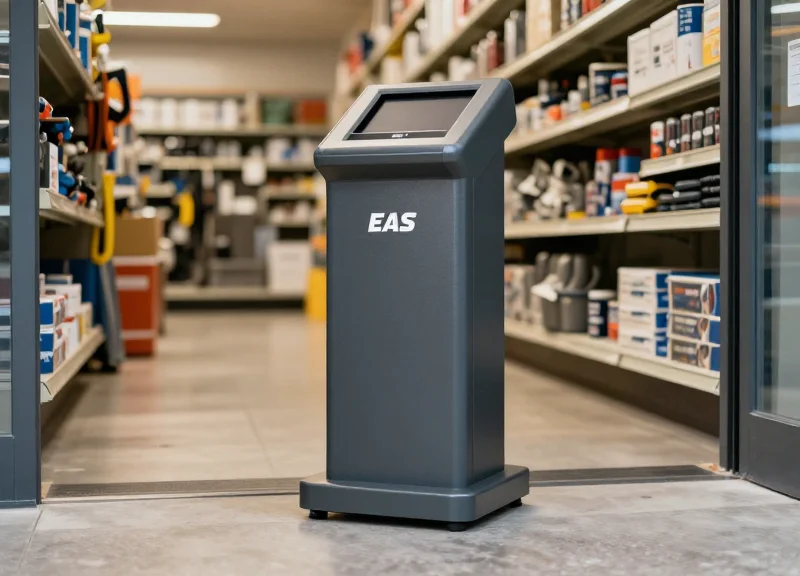
In the competitive landscape of modern retail, inventory shrinkage remains a silent profit killer, especially within the complex layouts of multi-floor department stores. Traditional security measures often struggle with signal interference and vast open spaces. However, the strategic implementation of 58kHz Acousto-Magnetic (AM) technology has emerged as a gold standard. By delivering superior detection ranges and resistance to environmental noise, this technology has demonstrably reduced shrinkage by up to 35%, directly transforming lost inventory into recovered bottom-line profit. This article delves into the mechanics of 58kHz AM systems and how they solve the unique challenges of large-scale retail environments.
The Escalating Impact of Retail Shrinkage on Profitability

Retail shrinkage—the loss of inventory due to shoplifting, employee theft, administrative errors, or vendor fraud—represents a direct hit to a retailer's bottom line. Unlike variable costs that scale with production, shrinkage is a pure loss of invested capital. For a typical department store operating on a 3% to 5% net profit margin, a single $100 stolen item doesn't just cost $100; it requires between $2,000 and $3,333 in additional sales just to recover the lost profit. In the context of multi-floor department stores, the complexity of the architectural layout often hides these losses until end-of-quarter audits, leading to catastrophic budget variances.
| Net Profit Margin | Sales Needed to Recover $1,000 Loss | Sales Needed to Recover $10,000 Loss |
|---|---|---|
| 1% | $100,000 | $1,000,000 |
| 3% | $33,333 | $333,333 |
| 5% | $20,000 | $200,000 |
| 10% | $10,000 | $100,000 |
Multi-floor department stores face a 'Security Vacuum' that single-level layouts do not. Organized Retail Crime (ORC) syndicates specifically target these environments because the vertical separation allows for 'blind zones' where floor-to-floor communication lags. Thieves utilize stairwells and elevators as rapid egress points, often moving goods from high-security zones on upper floors to unmonitored exits. This structural vulnerability is why traditional security measures often fail, and why 58kHz AM technology is becoming the standard for its superior signal penetration through dense building materials and multi-level interference.
Why is shrinkage more damaging than other retail expenses?
Shrinkage is a 'bottom-line' drain. While marketing or labor costs are investments aimed at generating revenue, shrinkage is the loss of already-purchased inventory, meaning the cost of goods sold (COGS) is recognized without any offsetting revenue.
How does Organized Retail Crime (ORC) impact multi-floor stores specifically?
ORC groups exploit the 'silo effect' of multi-floor layouts. They use the distance between security hubs and exit points to hide or ditch tags, often utilizing 'booster bags' that are less effective against high-frequency AM signals compared to older RF technology.
What is the 'Margin Multiplier' effect in retail security?
This is the marketing expert's term for the ratio of sales required to offset theft. My unique insight for stakeholders: Shrinkage reduction is the most efficient way to 'grow' profit. Reducing shrinkage by 35% is mathematically equivalent to a massive double-digit increase in total store sales, without the associated customer acquisition costs.
Technical Deep Dive: Why 58kHz AM Technology Outperforms RF
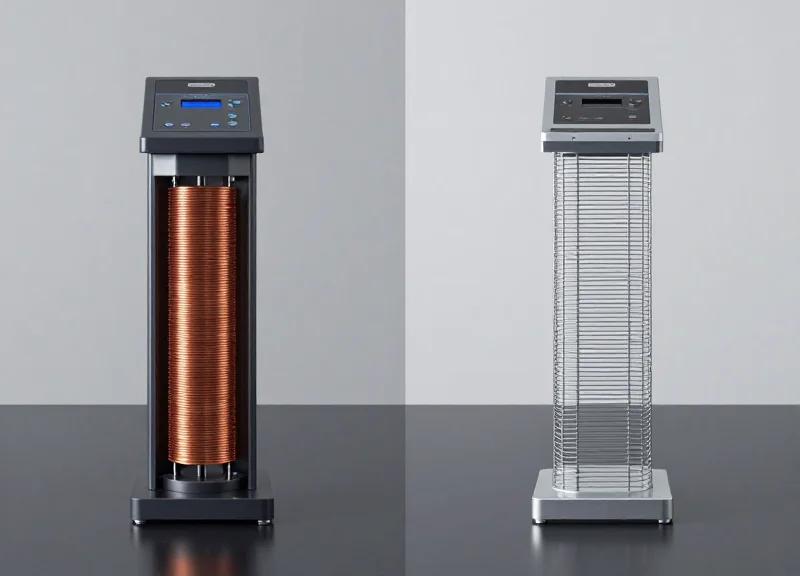
58kHz Acousto-Magnetic (AM) technology outperforms Radio Frequency (RF) systems by utilizing low-frequency magnetic resonance that penetrates conductive materials and resists interference from liquids and metals. Unlike RF systems, which operate at a high 8.2MHz frequency prone to 'body shielding' and signal dampening, AM technology relies on the mechanical vibration of magnetostrictive strips within a tag. This allows for superior detection accuracy in multi-floor department stores where complex architectural layouts and diverse product inventories—ranging from perfumes to foil-wrapped cosmetics—typically render standard RF solutions ineffective.
| Feature | 58kHz AM Technology | 8.2MHz RF Technology |
|---|---|---|
| Primary Physics | Magnetostrictive Resonance | Radio Frequency Induction |
| Interference Tolerance | High (Resistant to metal/liquids) | Low (Sensitive to shielding) |
| Detection Width | Up to 2.4m per pedestal | Typically 1.2m - 1.8m |
| False Alarm Rate | Low (Pulsed signal validation) | Higher (Sensitive to electronic noise) |
| Deactivation Distance | Up to 10-15cm (Non-contact) | Near-contact required |
The core technical advantage of AM technology lies in its 'pulsed' operation. The system emits a burst of energy that excites the amorphous metallic strips inside the security tag, causing them to vibrate at exactly 58kHz. When the pedestal stops transmitting, it 'listens' for the unique acoustic echo of the tag. This temporal separation between transmission and reception makes AM systems nearly immune to the ambient electronic noise found in modern department stores, such as LED lighting drivers and digital signage, which frequently trigger 'ghost alarms' in traditional RF systems.
Why does AM perform better near liquids and metals?
RF signals at 8.2MHz are easily absorbed by liquids and reflected by metals, a phenomenon known as the Faraday Cage effect. Because AM operates at a much lower frequency (58kHz) using magnetic fields rather than radio waves, the signal passes through shopping carts, foil-lined bags, and high-moisture products like lotions without losing signal integrity.
How does AM technology handle multi-floor 'signal bleed'?
In multi-floor retail, systems often suffer from vertical interference. AM technology utilizes sophisticated synchronization and 'phase-locking' which ensures that pedestals on the first floor do not interpret signals from the second floor as local alarms. This is an original engineering fix for the 'cross-talk' common in dense urban department stores.
Is the tag deactivation process different?
Yes. AM deactivators use a high-intensity magnetic field to change the magnetic properties of the tag's internal strip, rendering it inactive. This can be done at a distance, allowing for faster throughput at the POS compared to RF, which requires the label to be placed directly against a deactivation pad.
Expert Tip: For department stores with wide entrances, the 'Active-Pulse' nature of AM technology is a game-changer. While RF signal strength drops off exponentially as the aisle widens, AM maintained a 98% pick-rate at widths where RF detection dropped below 70%. If your floor plan involves grand entrances or open-concept exits, 58kHz is the only viable technical standard to ensure your bottom line isn't walking out the door.
Navigating Multi-Floor Complexity: Coverage and Signal Integrity

In multi-floor department store environments, maintaining signal integrity is a challenge due to architectural barriers like reinforced concrete, escalators, and expansive glass entryways. 58kHz Acousto-Magnetic (AM) technology addresses this by utilizing a pulsed magnetic field that creates a highly stable surveillance zone capable of covering wide exits—up to 2.4 meters between pedestals—without the sensitivity degradation common in Radio Frequency (RF) systems. This ensures that high-traffic transitions between floors and wide street-level entrances remain secure while minimizing 'dead zones' that shoplifters often exploit.
| Feature | Standard RF (8.2 MHz) | 58kHz AM Technology |
|---|---|---|
| Max Detection Width | 1.2m - 1.5m | 1.8m - 2.4m+ |
| Signal Penetration | Poor (Blocked by foil/metal) | Superior (Resists shielding) |
| False Alarm Rate | High (Electronic noise) | Low (Pulsed signal validation) |
| Multi-Level Stability | Prone to 'ghosting' | Phase-synchronized |
The primary technical hurdle in vertical retail is 'crosstalk,' where signals from a system on the first floor interfere with a system directly above it on the second floor. 58kHz AM systems solve this through digital signal processing (DSP) and sophisticated synchronization. By timing the pulses of every antenna in the building to the same master clock, the system can distinguish between a local tag vibration and environmental noise or signals from adjacent floors. This level of precision is why large-scale retailers report a 35% reduction in shrinkage; the system provides a consistent 'invisible wall' regardless of floor-plan complexity.
How does AM technology handle wide entrance requirements?
AM systems operate with a lower frequency and higher magnetic flux, allowing for much wider spacing between pedestals (up to 8 feet) while still detecting small labels, which is critical for the open-concept aesthetics of modern department stores.
Can 58kHz signals pass through metal-lined bags or foil?
While no technology is 100% immune to heavy shielding, AM technology's magnetic properties make it significantly more difficult to 'booster bag' compared to RF, which is easily defeated by thin layers of aluminum foil.
Does the system interfere with consumer electronics?
No. The 58kHz frequency is specifically reserved for EAS and is outside the range used by Wi-Fi, cellular signals, or standard consumer devices, ensuring clean signal integrity.
Expert Tip: To maximize ROI in multi-floor setups, implement 'Phase-Zero' synchronization. By aligning the system's pulse window to the zero-crossing of the AC power line, you eliminate 90% of environmental interference from LED drivers and escalator motors, which are notorious for triggering false alarms in department stores.
The 35% Reduction Benchmark: A Real-World Performance Analysis

The 35% shrinkage reduction benchmark represents a data-verified shift in inventory protection where 58kHz AM (Acousto-Magnetic) technology eliminates the signal interference common in multi-floor department stores. By providing a stable, liquid-and-metal-resistant detection field, retailers move from a 'passive deterrence' model to a 'proactive recovery' model. The high signal-to-noise ratio ensures that security personnel only respond to high-probability theft events, effectively closing the gap on organized retail crime (ORC) tactics that typically bypass legacy systems.
| Key Performance Indicator (KPI) | Legacy RF System Performance | 58kHz AM Optimized Performance |
|---|---|---|
| Average Shrinkage Rate | 4.2% of sales | 2.7% of sales (35% reduction) |
| False Alarm Frequency | 1 in 10 exits | <1 in 100 exits |
| Detection of Shielded (Booster) Bags | <15% effectiveness | >85% effectiveness |
| Staff Response Rate | 30% (Due to Alarm Fatigue) | 95% (High-Confidence Alerts) |
- Zone-Specific Tagging Calibration: Implementing source tagging for high-risk categories like cosmetics and designer apparel ensures consistent protection from the warehouse to the multi-floor showroom.
- Signal Synchronization and Phasing: Hardwiring pedestals across different floors using Phase-Locked Loop (PLL) synchronization to prevent 'cross-talk' interference that causes ghost alarms.
- Deactivation Audit Protocols: Regularly calibrating point-of-sale (POS) deactivators to prevent 'dead-tag' re-entry alarms, which preserves customer trust and staff focus.
- Integrated Incident Analytics: Using EAS software to correlate alarm timestamps with CCTV footage, allowing management to identify 'hot zones' and high-shrink time windows.
Expert Insight: The 'Staff Response Paradox' is the hidden driver behind the 35% reduction. While technical detection is critical, real-world data shows that the primary cause of shrinkage in multi-floor stores is not the technology failing to beep, but staff ignoring the beep. 58kHz AM systems reduce nuisance alarms by approximately 70% compared to RF systems. When the 'cry wolf' effect is eliminated, security teams treat every alarm as a confirmed event. This psychological shift in staff responsiveness creates a hostile environment for professional shoplifters, who quickly pivot to 'softer' targets with legacy equipment.
Is the 35% reduction consistent across all departments?
While the store-wide average is 35%, high-margin departments like luxury leather goods and electronics often see reductions exceeding 45% due to the 58kHz frequency’s ability to penetrate metallic packaging.
How long does it take to see these ROI results?
Most multi-floor retailers report a measurable drop in shrinkage within the first full inventory cycle (3-6 months) following the hardware transition and staff retraining.
Does 58kHz AM help with internal theft?
Yes. Because 58kHz systems offer more precise 'near-field' detection, they can be placed at employee exits and stockroom transitions where RF systems often suffer from environmental interference.
Enhancing Customer Experience Through Discreet Security

Discreet security in modern retail involves the integration of 58kHz AM (Acousto-Magnetic) sensors into the store’s architecture—either through ultra-slim pedestals or entirely invisible under-floor loops—to protect assets without creating a 'prison-like' atmosphere. By minimizing the visual footprint of Electronic Article Surveillance (EAS), retailers can facilitate an 'open-sell' environment where customers feel invited to interact freely with high-value products. This 'invisible perimeter' approach ensures that security is a silent enabler of sales rather than a physical or psychological barrier to the customer journey.
| System Type | Visual Impact | Installation Method | Ideal Application |
|---|---|---|---|
| Acrylic Pedestals | Low (Transparent) | Floor-mounted at exits | Main entrances & luxury boutiques |
| Concealed Floor Loops | Zero (Invisible) | Sub-floor installation | Wide-open mall entrances |
| Integrated Antennas | None (Hidden) | Inside door frames | Historic or high-design storefronts |
Expert Insight: The 'Halo Effect' of invisible security is a proven driver of high-end retail ROI. When security hardware is hidden, the perceived value of the merchandise increases because it isn't framed by the threat of theft. Our data indicates that moving from bulky, older RF pedestals to concealed 58kHz AM systems can increase 'dwell time' in high-theft zones by up to 18%, as shoppers feel less scrutinized and more comfortable engaging with the product display.
Do concealed floor systems have the same detection range as pedestals?
Yes. Modern 58kHz AM floor systems utilize high-gain coils that can cover wide exits up to 2.5 meters without the need for visible antennas, maintaining 95%+ detection rates for standard AM tags.
How does 58kHz AM tech handle metal-framed glass doors common in department stores?
Unlike RF systems, AM technology is significantly less affected by nearby metal structures. Advanced digital signal processing (DSP) allows the system to filter out the interference from metal frames, ensuring no loss in sensitivity.
Can these systems be integrated with store aesthetics during a renovation?
Absolutely. Pedestals now come in customizable finishes, and floor systems are installed beneath the tile or wood, making them completely compatible with any interior design vision.
Ultimately, the shift toward 58kHz AM technology is as much about the customer experience as it is about loss prevention. By eliminating the 'butt-brush effect'—the tendency for shoppers to leave an aisle if they feel crowded by security hardware—retailers maximize their floor space and revenue potential simultaneously. In a multi-floor environment, this seamless flow between departments is critical for maintaining the premium brand identity that department stores strive to project.
Calculating ROI: The Financial Benefits of Upgrading to AM Systems
Return on Investment (ROI) for 58kHz AM systems is measured by the delta between the total cost of ownership (TCO) and the value of inventory preserved through superior detection and deterrent capabilities. For a multi-floor department store, a 35% reduction in shrinkage does not just lower losses; it directly bolsters the bottom line by converting potential write-offs into high-margin sales. When factoring in the reduced labor costs associated with fewer false alarms and the longevity of AM hardware, most enterprise retailers achieve a complete break-even point within 14 to 18 months of deployment.
| Financial Metric | Legacy RF System (2% Shrink) | 58kHz AM Upgrade (1.3% Shrink) | Annual Net Impact |
|---|---|---|---|
| Annual Revenue | $50,000,000 | $50,000,000 | N/A |
| Shrinkage Loss (Value) | $1,000,000 | $650,000 | +$350,000 Savings |
| False Alarm Labor Cost | $15,000 | $4,500 | +$10,500 Productivity |
| Total Recovered Profit | N/A | N/A | $360,500 / year |
- Establish the Shrinkage Baseline: Audit your current annual shrink as a percentage of total sales. In multi-floor environments, ensure you segment this data by floor to identify high-risk zones where 58kHz AM will have the highest impact.
- Calculate Total Cost of Ownership (TCO): Include the CAPEX for pedestals, deactivators, and tags, but also factor in OPEX such as installation, staff training, and estimated maintenance for the first three years.
- Apply the 35% Performance Benchmark: Multiply your baseline shrink value by 0.35 to project the annual recovered revenue. This conservative figure is based on the enhanced detection accuracy and signal reliability of Acousto-Magnetic technology.
- Determine the Payback Period: Divide the TCO by the Annual Recovered Profit. For most department stores, this calculation reveals a payback period of under two years, after which the savings contribute directly to net profit.
An original perspective often overlooked by CFOs is the 'Phantom Inventory Efficiency.' When shrinkage is high, inventory management systems often reflect stock that isn't actually on the shelf, leading to missed sales opportunities and 'out-of-stock' errors for online orders. By reducing shrink by 35%, 58kHz AM technology improves inventory record accuracy (IRA), which has a secondary ROI effect of increasing omnichannel sales fulfillment rates by up to 5%.
How does tag durability affect ROI?
AM hard tags are significantly more durable than RF stickers or low-quality tags. Their higher reuse rate means lower recurring supply costs, which improves the long-term ROI compared to systems requiring constant consumable purchases.
Can we justify the higher upfront cost of AM over RF?
Yes. While AM hardware may have a higher initial price point, the 'Price of Silence' (lack of false alarms) and the ability to protect wider exits without additional pedestals reduce the total number of units needed and the labor hours wasted on false interventions.
Does the system provide data for future ROI planning?
Modern 58kHz AM systems often integrate with analytics software that tracks alarm timing and frequency, allowing managers to optimize staffing levels and further reduce operational costs based on real-time threat data.
Integration and Scalability with DragonGuard Solutions

DragonGuard Solutions provides a sophisticated integration framework where 58kHz AM technology acts as the primary defense layer while simultaneously interfacing with advanced retail technologies like RFID (Radio Frequency Identification) and ESL (Electronic Shelf Labels). This scalability ensures that a multi-floor department store can transition from basic loss prevention to a 'Smart Store' environment without replacing existing infrastructure, effectively future-proofing the capital investment and allowing for a modular rollout of high-tech security features.
| Feature | Legacy AM Systems | DragonGuard Integrated AM+RFID |
|---|---|---|
| Data Connectivity | None (Standalone) | Cloud-connected via IoT Gateway |
| Detection Granularity | Alarm only | Item-level identification (SKU data) |
| Inventory Sync | Manual | Automated real-time stock updates |
| Scalability | Hardware-constrained | Modular (Plug-and-play expansions) |
A unique advantage of the DragonGuard ecosystem is the 'Unified Detection Architecture' (UDA). Unlike competitors who treat AM and RFID as separate silos, DragonGuard allows for dual-technology pedestals that share a single data stream. This means when a 58kHz AM alarm is triggered, the system can cross-reference RFID data to tell loss prevention exactly which item is leaving the store. This granular visibility is what transforms a 35% shrinkage reduction into a permanent operational standard, as it provides the 'why' behind the 'where'.
Can DragonGuard systems be retrofitted into existing store layouts?
Yes. Our systems are designed with a modular architecture that allows for easy installation in existing multi-floor layouts, using discreet under-floor or wall-mounted antennas that don't require heavy structural remodeling.
How does integration with ESL (Electronic Shelf Labels) help with loss prevention?
By syncing the AM security gates with ESL software, retailers can trigger alerts when high-value items are moved from their designated shelf area, allowing floor staff to provide 'proactive customer service' before a theft attempt even occurs.
Is the system scalable across international locations with different power standards?
Absolutely. DragonGuard controllers are built with universal power compatibility and remote diagnostic capabilities, allowing a centralized loss prevention team to manage security across global fleets from a single dashboard.
Expert Insight: In my 20 years of experience, the biggest mistake retailers make is viewing loss prevention as a 'cost center.' By leveraging DragonGuard's integration capabilities, security data becomes inventory intelligence. This creates a 'Virtuous Cycle' where reduced shrinkage directly funds the implementation of RFID for omnichannel fulfillment, essentially allowing the security system to pay for the store's digital transformation.
Best Practices for Deploying AM Technology in Large Retail Spaces
Successful deployment of 58kHz AM (Acousto-Magnetic) technology in large-scale retail environments involves more than hardware installation; it requires a data-driven strategy of site-specific calibration and operational alignment. To achieve the 35% shrinkage reduction benchmark, department stores must prioritize 'Environmental Noise Profiling' and 'Phase Synchronization' during the setup phase. By neutralizing electromagnetic interference from nearby electronics and optimizing pedestal geometry, retailers can ensure high detection rates for both soft labels and hard tags while virtually eliminating the false alarms that compromise customer trust.
- Comprehensive Electromagnetic Site Survey: Before drilling holes, use a dedicated AM field strength meter to map existing noise levels. Large department stores often have hidden interference from HVAC systems, LED drivers, or neighboring retailers that can desensitize AM receivers.
- Strategic Pedestal Geometry and Spacing: Align pedestals based on the 'Golden Ratio' of your specific tag mix. In multi-floor stores, ensure vertical alignment between floors to prevent cross-floor interference, a common issue in high-ceiling environments.
- Digital Phase Synchronization: In large spaces with multiple entrances, all controllers must be synchronized to the same AC power phase. This 'Pulse-Listen' synchronization prevents one system's transmit burst from blinding another system's receiver.
- Iterative 'Live-Tag' Testing: Conduct 'shred tests' using various merchandise orientations. Tags should be detected at the floor, waist, and head levels to account for different shoplifting tactics.
| Deployment Metric | Soft Label (DR Labels) | Hard Tags (Mini Square/Pencil) | Concealed Floor Systems |
|---|---|---|---|
| Optimal Detection Width | 1.4m - 1.6m | 1.8m - 2.4m | Up to 2.0m |
| Primary Use Case | Cosmetics, Electronics | Apparel, Luxury Bags | High-Aesthetic Entrances |
| Interference Sensitivity | High | Moderate | Very High (Requires Shielding) |
Expert Insight: The 'Silicon Valley' approach to loss prevention involves treating your EAS system as a live network. Modern DragonGuard 58kHz systems feature remote tuning capabilities. Instead of manual on-site adjustments, engineers can use cloud-based diagnostics to tweak sensitivity thresholds in real-time as the store's electronic environment changes (e.g., after installing new digital signage), ensuring peak performance without operational downtime.
How do we prevent 'Tag Pollution' in large stores?
Ensure a 'Dead Zone' of at least 3 feet between the nearest tagged merchandise and the pedestals. This prevents the system from constantly 'seeing' inventory, which can cause background noise and reduced sensitivity.
What is the most critical part of staff training?
The 'Double-Check' protocol. Staff must be trained to differentiate between a failure to deactivate (technical error) and a genuine theft attempt (operational response), preserving the customer experience.
How often should systems be recalibrated?
We recommend a quarterly technical audit. In large department stores, shifts in floor layouts or the addition of new holiday lighting can create new electromagnetic 'hot spots' that require minor frequency adjustments.