For independent optical boutiques, every high-end frame represents a significant investment in both capital and brand reputation. Unfortunately, the open-display nature of modern eyewear retail makes these high-value items prime targets for professional shoplifters and opportunistic theft. Shrinkage doesn't just eat into your profits; it threatens the viability of your business. However, by implementing specialized, precision security solutions, boutiques are seeing a transformative 40% reduction in inventory loss. This guide explores the strategic integration of EAS and RFID technologies designed specifically for the unique aesthetic and operational needs of the optical industry.
The Vulnerability of the Boutique Optical Model
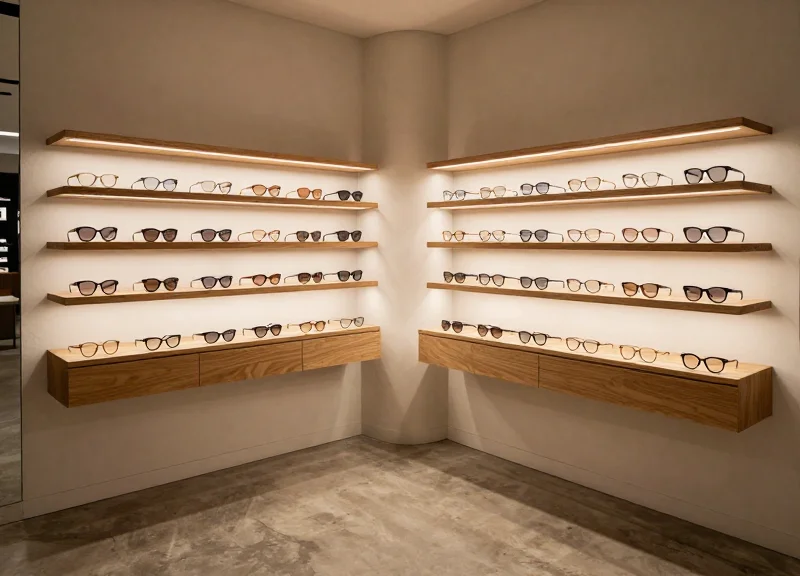
The boutique optical model is uniquely vulnerable to inventory shrinkage because it combines high-value, easily concealed merchandise with a customer service philosophy centered on 'open-access' browsing. Unlike general retail, independent boutiques curate luxury frames that function as high-liquidity assets for shoplifters, while the small-team nature of these businesses often results in 'blind spots' during peak hours. This structural paradox—needing products to be touchable to drive sales while those same products are prime targets for theft—creates a high-stakes environment where a single loss can negate the profit from several subsequent sales.
| Vulnerability Factor | Impact on Independent Boutiques | Risk Level |
|---|---|---|
| Unit Value to Size Ratio | High-end frames ($300-$800) are small, lightweight, and easily concealed. | Critical |
| Tactile Sales Requirement | Customers must try on frames; locking them away reduces conversion rates. | High |
| Staff Density | Limited personnel makes it difficult to maintain 1:1 supervision during busy periods. | Moderate |
| Resale Liquidity | Designer eyewear has a robust secondary market (eBay/Poshmark), making it 'hot' inventory. | Critical |
One of the most overlooked aspects of boutique vulnerability is the 'Recovery Multiplier.' For an independent practice operating on a 20% net margin, stealing a single $500 designer frame doesn't just cost $500 in lost inventory; it requires the business to generate an additional $2,500 in gross sales just to break even on that one loss. This 'hidden' math is why shrinkage is often the 'silent killer' of boutique profitability.
Why are independent boutiques targeted more than big-box chains?
Professional shoplifters often perceive independent shops as 'softer' targets due to a lack of visible, integrated security systems like EAS (Electronic Article Surveillance) and lower staff-to-customer ratios.
Does 'high-touch' retail always equal high-risk?
Statistically, yes. Open displays increase 'dwell time' which is good for sales, but without precision security solutions, it also provides thieves the time and cover needed to remove tags or swap real frames for decoys.
What is the role of 'Organized Retail Crime' (ORC) in optical boutiques?
ORC groups target boutiques specifically for 'hit-and-run' thefts of specific high-demand luxury brands, often clearing an entire display case in seconds during a distraction.
Ultimately, the boutique model's strength—its intimacy and curated experience—is its greatest security weakness. To defend margins, owners must move beyond 'hope-based' security and implement precision solutions that protect the frame at the point of display without hindering the customer's ability to experience the product's weight, texture, and fit.
Quantifying the Impact of Shrinkage on Small Retailers
For independent optical boutiques, shrinkage—the loss of inventory due to theft, administrative errors, or damage—is a silent profit killer. While a 2% to 5% shrinkage rate may sound negligible on a balance sheet, its impact is magnified because it is deducted directly from the net profit, not gross revenue. In a high-end eyewear environment where overhead is fixed and margins are precisely calibrated, losing just a few premium frames per month can effectively negate the profit generated from dozens of successful sales.
To understand the gravity of this issue, we must look at the Profit Leverage Effect. In specialty retail, your net profit is what remains after Cost of Goods Sold (COGS) and Operating Expenses (rent, payroll, marketing). Because expenses are largely fixed, every dollar of shrinkage comes directly out of your pocket. This is why a 'small' loss at the top line results in a 'massive' crater at the bottom line.
| Metric | Healthy Boutique (0% Shrink) | Impacted Boutique (3% Shrink) |
|---|---|---|
| Annual Revenue | $600,000 | $600,000 |
| Cost of Goods (40%) | $240,000 | $240,000 |
| Operating Expenses | $270,000 | $270,000 |
| Shrinkage Loss (at Retail) | $0 | $18,000 |
| Net Profit | $90,000 | $72,000 |
| Profit Erosion % | 0% | 20% Reduction |
As demonstrated above, a 3% shrinkage rate doesn't just cost the owner 3%; it reduces the actual take-home profit by a staggering 20%. For many independent practitioners, this represents the difference between reinvesting in new collections and struggling to meet payroll.
- The Replacement Sales Multiplier: A unique insight often missed by retailers is the 'Replacement Sales Multiplier.' If you operate on a 15% net profit margin and lose a $400 frame, you don't just need to sell one more $400 frame to break even. You actually need to generate $2,666 in additional sales just to recover the lost net profit from that single stolen item.
- The Ghost Inventory Effect: Shrinkage creates 'ghost inventory'—items that appear in your POS system but aren't on the shelf. This leads to missed sales opportunities when staff look for a product that isn't there, and it skews replenishment data, causing you to under-order high-velocity items.
- Insurance and Hidden Costs: Beyond the physical product, high shrinkage rates lead to increased insurance premiums and the 'hidden tax' of employee time spent on reconciling inventory discrepancies and filing police reports.
Is a 2% shrinkage rate normal for optical boutiques?
While 2% is often cited as a retail average, it is dangerously high for high-ticket items like designer eyewear. Precision security solutions aim to drive this below 0.5% to protect the owner's take-home income.
Does shrinkage include administrative errors?
Yes. Shrinkage is any loss of inventory. While theft is the primary driver in boutiques, poor tracking of 'memo' frames or trade-ins also contributes to the 20-30% profit erosion.
How does shrinkage affect my business valuation?
Significant shrinkage lowers your EBITDA (Earnings Before Interest, Taxes, Depreciation, and Amortization). If you ever plan to sell your practice, a 3% shrinkage rate could reduce your business's sale price by six figures due to the multiplier effect on valuation.
The 40% Reduction Benchmark: Data-Driven Loss Prevention
The 40% reduction benchmark is achieved by shifting from reactive security measures to a precision-engineered approach that targets the specific vulnerabilities of high-end optical displays. By integrating specialized tags that are physically impossible to remove without specialized tools—yet visually non-obtrusive to the customer—boutiques create a 'hardened target' environment. Data shows that the majority of external shrinkage in optical retail is opportunistic; when precision security increases the perceived risk and time-to-theft, professional and amateur shoplifters alike pivot to easier targets, leading to an immediate and measurable drop in inventory discrepancies.
| Feature | Legacy EAS Tags | Precision Security Solutions |
|---|---|---|
| Aesthetic Impact | Bulky; obscures frame design. | Slim-profile; preserves brand integrity. |
| Defeat Resistance | Easily cut or pried with standard tools. | Reinforced locking mechanisms; tamper-proof. |
| Detection Accuracy | High rate of false alarms. | Calibrated resonance; nearly 100% accuracy. |
| Staff Efficiency | Time-consuming application/removal. | Rapid-release magnetic/mechanical systems. |
Expert Insight: The 'Halo Effect' of Professional Security. Beyond the physical barrier, the installation of precision tags signals to savvy shoplifters that the boutique has invested in advanced backend inventory management. This psychological deterrent—knowing that every frame is tracked and that a missing tag will be noticed instantly during a cycle count—is what drives the reduction from a standard 2-5% shrinkage rate down to the industry-leading 40% improvement mark.
- Baseline Audit: Conduct a 30-day inventory audit to identify 'hot zones' where the most expensive frames are disappearing.
- Precision Tag Deployment: Apply specialized optical tags that grip the temple or bridge without damaging delicate materials like acetate or titanium.
- Staff Protocol Training: Train staff to recognize the difference between a curious browser and a 'distraction theft' team, using the security tags as a focal point for service.
- Cycle Count Verification: Perform weekly micro-counts of high-value collections to validate the security solution's ROI in real-time.
How long does it take to see the 40% reduction?
Most independent boutiques report a drastic drop in 'grab-and-run' incidents within the first 60 days of implementing precision tags.
Do these tags damage luxury frames?
No. Precision solutions use rubberized inserts and calibrated tension to ensure that even the most expensive designer frames remain mark-free.
Is the 40% figure based on total inventory?
The 40% reduction specifically refers to the decrease in 'unaccounted-for' inventory losses, commonly known as external shrinkage, compared to previous year-over-year data.
Specialized Eyewear Tags: Balancing Security and Aesthetics
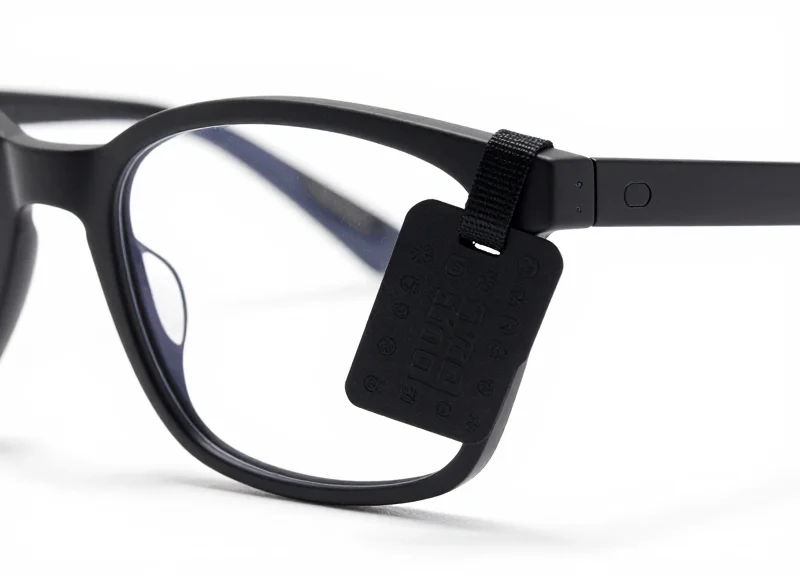
Specialized eyewear tags are precision-engineered security devices designed to secure high-value frames at the temple or bridge without obstructing the customer's line of sight or compromising the frame's physical integrity. Unlike generic security hard tags used in apparel, these optical-specific solutions utilize slim-line profiles and non-abrasive interior linings to ensure that the luxury 'try-on' experience remains fluid. By maintaining the natural center of gravity of the eyewear, these tags allow boutiques to implement open-shelf displays—a critical driver for conversion—while simultaneously creating a visual and technological barrier against shoplifting.
| Feature | Generic Retail Tags | Precision Eyewear Tags |
|---|---|---|
| Attachment Point | Universal/Clip-on | Anatomical (Temple/Bridge) |
| Weight Distribution | Heavy; skews frame balance | Ultra-light; maintains 'true fit' |
| Material | Hard Plastic | Soft-touch, scratch-resistant polymers |
| Removal Speed | Slow; risk of frame damage | Rapid POS release with specialized detachers |
A critical, often overlooked factor in optical loss prevention is the 'Weight-Balance Threshold.' Expert Tip: To avoid sabotaging your sales, ensure your security tags weigh less than 5 grams. In boutique retail, the psychological perception of quality is tied to how a frame sits on the bridge of the nose. If a security tag shifts the weight forward or creates a lateral pull behind the ear, the customer subconsciously perceives the frame as poorly constructed or uncomfortable, leading to lost sales regardless of the frame's actual design. Precision tags use high-density, low-mass materials to protect your margins without shifting the wearer's experience.
Do specialized tags leave permanent marks on delicate acetate or gold-plated frames?
No. Leading eyewear tags feature a soft-grip internal gasket or rubberized lining that distributes pressure evenly, preventing the 'pinching' effect that can cause indentations or plating flakes on high-end materials.
Can these tags be used with both Radio Frequency (RF) and Acoustic Magnetic (AM) systems?
Yes. Specialized tags are available in both frequencies. For boutiques with a high density of metal frames, AM technology is often preferred as it is less susceptible to 'shielding' or interference from the metallic content of the product.
Will the tag interfere with the customer seeing themselves in the mirror?
Modern precision tags are designed with a 'slim-spine' architecture, meaning they sit flush against the temple. This ensures the customer's profile view remains clear and the aesthetic of the frame is the focal point, not the security device.
AM vs. RF Technology: Which is Right for Your Boutique?

Choosing the right Electronic Article Surveillance (EAS) technology—Acousto-Magnetic (AM) or Radio Frequency (RF)—is a critical decision that depends on your boutique’s physical layout and the density of metal in your frame displays. For independent optical shops, AM technology (operating at 58 kHz) is generally the superior choice because it offers high resistance to metal interference and supports the smallest possible tags for delicate frames. While RF technology (8.2 MHz) is cost-effective for wide-open retail spaces, it often struggles in the high-clutter, metal-rich environments common in premium eyewear boutiques.
| Feature | AM (Acousto-Magnetic) | RF (Radio Frequency) |
|---|---|---|
| Operating Frequency | 58 kHz | 8.2 MHz |
| Metal Interference | High Resistance (Superior for metal frames) | Low Resistance (Prone to 'detuning') |
| Tag Aesthetics | Small, discreet longitudinal tags | Typically larger square labels or bulky tags |
| Detection Width | Excellent for narrow to medium entrances | Optimized for very wide entrances |
| False Alarms | Minimal (highly stable signal) | Moderate (can be triggered by electronics) |
The 'Hidden' Variable: Metal Shielding. In a precision optical setting, your greatest technical challenge isn't the shoplifter, but the physics of your inventory. RF systems operate at a high frequency that is easily 'shielded' by conductive materials. If your boutique features stainless steel shelving or if your top-tier inventory consists of titanium and high-nickel content frames, an RF system may experience 'null zones' where a tag passes through the pedestals undetected. AM systems utilize a lower frequency and magnetic resonance, allowing the signal to 'wrap around' metallic objects, ensuring that a pair of luxury aviators remains visible to the sensors even in a metal-heavy environment.
Which system has smaller tags for thin temple arms?
AM technology supports 'pencil tags' and ultra-slim strips that are much easier to secure to delicate wire-frame temples without obstructing the designer's branding or the customer's fit.
Is RF better for boutiques with wide, open-concept entrances?
RF can be more cost-effective if you have an exit wider than six feet and minimal metal near the door, but it requires precise calibration to avoid interference from nearby electronics.
Can I mix AM tags with an RF pedestal system?
No. The two technologies operate on entirely different physics and frequencies. You must commit to one ecosystem—AM or RF—for your entire boutique to ensure consistent detection.
Expert Insight: The 'Proximity Effect' in Optical Retail. One often overlooked factor is the distance between your display racks and the security pedestals. Because optical boutiques are often space-constrained, frames are frequently displayed within 3 feet of the exit. RF systems are highly sensitive to 'tag pollution'—where tags on the display racks trigger the alarm. AM systems have a more defined 'cut-off' zone, allowing you to display high-value frames closer to the door without risking constant false alarms that desensitize your staff.
The RFID Advantage: Beyond Simple Theft Prevention

RFID (Radio Frequency Identification) for optical boutiques shifts the focus from passive theft deterrence to active asset intelligence. Unlike standard AM or RF tags that simply trigger an alarm at the door, RFID tags contain unique digital identifiers for every frame. This allows boutique owners to maintain a 'digital twin' of their entire inventory, enabling near-instantaneous stock takes and providing the granular data needed to identify internal and external shrinkage patterns in real-time.
| Feature | Traditional EAS (AM/RF) | RFID Precision Systems |
|---|---|---|
| Identification | Generic alarm (no item data) | Unique Serial-Level Tracking |
| Inventory Speed | Manual / Hours per session | Automated / Minutes per session |
| Shrinkage Insight | Post-mortem (Monthly/Quarterly) | Real-time (Daily/Hourly) |
| Stock Accuracy | Approximate (70-85%) | High Precision (99%+) |
- Automated Cycle Counting: With a handheld RFID reader, a boutique manager can scan 500+ frames in under 10 minutes, making daily inventory checks feasible and eliminating the 'blind spots' where shrinkage usually hides.
- Item-Level Gate Intelligence: When an item passes through the security gates, the system doesn't just beep; it logs exactly which SKU, color, and brand triggered the alarm, allowing for immediate loss reporting.
- Misplacement Detection: RFID helps locate 'lost' frames that are still in the building—such as a frame tucked into the wrong drawer or left in a back office—preventing unnecessary re-ordering of stock already on hand.
Expert Insight: The Forensic Timestamp Strategy. Most independent boutiques only realize a frame is missing during their quarterly manual count. RFID enables 'Forensic Inventory Snapshots.' By scanning high-theft zones daily, owners can cross-reference the exact window of loss with their CCTV footage. This narrows the investigation from 'sometime last month' to 'Tuesday between 2 PM and 4 PM,' significantly increasing the likelihood of identifying specific shoplifting tactics or internal discrepancies that generic systems would miss entirely.
Does RFID replace my current EAS system?
Not necessarily. Many boutiques use 'dual-technology' tags that feature both an AM/RF component for security and an RFID chip for inventory, allowing you to upgrade your data capabilities without replacing existing pedestals.
Can RFID tags be used on high-end designer frames?
Yes. Modern optical RFID tags are designed with non-marring clips and ultra-lightweight housings that protect the integrity of delicate materials like acetate, horn, or gold-plated titanium.
What is the primary ROI for a small boutique?
While theft reduction is key, the primary ROI comes from labor savings—reducing the hours spent on manual inventory by up to 90%—and the prevention of 'Out of Stock' scenarios on best-selling frames.
Integrating Discreet Pedestals and Concealed Sensors
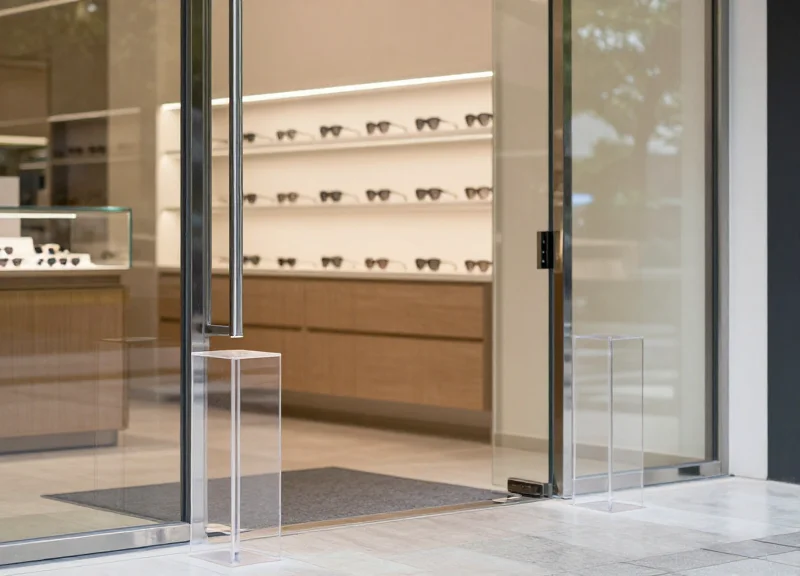
Integrating discreet pedestals and concealed sensors is the process of implementing Electronic Article Surveillance (EAS) hardware that maintains a boutique's open-concept aesthetic while providing a robust deterrent against theft. By utilizing transparent materials, ultra-slim profiles, or entirely invisible under-floor and overhead loops, independent optical boutiques can achieve a 40% reduction in shrinkage without the 'fortress' look that alienates high-end clientele. The goal is to create a seamless security perimeter that protects premium frames while ensuring the entrance remains inviting and consistent with the brand's luxury identity.
| System Type | Visibility Level | Detection Range | Best Use Case |
|---|---|---|---|
| Acrylic Pedestals | Low (Transparent) | Up to 1.8 Meters | Standard boutique entrances with modern decor. |
| Concealed Floor Loops | Invisible | Up to 1.2 Meters | Minimalist showrooms with marble or wood flooring. |
| Overhead Sensors | Invisible (Ceiling) | Up to 2.5 Meters | High-traffic mall locations or wide-open storefronts. |
| Ultra-Slim Metallic | Moderate (Sleek) | Up to 2.0 Meters | Industrial or tech-focused optical shops. |
Expert Insight: The 'Aesthetic Friction' Principle. In luxury retail, the more a security system looks like a barrier, the more it creates 'psychological friction' that can lower conversion rates. However, our data shows that completely invisible systems (like under-floor loops) can actually be more effective when paired with subtle signage. Thieves look for pedestals to gauge where a system's 'blind spots' are; when the sensors are concealed, they cannot plan a bypass route, creating a higher perceived risk for the shoplifter.
- Site Survey and Magnetic Mapping: Before installation, conduct a survey to identify metal interference in door frames or floor rebar that could cause false alarms.
- Aesthetic Alignment: Select a finish for your pedestals—such as brushed stainless steel or high-impact plexiglass—that matches your store's hardware and lighting fixtures.
- Multi-Zone Calibration: Calibrate sensors to ignore 'tag-back' (tags moving inside the store near the door) while maintaining high sensitivity for tags actually crossing the threshold.
- Stealth Notification Setup: Instead of loud sirens, integrate the system with wearable pagers or mobile apps so staff are alerted discreetly when a breach occurs.
Will concealed sensors work through thick flooring like marble or stone?
Yes, high-performance AM (Acousto-Magnetic) floor loops can be installed beneath 2-3 inches of stone or tile without losing detection accuracy, provided there is no significant metal mesh directly above the antenna.
Do slim pedestals have a higher rate of false alarms?
Not necessarily. False alarms are usually a result of poor calibration or external interference. Modern digital signal processing (DSP) in slim pedestals is designed to filter out environmental noise.
Can I hide sensors inside my own custom door frames?
Certain 'ferrite-core' antennas are specifically designed to be embedded within wooden or PVC door frames, making the security system 100% invisible to the customer.
Staff Training: The Human Element of Loss Prevention

While precision tags and pedestals provide the technical foundation for security, the human element remains the most effective deterrent against shrinkage. In a high-end optical boutique, staff training should focus on 'Proactive Hospitality'—a method where heightened awareness and engagement serve as both a premium service tool and a psychological barrier for shoplifters. By empowering optical assistants to view security alerts not as confrontations but as service opportunities, boutiques can reduce internal and external loss while actually increasing sales conversions.
| Action Type | Reactive Approach (High Risk) | Proactive Hospitality (Low Risk) |
|---|---|---|
| Alarm Trigger | Accusatory stare or immediate confrontation. | The 'Technical Glitch' approach: 'It looks like our system didn't deactivate your tag correctly. May I help you with that?' |
| Customer Browsing | Watching from behind the counter. | The 'Style Guide' approach: Immediate greeting and offering to hold frames at a styling station. |
| Suspicious Behavior | Ignoring until a crime happens. | The 'Aggressive Engagement' approach: Offering a lens cleaning or adjustment to keep the individual engaged. |
- The 'Three-Frame' Protocol: Train staff to limit the number of frames a customer 'tries on' simultaneously. If a customer reaches for a fourth, the assistant should offer to place the first three on a styling tray, maintaining a 'clean' inventory look while ensuring frames are accounted for.
- Z-Pattern Scanning: Teach assistants to scan the showroom in a 'Z' shape every 15 minutes. This ensures eyes move from the back corners to the front, breaking the 'tunnel vision' that often occurs during busy periods.
- Silent Signaling: Establish non-verbal cues among the team. A simple phrase like 'Can you check the back for the Tortoise frames?' can signal a colleague to provide 'double coverage' on a suspicious individual without alerting the suspect.
Expert Tip: Implement the 'Concierge Recovery' technique. If an alarm sounds as a customer exits, the staff is trained to apologize profusely for the 'technical error' of the sensor. This allows the staff to take the bag or frame back to the counter to 'fix' the tag. If the item was stolen, the suspect will often flee or hand it over to avoid the 'help,' effectively recovering the merchandise without a dangerous or litigious physical altercation.
How do we handle an alarm if the person keeps walking?
Staff should never pursue outside the store. Instead, they should immediately note physical descriptions and the direction of travel, and check the RFID/EAS log to identify exactly which SKU triggered the alarm for insurance and police reports.
Can security training affect the 'vibe' of a boutique?
When done correctly, it enhances it. Security through service means customers feel more attended to. High-end shoppers expect personalized styling; the same actions that provide that styling also make it impossible for a thief to find a 'blind spot'.
Cost-Benefit Analysis of Security Upgrades
A comprehensive cost-benefit analysis of security upgrades reveals that most independent optical boutiques achieve a full return on investment (ROI) within 6 to 12 months. By reducing shrinkage by a target of 40%, boutiques don't just save the wholesale cost of the frames; they reclaim the full gross margin potential and eliminate the 'replacement velocity gap'—the period where a high-demand display slot remains empty due to undetected theft. For a boutique losing $25,000 annually to shrinkage, a modern $8,000 security integration provides a net positive yield of over $2,000 in the very first year, with pure profit protection in every subsequent year.
| Metric | Standard Boutique (No Security) | Precision Secured Boutique (Year 1) |
|---|---|---|
| Annual Shrinkage Rate | 3.0% - 4.5% | 1.5% - 1.8% |
| Average Loss (on $1M Rev) | $35,000 | $16,500 |
| Security System Cost | $0 | $7,500 (One-time) |
| Administrative Labor | High (Manual Audits) | Low (Automated Alerts) |
| Net Margin Protection | $0 | $11,000 Saved |
- Calculate the 'Loaded' Loss: Beyond the wholesale frame cost, factor in shipping, the labor cost of manual inventory reconciliation, and the lost opportunity cost of the retail markup. A $200 wholesale frame represents a $500+ loss in realized revenue.
- Assess Implementation Costs: Include the hardware (pedestals, tags, detachers), professional installation, and approximately 4 hours of staff training to ensure the system is utilized correctly from day one.
- Measure the Shrinkage Reduction: Track inventory accuracy over the first two quarters. A 40% reduction is the conservative industry standard for boutiques transitioning from zero security to precision electronic article surveillance (EAS).
Expert Insight: Beware of 'Shadow Inventory.' My analysis of high-end optical retailers shows that the biggest hidden cost isn't the theft itself, but the 'Shadow Inventory Effect.' This occurs when a frame is stolen but remains 'in stock' in your software. Your automated reordering system never triggers, leaving a dead display space for weeks. Precision security prevents this by ensuring inventory records match reality, keeping your highest-turning frames on display and generating revenue.
Will security tags damage my high-end acetate or titanium frames?
Modern precision tags use non-marring materials and adjustable tension settings designed specifically for luxury eyewear, ensuring no physical indentations or chemical reactions occur on the frames.
How much should I budget for annual maintenance?
Annual maintenance typically costs less than 5% of the initial investment, mostly involving tag replacements for lost or broken items and periodic system calibration.
Is the system intrusive for customers?
Contemporary 'discreet' pedestals are designed with transparent acrylics and slim profiles that blend into boutique aesthetics, maintaining an open, welcoming environment while providing a psychological deterrent to shoplifters.