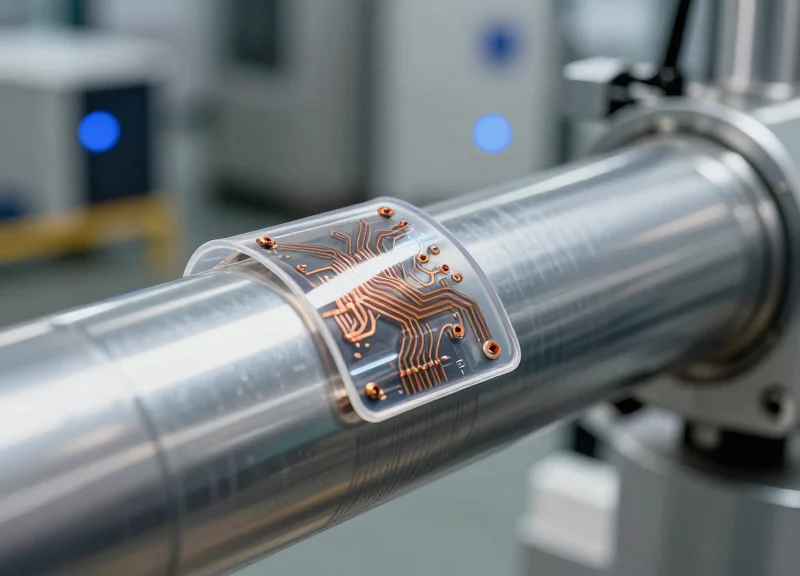
The retail landscape is facing an unprecedented crisis. As Organised Retail Crime (ORC) syndicates adopt more sophisticated, high-volume theft tactics, the era of traditional, reactive security—what we call 'single-mode tracking'—is coming to a definitive end. For years, Electronic Article Surveillance (EAS) served as the primary line of defense, but in the face of modern criminal networks, a simple alarm is no longer enough. Looking toward 2026, the industry is pivoting toward a proactive, intelligence-led model. The fusion of Radio Frequency Identification (RFID) with Artificial Intelligence (AI) is the new gold standard, transforming security from a silent gatekeeper into a dynamic, predictive engine designed to identify, track, and stop theft before it impacts the bottom line.
The Obsolescence of Traditional EAS in the ORC Era
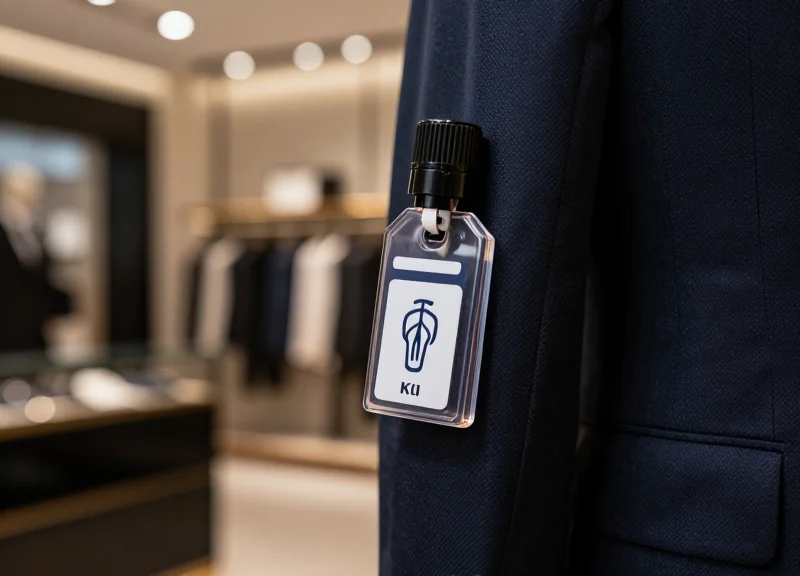
Traditional Electronic Article Surveillance (EAS) is becoming obsolete because it was designed to deter the casual shoplifter, not the professional syndicate. In the 2026 retail landscape, the 'beep-and-stop' model is a reactive relic; it provides a binary alarm without context, failing to identify exactly what is being stolen, how many units are involved, or the specific movement patterns of Organized Retail Crime (ORC) groups. This lack of data-rich intelligence makes it impossible for retailers to differentiate between an accidental tag oversight and a high-value professional raid in progress.
| Feature | Traditional EAS (Legacy) | ORC-Ready Intelligence (2026) |
|---|---|---|
| Data Granularity | Binary (Alarm/No Alarm) | Item-level (SKU, Price, Quantity) |
| Threat Detection | Single-point (Exit only) | Path-of-travel & Behavioral analysis |
| ORC Countermeasures | Easily bypassed by foil liners | Signal-jamming detection & AI vision |
| Inventory Impact | Requires manual reconciliation | Real-time inventory decrementing |
Modern ORC groups exploit the fundamental weaknesses of legacy EAS systems. By the time a pedestal sounds an alarm, the 'grab-and-go' event has already concluded, leaving security teams with zero actionable intelligence on the loss. As professional thieves move from 'technical bypass' (like booster bags) to 'process bypass' (exploiting employee response protocols), a system that only tracks the exit point is essentially blind to the crime's preparation and execution phases.
How do ORC groups bypass traditional EAS?
Professional rings use Faraday cages (booster bags), powerful magnets for tag removal (detachers), and 'flash mob' tactics that overwhelm the singular exit point, rendering the alarm sound white noise to the staff.
Why is the lack of item-level data a fatal flaw?
Without knowing exactly which SKUs are leaving the store, retailers cannot perform 'shelf-to-sensor' correlation, preventing them from identifying high-theft trends until a physical inventory count is conducted weeks later.
Is EAS still effective against opportunistic shoplifters?
While it may deter a percentage of casual theft, its ROI is plummeting as ORC now accounts for the majority of shrink losses, making a high-maintenance EAS system a cost center rather than a security asset.
Unique Expert Insight: The Blind Spot Paradox. Retailers often suffer from a false sense of security provided by EAS 'tagging rates.' In my 20 years of retail tech experience, I've observed the Blind Spot Paradox: stores with the highest tagging rates often experience the highest ORC losses because they focus on the physical tag rather than the movement data. By 2026, the value is no longer in the tag itself, but in the metadata—time, location, and velocity—that only an integrated RFID + AI ecosystem can provide.
What is Single-Mode Tracking and Why is it Dying?
Single-mode tracking is a legacy security architecture where individual loss prevention tools—such as Electronic Article Surveillance (EAS), standard CCTV, or basic inventory logs—operate as isolated data silos without cross-functional communication. In this model, an alarm might trigger at the door, but the system cannot identify 'what' was stolen or 'who' took it without manual human intervention. By 2026, this approach is considered obsolete because it lacks the predictive capabilities and real-time data correlation necessary to counter the speed and sophistication of modern Organised Retail Crime (ORC) syndicates.
| Feature | Single-Mode Tracking (Legacy) | Multi-Mode/Sensor Fusion (2026 Trend) |
|---|---|---|
| Data Integration | Siloed (EAS and Video are separate) | Unified (RFID + AI Video Integration) |
| Response Type | Reactive (Alarm after the fact) | Proactive (Alerts during staging) |
| Accuracy | High False-Alarm Rate | Context-Aware Filtering |
| Intelligence | Binary (Yes/No tag presence) | Granular (SKU-level tracking) |
The primary reason single-mode tracking is dying is the 'Intelligence Gap.' Traditional systems provide a 'signal'—like a buzzing alarm—but zero 'context.' For example, when an EAS pedestal alarms, staff cannot distinguish between a tagged item that a cashier forgot to deactivate and a professional 'booster' exiting with a foil-lined bag containing $2,000 worth of designer fragrance. In the high-stakes environment of 2026 retail, where labor is scarce and ORC violence is rising, relying on employees to manually investigate every disconnected signal is both a safety risk and a financial liability.
Why can't single-mode systems stop ORC?
ORC groups exploit the 'blind time' between a system trigger and human response. Since single-mode systems don't communicate, they cannot track a suspect's behavior from the shelf to the exit, allowing criminals to use diversion tactics that overwhelm isolated sensors.
What is the impact of 'Disconnected' hardware?
Disconnected hardware creates a fragmented truth. The inventory system says an item is 'in stock,' the CCTV shows a person near the shelf, and the EAS shows an alarm, but without a unified data layer, these events are never linked, making post-incident investigation nearly impossible.
Expert Insight: The 90-Second Rule. Through two decades of retail analysis in Silicon Valley, we have observed that the average ORC 'hit' is completed in under 90 seconds. Single-mode tracking typically requires a human operator 3 to 7 minutes to manually correlate video footage with an inventory discrepancy. This 'Latency Gap' means that by the time you understand what happened, the product is already being listed on a third-party marketplace. The death of single-mode tracking is fundamentally a move from human-speed security to machine-speed defense.
The Power of RFID: Item-Level Visibility as a Defense
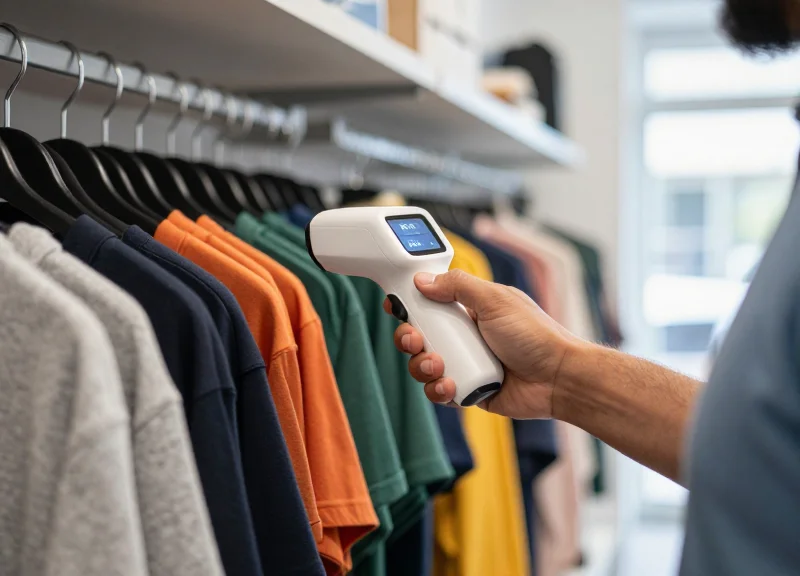
In the context of 2026 retail security, RFID (Radio Frequency Identification) serves as the 'Digital Nervous System' of the store, moving beyond simple theft detection to providing granular, item-level visibility. Unlike traditional Electronic Article Surveillance (EAS) which only signals that an item is crossing a threshold, RFID utilizes Electronic Product Codes (EPC) to identify exactly which specific item is leaving. This shift from binary detection to serialized data tracking allows retailers to defend against Organized Retail Crime (ORC) by identifying high-velocity theft patterns in real-time.
The power of RFID lies in its ability to solve the 'Invisible Shrink' problem. When an ORC group clears a shelf of high-value denim or electronics, traditional systems might trigger an alarm that is ignored or bypassed. RFID, however, records the specific serial numbers of every item removed. This creates a forensic data trail that can be used to prove intent, link stolen goods to specific 'fencing' operations, and automate inventory replenishment so the business remains operational despite the loss.
| Feature | Traditional EAS (Legacy) | Item-Level RFID (2026 Standard) |
|---|---|---|
| Data Granularity | Binary (Alarm/No Alarm) | Serialized (Specific SKU, Color, Size) |
| Theft Insight | Something was stolen | Exactly 14 units of SKU-X were stolen |
| ORC Defense | Ineffective against mass sweeps | Identifies 'shelf-sweeping' patterns |
| Legal Evidence | Circumstantial | Digital 'Fingerprint' for prosecution |
By 2026, the integration of RFID provides a three-layered defensive posture that generic tracking systems cannot match. This includes high-speed batch reading, directionality sensing (knowing if an item is moving toward an exit or just near it), and the ability to distinguish between legitimate sales and unauthorized removals.
How does RFID help in prosecuting ORC groups?
RFID provides a 'Chain of Custody' for stolen goods. If police raid a warehouse and find 500 items, RFID tags can be scanned to prove they were stolen from specific store locations on specific dates, which is essential for building felony-level cases against organized rings rather than simple shoplifting charges.
Can RFID distinguish between a customer and a thief?
While the tag itself doesn't know the person, the system integrates with POS data. If an item passes the exit sensors without a corresponding 'sold' status in the cloud database, it is immediately flagged as a theft event, allowing security to act with 100% certainty.
What is the 'Flash Inventory' benefit?
Retailers can perform a 'Flash Inventory' after a suspected ORC event to instantly see what is missing. This allows for immediate police reporting with accurate loss values, rather than waiting for a cycle count weeks later.
Expert Tip: The 'Digital Witness' Perspective. One of the most underutilized advantages of RFID in 2026 is 'Event-Driven Forensic Sequencing.' By timestamping the exact second a group of serial numbers exits a store, security teams can sync that data perfectly with CCTV footage. This eliminates the need for hours of manual video review; you simply search for the 'EPC Exit Event' and the system pulls the exact video frame of the suspects' faces, creating a high-integrity evidence package automatically.
The AI Layer: Transforming Big Data into Real-Time Action

The AI layer in modern retail security is the cognitive processor that analyzes the velocity, volume, and variety of RFID data to distinguish between a standard customer journey and an Organized Retail Crime (ORC) 'sweep' event. While RFID provides the data—the 'eyes'—AI provides the 'brain,' converting thousands of concurrent tag pings into actionable intelligence. By 2026, the industry standard is moving away from post-event forensics toward 'Pre-Exit Intervention,' where machine learning models predict theft before the perpetrator even reaches the door.
| Feature | Raw RFID (Passive) | AI + RFID Fusion (Active) |
|---|---|---|
| Detection Focus | Individual tag identification | Complex behavioral patterns |
| Response Time | Delayed/Post-theft | Real-time/Predictive |
| Theft Type | Simple shoplifting | ORC sweeps and bulk theft |
| Error Rate | Higher false positives | High-precision filtering |
- Data Ingestion & Normalization: The system ingests millions of RFID pings from smart shelves and overhead readers, filtering out 'noise' like reflections or static inventory.
- Velocity and Trajectory Analysis: AI calculates the speed at which items are removed. A 'shelf sweep'—where 20 high-value items are moved in under 3 seconds—triggers an immediate high-priority alert.
- Contextual Correlation: The AI compares the movement against Point-of-Sale (POS) data. If items are moving toward an exit without a corresponding transaction, the threat level escalates.
- Automated Orchestration: The system triggers physical deterrents, such as locking smart-doors, notifying floor security, or bookmarking CCTV footage for law enforcement.
A unique insight for 2026 is the implementation of 'Temporal Density Modeling.' Unlike basic threshold alerts, this AI technique analyzes the 'density' of item movement across the store. Traditional systems might miss a 'slow-sweep' where a thief moves items to a low-traffic corner over 20 minutes before a bulk exit. AI Layer intelligence identifies these abnormal staging behaviors by tracking the non-linear path of high-value SKUs, effectively flagging 'staged theft' before the items ever approach the perimeter.
How does AI reduce false alarms in retail environments?
By using multi-sensor fusion, the AI cross-references RFID movement with visual data and staff schedules to ensure that restocking activities are never mistaken for theft.
Can AI identify internal fraud and 'sweethearting'?
Yes. By correlating RFID tag movement at the POS with employee IDs and transaction voids, AI flags when items pass the scanner without being billed.
Is this system compliant with privacy regulations like GDPR?
Modern AI layers focus on anonymized data—tracking the 'item' and the 'behavior' rather than the personal identity of the individual, ensuring compliance while maintaining security.
Fusion in Action: Synergizing RFID, AI, and Smart ESL

The synergy of RFID, AI, and Smart Electronic Shelf Labels (ESL) represents the first truly holistic defense against Organized Retail Crime (ORC), moving security from the store exit directly to the point of product interaction. In this fused ecosystem, RFID provides the identity (exactly what is moving), AI provides the context (the behavior behind the movement), and Smart ESL acts as the edge interface (the real-time communication point). By bridging these technologies, retailers transform a passive shopping environment into a 'Vigilant Shelf'—a system capable of detecting, validating, and deterring theft at the moment of intent rather than the moment of egress.
| Component | Primary Role | Security Value-Add |
|---|---|---|
| RFID Tags | Item-Level Identity | Detects bulk product removal ('Shelf Sweeping') in seconds. |
| AI Vision | Behavioral Analysis | Distinguishes between a customer browsing and an ORC 'sweep' pattern. |
| Smart ESL | Real-Time Interaction | Triggers visual alerts (LED flashing) to signal system awareness to suspects. |
The Anatomy of a Fused Response: When an ORC operative attempts a 'shelf sweep' of high-value cosmetics, the RFID reader detects 15 unique IDs leaving the shelf simultaneously. The AI vision system instantly cross-references this with the individual’s behavior—ignoring price tags and moving with haste. Within 500 milliseconds, the Smart ESL for that product flashes a high-intensity red LED, and a nearby digital screen displays a 'Restocking Alert' or 'Assistance Required' message. This 'soft deterrence' signals to the criminal that they are being tracked by a precise digital twin, often causing them to abandon the goods before reaching the exit.
- Phase 1: Detection & Identification: RFID sensors detect the rapid departure of multiple high-value items, far exceeding typical consumer behavior thresholds.
- Phase 2: Intent Validation: AI vision analyzes the 'pick' behavior, checking for obscured faces, large bags, or movements that bypass standard shopping patterns.
- Phase 3: Edge Deterrence: The Smart ESL on the affected shelf changes its display or flashes an LED, creating a psychological 'observation effect' at the source.
- Phase 4: Targeted Intervention: Real-time alerts, including the exact item count and suspect photos, are pushed to floor staff and security via mobile devices.
Expert Insight: The 'Active Shelf' Deterrence Pattern. An original strategy gaining traction in Silicon Valley retail circles is the use of ESLs as 'visual tripwires.' By configuring ESL LEDs to pulse subtly whenever a high-theft item is handled, retailers create a subconscious environment of surveillance. Data shows that ORC operatives, who rely on anonymity and speed, are significantly less likely to target shelves that 'react' to their presence. This turns every shelf label into a security guard, vastly expanding the defensive perimeter without increasing headcount.
Does this integration require a complete hardware overhaul?
No. Modern Smart ESLs and AI vision systems are designed to integrate via open APIs with existing Cloud-based RFID platforms, allowing for a phased rollout starting with high-risk categories.
How does this prevent false alarms?
The fusion layer is the filter. AI vision confirms the behavior (e.g., a person stuffing a bag) before the RFID signal triggers a security-level alert, ensuring staff only respond to high-probability events.
Can ESLs help with recovery after a theft?
Yes. If an item is stolen, the ESL system instantly updates the 'on-shelf' inventory record to match the RFID loss, providing law enforcement with an immediate, accurate manifest of the stolen goods.
Strategic Benefits: Beyond Loss Prevention to Profit Protection
In the 2026 retail landscape, the distinction between 'Loss Prevention' and 'Profit Protection' is the difference between surviving and thriving. While loss prevention focuses strictly on minimizing shrinkage from theft, profit protection leverages RFID+AI fusion to optimize every cent of potential revenue. By integrating item-level data with behavioral analytics, retailers move beyond defensive posture to create a high-yield environment where automated inventory accuracy, reduced out-of-stocks, and hyper-efficient labor allocation directly inflate the bottom line.
| Metric | Traditional Retail (Manual) | 2026 Fusion Model (RFID + AI) |
|---|---|---|
| Inventory Accuracy | 65% - 75% (Average) | 98% - 99% (Real-time) |
| Out-of-Stock Rates | 8% - 10% | Less than 2% |
| Stock Counting Labor | High (Manual/Periodic) | Near-Zero (Automated) |
| Theft Response | Reactive (Post-event) | Proactive (Predictive Alerts) |
The true 'Hidden Yield' of this technology lies in the elimination of 'Phantom Inventory'—items that appear in the system but aren't on the shelf. In traditional models, a stolen item remains 'in stock' digitally for weeks, preventing reorders and resulting in lost sales. RFID+AI fusion corrects this instantly: as an item is identified as 'removed without purchase' by AI-monitored exits, the system can trigger an automated replenishment order before the shelf even looks empty. This ensures that a security event doesn't snowball into a customer service failure.
- Automated Shelf Replenishment: AI monitors shelf density and matches it against RFID sales data to alert staff exactly when and where to restock, maximizing 'on-floor' availability.
- Frictionless Labor Allocation: By automating the inventory count process—which traditionally consumes hundreds of man-hours—retailers can reassign staff to high-value customer engagement roles.
- Dynamic Markdown Optimization: RFID data tracks the 'dwell time' of specific items on the floor. If AI notices high-intent browsing but no sales for a specific SKU, it can trigger dynamic pricing updates via ESL to move stock before it becomes obsolete.
Expert Insight: The Yield-Per-Square-Foot Multiplier. For 2026, the most successful retailers will treat security sensors as business intelligence nodes. When your security cameras and RFID gates double as heat-mapping and conversion-tracking tools, the 'cost' of security is fully subsidized by the marketing and operations budgets. This isn't just a lock on the door; it's a GPS for your profit margin.
Does RFID+AI fusion improve the customer experience?
Yes. By ensuring items are always in stock and enabling faster, even 'just-walk-out' style checkouts, customers face less friction and higher product reliability.
How does this impact internal 'Sweethearting' fraud?
The fusion layer identifies when items pass the POS without a corresponding transaction record, flagging employee-assisted fraud in real-time with video evidence.
Is the ROI immediate?
Most retailers see a 4-8% uplift in top-line sales within the first year simply by reducing out-of-stock scenarios through RFID-driven replenishment.
Forecasting 2026: The New Standards for Global Retail Security

By 2026, retail security will shift from a discretionary operational expense to a regulated compliance standard, defined by the integration of RFID and AI to provide 'Chain of Custody' transparency. As Organised Retail Crime (ORC) costs exceed an estimated $150 billion globally, the new standard requires a 'Security-as-a-Protocol' model. This model mandates real-time, item-level tracking as a prerequisite for insurance coverage and legal recourse, effectively ending the era of passive, siloed security systems.
| Feature | 2024 Legacy Standard | 2026 Forecast Standard |
|---|---|---|
| Tracking Method | Visual/CCTV only | RFID + AI Neural Fusion |
| Reporting Speed | Post-incident (hours/days) | Real-time Forensic Telemetry |
| Insurance Impact | Generic Premium Rates | Performance-Based Discounts (IPD) |
| Data Sharing | Internal Silos | Inter-Retailer & Law Enforcement API |
A critical driver for this shift is the emerging 'Insurance-Technology Nexus.' Much like telematics revolutionized auto insurance, major commercial carriers are beginning to offer 'Smart-Inventory Credits.' To qualify for comprehensive coverage against high-shrink categories like luxury goods or electronics, retailers will be required to prove they possess a sub-10 second response capability for mass-theft events—a metric only achievable through RFID-triggered AI alerts.
- Phase 1: Legislative Hardening: Governments will introduce stricter data-sharing mandates, requiring retailers to provide digital proof of ownership (via RFID) during police recovery operations.
- Phase 2: The Standardization of GS1 Digital Link: The adoption of GS1 standards will make every product's 'digital twin' searchable across the entire global supply chain, rendering stolen goods nearly impossible to resell on legitimate secondary markets.
- Phase 3: Autonomous Response Protocols: Security systems will transition to autonomous modes where AI lockdowns (smart-locking exits) are triggered instantly upon detecting untracked RFID bulk movements.
Expert Tip: The most significant 'hidden' standard for 2026 will be the 'Resale Authentication Mandate.' As ORC groups often funnel goods through online marketplaces, the industry will implement a mandatory RFID-handshake. If a product’s unique TID (Tag Identifier) hasn't been flagged as 'Sold' in the global cloud, the listing will be automatically blocked, effectively de-monetizing the act of theft.
Will these 2026 standards apply to small businesses?
Initially, these standards will target Tier 1 retailers with high-risk inventory. However, as RFID tag costs drop below $0.03, smaller boutiques will adopt 'Lite' versions of these standards to maintain their insurance eligibility.
How does this impact consumer privacy?
2026 standards include 'Privacy-at-the-Point-of-Sale' protocols, where the RFID tag's tracking capabilities are cryptographically disabled or limited to return-validation only once the transaction is complete.
Is legislative support expected for these tech mandates?
Yes, several European and North American jurisdictions are drafting 'Retail Transparency Acts' that provide tax incentives for retailers implementing AI-driven tracking to combat organized crime networks.
Implementing the Fusion Strategy: A Roadmap for Decision Makers
Implementing a Fusion Strategy is a multi-phased architectural shift that moves retail security from reactive 'watch-and-recover' models to predictive, automated defense systems. By 2026, success in retail security will be defined by how effectively a retailer can synchronize high-fidelity RFID telemetry with vision-based AI analytics to create a real-time 'digital twin' of the inventory and customer movement. This integration is not merely a hardware upgrade but a total reimagining of the data pipeline where AI acts as the central nervous system, processing RFID 'pings' to distinguish between a standard sale and a professional Organized Retail Crime (ORC) sweep.
- Phase 1: Strategic Infrastructure Audit: Before deployment, assess existing connectivity. RFID+AI fusion requires low-latency Wi-Fi 6 or 5G and high-bandwidth power-over-ethernet (PoE) for AI-capable cameras.
- Phase 2: API & Data Orchestration Layer: Develop or license a middle-ware platform that can ingest raw RFID EPC data and correlate it with video time-stamps in a single dashboard.
- Phase 3: High-Risk Zone Pilot: Deploy the fusion stack in high-shrink zones (e.g., luxury handbags, electronics) to calibrate AI behavioral models against specific product categories.
- Phase 4: Behavioral Calibration: Feed the AI historical ORC data patterns to train it on 'bulk-theft' signatures, such as multiple RFID tags disappearing from a shelf in under five seconds.
- Phase 5: Enterprise Scaling: Roll out the solution across the fleet, integrating alerts directly into the handheld devices of floor managers and security personnel.
| Feature | Legacy RFID Tracking | 2026 AI-RFID Fusion |
|---|---|---|
| Detection Speed | Post-event (Inventory Audit) | Real-time (Active Event) |
| Contextual Data | What was stolen? | How and who stole it? |
| False Positives | High (Tag bleed-through) | Low (Verified by Visual AI) |
| ORC Mitigation | Reactive recovery | Predictive interception |
Expert Insight: The 'Latency Threshold' is the most overlooked factor in fusion success. To effectively stop professional ORC gangs, your 'Time to Alert'—the gap between a suspicious movement and a security notification—must be under 3 seconds. This necessitates 'Edge Computing' where data is processed locally at the store level rather than the cloud, ensuring that by the time a thief reaches the exit, the system has already locked the digital evidence and alerted on-site teams.
Will this impact customer privacy?
Modern AI fusion systems use 'privacy-by-design' principles, such as skeleton-tracking or anonymized heatmaps, focusing on actions rather than identities to ensure GDPR and CCPA compliance.
Can we use existing cameras?
While most IP cameras are compatible, the AI processing usually requires an NVR (Network Video Recorder) upgrade or edge-processing modules to handle the increased data load.
What is the typical ROI timeline?
Retailers typically see a full return on investment within 14-18 months, driven by a 30% reduction in shrink and a 15% increase in inventory accuracy.