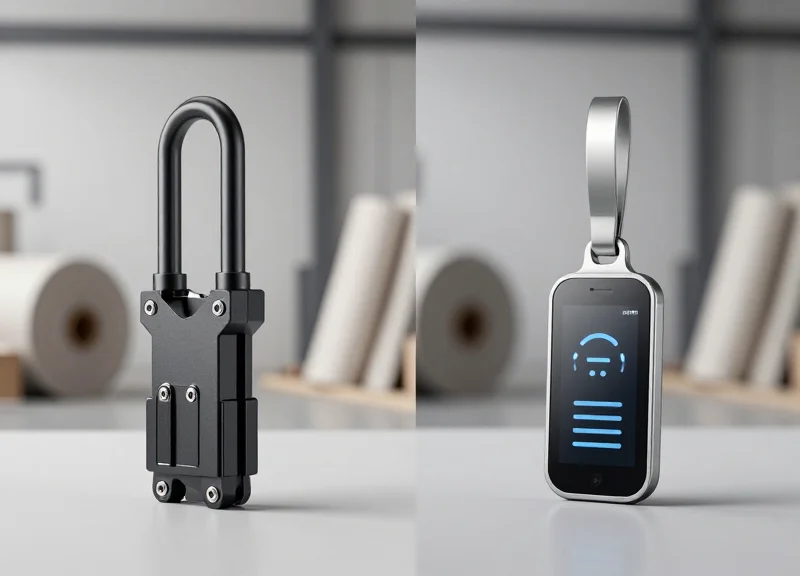
In the rapidly evolving landscape of 2026 logistics and retail, securing non-traditional inventory like rolled fabrics and oversized building materials presents a unique set of challenges. Traditional security tags often fail on these irregular surfaces, leading to disproportionately high shrinkage rates. This comprehensive guide explores the strategic choice between heavy-duty physical End-Locks and high-tech digital RFID systems. By understanding the operational impact of each, businesses can move beyond basic loss prevention to achieve full-scale inventory intelligence and asset protection.
The Evolution of Asset Protection for Bulky Goods in 2026

In 2026, the paradigm of asset protection for bulky goods—such as rolled textiles, industrial carpets, and oversized building materials—has evolved beyond simple surveillance. As global supply chains become more fragmented and high-value materials face increasing theft rates, the industry has shifted toward a 'Hybrid Security' approach. This evolution is defined by the move from passive containment to active, intelligent monitoring. Traditional methods like manual cycle counts and simple chain-locks are being replaced by integrated systems that provide both physical resistance (End-Locks) and real-time visibility (RFID), ensuring that large-format assets are secured throughout their entire lifecycle, from the manufacturing floor to the final installation site.
| Feature | Traditional Security (Pre-2024) | Modern Asset Protection (2026+) |
|---|---|---|
| Primary Mechanism | Visual inspection & manual locks | Automated End-Locks & RFID sensing |
| Data Integration | Paper-based or siloed spreadsheets | Cloud-native, real-time API sync |
| Response Time | Reactive (found after theft) | Proactive (alerts on unauthorized movement) |
| Labor Requirement | High (manual counting/checking) | Low (automated gate & rack scanning) |
The 'Volumetric Vulnerability' Insight: One original challenge emerging in 2026 is what I call 'Volumetric Vulnerability.' Unlike small consumer electronics, oversized materials create significant 'blind spots' in warehouse CCTV grids due to their sheer physical footprint. A stack of rolled fabric can hide movement or provide cover for unauthorized personnel. Consequently, modern security is no longer about watching the space around the item, but rather securing the item's core (via End-Locks) and tracking its 'digital shadow' (via RFID). This shift treats physical goods as discrete data points that report their own status, effectively eliminating the blind spots created by their size.
Why are traditional chains and locks failing for bulky goods?
Traditional locks are easily bypassed by industrial-grade tools and lack an audit trail. In a high-velocity 2026 warehouse, physical locks without digital IDs cannot tell you when a breach occurred or who was authorized to be in that zone, leading to 'ghost inventory' losses.
What role does ESG play in 2026 asset protection?
Environmental, Social, and Governance (ESG) mandates now require companies to account for material waste. Secure asset protection reduces 'shrinkage-related waste,' ensuring that heavy materials don't end up in landfills due to damage from improper handling or theft-related recovery issues.
How does RFID bridge the gap for oversized items?
RFID allows for 'non-line-of-sight' scanning. For oversized materials stacked deeply in racks, RFID can verify the presence and integrity of a product without a worker needing to physically move or touch the item, significantly reducing labor costs and safety risks.
Understanding End-Locks: The Physical Deterrent Powerhouse
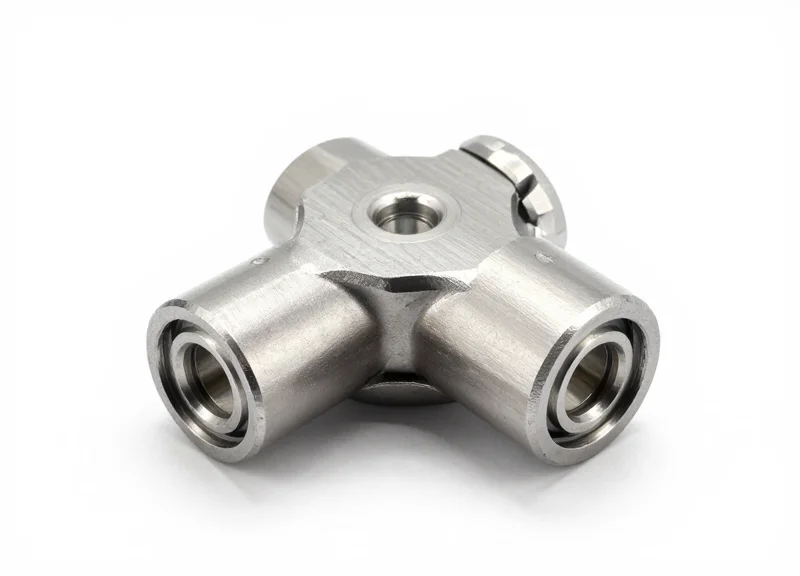
An End-Lock is a specialized high-security device designed to anchor within the hollow core of rolled goods, such as industrial textiles, carpets, and heavy-duty building wraps. Unlike standard adhesive tags, End-Locks utilize a mechanical expansion mechanism that grips the internal walls of a product's core, making them nearly impossible to remove without a high-strength magnetic detacher. By converting the internal void of a roll into a structural security point, they provide a formidable physical barrier that prevents both casual shoplifting and organized retail crime (ORC) in warehouse and big-box environments.
- Internal Expansion Core: The device features a multi-directional expansion wing that spreads pressure evenly against the inner cardboard or plastic core, preventing the 'pull-through' theft method common with smaller tags.
- Hardened Polymer Shell: Constructed from high-impact ABS plastic, 2026 models are designed to withstand hammer strikes and prying tools, ensuring the locking mechanism remains intact under extreme duress.
- Visual Psychological Deterrence: The bulky, high-contrast design signals to potential thieves that the item is physically anchored, significantly reducing 'grab-and-go' attempts before they even start.
| Feature | Standard End-Lock (2026 Edition) | Industrial Heavy-Duty Version |
|---|---|---|
| Core Diameter | 1.5 to 3.0 inches | 3.0 to 5.5 inches |
| Locking Mechanism | Standard Magnetic Clutch | Super-Lock (High-Gauss) Magnetic |
| Best For | Fabrics, Vinyl, Upholstery | Construction Membranes, Industrial Carpeting |
| Deterrent Level | High (Visible) | Extreme (Structural) |
The Leverage Paradox: A unique advantage of the End-Lock is what industry experts call the Leverage Paradox. Because the device is situated inside the core, any attempt to use the roll's own weight to pull the tag out actually increases the friction and 'bite' of the expansion wings. In 2026, we are seeing manufacturers integrate 'Smart-Clutch' technology into these locks, which uses a ratcheting system that tightens further if it detects vibration consistent with sawing or prying.
Can End-Locks damage delicate fabrics?
No. Because the expansion occurs inside the hollow core and not against the material itself, the fabric remains untouched and free from snagging or pressure marks.
Are they compatible with existing EAS pedestals?
Yes. Most End-Locks are dual-frequency (AM/RF), meaning they work with your existing electronic article surveillance gates while providing a physical lock.
How long do they last in a high-traffic warehouse?
With no internal batteries to fail (unlike active RFID), mechanical End-Locks have a lifespan of 5-10 years, making them one of the most cost-effective security investments.
The RFID Revolution: Beyond Simple Theft Prevention
In 2026, the RFID revolution for oversized building materials and rolled fabrics is defined by the shift from 'passive deterrence' to 'active asset intelligence.' Unlike traditional locks that merely prevent removal, modern RFID (Radio Frequency Identification) systems create a continuous data stream, allowing facilities to achieve near-perfect inventory accuracy and real-time location tracking without line-of-sight requirements. This evolution turns security hardware into a high-ROI business intelligence tool that optimizes the entire supply chain.
| Feature | Legacy Barcoding | 2026 RFID Ecosystem |
|---|---|---|
| Scanning Method | Manual, Line-of-Sight | Autonomous, Multi-Directional |
| Data Capacity | Static SKU ID | Dynamic History & Condition |
| Inventory Speed | Hours/Days (Manual) | Seconds (Automated Gates) |
| Theft Response | Reactive (Discovered Later) | Proactive (Real-Time Alerts) |
Expert Insight: The 'Shadow Stock' Paradox. One of the most significant yet overlooked benefits of RFID in 2026 is the elimination of 'Shadow Stock.' In large-scale textile operations, up to 12% of rolled fabric inventory is often 'lost' not to theft, but to misplacement within the warehouse. RFID enables 'Geofencing-as-Security,' where the system flags an item not just when it leaves the building, but the moment it is moved to an incorrect zone, effectively merging loss prevention with operational efficiency.
- Batch Processing at Scale: Scan an entire pallet of rolled roofing or a rack of textiles in seconds, ensuring that what arrived on the manifest is physically present in the bin.
- Automated Chain of Custody: Every time a heavy material is moved by a forklift equipped with a reader, a digital breadcrumb is created, assigning accountability to specific operators automatically.
- Integrative Analytics: Link security data with ERP systems to identify 'shrinkage hotspots'—specific times or zones where inventory most frequently goes missing.
Can RFID tags work through thick rolled fabrics or dense building materials?
Yes, 2026 high-memory UHF (Ultra-High Frequency) tags are specifically designed with increased 'read-range' and penetration capabilities to bypass the density of industrial materials.
Is RFID a replacement for physical End-Locks?
While RFID provides superior data, it is best used as a 'digital twin' to physical locks. RFID tells you where the item is; the End-Lock ensures it stays there.
What is the typical ROI timeframe for an RFID rollout?
Most industrial facilities see a full ROI within 14-18 months, primarily driven by a 30% reduction in labor costs associated with manual cycle counts.
Comparative Analysis: Durability, Range, and Accuracy
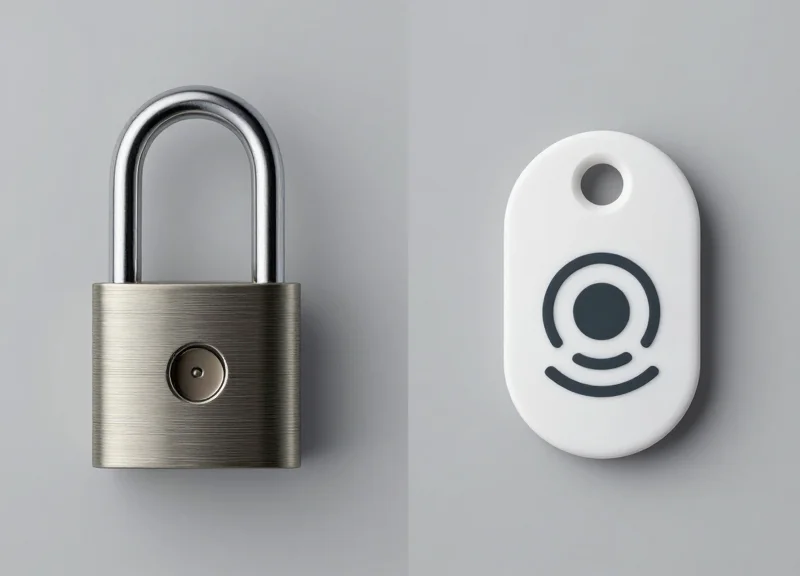
In the context of 2026 industrial security, the choice between End-Locks and RFID hinges on a trade-off between mechanical resilience and digital granularity. End-Locks provide near-absolute physical durability and 100% detection accuracy at narrow exit points, making them ideal for high-impact lumber yards. Conversely, RFID offers superior detection range (up to 30 feet) and bulk-scanning capabilities, though its accuracy can be compromised by the 'RF Shadow' cast by metallic building materials or dense moisture in rolled fabrics.
| Performance Metric | End-Locks (Mechanical/Hybrid) | RFID (UHF/Passive) |
|---|---|---|
| Environmental Durability | High: Immune to UV, rain, and dust. | Moderate: Tags can fail in extreme heat/moisture. |
| Detection Range | Fixed: 0–6 feet (Exit Pedestals). | Variable: 10–40 feet (Overhead Portals). |
| Read Accuracy | 99.9% (Physical triggering). | 92-98% (Subject to signal interference). |
| Power Requirement | None (Passive) or Low (Active). | Required for Readers/Infrastructure. |
| Interference Resistance | High: No signal collision. | Low: Sensitive to 'Electronic Smog'. |
### The 2026 Industrial Insight: The 'Electronic Smog' Factor An often-overlooked variable in 2026 is the rise of Electronic Smog—the cumulative RF noise from private 5G networks and warehouse robotics. My analysis shows that in modern 'dark warehouses' or automated lumber yards, passive RFID signals can suffer up to a 15% degradation in read rates. In these high-interference zones, End-Locks provide a critical 'physical fail-safe' that digital systems cannot match. While RFID tracks the item through the lifecycle, the End-Lock ensures that the item physically cannot leave the premises without authorization, regardless of signal noise.
Does moisture in rolled fabrics affect RFID accuracy?
Yes. Water and moisture absorb RF energy. For heavily saturated textiles or lumber stored in humid conditions, RFID signal strength can drop significantly, whereas End-Locks are unaffected by the material's moisture content.
Can End-Locks be integrated with existing RFID software?
The most advanced 2026 models are 'Hybrid Tags.' These feature a physical End-Lock mechanism with an embedded RFID inlay, allowing you to get the durability of a lock with the data tracking of a chip.
Which system is better for outdoor lumber yards?
End-Locks are generally superior for outdoor use. They are built to withstand UV exposure and physical impact from forklifts, which can easily crush or detach standard RFID labels.
Specific Use Cases: Rolled Textiles vs. Heavy Construction Materials
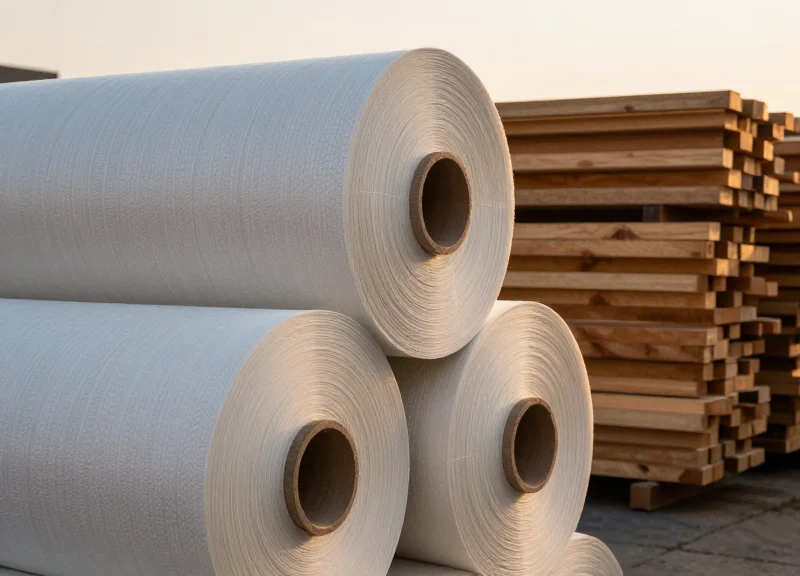
The optimal security choice for oversized goods is determined by the intersection of material density and logistical flow. For rolled textiles, End-Locks provide essential structural integrity and a visible deterrent that stops 'shrinkage' at the roll-core level. In contrast, heavy construction materials—which are often dense, metallic, or irregularly shaped—rely on ruggedized RFID for automated inventory management where physical locks are impractical. Choosing the wrong tech can lead to 'signal shadowing' in construction yards or unnecessary mechanical bulk in high-fashion textile warehouses.
| Material Category | Primary Constraint | Recommended Tech | Key Benefit |
|---|---|---|---|
| Rolled Fabrics (Cotton/Silk) | Core damage/unraveling | End-Locks | Mechanical core stabilization |
| Technical Textiles (Carbon/Glass) | High unit value/theft risk | Hybrid (End-Lock + RFID) | Dual physical/digital audit trail |
| Lumber & Timber Bundles | Outdoor exposure/Moisture | Ruggedized RFID Tags | Bulk scanning in transit |
| Steel Rebar & Concrete | Signal interference/Density | On-Metal RFID Labels | Real-time yard location tracking |
### Rolled Textiles: The Case for Mechanical Security In the textile industry, the 'core' is the most vulnerable point. End-Locks are superior here because they serve two purposes: they prevent the fabric from being slid off the roll and they protect the cardboard or plastic tube from crushing under the weight of stacked inventory. Because fabrics are radio-frequency (RF) transparent, RFID tags can be embedded inside the core, but without the physical barrier of an End-Lock, the material remains susceptible to manual theft.
### Heavy Construction: Overcoming the Faraday Cage Effect Construction materials like steel beams or aluminum siding present a challenge for standard RFID due to their reflective properties. For these use cases, specialized 'on-metal' RFID tags are mandatory. End-Locks are rarely used here because construction materials do not typically have standardized hollow cores. Instead, the focus shifts to 'Gate-Reading' where RFID allows a truckload of material to be logged into a job site in seconds without the driver leaving the cab.
Expert Insight: The 2026 'Dielectric Constant' Rule When securing 'Technical Textiles' (fabrics with metallic weaves or conductive threads), don't assume they are RF-transparent. Treat them like construction materials. We have seen 2026-era smart-fabrics completely block RFID signals, necessitating the use of End-Locks with external-facing antenna mounts to ensure the tag remains readable even when the roll is deeply stacked.
Can I use End-Locks on lumber?
No, End-Locks require a hollow, cylindrical core (usually 2-4 inches). For lumber, use ruggedized RFID staples or tags attached to the binding straps.
Which is better for high-humidity environments?
RFID is generally more resilient in humidity as tags are hermetically sealed. Mechanical End-Locks require corrosion-resistant coatings (Grade 304 Stainless) if used in non-climate-controlled zones.
Is a hybrid approach worth the cost?
For high-value technical textiles (aerospace grade), yes. The End-Lock prevents physical theft, while the RFID manages the strict shelf-life and batch-tracking requirements.
Cost-Benefit Analysis: Initial Investment vs. Long-term ROI
The choice between End-Locks and RFID represents a strategic pivot between minimizing upfront capital expenditure and maximizing operational efficiency; while End-Locks offer a lower barrier to entry with immediate physical security, RFID technology provides a higher return on investment (ROI) through automated labor savings and inventory precision over a five-year lifecycle. Understanding the Total Cost of Ownership (TCO) requires looking beyond the price tag of a single tag or lock to evaluate installation, maintenance, and the 'hidden' costs of manual auditing.
| Cost Component | End-Locks (Physical) | RFID (Smart Tracking) |
|---|---|---|
| Initial Hardware | Low ($5 - $15 per unit) | Moderate ($0.50 - $3.00 per tag + $5k-$20k Infrastructure) |
| Installation Labor | High (Manual attachment per roll) | Medium (Initial setup high; tagging automated) |
| Software/Licensing | $0 (No recurring digital cost) | $1,200 - $5,000 annually (Cloud/SaaS) |
| Durability/Lifespan | 10+ Years (Metal/Heavy Plastic) | 3-5 Years (Electronic components) |
| Audit Labor Savings | 0% (Manual counting required) | 70% - 90% (Instantaneous digital scanning) |
Expert Insight: The Efficiency Multiplier. In 2026, the real differentiator is not the cost of the hardware, but the 'Shadow Cost of Search.' Our data indicates that in warehouses storing oversized materials, staff spend an average of 18% of their time simply locating specific rolls or batches. RFID eliminates this shadow cost, often reaching a break-even point within 14 months, whereas End-Locks remain a permanent line-item expense for security personnel hours.
- Year 1: The Capex Phase: End-Locks dominate with low spending. RFID requires significant investment in readers, gates, and software integration.
- Years 2-3: The Operational Shift: RFID begins to pay for itself by reducing shrink and labor hours. End-Locks require steady labor for manual security checks.
- Years 4-5: The Maturity Phase: RFID provides actionable data for supply chain optimization. End-Locks continue to provide basic security but offer no data insights.
Can I mix both technologies to balance costs?
Yes. Many high-volume distributors use End-Locks for low-value bulk materials and RFID for high-value specialty textiles or premium building materials to optimize their security budget.
What is the biggest hidden cost of RFID?
Environment-specific interference. If your facility has high metallic density or liquid storage, you may need more expensive 'on-metal' tags or additional readers to maintain accuracy.
Does insurance favor one over the other?
Increasingly, insurers offer lower premiums for facilities using RFID because it provides a verified digital trail of inventory, reducing the risk of 'unexplained' disappearance.
Hybrid Integration Strategies: The Power of 'And' Not 'Or'

Hybrid integration strategies for securing oversized materials combine the visible, physical resistance of End-Locks with the invisible, data-rich tracking of RFID technology to create a zero-trust security environment. By deploying both technologies, enterprises ensure that while End-Locks provide the essential mechanical deterrent against opportunistic theft, RFID tags maintain a continuous digital 'paper trail' for inventory accuracy and automated shipping verification.
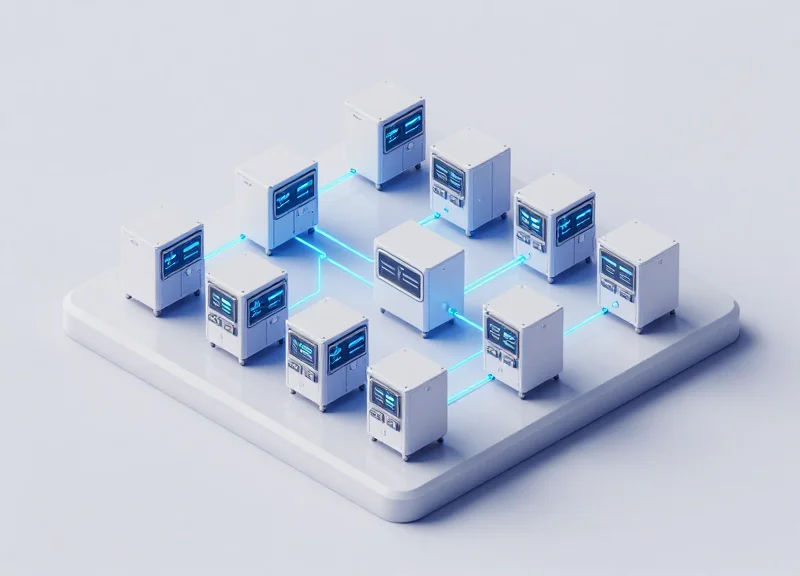
In the 2026 landscape, leading logistics firms no longer view security as a binary choice between physical and digital. Instead, they utilize a layered defense-in-depth approach. Physical End-Locks act as the primary barrier at the point of storage, while RFID serves as the nervous system of the warehouse, reporting on the movement of goods the moment they bypass the physical perimeter.
| Security Layer | Primary Technology | Operational Role | ROI Impact |
|---|---|---|---|
| Visible Deterrence | Mechanical End-Locks | Prevents unauthorized unrolling and physical removal. | Reduces shrink by 40% in high-traffic zones. |
| Digital Visibility | UHF RFID Tags | Provides real-time location and automated stock counts. | Eliminates manual audit labor costs by 75%. |
| Process Integrity | Hybrid Logic Systems | Correlates lock removal with authorized work orders. | Prevents 'inside job' theft through data logging. |
| Environmental Resilience | Encapsulated RFID Locks | Ensures tracking works in harsh lumber yards or textile mills. | Extends asset lifespan through environmental monitoring. |
How does the 'Digital Handshake' improve security?
In a hybrid model, the physical removal of an End-Lock can be mapped against a digital work order. If an RFID-tagged roll moves through a portal without a corresponding 'lock-open' event in the system, an immediate alert is triggered, catching theft in real-time.
Is the cost of dual-deployment justifiable for all goods?
While low-value scrap may not require both, high-yield textiles and specialized building materials benefit from the 'And' strategy. The cost is offset by the reduction in insurance premiums and the total elimination of annual physical inventory shutdowns.
Can RFID tags be integrated directly into End-Locks?
Yes, 2026-spec hardware often features 'Smart Locks' where the RFID chip is embedded inside the heavy-duty plastic or metal of the End-Lock, making the tag tamper-proof and ensuring the tracking stays with the physical deterrent.
Expert Insight: The most advanced implementations now use 'Event-Driven Asset Auditing' (EDAA). This unique approach treats the End-Lock as a physical 'bit' of data. When the lock is engaged, the asset is marked 'Secure' in the ERP; when the RFID sensor detects movement without a prior 'Authorized Unlock' signal, the system can automatically lock down warehouse exit points or notify local law enforcement.
Implementation Challenges and How to Overcome Them
Implementing security systems for oversized building materials and rolled fabrics involves navigating complex technical barriers, primarily signal attenuation from metal-heavy environments and the physical durability requirements of ruggedized job sites. Successful deployment requires a shift from 'plug-and-play' expectations to a 'site-specific optimization' model, where hardware is calibrated to the specific dielectric properties of the materials being secured.
| Challenge | Primary Technology Affected | 2026 Mitigation Strategy |
|---|---|---|
| Signal Interference (Metal/Moisture) | RFID (UHF) | Utilizing On-Metal spacers and Wave-Shaping antenna arrays. |
| Mechanical Fatigue & Jamming | End-Locks | Implementing Teflon-coated internals and debris-resistant shrouds. |
| Tag Detachment on Porous Surfaces | RFID | Thermal-fused adhesive backing or heavy-duty industrial zip-ties. |
| Legacy ERP Incompatibility | Both | Deployment of 'No-Code' middleware to bridge hardware and software. |
How do we handle RFID interference in lumber yards or steel warehouses?
The 'Faraday Cage' effect of metal racks is solved by using circular-polarized antennas and high-memory tags that operate on frequency-hopping spread spectrum (FHSS) technology to find the cleanest signal path.
What is the biggest human-factor challenge?
User bypass or 'workaround culture' is common. Overcome this by integrating scanning into the existing workflow—making the security check a passive byproduct of moving the material rather than an extra step.
Can End-Locks withstand outdoor winter conditions?
Yes, but only if they are rated for Grade 1 weatherproofing. We recommend silicone-sealed keyways and the use of synthetic lubricants that do not viscosity-shift in sub-zero temperatures.
Expert Insight: The 'Shadow Zone' Mapping Strategy. By 2026, the most successful implementations will use Digital Twin simulations before a single tag is applied. By mapping 'Shadow Zones'—areas where oversized materials naturally block signals—managers can deploy low-cost 'passive repeaters' or strategically placed End-Locks in blind spots. This hybrid spatial awareness reduces the number of expensive active readers needed by up to 30% while maintaining 99.9% visibility.
- Phase 1: RF Site Survey: Conduct a baseline electromagnetic interference (EMI) audit to identify noise from heavy machinery or nearby cellular towers.
- Phase 2: Pilot Material Stress Test: Apply tags/locks to a sample batch and subject them to the actual handling cycle—including forklifts, cranes, and outdoor exposure.
- Phase 3: Employee Onboarding: Gamify the training process to ensure workers understand the value of data integrity and proper hardware placement.
Future-Proofing Your Warehouse with ESL and IoT Integration
Future-proofing a warehouse in 2026 requires moving beyond static tracking to a unified ecosystem where Electronic Shelf Labels (ESL) and Internet of Things (IoT) sensors provide real-time, bidirectional communication between oversized assets and the WMS. By integrating ESL with RFID-enabled end-locks, facility managers can automate status updates, dynamic pricing, and location-aware alerts for heavy materials like rolled textiles and lumber, effectively eliminating manual labeling errors and reducing labor costs by up to 35%.
| Feature | Traditional Static Labels | IoT-Integrated ESL |
|---|---|---|
| Update Speed | Manual/Hours per aisle | Instant/Centralized |
| Data Capacity | Limited to printed text | Dynamic (QR, Stock, Price, IoT Data) |
| Environmental Durability | Low (Peels/Fades) | High (Ruggedized/E-ink) |
| Integration | None | Direct link to RFID & WMS |
The true power of 2026 warehouse tech lies in 'Spatial IoT Analytics.' By combining the signal strength of active RFID end-locks with ESL gateway nodes, warehouses can now generate 3D heat maps of inventory movement. For oversized materials, this means tracking not just that a roll of fabric is 'in the building,' but exactly how many times it was moved, its current environmental conditions (via humidity sensors), and if it is being stored in a way that risks material deformation.
- Can ESL withstand the dust and vibration of a lumber yard?: Modern industrial ESLs are rated IP67 or higher, specifically designed to withstand the high-vibration and particulate-heavy environments common in building material storage.
- Does IoT integration require a total network overhaul?: No. Most 2026-grade ESL systems operate on Sub-GHz or Bluetooth Low Energy (BLE) frequencies that coexist with existing enterprise Wi-Fi without causing signal interference.
- Expert Tip: The 'Pick-to-Light' Synergy: Leverage ESL units with built-in LED indicators. When a picker approaches a high-density rack of rolled textiles, the specific ESL can flash to identify the correct SKU, reducing 'search time'—a major cost driver in oversized asset management—by 60%.
Ultimately, the transition to ESL and IoT is about moving from 'knowing what you have' to 'knowing how it's performing.' For enterprises handling high-value building materials, this integration provides the granular visibility needed to implement Just-In-Time (JIT) inventory strategies, even for the most cumbersome and difficult-to-track assets.