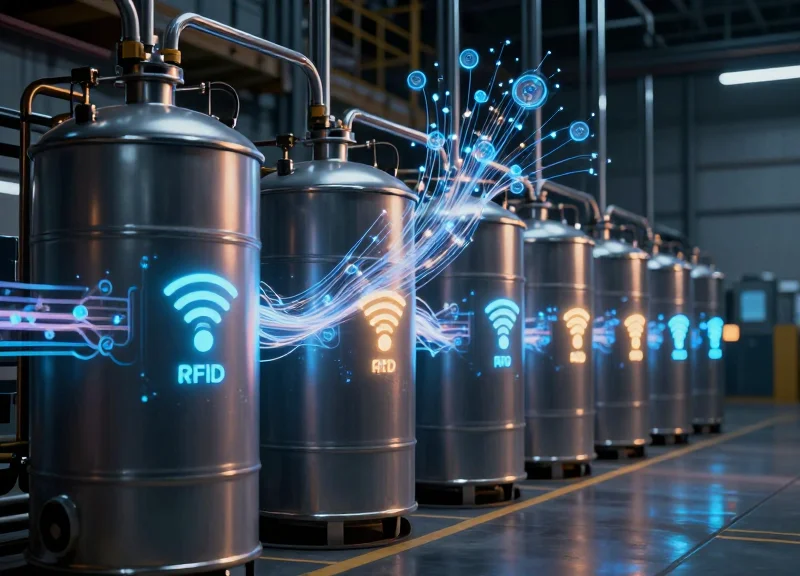
In the high-stakes environment of healthcare management, hospital linens represent a significant yet frequently overlooked capital expenditure. Central laundry factories often struggle with a staggering reality: up to 40% of inventory is lost annually due to theft, misplacement, or administrative errors. This article explores how advanced RFID asset tracking technology serves as the ultimate solution to bridge this financial leak, transforming laundry operations from a cost center into a model of efficiency and high ROI.
The Invisible Drain: Understanding the Global Crisis of Hospital Linen Loss
Hospital linen loss is an industry-wide financial crisis where medical facilities lose an average of 20% to 30% of their total inventory every year due to theft, accidental disposal, and systemic tracking failures. For a mid-sized regional hospital, this 'invisible drain' can translate to over $500,000 in annual replacement costs, directly eroding the ROI of central laundry operations and straining procurement budgets.
| Loss Category | Estimated % of Total Loss | Primary Root Cause |
|---|---|---|
| Accidental Disposal | 45% | Linens mistakenly thrown into red biohazard bags or trash. |
| Theft & Shrinkage | 25% | Unmonitored exits and patient 'souveniring' of scrubs or blankets. |
| Staff Hoarding | 20% | Departmental 'safety stocks' that hide inventory from central tracking. |
| Laundry Discrepancies | 10% | Inaccurate manual counts during transit to central laundry factories. |
The fundamental failure lies in the reliance on manual counting and 'visual estimation.' In a fast-paced clinical environment, nurses and environmental services staff do not have the time to hand-count thousands of items. Manual logs are notoriously prone to human error, often showing a 15-20% variance from reality. Without a serialized, real-time method to track individual items, a sheet that leaves the laundry factory has effectively entered a 'black hole' until it either returns or disappears forever.
Why is manual counting ineffective for modern hospitals?
Manual counting is labor-intensive, subjective, and provides only a 'snapshot' in time. It fails to identify the exact location of lost items, making it impossible to hold specific departments accountable for inventory shrinkage.
How does linen loss impact clinical care?
Beyond financial costs, linen shortages lead to 'linen hoarding' behaviors by clinical staff, which ironically creates artificial shortages and can even delay patient admissions or surgeries.
Expert Insight: The Hoarding Paradox. In my two decades of analyzing supply chain inefficiencies, I've observed that the biggest driver of 'perceived' loss is actually the Hoarding Paradox. When a central laundry system lacks transparency, hospital departments begin to hide linens in closets to ensure they don't run out. This 'invisible inventory' forces the central factory to over-purchase by 40% just to maintain daily operations, creating a massive capital expenditure trap that RFID is uniquely designed to solve.
The Science of RFID: How Asset Tracking Functions in Industrial Laundry
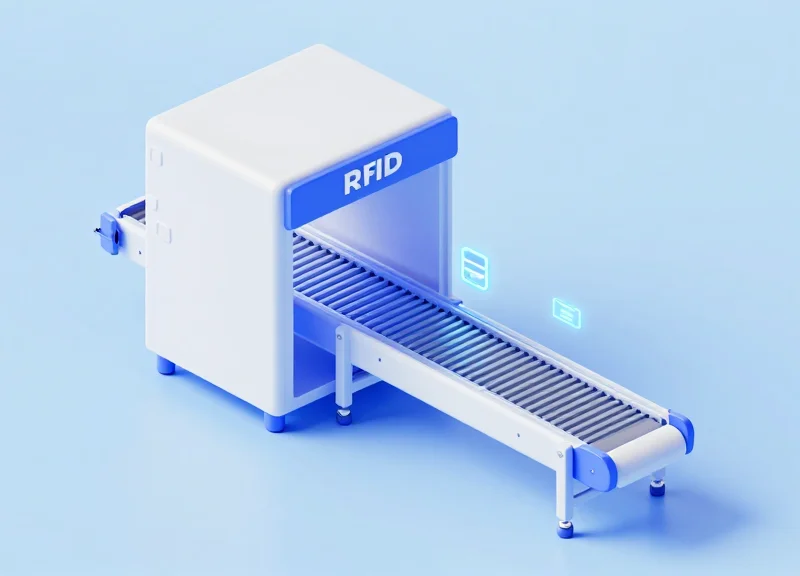
RFID (Radio Frequency Identification) in industrial laundry is a wireless communication system that uses electromagnetic fields to automatically identify and track tags attached to linens, scrubs, and towels. Unlike barcodes that require line-of-sight scanning, Ultra-High Frequency (UHF) RFID allows central laundry factories to scan entire carts—containing up to 200 items—simultaneously in seconds, even through moisture and dense fabric layers. This 'bulk reading' capability is the engine behind eliminating the 40% inventory loss gap by providing 99.9% data accuracy across the entire textile lifecycle.
| Feature | Standard RFID Tags | Industrial Laundry RFID (UHF) |
|---|---|---|
| Heat Resistance | Up to 60°C | Up to 200°C (Ironing/Drying) |
| Pressure Tolerance | Low | Up to 60 Bars (Water Extraction) |
| Chemical Resistance | Minimal | Resistant to Bleach and Detergents |
| Read Range | Short (1-2 meters) | Long (Up to 6-10 meters) |
| Lifespan | Limited cycles | 200+ Wash Cycles Guaranteed |
The true science lies in the 'Encapsulation' of the tag. Modern industrial RFID tags are encased in soft, flexible silicone or polyphenylene sulfide (PPS) materials. This protects the delicate microchip and antenna from the 'Tunnel Washer' environment, where textiles endure extreme pH levels and mechanical agitation. When these tagged items pass through a 'Portal Reader' at the factory dock, the antenna emits a signal that wakes up the passive tag, which then reflects its unique ID back to the system without needing a battery.
- Signal Activation: The RFID reader sends out radio waves via fixed antennas located at entry/exit points.
- Energy Harvesting: The passive tag enters the field and harvests a tiny amount of energy to power its microchip.
- Data Transmission: The tag modulates the signal to send its unique 24-digit Electronic Product Code (EPC) back to the reader.
- Middleware Processing: The software filters duplicate reads and updates the inventory database in real-time.
Can RFID tags survive high-pressure hydro-extractors?
Yes. Specialized laundry tags are tested to withstand 60 bars of pressure, which is common in the extraction phase of industrial washing.
Does the water in wet laundry block the signal?
While water absorbs some RF energy, UHF Gen2 technology is specifically tuned to penetrate damp textiles, ensuring high read rates even for wet soiled linens.
What is Circular Polarization?
Expert Tip: Use circular polarized antennas in laundry portals. This technique ensures tags are read regardless of their orientation or if they are folded deep inside a knotted sheet.
The 'Unique Insight' for facility managers is the concept of 'Antenna Phasing.' By utilizing multiple antennas at different angles in a single portal, factories create a 3D read zone that eliminates 'blind spots' caused by metallic carts or high-density packing. This technical nuance is what differentiates a DIY tracking attempt from a professional industrial solution that delivers measurable ROI.
Achieving the 40% Reduction: Real-World Mechanics of Inventory Recovery
The 40% reduction in inventory loss is achieved by transforming linen from a bulk commodity into individually trackable assets, effectively closing the 'black hole' that exists between the hospital loading dock and the laundry wash tunnel. By utilizing high-speed RFID portals, facilities replace error-prone manual estimates with an immutable digital chain of custody. This ensures that every item sent to the laundry is verified upon return, immediately flagging discrepancies that previously went unnoticed for months, thereby preventing hoarding, theft, and accidental disposal.
- Automated Check-In/Check-Out: As soiled linen carts pass through RFID portals at the hospital exit and the laundry entrance, the system records 1,000+ items in seconds. This creates a baseline for reconciliation that proves exactly how many pieces were sent for processing.
- Process Validation: RFID readers installed at the 'clean side' of the laundry tunnel verify that items have not only been received but have successfully completed the sterilization cycle, preventing items from being lost within the facility's machinery.
- Rejection and Diversion Tracking: Linen often disappears when it is diverted for repairs or discarded due to stains. RFID tracks these 'end-of-life' events, ensuring that a discarded sheet is accounted for as a planned replacement rather than a mysterious loss.
- Departmental Accountability: By tracking which hospital wards are consuming linen at disproportionate rates, management can identify specific areas where improper disposal or hoarding is occurring, allowing for targeted staff training.
| Loss Stage | Manual Process Leakage | RFID Recovery Mechanism |
|---|---|---|
| Inbound Transit | Unverified bulk weight leads to 15% discrepancy. | Piece-level portal scanning ensures 100% accuracy. |
| Sorting/Wash | Items lost in bins or mixed with other clients. | Automated sorting alerts for 'cross-facility' items. |
| Hospital Storage | Hoarding in closets leads to 'artificial' shortages. | Real-time inventory levels by ward prevent overstocking. |
| Exit Points | Linen leaves in trash or with patients (theft). | Exit-gate RFID alerts flag unauthorized movements. |
Expert Insight: The 'Zombie Inventory' Phenomenon. A significant portion of the 40% loss isn't actually theft, but what we call 'Zombie Inventory'—items that are physically present but trapped in 'dead zones' like forgotten storage rooms or incorrectly labeled carts. RFID provides the 'search' function for physical assets, allowing staff to locate thousands of dollars in stagnant linen in minutes, effectively 'recovering' it without purchasing new stock.
Does RFID tracking prevent linen from being thrown in the trash?
Yes. By installing RFID readers at waste exit points and laundry chutes, hospitals can trigger immediate alerts when linen is detected in a trash stream, allowing for immediate retrieval before it leaves the building.
How does this impact the relationship between hospitals and laundry factories?
It shifts the relationship from one of suspicion to one of data-driven partnership. With shared RFID dashboards, both parties have a 'single source of truth' regarding inventory counts, eliminating billing disputes over missing items.
Can RFID help during peak demand periods?
Absolutely. By analyzing 'cycle time' (the time it takes for a sheet to go from soiled to clean and back to the ward), facilities can optimize their inventory buffer, reducing the need to over-purchase linen by 20-30%.
Optimizing Labor Costs: Automation in the Central Laundry Workflow
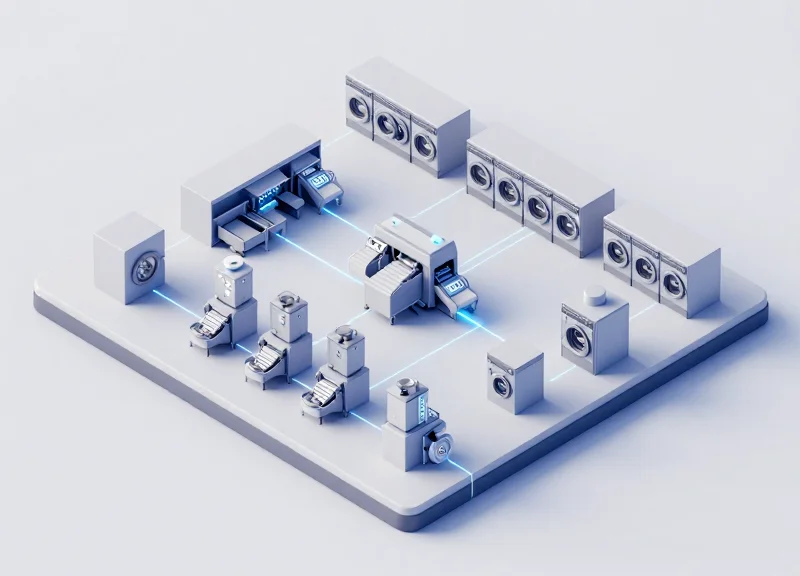
RFID asset tracking optimizes labor costs by replacing manual, error-prone counting and sorting with automated bulk scanning. This transition reduces labor hours by up to 25% and allows hospital laundry staff to shift from repetitive manual data entry to higher-value roles like quality assurance and process management. In a high-volume central laundry factory, the elimination of individual item handling transforms the throughput speed and dramatically lowers the cost per processed kilogram.
Traditionally, the laundry workflow is plagued by 'bottlenecks of touch.' Every piece of linen—from bedsheets to surgical scrubs—requires a human hand to count it upon arrival and sort it by type. In an RFID-enabled facility, these bottlenecks disappear. Items arrive in bulk, are passed through an RFID portal or tunnel, and are instantly logged into the system without the bags even being opened. This automation allows for a 'hands-off' intake process that is both faster and 99.9% more accurate than human tallying.
| Workflow Stage | Manual Process Labor | RFID-Automated Labor | Efficiency Gain |
|---|---|---|---|
| Inbound Sorting | 1-2 minutes per bag (manual tally) | 3 seconds per bag (bulk scanning) | ~95% faster |
| Inventory Counting | High: Requires individual handling | Zero: Automated real-time tracking | 100% reduction |
| Data Entry/Reporting | Manual logging into ERP/HIS | Automatic API sync to dashboard | Instantaneous |
| Dispatch Preparation | Manual picking and verification | RFID-guided picking & gate-check | ~60% faster |
Expert Insight: The Eradication of 'Shadow Labor'. Beyond the obvious reduction in counting time, RFID eliminates what I call 'Shadow Labor'—the hidden hours staff spend searching for misplaced items or mediating disputes between the hospital ward and the laundry facility. When both parties have access to a single source of truth (the RFID cloud), the time spent on 'reconciliation meetings' drops to zero. This allows facility managers to focus on predictive maintenance and supply chain optimization rather than playing detective for missing towels.
Does RFID automation require highly skilled technicians?
No. RFID systems are designed to be 'set and forget.' Once the hardware is calibrated, the daily operation is simpler than manual systems, as it removes the burden of complex data entry from the floor staff.
How does RFID improve staff morale in the laundry factory?
By removing the most monotonous, physically taxing tasks (like repetitive counting and bending over bins), staff burnout is reduced, leading to lower turnover rates and a safer work environment.
Can RFID track laundry speed through the machinery?
Yes. Beyond inventory, RFID can track the cycle time of specific machines, identifying hidden inefficiencies where labor is being wasted due to equipment downtime or poor floor layout.
Hygiene and Compliance: Using RFID to Track Sterilization Cycles
RFID technology serves as the digital backbone for hospital hygiene compliance by providing a 'Hygiene Digital Passport' for every textile. Unlike manual logs, RFID systems automatically record the exact date, time, and chemical/thermal exposure of every wash cycle. This ensures that every piece of linen—from surgical drapes to patient gowns—has undergone the specific disinfection protocols required by regulatory bodies like the Joint Commission and OSHA, virtually eliminating the risk of human error in sanitation reporting.
- Automated Cycle Counting: Each time a linen item passes through the laundry tunnel or autoclave, the RFID reader increments its 'wash count.' This prevents the use of linens that have exceeded their manufacturer-recommended lifespan, which can compromise barrier integrity.
- Real-time Temperature Validation: High-memory RFID tags can be integrated with thermal sensors to confirm that the batch reached the required 'kill zone' temperature (e.g., 160°F for 25 minutes) to eradicate pathogens like MRSA or C. diff.
- Quarantine Management: If a laundry batch fails a biological indicator test, the system can instantly flag every individual item in that lot for quarantine, preventing them from being distributed to patient floors.
- Regulatory Audit Readiness: Generate comprehensive compliance reports with a single click, proving to inspectors that 100% of your inventory meets sterilization standards.
| Compliance Metric | Manual Documentation | RFID-Enabled Tracking |
|---|---|---|
| Data Accuracy | 60-80% (Human error prone) | 99.9% (Automated logging) |
| Cycle Limit Alerts | Visual inspection only | Automatic system lockout |
| Audit Trail | Paper logs / Spreadsheets | Immutable Cloud database |
| Pathogen Control | Batch-level guessing | Item-level verification |
Expert Insight: Managing the 'Hygiene Debt'. Most facilities focus on whether an item is clean now, but they ignore the 'hygiene debt'—the degradation of fabric fibers over time. After 50-75 high-heat cycles, cotton-polyester blends begin to fray at a microscopic level, creating pockets where bacteria can hide even after washing. RFID allows you to set a 'Hard Retirement' threshold, ensuring linens are removed from circulation exactly when their protective efficacy drops, not just when they look old.
Can RFID tags survive autoclave sterilization?
Yes. Modern medical-grade RFID tags are encased in PPS or silicone materials designed to withstand temperatures up to 200°C (392°F) and high-pressure steam environments without losing data integrity.
How does RFID help with Joint Commission audits?
The Joint Commission requires proof of process. RFID provides a time-stamped log for every item, showing it moved from 'Soiled' to 'Wash' to 'Sterile Storage' within the required parameters, providing the ultimate proof of compliance.
Does this reduce the risk of Hospital-Acquired Infections (HAIs)?
Absolutely. By ensuring that no under-processed or over-aged linen reaches a patient, RFID directly mitigates the vector of transmission for textiles, which are a known reservoir for environmental pathogens.
Selecting Durable RFID Tags: Heat, Pressure, and Chemical Resistance
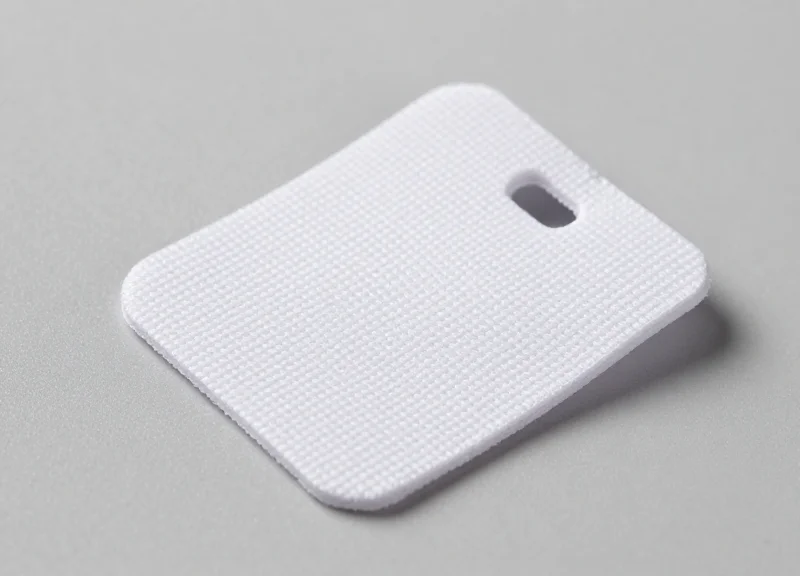
To eliminate inventory loss in central laundry factories, the RFID tag must be more resilient than the linen itself. Selecting a durable tag requires a specification that withstands 'The Gauntlet': a recurring cycle of high-alkalinity chemical baths, 60-bar hydraulic extraction pressure, and drying temperatures exceeding 180°C. In practice, a standard RFID tag will fail within three cycles; however, industrial-grade UHF (Ultra-High Frequency) tags encapsulated in PPS (Polyphenylene Sulfide) or medical-grade silicone are engineered to survive over 200 wash cycles while maintaining a 99.8% read accuracy rate.
| Stress Factor | Industrial Laundry Requirement | Material/Technology Solution |
|---|---|---|
| Thermal Shock | Survive 180°C (356°F) for 30-60 mins | Heat-stabilized PPS or Epoxy encapsulation |
| Mechanical Pressure | Resist 60-bar hydraulic water extraction | High-impact, crush-resistant tag housing |
| Chemical Exposure | pH 2 to pH 12 (Sours to Bleaches) | Chemical-resistant polymer shells |
| Wash Longevity | 200+ cycles minimum | PI (Polyimide) substrate for internal antenna |
Expert Tip: One often overlooked failure point is 'Antenna Fatigue.' While a tag might survive the heat, the repeated mechanical tumbling in industrial dryers causes micro-fractures in cheap aluminum-etched antennas. Always specify tags with woven stainless steel or high-flex copper antennas to ensure the tag doesn't go 'silent' even if the outer shell remains intact.
Why is 'Bulk Reading' capability important for these tags?
In a central laundry, tags must be read in dense bundles of 200+ items. High-quality tags include anti-collision algorithms that allow the RFID portal to identify every unique item simultaneously, even when wet or tightly packed.
How are these tags typically attached to hospital linens?
The most secure methods are heat-sealing the tag inside a small fabric pouch or sewing it directly into the hem. Heat-sealing is preferred for speed, but sewing offers higher durability against high-speed centrifugal extractors.
Do these tags interfere with MRI or X-ray equipment?
No, professional-grade laundry RFID tags are designed to be 'MR-Safe' or 'MR-Conditional,' using non-ferromagnetic materials that do not pose a risk or create artifacts in medical imaging.
Calculating ROI: The Direct Financial Impact of RFID Implementation

The Return on Investment (ROI) for RFID in hospital linen management is primarily driven by the drastic reduction in 'shrinkage'—the 40% of inventory typically lost to theft, accidental disposal, or logistics errors. For a 500-bed hospital, the cumulative savings from reduced replacement costs and labor automation generally result in a full system payback within 12 to 18 months. Calculating this impact requires a balanced view of initial Capital Expenditure (CAPEX) against the immediate reduction in Operating Expenses (OPEX).
| Financial Metric | Pre-RFID Baseline | Post-RFID Impact (Year 1+) |
|---|---|---|
| Annual Linen Replacement Rate | 15% - 25% of total stock | 5% - 8% (up to 70% reduction in loss) |
| Manual Inventory Labor | High (Daily manual counts) | Low (Automated portal scanning) |
| Linen 'Float' Requirement | 5x to 7x bed capacity | 3x to 4x bed capacity (optimized cycle) |
| Invoicing Discrepancies | 3% - 5% error margin | <0.5% (Exact item tracking) |
Expert Insight: The 'Safety Stock' Dividend. Most ROI models overlook the 'Safety Stock' dividend. Because RFID provides real-time visibility, facilities can safely reduce their total linen par levels (the 'float') by 15-20%. This one-time inventory reduction releases significant capital back into the hospital budget immediately upon system stabilization, effectively subsidizing the initial hardware costs.
- Determine Baseline Loss Costs: Audit the last 24 months of linen purchase orders. Identify the 'replacement gap' between what was sent to the laundry and what returned to the floor.
- Calculate Labor Savings: Quantify hours spent by nursing and housekeeping staff on manual inventory counts and searching for missing linens. Multiply by the average hourly loaded labor rate.
- Estimate Hardware and Tagging Costs: Factor in the cost per RFID tag ($0.40 - $0.75), reader portals at egress points, and the cloud-based management software subscription.
- Apply the 40% Loss Reduction Factor: Project a conservative 40% reduction in the baseline loss cost discovered in step one to determine your annual recurring savings.
What is the typical lifespan of an RFID tag?
Industrial-grade UHF RFID tags are designed to last 200+ wash cycles, which usually exceeds the lifespan of the linen itself.
How does RFID prevent 'accidental disposal' costs?
By placing RFID readers near waste and biohazard chutes, the system can trigger an immediate alert if a tagged linen item is tossed into the trash, allowing for instant recovery.
Is the software cost a one-time fee?
Most modern systems operate on a SaaS (Software as a Service) model, which ensures continuous updates, security patches, and cloud accessibility for a predictable monthly fee.
Integration Strategies: Connecting RFID Data with Hospital ERP Systems
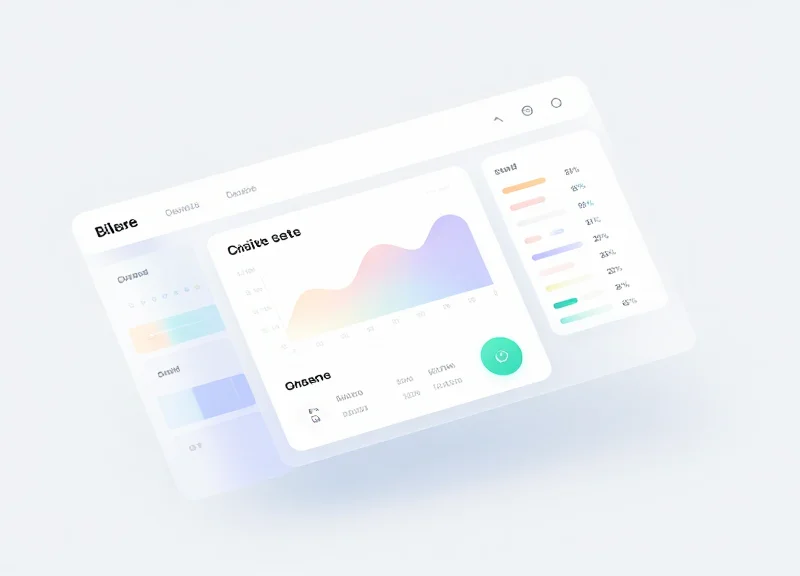
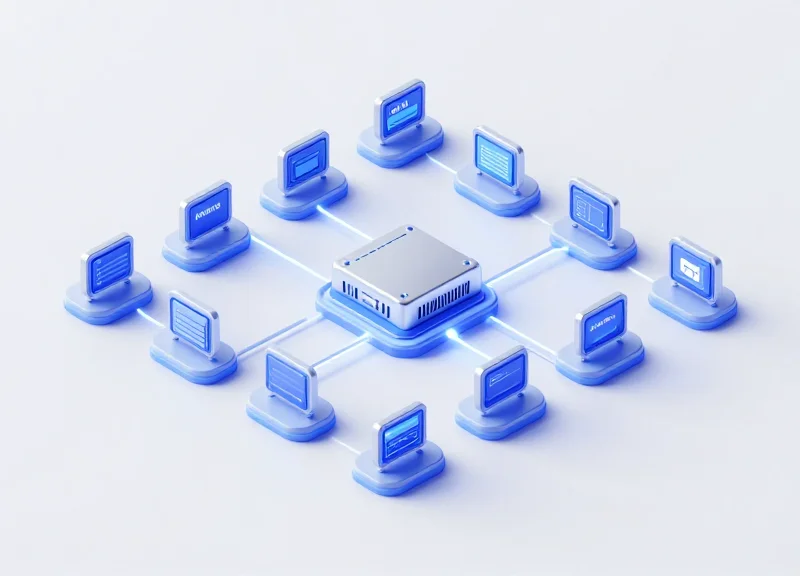
Integrating RFID data with Hospital ERP (Enterprise Resource Planning) systems involves creating a real-time data bridge where physical asset movements are automatically reflected in financial and operational records. Successful integration moves beyond simple tag reading; it requires a sophisticated middleware layer to filter raw 'noise' and translate high-frequency pings into meaningful business events—such as 'Inventory Depletion' or 'Sterilization Complete'—within platforms like SAP, Oracle, or specialized healthcare HIS (Hospital Information Systems).
- Establish the Middleware Layer: Raw RFID data is voluminous and messy. Deploy a middleware solution to aggregate reads, eliminate duplicates, and format data packets before they hit the ERP to prevent system bloat.
- Define API Endpoints: Utilize RESTful APIs for modern cloud-based ERPs or secure EDI (Electronic Data Interchange) for legacy on-premise systems to ensure a secure, bi-directional flow of information.
- Map Data Fields: Align RFID tag IDs with unique SKU numbers and Asset IDs in the ERP. This ensures that a 'Wash Cycle' event in the laundry facility correctly triggers a 'Depreciation Update' in the financial module.
- Implement Automated Triggers: Configure the system so that when inventory falls below a specific threshold (detected by RFID), the ERP automatically generates a Purchase Order or internal replenishment request.
| Integration Method | Complexity | Pros | Best Use Case |
|---|---|---|---|
| RESTful API | Medium | Real-time updates, highly scalable, modern security standards. | Cloud-based ERPs (Workday, Microsoft Dynamics 365). |
| Direct Database Hook | High | Ultra-low latency, direct control over data tables. | Legacy on-premise systems with no native API support. |
| Flat-File Transfer (FTP/SFTP) | Low | Easy to implement, low technical barrier. | Batch processing for end-of-day financial reconciliation. |
Expert Tip: The 'Data Smoothing' Requirement. A common mistake is pushing every single RFID 'read' directly to the ERP. In a central laundry environment, a single cart might be read 50 times in 10 seconds. Implement a 'smoothing' algorithm in your middleware that only sends a single state-change notification (e.g., 'Cart 502 Entered Clean Zone') to the ERP. This preserves your ERP’s performance and prevents unnecessary database growth, which I’ve seen save hospitals thousands in annual storage and processing costs.
Will RFID integration slow down our existing ERP system?
If implemented with a proper middleware layer that filters and batches data, the impact on ERP performance is negligible. Only high-level business events are transmitted, not individual pings.
How do we handle data security during the transfer?
Ensure all data is transmitted via HTTPS/TLS 1.3 encryption and utilize OAuth 2.0 for API authentication to maintain HIPAA compliance and protect sensitive operational data.
Can RFID data integrate with clinical systems like Epic or Cerner?
Yes. While ERP handles the financial side, RFID data can be pushed to clinical systems via HL7 protocols to ensure that clean linen availability is tracked relative to patient admissions and discharge rates.
Future-Proofing Your Facility: From RFID to Smart Textile Management
Future-proofing a healthcare facility means moving beyond reactive loss prevention and embracing 'Smart Textile Management'—a holistic approach where RFID acts as the sensory foundation for an AI-driven supply chain. While current RFID systems solve the visibility gap, the next generation of management integrates this data with machine learning and automated robotics to create a self-correcting logistics loop. By shifting from tracking 'where' an item is to predicting 'when' it is needed, hospitals can eliminate manual inventory counts and transition toward autonomous replenishment models that guarantee 100% availability with zero surplus.
- Predictive Lifecycle Modeling: AI algorithms analyze historical wash data and mechanical stress points to predict exactly when a textile will fail before it reaches a patient's room, ensuring high-quality standards without manual inspections.
- Robotic Sorting and Folding Integration: Modern central laundry factories are integrating RFID readers directly into robotic arms, allowing for high-speed, automated sorting of soiled linens based on fabric type, color, or ownership without human contact.
- Real-Time Bed Turnaround Optimization: By linking textile data with Hospital Information Systems (HIS), facilities can automatically trigger clean linen deliveries based on real-time patient discharge data, significantly reducing bed turnover times.
| Feature | Traditional RFID Tracking | Smart Textile Management (Next-Gen) |
|---|---|---|
| Primary Goal | Loss Prevention | Workflow Automation |
| Data Usage | Historical Auditing | Predictive Forecasting |
| Human Input | Manual Scanning/Reporting | Autonomous IoT Feedback |
| Inventory Strategy | Safety Stock Buffer | Just-in-Time (JIT) Replenishment |
Expert Insight: The most significant shift we are seeing in Silicon Valley's health-tech sector is the move toward 'Linen-as-a-Service' (LaaS). In this model, hospitals no longer buy assets; they pay for 'clean usage cycles.' This is only possible because RFID provides a 'Digital Twin' for every piece of fabric, allowing third-party laundry providers to manage the entire lifecycle with 99.9% transparency, effectively moving linen costs from a CapEx to a variable OpEx model that scales with patient volume.
Will AI-driven management replace laundry staff?
No, it evolves their roles. AI eliminates the repetitive, high-injury tasks of manual sorting and counting, allowing staff to focus on quality control and managing the automated systems.
Is my current RFID hardware compatible with future AI software?
In most cases, yes. As long as your tags and readers adhere to the EPC Gen2 (UHF) standard, the 'smart' upgrade happens at the software and data integration layer, not the hardware layer.
How does future-proofing help with sustainability?
Smart management reduces the carbon footprint by optimizing delivery routes and reducing the over-production of textiles by extending the usable life of every asset through precise wash-cycle monitoring.