
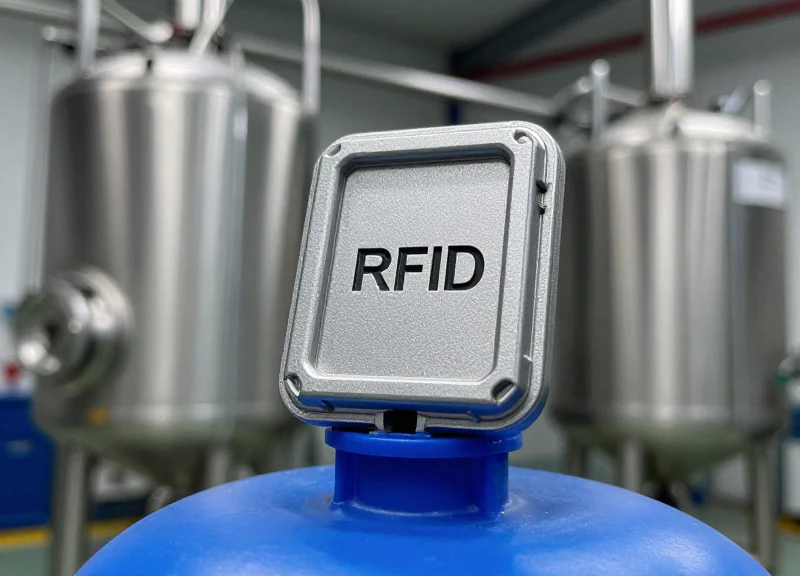
In the volatile world of chemical manufacturing and storage, traditional tracking methods often fall short, leading to costly discrepancies and safety risks. Achieving 99.9% inventory accuracy is not just a goal—it is a necessity for regulatory compliance and operational efficiency. However, standard RFID tags quickly degrade when exposed to corrosive substances, extreme temperatures, and moisture. This guide provides a strategic framework for selecting high-performance RFID tags specifically engineered to withstand the rigors of chemical environments, ensuring your data remains as stable as your inventory.
The Critical Role of RFID in Chemical Asset Management

RFID (Radio Frequency Identification) in chemical asset management provides an automated, non-line-of-sight tracking mechanism that ensures 99.9% inventory accuracy by eliminating human error, streamlining regulatory compliance, and enabling real-time monitoring of hazardous materials. By integrating passive or active RFID tags into chemical drums, intermediate bulk containers (IBCs), and small-scale lab assets, organizations can achieve a 'digital twin' of their physical inventory, which is essential for maintaining safety standards and optimizing complex supply chains.
- Real-Time Visibility: Continuous tracking of asset locations across massive warehouses without requiring manual barcode scans or direct line-of-sight.
- Safety & Compliance Automation: Automated logging for OSHA and REACH compliance, ensuring that hazardous materials are stored according to reactivity protocols.
- Loss Prevention: Immediate detection of misplaced or unauthorized movement of high-value or restricted chemical precursors.
- Lifecycle Management: Digital recording of container inspection dates, pressure tests, and expiration cycles to prevent the use of degraded vessels.
| Feature | Manual/Barcode Tracking | RFID-Enabled Management |
|---|---|---|
| Data Capture Speed | Slow (One item at a time) | Instant (Hundreds of tags per second) |
| Human Error Rate | High (Missing/double scanning) | Near Zero (Automated reading) |
| Line-of-Sight Required | Yes (Scanner must see label) | No (Reads through fumes and clutter) |
| Safety Verification | Retrospective/Manual | Proactive/Automated Alerts |
Expert Insight: In the chemical sector, 'Ghost Assets'—containers that exist on the ledger but cannot be physically located—account for an average of 15% of annual capital leakage. Traditional barcode systems fail in these environments because chemical residues and harsh cleaning agents frequently degrade the labels. The transition to specialized RFID tags doesn't just improve speed; it recaptures this 'lost' 15% by ensuring that every container is digitally tethered to the ERP system from receipt to disposal.
Why Standard RFID Tags Fail in Chemical Environments
Standard RFID tags are typically designed for retail or logistics environments where the primary stressors are light abrasion and ambient humidity. When introduced to chemical processing plants or storage facilities, these tags fail because their primary components—the PET substrate, acrylic adhesive, and aluminum antenna—are highly susceptible to chemical attack. Within hours of exposure to solvents, acids, or caustic bases, the protective layers of a standard tag dissolve or swell, leading to immediate signal loss or intermittent 'ghost' reads that compromise inventory accuracy.
| Component | Standard Tag Material | Failure Mechanism | Resulting Symptom |
|---|---|---|---|
| Adhesive | General-purpose Acrylic | Chemical dissolution/swelling | Tag detachment or 'flagging' |
| Antenna | Etched Aluminum | Oxidation and Corrosion | Reduced read range or dead tags |
| Inlay Substrate | Polyester (PET) | Hydrolysis or solvent embrittlement | Cracking and mechanical failure |
| IC Connection | Anisotropic Conductive Film (ACF) | Delamination from moisture/chemical ingress | Total communication failure |
One of the most overlooked failure points is Capillary Ingress. Even if the face of a tag appears intact, chemicals can wick along the edges of the substrate. This 'micro-wicking' effect transports corrosive agents directly to the Integrated Circuit (IC) bump connection. Once the bond between the chip and the antenna is compromised, the tag becomes unreadable, even if the antenna itself looks perfect to the naked eye.
How do pH levels affect RFID tag longevity?
Extremely low pH (acids) and high pH (bases) act as electrolytes that accelerate the galvanic corrosion of aluminum antennas. Without an FEP or PEEK encapsulation, a standard tag can be rendered useless in less than 48 hours.
Can't I just cover a standard tag with a protective laminate?
No. Most consumer-grade laminates are gas-permeable. Chemical vapors (like Chlorine or Ammonia) can penetrate the laminate and trap corrosive gases against the tag, effectively creating a 'micro-greenhouse' of corrosion.
Why do some tags fail only during cleaning cycles?
This is often due to Thermal Shock. High-pressure wash-downs with hot surfactants cause thermal expansion mismatches between the tag layers, creating micro-cracks that allow chemical ingress.
Expert Tip from 20 Years in the Field: Never rely on a 'static' chemical resistance chart. In a real chemical environment, you are rarely dealing with a pure substance. It is the chemical cocktail—the combination of solvents plus heat and UV exposure—that causes standard adhesives to turn into a gooey residue, leading to a 30% tag loss rate in the first quarter of deployment.
Key Material Science: What Makes a Tag Chemical-Resistant?
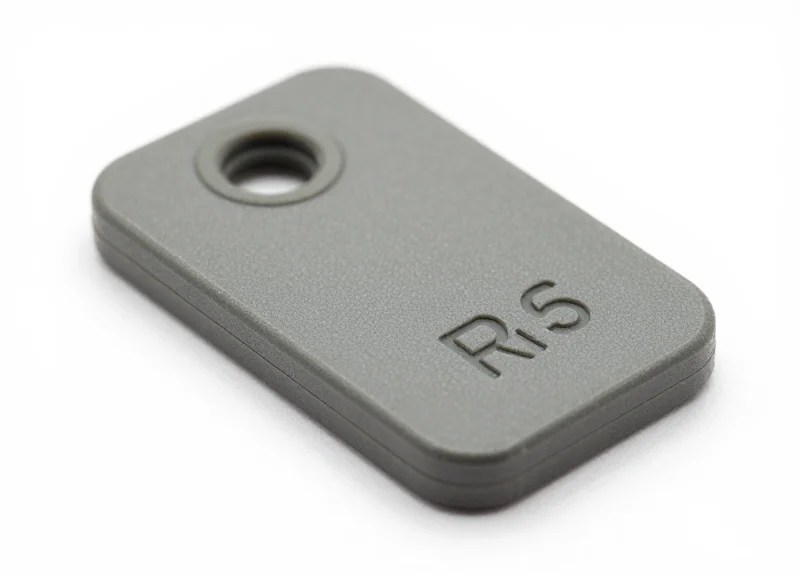
A truly chemical-resistant RFID tag is defined by its encapsulation material's ability to maintain structural integrity and low permeability when exposed to solvents, acids, or bases. Unlike standard tags that rely on simple plastic housings, high-durability tags use high-performance engineering thermoplastics like PEEK (Polyether ether ketone) and PPS (Polyphenylene sulfide). These materials offer a 'hermetic-like' seal because of their semi-crystalline molecular structures, which prevent corrosive molecules from diffusing through the shell and reaching the delicate silicon chip and antenna bonding points.
| Material | Chemical Profile | Temperature Stability | Primary Application |
|---|---|---|---|
| PEEK | Exceptional; resists organic, inorganic, and most solvents. | Up to 250°C | Oil & Gas, Heavy Industrial Acids |
| PPS | High; excellent resistance to salts and alkaline solutions. | Up to 200°C | Automotive fluids, Laundry, Cleaning |
| Specialized Epoxy | Good; highly resistant to moisture and localized corrosion. | Up to 150°C | General laboratory and pharmacy tracking |
| Teflon (PTFE) | Near-universal; virtually inert to all chemicals. | Up to 260°C | Extreme caustic environments (Nitric/Sulfuric acids) |
The science of protection goes beyond the outer shell; it involves the 'Coefficient of Thermal Expansion' (CTE) matching. When a tag is exposed to chemicals in high-heat environments (like an autoclave or a chemical wash), the material expands. If the encapsulation material expands at a different rate than the internal antenna, micro-fractures occur. These fractures act as highways for chemical ingress. Therefore, the best chemical-resistant tags are engineered so that the housing and the internal potting compounds expand in unison, maintaining the seal's integrity under thermal and chemical stress.
Is 'Waterproof' the same as 'Chemical-Resistant'?
No. Waterproofing (IP67/68) prevents liquid ingress, but chemical resistance requires materials that won't degrade at a molecular level when in contact with solvents or acids that would melt standard polymers.
Why is PEEK considered the gold standard for RFID?
PEEK is used because it is chemically inert to almost everything except extremely concentrated nitric and sulfuric acids, while also being stiff enough to protect against mechanical impact.
What is the Expert Tip on Gas Permeability?
Always check for gas permeability. While a tag might resist liquid hydrochloric acid, some polymers allow acidic vapors to permeate through the housing, causing internal oxidation over 6-12 months.
Expert Insight: In my 20 years in the field, I’ve found that the failure point is rarely the plastic itself, but the 'overmolding' interface. If a tag is made of two pieces glued together, the adhesive is the weakest link. True chemical-resistant tags are usually injection-molded as a single, monolithic piece (unibody) or use ultrasonic welding to fuse the plastic into a single chemical barrier.
Evaluating Environmental Stressors: pH, Temperature, and Pressure

To achieve 99.9% inventory accuracy in chemical processing, RFID tags must be rated against the 'Triple Threat' of stressors: pH levels (acidity/alkalinity), thermal cycling (operating vs. peak exposure), and mechanical pressure (including hermetic seals against ingress). Unlike standard environments, chemical stressors often act synergistically; for instance, high temperature can accelerate the rate of chemical corrosion on a tag's protective casing by up to 2x for every 10-degree Celsius increase. Selecting the correct tag requires matching the specific chemical concentration and physical state (liquid vs. vapor) with the tag's Material Safety Data Sheet (MSDS) compatibility rating.
| Stressor | Industrial Requirement | Optimal Tag Specification |
|---|---|---|
| pH Exposure | pH 0 (Acidic) to pH 14 (Alkaline) | Encapsulated PEEK or PPS housing |
| Temperature | -40°C to +250°C (Sterilization) | High-temp thermoset epoxy or Ceramic |
| Pressure | IP69K (High pressure washdown) | Ultrasonically welded or overmolded seams |
| Chemical Vapor | Constant VOC exposure | Gas-tight hermetic sealing |
A common mistake in procurement is selecting a tag based on a single stressor rather than the cumulative environmental load. In chemical asset management, 'Chemical Inertness' is the goal. For example, in Clean-in-Place (CIP) systems, tags face caustic soda (pH 12+) followed by steam sterilization (+130°C). A tag that is merely waterproof will fail due to thermal expansion cracking the seal, allowing chemicals to reach the internal IC. Expert Tip: Always look for tags with 'Stress-Relieved' encapsulation, which allows the internal antenna to expand and contract at a different rate than the outer shell without losing hermeticity.
- Identify the pH Gradient: Determine if the tag will face constant immersion or occasional splashes of acidic/basic solutions. Use PPS (Polyphenylene Sulfide) for broad chemical resistance.
- Calculate Peak vs. Sustained Temperature: Ensure the tag's 'Survival Temperature' covers sterilization peaks, while the 'Operating Temperature' covers the duration of the reading process.
- Validate Ingress Protection (IP) Ratings: For chemical environments involving pressure cleaning, an IP68 rating is insufficient; IP69K is required to withstand the 1450 PSI water jets used in industrial sanitation.
Can I use standard rugged tags in chemical vats?
No. Standard 'rugged' tags are often designed for impact or moisture, not chemical permeation. Chemicals like acetone or sulfuric acid can dissolve common ABS plastics in hours.
How does pressure affect RFID read range?
Pressure itself rarely affects signal, but the specialized high-pressure housings (thicker PEEK/Ceramic) can slightly attenuate the signal, requiring a high-sensitivity reader.
What is the best tag for autoclaving chemical assets?
Tags utilizing PEEK (Polyether ether ketone) are the gold standard because they maintain structural integrity and chemical resistance even at 250°C.
Frequency Selection: Why UHF is the Standard for Inventory Accuracy

Ultra-High Frequency (UHF) RFID, operating within the 860 MHz to 960 MHz range, is the global standard for chemical inventory management due to its unique ability to perform 'bulk reading'—the simultaneous identification of hundreds of tagged assets from distances exceeding 10 meters. While Low Frequency (LF) and High Frequency (HF) have their niche roles, only UHF provides the data throughput and range required to automate large-scale warehouse reconciliations and realize the 99.9% accuracy levels demanded by modern chemical supply chains.
| Feature | LF (125-134 kHz) | HF/NFC (13.56 MHz) | UHF (860-960 MHz) |
|---|---|---|---|
| Read Range | Close contact (<10 cm) | Short range (<1 m) | Long range (up to 15 m) |
| Read Speed | Low (1 tag at a time) | Medium (1-20 tags) | High (1,000+ tags/sec) |
| Liquid Penetration | Excellent | Good | Challenging (Requires tuning) |
| Primary Use Case | Animal tracking | Access control/Labs | Warehouse Inventory |
Expert Insight: The 'Zone of Certainty' in Chemical Warehousing. A common misconception is that UHF cannot work around liquids. In reality, veteran engineers use 'Circular Polarization' and 'Antenna Diversity' to create a Zone of Certainty. By leveraging the way UHF waves bounce off metallic warehouse structures—a phenomenon called multipath propagation—we can actually read tags hidden deep within a pallet of chemical drums, a feat impossible for HF or LF systems which require a direct magnetic coupling.
- Bulk Scanning Capabilities: UHF protocols use advanced anti-collision algorithms, allowing a single reader to identify an entire pallet of 50+ chemical containers in seconds without line-of-sight.
- Automated Portal Tracking: UHF is the only frequency that allows for 'hands-free' tracking. Tags on chemical totes are read automatically as forklifts pass through dock doors (portals).
- Lower Infrastructure Cost per Asset: Because UHF readers cover such a wide area, you need fewer pieces of hardware to monitor a 50,000 sq. ft. chemical facility compared to HF alternatives.
Does the chemical liquid inside a container block UHF signals?
Water-based or polar chemicals can absorb UHF energy, but this is mitigated by using 'on-metal' or 'high-profile' tags that provide a physical air gap between the tag antenna and the container surface.
Is UHF safe for use with flammable chemicals?
Yes, provided the tags and readers are ATEX or IECEx certified. Passive UHF tags have no internal power source and do not generate sparks, making them inherently safer for volatile environments than active battery-powered tags.
Why not use HF for high-value chemical tracking?
HF is excellent for lab-level item-level tracking (like vials), but it fails in the warehouse because it requires the operator to bring a handheld reader within inches of the chemical, which is inefficient for large-scale inventory.
Attachment Strategies for Hazardous Zones
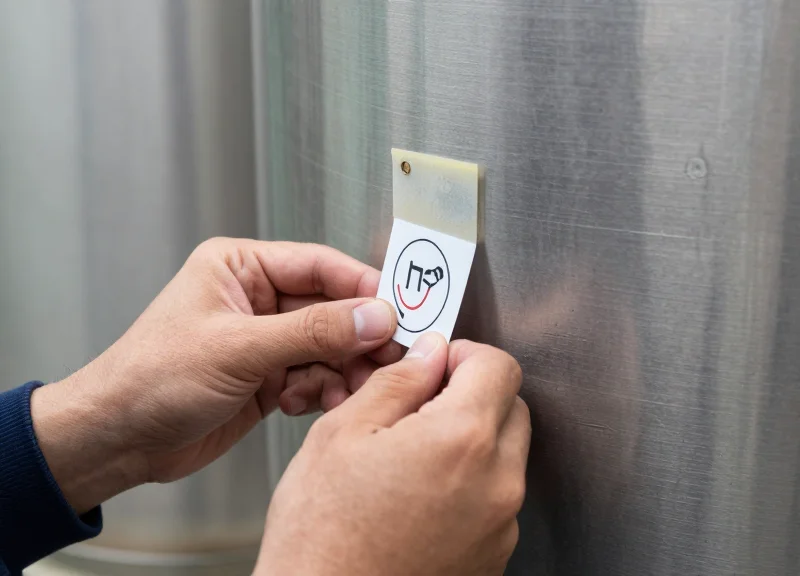
In hazardous zones, RFID tag attachment strategies must account for chemical degradation, extreme vibration, and explosive atmospheres (ATEX/IECEx). To achieve 99.9% inventory accuracy, the bond between the tag and the asset must be as durable as the tag itself. The three primary methods for permanent placement are high-performance industrial adhesives, mechanical fasteners (screws or rivets), and ultrasonic welding, each selected based on the substrate material and the severity of the chemical exposure.
| Method | Substrate Compatibility | Chemical Resistance | Installation Speed | Best Use Case |
|---|---|---|---|---|
| Industrial Adhesives | Metals & Plastics | Moderate to High | Fast | Curved surfaces or thin-walled containers |
| Mechanical Fasteners | Heavy Metals / Alloys | Excellent | Slow | Large tanks, valves, and heavy machinery |
| Ultrasonic Welding | Compatible Thermoplastics | Superior | Moderate | Permanent integration into plastic components |
| Metal Strapping | Cylindrical Assets | Excellent | Fast | Pipes, gas cylinders, and barrels |
Expert Insight: The Surface Energy Factor. A common failure point in chemical facilities is ignoring 'Surface Energy.' Even the strongest industrial adhesive will peel off if the tag is PEEK (high energy) but the asset is Polyethylene (low energy). For 99.9% accuracy, always match your adhesive's 'wetting' ability to the substrate’s surface energy. In high-solvency environments, avoid standard acrylic tapes; they can swell and lose cohesion. Instead, opt for structural epoxies that cross-link with the surface material to create a chemical-proof seal.
- Surface Preparation: Decontaminate the surface using an industry-approved solvent (like Isopropyl Alcohol) to ensure no oily residues interfere with the bond.
- Expansion Gap Analysis: When using mechanical fasteners on metal assets in high-heat chemical zones, ensure a 0.5mm clearance to account for thermal expansion, preventing tag cracking.
- Curing Verification: For epoxy-based attachments, strictly follow the 24-hour full-cure cycle before exposing the asset to high-pressure chemical washdowns.
Does drilling for mechanical fasteners compromise ATEX certification?
Yes, it can. Drilling into pressurized vessels or certified enclosures may void safety ratings. In these cases, welding a secondary mounting plate or using specialized high-bond epoxies is the industry standard.
How does ultrasonic welding affect RFID performance?
When done correctly, it creates a hermetic seal that is more chemical-resistant than any adhesive. However, the frequency must be tuned to avoid vibrating the internal IC bond wires, which can cause 'silent failures' where the tag remains attached but becomes unreadable.
Can I use zip ties in chemical zones?
Only if they are made of 316 Stainless Steel or specialized polymers like Tefzel (ETFE). Standard nylon zip ties will embrittle and snap within weeks when exposed to acidic vapors or UV light.
Ensuring 99.9% Accuracy: System Integration and Middleware

To achieve 99.9% inventory accuracy, one must look beyond the tag itself and focus on the middleware—the critical software layer that sits between the RFID readers and your ERP (Enterprise Resource Planning) or WMS (Warehouse Management System). In chemical environments, where liquid interference and metallic structures cause signal refraction, middleware acts as the 'brain' that cleanses raw data. It filters out stray reads, eliminates duplicate pings, and ensures that only validated inventory movements are recorded. Without high-performance integration, even the most expensive chemical-grade tags will suffer from 'data pollution' that undermines your inventory reliability.
| Feature | Raw RFID Data | Middleware-Enhanced Data |
|---|---|---|
| Data Integrity | Duplicate reads from multiple antennas. | Automatic deduplication and event logic. |
| Environmental Noise | Includes 'phantom' reads from reflected signals. | RSSI filtering to ignore low-quality pings. |
| System Load | Thousands of redundant pings per second. | Consolidated summaries pushed via API. |
| Directionality | Indicates a tag is present. | Determines if tag is entering or leaving a zone. |
- Edge Device Management: Configure readers at the local level to handle initial data processing, reducing the latency involved in cloud communication.
- Data Sanitization and Filtering: Apply algorithms to discard 'stray reads' from neighboring rooms or passing forklifts that aren't part of the targeted inventory count.
- Contextual Logic Layering: Combine RFID data with external triggers (like motion sensors or weight scales) to confirm that a chemical drum has actually been moved.
- ERP/WMS Handshake: Ensure bi-directional communication so that the RFID system can verify tag IDs against the master database in real-time.
Expert Insight: The 'RSSI Thresholding' Secret. In chemical plants with high metallic interference (e.g., stainless steel vats), the biggest threat to 99.9% accuracy isn't failing to read a tag—it is 'over-reading' tags from 50 feet away due to signal bounce. A sophisticated middleware setup utilizes Received Signal Strength Indicator (RSSI) thresholding. By setting a software-defined 'cutoff' value, the system ignores any tag pings that do not meet a specific signal strength, effectively creating a virtual 'geofence' around your intended read zone and eliminating the false positives that typically skew inventory counts.
Can I integrate RFID middleware with legacy ERP systems?
Yes, most modern middleware solutions provide REST APIs or Webhooks that act as a bridge, allowing older systems to receive clean, formatted XML or JSON data packets without a total infrastructure overhaul.
How does middleware handle 'blind spots' in chemical storage?
Through a process called 'Smoothing.' If a tag is temporarily blocked by a large liquid-filled container, the middleware maintains its 'Last Known Good' state for a predefined interval rather than marking it as missing immediately.
What is the role of GPIO in RFID integration?
General Purpose Input/Output (GPIO) allows the middleware to connect with physical hardware like stack lights or sirens, providing instant visual confirmation to workers when a chemical container is correctly or incorrectly processed.
Compliance and Safety Standards: ATEX and Beyond
In chemical processing environments, compliance is not a suggestion; it is a life-safety requirement. For RFID tags, this specifically refers to certifications for potentially explosive atmospheres where flammable gases, mists, or dusts are present. The most critical standards are ATEX (European) and IECEx (International), which classify equipment based on the level of protection provided. A 'certified' tag is designed with Intrinsic Safety (IS) principles, ensuring that even under fault conditions, the tag's electrical circuitry cannot produce a spark or thermal effect sufficient to ignite the surrounding chemical vapors.
| Region / Standard | Classification Type | Description | RFID Suitability |
|---|---|---|---|
| EU / ATEX | Zone 0 / 20 | Continuous explosive risk | Requires highest Intrinsic Safety rating. |
| EU / ATEX | Zone 1 / 21 | Occasional explosive risk | Standard industrial ATEX-certified tags. |
| US / NEC 500 | Class I, Div 1 | Gases/Vapors normally present | Must meet specific UL or FM standards. |
| Global / IECEx | Ex ia / Ex ib | Intrinsic Safety protection level | Universal standard for hazardous zones. |
Expert Insight: The 'Ex-Rating' Performance Gap. A common misconception is that an ATEX-certified tag is inherently chemically resistant. In reality, ATEX certification only validates that the tag won't cause an explosion. It does not guarantee the tag will survive exposure to sulfuric acid or toluene. For 99.9% accuracy, you must cross-reference the Ex-rating with the IP (Ingress Protection) and material compatibility ratings. A tag that remains safe but fails to read after chemical exposure is a failure for your inventory system.
- Identify the Hazardous Zone: Consult your facility's safety map to determine if you are operating in Zone 0, 1, or 2 (or Class I/II/III). This dictates the 'Equipment Protection Level' (EPL) required for the RFID hardware.
- Verify Intrinsic Safety Parameters: Ensure the tag is passive. Passive RFID tags are generally safer in hazardous zones than active (battery-powered) tags because they do not have an internal power source that could leak or short-circuit.
- Check Certificate Authenticity: Always request the official 'Declaration of Conformity' or the certificate number from the manufacturer to ensure the tag has been tested by a Notified Body like Intertek, SGS, or UL.
Can I use standard RFID tags in a chemical warehouse?
No. Standard tags can store static electricity or discharge energy. Only tags with anti-static housings and certified low-energy circuitry are safe for chemical environments with ignition risks.
Does ATEX certification affect read range?
Occasionally, yes. The protective potting compounds and anti-static additives in the tag's casing can slightly dampen signal sensitivity, which is why testing for 99.9% accuracy must be done with the certified version of the tag.
What is the difference between ATEX and IECEx?
ATEX is mandatory for the European Union, while IECEx is an international certification scheme. Many high-end chemical RFID tags are dual-certified to allow for global supply chain movement.
Cost-Benefit Analysis: The ROI of Specialized RFID Solutions
Calculating the ROI of specialized RFID solutions in chemical environments requires a shift from 'price per tag' to 'Total Cost of Ownership' (TCO). While industrial-grade, chemically resistant tags can cost 5 to 10 times more than standard UHF labels, their value is realized through the elimination of the 'Tag Failure Tax'—the cascading costs of manual reconciliations, production delays, and safety incidents that occur when a $0.50 generic tag dissolves in a caustic wash. For most chemical enterprises, achieving 99.9% accuracy via specialized hardware results in a full system payback within 12 to 18 months.
| Financial Metric | Generic RFID Labels | Specialized Chemical RFID Tags |
|---|---|---|
| Initial Unit Cost | $0.15 – $0.60 | $2.50 – $12.00 |
| Annual Replacement Rate | 30% – 70% (due to degradation) | < 1% (environmentally hardened) |
| Manual Audit Labor | High (to verify missing data) | Near Zero (automated data flow) |
| Compliance Risk | Significant (data gaps) | Low (continuous audit trail) |
Expert Insight: The 'Hidden Cost of the 0.1%'. In the chemical sector, the difference between 99% and 99.9% inventory accuracy isn't just a rounding error; it represents the 'dark zone' where safety incidents occur. If a drum of hazardous material is 'lost' to the system due to tag failure, the regulatory fines and emergency response costs can exceed the entire cost of a facility-wide RFID deployment in a single day.
- Baseline Manual Labor Costs: Calculate the total hours spent by staff on manual cycle counts and searching for 'misplaced' assets. In chemical plants, this often involves donning PPE, which triples the time spent per asset.
- Quantify Asset 'Leakage': Determine the annual cost of replaced containers, missing returnable transport items (RTIs), and expired chemical batches that were not used because they weren't visible in the ERP.
- Factor in Regulatory Fines: Evaluate the historical cost or potential risk of OSHA or EPA fines related to inaccurate chemical tracking or reporting.
- Calculate the Tag Failure Tax: Add the cost of labor required to scrape off failed adhesive labels and re-tag items that were initially equipped with non-specialized hardware.
Is the higher upfront cost of ATEX-certified tags worth it?
Absolutely. Non-certified tags can become ignition sources in explosive atmospheres. The ROI here isn't just efficiency; it is risk mitigation and legal protection for the organization.
How does specialized RFID impact insurance premiums?
Many insurers offer lower premiums or better coverage terms to facilities that can demonstrate real-time, high-accuracy tracking of hazardous materials, as it significantly lowers the risk profile of the operation.
Can I mix and match cheap and expensive tags?
It is not recommended. A heterogeneous tag environment often leads to inconsistent read rates, which forces staff to revert to manual processes, effectively neutralizing the ROI of the high-end components.