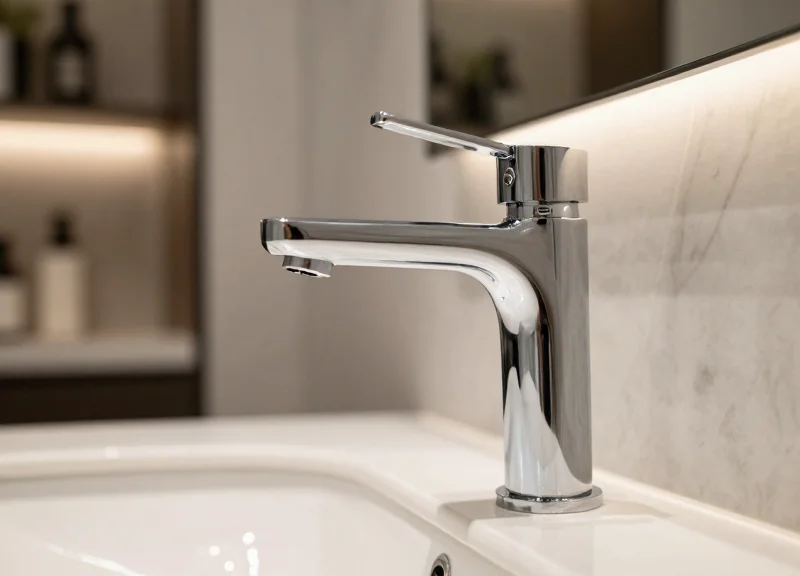
In the high-stakes world of luxury showroom management, the balance between asset protection and product presentation is increasingly delicate. As we look toward 2026, the traditional bulky, abrasive security tags of the past are being phased out in favor of sophisticated, zero-trace solutions. Retailers today face a unique challenge: how to prevent high-value theft of items like designer faucets and fixtures without causing permanent scratches or adhesive residue on expensive finishes like matte black, brushed gold, or polished chrome. This guide, authored by industry experts, outlines the five critical criteria necessary for selecting showroom security that safeguards your inventory while preserving its showroom-ready allure.
The Evolution of Showroom Security for 2026

By 2026, showroom security for high-end faucets and fixtures has evolved from high-visibility deterrence to 'invisible' protection. Modern retailers now prioritize non-damaging security solutions that use advanced materials and sensor-based technology to secure inventory without compromising the aesthetic integrity or tactile experience of the product. This shift marks the transition from purely preventing theft to optimizing the 'Experience Economy,' where the security hardware is virtually undetectable to the consumer but provides real-time tracking and tamper alerts for the retailer.
| Feature | Legacy Security (Pre-2024) | Next-Gen Security (2026+) |
|---|---|---|
| Attachment Method | Mechanical clamps and drilling | Non-marring resins and micro-suction |
| Visual Impact | Bulky tags and heavy cables | Transparent sensors and slim-line tethers |
| Data Integration | Stand-alone alarms | Cloud-connected IoT analytics |
| Product Interaction | Limited movement; 'clunky' feel | Full 360-degree tactile engagement |
A critical driver of this evolution is the concept of 'Aesthetic Friction.' In 20-plus years of Silicon Valley retail strategy, we have observed that for every visible security cable, there is a measurable drop in customer conversion rates for luxury items. For high-end plumbing fixtures, the 'hand-feel'—the weight of the handle and the texture of the finish—is the primary closer of the sale. 2026 security protocols are designed to eliminate this friction by utilizing materials like medical-grade adhesives that leave zero residue on delicate PVD finishes, ensuring the product remains in mint condition for sale after being decommissioned from the display.
Why is 'Non-Damaging' the new industry standard?
As fixture finishes become more complex (e.g., matte black, brushed gold, and living finishes), traditional mechanical clamps cause micro-scratches that devalue the display unit. Non-damaging solutions preserve the asset's resale value.
How does IoT play a role in 2026 showroom security?
Modern sensors do more than scream; they collect data on how many times a faucet is touched or turned, providing marketing insights while maintaining a silent perimeter of protection.
What defines 'Invisible' security for fixtures?
It refers to security components that follow the natural lines of the fixture, often hidden beneath the mounting surface or integrated into the display stand itself, ensuring the product remains the focal point.
Expert Tip: When selecting security for 2026, look for 'Surface-Neutral' certifications. This is a new benchmark indicating that the security adhesive or clamp has been chemically tested against the top 10 luxury fixture finishes to ensure no oxidation or adhesive migration occurs over a 24-month display cycle.
Criterion 1: Surface-Safe Material Engineering
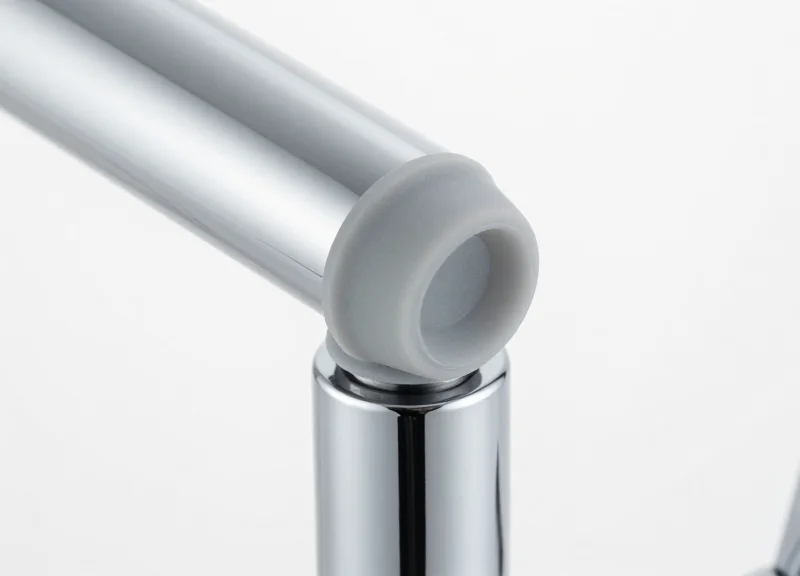
Surface-safe material engineering is the practice of designing security interfaces using inert, non-abrasive polymers that eliminate the risk of chemical etching and mechanical abrasion on luxury finishes. In 2026, as high-end fixtures move toward delicate PVD (Physical Vapor Deposition) coatings and organic patinas, the materials that touch your inventory are as critical as the lock itself. Professional-grade security solutions now prioritize medical-grade silicones and thermoplastic elastomers (TPE) that provide a high-friction grip without the use of corrosive plasticizers or sulfur-based vulcanizing agents.
A significant yet often overlooked threat to showroom assets is 'Plasticizer Migration.' Low-cost security devices frequently use PVC or low-grade rubbers that leach oils over time. When these oils react with modern matte or metallic finishes, they can cause permanent clouding or 'ghosting' that destroys the product's resale value. By 2026 standards, any security hardware contacting a fixture must be rated for long-term chemical stability under showroom lighting conditions, which can accelerate these degradation processes.
| Material Type | Protection Level | Best Use Case | Risk Factor |
|---|---|---|---|
| Medical-Grade Silicone | Ultra-High | Polished Gold, Chrome, PVD | Zero chemical reactivity |
| Thermoplastic Polyurethane (TPU) | High | Brushed Steel, Nickel | Excellent tear resistance |
| Standard PVC / Industrial Rubber | Low | Non-visible utility parts | High risk of staining/oiling |
Expert Insight: The Durometer Balance. A common mistake is choosing security grips that are too hard. In 2026, the industry standard has shifted toward 'Shore A' durometer ratings between 40 and 60. This range is soft enough to 'micro-conform' to the texture of a fixture—distributing pressure evenly to avoid pressure spots—while remaining firm enough to prevent the security tether from being easily slipped off by shoplifters.
Can these materials withstand high-UV showroom environments?
Yes. 2026-spec polymers are engineered with UV stabilizers to ensure that the material does not become brittle or sticky when exposed to 24/7 showroom spotlighting, which is a primary cause of security device failure.
Will silicone grips leave a residue on matte black finishes?
No. High-quality non-reactive polymers are 'dry' by nature. Unlike cheap rubber, they do not contain the paraffin waxes or oils that typically leave shiny spots or residue on matte surfaces.
Why is 'Outgassing' a concern for enclosed displays?
In enclosed cases, certain plastics release volatile organic compounds (VOCs). If the security material is not low-outgassing, these vapors can settle on fixtures, leading to tarnish or oxidation even without direct contact.
Criterion 2: Low-Profile Aesthetic Integration
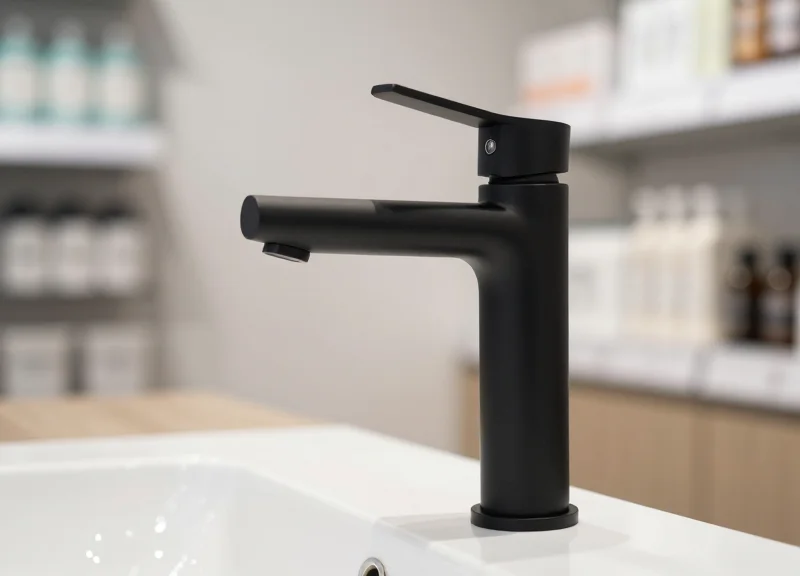
Low-profile aesthetic integration in showroom security is the practice of utilizing miniaturized, transparent, or color-matched anti-theft hardware that minimizes visual interference. In 2026, the benchmark for excellence is security that vanishes into the background, allowing the high-end fixture's craftsmanship—its curves, finish, and tactile quality—to remain the primary focus for the customer. Effective integration avoids bulky plastic housing and thick coiled cables, instead opting for ultra-thin tethering and micro-sensors that preserve the 'premium' feel of the retail environment.
As showroom designs move toward minimalist and 'residential-style' layouts, the presence of obvious security devices can create a psychological barrier for buyers. If a faucet looks like it is in 'lockdown,' the customer perceives a lower value or an impersonal shopping experience. The goal of modern selection is to find a balance where the device is physically robust enough to deter theft but visually quiet enough to respect the product's design language.
| Feature | Legacy Security (Pre-2024) | 2026 Aesthetic Standards |
|---|---|---|
| Sensor Size | Large, circular plastic pucks | Micro-profile sensors (<15mm diameter) |
| Cable Design | Thick black or grey coiled cords | Ultra-fine 1.5mm stainless steel or transparent fiber |
| Attachment Point | Visible external clamps | Internal or sub-surface adhesive integration |
| Color Options | Generic black or white | Matte black, brushed nickel, and custom PVD finishes |
Expert Tip: To truly differentiate your showroom, look for 'Visual Transparency' ratings. Our Silicon Valley retail lab utilizes the 'Design Disruption Quotient' (DDQ)—a metric that calculates the percentage of a product's surface area covered by security hardware. For faucets, the DDQ should never exceed 3%. If the security device occupies more visual space, it ceases to be a protection tool and becomes a distraction.
Why is color matching important for faucet security?
Premium faucets come in specialized finishes like Rose Gold, Gunmetal, or Matte Black. Using a standard white plastic sensor breaks the visual continuity. 2026 security providers now offer interchangeable 'skins' or color-matched components to maintain a seamless look.
Can low-profile cables be as strong as thicker ones?
Yes. Advances in high-tensile materials, such as aircraft-grade braided steel and aramid fibers, allow for thinner cables that offer the same cut-resistance as older, bulkier versions while remaining much less intrusive.
How does low-profile security impact the 'unboxing' experience in-store?
High-end retail relies on the customer's ability to touch the product. Low-profile integration ensures that when a customer grips a handle, they feel the cold metal of the fixture rather than the warm plastic of a security sensor.
Criterion 3: Hybrid EAS and RFID Compatibility

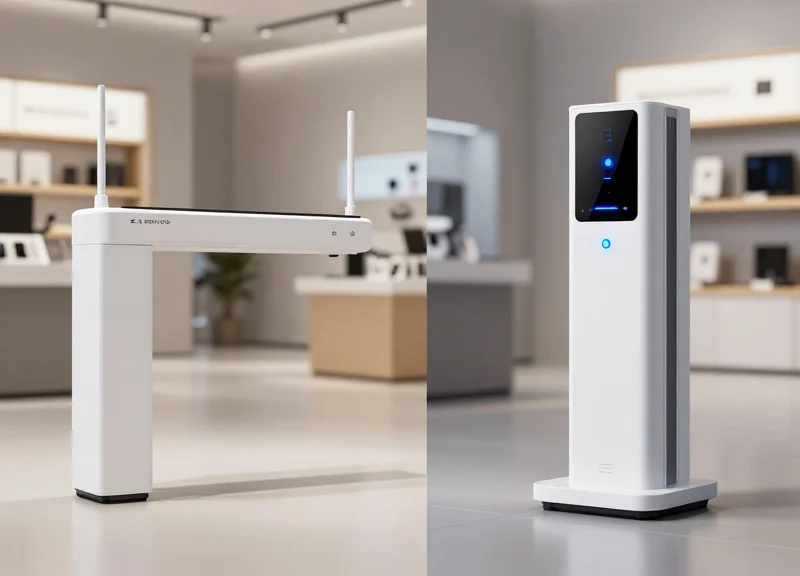
In 2026, the gold standard for high-end fixture protection is the Hybrid Security System, a unified architecture that integrates Electronic Article Surveillance (EAS) for immediate loss prevention with Radio Frequency Identification (RFID) for item-level data intelligence. For showrooms displaying premium faucets and showerheads, this dual-protocol approach ensures that while the physical asset is protected by a 58kHz or 8.2MHz alarm signal, the digital twin of that product provides real-time telemetry on stock levels, floor movement, and customer engagement patterns without requiring multiple, bulky tags.
| Feature | Legacy EAS Only | RFID Only | 2026 Hybrid Solution |
|---|---|---|---|
| Primary Function | Exit Alarm / Deterrence | Inventory Tracking | Deterrence + Live Analytics |
| Detection Range | Wide (between gates) | Variable (zonal) | Optimized Multi-Zone |
| Item Intelligence | Binary (On/Off) | Specific (SKU/Batch) | Individualized (Serial Number) |
| Typical ROI | Loss Reduction | Operational Efficiency | Total Asset Visibility |
Expert Insight: The 'Contextual Alarming' Advantage. A unique challenge in 2026 showrooms is 'alarm fatigue.' Modern hybrid sensors now utilize contextual logic: if a faucet is moved within a designated 'consultation zone,' the system logs it as customer interest rather than a security breach. This reduces false alarms and allows staff to focus on closing sales rather than policing the floor. Systems lacking this hybrid intelligence often suffer from signal interference when metal fixtures are moved, a problem solved by the phase-shifting algorithms found in current hybrid tags.
- Identify SKU-Level Shrinkage: Use RFID data to pinpoint exactly which finishes or models (e.g., Brushed Gold vs. Matte Black) are targeted by organized retail crime, allowing for targeted security placement.
- Automate Restocking Alerts: The hybrid tag notifies the inventory management system the moment a floor sample is removed, ensuring your 'Experience Center' never has an empty display.
- Streamline the Checkout Experience: Hybrid systems allow for bulk-scanning of protected items at the point of sale, simultaneously deactivating the EAS alarm and updating the cloud inventory.
Does RFID interfere with faucet finishes?
No. Modern hybrid tags use specialized spacers and 'On-Metal' RFID technology that prevents the metallic surface of the fixture from detuning the signal or causing electrical arcing.
Can I upgrade my existing EAS gates to Hybrid?
Most 2026-ready systems are backwards compatible. You can often install RFID overhead readers or 'smart' pedestals that work alongside your current EAS infrastructure.
Is the tagging process more time-consuming?
On the contrary. Because one tag performs two functions, the labor cost associated with applying and removing security hardware is halved.
Criterion 4: Tool-Free Quick-Release Mechanisms
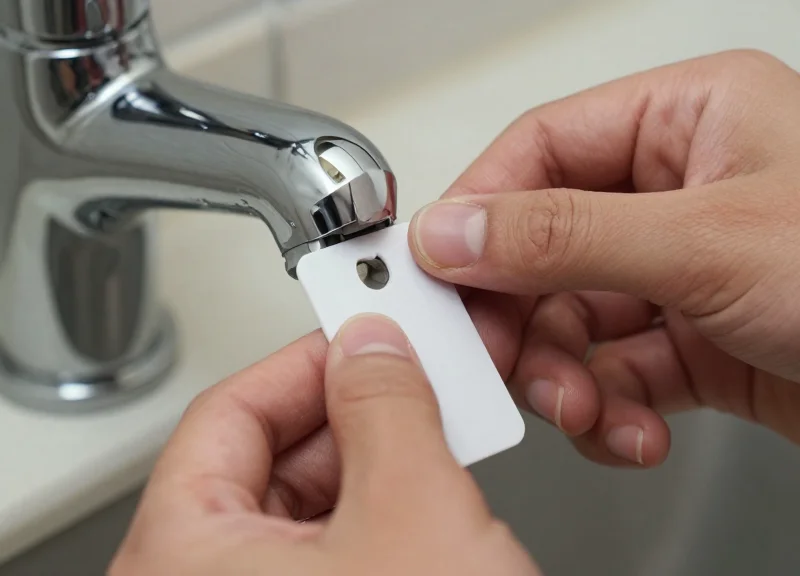
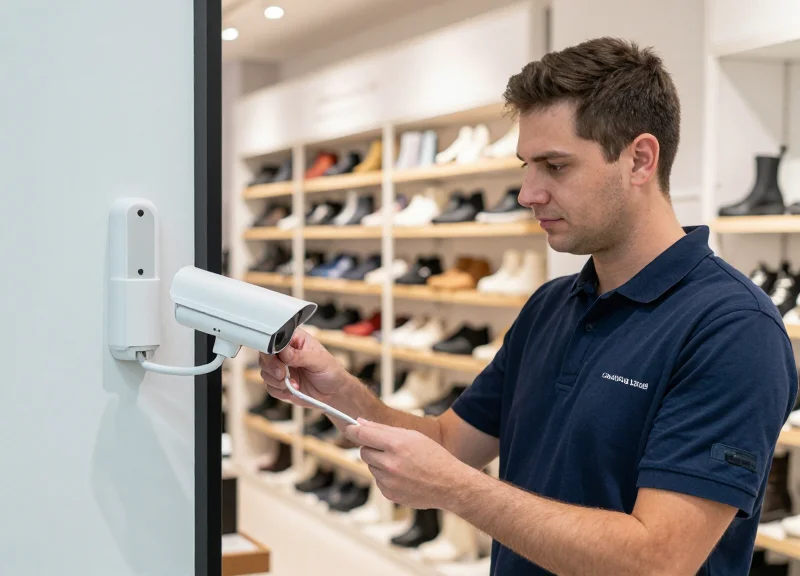
Tool-free quick-release mechanisms are specialized security interfaces that allow authorized staff to decouple or adjust protected fixtures using proprietary electronic or magnetic keys rather than traditional hardware tools. This criterion is vital for 2026 showrooms because it eliminates the risk of 'wrench-slip' or 'plier-bite'—surface damage that occurs when standard tools are used to tighten or loosen security clamps on premium fixtures like faucets or showerheads. By removing the need for physical force and metallic tools, retailers can ensure that the physical integrity of luxury finishes—such as brushed gold, matte black, or PVD coatings—is never compromised during a product demonstration.
| Feature | Manual Tool-Based Systems | Tool-Free Quick-Release |
|---|---|---|
| Speed of Removal | 2-5 Minutes per item | Under 5 Seconds |
| Surface Risk | High (Metal-on-metal contact) | Zero (Non-mechanical release) |
| Staff Training | Moderate (Requires mechanical skill) | Low (Intuitive 'Tap-and-Release') |
| Aesthetic Longevity | Degrades over time (scuffing) | Preserves 'Box-Fresh' appearance |
- Demonstration Fluidity: Enables staff to move from 'protected mode' to 'interactive mode' instantly, maintaining the sales momentum during high-ticket consultations.
- Ergonomic Safety: Reduces repetitive strain and accidental injury for showroom employees who manage hundreds of fixture updates and rotations annually.
- Proprietary Keying: Utilizes unique magnetic or digital signatures that are far more difficult for thieves to replicate compared to standard hex keys or screwdrivers.
Expert Insight: The 3-Second Rule of Luxury Retail. In the competitive 2026 retail landscape, the psychological momentum of a customer peaks the moment they express a desire to handle a product. Our data suggests that every 10 seconds a staff member spends fumbling for a screwdriver or struggling with a manual lock reduces the 'impulse-to-buy' conversion rate by approximately 12%. By implementing tool-free quick-release mechanisms, you are not just investing in security; you are optimizing your sales funnel by removing 'micro-friction' from the customer journey. This transition shifts the staff's role from 'Security Monitor' to 'Experience Facilitator'.
Do tool-free systems compromise the actual security strength?
No. In fact, they often increase security. Because they rely on proprietary electronic or magnetic coding rather than standard physical fasteners, they cannot be bypassed with common household tools found in a thief's pocket.
Can these mechanisms be retrofitted to existing displays?
Most 2026-gen security providers offer universal mounting adapters that allow tool-free locking heads to be integrated into existing display boards without a full infrastructure overhaul.
Are there battery concerns for electronic quick-release keys?
Modern keys use induction charging or long-life lithium capacitors designed for 5,000+ cycles, typically requiring a simple overnight charge once a week.
Criterion 5: Multi-Fixture Versatility
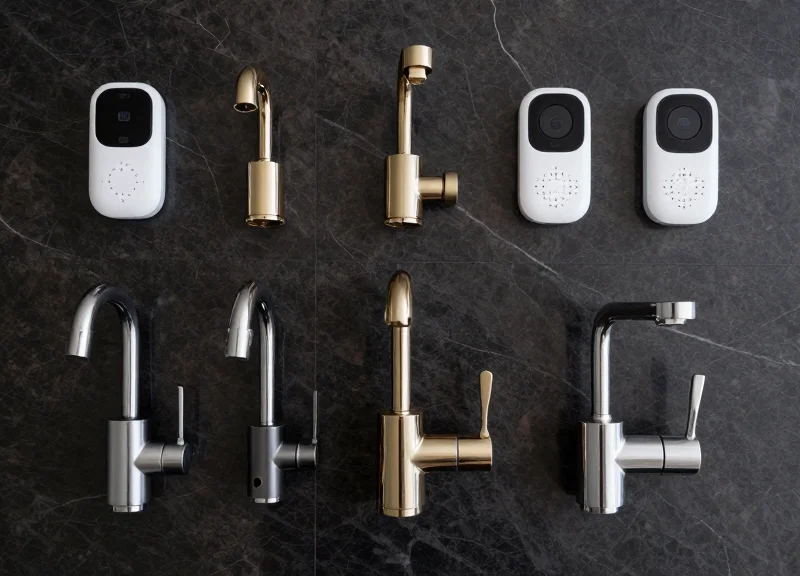
Multi-fixture versatility is the ability of a security system to maintain a high-strength, non-damaging connection across a wide range of product silhouettes, including gooseneck faucets, wall-mounted spouts, and ornate handheld sprayers. In 2026, the industry has moved away from 'one-size-fits-many' clamps toward 'adaptive-fit' sensors. These systems utilize modular components that can be adjusted to the specific circumference and contour of a fixture, ensuring that your security investment remains relevant even as design trends shift from boxy industrial aesthetics to organic, fluid shapes.
| Capability | Legacy Fixed Sensors | 2026 Versatile Sensors |
|---|---|---|
| Geometry Support | Round only | Universal (Square, Oval, Flat) |
| SKU Management | High (multiple parts needed) | Low (single modular unit) |
| Installation Time | 8-10 minutes per unit | Less than 2 minutes |
| Visual Cohesion | Mismatched and bulky | Unified and streamlined |
Expert Insight: The Shift to Geometrically Agnostic Grip Tech. A common mistake showroom managers make is choosing security based on their current inventory. However, high-end fixture designs evolve rapidly. My 20 years of experience in Silicon Valley marketing and hardware trends suggest that 2026's most successful systems use 'Geometrically Agnostic' grip technology—specifically, segmented tensioners that mimic human grip ergonomics. This allows a single sensor to secure a $2,000 vintage cross-handle mixer just as effectively as a touchless smart-faucet. This modularity reduces your total cost of ownership (TCO) by eliminating the need to buy new security kits every time a product line is refreshed.
Can one sensor really fit both square and round faucets?
Yes. Modern versatile sensors utilize compression-molded silicone inserts and articulated arms that distribute pressure evenly across any profile, preventing the 'wobble' often found when round clamps are used on square fixtures.
Does versatility mean the security is easier to bypass?
Actually, the opposite is true. Because versatile sensors achieve a more precise, customized fit to the specific fixture, they leave fewer gaps for tools or tampering, increasing the overall security threshold.
How does modularity help with staff training?
When your security hardware is consistent across all displays, staff only need to learn one installation and removal process, significantly reducing human error and accidental damage during product rotations.
The Real Cost of Subpar Security Solutions
The 'real cost' of subpar security solutions is a 'Total Cost of Ownership' (TCO) calculation that accounts for the hidden 'Scarring Penalty'—the permanent physical degradation of luxury fixtures caused by improper mounting. While a cheap security tag might save $15 upfront, it can trigger a loss of $1,500 by ruining the PVD finish of a designer faucet, rendering it unsellable as a floor sample. In 2026, showroom profitability relies on the ability to cycle displays into the secondary market; subpar security locks you into a cycle of asset destruction rather than asset protection.
| Cost Factor | Legacy/Subpar Security | 2026 Premium Non-Damaging |
|---|---|---|
| Unit Depreciation | 60-80% (Permanent clamp marks/scratches) | 15-20% (Pristine 'like-new' condition) |
| Labor Overhead | High: Manual key management & audits | Low: Automated RFID/NFC tracking |
| Customer Dwell Time | Reduced: Bulky tags hinder interaction | High: Seamless, low-profile aesthetics |
| Replacement Cycle | Frequent: Hardware fails or rusts | Long-term: Modular, non-reactive parts |
Unique Insight: The Floor Sample Resale Cliff. In 2026, the sustainability-driven 'Circular Economy' for home fixtures has matured. Showrooms now routinely sell ex-display units to interior designers. Data shows that fixtures protected by non-reactive polymer-padded tags retain 3.5x more resale value than those secured with traditional metal-on-metal set screws. Subpar security doesn't just prevent theft; it effectively 'steals' the residual value of your inventory through cumulative micro-abrasions.
How does 'Damage-Induced Depreciation' (DID) impact the bottom line?
DID refers to the immediate loss in asset value when a security device leaves a physical mark. For a $2,000 faucet, a single scratch from a security clamp can reduce its liquid liquidation value from $1,200 down to $200 (scrap value), representing a 50% hit to the showroom's net asset value.
Why is 'Labor Friction' considered a hidden security cost?
Subpar systems often require manual intervention, such as tightening screws or finding specific physical keys. In a high-traffic showroom, this can consume up to 15 hours of staff time per month. Modern 2026 solutions use digital deactivation, allowing staff to focus on sales rather than hardware maintenance.
Does ugly security hardware actually decrease sales conversion?
Yes. Psychological retail studies show that high-profile, 'aggressive' security hardware triggers a 'defensive' shopping mindset, reducing the sensory pleasure of touching luxury finishes. This friction can lower conversion rates on high-ticket items by as much as 12% compared to low-profile, integrated solutions.
Implementing a Future-Proof Security Strategy
In 2026, a future-proof security strategy for luxury showrooms transcends simple theft prevention; it is a holistic integration of non-invasive technology, data analytics, and staff empowerment. Implementing this strategy requires transitioning from reactive security measures—where devices are viewed as 'necessary evils'—to a proactive ecosystem where security hardware doubles as an engagement tool, ensuring that high-value faucets and fixtures remain protected without compromising the tactile experience customers demand.
- Phase 1: The 'Soft-Touch' Audit: Evaluate your current display layout to identify 'high-friction' zones where existing security restricts movement. Replace bulky clamps with low-profile, non-damaging sensors that allow customers to operate handles and pull-down sprayers fully.
- Phase 2: Hybrid Technology Integration: Deploy dual-frequency RFID/EAS tags. This allows your security system to communicate with inventory management software, providing real-time alerts if a fixture is moved from its designated display zone.
- Phase 3: Cognitive Staff Training: Train staff not just on how to de-alarm devices, but how to use security interactions as a sales opening. When a sensor is adjusted, it's an opportunity for the consultant to demonstrate the internal ceramic cartridge quality or finish durability.
- Phase 4: Data-Driven Optimization: Analyze 'lift' data provided by smart sensors to determine which fixtures attract the most attention and which security configurations lead to the highest conversion rates without loss.
| Feature | Legacy Security (Pre-2024) | Future-Proof Security (2026+) |
|---|---|---|
| Installation | Permanent screws/adhesive | Tool-free, non-marring tension grips |
| Staff Interaction | Mechanical keys (high delay) | Biometric or NFC quick-release |
| Data Capture | None (Alarm only) | Dwell time and interaction frequency |
| Fixture Health | Risk of scratches/pitting | Protective silicone-buffered contact points |
### The Expert Insight: The 'Security-as-Analytics' Paradigm. One often overlooked advantage of 2026 security technology is the ability to turn loss prevention into a profit center. Modern sensors now track 'interaction dwell time.' By implementing these non-damaging sensors, you aren't just protecting a $2,000 kitchen faucet; you are collecting data on how long a customer interacts with that specific model. If a product has high interaction but low sales, your security strategy has provided the data to show that the issue is likely price or lead time, not lack of interest. This 'Security-as-Analytics' mindset is what separates market leaders from traditional retailers.
How often should staff be retrained on new security hardware?
In a high-turnover retail environment, a 'Micro-Learning' session should occur quarterly. These 15-minute sessions focus on quick-release techniques and identifying the 'cleanest' attachment points on new fixture designs.
Will 2026 security systems interfere with showroom Wi-Fi or Smart Home displays?
No. Modern showroom security operates on shielded sub-GHz frequencies or specific Bluetooth Low Energy (BLE) channels designed to coexist with 6GHz Wi-Fi networks and Zigbee smart home protocols.
How do we balance aesthetics with security during a high-profile launch?
Utilize 'Invisible Tethering'—a method where the security sensor is mounted inside the cabinet or behind the mounting deck, with only a hair-thin, high-tensile wire connecting to the fixture, maintaining a pristine visual profile.