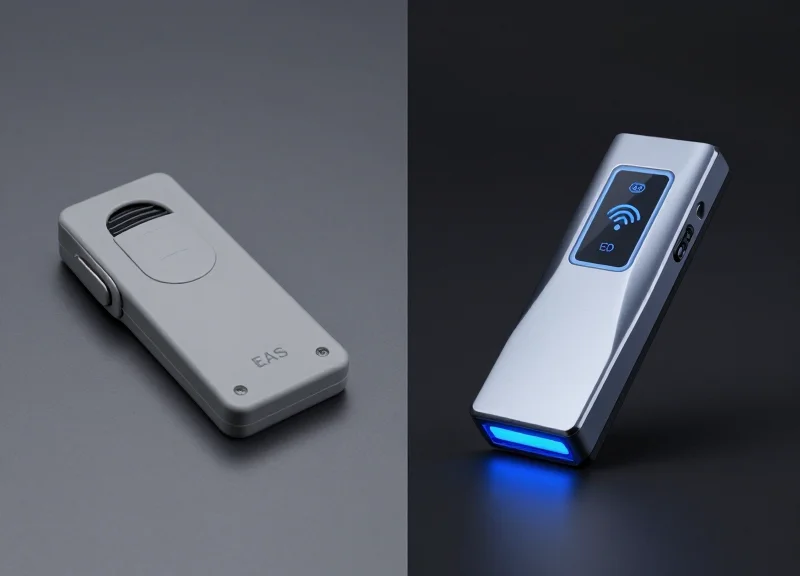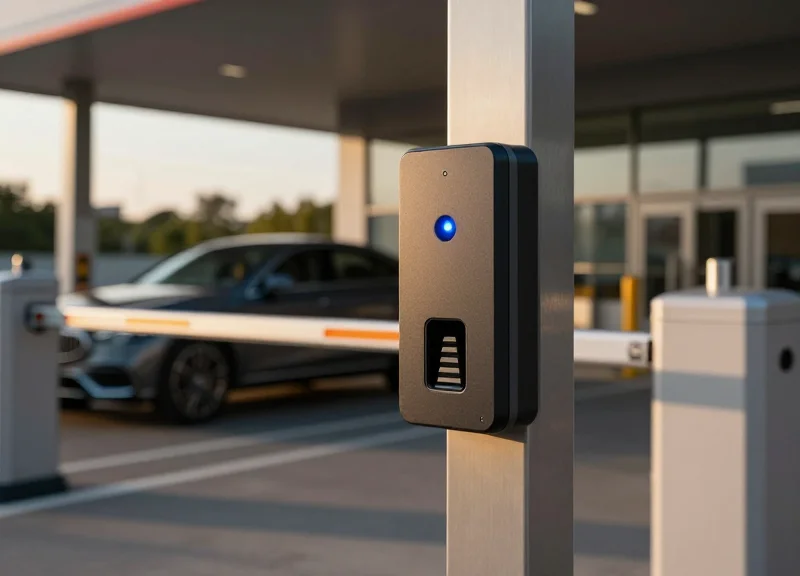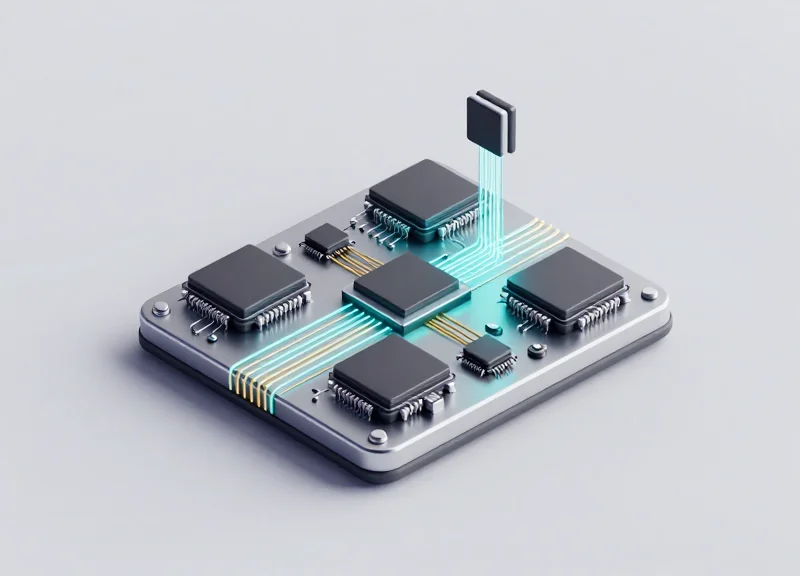
As we approach 2026, the industrial landscape is shifting from simple tracking to autonomous intelligence. OEM RFID is no longer just a peripheral; it is becoming the cognitive core of industrial devices. Driven by the dual forces of extreme hardware miniaturization and decentralized edge computing, the next generation of RFID technology promises to eliminate latency and fit into the smallest form factors imaginable, fundamentally redefining how we think about machine-to-machine communication and data-driven decision-making in real-time.
The Evolution of OEM RFID: From Tracking to Intelligence

The evolution of OEM RFID represents a paradigm shift from 'passive identification'—where tags merely reported a static ID—to 'distributed intelligence,' where miniaturized modules process data locally to enable real-time autonomous decision-making within industrial hardware. By 2026, the value of RFID in the OEM sector will no longer be measured by its ability to locate an object, but by its capacity to serve as the 'sensory cortex' for smart devices, integrating seamless connectivity with onboard computational power.
| Feature | Legacy RFID (Tracking Era) | Next-Gen OEM RFID (Intelligence Era) |
|---|---|---|
| Primary Function | Inventory & Asset Location | Edge Data Processing & Logic |
| Form Factor | Bulky External Readers | Embedded, Sub-10mm Modules |
| Data Flow | Unidirectional (Tag to Cloud) | Bi-directional (Real-time Feedback) |
| Integration | Add-on Accessory | Native System-on-Chip (SoC) |
In the early stages, RFID was a reactive tool, largely used to replace manual barcodes for warehouse efficiency. However, as we approach 2026, the focus has shifted to the 'Embedded Intelligence' model. Here, OEM manufacturers are no longer just attaching tags; they are integrating ultra-small RFID readers directly into the circuit boards of medical devices, industrial robots, and high-value tools. This allows the device itself to verify the authenticity of consumables, monitor usage cycles, and prevent operation if safety parameters are not met—all without requiring a persistent connection to a central server.
How does miniaturization change the OEM design cycle?
Smaller footprints allow RFID to be integrated into previously impossible spaces, such as surgical instruments or handheld electronics, reducing the need for external antennas and simplifying mechanical design.
Why is edge-computing critical for 2026 RFID standards?
Edge-computing eliminates latency. Instead of sending raw signal data to the cloud, the OEM module interprets the data locally, allowing for instant 'Go/No-Go' decisions in critical industrial workflows.
What is the 'Silicon Squeeze' in RFID evolution?
This is the industry trend where the RF transceiver and the microcontroller are fused into a single die, significantly reducing power consumption while increasing the cryptographic security of the device.
Expert Insight: The most significant breakthrough we are seeing for 2026 is 'Predictive Telemetry' at the tag level. Unlike traditional systems that only record historical movements, modern OEM RFID modules can now analyze signal strength fluctuations and environmental data to predict maintenance needs before a mechanical failure occurs. We are moving from knowing where a device is to knowing how a device feels.
The Miniaturization Breakthrough: Micro-RFID Modules
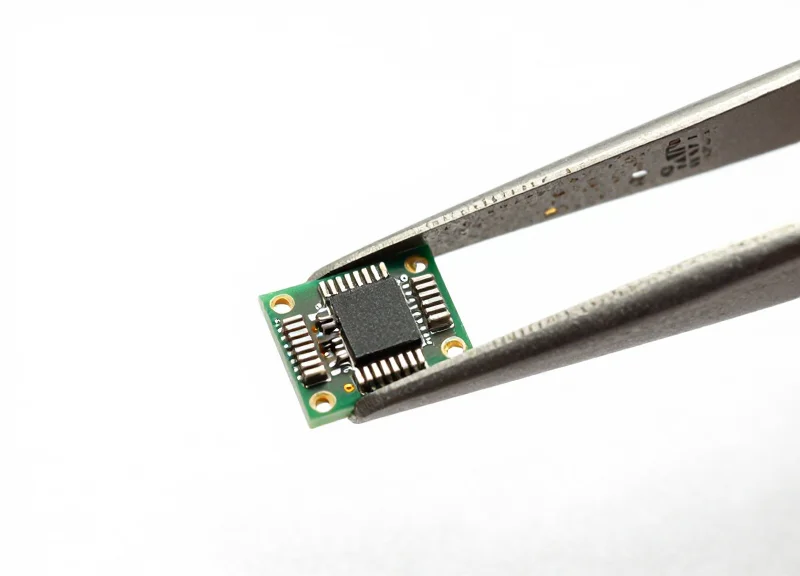
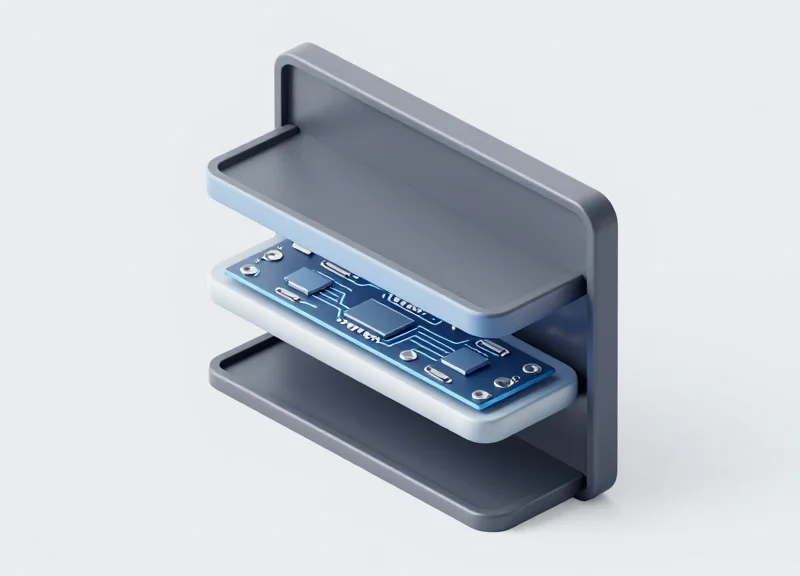
Micro-RFID modules represent the next generation of embedded UHF reader technology, characterized by surface-mount (SMD) footprints smaller than 20mm x 20mm that maintain long-range read capabilities. Unlike legacy boards, these 2026-spec modules utilize highly integrated Application-Specific Integrated Circuits (ASICs) and System-on-Chip (SoC) architectures to condense power management, RF front-ends, and digital processing into a single, low-profile package suitable for industrial wearables and surgical-grade handhelds.
The shift toward miniaturization is driven by the 'Invisible Intelligence' mandate: the requirement that RFID functionality must not dictate the form factor of the host device. By leveraging advanced ceramic packaging and high-density interconnect (HDI) PCBs, engineers can now achieve -80dBm sensitivity in a module the size of a postage stamp. This allows for the integration of enterprise-grade tracking into devices previously deemed too small, such as smart glasses, biometric rings, and compact medical diagnostic tools.
| Feature | Legacy OEM Modules (Pre-2023) | 2026 Micro-Modules |
|---|---|---|
| Typical Dimensions | 40mm x 40mm to 60mm x 40mm | 15mm x 15mm to 22mm x 22mm |
| Power Consumption | 2.0W - 3.5W (Active) | 0.6W - 1.2W (Active) |
| Antenna Integration | External MMCX/U.FL connectors | Integrated ceramic patch or PCB edge-feed |
| Mounting Type | Through-hole or board-to-board | Surface Mount (SMD/LGA) |
The Veteran's Insight: The Thermal Density Paradox. While shrinking the PCB footprint is a win for industrial designers, it creates a 'Thermal Density Paradox.' In 2026, the real engineering hurdle isn't just fitting the module on the board—it is managing the concentrated heat output of a 30dBm transmitter in a sealed, fanless enclosure. To solve this, leading-edge modules now incorporate 'Adaptive Power Scaling,' where the reader intelligently modulates output power based on real-time heat-sink telemetry, ensuring the device remains within safe ergonomic temperatures without sacrificing read-rates.
How do micro-modules handle the range vs. size trade-off?
Modern micro-modules utilize high-sensitivity silicon that compensates for the smaller physical apertures of compact antennas. While a legacy reader might rely on raw power (30dBm) to achieve distance, 2026 modules use advanced noise-cancellation and superior signal-to-noise ratios (SNR) to achieve 5-7 meter read ranges at significantly lower power levels.
Are these modules compatible with existing industrial protocols?
Yes. Despite their size, these modules are designed for global compliance (860-960 MHz) and support standard EPC Gen2v2 protocols, often providing UART, SPI, or USB interfaces for direct communication with the host's microcontroller.
What impact does miniaturization have on durability?
Actually, it improves it. The move to Surface Mount Technology (SMT) and Land Grid Array (LGA) packaging eliminates fragile connectors and cables, making the RFID sub-system significantly more resistant to the high-vibration and drop-shocks common in industrial environments.
Edge-Computing: Bringing Logic to the Tag Reader

Edge-computing in OEM RFID refers to the architectural shift where raw tag data is processed, filtered, and analyzed directly on the reader hardware rather than being streamed to a centralized cloud or server. By 2026, this 'localized logic' will be the standard for industrial intelligence, allowing devices to make autonomous decisions—such as triggering an alarm or updating a local database—in sub-millisecond timeframes without relying on external connectivity.
| Feature | Traditional Cloud-Centric RFID | 2026 Edge-Enabled OEM RFID |
|---|---|---|
| Latency | 100ms - 2s (Network dependent) | < 5ms (Local processing) |
| Data Traffic | High (Every tag read is sent) | Low (Only actionable insights sent) |
| Offline Reliability | System fails without connection | Fully functional autonomous operation |
| Security | Data exposed during transit | Local encryption and data thinning |
The primary driver for this transition is the 'Noise-to-Signal' problem. In a high-density industrial environment, an RFID reader can capture thousands of redundant tag pings per second. Sending all this 'noise' to the cloud is a waste of bandwidth and power. Edge-integrated modules use sophisticated algorithms to deduplicate data and recognize patterns locally. For instance, an OEM module in a 2026 sorting bot doesn't just report a tag; it calculates the trajectory of the item and only alerts the system if a 'mis-pick' is detected. This transition transforms the RFID reader from a passive sensor into a proactive controller.
Expert Insight: The 'Silent Network' Principle. By 2026, leading industrial OEMs will adopt a 'Silent Network' strategy where edge-computing RFID modules only communicate with the primary ERP when an anomaly or threshold is met. This reduces industrial Wi-Fi/5G congestion by up to 90% and can extend the battery life of mobile handheld readers by nearly 40% because the power-hungry radio transmitter remains idle while the low-power edge processor handles the logic.
How does edge-computing improve security in RFID systems?
By processing data locally, sensitive information is 'thinned' before it ever hits the network. If a reader only transmits a 'Pass/Fail' signal instead of raw personnel data, the attack surface for hackers sniffing network traffic is significantly reduced.
Will edge-computing modules be more expensive to integrate?
While the initial hardware cost of an edge-capable SoC (System on Chip) is slightly higher, the Total Cost of Ownership (TCO) is lower due to massive savings in cloud storage fees, bandwidth costs, and reduced server infrastructure.
Does this require complex custom programming?
Modern OEM modules are moving toward 'Low-Code' edge environments where engineers can drag-and-drop logic flows (like if-this-then-that) directly onto the reader firmware.
Reducing Latency in High-Speed Automated Environments

In high-speed industrial automation, reducing latency is no longer about faster network cables; it is about eliminating the 'cloud-trip' entirely through Edge-to-Action architecture. By 2026, the benchmark for high-performance OEM RFID is sub-millisecond response times, achieved by embedding logic-heavy processors directly into miniaturized reader modules. This allows devices to identify, validate, and trigger mechanical responses (like sorting a package or stopping a robotic arm) locally, ensuring that the speed of data processing finally matches the velocity of the production line.
| Architecture Type | Typical Latency (ms) | Application Suitability | Data Bottleneck |
|---|---|---|---|
| Cloud-Centric RFID | 150 - 500+ | Inventory Management | WAN Bandwidth |
| On-Premise Server | 20 - 50 | Standard Conveyor Sorting | LAN Congestion |
| 2026 Edge-Embedded OEM | < 5 | High-Speed Robotics & AGVs | None (Local I/O) |
The integration of edge-computing into small-form RFID modules changes the fundamental workflow of an industrial device. Traditionally, an RFID reader was a 'dumb' sensor that passed raw data to a PLC or server. Modern modules now perform 'Data Pruning' at the source. They filter out redundant 'noise' and multipath reflections before the data ever leaves the module. This is critical in environments where items move at speeds exceeding 10 meters per second, where even a 100ms delay results in a physical displacement of one meter—often the difference between a successful sort and a system collision.
- On-Module GPIO Triggering: Modern modules use General Purpose Input/Output (GPIO) pins to trigger actuators directly from the reader's logic board, bypassing the millisecond-heavy handshaking of traditional industrial protocols.
- Anticipatory Buffer Algorithms: Using local edge-processing to predict the arrival of a tag based on previous RSSI trends, allowing the reader to prep authorization keys before the tag is fully in the main read field.
- Protocol Stripping: By 2026, miniaturized modules utilize optimized internal stacks that strip away unnecessary TCP/IP overhead for local-only decision loops.
Expert Insight: The Jitter-Stability Benchmark. While 'low latency' is the marketing buzzword, the 2026 industrial gold standard is actually 'Low Jitter.' In synchronous robotics, it is often better to have a consistent 5ms response than a response that fluctuates between 1ms and 10ms. Miniaturized edge modules provide this deterministic timing by isolating the RFID processing environment from the noise of the broader enterprise network.
Can't 5G networks handle this latency requirement?
While 5G reduces air-interface latency, the overhead of the core network and the physical distance to an MEC (Multi-access Edge Compute) node still cannot compete with an on-module processor for sub-millisecond tasks.
Does miniaturization lead to thermal throttling in high-speed use?
New 2026 OEM designs utilize GaN (Gallium Nitride) components that maintain high efficiency with minimal heat, preventing the performance dips that used to plague older, compact high-frequency readers.
Is edge-processing compatible with existing PLCs?
Yes. Edge-enabled modules handle the 'micro-decisions' locally but still report the 'macro-data' (results) to the PLC via standard industrial Ethernet, giving you the best of both worlds.
Design Challenges: Thermal Management and Power Efficiency
Designing 2026-grade OEM RFID systems requires overcoming the 'thermal density wall,' where miniaturized modules generate significant heat from edge-computing processors and high-gain radio frequencies. To maintain efficiency, engineers must implement sophisticated power-envelope management and advanced Thermal Interface Materials (TIMs) that allow for sustained read ranges without compromising the integrity of ultra-compact housings. In the context of industrial automation, failure to manage these thermals results in frequency drift and reduced component lifespan, making efficiency the primary metric for successful device integration.
| Parameter | Traditional RFID (Pre-2024) | Next-Gen OEM RFID (2026+) |
|---|---|---|
| Power Stage Material | Standard Silicon (Si) MOSFETs | Gallium Nitride (GaN) Transistors |
| Heat Dissipation | Bulk Passive Heatsinks | Phase-Change Materials (PCM) & Structural Cooling |
| Power Management | Fixed Duty Cycles | AI-Driven Adaptive Voltage Scaling (AVS) |
| Efficiency Goal | ~65-75% Power Conversion | >92% Power Conversion |
The transition to Gallium Nitride (GaN) components is the 'hidden' revolution in 2026 RFID design. GaN-on-Si transistors allow for higher switching frequencies with significantly lower energy loss, which is critical when fitting an edge-computing RFID reader into a space no larger than a postage stamp. By reducing the energy wasted as heat, we can finally achieve 30dBm output in fanless, sealed industrial enclosures that previously would have triggered thermal shutdowns within minutes of operation.
How does edge-computing impact battery life in RFID handhelds?
While local processing increases immediate power draw, it reduces the need for constant high-bandwidth Wi-Fi or 5G transmissions. By filtering data at the edge, the overall 'radio uptime' is decreased, often resulting in a 15-20% net gain in battery life for mobile industrial devices.
What are the best materials for heat dissipation in plastic OEM enclosures?
When metal heat sinks aren't an option, thermally conductive polymers and graphite heat spreaders are used to move heat from the RFID SoC to the device's surface area, preventing localized hot spots that can degrade internal circuitry.
Can software-defined power management replace hardware heatsinks?
No, but it significantly reduces the size requirement. Software-defined power uses real-time temperature feedback to modulate the RFID read-pulse width, ensuring the device operates at the maximum possible performance without exceeding safe thermal thresholds.
- Thermal Modeling: Use CFD (Computational Fluid Dynamics) to simulate heat flow within the specific OEM housing early in the design phase.
- Duty Cycle Optimization: Implement trigger-based reading rather than continuous scanning to lower the average power consumption.
- Component Selection: Prioritize modules with integrated Power Management Integrated Circuits (PMICs) designed specifically for edge-processing loads.
- Structural Integration: Utilize the device's chassis as a secondary heat spreader by using high-performance TIMs between the RFID module and the inner casing.
Security at the Edge: Protecting Data in 2026

In 2026, security at the edge for RFID systems is defined by the migration of cryptographic logic and threat detection from centralized servers directly onto the OEM reader module. By processing sensitive identification data locally, industrial devices create a 'Hardened Edge' that reduces the attack surface by up to 80%, ensuring that raw PII (Personally Identifiable Information) or proprietary asset data never leaves the device in an unencrypted state. This decentralized approach is the cornerstone of modern Zero Trust architectures in Industrial IoT (IIoT).
As we move into 2026, the primary security challenge has shifted from simple signal jamming to sophisticated packet injection and cloud-relay attacks. Miniature RFID modules now include dedicated Secure Elements (SE) and Hardware Security Modules (HSM) embedded within the silicon. This allows for real-time authentication without the latency of a cloud handshake, ensuring that even if the primary network is compromised, the individual device remains a locked gateway.
| Feature | Legacy RFID Security (Centralized) | 2026 Edge-Native Security (Decentralized) |
|---|---|---|
| Data Transmission | Raw data sent to cloud for processing | Processed 'Insights' sent; raw data stays local |
| Encryption Level | Software-based AES-128 | Hardware-enforced ECC & Post-Quantum Crypto |
| Authentication | Server-side validation (High Latency) | On-chip Secure Element (Sub-ms Latency) |
| Threat Response | Manual intervention after detection | AI-driven autonomous port-locking |
Expert Insight: The Rise of PUF (Physically Unclonable Functions). A significant breakthrough for 2026 is the integration of PUF technology within miniaturized OEM readers. Unlike traditional keys stored in flash memory—which can be extracted via sophisticated micro-probing—PUF creates a unique digital fingerprint based on the microscopic physical variations in the silicon itself. This ensures that the identity of the RFID reader cannot be cloned, even if an adversary gains physical possession of the hardware.
How does edge-computing prevent replay attacks in 2026?
Edge-computing allows the reader to implement 'Dynamic Payload Obfuscation,' where the data structure of the tag-read changes on every cycle based on a local temporal algorithm, making intercepted data useless to attackers.
Is on-device security compatible with low-power miniaturized modules?
Yes, the 2026 generation of silicon uses ultra-low-power cryptographic accelerators that perform complex SHA-3 hashing with 90% less energy consumption than previous software-emulated methods.
What happens to security if the device loses internet connectivity?
The edge-native intelligence allows the device to maintain full security protocols and 'Store-and-Forward' encrypted logs locally, ensuring zero security gaps during network outages.
Ultimately, the integration of edge computing into RFID readers transforms security from a reactive cloud process into a proactive hardware feature. For OEM designers, this means the security is 'baked in' rather than 'bolted on,' satisfying the increasingly stringent global regulations for industrial data privacy and critical infrastructure protection.
Industry Use Cases: Healthcare, Logistics, and Manufacturing

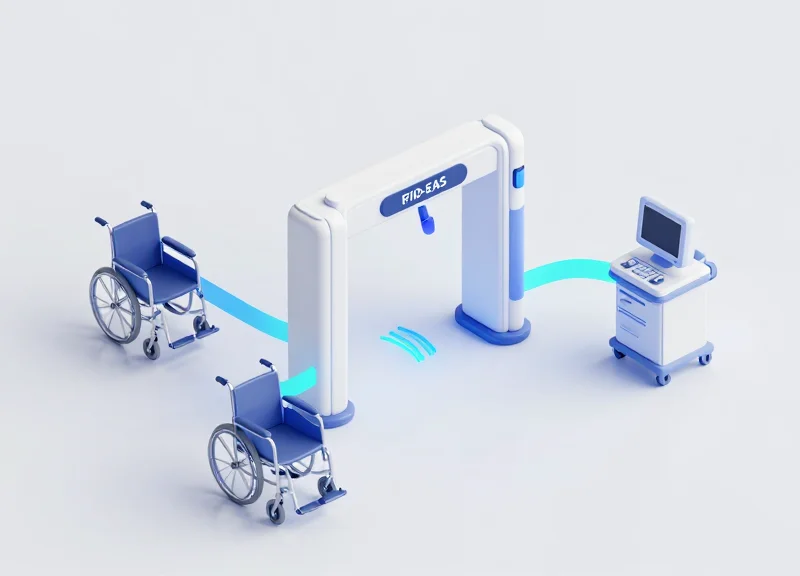
By 2026, the convergence of miniaturized OEM RFID modules and edge-computing intelligence will redefine industrial efficiency by enabling autonomous, real-time decision-making at the point of capture. Unlike legacy systems that merely relay data to a central server, these next-generation devices process complex data locally to facilitate immediate actions—such as validating surgical kit completeness in sterile environments, directing high-speed robotic sorters in logistics, or managing sub-assembly precision on automated manufacturing lines—without the latency of cloud round-tripping.
| Industry Sector | Legacy RFID Limitation | 2026 Edge-RFID Solution |
|---|---|---|
| Healthcare | Large readers limit use to doorways or bulky carts; high latency. | Micro-readers integrated into smart trays and wearables; instant edge verification. |
| Logistics | Centralized processing causes bottlenecks during peak transit. | On-device sorting logic allows autonomous rerouting at the edge pallet level. |
| Manufacturing | External readers miss internal component data in dense assemblies. | Embedded micro-OEM modules provide 'inside-out' telemetry for the entire lifecycle. |
- Healthcare: The Smart Surgical Suite: Miniaturized RFID readers are now embedded directly into surgical instrument trays. The edge-computing layer performs a 'presence check' against the scheduled procedure's requirements locally. If a specific micro-tool is missing or exceeds its sterilization cycle, the tray alerts the staff via an onboard LED—zero cloud connectivity required, ensuring 100% compliance in RF-shielded operating rooms.
- Logistics: Dark Warehouse Optimization: In high-velocity 'dark' warehouses, edge-capable RFID modules on mobile robots handle the filtering of thousands of tag reads per second. By discarding 'noise' at the reader level and only transmitting actionable changes to the WMS, these devices reduce network bandwidth consumption by up to 90% while maintaining sub-millisecond response times for robotic picking.
- Manufacturing: The Digital Twin Birthplace: OEM micro-readers are integrated into the assembly jigs themselves. As a component is seated, the edge-processor validates its serial number and technical specs against the local 'Gold Build' database. This prevents assembly errors before they happen (Poka-yoke) and initiates the digital twin record at the precise moment of physical integration.
One significant, often overlooked advantage of this 2026 paradigm shift is the solution to 'Data Gravity' in global supply chains. As we move toward trillions of tagged items, moving all that raw data to the cloud is no longer economically or physically viable. My unique perspective after decades in the valley is that 'Data Sanitization at the Edge' will become the most valuable KPI for OEM engineers. By 2026, the most successful RFID integrations won't be those that read the most tags, but those that use edge-logic to intelligently ignore the 99% of data that doesn't change, transmitting only the critical 'delta' to the enterprise layer.
Why is miniaturization critical for healthcare RFID applications?
Space is at a premium in clinical settings. Miniaturized OEM modules allow RFID to be embedded into handheld diagnostics and small sterilization containers where traditional readers simply wouldn't fit, enabling tracking at a more granular, unit-of-use level.
Does edge-computing increase the power consumption of RFID readers?
While local processing requires power, it is offset by the massive reduction in radio transmission time. By processing data locally and only using Wi-Fi or 5G to send small bursts of filtered info, the overall battery life of mobile industrial devices is actually extended.
Can these edge-capable modules operate without an internet connection?
Yes, that is a core design requirement for 2026. These modules carry localized databases and logic gates that allow them to perform critical validation and sorting tasks during network outages, syncing with the cloud only when a connection is restored.
DragonGuardGroup's Vision for the Future of OEM RFID
DragonGuardGroup’s vision for 2026 centers on the 'Invisible Intelligence' framework, where high-performance RFID, EAS, and ESL capabilities are synthesized into ultra-compact, edge-computing OEM modules. By moving beyond simple data collection, we are engineering embedded components that allow industrial devices to perceive, decide, and communicate autonomously. This vision eliminates the traditional trade-offs between device size and processing power, ensuring that even the smallest handheld scanners or robotic grippers possess the localized intelligence required for sub-millisecond decision-making in the smart factories of tomorrow.
| Feature | Legacy OEM RFID Standards | DragonGuard 2026 Vision |
|---|---|---|
| Integration | Single-protocol (RFID only) | Multi-Spectrum (EAS + RFID + ESL Hybrid) |
| Data Handling | Cloud-reliant / Passive | Edge-Intelligent / Active Logic |
| Form Factor | Standard Module Sizes | Nanoscale 'Component-on-Flex' Designs |
| Power Profile | High consumption during TX | Ultra-low power 'Wake-on-Radio' tech |
- Cross-Protocol Convergence: We are breaking the silos between Electronic Article Surveillance (EAS), Radio Frequency Identification (RFID), and Electronic Shelf Labels (ESL). Our 2026 modules will allow a single OEM component to handle inventory tracking, loss prevention, and dynamic pricing updates simultaneously.
- The 'Self-Healing' Edge: Our vision includes embedded AI that monitors signal interference in real-time. If a factory environment becomes electronically 'noisy,' the RFID module autonomously adjusts its frequency hopping and sensitivity parameters to maintain 99.99% read accuracy.
- Sustainability through Longevity: By utilizing advanced power-harvesting circuits, our next-gen OEM components are designed to outlast the mechanical life of the host device, reducing e-waste and total cost of ownership.
Unique Expert Insight: In 2026, the real differentiator will be 'Hybrid-Spectrum Fusion.' DragonGuardGroup is currently developing a proprietary chip architecture that allows OEM devices to switch dynamically between UHF RFID for long-range logistics and NFC for secure, localized technician access. This 'Dual-Personality' hardware allows manufacturers to simplify their SKU management by using one universal module for multiple global markets and use cases.
How does DragonGuardGroup plan to address the complexity of multi-protocol integration?
Through a unified SDK (Software Development Kit) that abstracts the hardware layers. Developers can interact with EAS, RFID, and ESL functions via a single API, significantly reducing the engineering time required for device integration.
What role does miniaturization play in your 2026 roadmap?
We are targeting a 40% reduction in module footprint without sacrificing read range. This is achieved through 3D stacking of components and advanced thermal dissipation materials that allow high-power output in confined spaces.
Is security a priority in this vision?
Absolutely. Our 2026 vision includes hardware-level encryption (Root of Trust) inside the OEM module, ensuring that edge-processed data is tamper-proof before it ever reaches the local network.
Strategic Roadmap: Preparing Your Product Line for 2026
To prepare a product line for 2026, OEMs must transition from treating RFID as a simple identification tag to viewing it as a decentralized intelligence node. This requires a three-pronged strategic approach: adopting modular 'plug-and-play' edge architectures, optimizing for sub-millimeter form factors, and ensuring firmware compatibility with emerging AI-driven industrial networks. Companies that begin integrating hybrid edge-cloud RFID capabilities now will gain a significant first-mover advantage in autonomous logistics and high-precision healthcare environments.
| Phase | Strategic Focus | Key Deliverables |
|---|---|---|
| Phase 1: Foundation (Q4 2024) | Legacy Audit & Power Profiling | Assessment of existing hardware's thermal and power headroom for edge chips. |
| Phase 2: Integration (H1 2025) | Miniaturization Prototyping | Initial CAD designs for embedded antennas and micro-RFID modules. |
| Phase 3: Intelligence (H2 2025) | Edge Logic Development | Deployment of local data-processing scripts to reduce cloud latency. |
| Phase 4: Launch (2026) | Ecosystem Validation | Full-scale production of 'Ready-for-2026' intelligent industrial devices. |
- Prioritize Modular Antenna Design: Avoid rigid, fixed-size antenna configurations. As miniaturization accelerates, use flexible PCB (FPCB) antennas that can wrap around internal device components to maximize space efficiency.
- Implement 'Zero-Trust' at the Reader Level: With edge-computing, the RFID module becomes an entry point. Integrate hardware-level encryption (ECC) during the design phase to ensure data integrity before it reaches the local gateway.
- Adopt Unified API Standards: Standardize on communication protocols like MQTT or gRPC for edge data transmission. This ensures your 2026 hardware remains interoperable with diverse Industrial IoT (IIoT) platforms.
Expert Insight: The Digital Product Passport (DPP) Mandate. By 2026, international regulations—particularly in the EU—will increasingly require 'Digital Product Passports' for industrial components to support circular economy goals. Integrating miniaturized RFID with edge-intelligence isn't just a technical upgrade; it is a compliance strategy. Devices that can locally store and update their own lifecycle data without constant cloud access will become the only viable option for global manufacturers.
Do I need to replace my entire hardware stack for edge-RFID?
Not necessarily. Many 2026-ready RFID modules are designed for drop-in compatibility via standard interfaces like I2C or SPI, allowing for incremental upgrades.
What is the primary power challenge for 2026 miniaturized modules?
The challenge is 'Active-Edge' consumption. While passive RFID is low power, edge-computing chips require precise power management to avoid draining the host device's battery.
How does miniaturization affect read range in industrial settings?
While smaller antennas typically mean shorter ranges, the 2026 generation compensates for this through increased chip sensitivity and beam-forming technology in the reader infrastructure.