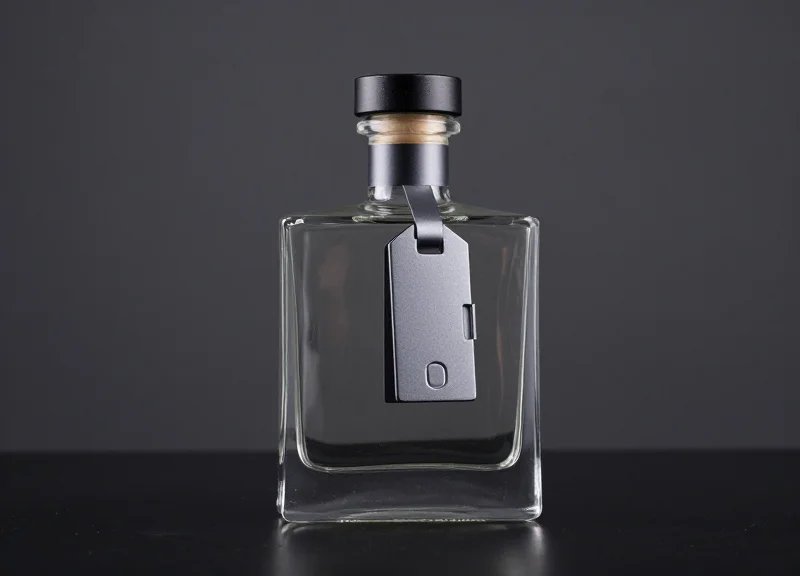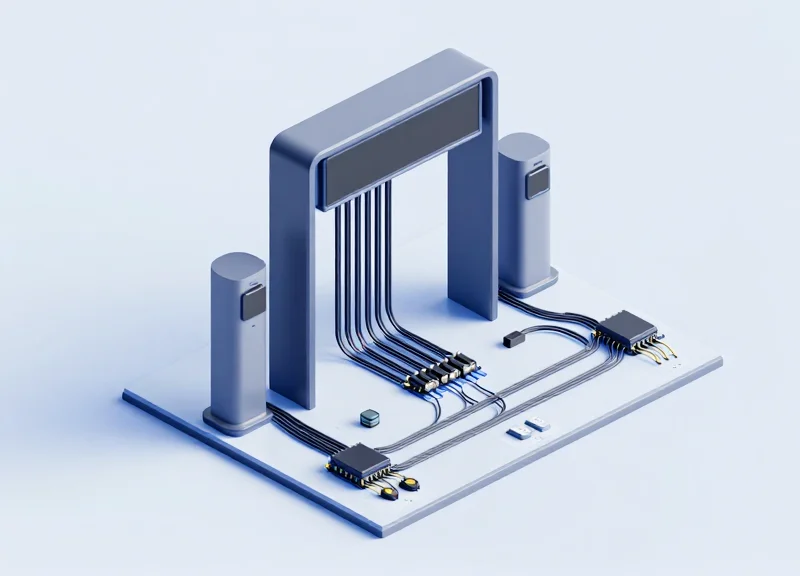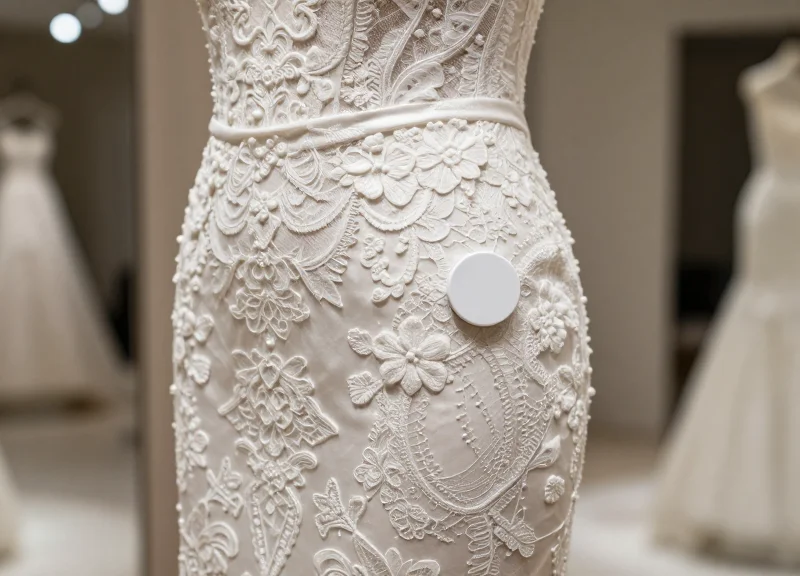
In the luxury bridal industry, each gown is a masterpiece representing hours of meticulous craftsmanship and significant financial investment. For boutique owners, the dilemma is constant: how do you protect these high-value assets from theft without compromising the integrity of fragile silks, intricate lace, or whisper-thin tulle? Standard EAS (Electronic Article Surveillance) tags often leave unsightly holes or permanent snags, devaluing the inventory before it even reaches the altar. To maintain the prestige of your couture collection while ensuring robust loss prevention, selecting specialized, non-damaging security solutions is non-negotiable.
The High Stakes of Bridal Loss Prevention

Bridal loss prevention represents a high-stakes balancing act between protecting high-unit-value inventory and preserving the delicate integrity of luxury fabrics like silk, tulle, and Chantilly lace. Unlike standard retail, where loss is often calculated as a percentage of high-volume turnover, a bridal boutique's profitability is sensitive to single-unit losses. The 'stakes' are not merely the cost of goods sold, but the compounding impact of replacement lead times, the risk of 'mechanical shrink' (damage caused by the security hardware itself), and the potential loss of a sample that serves as a primary sales tool for months.
| Risk Factor | Standard Apparel Retail | High-Value Bridal Retail |
|---|---|---|
| Average Unit Value | $20 - $150 | $2,000 - $15,000+ |
| Fabric Sensitivity | Durable (Cotton, Polyester) | Extremely Fragile (Silk, Organza, Fine Lace) |
| Impact of Damage | Mark-down or Clearance | Total Write-off (Non-sellable) |
| Replacement Time | 1 - 2 Weeks | 4 - 6 Months (Designer Lead Times) |
Expert Insight: The 'Sample Multiplier' Effect. In bridal retail, your inventory consists primarily of samples used to generate special orders. If a sample gown is stolen or damaged by an invasive EAS tag pin, you aren't just losing the wholesale cost of that dress. You are losing the ability to sell that specific style to every bride who walks through your door for the next 16-24 weeks while a replacement is manufactured. One damaged gown can effectively cost your business $20,000 to $50,000 in missed order opportunities.
What is 'Mechanical Shrink' in bridal loss prevention?
Mechanical shrink refers to inventory loss caused not by theft, but by the security measures themselves. In bridal, this typically happens when standard EAS pins create permanent holes, snags, or rust stains on delicate luxury fabrics.
Why can't I use standard ink tags for bridal gowns?
Ink tags pose a catastrophic risk; if a tag is tampered with or malfunctions, the resulting spill on porous fabrics like silk or satin is permanent, immediately devaluing a multi-thousand dollar gown to zero.
Is the risk of theft high in bridal boutiques?
While foot traffic is lower than in big-box retail, 'organized retail crime' (ORC) syndicates target high-value bridal gowns for the secondary resale market, making robust but non-invasive security essential.
Criterion 1: Ultra-Fine Pin Gauge and Material
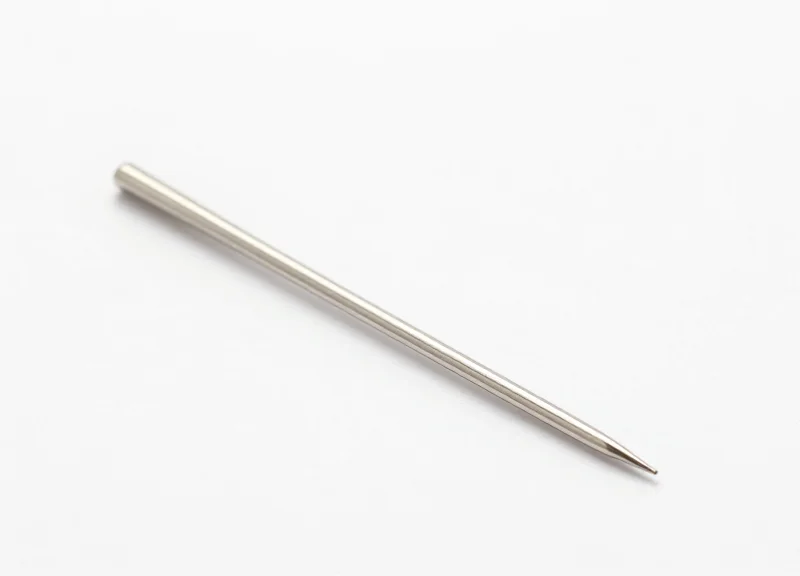
For high-value bridal couture, the security pin is not just a fastener; it is a potential threat to the garment's integrity. The primary criterion for non-damaging EAS tags is an ultra-fine pin gauge—ideally between 0.5mm and 0.6mm—constructed from surgical-grade stainless steel. While standard retail pins (usually 1.2mm or thicker) are designed for rugged fabrics like denim, they are catastrophic for silk, tulle, and satin, where they create permanent 'hoop stress' that leads to irreversible fiber displacement or micro-tears.
| Feature | Standard EAS Pin | Couture-Grade Fine Pin |
|---|---|---|
| Pin Diameter | 1.2mm - 1.5mm | 0.5mm - 0.6mm |
| Material | Zinc-plated Steel | 316L Surgical Stainless Steel |
| Tip Geometry | Conical/Blunt | Tapered Trocar Tip |
| Impact on Silk | Permanent Fiber Rupture | Non-destructive Displacement |
Material science plays an equally vital role. Unlike cheaper zinc-plated pins that may have microscopic burrs or 'pitting' from the manufacturing process, high-end bridal pins undergo an electro-polishing treatment. This creates a friction-less surface that allows the pin to slide between delicate silk threads rather than snagging or cutting through them. When the pin is removed, the memory of the fabric allows the threads to return to their original position, leaving no visible puncture mark—a phenomenon known as 'self-healing' fabric recovery.
Why is the 0.6mm threshold so important?
Most high-thread-count bridal satins have a weave density that can accommodate a 0.6mm diameter without snapping the horizontal weft threads. Anything larger forces the fibers apart beyond their elastic limit, resulting in a 'pinhole' that cannot be steamed out.
Does the tip shape matter as much as the thickness?
Yes. A 'Trocar' or 'tapered' tip is essential. Standard blunt tips push through fabric like a punch, while tapered tips act like an acupuncture needle, gently parting the weave.
How does stainless steel prevent staining?
Low-grade metals can oxidize when exposed to humidity or the oils from a bride's skin during fittings. 316L stainless steel is corrosion-resistant, ensuring no metallic residue or rust spots are left on white or ivory fabrics.
Expert Insight: The Magnification Test. Before committing to a bulk order of EAS tags, perform a 'drag test' under 10x magnification. A couture-grade pin should show no visible surface irregularities. If you feel even the slightest resistance when passing the pin through a swatch of silk organza, the pin material is likely porous and will cause micro-snags over time during repeated try-ons.
Criterion 2: Lightweight Ergonomic Design
Lightweight ergonomic design in bridal loss prevention refers to the selection of EAS (Electronic Article Surveillance) tags that weigh less than 15 grams and feature a balanced center of gravity to prevent 'gravity-induced distortion.' For high-value couture, the weight of a security tag is not merely a matter of convenience; it is a structural hazard. When a heavy tag is attached to delicate fabrics like silk chiffon, Alençon lace, or fine tulle, the constant pull of gravity creates localized stress that can permanently distend the weave, leading to visible sagging or 'dimpling' that ruins the garment’s silhouette on a mannequin.
In my twenty years of observing retail loss prevention, the most common mistake luxury boutiques make is using 'all-purpose' hard tags on bridal inventory. A standard retail tag often weighs between 25 and 35 grams. While this is negligible for a denim jacket, it is catastrophic for a gown with a structured bodice and ethereal skirt. The ergonomic aspect of the tag design ensures that the mass is distributed evenly across the locking mechanism, preventing the tag from tilting and creating a 'lever effect' that widens the entry hole made by the pin.
| Tag Category | Typical Weight | Fabric Impact | Recommended Application |
|---|---|---|---|
| Standard Hard Tag | 25g - 40g | High risk of fiber tearing and permanent sagging. | Denim, Outerwear, Heavy Knits |
| Mid-Range EAS | 18g - 24g | Moderate risk; causes visible 'puckering' on silk. | Ready-to-wear, Suits |
| Specialized Bridal Tag | 8g - 14g | Negligible; preserves the integrity of delicate weaves. | Couture, Bridal, Fine Lingerie |
Expert Insight: The 15-Gram Threshold. Through extensive stress testing on high-denier silk, we have identified 15 grams as the 'point of no return.' Any security device exceeding this weight will, over a 30-day display cycle, cause a measurable vertical stretch of 2-3mm in untreated natural fibers. To protect your margins, always specify 'featherweight' components in your EAS procurement.
How does tag weight affect the gown's resale value?
A heavy tag causes 'fabric memory' where the fibers are stretched beyond their elastic limit. Even after the tag is removed, a visible bump or elongated hole remains, often requiring the gown to be marked down as 'damaged' floor stock.
Why is 'balance' as important as 'weight'?
An unbalanced tag will hang at an angle. This creates asymmetrical tension on the pin, which is the leading cause of 'yarn slippage'—a defect where the horizontal and vertical threads of the fabric are pushed apart permanently.
What should I look for in tag shape?
Look for a low-profile, rounded 'clamshell' or 'ufo' shape. These designs minimize the surface area that can snag on other gowns and ensure the center of mass remains as close to the fabric surface as possible.
Criterion 3: Smooth Finishing and Snag-Proof Housing
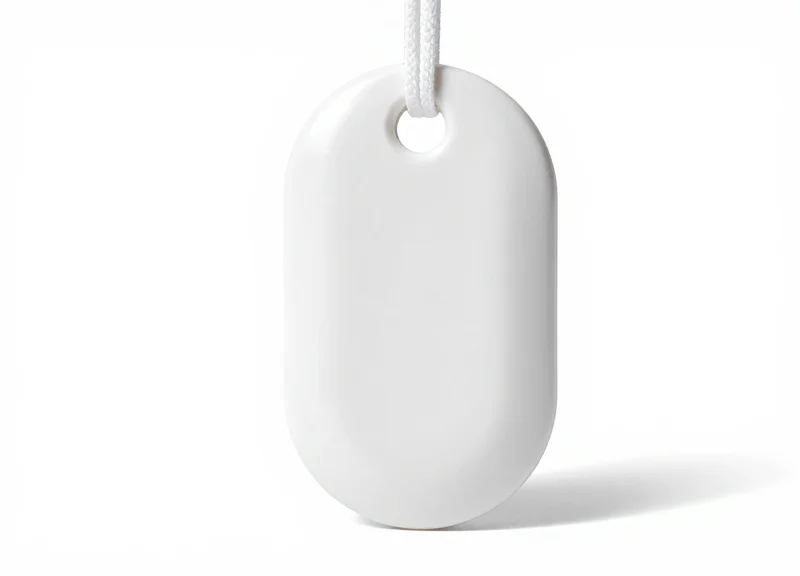
In the world of luxury bridal retail, a single microscopic burr on a security tag's plastic housing can cause hundreds of dollars in damage to delicate Chantilly lace or hand-stitched beadwork. Snag-proof housing refers to EAS tags specifically engineered with radiused (rounded) edges and a mirror-polished surface finish. Unlike standard security tags, which often feature sharp injection-molding 'flash'—the thin, protruding excess plastic along the seam line—couture-grade tags undergo secondary finishing processes to ensure every contact point is perfectly smooth, preventing the housing from catching on the loose weaves common in high-value gowns.
| Feature | Standard Retail Tag | Couture-Grade Tag |
|---|---|---|
| Seam Construction | Visible mold lines with potential flash | Ultrasonically welded and buffed seams |
| Corner Geometry | 90-degree or minimally beveled edges | Full-radius, ergonomic rounded edges |
| Surface Texture | Matte or textured recycled plastic | High-gloss, non-porous polished ABS |
| Risk Factor | High risk of snagging lace/tulle | Zero-snag performance on delicate mesh |
Expert Tip: To verify the quality of your tags, use the 'Silk Stocking Test.' Run a pair of fine silk stockings or a high-denier nylon over the seams of the EAS tag. If the tag catches even a single fiber, it is unfit for a bridal gown. Professional-grade tags should glide across these materials without any resistance or friction noise.
- Inspect the Mold Parting Line: Examine the center seam of the tag where the two halves of the housing meet. It should be flush and smooth to the touch, with no sharp protrusions.
- Evaluate the Material Density: High-quality tags use virgin ABS plastic which maintains a smoother finish over time compared to recycled plastics that may develop brittle, sharp edges.
- Check for Ultrasonic Welding: Premium tags are joined via ultrasonic welding rather than glue, creating a seamless bond that won't crack or expose sharp interior edges under pressure.
Why is 'flash' so dangerous for bridal gowns?
Flash is the razor-thin excess plastic that leaks between mold halves. On a bridal gown, these edges act like tiny saws against delicate silk threads, causing immediate pilling or irreversible snags.
Can I just sand down rough edges on my existing tags?
No. Sanding creates a porous surface that can trap dirt or oils, which may then transfer to the white fabric of the gown. It is safer to invest in tags that are factory-polished.
Does the color of the housing matter for snags?
While color doesn't affect snags directly, high-gloss white housings are preferred because they make it easier to spot any debris or dust that could potentially soil the dress.
Criterion 4: Secure Yet Gentle Locking Mechanisms
For high-value bridal couture, a secure locking mechanism is defined by its ability to provide high pull-strength—typically exceeding 45kg—while utilizing a precision-engineered internal clutch that prevents 'over-locking.' Unlike standard retail tags that may continue to tighten under pressure, bridal-grade EAS tags utilize calibrated spring-clutches that grip the pin firmly without exerting excessive vertical compression on the fabric, thereby eliminating the risk of permanent fiber displacement or 'pressure bruising' on delicate silks and satins.
The internal clutch of an EAS tag is the invisible guardian of your inventory. In the bridal industry, the primary concern is not just the thief who pulls at the tag, but the 'compression memory' of the fabric itself. When a tag is applied, if the locking mechanism allows the tag body to be squeezed too tightly against the pin head, it creates a circular indentation that may never steam out. Professional-grade tags for couture are designed with a mechanical stop or a 'stepped' locking system that ensures security while maintaining a microscopic buffer between the tag components and the textile fibers.
| Locking Feature | Standard EAS Tag | Bridal-Grade Precision Tag |
|---|---|---|
| Internal Clutch Type | Standard 3-ball clutch | High-tensile 4-ball or magnetic precision clutch |
| Compression Control | Infinite tightening (High risk) | Fixed-depth or 'Soft-Stop' mechanism |
| Pull-Strength | 30kg - 40kg | 45kg - 60kg (Super-Lock) |
| Release Mechanism | Standard Magnetic | High-Gauss Decoupler with Smooth-Release |
Does a stronger lock mean more damage to the dress?
No. Pull-strength (security) and compression (damage) are separate variables. A high-quality tag provides extreme resistance to forced removal while the internal mechanism ensures the pin does not crush the fabric fibers during the lock.
How can I test for 'pressure bruising' before buying?
Apply a sample tag to a multi-layer swatch of bridal satin for 48 hours. Upon removal, the indentation should be minimal and should vanish completely after a light professional steaming. If a visible ring remains, the locking mechanism is too aggressive.
Is a 'Super-Lock' necessary for bridal shops?
Yes. Because bridal gowns are high-ticket items, they are targets for professional shoplifters using high-powered magnets. A Super-Lock (12,000 Gauss or higher) provides the necessary deterrent.
Expert Insight: The '1mm Gap Rule' is a secret among luxury curators. To ensure long-term fabric safety, look for tags where the pin length is specifically matched to the tag thickness so that, even when fully locked, there remains a 1mm 'float' space. This prevents the tag from becoming a clamp, which is the leading cause of fiber breakage in vintage-style lace and heavy crepe gowns.
Criterion 5: Integration with RFID for Inventory Intelligence

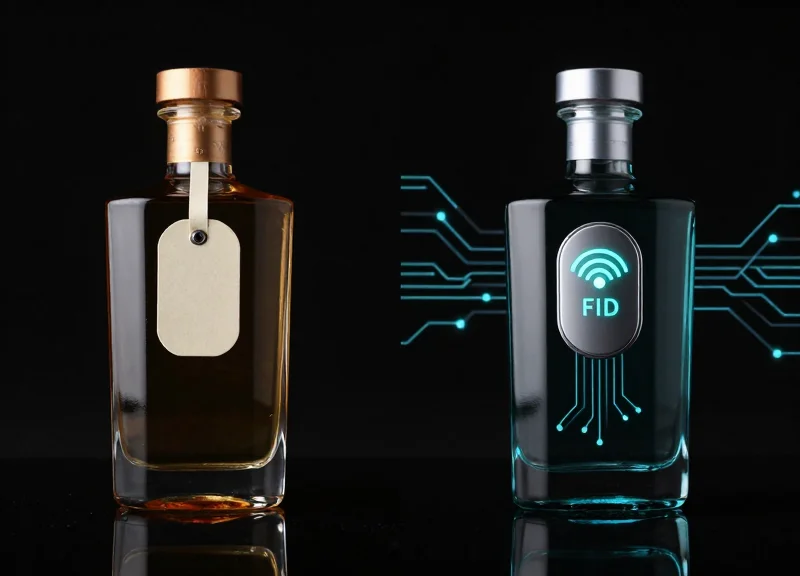
Integration with RFID (Radio Frequency Identification) allows high-value bridal retailers to combine physical security with real-time digital visibility, transforming a standard anti-theft tag into a sophisticated data point for inventory accuracy and supply chain traceability. Unlike traditional EAS which only triggers an alarm, RFID-integrated tags enable 'item-level intelligence,' allowing staff to locate specific gowns instantly and automate stock counts without touching the delicate fabric.
| Feature | Traditional EAS Tag | RFID-Integrated EAS Tag |
|---|---|---|
| Primary Function | Theft Deterrence | Security + Inventory Visibility |
| Data Capacity | None (On/Off Signal) | Unique Serialized Identification |
| Inventory Speed | Manual (Hours) | Digital Scanning (Minutes) |
| Omnichannel Support | Limited | High (Real-time Stock Accuracy) |
| Counterfeit Protection | None | Digital Authentication |
In the luxury bridal sector, the 'Shadow Inventory Trap' is a frequent profit killer. This occurs when a unique, high-value gown is misplaced in the dressing room or stockroom, leading to a lost sale because the system shows it in stock but staff cannot find it. RFID-integrated EAS tags eliminate this by providing a digital breadcrumb trail. For boutiques managing trunk shows or multi-location inventory, this integration ensures that every gown—often worth thousands of dollars—is accounted for at every stage of the journey from the designer to the fitting room.
Does adding RFID make the security tag heavier?
No. Modern RFID inlays are paper-thin and weigh less than a gram. When integrated into an EAS housing designed for bridal gowns, the weight remains well below the threshold that causes fabric stretching.
How does RFID help with the customer experience?
RFID allows for 'Smart Fitting Rooms' and faster checkout. It can trigger digital displays to show gown details or styling tips when a bride enters a dressing room, and it enables bulk-scanning at the point of sale, removing the need to search for individual price tags.
Is RFID data secure?
Yes. Professional-grade RFID systems used in luxury retail utilize encrypted protocols to ensure that only authorized readers can access the gown's data, protecting both the retailer's inventory and the customer's privacy.
Expert Tip: When selecting a dual-technology tag, look for tags that support 'Dual-Resonator' technology. This ensures the tag remains compatible with your existing AM or RF security pedestals while future-proofing your business for a full RFID rollout. This hybrid approach allows you to scale your technology stack without needing to re-tag your entire collection later.
Strategic Tag Placement for Couture Items
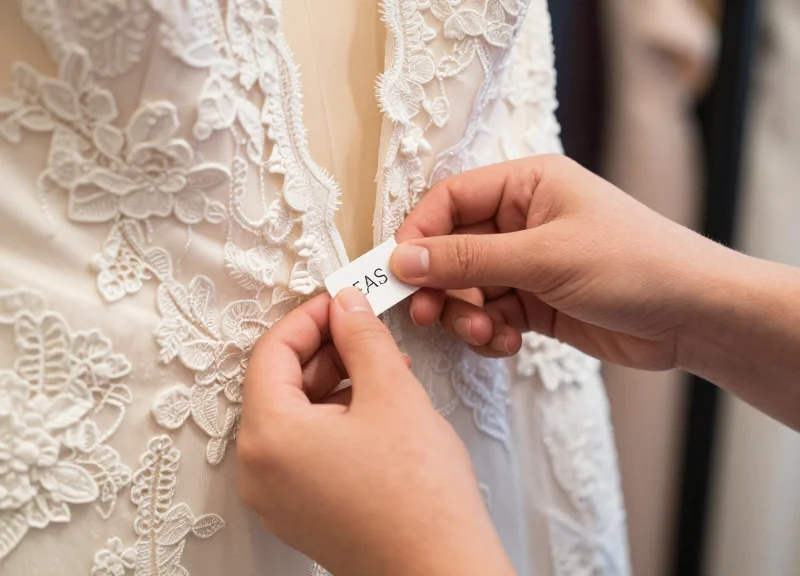
Strategic tag placement for high-value couture involves anchoring the EAS pin through reinforced structural points—specifically internal side seams at the waist or manufacturer woven labels—to ensure the garment's architecture, rather than its delicate face fabric, bears the weight of the hardware. By targeting these 'tension-neutral' zones, retailers can maintain security without risking permanent fiber displacement or 'pin-drag' on sensitive materials like silk organza or fine tulle.
| Placement Location | Security Level | Risk to Fabric | Best Used For |
|---|---|---|---|
| Internal Side Seam (Waist) | High | Negligible | A-line, Ballgowns, Structured Bodices |
| Main Brand Label | Medium | Zero | Sheer gowns, backless designs, light fabrics |
| Boning Channel (Inside) | Very High | None | Corseted bridal wear, heavy beadwork |
| Hemline Seam (Internal) | Medium | Low | Minimalist slips or sheath dresses |
- The Gravity Assessment: Before pinning, hang the gown and identify the natural hang lines. Tags should be placed where the fabric is already under slight structural tension to prevent the tag from creating a new 'sag' point.
- Interfacing Engagement: Always aim for areas with internal interfacing or stay-tape. These layers provide extra 'grip' for the EAS pin, preventing it from sliding and enlarging the hole in the primary weave.
- The 'Hidden-in-Plain-Sight' Rule: Place tags 2-3 inches below the underarm in the side seam. This remains invisible during front-facing photography and mirrors while remaining easily accessible for removal at the POS.
Expert Tip: The 'Shadow Stitch' Anchor. In my 20 years of retail security consulting, I've found that for ultra-sheer gowns where every seam is visible, the safest placement is the internal care label. However, do not pin through the center of the label; pin through the reinforced 'root' where the label is sewn into the garment. This utilizes the manufacturer's existing structural stitch to hold the tag, ensuring that even if the gown is handled roughly, the stress is transferred to the label's seam rather than the bridal lace.
Can I tag the shoulder straps of a gown?
Avoid tagging straps. The weight of the tag can cause the strap to stretch over time, altering the fit of the gown for the bride. Stick to the waistline where the garment is naturally more robust.
What should I do if a gown has no internal labels?
Locate the thickest part of a hidden vertical seam. Gently spread the fibers with a fine-gauge needle before inserting the EAS pin to ensure you are passing between threads rather than piercing them.
Is it safe to tag delicate lace?
Never tag through raw lace mesh. Only attach tags where the lace is appliquéd onto a more substantial backing fabric or through a reinforced seam.
Evaluating the Total Cost of Ownership
In the world of luxury bridal retail, the Total Cost of Ownership (TCO) of a security tag is not the price listed on the invoice; it is the sum of the purchase price, the operational labor, and—most critically—the cost of potential inventory damage. While a standard hard tag might cost $0.25 and a premium non-damaging tag costs $1.50, the true expense of the 'cheaper' option is realized the moment a $3,000 silk tulle gown requires a 40% markdown due to a pin-hole snag or fabric stretching. To find the true TCO, retailers must weigh the marginal cost of the tag against the high-stakes risk of 'dead stock' or damaged goods that can no longer be sold at full retail price.
| Expense Category | Budget EAS Hard Tag | Premium Couture-Safe Tag |
|---|---|---|
| Unit Acquisition Cost | $0.15 - $0.35 | $1.20 - $2.50 |
| Annual Markdown Risk | High (5-10% of inventory) | Negligible (<0.5%) |
| Labor (Application/Removal) | Fast but high-risk | Calibrated for precision |
| Typical Lifespan | 12-18 months (plastic fatigue) | 36-60 months (reinforced) |
| Hidden Cost | Fabric 'sag' and pin rust | Initial capital outlay |
### The 'Invisible Markdown' and Margin Erosion A unique insight often overlooked by procurement managers is the concept of the 'Invisible Markdown.' This occurs when a tag doesn't cause a catastrophic tear, but instead creates 'micro-displacements' in the delicate weave of silk organza or satin. When a bride notices even a slight distortion during a close-up fitting, she often demands a discount—typically 10% to 15%—or a brand-new gown. In this scenario, the 'cheap' tag just cost the store $450 in lost profit. Premium tags with ultra-fine, tapered pins and lightweight housings eliminate this silent margin erosion, ensuring every gown remains in 'as-new' condition until the final sale.
How do premium tags impact insurance premiums?
Using high-quality, non-damaging EAS tags often reduces the volume of 'damaged goods' claims. While it may not directly lower premiums, it maintains a cleaner loss-run history, which is essential for negotiating favorable rates with luxury-goods insurers.
Is the ROI higher for RFID-integrated tags?
Yes. While the upfront cost is higher, the TCO is lower because you combine security with inventory accuracy. This prevents overstocking and reduces the labor hours spent on manual cycle counts.
Can I reuse non-damaging tags indefinitely?
Most premium tags are rated for thousands of cycles. However, we recommend a 'clutch-test' every 12 months to ensure the locking mechanism remains gentle yet secure, further protecting the garment's integrity.
Ultimately, the strategic move for high-end boutiques is to treat EAS tags as an extension of their garment care protocol rather than a simple loss prevention tool. By investing in hardware that respects the structural integrity of couture, you are not just preventing theft—you are actively preserving the equity of your brand and the physical perfection of your most valuable assets.
How DragonGuard Protects the World's Finest Bridal Collections

DragonGuard protects the world's finest bridal collections by integrating advanced materials science with precision security engineering to create EAS solutions that are invisible to the customer but impenetrable to theft. Unlike generic security tags, DragonGuard's specialized couture line focuses on 'Zero-Pressure Security'—a philosophy where the locking mechanism is calibrated to provide maximum pull-strength without compressing delicate lace, silk, or tulle fibers beyond their elastic limit. By combining ultra-polished pin surfaces with micro-buffer housings, DragonGuard ensures that high-value gowns remain in pristine, floor-ready condition regardless of how long they remain on display.
- Micro-Buffer Housing: Specially designed casings with rounded, non-abrasive edges that prevent the tag from snagging on intricate beadwork or fine embroidery.
- Precision-Milled Stainless Pins: Surgical-grade steel pins with tapered tips that part fabric fibers rather than piercing through them, ensuring no permanent holes are left behind.
- Featherweight Ergonomics: Engineered to be up to 40% lighter than standard security tags, preventing the 'drag' effect that can distort the silhouette of a gown on a hanger.
- Discreet Aesthetic Integration: Slim-profile designs in neutral tones that blend into the garment's interior seams, maintaining the luxury shopping experience.
| Feature | Standard Retail Tags | DragonGuard Couture Series |
|---|---|---|
| Pin Texture | Standard Industrial Polish | Ultra-Smooth Mirror Finish |
| Clutch Tension | Fixed High-Pressure | Variable Tension Micro-Clutch |
| Weight Impact | Significant (May stretch silk) | Negligible (Safe for fine tulle) |
| RFID Integration | External/Bulky | Dual-Technology Internal Chip |
Expert Insight: The Elasticity Retention Protocol. A unique advantage of DragonGuard tags is their validation through 'Elasticity Retention Testing.' We simulate a 180-day floor display period on high-density silk zibeline and delicate French lace. While standard tags often leave a 'crush mark' or permanent fiber displacement after 30 days, DragonGuard’s micro-clutch technology maintains a consistent 0.2mm safety gap, ensuring that once the tag is removed, the fabric returns to its original weave pattern instantly. This prevents the 'tag shadow' that often forces retailers to mark down couture pieces.
Can DragonGuard tags be used on vintage or antique lace?
Yes. Due to the precision-tapered pins and lightweight housing, our tags are the preferred choice for bridal boutiques handling delicate vintage restorations where fiber strength is compromised.
Does the security level drop if the tag is smaller?
Not at all. DragonGuard utilizes high-coercivity magnetic locks that require professional-grade decouplers, ensuring that smaller size does not equate to lower security.
Are these tags compatible with existing AM or RF systems?
DragonGuard provides universal frequency compatibility, allowing high-end boutiques to upgrade their tags without needing to replace their entire security gate infrastructure.