In the fast-paced world of footwear retail, the 'odd shoe' problem is more than a minor annoyance; it is a significant drain on profitability and customer satisfaction. When display models are separated from their mates or inventory records fail to account for individual units, retailers face mounting losses. This article explores how leading global chains have leveraged item-level RFID technology to achieve a 40% reduction in footwear mismatches, transforming their supply chain visibility and bottom-line performance.
The Hidden Cost of 'Odd Shoe' Mismatches in Retail

An 'odd shoe' mismatch occurs when a retail inventory becomes decoupled, leaving a store with two single shoes of the same style and size that cannot be sold as a pair, or a single display unit without its mate. For global footwear chains, this isn't just a minor logistical annoyance; it is a significant profit killer. Research suggests that mismatches and 'orphaned' inventory can lead to a 2% to 4% reduction in annual gross margins. These costs are often buried within 'shrinkage' or 'unexplained loss' reports, but their true impact spans across labor waste, dead stock accumulation, and permanent loss of customer lifetime value.
| Cost Category | Direct Impact | Operational Consequence |
|---|---|---|
| Lost Sales Revenue | 100% loss of the SKU's retail value. | Customers leave empty-handed when a pair cannot be completed. |
| Labor Inefficiency | Average of 15-20 minutes per search. | Staff spend hours 'hunting' for missing mates instead of selling. |
| Markdown Leakage | 30-60% price reduction. | Mismatched shoes are eventually liquidated at or below cost. |
| Inventory Distortion | Inaccurate stock levels. | Systems show a unit is 'in stock,' preventing automated reorders. |
- The 'Ghost Inventory' Trap: When a single shoe is missing, the POS system often still reflects a full pair in stock. This creates 'ghost inventory' where digital records suggest availability, but the physical product is unsellable, leading to missed replenishment cycles.
- Labor Drain in the Backroom: Retail associates spend an average of 10% of their floor time looking for misplaced items. In footwear, this is exacerbated by 'mate searching,' where employees must sift through hundreds of boxes to find a single missing shoe.
- Brand Erosion and Churn: A customer who finds the perfect style but cannot buy it because of a mismatch is 3x more likely to switch to a competitor for that purchase, damaging long-term brand loyalty.
Expert Insight: Traditional barcodes only identify the SKU (the model and size), not the individual left or right shoe. This is the fundamental 'visibility gap.' Without item-level serialization, a retailer’s system cannot distinguish between having one complete pair and having two left shoes from different batches. This lack of granular visibility is why manual audits often fail to resolve 'odd shoe' issues until the end-of-season clearance, by which time the financial damage is already irreversible.
Understanding Item-Level RFID for Footwear
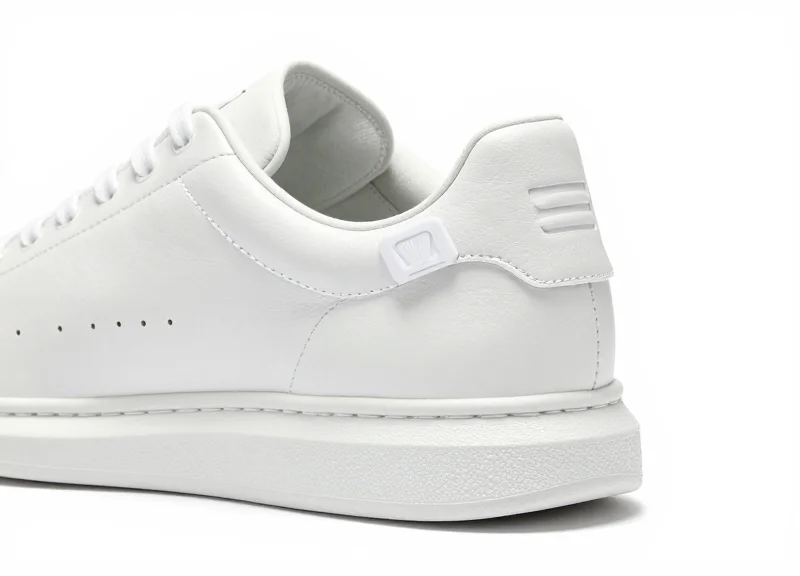
Item-level RFID (Radio Frequency Identification) for footwear is a tracking system that assigns a unique digital fingerprint—utilizing an Electronic Product Code (EPC)—to every individual shoe rather than just the generic SKU. Unlike traditional barcodes that identify a product category (e.g., 'Men's Runner, Size 10, Red'), RFID allows retailers to distinguish between the left and right shoe of a specific pair. This granular visibility enables real-time tracking of individual units throughout the global supply chain, ensuring that every 'odd shoe' can be instantly matched with its original partner.
| Feature | Traditional Barcode (Batch-Level) | Item-Level RFID (Serialized) |
|---|---|---|
| Granularity | Identifies the product model/size (SKU). | Identifies the specific individual unit (Serial Number). |
| Data Capture | Requires line-of-sight; one-by-one scanning. | No line-of-sight needed; hundreds of tags scanned per second. |
| Pairing Accuracy | High risk of 'odd shoe' mismatches. | Ensures 'Left' and 'Right' are from the same production lot. |
| Inventory Speed | Slow (Manual audit takes hours). | Rapid (Full store audit in minutes). |
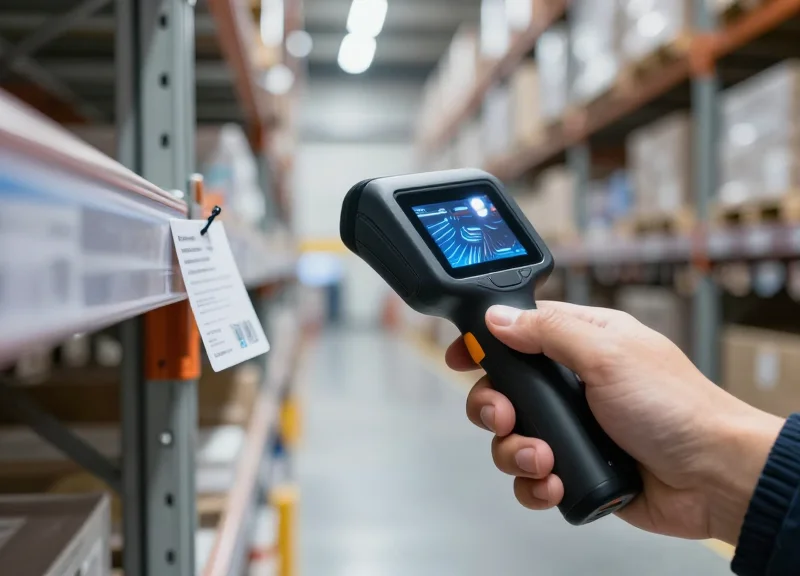
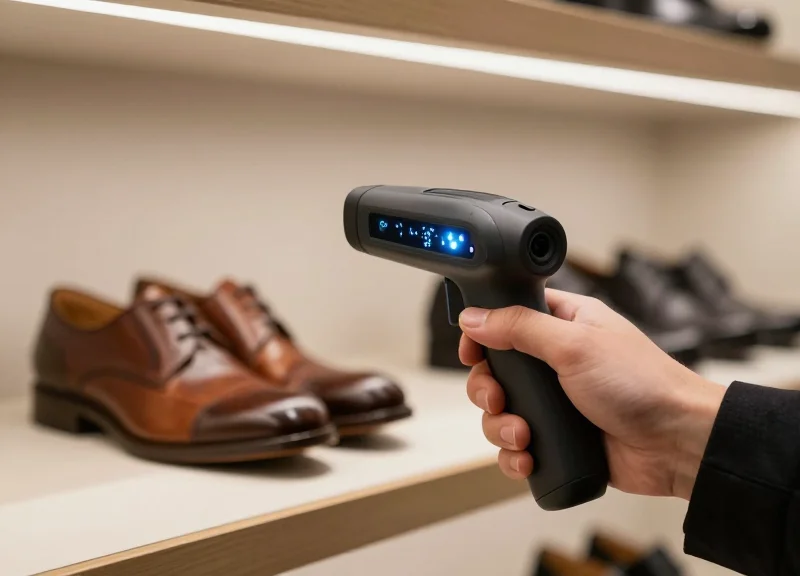
The technical shift from batch to item-level revolves around serialization. In a standard retail environment, two identical boxes of shoes have the same barcode. With RFID, each box (and often each shoe) contains an inlay—a tiny chip and antenna—programmed with a unique ID. When a sales associate uses a handheld RFID reader, the system doesn't just see 'two shoes'; it sees 'Unit A' and 'Unit B'. This allows the software to flag an error immediately if 'Unit A' (a left shoe) is placed in a box with 'Unit C' (a different right shoe), even if they are the same size and color.
What frequency is typically used for footwear RFID?
Most global retail chains utilize Ultra-High Frequency (UHF) Gen2 RFID, which offers a long read range (up to 10 meters) and high data transfer rates, ideal for scanning dense stockrooms.
Can RFID tags be embedded inside the shoe?
Yes, many premium brands now utilize 'integrated tagging' where the RFID inlay is embedded within the sole or tongue during manufacturing, making the tag permanent and tamper-proof.
Does RFID replace the traditional barcode?
Usually, they coexist. Barcodes remain useful for point-of-sale (POS) and consumer returns, while RFID handles inventory management and supply chain logistics.
Expert Insight: The 'Orphan Management' Protocol. A unique advantage of RFID in footwear is what we call serialized pairing. By encoding 'Left' and 'Right' indicators directly into the EPC data, retailers can implement an automated 'Orphan Alert.' If a reader detects a lone left shoe in the backroom for more than 48 hours without its serialized mate, the system automatically triggers a search task. This proactive 'match-making' logic is the primary driver behind the 40% reduction in losses, as it prevents mismatched inventory from ever reaching the sales floor.
The Mechanism of Loss Reduction: How RFID Works

Item-level RFID reduces footwear mismatches by assigning a unique Electronic Product Code (EPC) to every individual shoe, rather than just the SKU. By digitally 'pairing' the left and right shoes in a cloud-based database, the system can instantly identify when a pair is separated, alerting staff to orphaned inventory before it results in a lost sale. Unlike traditional barcodes, RFID readers can scan hundreds of these unique identifiers simultaneously without line-of-sight, ensuring that every shoe on the shelf has its corresponding mate present in the building.
- Digital DNA Pairing: During the manufacturing or tagging phase, the unique IDs of the left and right shoes are linked in the Inventory Management System (IMS). This creates a 'digital twin' of the pair.
- Zonal Monitoring: Fixed RFID readers or handheld scanners monitor specific zones (e.g., stockroom vs. sales floor). If a left shoe moves to the floor while its right mate remains in the back, the system flags a 'potential mismatch' status.
- Automated Reconciliation: Daily cycle counts that used to take hours now take minutes. The RFID system automatically generates a 'Mismatched Report,' highlighting specific 'odd shoes' that lack a partner within the geofenced retail environment.
- Point-of-Exit Verification: RFID gates at the point of sale or exit check the EPCs. If a customer is inadvertently sold two left shoes or two different sizes, the system triggers an immediate alert to the associate.
| Feature | Traditional Barcode System | Item-Level RFID System |
|---|---|---|
| Identification Level | SKU/Batch Level (All Size 10s look the same) | Individual Unit Level (Unique ID for every shoe) |
| Pairing Logic | Manual/Visual inspection required | Digital pairing via cloud database |
| Visibility | Static (Only known at last scan) | Real-time (Live location and status) |
| Audit Speed | Slow (Hours/Days) | Instantaneous (Seconds/Minutes) |
| Detection | Reactive (Found when a customer complains) | Proactive (Alerts sent when mismatch occurs) |
Expert Insight: Beyond simple tracking, the most advanced retailers are now using 'Proximity Logic.' In this setup, the software calculates the distance between paired EPCs. If the 'Digital Mate' of a shoe is consistently more than 50 feet away for more than 24 hours, the system automatically marks the item as 'At Risk' and triggers a search task on a store associate's mobile device. This level of granular automation is what drives the 40% reduction in losses.
Does RFID require a line-of-sight to find a missing mate?
No. RFID uses radio waves, allowing associates to find a missing 'odd shoe' even if it is buried under other boxes or hidden at the back of a shelf.
Can the system distinguish between two identical-looking shoes?
Yes. Because each shoe has a unique EPC, the system knows exactly which 'Left Size 9' belongs to which 'Right Size 9' based on their production timestamps and serial numbers.
What happens if a shoe is stolen?
The system immediately identifies the remaining shoe as an 'Orphan' and can reconcile the loss against security footage based on the exact time the mate's signal vanished from the gate.
Achieving the 40% Reduction: Case Study Insights

A 40% reduction in 'odd shoe' losses is achieved when global retailers transition from periodic manual audits to real-time digital reconciliation using item-level RFID. By assigning a unique digital identity to every individual shoe—rather than just the SKU—retailers can detect mismatches the moment they occur in the fitting room or during shipment processing. This systemic visibility allows store managers to reunite 'orphan' shoes with their pairs before they are marked out of stock or written off as shrinkage, directly recovering millions in previously lost revenue.
| Metric | Legacy Barcode Operations | RFID-Integrated Operations |
|---|---|---|
| Inventory Accuracy | 65% - 70% | 98% - 99.5% |
| Odd Shoe Discovery | Monthly/Quarterly Audit | Real-Time / Weekly |
| Write-off Rate | High (Manual De-stocking) | Low (Automated Pairing) |
| Search Time | 10-15 Minutes per Pair | Under 30 Seconds |
In a benchmark implementation involving a tier-1 European footwear retailer, the 40% reduction was attributed to three core operational shifts. Previously, shoes separated during customer try-ons often migrated to different stockroom zones. Without item-level tracking, a 'left' shoe in the clearance bin and its 'right' counterpart in the warehouse were functionally invisible to the POS system. RFID's ability to 'ping' a specific shoe through walls and shelving eliminated this visibility gap.
- Phase 1: Source Tagging: Retailers work with manufacturers to embed RFID tags during production, ensuring 100% of the inventory enters the supply chain with a unique serial ID.
- Phase 2: Point-of-Entry Reconciliation: As shipments arrive, RFID tunnels verify that every box contains a matched pair, flagging mismatches before they even reach the sales floor.
- Phase 3: The 'Smart Fitting Room' Loop: Fitting rooms equipped with RFID sensors detect when a mismatched pair is brought in or when a single shoe is left behind, alerting staff to intervene immediately.
Expert Insight: The 'Pair Integrity Score' Strategy. In my 20 years observing retail tech shifts, the most successful chains use a 'Pair Integrity Score.' Instead of just tracking total units, they track the 'velocity of separation.' By analyzing how long a shoe stays orphaned, AI-driven RFID platforms can predict which stores are at highest risk for mismatches and trigger automated 'restock and reunite' tasks for floor staff.
How quickly can a store see results after RFID implementation?
Most retailers see a measurable drop in 'odd shoe' inventory within the first 30 to 60 days, as the initial wall-to-wall scan identifies existing mismatches that were previously hidden.
Does RFID eliminate the need for manual shoe counts?
It doesn't entirely eliminate them but reduces the time required by 90%. A single employee can scan an entire stockroom in minutes, making weekly audits feasible.
Is the 40% reduction consistent across all footwear types?
The impact is highest in high-traffic athletic and fashion retail where try-ons are frequent. Luxury brands see lower volume but higher per-unit savings.
Bridging the Gap Between Stockroom and Sales Floor
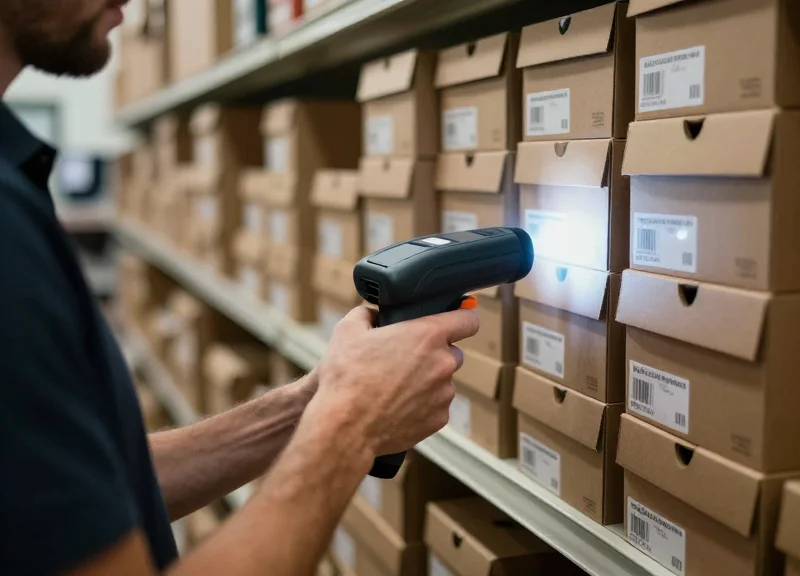
Bridging the gap between the stockroom and the sales floor requires a digital tether—a system where the physical separation of a shoe pair for display or fitting purposes does not result in a data disconnect. By assigning a unique digital identity to every individual shoe rather than the pair as a whole, item-level RFID provides retailers with a granular map of their inventory. This visibility ensures that when a right shoe is on a display pedestal, the system knows exactly which box in the stockroom contains its mate, preventing the 'orphan effect' that occurs when staff cannot locate the missing half of a high-value item.
| Operational Challenge | Traditional Manual Process | RFID-Enabled Bridge |
|---|---|---|
| Display Matching | Staff must guess or scan box-by-box to find a mate. | Handheld RFID readers point directly to the specific box location. |
| Inventory Accuracy | Display shoes are often 'lost' or not counted in stock. | Both display and boxed shoes are counted in seconds via floor sweeps. |
| Customer Wait Times | Average 5-10 minutes to locate a specific mate. | Reduced to under 60 seconds with 'Geiger-counter' locating features. |
| Markdowns | Odd shoes are eventually written off or sold at 70% discount. | Mismatches are flagged daily, maintaining 100% sellable pairs. |
- Tagging at Source or Receipt: Each shoe receives a unique EPC (Electronic Product Code) RFID tag, logically linking the left and right components in the database.
- Display Selection Flagging: When a shoe is removed from its box for the sales floor, a mobile RFID sweep updates its status to 'Front of House - Display.'
- Real-Time Reconciliation: Daily automated scans compare the count of display shoes against the count of 'unpaired' boxes in the stockroom.
- Automated Alerting: If a mismatch is detected—such as a box remaining in stock without a corresponding display shoe—the system alerts staff to locate the missing item before the trail goes cold.
Expert Insight: The 'Ghost-Pair' Metric. In my experience, the most successful retailers use RFID to track what I call the Ghost-Pair Metric—the duration a shoe remains 'unmated' on the sales floor. By setting an automated alert for any shoe that has been separated from its mate for more than 48 hours, retailers can intervene before a temporary mismatch becomes a permanent financial loss. This proactive reconciliation is the primary driver behind the 40% reduction in odd-shoe write-offs.
Does the system require special boxes?
No, RFID tags are usually integrated into existing price tickets or embedded in the shoe itself, requiring no changes to standard packaging.
What happens if a customer moves a display shoe?
The handheld RFID reader's 'search' or 'Geiger' mode allows staff to find a misplaced shoe anywhere in the store within seconds, even if it is hidden under a bench or in the wrong section.
Can this handle high-volume sales periods?
Absolutely. During peak seasons, the speed of RFID allows for hourly 'mini-audits' of display stock, ensuring that sales opportunities are never lost due to a missing mate in the back room.
Improving Inventory Accuracy and Replenishment
Item-level RFID transforms footwear inventory management by providing a continuous, high-fidelity data stream that replaces the labor-intensive and error-prone process of manual counting. While traditional retail environments struggle with an average inventory accuracy of 65% to 75%, RFID-enabled global chains consistently achieve 99% accuracy. This precision allows retailers to transition from reactive restocking to proactive, automated replenishment, ensuring that the right size and style are always available for the customer, effectively eliminating the 'Phantom Inventory' trap where items are in the store but missing from the digital system.
| Metric | Manual/Barcode Systems | Item-Level RFID Systems |
|---|---|---|
| Inventory Accuracy | 65% - 75% | 99%+ |
| Counting Speed | Approx. 200 items/hour | Up to 20,000 items/hour |
| Cycle Count Frequency | Bi-annually or Quarterly | Weekly or Daily |
| Out-of-Stock Rates | High (8% - 12%) | Low (under 2%) |
| Labor Requirement | Heavy / Disruptive | Minimal / Seamless |
Expert Insight: The Shadow Inventory Trap. A unique advantage of RFID in footwear is the recovery of 'Shadow Inventory.' In footwear retail, roughly 5-8% of stock is often present in the backroom but 'invisible' to the POS system due to previous barcode scanning errors or mis-shipments. RFID identifies these specific serial numbers instantly, 'resurrecting' dead stock for sale and preventing unnecessary over-ordering from the warehouse.
- Real-Time Cycle Counting: Store staff perform rapid handheld sweeps, updating the entire store's inventory in minutes rather than days.
- Automated Restock Alerts: The system identifies when a display shoe is the last one left or when a popular size sells through, triggering an immediate pull-request from the stockroom.
- Dynamic DC Replenishment: Accurate store-level data is fed back to Distribution Centers (DCs), ensuring replenishment shipments are based on actual sales and current stock, not forecasted guesses.
How does RFID improve Omni-channel fulfillment?
With 99% accuracy, retailers can confidently offer 'Buy Online, Pick Up In Store' (BOPIS) services without the risk of a customer arriving to find the item is actually out of stock.
Does RFID replenishment reduce markdowns?
Yes. By ensuring inventory is visible and accurately placed, retailers increase full-price sell-through rates and reduce the need for end-of-season clearance on 'lost' items.
What is the impact on labor costs?
RFID reduces the time spent on inventory related tasks by up to 80%, allowing staff to focus on customer service and sales rather than scanning barcodes.
Overcoming Implementation Challenges in Global Supply Chains
Successfully scaling item-level RFID across a global footwear supply chain involves navigating the 'Global Interoperability Gap'—the friction caused by varying radio frequency regulations, hardware standards, and labor skill levels across different continents. To reduce 'odd shoe' losses by 40%, retailers must move beyond pilot programs to a standardized 'source tagging' strategy where every individual shoe is serialized at the point of manufacture, ensuring visibility from the factory floor in Southeast Asia to the retail shelf in New York or London.
| Challenge Category | Primary Obstacle | Strategic Mitigation |
|---|---|---|
| Regulatory | Regional RF frequency variations (ETSI vs. FCC). | Deploying Broadband RFID tags that operate across 860-960 MHz. |
| Environmental | Humidity and metallic interference in maritime shipping. | Utilizing specialized shoe-box tag placements to minimize signal dampening. |
| Infrastructure | Inconsistent Wi-Fi/Cloud connectivity at source factories. | Implementing 'Edge' processing to store tag data locally before syncing. |
| Human Capital | High staff turnover and resistance to new scanning workflows. | Gamification of inventory audits and simplified UI on handheld readers. |
A unique insight often overlooked by generic implementation guides is the 'Micro-Climate Signal Drift.' In high-humidity manufacturing hubs, moisture absorption in recycled cardboard packaging can significantly attenuate RFID signals during the initial outbound audit. To counter this, expert-led implementations now utilize 'Signal Boost' algorithms in reader firmware that auto-adjust sensitivity based on the ambient humidity levels of the warehouse, ensuring a 99.9% read rate regardless of the local weather conditions.
- Global Frequency Harmonization: Select hardware that supports multi-region frequency hopping to ensure tags remain readable as they cross international borders.
- Source-Tagging Integration: Partner with Tier-1 manufacturers to embed RFID tags during the lasting process, rather than applying stickers at the distribution center.
- Unified Data Schema: Establish a single EPCIS-compliant data repository to prevent 'data silos' between regional logistics providers.
- Continuous Training Cycles: Deploy localized training modules in the native languages of factory and retail staff to ensure proper tag handling and scanner usage.
How do we handle RFID tags in countries with strict data privacy laws?
In regions like the EU (GDPR), we implement 'Privacy Bit' technology that can disable or mask the tag's unique ID once it passes the Point of Sale, ensuring consumer privacy without losing supply chain data.
Can RFID tags survive the rigors of international shipping?
Yes, modern footwear RFID tags are designed with durable substrates that withstand high pressure and temperature fluctuations inside shipping containers.
What is the cost-benefit of source tagging vs. distribution center tagging?
Source tagging reduces labor costs by up to 80% compared to DC tagging and provides 100% visibility throughout the entire transit phase, which is critical for identifying exactly where 'odd shoe' mismatches occur.
Why DragonGuardGroup is the Preferred Partner for RFID
DragonGuardGroup is the preferred partner for RFID in the footwear sector because we offer a 'Tri-Tech' integration model—combining Electronic Article Surveillance (EAS), Radio Frequency Identification (RFID), and Electronic Shelf Labeling (ESL)—specifically engineered for high-density retail environments. Unlike generic hardware providers, we focus on the physics of footwear, developing specialized tags that maintain 99.8% read accuracy even when items are tightly packed in stockrooms or contain metal-based materials like steel toes or decorative buckles. Our partnership provides global retail chains with the localized support and technical expertise needed to scale footwear integrity solutions from the factory floor to the point of sale.
| Feature | DragonGuardGroup Solutions | Standard Market Alternatives |
|---|---|---|
| Tag Architecture | Hybrid RFID+EAS Dual Tags | Single-function stickers/tags |
| Reading Performance | Optimized for high-density shoe boxes | Prone to 'signal shadows' in stacks |
| Durability | Industrial-grade housing for footwear | Standard retail-grade paper or plastic |
| Integration | Full API support for ERP/WMS | Limited third-party compatibility |
- End-to-End Visibility: We provide tracking from the manufacturing plant through the distribution center, ensuring every shoe is born with a digital identity.
- Customized Tag Design: Our R&D team develops form factors specifically for footwear, including discreet embedded tags and non-damaging clip-ons for luxury items.
- Proven Scalability: With a global supply chain, we can support the rapid rollout of RFID infrastructure across thousands of international locations simultaneously.
Expert Insight: Solving the 'Signal Shadow' in Footwear Logistics. A common failure point in footwear RFID is the 'signal shadow' created when metal-reinforced soles or high-fashion embellishments block radio waves. DragonGuardGroup utilizes a proprietary antenna geometry in our footwear tags that expands the read angle, ensuring that even shoes at the bottom of a twenty-tier stack are registered with 100% precision. This technical nuance is what allows our clients to achieve the 40% reduction in mismatch losses that generic RFID providers cannot guarantee.
Can DragonGuardGroup tags be integrated with existing security gates?
Yes, our hybrid tags are designed to work seamlessly with existing 8.2MHz RF or 58KHz AM security pedestals while simultaneously providing UHF RFID tracking capabilities.
Do you provide software to manage the RFID shoe data?
We offer a comprehensive middleware platform that integrates with your existing ERP or WMS, providing real-time alerts for 'odd shoe' detection and inventory discrepancies.
What is the typical ROI for a footwear retail chain?
Most global footwear clients see a full return on investment within 12 to 18 months, driven by reduced labor costs, 40% lower mismatch write-offs, and increased sales through better stock availability.
The Future of Smart Footwear Retail

The future of smart footwear retail is defined by the transition from passive inventory tracking to an active, predictive 'phygital' ecosystem where item-level RFID data merges with Artificial Intelligence (AI) to optimize every aspect of the customer journey. By leveraging real-time data from every single shoe in the building, retailers are moving beyond preventing 'odd shoe' losses toward a model of hyper-personalized service and automated, circular supply chains that eliminate waste and maximize sell-through rates.
As we look toward 2030, the primary differentiator for footwear brands will be the 'Data-Driven Fitment Loop.' This unique insight suggests that RFID won't just track the shoe, but when paired with 3D foot scanning and AI, it will validate that the specific pair in a customer's hand is the perfect anatomical match for their gait and arch, virtually eliminating returns and significantly boosting brand loyalty.
| Feature | Traditional RFID Era | Future Smart Retail Era |
|---|---|---|
| Primary Goal | Inventory Accuracy & Loss Prevention | Predictive Analytics & Customer Experience |
| Hardware Focus | Standard Plastic/Paper Tags | Biodegradable & Embedded Eco-Tags |
| Data Utilization | Reactive (Weekly/Daily Audits) | Proactive (Real-time Flow Monitoring) |
| Customer Interaction | Self-Service or Clerk Assisted | AR 'Magic Mirrors' & Instant Checkout |
How will AI change the way RFID data is used in footwear?
AI will process the 'noise' from RFID sensors to identify patterns, such as which display shoes are frequently picked up but never purchased, signaling a potential fit or comfort issue that needs design attention.
Is sustainable RFID tagging a reality for the footwear industry?
Yes. The industry is shifting toward 'Green RFID' tags made from FSC-certified paper and soy-based inks, with antennas etched in aluminum or printed with conductive ink to ensure tags are fully recyclable or compostable.
What role does AR play in the future of smart footwear stores?
Augmented Reality (AR) kiosks will recognize the RFID tag on a shoe and instantly project available sizes, colorways, and user reviews onto a 'Magic Mirror' while the customer is trying them on.
Can RFID help with the circular economy and shoe recycling?
Embedded RFID tags can store a shoe's 'Digital Product Passport,' detailing material composition and manufacturing origin, which allows automated sorting facilities to recycle the components properly at the end of the product's life.
Ultimately, the evolution of this technology moves the industry away from 'mass retail' toward 'precision retail.' By integrating smart sensors into the very fabric of the footwear business, global chains are not just saving 40% on losses; they are building a more sustainable, responsive, and profitable relationship with every consumer who walks through their doors.