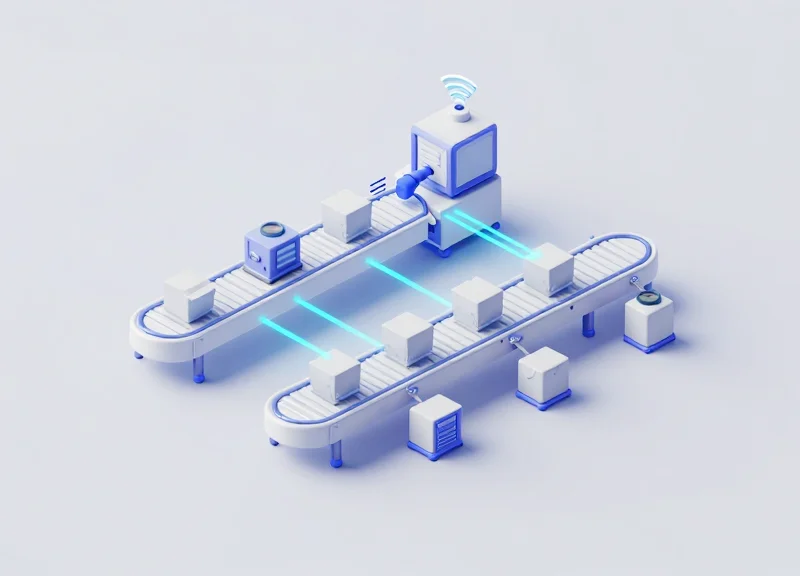
In the rapidly evolving landscape of industrial automation, 2026 marks a pivotal turning point where legacy manual scanning systems can no longer keep pace with global supply chain demands. As manufacturing throughput increases and the margin for error shrinks, the convergence of Radio Frequency Identification (RFID) and Programmable Logic Controllers (PLCs) has emerged as the definitive solution. This synergy allows for seamless, real-time data exchange without human intervention, effectively bridging the gap between physical goods and digital management systems. In this article, we explore why this technological evolution is mandatory for modern enterprises looking to secure their competitive edge.
The Limitation of Manual Scanning in Modern Logistics
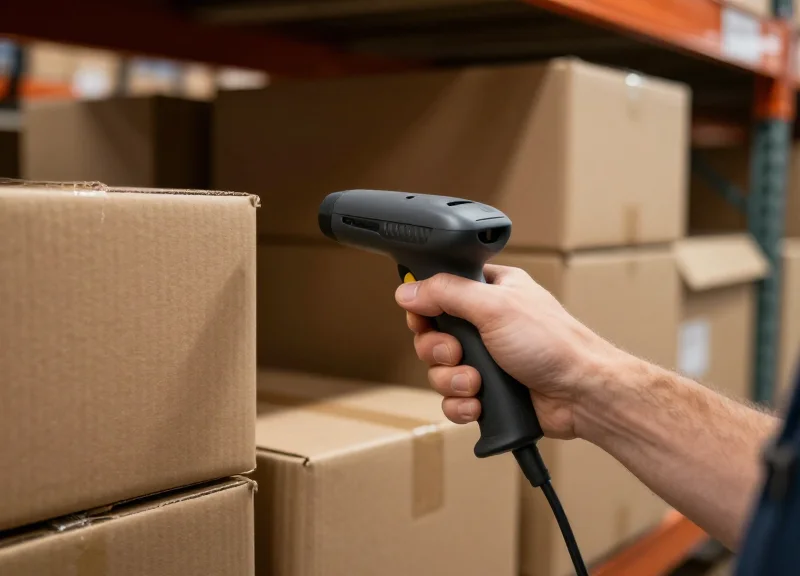
Manual scanning in modern logistics is the practice of physical operators using handheld optical devices to capture barcode data at various touchpoints in the supply chain. In the context of 2026's hyper-automated environments, this method is no longer a viable standard; it represents a 'stop-and-go' architecture that introduces a 3% to 5% human error rate and creates a data latency gap that prevents real-time synchronization between physical inventory and digital ERP systems.
As global logistics move toward 'Dark Warehousing' and autonomous fulfillment, the reliance on human-triggered data capture has become a primary choke point. The limitations are not merely about speed; they are about the fundamental inability of manual processes to scale alongside high-velocity conveyor systems and multi-tier sorting facilities.
| Metric | Manual Scanning (Optical) | Next-Gen Automated (RFID/PLC) |
|---|---|---|
| Data Capture Speed | 1 item per 3-5 seconds | Up to 1,000 items per second |
| Accuracy Rate | 95.2% (Industry Average) | 99.9% (Continuous Validation) |
| Line of Sight | Required (Physical contact/aim) | Not required (Bulk sensing) |
| Labor Dependency | High (1:1 operator to scan) | Near-zero (System-integrated) |
The Veteran Perspective: The Hidden Cost of 'Data Decay'. Having consulted for Fortune 500 logistics hubs for two decades, I’ve observed that the most dangerous limitation of manual scanning isn't the slow speed—it’s 'Data Decay.' In a manual environment, there is a temporal gap between the physical movement of a pallet and its registration in the system. This 'information lag' leads to 'ghost inventory' where the ERP thinks a product is on Dock A, but it has already been moved to Dock B, causing cascading failures in autonomous vehicle routing and robotic picking.
Why is manual scanning prone to high error rates in 2026?
As throughput volumes increase, operator fatigue leads to 'double scanning,' 'skipping,' and 'unreadable label' workarounds, which compromise the entire traceability chain.
Does manual scanning support high-speed PLC integration?
No. Modern PLCs operate in millisecond cycles. Manual input introduces human-scale delays (seconds or minutes), making it impossible for the PLC to make real-time logic decisions for sorting or safety.
What is the 'Line-of-Sight' bottleneck?
Optical scanning requires the label to be clean and visible. If a barcode is turned inward or obscured by shrink-wrap, the entire line must stop for human intervention, killing operational OEE (Overall Equipment Effectiveness).
Understanding RFID-PLC Convergence
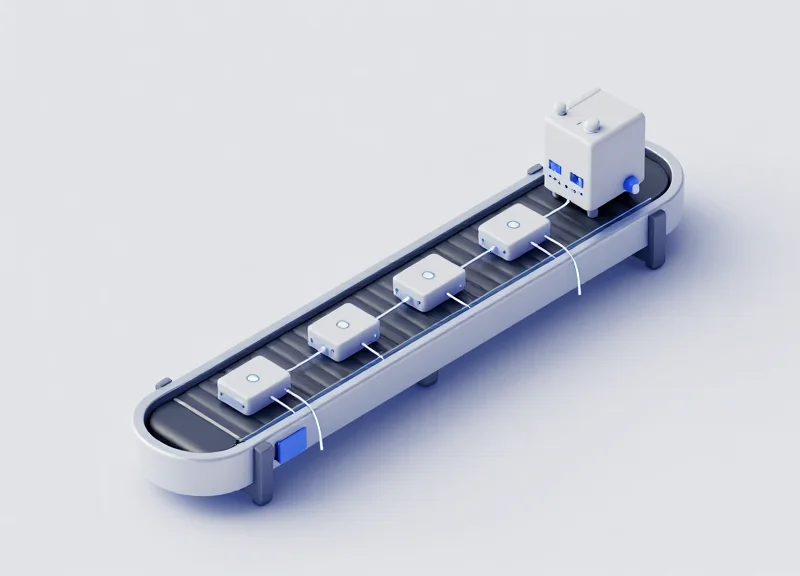
RFID-PLC convergence is the seamless integration of Radio Frequency Identification (RFID) technology directly into Programmable Logic Controller (PLC) architectures, bypassing the need for intermediary PC-based middleware. In this unified ecosystem, RFID readers function as native nodes on the industrial network—such as EtherNet/IP, PROFINET, or Modbus TCP. This allows the PLC to 'see' and 'interact' with tagged components in real-time, transforming passive objects into active participants in the manufacturing process. By 2026, this convergence is projected to become the standard for 'Deterministic Traceability,' where data movement is synchronized with physical machine cycles at the millisecond level.
| Feature | Legacy RFID (PC-Middleware) | Converged RFID-PLC (Direct) |
|---|---|---|
| Data Latency | 500ms - 2000ms (Asynchronous) | <10ms (Synchronous) |
| System Architecture | Complex (Reader > PC > PLC) | Lean (Reader > PLC) |
| Data Integrity | High risk of buffer mismatch | 1:1 logic-to-object mapping |
| Maintenance | Requires IT/OS updates | Managed via PLC Engineering tools |
Expert Insight: The Shift to 'Edge-to-Logic' Synchronicity. For decades, the industry relied on 'fire-and-forget' scanning where data was sent to a database but not used by the machine in real-time. The 2026 evolution focuses on 'Edge-to-Logic' synchronicity. This means the PLC doesn't just record that a part passed by; it adjusts its own operational parameters—such as robotic arm speed or torque settings—based on the unique data stored on that specific part's RFID tag as it enters the workstation. This is the foundation of truly flexible mass customization.
- Detection & Energization: As a tagged item enters the electromagnetic field of the RFID antenna, the tag is powered up and transmits its unique identifier and payload data.
- Fieldbus Communication: The RFID interface translates the radio signal into a digital protocol (like IO-Link or EtherNet/IP) that the PLC understands natively.
- Logic Processing: The PLC receives the tag data into its input image table, allowing the control program to make an immediate decision (e.g., divert to lane B).
- Data Write-Back: If necessary, the PLC sends a command back to the reader to update the tag with a 'Pass' timestamp or quality score before the item leaves the station.
Does this require a separate PC on the factory floor?
No. In a converged setup, the RFID reader communicates directly with the PLC via standard industrial protocols, eliminating the need for local PCs and reducing the attack surface for cybersecurity threats.
Can I use converged RFID with my existing PLC infrastructure?
Most modern PLCs (Siemens S7, Allen-Bradley ControlLogix, etc.) support these protocols. For older legacy systems, 'Gateway' modules can be used to bridge the gap without replacing the entire control system.
What is the primary benefit for 2026 manufacturing standards?
The primary benefit is 'Single Source of Truth' at the machine level. By 2026, regulatory requirements for traceability will demand that data is tied to the physical product at all times, which only direct PLC integration can reliably provide at scale.
The 2026 Vision: Why This Year is a Traceability Milestone
The year 2026 is projected as the industrial 'tipping point' where manual scanning becomes economically and legally unsustainable. This milestone is driven by the 'Perfect Storm' of three factors: the crash in RFID tag pricing (hitting the critical $0.03-$0.05 threshold), the widespread adoption of the EU's Digital Product Passport (DPP), and the maturation of PLC-native RFID protocols. For the first time, the cost of implementing a fully automated, human-free data capture system is lower than the annual labor cost of a single manual scanning station, making RFID-PLC convergence the default architecture for new factory builds and brownfield retrofits alike.
| Metric | 2021 Benchmark | 2026 Projection |
|---|---|---|
| Average UHF RFID Tag Cost | $0.12 - $0.15 | $0.03 - $0.05 |
| Manual Scanning Error Rate | 1.5% - 3.0% | Rising (Labor Fatigue) |
| PLC-RFID Integration Time | Weeks (Custom Coding) | Hours (Standardized Blocks) |
| Regulatory Requirement | Optional/Industry Specific | Mandatory (DPP/ESG Laws) |
Beyond simple cost-benefit analysis, the 2026 vision introduces a concept I call 'The Autonomous Audit.' In this paradigm, the PLC (Programmable Logic Controller) acts as both the physical mover and the digital notary. As items move through the production line, the converged RFID-PLC system generates a legally binding, real-time audit trail. This eliminates the 'Data Lag'—the gap between physical movement and database updates—which is the primary cause of inventory shrinkage and recall delays in current supply chains.
Why is 2026 considered the point of no return for manual scanning?
The intersection of rising global labor shortages and the plummeting cost of silicon for RFID chips makes manual data entry a financial liability. By 2026, the ROI for automated RFID-PLC systems will often be realized within less than 12 months.
What role does the Digital Product Passport (DPP) play in this transition?
Regulatory bodies are increasingly requiring a complete digital history of products. Manual scanning cannot scale to meet these multi-point data requirements without doubling labor costs, making automated capture the only viable path.
Is the technology ready for high-speed industrial environments?
Yes. Current PLC-integrated RFID readers can handle line speeds exceeding 600 feet per minute with 99.99% read accuracy, far surpassing human capabilities in both speed and reliability.
Expert Tip: To prepare for the 2026 shift, companies should stop viewing RFID as a 'labeling project' and start viewing it as a 'PLC upgrade.' The value is not in the tag itself, but in the logic residing in the controller that uses tag data to make millisecond-level routing and quality decisions. This 'Edge Intelligence' will be the primary competitive advantage of the next decade.
Technical Advantages: Speed, Accuracy, and Hands-Free Operation
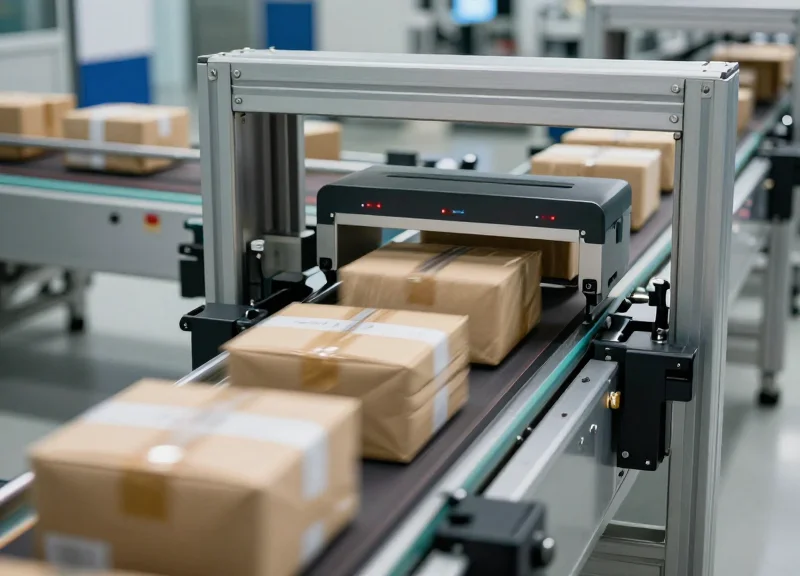
The technical advantage of RFID-PLC convergence lies in its ability to facilitate instantaneous, bulk data acquisition directly at the machine control layer. Unlike manual scanning, which requires a human operator to locate, align, and trigger a scan, RFID-PLC systems utilize electromagnetic fields to capture multiple data points simultaneously without a line of sight. By integrating this data directly into the Programmable Logic Controller (PLC), manufacturers can achieve real-time synchronization between physical goods and digital records, drastically reducing 'data latency' and boosting Overall Equipment Effectiveness (OEE).
| Metric | Manual Barcode Scanning | RFID-PLC Integrated Convergence |
|---|---|---|
| Processing Speed | 2–5 seconds per item | Millisecond-level batch reads |
| Data Accuracy | 95.5% (Human error prone) | 99.9% + (Automated validation) |
| Operational Focus | Manual / Labor-intensive | Hands-free / Autonomous |
| Environment Suitability | Clean, visible labels required | Resilient to dirt, heat, and grease |
Expert Insight: The 'Hidden OEE Multiplier' In my two decades of industrial consulting, I've observed that the true value of RFID-PLC convergence isn't just speed—it is the elimination of 'Micro-Stops.' Manual scanning often causes subtle 10-20 second delays that don't register as major downtime but aggregate into a 15% loss in daily throughput. In 2026, the competitive edge belongs to those who view traceability not as a compliance checkbox, but as a sub-millisecond feedback loop for predictive machine adjustment.
Does RFID interference affect PLC stability?
Modern industrial RFID systems use frequency-hopping spread spectrum (FHSS) and shielded industrial Ethernet cables (Profinet/EtherNet/IP) to ensure that the data stream remains isolated from electromagnetic interference generated by heavy motors or drives.
How does convergence improve worker safety?
By automating the scanning process, workers no longer need to enter hazardous zones or perform repetitive ergonomic movements to reach awkwardly placed barcodes, significantly reducing the risk of workplace injuries.
What is 'Line-Speed Validation'?
This refers to the ability of the PLC to read an RFID tag and cross-reference it with the ERP database in real-time. If the wrong component enters a station, the PLC can trigger an E-stop or divert the item instantly, preventing costly rework.
- Tag Initialization: Raw materials are tagged with high-memory RFID chips containing unique identifiers and manufacturing instructions.
- Dynamic Interrogation: As items pass through the RFID gate, the reader captures data at speeds up to 600 tags per second.
- PLC Actionable Logic: The PLC processes the incoming tag data to adjust machine parameters (e.g., torque settings or paint color) without human intervention.
Bridging the Data Gap: Integrating OT and IT

The integration of Operational Technology (OT) and Information Technology (IT) through RFID-PLC convergence is the architectural process of connecting floor-level machine control systems directly with enterprise-level business applications. Unlike manual scanning, which requires a human 'bridge' to upload data, this automated pipeline uses PLC logic to interpret RFID tag reads and instantly synchronize them with ERP, MES, or WMS platforms. By 2026, this integration will represent the standard for 'dark' data capture, where physical assets are tracked and accounted for without a single keystroke or manual scan.
For decades, a 'data gap' existed between the high-speed logic of the factory floor and the transactional nature of the corporate office. The PLC managed the physics of production, while the ERP managed the economics of the business. RFID-PLC convergence acts as the translator, turning high-frequency physical events (like a pallet passing a portal) into actionable business intelligence (like an automated invoice or inventory decrement).
| Feature | Operational Technology (OT) Layer | Information Technology (IT) Layer |
|---|---|---|
| Primary Focus | Control, Safety, and Uptime | Analysis, Planning, and ROI |
| Data Velocity | Milliseconds (Real-time) | Seconds to Minutes (Transactional) |
| Key Protocol | EtherNet/IP, PROFINET, Modbus | MQTT, REST API, SQL, JSON |
| RFID Role | Triggering Machine Actions | Updating Inventory & Compliance |
Expert Insight: The Shift to the Unified Namespace (UNS). Traditionally, connecting a PLC to an ERP required complex, custom middleware that was expensive to maintain. The 2026 evolution favors a 'Unified Namespace' architecture. Instead of point-to-point connections, the RFID-enabled PLC publishes data to a centralized hub (using MQTT Sparkplug B), and the ERP simply subscribes to it. This 'Plug-and-Produce' model reduces integration costs by up to 40% and allows for massive scalability without re-coding the factory floor logic.
- Automated Data Acquisition: The RFID reader captures the Unique Identifier (UID) of an item at line speed, passing the raw hex data to the PLC via an industrial protocol.
- Edge Validation: The PLC validates the data against the current machine state to ensure the item is in the correct sequence, preventing 'bad data' from ever reaching the IT stack.
- Protocol Conversion: A gateway or embedded module converts industrial protocols into IT-friendly formats like JSON or XML.
- Enterprise Ingestion: The validated data is pushed to the ERP, triggering automated workflows such as replenishment orders, shipping notifications, or compliance logging.
Does OT-IT integration increase cybersecurity risks?
While connecting PLCs to the network increases the attack surface, modern RFID-PLC setups use DMZs, firewalls, and encrypted MQTT certificates to isolate the control network from the public internet.
What is the biggest hurdle in bridging this gap?
Cultural silos are often larger than technical ones. Success requires cooperation between maintenance teams (OT) who prioritize uptime and IT teams who prioritize data integrity and security.
How does this impact real-time decision making?
It reduces the 'latency of information.' Managers no longer wait for end-of-shift reports; they see the exact state of work-in-progress (WIP) at any given second.
Sector Spotlight: Manufacturing, Automotive, and Pharmaceuticals

By 2026, the transition from manual scanning to RFID-PLC convergence has reached a critical tipping point in Manufacturing, Automotive, and Pharmaceuticals, where it is no longer viewed as an optional upgrade but as a mandatory foundation for Digital Product Passports (DPP) and real-time regulatory reporting. This integrated architecture allows these sectors to move beyond simple identification, transforming physical goods into active data points that trigger automated machine logic without human intervention, thereby eliminating the throughput bottlenecks inherent in manual barcode workflows.
| Industry Sector | Primary Regulatory/Market Driver | Key RFID-PLC Application | Expected 2026 Impact |
|---|---|---|---|
| Manufacturing | Industry 4.0 / Mass Customization | Work-in-Progress (WIP) Tracking | 30% increase in throughput via automated routing |
| Automotive | EU Battery Regulation / DPP | Component Serialization & EoL Tracking | 100% compliance with digital battery passports |
| Pharmaceuticals | DSCSA / Anti-Counterfeiting | Unit-Level Pedigree Automation | Zero-latency recall management at the pallet level |
Expert Insight: The Rise of the 'Self-Reporting' Component. A unique shift we are seeing in 2026 is the move from reactive tracking to proactive machine-led logic. In advanced automotive plants, the PLC no longer waits for a central server to tell it which part is on the line. Instead, the RFID tag on the chassis 'broadcasts' its configuration directly to the PLC, which then autonomously adjusts the robotic assembly parameters. This 'decentralized intelligence' reduces network latency and is only possible when the RFID reader is a native node on the PLC's industrial network (e.g., EtherNet/IP or PROFINET).
- Manufacturing: Eliminating 'Ghost Inventory': In high-volume manufacturing, manual scans are often skipped during peak shifts to maintain speed. RFID-PLC integration ensures every movement is logged automatically, providing a real-time 'digital twin' of the factory floor that eliminates inventory discrepancies.
- Automotive: The JIT 2.0 Revolution: Just-In-Time (JIT) delivery is evolving. RFID sensors at the loading dock communicate directly with the warehouse PLC to trigger automated guided vehicles (AGVs), ensuring that parts reach the line precisely as the RFID-tagged chassis arrives.
- Pharmaceuticals: Secure Cold Chain Verification: Beyond simple ID, RFID tags with integrated temperature sensors now feed data directly into the PLC controlling the cold storage environment. If a temperature excursion occurs, the PLC can automatically lock the outbound conveyor to prevent non-compliant product from shipping.
Why is 2026 the 'Point of No Return' for these industries?
A combination of the 2026 EU Digital Product Passport deadlines and the final enforcement phases of the DSCSA in the US has made manual data entry a legal liability. Automation is now the only way to maintain the necessary data granularity at scale.
Can these systems handle high-speed assembly lines?
Yes. Unlike manual scanning which requires a line stop or slow-down, modern RFID-PLC setups can read hundreds of tags per second at line speeds exceeding 10 meters per second, making them ideal for high-speed bottling or electronic assembly.
How does this impact labor costs in these sectors?
By automating the traceability layer, companies are redirecting 15-20% of their floor labor from 'scanning tasks' to 'value-add tasks' like quality assurance and preventative maintenance.
Overcoming Implementation Challenges
Transitioning from manual scanning to an automated RFID-PLC integrated environment in 2026 requires addressing three primary friction points: physical environment interference, data protocol fragmentation, and the initial capital barrier. While these challenges are significant, the evolution of 'Auto-Tuning' RFID readers and standardized communication stacks has simplified the deployment process, allowing for seamless data flow from the physical tag directly into logic controller registers without custom middleware.
| Challenge Category | Common Obstacle | 2026 Strategic Solution |
|---|---|---|
| Physical/RF | Signal reflection or absorption by metal/liquids | On-metal tags and 'Liquid-Friendly' UHF frequencies with adaptive beamforming readers. |
| Interoperability | PLC-to-RFID protocol mismatch (e.g., Modbus vs. EtherNet/IP) | Universal adoption of OPC UA and IO-Link for vendor-neutral plug-and-play integration. |
| Data Management | PLC memory overflow from high-speed tag streaming | Edge-processing readers that filter redundant pings, sending only 'Change-of-State' data to the PLC. |
| Financial | High upfront costs for tags and infrastructure | Shift to OpEx models (RFID-as-a-Service) and 40% reduction in chip costs due to high-volume manufacturing. |
Expert Tip: The 'Digital Twin' RF Survey. In 2026, the most successful implementations avoid trial-and-error by using AI-driven simulation software to create a digital twin of the factory's electromagnetic environment. By modeling machinery placement and potential EMI sources before a single reader is mounted, companies reduce installation labor by up to 60% and eliminate 'dead zones' that previously plagued large-scale RFID rollouts.
Will metal structures in our facility prevent RFID from working?
No. Modern 'on-metal' tags use a specialized spacer and antenna design that actually utilizes the metal surface to boost the signal. When coupled with modern PLC logic that filters multi-path reflections, accuracy rates now routinely exceed 99.9% in heavy industrial settings.
How do we integrate RFID if we use multiple PLC brands (Siemens, Rockwell, Schneider)?
The 2026 standard is to use IO-Link or OPC UA-enabled RFID masters. These act as a 'universal translator,' allowing the same RFID hardware to communicate natively with different PLC backplanes without writing complex custom drivers.
Is the ROI fast enough to justify replacing manual scanning?
Typically, yes. While the initial setup is higher, the reduction in labor costs, elimination of human error (which averages 1% in manual entry), and the ability to perform 'instant inventory' usually result in a full ROI within 12 to 18 months.
Ultimately, the shift from a 'hardware-first' to a 'strategy-first' mindset is what separates successful adopters. By treating RFID as a core component of the PLC logic rather than a peripheral add-on, engineers can build resilient traceability systems that are future-proofed against evolving global compliance standards.
The Strategic ROI of Moving Beyond Manual Processes

The Strategic ROI of RFID-PLC convergence is defined by the total elimination of manual scanning labor, a 99.9% reduction in data entry errors, and the recovery of significant working capital through optimized inventory levels. By 2026, organizations adopting this integrated architecture are projected to see an average internal rate of return (IRR) of 22% to 28% within the first 18 months. Unlike manual processes that incur linear costs as volume grows, RFID-PLC convergence offers a scalable model where the marginal cost of tracking additional units approaches zero, fundamentally shifting traceability from a cost center to a competitive advantage.
| ROI Metric | Manual Scanning Environment | RFID-PLC Converged Environment |
|---|---|---|
| Labor Allocation | High: 1-3 minutes per pallet/batch | Zero: Automated at line speed |
| Data Accuracy | 85% - 92% (Human error prone) | 99.9% (Machine precision) |
| Inventory Carrying Cost | High (Buffer stock for errors) | Low (Lean, real-time visibility) |
| Recall Speed | Hours to Days | Seconds (Sub-second precision) |
How does RFID-PLC convergence impact labor optimization?
It reallocates headcount from low-value scanning tasks to high-value exception management and process improvement. Instead of workers 'hunting' for misplaced items, the system provides 100% floor visibility, reducing non-productive search time by up to 40%.
What are the hidden savings in waste reduction?
Automated traceability prevents 'perishable data'—where errors in manual entry lead to expired components or mislabeled products. In the pharmaceutical and food sectors, this precision reduces scrap rates by 15-20% by ensuring First-Expired-First-Out (FEFO) compliance.
Can the system lower insurance and compliance costs?
Yes. By providing an immutable, time-stamped digital audit trail directly from the PLC to the ERP, companies can negotiate lower liability insurance premiums and avoid hefty regulatory fines associated with inaccurate reporting.
Expert Insight: The Buffer Decay Metric. A unique, often overlooked driver of ROI in 2026 is the elimination of the 'Manual Buffer.' Most manual facilities maintain 5-10% excess inventory specifically to compensate for data lag and scanning inaccuracies. With RFID-PLC convergence, this uncertainty evaporates. We call this 'Buffer Decay'—the process of liquidating excess safety stock once your digital twin matches your physical floor with 100% fidelity. For a mid-sized manufacturer, reclaiming this tied-up capital often pays for the entire RFID infrastructure within the first fiscal year.