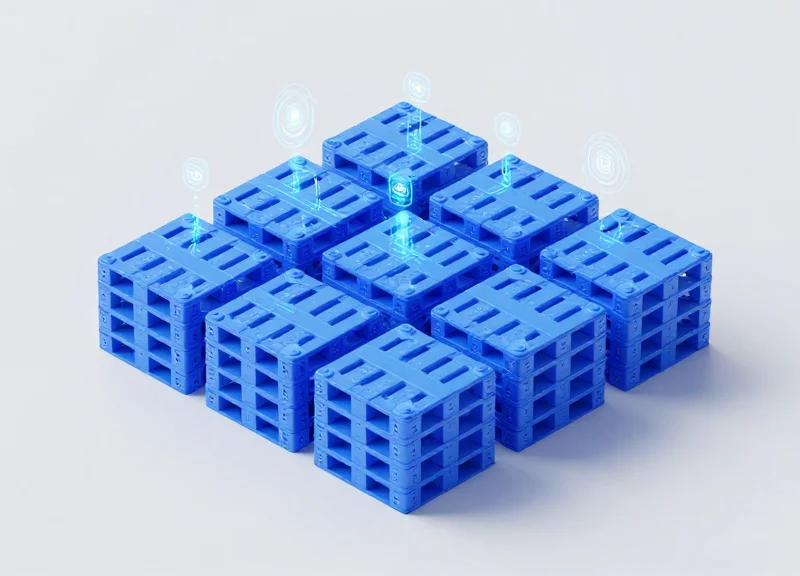
As we move toward 2026, the era of manual data entry and spreadsheet-based asset management is quickly becoming a liability for industrial logistics. For businesses utilizing heavy-duty plastic pallets, the stakes are higher than ever: these assets represent a significant capital investment and are the backbone of high-velocity supply chains. Relying on outdated tracking methods leads to lost inventory, delayed shipments, and massive operational blind spots. This guide provides an authoritative roadmap to transitioning from static spreadsheets to dynamic, automated RFID tracking systems tailored specifically for the rigors of heavy-duty pallet management.
The Evolution of Pallet Tracking: Why Spreadsheets Fail in 2026

By 2026, the 'digital twin' of a heavy-duty plastic pallet is no longer a luxury but a fundamental requirement for global supply chain resilience. Traditional spreadsheets fail because they are reactive, static documents that rely on human input, creating an inherent latency between physical movement and digital record. In modern high-speed logistics, where AI-driven routing and automated warehousing are standard, a delay of even 15 minutes in data entry results in 'stale intelligence,' leading to asset misallocation, lost inventory, and increased operational costs.
The evolution of pallet tracking has moved through three distinct eras: the Manual Era (paper logs), the Scanned Era (barcodes), and the current Autonomous Era (RFID and IoT). As enterprises transition to heavy-duty plastic pallets—which are designed for decades of use rather than a few trips—the financial stakes of losing an asset have tripled. Relying on a human to type a serial number into Excel in a world of 5G-enabled edge computing is the primary bottleneck preventing true supply chain optimization.
| Feature | Manual Spreadsheets | RFID-Enabled Systems (2026) |
|---|---|---|
| Data Accuracy | 65-80% (Human Error Risk) | 99.9% (Automated Capture) |
| Visibility | Historical / Reactive | Real-Time / Predictive |
| Scalability | Low (Manual Labor Intensive) | High (Automated Gateways) |
| Asset Recovery | Difficult / Delayed | Instant / Geofenced |
- The Error of Human Latency: A warehouse worker can process roughly 40-60 pallets per hour via manual entry. An RFID gateway processes 40 pallets in 3 seconds. The speed gap creates a data vacuum that spreadsheets cannot fill.
- Incompatibility with AI Orchestration: Modern Warehouse Management Systems (WMS) use AI to predict demand. If the pallet location data in your spreadsheet is an hour old, the AI’s suggestions will be based on a reality that no longer exists.
- Hidden Costs of 'Ghost Assets': Heavy-duty plastic pallets represent significant CAPEX. Spreadsheets often hide the true rate of loss because they cannot track 'last seen' timestamps automatically, leading to massive year-end write-offs.
Expert Insight: In 2026, we are seeing the rise of 'Predictive Decay.' This is the phenomenon where the value of logistics data drops by 50% for every minute it remains unverified. RFID eliminates this decay by providing an immutable, time-stamped record the moment a pallet passes a sensor, ensuring your digital inventory is a perfect reflection of your physical floor.
Can spreadsheets still handle small-scale plastic pallet fleets?
While possible for fleets under 50 units, the lack of automated alerts means you lose the primary benefit of heavy-duty pallets: their long-term durability and ROI through reuse.
What is the biggest risk of manual tracking in 2026?
Audit and compliance failure. As ESG regulations tighten, companies must prove the lifecycle and recycling of plastic assets; spreadsheets lack the audit trail required for modern regulatory standards.
Unique Challenges of Tracking Heavy-Duty Plastic Pallets
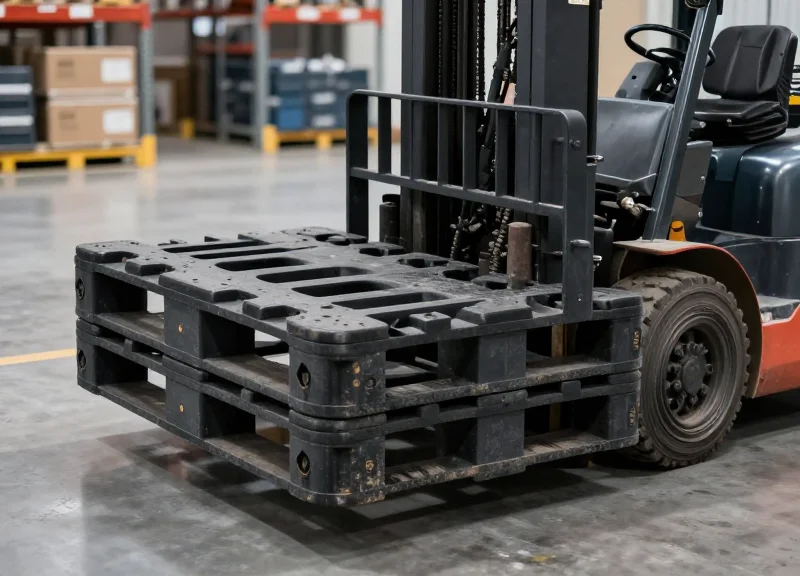
Unlike their wooden counterparts, heavy-duty plastic pallets are high-value, long-term assets designed to survive hundreds of trips over a decade or more. The tracking challenge lies in the 'Durability Paradox': while the HDPE (High-Density Polyethylene) or PP (Polypropylene) material of the pallet is nearly indestructible, the sensitive RFID electronics required to track them are often prone to failure when subjected to the same industrial rigors as the pallet itself. In 2026, as automated warehouses (AS/RS) become the standard, any tracking failure results in a 'ghost asset' that can disrupt an entire supply chain.
| Environmental Stressor | Impact on Plastic Pallets | RFID Technical Requirement |
|---|---|---|
| Thermal Cycling | Expansion/contraction in cold storage (-30°C to +40°C). | Flexible epoxy resins to prevent internal circuit cracking. |
| Chemical Exposure | Caustic wash-downs and sterilization in food/pharma. | IP69K rating and ultrasonic welding of tag enclosures. |
| Physical Impact | Forklift tine strikes and high-velocity sorting. | Sub-surface integration or recessed mounting 'pockets'. |
| UV Degradation | Outdoor staging causing material brittleness. | UV-stabilized polycarbonate or polymer housings. |
- Content Interference: While plastic is RF-transparent, the goods stacked on the pallet (liquids, metals, or foil packaging) can reflect or absorb signals. A challenge is ensuring the tag placement allows for a 'read' even when the pallet is fully loaded with challenging materials.
- Attachment Longevity: Standard adhesives fail under the high-pressure steam cleanings common in the food industry. Systems must use mechanical fasteners or be molded directly into the pallet frame during the injection molding process.
- Data Persistence: In a circular economy model, the RFID tag must outlive the pallet's branding. As pallets are leased or shared across pools, the tag must support re-writeable memory banks or secure cloud-linked identifiers that can be reassigned.
Expert Insight: The 'Shadow-Zone' Phenomenon. A common mistake in 2026 is ignoring the dielectric constant of different plastic resins. Depending on the density of the recycled plastic used in the pallet, the 'tuning' of the RFID antenna can shift. My 'Silicon Valley' tip: Always specify 'Broadband' UHF tags. These are designed to maintain a consistent read range across the entire global frequency band (860-960 MHz), ensuring that a pallet manufactured in the US performs identically when it arrives at a highly automated distribution center in Europe or Asia, regardless of the pallet's specific polymer blend.
Hardware Matters: Selecting the Right RFID Tags and Readers
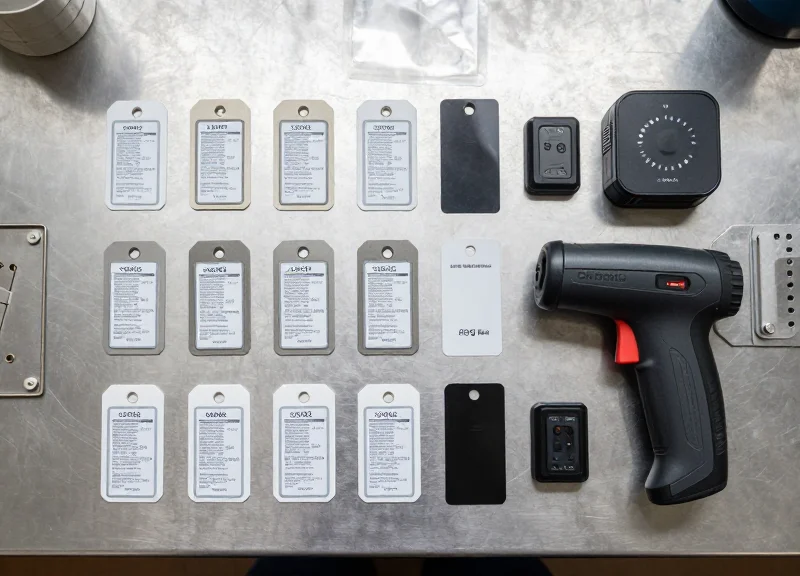
In 2026, selecting the right RFID hardware for heavy-duty plastic pallets requires a shift from 'off-the-shelf' solutions to application-specific engineering. To achieve 99.9% read reliability, companies must prioritize UHF Gen2v2 tags encapsulated in high-impact polymers and paired with readers featuring phased-array antennas. The goal is to overcome the physical barriers of high-density polyethylene (HDPE) and the radio frequency (RF) interference common in industrial warehouses.
| Tag Feature | Surface-Mount (Ruggedized) | In-Molded (Embedded) |
|---|---|---|
| Durability | High (Protective Shell) | Extreme (Internalized) |
| Installation | Retrofit-friendly (Rivets/Adhesive) | Factory-integrated only |
| Read Range | Up to 12 meters | 6–10 meters (material dependent) |
| Impact Resistance | Exposed to forklift shear | Immune to surface impact |
Expert Insight: The 'Dielectric Constant' Factor. One common mistake is ignoring the dielectric constant of the plastic itself. Different densities of HDPE or recycled plastic blends can actually shift the resonant frequency of the RFID tag. For 2026, leading manufacturers are using 'broadband' tags that are pre-tuned to maintain performance across the slightly varying chemical compositions of modern sustainable plastic pallets, ensuring the signal isn't dampened when the pallet is fully loaded with moisture-rich or metallic goods.
- Fixed Portal Readers: Best for high-volume dock doors. Look for readers with Power-over-Ethernet (PoE) and AI-driven edge processing to filter out 'ghost reads' from adjacent pallets.
- Handheld Mobile Readers: Crucial for cycle counting. In 2026, ergonomics are secondary to 'find-mode' accuracy—the ability to locate a specific pallet in a stack of hundreds using haptic feedback.
- Antenna Polarization: Use circular polarized antennas for pallets. This ensures the tag is read regardless of its orientation on the forklift or rack, a non-negotiable for heavy-duty automation.
Should I use 'On-Metal' tags for plastic pallets?
Only if the pallet is carrying high-metal content loads. Standard ruggedized UHF tags usually suffice for plastic, but 'on-metal' spacers can help if the pallet design includes steel reinforcement bars.
What is the importance of IP69K ratings in 2026?
For heavy-duty pallets, an IP69K rating is essential if your facility uses high-pressure steam cleaning or chemical wash-downs, preventing water ingress from killing the chip.
Can readers handle high-speed forklift movement?
Yes, modern 'high-sensitivity' readers can capture tag data at speeds up to 20 mph, provided the antenna array is configured to create a deep enough read zone.
Integration Strategy: Connecting RFID to WMS and ERP Systems
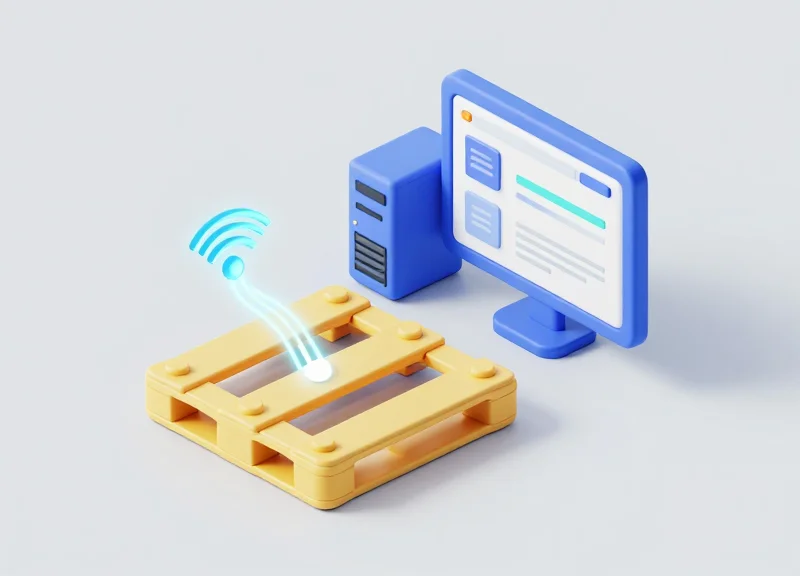
An effective RFID integration strategy transforms raw radio frequency signals into 'business intelligence' by bridging the gap between physical heavy-duty pallets and your digital core. In 2026, this isn't just about sending a Tag ID to a database; it is about real-time orchestration where the RFID middleware filters 'noise' at the edge, ensuring your Warehouse Management System (WMS) or Enterprise Resource Planning (ERP) system receives only relevant, validated state changes—such as 'Loaded,' 'Shipped,' or 'Under Maintenance'.
| Integration Method | Data Latency | Complexity | Best Use Case |
|---|---|---|---|
| RESTful APIs / Webhooks | Near-Zero (Real-time) | Medium | Cloud-native WMS like Oracle or SAP S/4HANA |
| RFID Middleware | Low (Buffered) | Low | High-volume sites needing data filtering/aggregation |
| Direct Database Write | Low | High | Legacy on-premise systems with no API support |
| EDI (Electronic Data Interchange) | High (Batch) | Medium | Cross-company logistics and global supply chains |
Expert Insight: The 'Data Tsunami' Warning. A common mistake is pipe-lining every single RFID ping directly into your ERP. A single heavy-duty pallet sitting near a reader can generate 50 reads per second. Without 'Edge Sanitization'—logic that resides in the reader or middleware to group these into one 'event'—you risk crashing your ERP's database tables or incurring massive cloud ingress costs. Always process at the edge to send only the 'Change of State'.
- Edge Filtering and Logic: Configure your RFID readers to filter duplicate reads and only broadcast 'GPIO triggers'—for instance, only recording a pallet when it breaks an infrared beam while passing through a dock door.
- Middleware Translation: Utilize a middleware layer (like Mojix or Impinj ItemSense) to map the EPC (Electronic Product Code) of the pallet to your internal SKU or Asset ID stored in the ERP.
- API Handshake: Execute an API call to the WMS to update the pallet status. In 2026, JSON over HTTPS is the gold standard for these transactions.
- Automated Exception Handling: Establish 'If-Then' protocols: If a pallet is detected at 'Exit Gate A' but its status is 'Incomplete Order' in the ERP, trigger a visual alarm and lock the gate automatically.
Will RFID integration slow down my existing WMS?
No, if implemented with a middleware layer. The middleware handles the high-frequency data processing and only sends a single, lightweight update to the WMS.
Do I need to replace my legacy ERP to use RFID?
Rarely. Most legacy systems can accept flat-file transfers (CSV/XML) via FTP, which RFID middleware can easily generate, though APIs are preferred for real-time accuracy.
What is the biggest failure point in integration?
Poor 'Data Mapping.' If your ERP doesn't have a specific field to track 'Pallet Health' or 'Cycle Count,' the RFID data becomes a siloed asset rather than a business tool.
Future-Proofing Your Tech: AI and IoT Trends for 2026

In 2026, future-proofing your RFID system for heavy-duty plastic pallets requires a shift from passive data collection to active 'Edge Intelligence.' By integrating Artificial Intelligence (AI) and the Internet of Things (IoT), businesses no longer just track where a pallet is; they analyze its condition, environmental impact, and optimal lifecycle in real-time. This 'Smart Pallet' ecosystem utilizes AI algorithms to predict supply chain bottlenecks and automate reordering processes before a human operator even identifies a delay.
| Feature | Legacy RFID (Pre-2024) | AI + IoT Integrated RFID (2026) |
|---|---|---|
| Data Processing | Centralized / Manual | Edge-based / Autonomous |
| Pallet Health | Visual Inspection Only | Predictive Fatigue Analytics |
| Visibility | Checkpoint-to-Checkpoint | Real-time Continuous Streaming |
| Decision Making | Reactive (After the event) | Proactive (Predictive modeling) |
The marriage of IoT sensors with RFID tags allows for 'Sensor Fusion.' For heavy-duty plastic pallets, this means monitoring more than just location. Integrated sensors can now detect impact force, temperature shifts, and even chemical exposure that might compromise the structural integrity of the pallet. AI engines process this stream of 'noise' to flag only the critical events, reducing the data burden on your ERP while ensuring your high-value assets remain in peak condition.
What is Predictive Pallet Maintenance?
AI models analyze historical usage patterns and impact data to predict when a heavy-duty plastic pallet is likely to fail. This allows for scheduled recycling or repair, preventing costly collapses in automated storage systems (ASRS).
How does Digital Twin technology apply to pallets?
In 2026, every physical pallet has a virtual 'Digital Twin.' Any movement or stress recorded by the IoT-enabled RFID system is mirrored in the cloud, allowing logistics managers to run 'what-if' simulations to optimize warehouse throughput.
What is the role of 5G/6G in 2026 RFID systems?
The rollout of massive IoT (mIoT) via 5G/6G networks allows for thousands of tags and sensors to communicate simultaneously within a single facility without signal interference, a major hurdle for older RFID deployments.
Silicon Valley Expert Tip: The Rise of 'Autonomous Pallet Agents'. In the coming year, we are seeing the emergence of pallets that act as autonomous agents. Instead of being passive objects, these pallets carry enough on-tag processing power to 'negotiate' with automated forklifts and ASRS robots. If a pallet detects it is carrying a fragile load or has reached a specific heat threshold, it can autonomously request a priority route or a specific storage zone. This localized decision-making reduces latency and makes your fleet vastly more resilient to network outages.
Evaluating Total Cost of Ownership and ROI
Evaluating the Total Cost of Ownership (TCO) and Return on Investment (ROI) for RFID in 2026 requires moving beyond the 'price per tag' to a comprehensive lifecycle analysis. For heavy-duty plastic pallets—which can cost five to ten times more than wood—the primary ROI driver is the drastic reduction in 'pallet leakage' (lost or stolen assets) and the optimization of cycle times. A successful evaluation balances initial capital expenditure (CapEx) for hardware and integration against recurring operational expenditure (OpEx) like cloud platform fees, while quantifying the 'hidden' savings found in automated inventory accuracy and reduced manual labor hours.
| Cost Category | Expense Type | Estimated % of 5-Year TCO | Description |
|---|---|---|---|
| Hardware & Tags | CapEx | 25-30% | Ruggedized UHF tags, fixed readers, and handheld mobile scanners. |
| Software & Integration | CapEx/OpEx | 20-25% | WMS/ERP middleware, cloud-native tracking platforms, and API usage. |
| Implementation & Labor | CapEx | 15-20% | Site surveys, cabling, antenna tuning, and initial staff training. |
| Maintenance & Support | OpEx | 10-15% | Firmware updates, tag replacements (breakage), and technical support. |
| Data & Connectivity | OpEx | 10-15% | 5G/LTE backhaul for yard tracking and cloud storage scalability. |
The 'Pallet Leakage' Metric: A 2026 Perspective. In previous years, companies accepted a 10% to 15% annual loss rate for plastic pallets as a 'cost of doing business.' In 2026, with rising material costs and sustainability mandates, that margin has vanished. An RFID system that reduces leakage to under 2% often pays for its entire infrastructure within 14 to 18 months solely through asset recovery. Furthermore, the ability to prove 'circularity' for ESG reporting provides a secondary, indirect ROI through tax credits or reduced carbon penalties.
- Baseline Asset Loss Audit: Determine your current annual pallet loss rate. For heavy-duty plastic, losing even 500 pallets at $80 each results in a $40,000 annual hit that RFID can almost entirely eliminate.
- Quantify Labor Efficiency Gains: Measure the time spent on manual cycle counts. RFID can reduce inventory time by 90%, allowing staff to be reallocated to higher-value fulfillment tasks.
- Calculate Dwell Time Reductions: Use RFID data to identify 'bottleneck' facilities where pallets sit idle. Increasing pallet turns by 10% reduces the need to purchase new safety stock.
- Factor in Maintenance Longevity: By tracking the 'trips' each pallet makes, you can implement predictive cleaning and repair schedules, extending the usable life of a heavy-duty pallet by 2-3 years.
Is a subscription-based (SaaS) model better than a perpetual license?
In 2026, SaaS is generally preferred for RFID tracking as it includes continuous security updates and scales OpEx based on the number of active assets, preventing heavy upfront software costs.
What is the 'Hidden Cost' most companies miss?
Environmental interference tuning. Many budgets fail to account for the labor required to tune antennas after the initial install as warehouse layouts change or new metallic racking is added.
How long does it take to see a positive ROI?
For high-velocity supply chains using premium plastic pallets, the break-even point typically occurs between month 12 and month 24, depending on the scale of the deployment.
Vendor Selection: What to Look for in a 2026 Technology Partner
In 2026, choosing an RFID technology partner for heavy-duty plastic pallets requires looking beyond hardware specifications to evaluate their capability in Edge computing, AI-driven analytics, and long-term ecosystem support. A qualified partner must demonstrate a 'field-first' philosophy, meaning their systems are built to withstand the physical rigors of industrial handling—such as high-pressure washdowns and extreme racking impacts—while providing a scalable software architecture that integrates with global supply chain standards. The goal is to move from a transactional vendor relationship to a strategic partnership that ensures data integrity across the entire asset lifecycle.
| Criteria | Legacy Vendor (2020-2024) | 2026 Strategic Partner |
|---|---|---|
| Data Processing | Cloud-only (Latency issues) | Edge-Native (Real-time at the dock door) |
| Integration | Custom API (Brittle) | Low-code/No-code Connectors (Agile) |
| Hardware Focus | Generic tags and readers | Material-specific ruggedized components |
| Service Model | Break-fix support | Predictive monitoring and uptime SLAs |
Expert Tip: Look for 'Resin-Aware' expertise. A top-tier 2026 partner understands how different high-density polyethylene (HDPE) or polypropylene (PP) blends affect RFID signal attenuation. If they don't ask about your specific pallet resin type or your washdown temperature specs during the first call, they aren't the right partner for heavy-duty industrial applications.
- Validate Industrial Resilience: Request case studies specifically involving plastic pallets in high-impact environments. Ask for third-party lab results regarding tag adhesion and housing durability against chemical cleaners and UV exposure.
- Assess Multi-Protocol Interoperability: Ensure the vendor supports global standards like GS1 EPC Gen2V2. Your partner should facilitate seamless data handoffs between your internal systems and external logistics providers without proprietary lockdowns.
- Evaluate the 'Digital Twin' Roadmap: The vendor should provide a platform that creates a digital twin for every physical pallet, tracking not just location but also maintenance history, load cycles, and carbon footprint metrics.
- Test Scalability from Pilot to Global: A 2026 partner must prove they can manage 100,000+ assets across multiple geographies without a degradation in software performance or data latency.
How do I verify a vendor's track record with heavy-duty plastic?
Ask for references in the automotive or food-processing sectors. These industries test the limits of plastic pallet durability and RFID read rates in harsh conditions.
What should be included in a 2026 Support SLA?
Look for 99.9% data availability, remote hardware health monitoring, and a guaranteed path for firmware updates that don't disrupt operations.
Can the vendor support 'Circular Economy' initiatives?
Verify if their system can track pallet recycling cycles and end-of-life disposal, which is increasingly mandatory for ESG reporting in 2026.
Ultimately, the differentiator in 2026 is 'Deployment Velocity.' The best partners have moved beyond months of manual configuration to automated provisioning tools that allow you to bring new facilities online in days. If a vendor’s implementation timeline looks like it belongs in 2015, their technology likely does too.
Implementation Roadmap: Best Practices for a Seamless Transition

A successful RFID implementation for heavy-duty plastic pallets in 2026 requires moving beyond simple hardware installation to a phased, data-centric integration strategy. To ensure a seamless transition, organizations must prioritize a 'pilot-to-parity' model: starting with a controlled site survey and environment audit, followed by a localized pilot, and concluding with a full-scale rollout that aligns real-time edge data with core ERP functions. The goal is to eliminate manual spreadsheet entry by establishing a 'digital twin' for every physical pallet, ensuring 99.9% read-rate accuracy even in high-density industrial environments.
- Phase 1: Environmental RF Audit & Site Survey: Before purchasing hardware, use spectrum analyzers to map out 'dead zones' and electromagnetic interference (EMI) in your facility. For heavy-duty pallets, identify where metal racking or liquid storage might necessitate specialized high-gain antennas.
- Phase 2: The Controlled Pilot (The 'Micro-Loop'): Select a single high-traffic lane or a specific high-value product line to test. Deploy 50-100 tagged pallets and monitor tag durability and read consistency across various speeds on forklifts and conveyors.
- Phase 3: Integration & Shadow Tracking: Run your new RFID system in parallel with your existing spreadsheet or manual processes. This 'Shadow' phase allows you to calibrate AI-driven predictive models against historical data without risking operational downtime.
- Phase 4: Staff Training & Gamification: Shift the focus from 'tracking' to 'empowerment.' Train floor staff on how to use handheld readers for exceptions and provide dashboards that show how the technology reduces their manual search time.
- Phase 5: Full-Scale Enterprise Rollout: Execute a facility-wide launch, moving from localized edge processing to full cloud-syncing for global visibility across all distribution centers.
| Implementation Milestone | Success Metric (KPI) | 2026 Benchmark |
|---|---|---|
| Tag Commissioning | Encoding Accuracy | 100% Zero-Error Rate |
| Portal Read Gates | Dynamic Read Rate | >99.7% at 10mph |
| System Latency | Edge to Cloud Sync | <200 Milliseconds |
| Labor Efficiency | Manual Audit Time | 85% Reduction |
Expert Insight: The 'Shadow Calibration' Strategy. In 2026, the most successful implementations utilize a 30-day shadow period where the RFID system's AI-confidence score is compared against manual logs. Do not decommission your legacy tracking until your 'Confidence Delta'—the difference between the two systems—is less than 1%. This ensures your automated alerts for 'missing' pallets aren't triggered by temporary signal occlusion or human error during the learning curve.
How long does a typical implementation take?
For a medium-sized distribution center, a full transition usually takes 12 to 18 weeks, including site preparation and employee onboarding.
Do we need to tag every pallet at once?
No. Most firms use a 'Rolling Conversion' where new heavy-duty pallets arrive pre-tagged from the manufacturer, while older stock is tagged as it passes through maintenance checkpoints.
What is the biggest cause of implementation failure?
Inadequate site surveys. Skipping the RF environment audit often leads to poor read rates near large metal structures or high-voltage equipment, requiring costly post-installation adjustments.