In the high-stakes world of collectible toys, the 'blind box' market has evolved into a global phenomenon where the packaging is often as valuable as the figure inside. For retailers, this presents a unique challenge: how do you secure inventory against theft without leaving adhesive residue or causing structural damage that destroys the 'mint-in-box' status? As we move into 2026, the demand for sophisticated security that respects asset value is at an all-time high. This article outlines the essential considerations for selecting EAS (Electronic Article Surveillance) security tags specifically designed to maintain the pristine condition and resale potential of blind box collectibles.
The Rise of the Collectible Resale Economy in 2026

By 2026, the collectible resale economy has transitioned from a niche hobby to a sophisticated asset class, where the secondary market value of a 'blind box'—a sealed mystery toy—is dictated almost entirely by the physical integrity of its original packaging. In this high-stakes retail landscape, the 'Mint in Box' (MIB) standard has evolved; collectors now view even the slightest adhesive residue or micro-puncture from outdated Electronic Article Surveillance (EAS) tags as a permanent devaluation of their investment. For retailers, this means loss prevention strategies must shift from simply stopping theft to 'preserving asset liquidity,' ensuring that security measures do not inadvertently destroy the very profit margins they are designed to protect.
| Metric | 2024 Market Baseline | 2026 Projected Trend |
|---|---|---|
| Resale Value Variance | 15-20% for damaged boxes | 35-50% for damaged boxes |
| Collector Priority | Item Authenticity | Packaging Integrity & Seal Provenance |
| Security Requirement | Visual Deterrence | Non-Invasive Invisible Protection |
| Secondary Market Size | $15B (Collectibles) | $28B (Hyper-curated Resale) |
The 2026 consumer is increasingly participating in 'circular commerce,' where a blind box is purchased with the intent to eventually resell it on decentralized marketplaces. This shift has turned the retail shelf into a temporary storage facility for future vintage goods. Retailers who utilize aggressive, invasive security tags are finding that while they may reduce shrink, they also reduce sell-through rates among serious collectors. High-end brands like Pop Mart and 52Toys have standardized 'pristine-state' requirements, meaning any security intervention must be chemically neutral and physically non-distorting to the box's structural fibers.
Why is 'Packaging Equity' a core KPI in 2026?
Because the box serves as the primary certificate of authenticity. In a market flooded with high-quality fakes, an untampered factory seal and a box free from 'tag scarring' are the only ways collectors can verify the item hasn't been weighed or searched.
How does EAS selection impact customer loyalty?
Collectors are loyal to stores that treat products as investments. Using high-residue stickers or puncturing pins signals a lack of respect for the hobby, driving high-value 'whales' to competitors who use non-invasive RFID or specialized soft-clutch tags.
What is the 'Resale Value Retention Rate' (RVRR)?
A new industry metric for 2026 that measures the percentage of an item's value preserved after security processing. High RVRR leads to higher stock turnover and brand advocacy.
Expert Tip: The 'Invisible Security' Standard. In my two decades of Silicon Valley retail tech, I’ve seen security evolve from 'scary' to 'silent.' In 2026, the gold standard is 'Zero-Trace Security.' This involves using EAS tags with pH-neutral adhesives that leave no ghosting under UV light, or acoustic-magnetic (AM) labels integrated into the box's internal structural folds during manufacturing. If your security tag leaves a mark, you aren't just losing a sale; you're devaluing your entire brand ecosystem.
Factor 1: Advanced Adhesive Chemistry and Zero-Residue Technology
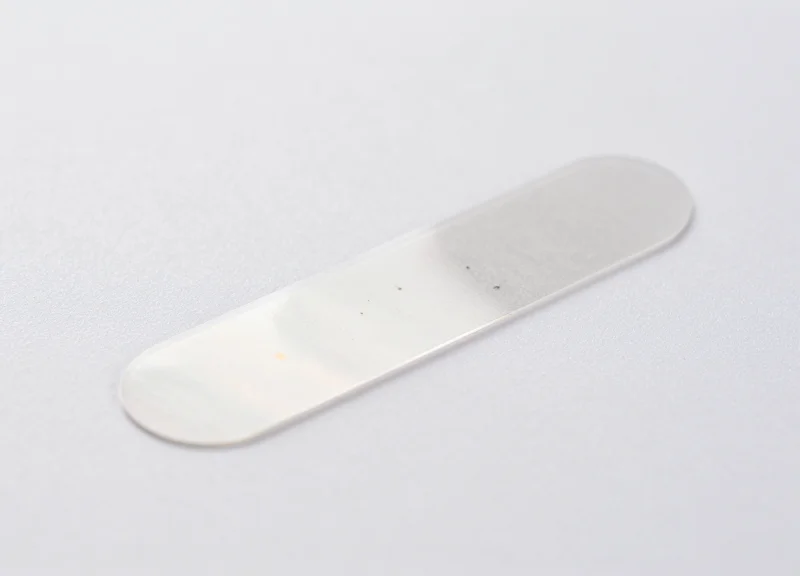
In the 2026 retail landscape, advanced adhesive chemistry for EAS (Electronic Article Surveillance) tags refers to the use of pressure-sensitive, low-energy polymer coatings designed to provide high initial grab while maintaining a 'clean-peel' threshold that prevents paper fiber tear or chemical residue on luxury blind box packaging. This technology ensures that security measures remain invisible to the product's physical integrity once removed.
Traditional adhesives often undergo a process called 'cross-linking' or 'aging,' where the bond with the packaging becomes permanent over time. For blind box collectors, a torn box corner or a sticky square mark can reduce the resale value by up to 40%. To mitigate this, retailers must prioritize 'High-Stability Acrylics' or 'Synthetic Rubber Elastomers' that are specifically tested for non-migration on high-gloss and matte UV coatings commonly used in 2026 toy manufacturing.
| Feature | Traditional Adhesives | 2026 Zero-Residue Adhesives |
|---|---|---|
| Peel Strength | Increases over time (becomes permanent) | Remains constant (controlled release) |
| Chemical Ghosting | High risk of ink leaching and staining | Zero chemical migration via barrier layers |
| Substrate Compatibility | Limited to standard cardboard | Optimized for Bioplastics & UV Coatings |
| Resale Value Impact | Significant depreciation (damaged packaging) | Preserved (pristine box condition) |
Why does residue appear months after the tag is applied?
This is usually due to plasticizer migration where the adhesive reacts with the box's laminate or ink; 2026-spec adhesives use specialized polymers that are chemically inert to common packaging finishes.
Can 'clean-peel' tags still prevent theft?
Absolutely. These tags are engineered for high shear resistance, making them difficult to slide off or 'scoot' horizontally, while still allowing for a clean vertical peel when the correct force is applied.
How do environmental factors affect these adhesives?
Modern zero-residue adhesives are UV-stable and thermal-resistant, meaning they won't melt or 'weep' sticky residue even if the blind boxes are displayed in high-heat retail windows.
Expert Tip: Implement the 'Shadow-Test' Protocol. Before committing to a bulk order of EAS tags, conduct a 30-day accelerated aging test by placing tagged samples in a 40°C (104°F) environment. If the tag leaves a 'shadow'—a slight change in the box's sheen or texture—after removal, the adhesive's solvent content is too high for premium collectibles. In 2026, the 'Ghosting' effect is considered a defect by professional grading services like PSA or Beckett.
Factor 2: Mechanical Compression and Structural Integrity
In the world of collectible blind boxes, 'Mechanical Compression' refers to the physical force exerted on a box's cardstock during the application and long-term storage of an EAS security tag. For 2026, structural integrity has become a primary valuation metric; even a minor indentation or 'micro-crease' caused by an over-tightened security strap or a heavy hard tag can reduce a collectible’s resale value by 15% to 30%. To protect these assets, retailers must select tags that balance theft deterrence with a low 'Point-Load' profile to ensure the box remains in pristine, factory-fresh condition.
| Tag Category | Typical Weight (g) | Application Pressure (PSI) | Risk to Blind Box Integrity |
|---|---|---|---|
| Standard RF Soft Label | 0.5 - 0.8g | Low (< 0.2 PSI) | Negligible (Safe for most cardstock) |
| Mini Hard Tag (Magnetic) | 5.0 - 8.0g | High (Mechanical Clamp) | High (Significant risk of corner crushing) |
| 2026 Ultra-Thin AM Strip | 0.3 - 0.5g | Low (< 0.15 PSI) | Minimal (Optimized for premium resale) |
| RFID Hybrid Label | 1.0 - 1.5g | Medium (0.4 PSI) | Moderate (Requires reinforced placement) |
The challenge for 2026 is that many blind box manufacturers are moving toward eco-friendly, recycled cardstock which often has lower tensile strength than traditional virgin-fiber boards. This makes the 'Crush Threshold'—the amount of weight a box can withstand before buckling—lower than ever before. When multiple tagged boxes are stacked for display, the cumulative weight of EAS tags can cause the bottom-most boxes to fail structurally if the tags are not distributed correctly or are excessively heavy.
- The 0.5 PSI Rule (Expert Tip): As a rule of thumb for 2026, never utilize an EAS application process that exceeds 0.5 pounds per square inch (PSI) of pressure on the box face. To test this, use a digital pressure gauge during the initial setup of your labeling line to ensure that automated applicators or manual hand-pressure do not exceed this limit, preventing 'box-bowing' which is a common reason for collector returns.
- Edge-Loading Strategy: Always place security tags near the vertical edges or corners of the box. These areas possess the highest structural rigidity due to the internal folds. Placing a tag in the center of a box face—the weakest point—increases the risk of the box collapsing inward under the weight of stacked inventory.
- Avoid Strap-Based Tags: Avoid 'Spider Wraps' or cinching straps for blind boxes. These devices apply 'Perimeter Tension' which is the leading cause of corner-tearing and edge-fraying in high-end collectible packaging.
How does tag weight affect the 'gravity-dent' over time?
A 'gravity-dent' occurs when a heavy tag causes the thin cardstock to sag over months of shelf-life. By 2026 standards, any tag over 2 grams applied to a box with less than 350gsm thickness will likely cause visible deformation if stored vertically.
Is it safer to apply tags to the top or bottom of the box?
Applying tags to the bottom face is generally safer for resale value as any minor surface compression is hidden from display. However, ensure the tag is thin enough that the box does not wobble when standing, as an unstable box is prone to falling and corner-denting.
Can automated labeling machines damage blind boxes?
Yes. High-speed pneumatic applicators can strike the box with enough force to cause 'shock-compression.' In 2026, we recommend 'Tamp-Blow' applicators that use a cushion of air to apply the label rather than a mechanical piston.
Factor 3: Frequency Compatibility – AM vs. RF for Dense Packaging
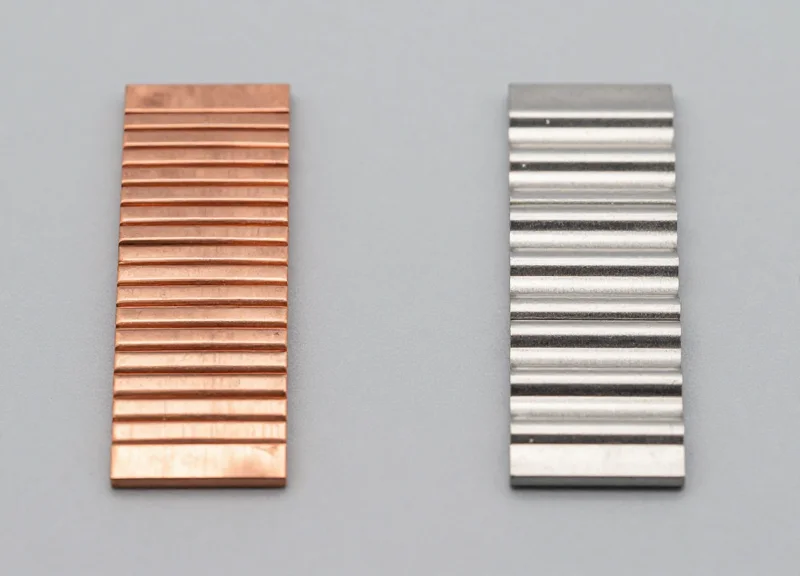
Frequency compatibility determines the physical ability of a security pedestal to 'see' a tag through layers of packaging. For the blind box market in 2026, the choice between Acousto-Magnetic (AM) 58 kHz and Radio Frequency (RF) 8.2 MHz is no longer just about price; it is about signal penetration. While RF is the global standard for general retail, AM technology provides superior performance for collectibles because its lower frequency waves are less susceptible to 'detuning' or shielding when placed near the metallic foils often used for internal mystery bags.
| Feature | AM (58 kHz) Technology | RF (8.2 MHz) Technology |
|---|---|---|
| Foil Penetration | Excellent; signal passes through metallic linings. | Poor; foil acts as a 'Faraday cage' and kills signal. |
| Detection Width | Wider aisles (up to 2.4m); ideal for high-traffic stores. | Standard aisles (up to 1.8m); narrower range. |
| Tag Thickness | Slightly thicker (3D profile). | Paper-thin (flat profile). |
| Interference Risk | Low; unaffected by liquid or dense cardboard. | High; susceptible to 'body shielding' and metal. |
The Veteran Perspective: The 'Signal Shadowing' Risk. In 2026, retailers are maximizing shelf density by stacking blind boxes 10 to 12 units deep. This creates a phenomenon known as 'Signal Shadowing.' RF tags in the middle of a dense stack often fail to resonate because the surrounding boxes absorb the 8.2 MHz energy. AM systems, however, utilize a magnetic field that is significantly more resilient to this type of dense-pack attenuation, ensuring that even a box hidden in the center of a display remains protected.
Can I use RF tags if my blind boxes have foil inner bags?
It is not recommended. The aluminum foil used in many blind box 'secret' bags creates a shielding effect that significantly reduces the detection rate of 8.2 MHz RF tags, often resulting in false negatives at the exit.
Why is AM preferred for premium 'Art Toy' retailers?
Premium retailers often have wider, more aesthetic entrance designs. AM technology allows for wider detection spans and better reliability through the complex, multi-layered packaging materials used in high-end collectibles.
Does frequency affect the resale value of the box?
Indirectly, yes. RF tags are flatter and less likely to leave a physical indentation on the cardstock, but AM tags provide better security. The key is using an AM tag with a 'de-activated' footprint that doesn't require high-pressure physical contact.
Ultimately, for 2026 operations, if your inventory includes high-gloss coatings, metallic inks, or interior foil packaging, AM (Acousto-Magnetic) is the technically superior choice to ensure a 98%+ detection rate without compromising the display density of your retail floor.
Factor 4: Visual Deterrence vs. Merchandising Aesthetics
In the high-stakes world of collectible blind boxes, the packaging is the product. Visual Deterrence vs. Merchandising Aesthetics represents the strategic tension between making a security tag visible enough to stop a thief, yet discrete enough to satisfy a 'mint-condition' collector. By 2026, the industry standard has shifted toward 'Aesthetic Security,' where the placement and transparency of EAS (Electronic Article Surveillance) tags are optimized to protect the box's 'Visual Real Estate' (VRE)—the key graphics, serial numbers, and holographic seals that prove authenticity on the secondary market.
| Feature | High-Deterrence Approach | Aesthetic-First Approach | The 2026 Hybrid Standard |
|---|---|---|---|
| Tag Type | Large Hard Tags | Hidden Internal Tags | Clear-Film Micro-Labels |
| Placement | Center-Front Box Face | Inside Flap / Bottom | Lower-Third 'Dead Zone' |
| Consumer Impact | High Friction / Resale Drop | Zero Visibility / Risk of Loss | Low Friction / High Trust |
| Theft Reduction | Highest (Visual) | Low (Stealth Only) | High (Psychological + Tech) |
Expert Insight: The Digital Integrity Rule. In 2026, many premium blind boxes feature scannable AR (Augmented Reality) triggers or NFC 'Proof of Authenticity' chips embedded in the cardstock. A critical mistake retailers make is placing an EAS tag directly over these markers. This doesn't just hide art; it physically disables the digital utility of the item. To maintain maximum resale value, tags must be placed at least 15mm away from any scannable element, a practice known as 'Digital Integrity Protection' (DIP).
Does a visible security tag lower the resale value of a blind box?
Only if it is applied with permanent adhesive or placed over critical artwork. Using a 'clear-zone' application strategy with zero-residue labels actually increases buyer confidence by proving the item was sourced from a legitimate, high-security retail environment.
Where is the best 'dead zone' for tag placement?
The bottom-rear corner is usually the lowest-value real estate for collectors. However, always ensure the tag does not cover the UPC or the manufacturer’s batch code, as these are vital for identifying rare 'chase' variants.
Are transparent EAS tags as effective as white or black labels?
Yes. Modern transparent AM/RF labels use high-contrast metallic circuits that are still recognizable to shoplifters as security devices but allow the underlying box art to remain 95% visible.
- Map the Visual Real Estate: Identify the 'Primary Display Panel' (PDP) and any secondary panels containing lore, character lists, or rarity charts.
- Identify Scannable Zones: Locate QR codes, AR markers, and barcodes to ensure the EAS tag provides a 10-15mm buffer zone.
- Standardize Application: Train staff to apply tags in a uniform 'safe corner' across all units to maintain shelf symmetry and professional presentation.
Factor 5: Future-Proofing with Hybrid RFID-EAS Labels

In 2026, future-proofing blind box security means transitioning to hybrid RFID-EAS (Radio Frequency Identification & Electronic Article Surveillance) labels. These integrated solutions combine the 8.2MHz or 58kHz security triggers of traditional EAS with the serialized data capabilities of UHF RFID. For blind box retailers, this dual-layer approach eliminates the need for multiple stickers, significantly reducing the 'adhesive footprint' on collectible packaging and ensuring that the box remains pristine for the secondary market.
| Feature | Legacy EAS Tags | 2026 Hybrid RFID-EAS Labels |
|---|---|---|
| Data Capacity | None (Bit-only alarm) | Serialized (Unique ID per box) |
| Physical Profile | Thick/Visible | Ultra-thin (Paper-thin inlay) |
| Inventory Utility | Loss Prevention only | Real-time stock & authentication |
| Resale Impact | High (Risk of residue/tears) | Low (Sub-surface integration) |
The strategic advantage of hybrid labels lies in 'Digital Authenticity.' By 2026, high-end collectors will use smartphone-based NFC or RFID readers to verify a box's provenance before purchase. A hybrid tag allows the retailer to maintain a 'Digital Twin' of the blind box. This means you can track the specific 'Chase' figure distribution within your inventory without ever breaking the factory seal, ensuring the mechanical integrity of the packaging is 100% maintained for the end-user.
Can hybrid tags be applied inside the box?
Yes. One of the biggest shifts in 2026 is 'Source Tagging' where ultra-thin hybrid inlays are placed inside the box flap during manufacturing. This provides 'Invisible Security' that does not interfere with the external box art or the resale value.
Do these labels require new gate hardware?
Most 2026 EAS pedestals are multi-frequency. Hybrid labels are designed to trigger existing AM or RF gates while simultaneously communicating with RFID overhead sensors for inventory counts.
How do hybrid tags prevent 'Switching'?
Because each hybrid tag has a unique digital signature, thieves cannot simply peel a tag off a cheap common box and put it on a high-value rare box; the RFID system will detect the SKU mismatch at the exit.
Expert Tip: For maximum ROI, implement 'Zone-Based Deactivation.' In 2026, advanced Point-of-Sale systems can 'soft-deactivate' the EAS component while keeping the RFID data active. This allows the collector to keep the tag as a 'birth certificate' for the item, proving it was purchased from an authorized gallery and significantly boosting its long-term resale valuation.
The Risk of Using Generic Security Tags on Collectibles
Generic Electronic Article Surveillance (EAS) tags are designed for high-turnover consumer goods like detergent or cereal, where the packaging is discarded immediately after purchase. For blind boxes, the packaging constitutes up to 50% of the item's total valuation. Applying standard high-tack adhesive labels or heavy-clamping hard tags to these delicate cardboard structures often results in irreversible 'box rot,' structural warping, or fiber tearing. In the 2026 resale landscape, where high-resolution macro-photography is the standard for secondary market verification, even a microscopic blemish caused by a generic security tag can downgrade a 'Gem Mint' box to 'Fair' condition, instantly stripping away 40% to 70% of its potential resale value.
| Risk Factor | Generic EAS Tag Impact | Collectible-Grade Tag Impact |
|---|---|---|
| Adhesive Profile | Permanent high-tack bond; causes fiber tear on removal. | Low-tack micro-suction; leaves zero residue or lifting. |
| Chemical Composition | Acidic solvents that yellow paper over time. | pH-neutral, archival-safe synthetic materials. |
| Mechanical Pressure | High-tension springs that crush box corners. | Weight-balanced shells to prevent compression. |
| UV Reaction | Leaves 'ghosting' marks visible under blacklight. | Zero UV-reactive footprint for authenticated reselling. |
What is 'Chemical Migration' in blind box security?
This is a hidden risk where the solvents in cheap adhesives seep through the porous cardboard of a blind box. Over 6-12 months, these chemicals can reach the interior foil bag and even the vinyl figure itself, causing discoloration or a sticky 'leaching' effect that ruins the collectible.
Can heat guns safely remove generic security stickers?
While often recommended in DIY forums, heat guns are dangerous for blind boxes. The heat required to melt generic adhesives can warp the thin internal plastic bags and potentially soften the PVC or ABS plastic of the figure inside, creating 'heat-slump' defects.
Why do collectors value 'Untampered' UV status?
By 2026, professional grading services use UV-spectrum analysis to detect if a box has been tampered with or if a security tag was removed. Generic tags leave a chemical 'ghost' that glows under UV, signaling to buyers that the box surface has been compromised.
Expert Tip: The 'Blacklight Ghosting' phenomenon is the newest hurdle for resellers. Most generic EAS adhesives contain optical brighteners that are invisible to the naked eye but glow brilliantly under 365nm UV light. Even if you manage to remove the sticker without tearing the paper, the chemical footprint remains as a permanent 'stain' in the eyes of professional graders. To protect the 2026 investment value of your inventory, you must specify 'optical-brightener-free' (OBF) adhesives for all on-box security applications.
Best Practices for In-Store Tag Application and Removal

The gold standard for in-store EAS management in 2026 is the 'Preservation-First' protocol, which prioritizes the physical state of the collectible over the convenience of the security application. Effective EAS management for blind boxes requires specialized staff training to ensure that tags are applied to non-critical surfaces and removed using precision instruments that eliminate the risk of tearing, scuffing, or leaving adhesive ghosting on high-value cardstock.
| Application Zone | Risk Level | Recommended Action |
|---|---|---|
| Shrink-Wrap Layer | Low | Preferred. Apply labels directly to the outer plastic wrap to avoid contact with the cardboard. |
| Box Base/Bottom | Medium | Secondary option. Apply only if the base is unprinted or lacks barcodes/authentication marks. |
| Character Art/Front | Critical | Strictly Prohibited. Adhesives can lift ink and ruin the 'Mint in Box' (MIB) status. |
| Corner Edges | High | Avoid. High pressure on corners during tag application can cause permanent crushing. |
- Calibration of Detaching Tools: Ensure all magnetic detachers and mechanical tag removers are calibrated weekly to prevent excessive force, which can lead to 'mechanical shock' that damages fragile internal figures.
- The 45-Degree Peel Technique: When removing labels, staff should use a slow, 45-degree angled peel. This maximizes the shear force against the adhesive while minimizing the vertical lift on the paper fibers of the box.
- Residue Inspection Station: Establish a post-removal inspection point using UV light to detect 'invisible' adhesive traces that might attract dust and devalue the item over time.
Expert Insight: The 'Buffer Layer' Strategy. To eliminate resale risk entirely, top-tier retailers are now applying a small square of low-tack, acid-free 'transfer tape' to the box first, then placing the high-strength EAS label on top of that buffer. This ensures the permanent adhesive never touches the collectible, allowing for a 100% clean removal during the checkout process.
How do we handle boxes where the wrap has already been removed?
Utilize clear, adjustable acrylic 'security cages' or wraps rather than adhesive labels to protect the box surface from direct contact.
Will 2026 EAS labels damage the box if left on for months?
Standard acrylic adhesives can cross-link over time, becoming permanent. Always use 'removable grade' EAS labels specifically rated for paperboard storage.
Can heat guns be used to assist in removal?
No. Heat guns can warp the internal PVC figures or melt thin shrink-wrap. Use precision chemical adhesive removers that are pH-neutral if a label is stuck.
Evaluating ROI: Security Costs vs. Preserved Asset Value

In the 2026 collectible market, the Return on Investment (ROI) for EAS security is no longer measured solely by theft reduction (shrinkage), but by the 'Preserved Asset Value' of the inventory. For blind boxes, the packaging is the product; therefore, a security solution that costs $0.05 but leaves adhesive residue or causes a 'box tear' upon removal can result in a 30% loss in resale margin. A true ROI calculation must factor in the 'Condition Premium'—the higher price collectors pay for pristine, untampered boxes—against the incremental cost of premium, non-marring EAS labels.
| Metric | Generic Adhesive Tag | Premium Non-Residue Label (2026) |
|---|---|---|
| Unit Cost | $0.02 - $0.04 | $0.07 - $0.12 |
| Removal Impact | Fiber tear / Adhesive residue | Zero surface disturbance |
| Resale Value Retention | 60-70% (Damaged Box) | 98-100% (Mint Box) |
| Annual Shrinkage Reduction | High (if tag is visible) | High + Higher Secondary Margin |
Expert Insight: In 2026, we utilize the 'Box Integrity Multiplier' (BIM) to justify security budgets. As blind boxes increasingly move into the 'alternative asset' category, a single 'Chase' figure in a damaged box can lose $200 in value. By spending an extra $0.08 on a pH-neutral, low-tack EAS label, retailers essentially buy insurance for the box's secondary market liquidity. If your store moves 10,000 units a month, a 1% reduction in 'security-induced markdowns' covers the entire cost of a premium EAS system three times over.
How do I calculate 'Security-Induced Markdown'?
This is the total revenue lost when a customer demands a discount or a box is moved to the clearance bin because of damage caused by a security tag, pin, or adhesive.
Is the ROI higher for RFID-EAS hybrids?
Yes. While the unit cost is higher, the ROI is compounded by inventory accuracy (99%+) and the elimination of manual stock counts, alongside the preservation of box art.
Does 'Visual Deterrence' negatively impact ROI?
Only if it obscures 'Mint' status indicators. In 2026, the highest ROI comes from 'Invisible Security'—tags hidden under the fold or integrated into the manufacture—which maintains the box's aesthetic while preventing theft.