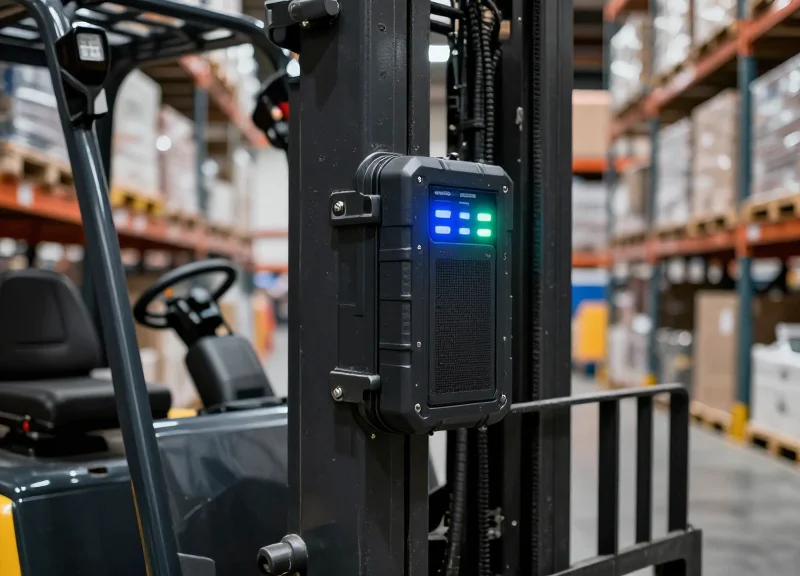

In the high-stakes environment of a modern hospital, every second—and every piece of equipment—counts. Yet, high-traffic healthcare facilities lose millions annually to misplaced, stolen, or underutilized assets. From infusion pumps to mobile X-ray units, the 'hide and seek' game played by clinical staff compromises patient care and balloons operational costs. Achieving 99.9% real-time asset accuracy isn't just a technical milestone; it's a financial imperative. By leveraging advanced RFID and EAS technologies, facilities can transform chaos into a streamlined, high-ROI ecosystem where equipment is always where it needs to be.
The Invisible Drain: Understanding the True Cost of Equipment Loss
The true cost of equipment loss in high-traffic healthcare environments is a triple threat to the bottom line: it involves the immediate capital outlay for replacements, the soft cost of wasted clinical labor spent searching for assets, and the systemic inflation of capital budgets due to unnecessary over-procurement. For many Tier-1 trauma centers, the cumulative financial drain of missing inventory averages between $4,000 and $5,000 per bed per year, a figure that is often obscured within general operational overhead rather than tracked as a discrete asset management failure. To solve this, facilities must look beyond the price tag of a single lost IV pump and evaluate the total economic friction caused by asset invisibility.
| Cost Category | Financial Impact | Operational Consequence |
|---|---|---|
| Direct Replacement | High (Full MSRP + Shipping) | Immediate hit to capital expenditure budgets. |
| Clinical Labor Search | Variable ($15k-$20k per nurse/year) | Increased burnout and reduced time at the bedside. |
| Over-Procurement Buffer | 15% to 30% Surplus | Capital tied up in 'safety stock' that sits idle. |
| Canceled Procedures | Extreme ($2k-$5k per instance) | Revenue loss and patient dissatisfaction. |
A unique perspective often overlooked by hospital leadership is the Search-to-Service Ratio. In a high-traffic facility, if a clinician spends 20 minutes of a 12-hour shift looking for a bladder scanner or telemetry monitor, you are essentially paying a premium for a non-value-added activity. When scaled across 500+ nurses, this search time creates a 'shadow workforce'—staff paid to be detectives rather than caregivers. Furthermore, the 'Capital Buffer Trap' forces hospitals to purchase 25% more infusion pumps than clinically necessary just to ensure one is available when needed, representing millions in wasted liquidity that could have been allocated to facility upgrades or specialized staffing.
How does equipment loss impact patient safety?
Loss of critical equipment leads to treatment delays. When a crash cart or a specific ventilator cannot be located immediately during a 'code,' the risk of adverse clinical outcomes increases exponentially.
What is the 'Phantom Inventory' effect?
This occurs when assets are technically on the books but physically unavailable. This leads to redundant rentals, where hospitals pay daily fees for equipment they already own but cannot find.
Why is 99.9% accuracy the new industry benchmark?
Standard manual audits usually achieve only 70-80% accuracy. A 99.9% real-time accuracy rate eliminates the need for the 'buffer stock' entirely, allowing for lean inventory management and instant ROI through avoided purchases.
Why 99.9% Accuracy is the New Standard for Healthcare Facilities

In high-traffic healthcare environments, 99.9% real-time accuracy is the critical threshold where technology finally bridges the gap between data and clinical trust. Unlike legacy 'periodic' tracking, which relies on manual audits or low-fidelity scans, 99.9% accuracy provides a continuous, high-definition stream of asset location and status. This level of precision is the 'Gold Standard' because it effectively eliminates the 'search-and-find' waste that consumes up to 20% of a nurse's shift, ensuring that life-critical equipment like ventilators and crash carts are exactly where the system says they are, every single time.
| Feature | Periodic/Manual Inventory | 99.9% Real-Time Tracking |
|---|---|---|
| Data Freshness | Weeks or months old | Real-time (sub-second updates) |
| Accuracy Level | 70% - 85% (due to human error) | 99.9% (automated precision) |
| Staff Behavior | Hoarding/Hiding equipment | Total trust in system availability |
| Clinical Impact | Delayed procedures/Delayed care | Optimized throughput and safety |
The Hoarding Paradox: Why 95% Accuracy is a Failing Grade. In my two decades of optimizing supply chains, I have observed a recurring phenomenon: the 'Trust Chasm.' When an asset tracking system is only 90% or 95% accurate, clinicians still experience 'false positives'—the system says a pump is in Room 302, but it isn't there. This lack of total reliability forces staff to revert to 'shadow inventories,' where they hoard equipment in closets or ceiling tiles to ensure they have what they need for their patients. It is only when you hit the 99.9% mark that you break this psychological cycle of hoarding, allowing the facility to reduce its total asset fleet size by 10-15% because the equipment is finally visible and mobile.
Why is 95% accuracy insufficient for high-traffic zones?
In high-traffic areas like the ER or OR, equipment moves dozens of times a day. A 5% error rate results in hundreds of 'ghost assets' per week, leading to immediate loss of staff confidence and a return to manual searching.
How does 99.9% accuracy impact 'Operational Drift'?
Operational drift occurs when assets slowly migrate away from their intended zones. High-accuracy tracking allows for 'geofencing' alerts that trigger the moment an asset leaves its designated area, preventing loss before it happens.
Can 99.9% accuracy improve patient throughput?
Yes. By ensuring that transport chairs, IV pumps, and monitors are immediately available, the time to prep a room or transition a patient is reduced, directly increasing the number of patients a facility can treat daily.
Leveraging RFID for Real-Time Equipment Visibility
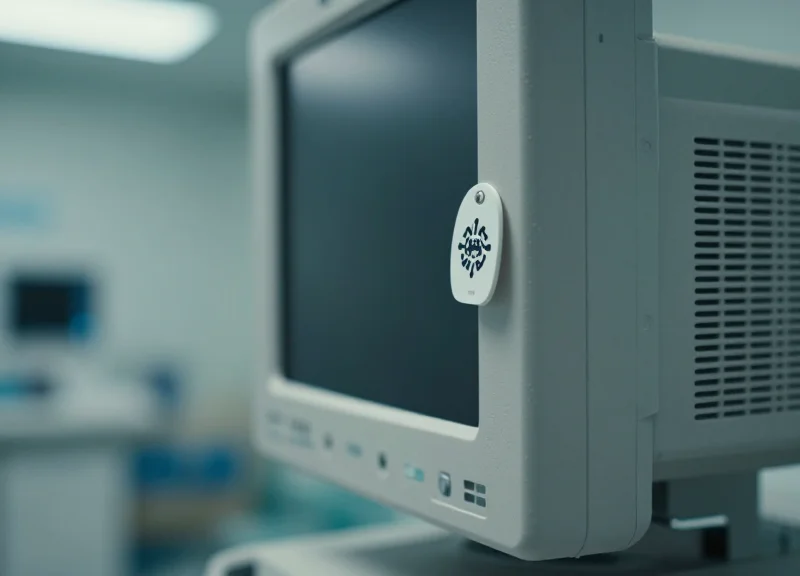
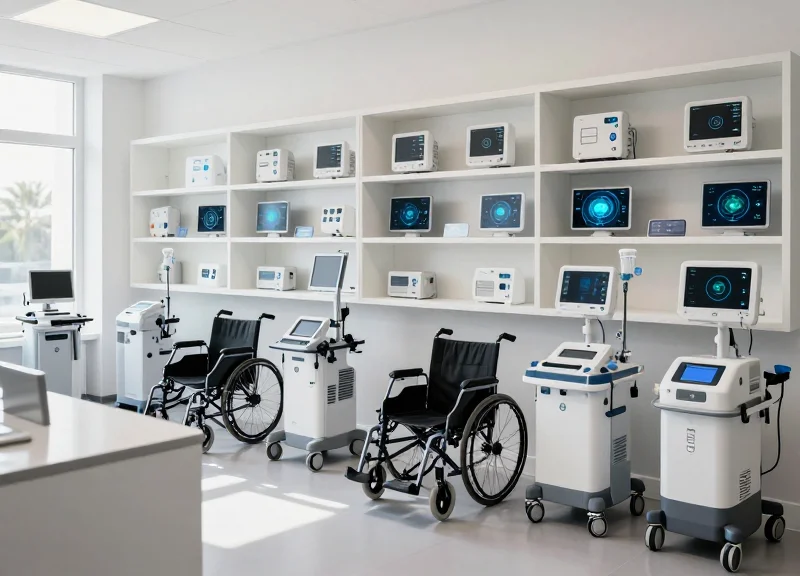
Leveraging Radio Frequency Identification (RFID) for equipment visibility transforms a hospital's inventory from a static list into a dynamic, real-time map. Unlike barcodes that require line-of-sight scanning, RFID utilizes electromagnetic fields to automatically identify and track tags attached to objects. In a high-traffic healthcare facility, this means thousands of items—from infusion pumps to wheelchairs—can be accounted for simultaneously without human intervention, providing the granular data necessary to maintain a 99.9% accuracy rate and eliminate the 'search time' that plagues clinical staff.
| Feature | Passive RFID | Active RFID (RTLS) |
|---|---|---|
| Power Source | Powered by the reader's signal | Internal battery (long-life) |
| Read Range | Up to 10-15 meters | Up to 100+ meters |
| Typical Use Case | High-volume, low-cost assets | High-value, mobile medical devices |
| Infrastructure | Fixed portals at chokepoints | WAP-integrated or proprietary mesh |
| Accuracy | Zonal (Room/Hallway level) | Sub-meter (Precise X-Y coordinates) |
Expert Insight: The Hybrid Logic Strategy. While most vendors push a 'one-size-fits-all' solution, the most cost-effective way to hit 99.9% accuracy is a hybrid deployment. Use Active RFID (BLE or Wi-Fi tags) for mission-critical equipment like ventilators that require room-level precision, and use Passive RFID at 'chokepoints' (like laundry chutes or exit bays) to track low-cost telemetry units or wheelchairs. This tiered approach maximizes ROI by focusing high-cost tracking only where the clinical risk of loss is highest.
- Asset Tagging and Serialization: Apply unique RFID identifiers to each piece of equipment, ensuring the tag's form factor (on-metal vs. standard) matches the device's surface material for optimal signal propagation.
- Portal and Reader Calibration: Strategically place readers at transition points (e.g., between the ER and the sterilization wing) to create 'digital fences' that trigger alerts if equipment leaves its assigned zone.
- Middleware Integration: Connect the raw RFID data stream to a centralized asset management platform that translates signal pings into actionable business intelligence.
- Continuous Threshold Monitoring: Set automated alerts for when equipment levels in specific high-traffic departments drop below a predefined 'par level,' enabling proactive replenishment.
Can RFID interfere with sensitive medical equipment?
Modern healthcare-grade RFID systems operate on regulated frequencies (such as UHF or BLE) that are specifically designed to be non-interfering with life-support devices and follow FCC and hospital-specific EMI standards.
What is the lifespan of an active RFID tag?
Typically, active tags last between 3 to 5 years depending on the ping rate. Many systems now include low-battery alerts to ensure the 99.9% accuracy threshold is never compromised by hardware failure.
How does RFID handle multi-floor environments?
Sophisticated RTLS algorithms use floor-discrimination logic and RSSI (Received Signal Strength Indicator) to accurately determine which level an asset is on, preventing the 'ghosting' effect where items appear on multiple floors.
The Role of EAS in Preventing Hospital Theft and Shrinkage
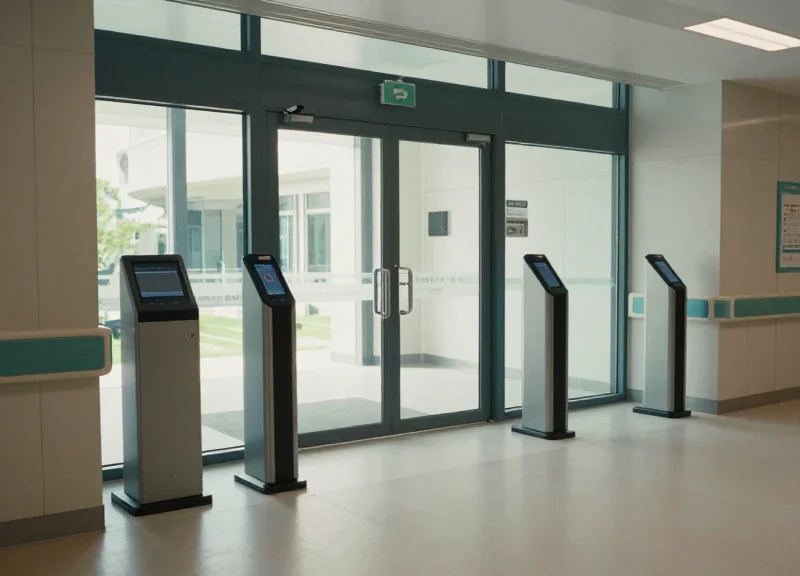
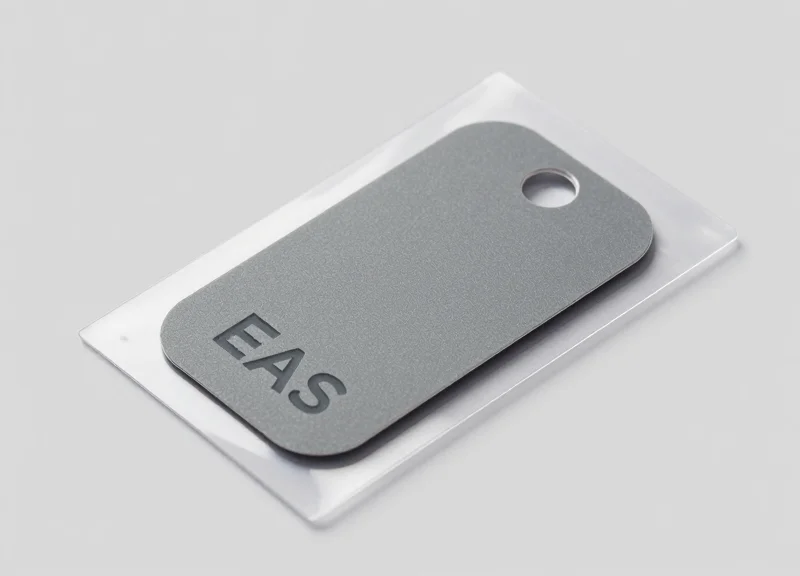
Electronic Article Surveillance (EAS) in healthcare functions as a high-integrity security perimeter that detects tagged medical equipment as it passes through designated exit points. By integrating EAS with Real-Time Location Systems (RTLS), facilities can achieve 99.9% accuracy in preventing 'shrinkage'—the loss of assets due to theft, administrative errors, or accidental removal. This technology provides an immediate deterrent and real-time alert system that ensures expensive infusion pumps, ventilators, and mobile ultrasound units never leave the building without authorization.
| Feature | Traditional Security Guarding | EAS-Integrated RTLS |
|---|---|---|
| Detection Speed | Manual/Visual observation (Delayed) | Instantaneous electronic trigger (Real-Time) |
| Accuracy | Low (Prone to human error/fatigue) | 99.9% (Precision tag identification) |
| Operational Cost | High (Continuous labor wages) | Low (Automated passive or active monitoring) |
| Data Logging | Subjective written reports | Objective digital timestamps and ID tracking |
A sophisticated EAS implementation goes beyond simple 'beeping' at the door. In high-traffic healthcare facilities, we utilize a 'Chokepoint Strategy.' This involves placing high-gain antennas at loading docks, main exits, and staff corridors. When a piece of equipment is detected in an unauthorized zone, the system doesn't just sound an alarm; it can be programmed to trigger a 'Security Snapshot'—automatically activating the nearest CCTV camera to capture an image of the event. This level of forensic evidence is what transforms a simple alarm system into a robust loss-prevention powerhouse.
How does EAS handle 'Accidental Shrinkage'?
Many losses are unintentional, such as equipment hidden in laundry carts or mistakenly taken by transferring patients. EAS identifies these items at the exit, allowing staff to recover them before they cross the threshold.
Can EAS distinguish between staff movement and theft?
Yes. Modern systems use role-based logic. If an asset is moved by an authorized badge holder through an exit, the system remains silent. If it moves independently, it triggers a 'theft-in-progress' alert.
What is the 'Visual Deterrent' effect?
The presence of visible EAS pedestals or ceiling-mounted sensors creates a psychological barrier. Potential bad actors are significantly less likely to attempt theft when they know every exit is a digital gatekeeper.
Expert Insight: One often overlooked benefit of EAS in hospitals is 'E-Waste and Hazardous Material Compliance.' Many medical devices contain lithium batteries or bio-hazardous components that cannot be legally disposed of in general waste streams. EAS serves as a secondary audit trail to ensure these assets are decommissioned and recycled through official channels rather than disappearing into a landfill, protecting the hospital from both financial loss and environmental litigation.
Calculating ROI: How Asset Accuracy Impacts the Bottom Line
In high-traffic healthcare environments, the Return on Investment (ROI) for real-time asset tracking is defined by the elimination of 'Shadow Costs'—the expenses incurred when inventory data diverges from physical reality. A facility operating with 99.9% accuracy achieves ROI through three primary levers: the reduction of annual capital expenditure (CapEx) by 15-25% via improved utilization, the near-total elimination of emergency equipment rentals, and the conversion of 'Search Latency' into billable clinical time. When asset location is guaranteed, the need for 'Just-in-Case' over-provisioning vanishes, directly impacting the hospital's EBITDA.
| Financial Metric | Traditional Inventory (70-85% Accuracy) | Real-Time Accuracy (99.9%) |
|---|---|---|
| Annual Equipment Loss Rate | 10% - 15% of total fleet | < 1% of total fleet |
| Equipment Utilization Rate | Avg. 42% - 50% | Avg. 75% - 85% |
| Monthly Rental Expenditures | High (to cover 'missing' units) | Minimal (only for surge capacity) |
| Staff Search Time | 20-30 mins per nurse per shift | < 2 mins per nurse per shift |
- Audit Ghost Assets: Identify equipment currently on the balance sheet that cannot be physically located. 99.9% accuracy allows for the immediate removal of these assets, reducing insurance premiums and property taxes.
- Calculate Search Latency Value: Multiply the average hourly rate of nursing staff by the total hours spent searching for pumps, monitors, and wheelchairs. High-traffic facilities often find this 'soft' cost exceeds $500,000 annually.
- Assess Rental Redundancy: Analyze how often sub-rentals are ordered while owned assets are sitting idle in 'dead zones' like basements or soiled utility rooms.
- Project CapEx Avoidance: Determine the cost of upcoming equipment refreshes. With 99.9% visibility, you can typically reduce the size of new purchase orders by 20% because utilization of the existing fleet is maximized.
Expert Insight: The 'Trust Dividend' is the most significant hidden ROI factor. In most hospitals, department heads intentionally hoard assets in closets because they don't trust the central supply chain to provide equipment when needed. When accuracy reaches 99.9%, this 'hoarding behavior' stops. This allows the facility to operate with a significantly leaner total inventory—often 15-20% smaller—without ever compromising patient safety or care delivery speed.
Is 99.9% accuracy overkill for ROI?
No. In high-traffic zones, a 10% error rate (90% accuracy) means 1 out of 10 items is missing. This uncertainty forces staff to continue manual hoarding and 'just-in-case' ordering, which negates the financial benefits of the system.
How long does it take to see a positive ROI?
Most healthcare facilities see a break-even point within 12 to 18 months, primarily driven by reduced equipment replacement costs and the elimination of unnecessary rentals.
Does this impact preventative maintenance (PM) costs?
Yes. 99.9% accuracy ensures 100% PM compliance by locating every device for its scheduled service, preventing expensive emergency repairs and regulatory fines.
Improving Patient Safety Through Immediate Asset Availability
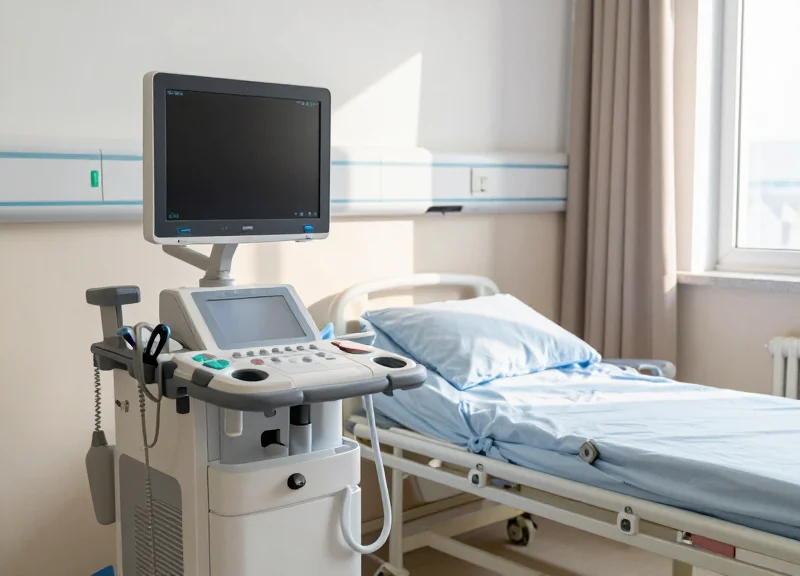
Patient safety in high-traffic healthcare environments is inextricably linked to the 'Equipment Proximity Ratio'—the speed at which a clinician can locate and deploy a functional, calibrated medical device at the point of care. When asset accuracy reaches 99.9%, hospitals eliminate the 'search-and-rescue' phase of clinical workflows, ensuring that life-saving tools like ventilators, defibrillators, and infusion pumps are available within seconds of a critical event. By removing the latency between a clinical need and the physical presence of the tool, facilities significantly reduce the risk of sentinel events and improve overall patient outcomes.
| Clinical Scenario | Legacy Tracking Impact (70-80% Accuracy) | Real-Time Accuracy Impact (99.9%) |
|---|---|---|
| Code Blue Response | 5-10 minute delay locating the nearest available crash cart. | Instant notification of the closest ready-to-use cart. |
| Inpatient Infusion | Nurses 'hoard' pumps to ensure availability, creating artificial shortages. | Balanced distribution ensures pumps are always bedside when needed. |
| Preventive Maintenance | Devices are missed during recall or service cycles, risking failure. | 100% compliance with maintenance schedules through automated alerts. |
Beyond simple location tracking, 99.9% accuracy supports 'Clinical Integrity'—the assurance that the device found is not only present but also safe for use. Real-time systems can monitor the movement of equipment through sterilization and 'soiled' zones. This prevents the accidental use of contaminated equipment on immunocompromised patients, a leading cause of Healthcare-Associated Infections (HAIs). In high-acuity wards, the difference between 'near enough' and 'exactly here' is measured in clinical minutes that directly correlate to patient survival rates.
How does equipment availability affect nurse burnout and patient safety?
When nurses spend an average of 20-30 minutes per shift searching for equipment, it leads to cognitive overload and fatigue. Reducing this friction allows clinicians to spend more direct time with patients, improving monitoring and reducing the likelihood of medical errors.
Can real-time tracking prevent the use of recalled medical devices?
Yes. With 99.9% accuracy, hospital administrators can instantly flag and locate every unit of a recalled model, ensuring it is removed from the floor before it can be used on a patient, thereby mitigating legal and clinical risks.
Does asset accuracy impact Emergency Department (ED) throughput?
Directly. Rapid access to mobile imaging and diagnostic tools ensures faster patient stabilization and transition, preventing ED overcrowding which is a known factor in increased patient mortality.
Expert Insight: The 'Golden Minute' of Asset Retrieval. In veteran clinical engineering, we recognize the 'Golden Minute'—the sixty seconds after a critical patient need arises. Our data indicates that in facilities with sub-90% asset visibility, clinicians often resort to 'suboptimal substitution' (using a second-choice device because the primary is missing). 99.9% real-time accuracy eliminates this 'Clinical Drift,' ensuring the gold-standard treatment is always the path of least resistance.
Optimizing Maintenance and Compliance with ESL and RFID

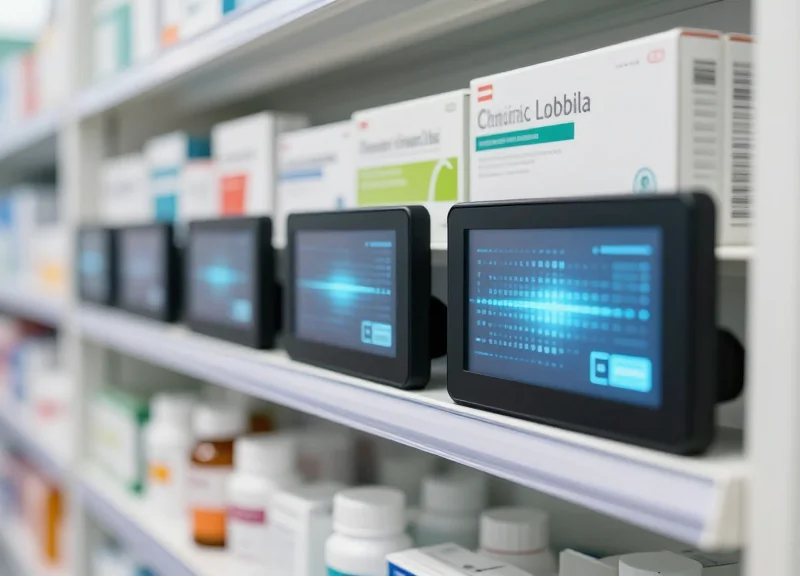
Optimizing maintenance and compliance in healthcare facilities involves leveraging RFID for automated data capture and Electronic Shelf Labels (ESL) as dynamic, localized displays for asset status. By marrying these technologies, hospitals can transition from reactive, manual logbooks to a proactive 'smart-asset' ecosystem where equipment automatically reports its maintenance history and regulatory readiness. This integration ensures that 99.9% asset accuracy translates directly into 100% audit-readiness and zero clinical delays due to equipment failure.
| Feature | Traditional Manual Logging | ESL + RFID Integrated System |
|---|---|---|
| Data Accuracy | High risk of human error/omission | Automated, timestamped precision |
| Visual Status | Requires checking a separate database | Instant visibility on the device via ESL |
| Compliance Audit | Days of manual paperwork preparation | Instant, one-click digital reports |
| Preventative Alerts | Calendar-based, often missed | Real-time usage-based notifications |
The true innovation lies in Dynamic Visual Compliance. While RFID tracks the location and history in the background, the ESL acts as a 'digital service tag' attached to the device. Instead of a paper tag that can fall off or be ignored, an ESL can flash a red LED when a device is past its calibration date or display a QR code that technicians can scan to instantly pull up the full service manual. This eliminates the 'search and find' waste that plagues biomedical engineering departments.
- Automated Lifecycle Tracking: As assets move through the facility, RFID gates log hours of operation based on location (e.g., time spent in an active OR), triggering maintenance alerts based on actual usage rather than just chronological time.
- Real-Time Compliance Dashboards: ESLs update automatically to reflect 'Compliant' or 'Out of Service' status, preventing clinicians from accidentally using uncalibrated equipment.
- Seamless Audit Trails: Every interaction—from the last sterilization to the latest software update—is recorded digitally, providing a permanent and unalterable record for Joint Commission or regulatory inspections.
How long do ESL batteries last in a high-traffic hospital?
Modern ESLs used for medical assets typically have a battery life of 5 to 10 years, as they only consume power during display updates, making them extremely low-maintenance.
Can RFID/ESL systems integrate with existing CMMS?
Yes, most advanced systems use open APIs to push real-time location and status data directly into Computerized Maintenance Management Systems (CMMS), ensuring a single source of truth.
Do these signals interfere with sensitive medical imaging?
No. Healthcare-grade RFID and ESL systems operate on specific frequencies (such as 2.4GHz or Sub-GHz bands) that are designed to coexist safely with sensitive medical telemetry and imaging equipment.
Overcoming Implementation Challenges in High-Traffic Environments
Implementing real-time location systems (RTLS) in a high-traffic hospital is comparable to changing a tire while the car is moving at sixty miles per hour. The primary challenge is not the technology itself, but the environment: 24/7 operations, complex architectural barriers like lead-lined X-ray rooms, and a high density of existing wireless signals. To achieve 99.9% accuracy, facilities must adopt a 'stealth-mode' deployment strategy that prioritizes non-invasive hardware installation and rigorous radio frequency (RF) mapping to ensure the new system does not interfere with life-critical medical telemetry.
| Deployment Strategy | Disruption Level | ROI Speed | Best Use Case |
|---|---|---|---|
| The 'Big Bang' Rollout | High | Fastest | New hospital builds or facility-wide renovations. |
| Phased Zonal Rollout | Low | Moderate | Active emergency departments and high-traffic ICUs. |
| Asset-Category Rollout | Minimal | Steady | Focusing on high-value mobile assets like infusion pumps first. |
Expert Insight: The 'Ghost Signal' Audit. One overlooked factor in high-traffic healthcare environments is 'signal noise' from legacy pagers and older Bluetooth devices. Before deploying a single tag, we recommend a 48-hour spectral analysis to identify these 'ghost signals.' By mapping the invisible landscape first, you can calibrate your gateway sensitivity to avoid the 15-20% accuracy drop-off often seen in the first month of unoptimized installations.
- Multi-Spectrum Site Survey: Conduct a comprehensive RF audit to identify dead zones caused by structural steel and medical imaging equipment.
- Infrastructure Masking: Utilize existing Wi-Fi access points or low-profile BLE (Bluetooth Low Energy) anchors to minimize aesthetic and physical impact on the clinical environment.
- Workflow Integration Pilot: Deploy in a single high-traffic unit (like the ED) for 30 days to refine tag placement and notification thresholds.
- Automated Calibration: Use machine learning algorithms to automatically adjust for environmental changes, such as the movement of heavy metal carts or varying occupancy levels.
Will RTLS interfere with existing medical devices?
Modern BLE and Ultra-Wideband (UWB) solutions operate on low power and different frequencies than life-critical telemetry, making them safe for use near sensitive equipment.
How do we handle tag maintenance in a busy ward?
Use tags with 5+ year battery lives and centralized cloud dashboards that send proactive 'Low Battery' alerts to the biomedical engineering team before a device goes dark.
How do we get clinical staff to support the rollout?
Position the system as a tool to 'give time back' to nurses by eliminating the average 30 minutes per shift spent searching for equipment.
The DragonGuard Advantage: Integrated Solutions for Modern Hospitals
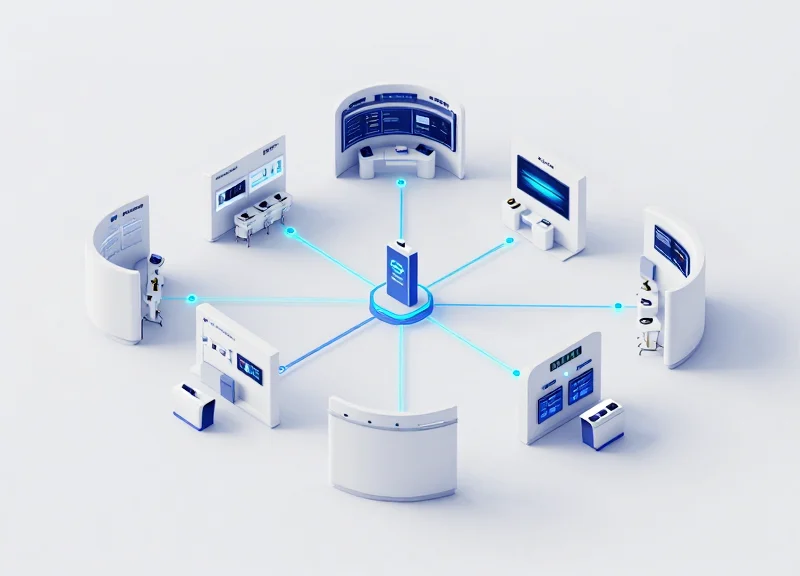
The DragonGuard Advantage is a unified security and tracking ecosystem that synchronizes Electronic Article Surveillance (EAS) for theft prevention, Radio Frequency Identification (RFID) for real-time inventory precision, and Electronic Shelf Labels (ESL) for dynamic data visualization. Unlike siloed vendors, DragonGuard provides a 'Single Pane of Glass' interface where hospitals can monitor high-traffic zones, automate asset replenishment, and eliminate the 15-20% annual equipment shrinkage common in the healthcare sector.
Modern hospitals operate in a state of constant motion. Traditional asset management fails because it relies on passive data. DragonGuard transforms this by creating an active feedback loop. When a cardiac monitor moves through a high-traffic exit, the EAS gate triggers an alert, the RFID tag identifies the specific unit ID, and the central database updates the ESL display to reflect the 'Missing' or 'In-Transit' status instantly. This integration ensures that clinical staff never waste time searching for equipment that is no longer on the floor.
| Technology | Primary Function | Hospital Use Case | Integrated Value |
|---|---|---|---|
| EAS (Security) | Theft & Exit Detection | Preventing wheelchairs and telemetry units from leaving the building. | Triggers active alerts to security software upon unauthorized movement. |
| RFID (Tracking) | Sub-Meter Localization | Locating IV pumps across multiple floors or storage closets. | Provides the granular data needed for 99.9% inventory accuracy. |
| ESL (Display) | Dynamic Labeling | Real-time status updates (Cleaned, Calibrated, In-Use) at the equipment bay. | Reduces cognitive load for nurses by providing visual status cues at a glance. |
Unique Expert Insight: Most facilities struggle with 'Network Noise' when deploying multiple wireless technologies. The DragonGuard platform utilizes a proprietary frequency-hopping algorithm that prevents interference between RFID readers and existing hospital Wi-Fi/medical telemetry bands. This ensures that your 99.9% accuracy doesn't come at the cost of your hospital's critical communication infrastructure.
Can DragonGuard integrate with existing Hospital Information Systems (HIS)?
Yes. DragonGuard’s API-first architecture allows seamless integration with major HIS and ERP platforms like Epic, Cerner, and Oracle, ensuring asset data flows directly into patient billing and procurement workflows.
How does the 'Triple-Lock' security approach work?
DragonGuard combines hardware-level EAS alerts, software-level RFID geofencing, and visual ESL status indicators. If an asset crosses a geofence without a scheduled maintenance or transfer order, the system automatically logs the incident and notifies the floor manager.
Is the hardware durable enough for sterilization environments?
Our tags and labels are designed with IP67-rated enclosures, making them resistant to medical-grade disinfectants, high-pressure cleaning, and the rigorous sterilization protocols required in surgical suites.