
As we head toward 2026, the retail landscape is facing unprecedented challenges in loss prevention. While traditional Electronic Article Surveillance (EAS) remains a cornerstone of physical security, the rise of sophisticated organized retail crime and self-checkout shrinkage demands a more intelligent approach. The solution lies in the synergy between AI Computer Vision and established EAS technologies. This guide explores how a hybrid security model provides the comprehensive coverage necessary to protect margins without sacrificing the customer experience, positioning your business at the forefront of retail innovation.
The Evolution of Retail Security: Why Hybrid is the Future
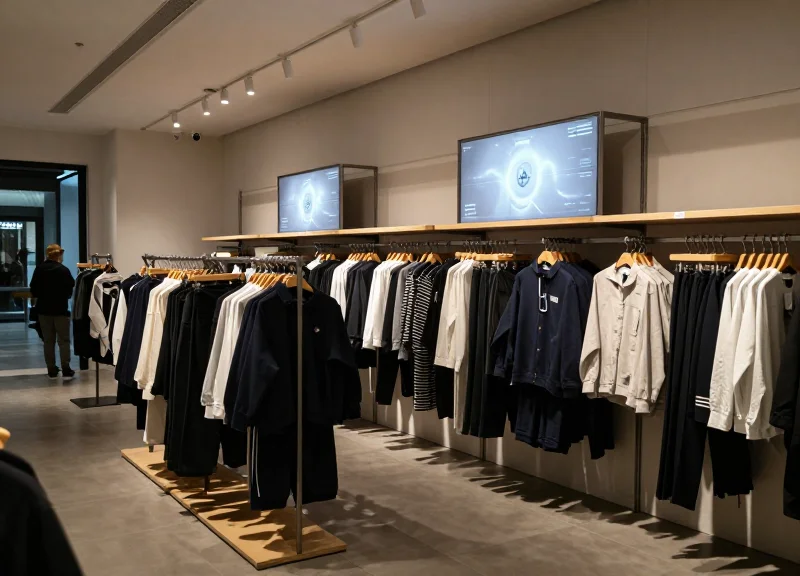
Hybrid retail security is a multi-layered loss prevention strategy that integrates traditional Electronic Article Surveillance (EAS) with advanced AI-powered computer vision to move from reactive alarms to proactive threat detection. In 2026, this 'Hybrid' approach is the gold standard because it bridges the gap between physical deterrents and digital intelligence, allowing retailers to identify high-risk behaviors before a theft occurs while maintaining a frictionless customer experience.
For decades, retail security relied almost exclusively on EAS—gates that beep when a tagged item passes through. While effective as a basic deterrent, EAS is fundamentally reactive: it only alerts staff after the item has reached the exit. As Organized Retail Crime (ORC) tactics have evolved and self-checkout shrinkage has skyrocketed, these legacy systems have become insufficient on their own. The evolution toward hybrid systems represents a shift toward 'Loss Prevention 3.0,' where data-driven insights from AI vision provide the context that hardware-only systems lack.
| Feature | Traditional EAS (Legacy) | AI Vision (Modern) | Hybrid Ecosystem (2026) |
|---|---|---|---|
| Detection Type | Reactive (at exit) | Behavioral (in-aisle) | Full-path Proactive |
| Data Context | None (Tag based) | High (Video based) | Comprehensive Analytics |
| Primary Role | Theft Deterrence | Insight & Alerting | Shrinkage Prevention |
| Staff Response | After-the-fact stop | Real-time intervention | Intelligent prioritization |
Expert Insight: The 'Intent-Action Gap'. The most significant breakthrough in 2026 hybrid systems is the ability to bridge the 'Intent-Action Gap.' While EAS only knows an item is leaving, AI Vision can detect the intent to steal—such as 'sweethearting' at checkout or concealment in an aisle—minutes before the thief reaches the EAS pedestals. By syncing these systems, the EAS alarm becomes a secondary verification of an AI-flagged behavioral anomaly, reducing false positives by up to 45%.
Why can't I just use AI cameras and remove EAS gates?
While AI is powerful, EAS gates remain the most recognizable physical deterrent. A hybrid system ensures that if a sophisticated thief bypasses AI detection (e.g., through blind spots), the physical tag remains a final line of defense. Conversely, the AI reduces 'alarm fatigue' for staff by providing visual proof when a gate does trigger.
How does hybrid security impact the customer experience?
Hybrid systems allow for 'soft' security. Instead of aggressive tagging on every low-cost item, retailers can use AI to monitor high-traffic zones and only rely on heavy physical security for high-value merchandise, leading to a more open and inviting store layout.
What is the ROI on upgrading to a hybrid model?
Beyond reducing shrink, hybrid systems provide operational data, such as heatmaps and queue lengths, essentially allowing the security budget to double as a marketing and operations investment.
Understanding the Strengths of AI Computer Vision

AI Computer Vision (CV) in 2026 represents the pinnacle of retail loss prevention, utilizing deep learning algorithms and neural networks to interpret visual data with human-like understanding at a machine-level scale. Unlike traditional CCTV, which serves primarily as forensic evidence for post-event investigation, AI Vision acts as a proactive digital sentinel. It identifies 'micro-behaviors'—such as rapid shelf sweeping, nervous perimeter scanning, or specific concealment motions—allowing security teams to receive real-time alerts and intervene before the 'point of exit' is reached.
- Behavioral Pattern Recognition: AI models are trained on millions of hours of retail footage to differentiate between a customer putting an item in their cart versus concealing it in a jacket or a personal bag.
- Real-Time SKU-Level Tracking: Advanced vision systems can now track specific high-value items from the moment they are removed from the shelf, maintaining a 'digital chain of custody' throughout the store.
- Non-Linear Movement Detection: Algorithms can flag 'erratic' paths or loitering in high-theft zones (like liquor or cosmetics aisles) that deviate from typical shopping journeys.
- Automated POS Verification: AI monitors the Point of Sale to detect 'sweethearting' (scanning a low-cost item while bagging a high-cost one) or miss-scans by matching visual data with transaction logs.
| Feature | Legacy CCTV Systems | 2026 AI Vision Systems |
|---|---|---|
| Primary Role | Passive evidence collection | Active real-time intervention |
| Accuracy | High human error in monitoring | 98%+ accuracy in event flagging |
| Data Output | Raw video footage | Actionable metadata and heatmaps |
| Inventory Impact | None | Reduces 'Ghost Stock' through tracking |
The Expert Perspective: Shifting from 'Identity' to 'Intent' — A critical breakthrough for 2026 is the industry-wide shift toward Intent-Based Analytics. While early facial recognition faced significant privacy hurdles and regulatory bans, modern AI Vision focuses on 'skeleton-tracking' and object-interaction dynamics. This approach protects customer privacy by anonymizing identity while simultaneously increasing security efficacy by analyzing the physics of the action rather than the face of the actor. This 'Privacy-by-Design' architecture is what makes modern AI Vision globally deployable across strict regulatory environments like the EU.
Does AI vision work in low-light conditions?
Yes, 2026 systems utilize IR-enhanced sensors and 'Low-Light Transformer' models that can interpret behavioral patterns in as little as 0.01 lux.
How does it handle crowded store environments?
Modern AI utilizes edge-processing to maintain multi-object tracking (MOT), which can distinguish between up to 100 individual 'actors' in a single high-density frame without losing track of their respective product interactions.
Is the system 'always learning'?
Most enterprise systems now use 'Federated Learning,' where the local model improves by learning from global anonymized theft trends without ever sharing specific store footage externally.
The Persistent Value of EAS (Electronic Article Surveillance)

Electronic Article Surveillance (EAS) is a technology-based retail security solution that uses electronic tags or labels attached to merchandise and antenna pedestals at exits to prevent shoplifting. While AI computer vision monitors the entire store floor, EAS serves as the 'Last-Mile Deterrent,' providing a physical barrier and immediate audible alert at the point of exit that signals a breach in real-time. Even in 2026, EAS remains the only automated system capable of identifying a theft the exact second a suspect attempts to leave the building with an unpurchased item.
- Visual Deterrence: The presence of hard tags and pedestals creates a psychological barrier for opportunistic shoplifters, signaling that the store is actively protected.
- Immediate Intervention: Unlike post-event video reviews, EAS alarms provide staff with a 'golden window' of 5-10 seconds to approach a customer and perform a receipt check.
- Low Latency Action: EAS operates on physical resonance or radio frequency, meaning it functions without the processing delays sometimes found in cloud-based AI systems.
| Technology Type | Primary Benefit | Best Use Case (2026) |
|---|---|---|
| Acousto-Magnetic (AM) | High detection range and resistance to metal interference. | High-end apparel, electronics, and DIY tools. |
| Radio Frequency (RF) | Low-cost tags and high-speed deactivation. | Grocery, health & beauty, and high-volume retail. |
| RFID-EAS Hybrid | Dual inventory tracking and theft prevention. | Omnichannel flagship stores and luxury boutiques. |
Expert Insight: In the 2026 landscape, the value of EAS has shifted from 'catching' to 'friction.' While AI vision identifies suspicious patterns, the physical act of removing a hard tag requires tools and time—two things a shoplifter lacks. We are seeing a trend where retailers use 'Ghost Pedestals' (invisible floor loops) integrated with AI to track exactly which SKU triggered an alarm, turning a generic beep into a data-rich event.
Does EAS still work if a shoplifter uses a booster bag?
Modern AM and RF pedestals can be equipped with Metal Detection or 'Booster Bag' detection alerts that notify security the moment a shielded bag enters the store, long before a theft occurs.
Can EAS be integrated with AI Vision?
Yes, top-tier systems now link the EAS alarm to the nearest AI camera, automatically bookmarking the video feed and pushing a high-resolution image of the suspect to security smartphones instantly.
Is EAS too intrusive for modern store design?
No. 2026 designs utilize 'Concealed EAS,' where antennas are hidden in door frames or under the floor, maintaining the aesthetic of high-end retail while providing full protection.
Synergizing AI and EAS: How Complementary Systems Work

The synergy between AI computer vision and Electronic Article Surveillance (EAS) is a closed-loop ecosystem where physical sensors provide the 'reflex' and deep-learning algorithms provide the 'intelligence.' In this hybrid model, the EAS pedestal acts as a trigger event that prompts the AI vision system to instantly analyze the preceding 30 seconds of video data, confirming whether the alarm was caused by a legitimate theft attempt or a common technical glitch, such as a failed deactivation or an 'incoming' tag.
- Signal Interception: The EAS controller detects a tag in the field and sends a real-time interrupt signal via API or dry-contact relay to the AI Vision Management System.
- Temporal Visual Mapping: The AI instantly retrieves the high-definition video feed from the camera covering that specific exit lane, focusing on the specific person passing through the gate.
- Behavioral Contextualization: AI algorithms check the person's 'shopping path'—did they pick up the item? Did they go to a Point of Sale (POS)? Was a transaction recorded for that specific SKU?
- Automated Validation: If the AI sees no corresponding POS transaction but detects a concealed item, it upgrades the 'Technical Alarm' to a 'Verified Theft Event.'
- Targeted Notification: Security personnel receive a mobile alert containing the suspect's image and the specific item detected, rather than a generic alarm chime.
| Feature | Legacy EAS Only | AI + EAS Hybrid (2026) |
|---|---|---|
| Alarm Reliability | High False Alarm Rate (80%+) | 98% Accuracy via Visual Verification |
| Response Protocol | Staff stop every customer | Response only to verified events |
| Data Insights | Only counts total alarms | Identifies specific 'hot' items and methods |
| Customer Friction | High (Interrogating innocent shoppers) | Low (Invisible verification loop) |
Expert Insight: By 2026, the industry is moving toward 'Edge-to-Edge Handshaking.' This means the EAS pedestal and the AI camera process the data locally without sending it to the cloud first. This reduces the latency of a verified alert to under 150 milliseconds, allowing staff to intercept a shoplifter before they even clear the sidewalk outside your door.
How does the system handle 'tag pollution'?
AI vision identifies if the tag triggering the EAS is on a customer entering the store (e.g., a tag from another store), automatically suppressing the alarm and preventing staff from being distracted by non-threats.
Can legacy EAS hardware be integrated with modern AI?
Yes, most modern AI platforms use IoT gateways that can ingest simple alarm signals from older AM or RF pedestals, though digital EAS systems provide more granular data.
What happens if the camera view is blocked?
The system defaults to standard EAS protocols. However, most hybrid setups utilize 'Cross-Camera Tracking' to maintain a visual of the subject from the shelf to the exit, ensuring context is never lost.
Addressing the Self-Checkout Challenge with Hybrid Tech
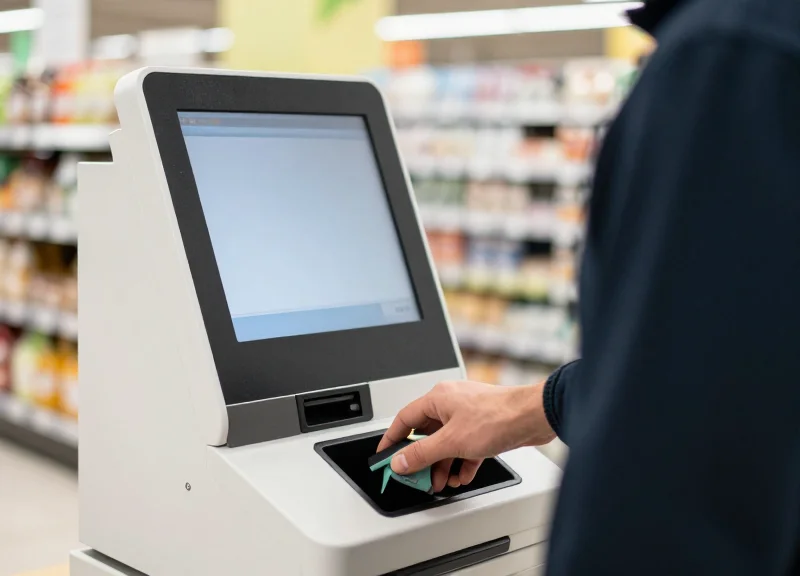
In the 2026 retail landscape, the self-checkout (SCO) lane remains the primary vector for shrinkage, where 'non-scan' losses often outweigh traditional shoplifting. Addressing the self-checkout challenge requires a hybrid technology approach that fuses AI computer vision—capable of identifying 'sweethearting' or missed scans in real-time—with Electronic Article Surveillance (EAS) that provides a final physical check for high-value, tagged merchandise. By layering these systems, retailers can reduce shrink by an estimated 35-50% while maintaining the speed and convenience that SCO customers expect.
| Theft Method | AI Vision Capability | EAS Role | Hybrid Advantage |
|---|---|---|---|
| Scan-Skipping | Detects item bypass of the scanner. | Secondary check for tagged items. | Alerts staff to missed items before exit. |
| Ticket Switching | Identifies mismatch between item and price. | Unchanged tags trigger exit alarms. | Prevents loss on high-end goods sold as low-end. |
| Walk-Away Theft | Tracks shopper leaving without payment. | Triggers pedestal alarm at the door. | Provides video evidence linked to the alarm. |
- Intentionality Analysis: AI cameras monitor the 'golden zone' of the checkout kiosk to distinguish between accidental missed scans and deliberate concealment based on hand movement patterns.
- Cross-Referencing the Basket: The system compares the visual inventory detected by the camera against the digital transaction log in the POS system.
- EAS Tag Validation: If a high-value item is detected visually but its EAS tag remains active, the system prevents the transaction from finalizing.
- Contextual Intervention: Store associates receive a silent haptic alert on their wearable devices, allowing them to provide 'customer service' to correct the error rather than a confrontational security stop.
Expert Insight: By 2026, the most successful retailers are moving toward 'Edge-Integrated SCO.' This means the AI vision isn't just sending data to the cloud; it's processing at the kiosk level to eliminate latency. A unique strategy we are seeing is 'Predictive Friction'—where the system only slows down the checkout process (by asking for an extra scan or weight check) for transactions the AI deems 'High Probability for Error,' keeping the lane fast for the 98% of honest shoppers.
Does hybrid tech increase customer wait times?
No, it actually reduces them by decreasing the frequency of 'attendant assist' interventions for false weight-scale errors, as the camera confirms the item is correct.
Can AI vision detect items hidden in the bottom of the cart?
Yes, overhead cameras and floor-level sensors work together to identify items that never reach the scanner, while EAS antennas detect any active tags passing through the lane.
What is the ROI on hybrid SCO security?
Most retailers see a full return on investment within 12 to 18 months through a combination of reduced shrink and lower labor costs for manual checkout monitoring.
The Role of RFID and ESL in the Hybrid Security Framework

In a 2026 hybrid retail security framework, Radio Frequency Identification (RFID) and Electronic Shelf Labels (ESL) serve as the 'digital nervous system' that connects physical products to the AI vision brain. While AI vision identifies behavior and EAS protects the perimeter, RFID provides the specific identity of every item, and ESLs ensure shelf-edge integrity. This combination allows retailers to move beyond 'mass surveillance' into 'item-level intelligence,' where the system knows exactly which SKU was moved, by whom, and whether it was properly transacted, virtually eliminating inventory discrepancies and 'phantom' shrink.
| Technology | Security Function | Hybrid Synergy |
|---|---|---|
| RFID | Item-level tracking and serialized identity. | Provides the 'What' to AI's 'Who'—identifying specific stolen items in a crowd. |
| ESL | Real-time price auditing and shelf-pull alerts. | Triggers AI cameras when multiple high-value items are removed simultaneously. |
| Integrated Tags | Dual-mode EAS/RFID hard tags. | Maintains physical deterrence while feeding inventory data to the cloud. |
- Serialized Tracking: Assign a unique digital identity to every product, allowing the hybrid system to distinguish between two identical-looking jackets.
- Shelf-Edge Triggering: Configure ESL sensors to detect 'sweeping'—the rapid removal of products—which immediately prompts AI cameras to focus on that specific aisle.
- Automated Reconciling: Use RFID at the point of exit to automatically reconcile items leaving the store against the transaction log, reducing manual gate checks.
Expert Insight: In 2026, the most advanced retailers are using 'Dynamic Risk-Based Pricing' via ESLs. If the hybrid system detects a high-shrink environment (e.g., suspicious group activity or network outages), ESLs can automatically update to display a QR code for 'Digital Checkout Only' for high-value items, forcing a digital handshake before the item even reaches the exit.
Does RFID replace the need for EAS antennas?
Not entirely. While RFID can trigger alarms, traditional EAS remains more effective for shielding-heavy environments (like foil-lined bags). The hybrid approach uses RFID for data and EAS for reliable physical detection.
Can ESLs really help prevent theft?
Yes. Modern ESLs are equipped with accelerometers and Bluetooth Low Energy (BLE) sensors. If a label is tampered with or if a 'shelf-sweep' is detected, it sends an instant API call to the security dashboard.
How does this improve the customer experience?
By using RFID and ESL for security, retailers can remove bulky physical locks and cables from merchandise, allowing customers to interact with products freely while the digital framework maintains 'invisible' security.
Cost-Benefit Analysis: Calculating ROI for 2026 Implementations
Return on Investment (ROI) for 2026 hybrid retail security systems is calculated by aggregating the total reduction in annual shrinkage, the decrease in labor costs due to automated monitoring, and the gain in customer lifetime value from friction-free checkout, divided by the total cost of ownership (TCO). In the current market, leading retailers are seeing a break-even point within 14 to 18 months, as AI vision systems significantly reduce the false-alarm fatigue that previously drained staff productivity.
| Metric | Legacy EAS Only | Hybrid AI + EAS (2026) |
|---|---|---|
| Average Shrink Reduction | 15-20% | 45-60% |
| Staff Intervention Accuracy | Low (High False Positives) | High (AI-Validated) |
| Labor Cost per Incident | $12.00 | $2.50 |
| Hardware Lifespan/Value | Static Depletion | Appreciating (Software Updates) |
- Establish the 2025 Baseline: Audit current loss rates specifically at self-checkout and high-traffic zones. Include 'hidden' costs like inventory distortion and out-of-stock losses caused by unrecorded theft.
- Calculate the Total Cost of Ownership (TCO): Factor in initial hardware CapEx (cameras, EAS pedestals), software licensing (SaaS), and the cloud compute costs required for real-time vision processing.
- Quantify Labor Optimization: Measure the time saved when security personnel only respond to AI-verified 'Intent-to-Steal' alerts rather than every random EAS tag trigger.
- Project the 'Data Dividend': Estimate the value of non-security insights, such as heat-mapping and queue management, which AI vision provides as a secondary benefit to the marketing department.
Unique Expert Insight: The 'Algorithm Amortization' effect. Unlike traditional physical locks or tags that degrade in value the moment they are installed, AI vision systems actually appreciate in effectiveness over time. As the neural networks are fine-tuned to your specific store layout and product mix, the accuracy of detection increases, leading to a 'compounding ROI' where the system becomes more profitable in year three than it was in year one.
Does the ROI account for customer privacy concerns?
Yes. Modern 2026 implementations use edge-computing to process data locally, reducing the risk of costly data breaches and potential regulatory fines associated with biometric storage.
What is the biggest hidden cost in hybrid systems?
Integration friction. The highest unexpected costs typically arise from attempting to link legacy inventory databases with new real-time vision APIs. Budgeting for a unified middleware layer is essential.
Can small retailers achieve a positive ROI?
By utilizing 'AI-as-a-Service' models, smaller footprints can bypass heavy server investments, achieving a positive ROI by focusing purely on high-margin category protection.
Privacy and Compliance: Balancing Security with Customer Trust
In the 2026 retail landscape, privacy is no longer a legal checkbox but a core component of the customer experience. Implementing hybrid security—combining AI vision with Electronic Article Surveillance (EAS)—requires a 'Privacy by Design' approach. This means ensuring that AI systems analyze behavior and intent rather than individual identities, adhering to strict global standards such as GDPR, CCPA/CPRA, and the EU AI Act. By prioritizing data minimization and edge processing, retailers can achieve near-zero shrinkage without infringing on consumer rights.
| Feature | Legacy Video Surveillance | 2026 Privacy-First AI Vision |
|---|---|---|
| Data Processing | Centralized Cloud Storage | On-device 'Edge' Processing |
| Identification | Facial Recognition / PII | Skeletonization / Pose Estimation |
| Data Retention | Indefinite raw footage | Metadata only; raw video purged hourly |
| Compliance Level | High-risk (Biometric laws) | Low-risk (Anonymized behavior) |
Expert Insight: The Shift to Action Classification. A common mistake is using facial recognition for security. My 20-year recommendation for 2026 is to deploy 'Action Classification' models. These models detect the motion of shoplifting—such as the specific arc of a hand moving into a pocket—without ever identifying the face. This technical distinction allows retailers to bypass stringent biometric consent requirements in most jurisdictions while maintaining higher detection accuracy than traditional EAS alone.
Does AI vision in retail violate GDPR?
Not if implemented correctly. By utilizing anonymization techniques like 'blurring-at-source' and ensuring no PII (Personally Identifiable Information) is stored, retailers meet the 'Legitimate Interest' criteria under GDPR without requiring explicit consent for every shopper.
How do you communicate AI monitoring to customers?
Transparency is key. We recommend 'Digital Trust Signage'—QR codes at entrances that link to a simplified, real-time dashboard showing exactly what the AI sees (e.g., a stick-figure skeleton) to demystify the tech and build trust.
What is the impact of the EU AI Act on retail security?
The Act categorizes certain AI uses by risk. Most retail loss prevention falls under 'limited risk,' requiring transparency. However, real-time remote biometric identification is 'high risk' and often prohibited, making behavior-based AI the only viable long-term strategy.
- Conduct a DPIA: Perform a Data Protection Impact Assessment before deployment to identify and mitigate privacy risks.
- Enable Edge-Only Processing: Configure AI cameras to process data locally and delete raw frames immediately after metadata is extracted.
- Establish an Audit Trail: Maintain automated logs of who accesses security data and for what purpose to ensure accountability during regulatory audits.
Key Selection Criteria for Hybrid Security Vendors
Selecting a hybrid security vendor in 2026 is no longer about choosing hardware; it is about selecting a software-defined partner capable of orchestrating synergy between Computer Vision (CV) and Electronic Article Surveillance (EAS). The ideal vendor must offer a 'Unified Security API' that allows legacy EAS gates to trigger AI camera recordings instantly, creating a verifiable audit trail for every alarm. Key selection hinges on the vendor's ability to demonstrate low-latency edge processing, hardware-agnostic software stacks, and a clear roadmap for multimodal sensor fusion.
| Criterion | Legacy-First Vendors | AI-Native Hybrid Vendors |
|---|---|---|
| Integration Type | Proprietary / Closed Loops | API-First / Open Ecosystem |
| Processing Location | On-Premise DVR/NVR | Edge-Cloud Hybrid (Distributive) |
| Scalability | Per-store manual config | Zero-touch cloud provisioning |
| Maintenance | Break-fix hardware model | Proactive AI Model Retraining |
- Interoperability and API Maturity: Ensure the vendor supports standard protocols like MQTT or RESTful APIs. In 2026, the best vendors provide 'Plug-and-Protect' modules that allow AI vision systems to talk to your existing EAS pedestals without requiring a total hardware overhaul.
- Edge-Computing Efficiency: The system must process video data at the 'Edge' (on the camera or a local gateway) to minimize bandwidth costs and latency. A vendor should be able to process skeletal tracking and object detection in under 100ms to allow for real-time staff intervention.
- Data Privacy-by-Design: Check for built-in anonymization features. Leading vendors use 'Vectorized Privacy' where human forms are converted into anonymous coordinate data before leaving the camera, ensuring GDPR and CCPA compliance by default.
- Total Cost of Ownership (TCO) Transparency: Look beyond the initial installation. Evaluate the 'Software-as-a-Service' (SaaS) fees against the reduction in manual labor costs and the accuracy of the system in reducing false EAS alarms.
Expert Insight: Beware of 'Model Drift'. A unique challenge in 2026 is that AI vision models lose accuracy as store layouts change or new seasonal merchandise is introduced—a phenomenon known as Model Drift. Ask potential vendors for their 'Model Health Lifecycle' plan: How often do they retrain their neural networks on your specific store data, and is this automated? A vendor without an automated retraining pipeline will see a 15-20% drop in detection accuracy within the first six months.
Can we use our existing CCTV cameras with a hybrid AI system?
Yes, provided the vendor offers an 'AI Gateway' or 'Edge Box' that can ingest RTSP streams from your current IP cameras and apply vision analytics layers on top.
What is the typical deployment timeline for a 50-store rollout?
Modern hybrid systems leveraging cloud-native provisioning can typically be deployed in 8-12 weeks, compared to the 6-9 months required for legacy systems.
How does the system handle high-traffic holiday periods?
Top-tier vendors use dynamic resource allocation, scaling their cloud-side processing during peak hours to maintain detection accuracy even when store density triples.
How DragonGuard Leads the Hybrid Retail Security Revolution
DragonGuard leads the hybrid retail security revolution by providing 'AI-Native Hardware' that bridges the gap between physical loss prevention and digital computer vision. Unlike legacy providers, DragonGuard’s 2026 suite focuses on high-fidelity EAS and RFID sensors that export real-time signal data directly to AI platforms. This creates a unified defense layer that has been shown to reduce shrinkage by up to 45% by correlating physical tag triggers with visual event verification, effectively eliminating the 'blind spots' inherent in standalone systems.
Expert Insight: In the 2026 retail landscape, the most successful implementations move away from 'silent' EAS. DragonGuard's unique innovation is the 'Edge-Sync' capability, where our EAS gates act as IoT nodes. When a tag enters a detection zone, the system doesn't just beep; it sends a timestamped metadata packet to your AI Vision software, allowing the camera to instantly zoom and log the specific individual involved, creating a forensic trail that traditional systems lack.
| Product Line | Hybrid Capability | Key 2026 Retail Benefit |
|---|---|---|
| Aero-EAS Series | MQTT & Cloud-API Connectivity | Reduces false alarms by 98% via AI visual verification. |
| Dragon-RFID | High-Speed Item Telemetry | Enables real-time inventory sync with video tracking. |
| Smart ESL 2.0 | Dynamic Visual Alerting | LEDs flash to alert staff of AI-detected 'suspicious' movement. |
Why is DragonGuard's hardware considered 'AI-Ready'?
Our hardware is built with open SDKs and standard communication protocols. This allows third-party AI Vision providers to pull raw signal data from our EAS gates and RFID readers without requiring proprietary middle-ware.
Can DragonGuard systems work with existing analog cameras?
Yes. DragonGuard's hybrid controllers can act as the 'brain,' digitizing inputs from older sensors and syncing them with modern AI overlays to extend the life of your current infrastructure.
How does DragonGuard support sustainability in 2026?
Our latest tags use 30% less plastic and feature ultra-low-power chipsets that extend the battery life of active components by up to 5 years, meeting new ESG compliance standards for global retailers.
- The Audit Phase: DragonGuard engineers assess your current shrink hotspots and network capacity to determine the best sensor density.
- API Integration: We connect our hardware nodes to your chosen AI Vision dashboard using our secure, low-latency API.
- Heuristic Tuning: The system is calibrated to distinguish between staff restocking and customer handling, minimizing 'noise' in the data.
- Automated Response Deployment: Finalizing the loop where security alerts are automatically routed to floor staff mobile devices or wearable tech.