As the value of precision optical equipment like high-end microscopes and telescopes continues to soar, the limitations of traditional Electronic Article Surveillance (EAS) have become glaringly apparent. While legacy systems can alert you when a product leaves the premises, they offer no data on what is missing or where it is within your facility. By 2026, the industry is pivoting toward a more holistic approach: Next-Gen RFID Integration. This evolution transforms security from a reactive 'alarm at the door' model to a proactive, data-driven ecosystem that ensures asset integrity, real-time tracking, and significant ROI for research facilities, universities, and specialized retailers.
The Limitation of Legacy EAS in High-Value Environments
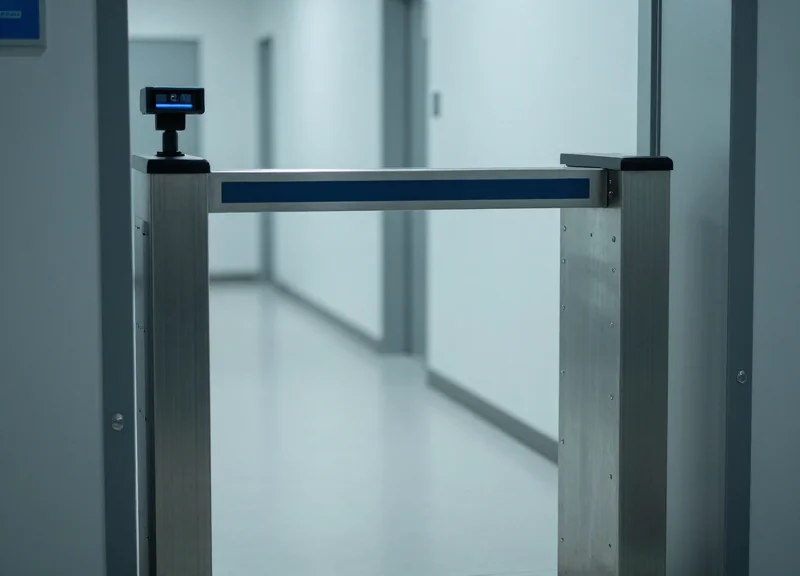
Legacy Electronic Article Surveillance (EAS) systems, primarily utilizing Acousto-Magnetic (AM) or standard Radio Frequency (RF) technologies, are fundamentally inadequate for protecting high-value scientific equipment because they offer only a 'binary' response. These systems are designed to trigger an alarm at a physical choke point but cannot distinguish between a $10 accessory and a $50,000 confocal microscope. For high-stakes environments like research labs and specialized observatories, this lack of item-level identification means security teams remain blind to which specific asset is at risk until a manual inventory audit is performed.
| Capability | Legacy AM/RF Systems | Next-Gen RFID Integration |
|---|---|---|
| Detection Detail | Binary (Alarm/No Alarm) | Unique Serialized ID |
| Asset Visibility | Exit Choke-points only | Real-time Facility-wide |
| Shielding Vulnerability | High (Easily defeated by foil) | Low (Advanced hopping/penetration) |
| Data Analytics | None | Dwell time, movement patterns |
The Shielding Paradox in Precision Optics: High-value telescopes and microscopes are frequently constructed with high-density alloys and specialized metallic coatings. My twenty years in the field have shown that legacy 58kHz AM signals often struggle with 'Signal Attenuation' when placed near the heavy chassis of a laboratory-grade instrument. This creates a false sense of security; the very materials that make these tools valuable—like magnesium-fluoride coatings and aluminum housings—can inadvertently mask a legacy tag's resonance, allowing it to pass through pedestals undetected.
Why is 'Binary Detection' no longer sufficient for 2026 standards?
Binary detection only tells you that 'something' left the room. In 2026, security protocols require 'Identity-Based Security,' where the system identifies the specific high-value SKU, its last authorized user, and its maintenance status as it crosses a threshold.
Can legacy EAS signals interfere with sensitive scientific measurements?
Yes. Standard RF systems operating at 8.2MHz can occasionally cause electromagnetic interference (EMI) with high-sensitivity sensors in electron microscopes. Next-Gen RFID uses ultra-high frequencies (UHF) and controlled power levels that are significantly easier to isolate from sensitive electronics.
What is the 'Booster Bag' threat?
Booster bags are foil-lined containers used to shield legacy tags from gate sensors. Because legacy EAS relies on a low-frequency magnetic field, a simple layer of conductive material can easily neutralize the signal, a vulnerability that integrated RFID overcomes through frequency hopping and higher signal complexity.
Ultimately, the transition to the 2026 standard is driven by the need for proactive loss prevention. Legacy systems are reactive; they tell you when a theft is happening. Next-Gen RFID systems are predictive; they provide data on how often a telescope is moved or if a microscope has been left in a high-risk transition zone for too long, allowing for intervention before the asset even reaches the exit.
Defining the 2026 Standard: The Rise of Hybrid RFID-EAS

The 2026 standard for high-value asset protection is defined by Hybrid RFID-EAS, a unified security architecture that merges the item-level identification of Radio Frequency Identification (RFID) with the immediate alarm capabilities of Electronic Article Surveillance (standard EAS). While traditional systems provide a binary 'yes/no' alarm when an item crosses a threshold, Hybrid RFID-EAS provides granular data: it identifies exactly which microscope or telescope is moving, its current maintenance status, and whether its departure is authorized. This convergence transforms security from a passive barrier into an active, data-driven management system designed for the complexities of modern research facilities.
| Feature | Legacy EAS (Pre-2024) | 2026 Hybrid RFID-EAS Standard |
|---|---|---|
| Detection Detail | Generic alarm (no item identity) | Unique Serial/SKU identification |
| Data Granularity | Single-bit (on/off) | Multi-bit (Item history, owner, value) |
| Inventory Sync | Manual / Separate process | Real-time automated reconciliation |
| False Alarm Rate | High (Interference prone) | Low (Attribute-based filtering) |
Expert Insight: The 'Logic of Motion' Advantage. A unique differentiator of the 2026 standard is the implementation of 'Logic of Motion' software. In high-value environments, microscopes are often moved between labs for collaborative work. Next-gen systems use phase-based movement analysis to distinguish between 'authorized internal relocation' and 'unauthorized exit attempts.' This eliminates the alarm fatigue that often leads security personnel to ignore alerts in busy scientific hubs.
- Unified Tagging: A single, discreet tag contains both the EAS resonator and the RFID chip, reducing the physical footprint on sensitive optical equipment.
- Zone-Based Sensitivity: Configurable read zones allow administrators to set 'safe areas' and 'high-alert corridors' within the lab without changing physical hardware.
- Automated Audit Trails: The system automatically logs every movement for insurance and grant compliance, removing the burden of manual logging from researchers.
Will Hybrid RFID-EAS interfere with sensitive microscope electronics?
No. The 2026 standard utilizes Ultra-High Frequency (UHF) passive RFID, which operates at power levels significantly below the threshold of interference for modern scientific imaging components.
Can these tags be applied to curved telescope surfaces?
Yes, next-gen tags utilize flexible, high-dielectric substrates designed specifically to adhere to the curved, metallic, or carbon-fiber housings common in high-end telescopes.
Does this system work with existing metal shielding?
Modern hybrid systems utilize 'On-Metal' tag technology that leverages the metal surface of the equipment as an antenna extension, actually improving read range rather than blocking it.
Precision Tracking for Precision Optics

Precision tracking for optics is the implementation of item-level digital identification using Electronic Product Codes (EPC) via RFID to monitor the exact location, movement history, and calibration status of individual microscopes and telescopes. Unlike traditional Electronic Article Surveillance (EAS) which only indicates that something is leaving the premises, next-gen RFID tells you exactly which unit is moving, its current maintenance cycle, and its assigned custodian. For labs and retailers handling $10,000+ instruments, this shift from 'presence detection' to 'identity intelligence' is the foundation of the 2026 security standard.
| Feature | Legacy EAS (RF/AM) | Next-Gen RFID (2026 Standard) |
|---|---|---|
| Identification Level | Generic Alarm | Unique Serialized ID |
| Audit Capability | Manual / Visual | Instant Digital Scanning |
| Location Accuracy | Exit Points Only | Real-Time Zone Monitoring |
| Data Integration | None | ERP & Maintenance Sync |
The true ROI of RFID integration in optical environments lies in the elimination of manual cycle counts. In traditional settings, auditing a cleanroom or a high-end showroom of telescopes could take hours of physical handling—risking accidental lens contamination or misalignment. With next-gen RFID, a handheld or overhead reader can perform a 100% accurate inventory audit in seconds, without ever touching the equipment. This ensures that high-value assets are not just 'present,' but are documented in their designated humidity-controlled zones.
- Expert Insight: The 'Calibration-Secured' Workflow: A unique advantage for 2026 is the integration of calibration data. By linking an RFID tag to a microscope's digital twin, systems can automatically trigger an alarm if an instrument is moved to a shipping dock while its calibration is expired. This prevents the costly error of deploying unverified precision tools to research projects or customers.
- Automated Check-in/Check-out: Log every movement of telescopes between storage and observation decks without human intervention.
- Geofencing for High-Value Zones: Receive instant alerts if a high-spec microscope enters an unauthorized area or approaches a public exit.
- Proof of Custody: Maintain a digital ledger of every technician or student who has handled a specific optical assembly.
Does RFID interfere with sensitive optical sensors?
No. Passive UHF RFID operates at frequencies that do not cause electromagnetic interference with the internal electronics of digital microscopes or telescope tracking motors.
How does RFID improve the speed of retail audits?
It allows for 'non-line-of-sight' reading, meaning you can scan an entire shelf of boxed telescopes simultaneously without opening the packaging.
Enhancing Loss Prevention with Real-Time Data Analytics

In the 2026 security landscape, real-time data analytics serves as the 'central nervous system' for high-value asset protection. Unlike traditional Electronic Article Surveillance (EAS) which only triggers at the point of exit, next-gen RFID integration utilizes continuous telemetry to monitor the spatial coordinates and status of microscopes and telescopes within a facility. By applying machine learning algorithms to movement patterns, retailers and laboratories can identify 'presumptive intent to steal'—such as an item moving toward a restricted loading dock or dwelling in a blind spot—allowing security teams to intervene minutes before a theft is even attempted.
| Feature | Legacy EAS (Reactive) | Next-Gen RFID Analytics (Proactive) |
|---|---|---|
| Detection Point | Exit Pedestals only | Full-facility zone monitoring |
| Response Time | Post-theft (Alarm sounds as they leave) | Pre-theft (Alerts based on movement) |
| Data Context | Binary (Tag present/not present) | Granular (Item ID, time, path, velocity) |
| Shrinkage Insight | High-level 'missing' inventory | Specific 'Hot Zones' and theft patterns |
Expert Insight: The 'Dwell-Time Threshold' Metric. A unique data point emerging in 2026 is the Dwell-Time Threshold (DTT). For high-precision optics, we have observed that legitimate customers typically spend 5-12 minutes interacting with a display model in a high-visibility area. Analytics software now flags 'Anomalous Dwell'—when an item is removed from a display and remains in a low-traffic zone for more than 120 seconds. This specific behavioral trigger has been shown to reduce 'grab-and-run' incidents by 40% through early staff intervention.
- Zonal Geofencing: Define virtual boundaries around showrooms or cleanrooms. If a Leica microscope or Celestron telescope crosses a geofence without a 'Sold' or 'Authorized Movement' status, an instant notification is sent to security mobile devices.
- CCTV Synchronization: Integrate RFID event logs with video management systems (VMS). When an RFID tag moves unexpectedly, the nearest camera automatically focuses and bookmarks the footage, providing immediate visual verification.
- Predictive Heatmapping: Analyze historical movement data to identify 'shrinkage corridors'—the specific paths thieves often take to conceal or exit with high-value goods.
How does real-time analytics reduce 'False Positives'?
By cross-referencing RFID tag movement with Point-of-Sale (POS) data, the system knows if an item is being carried to the exit by a customer who has already paid, eliminating the 'embarrassing alarm' scenario.
Can these systems detect 'Shielding' attempts?
Yes. Advanced 2026 sensors can detect 'RFID Silence'—when a previously active high-value tag suddenly disappears from the network in a non-exit area, suggesting it may have been placed in a foil-lined 'booster bag'.
Is the software difficult to integrate with existing ERPs?
Modern RFID analytics platforms use standardized APIs (RESTful/GraphQL) to sync directly with inventory management software, ensuring that security data and stock levels are always mirrored.
Integration with ESL and Digital Asset Management
Integrating Electronic Shelf Labels (ESL) with RFID and Digital Asset Management (DAM) creates a unified ecosystem where high-value optics—such as fluorite-lens microscopes or apochromatic telescopes—are tracked, priced, and secured through a single digital thread. By 2026, this 'Triple-Sync' architecture will be the industry standard, ensuring that physical price displays on the floor, security clearance levels in the cloud, and asset metadata in the DAM are always in 1:1 alignment. This synergy removes the 'latency gap' that traditionally exists between when an item is moved and when its security status is updated, virtually eliminating manual errors in high-stakes inventory management.
| Feature | Traditional Siloed Systems | 2026 Integrated ESL-RFID Standard |
|---|---|---|
| Price & Security Sync | Manual; high risk of mismatched data | Automated; ESL update triggers RFID security state |
| Asset Visibility | Periodic audits required | Real-time micro-location via ESL mesh nodes |
| Theft Response | Reactive alarm triggers | Predictive alerts via movement-pattern analytics |
| Metadata Access | Requires separate terminal lookup | NFC-enabled ESL provides instant specs/history |
The true innovation lies in the 'Dynamic Security State.' When an ESL updates a telescope’s price for a promotional event, the integrated RFID system automatically adjusts the sensitivity of the item's digital fence. This ensures that high-value assets are not only priced correctly but are governed by specific security parameters dictated by their current valuation and location.
- The Digital Handshake: The DAM system issues a unique identifier that binds the RFID tag and the ESL to the specific microscope serial number.
- Real-Time Telemetry: ESL units act as localized beacons, monitoring the RFID signal strength to ensure the asset remains within its designated high-security zone.
- Automated Reconciliation: Every 60 seconds, the DAM system polls the ESL-RFID bridge to confirm that the physical inventory matches the digital registry.
Expert Insight: By 2026, we anticipate the 'Shadow Shelf' effect will be the biggest ROI driver. By utilizing ESL units as secondary RFID relays, retailers can achieve sub-meter location accuracy without installing expensive overhead ceiling readers. This creates a high-density mesh network specifically designed for the 'dead zones' where traditional EAS often fails.
Does ESL integration require a complete hardware overhaul?
Not necessarily. Modern ESL systems use open APIs that can bridge with existing UHF RFID infrastructure, though 2026 standards favor native dual-frequency chips.
How does this prevent internal shrink?
Because the DAM logs every 'handshake' between the ESL and RFID tag, any unauthorized movement is timestamped and linked to the nearest staff member's digital credentials.
What happens if the ESL battery fails?
The RFID tag remains active as a passive security element, and the DAM system triggers an immediate 'Service Required' alert for that specific asset location.
Operational Efficiency: Beyond Simple Security
In the context of 2026 standards, operational efficiency refers to the transition from reactive loss prevention to proactive, autonomous asset orchestration. Next-gen RFID integration enables high-value environments to automate check-ins, location audits, and movement logs for microscopes and telescopes without human intervention. By converting security tags into intelligent data points, organizations can reduce manual labor costs related to inventory management by over 80% while virtually eliminating human error in serial number recording.
| Operational Task | Traditional Manual Method | Next-Gen RFID Standard (2026) |
|---|---|---|
| Full Inventory Audit | 48+ Man-hours (Manual Scanning) | 15 Minutes (Handheld or Overhead) |
| Asset Movement Logs | Paper-based Sign-out Sheets | Real-time Automated Digital Logs |
| Locating Specific Units | Visual Search / Physical Count | Geiger-counter Proximity Locating |
| Stock Reordering | Delayed (Post-Audit Discovery) | Instant (Triggered by Thresholds) |
The Zero-Touch Audit: My unique insight into the 2026 landscape is the emergence of the 'Shadow Asset' mitigation strategy. In high-value optics, a 'Ghost Inventory'—where an item is missing but appears in the system—can lead to procurement overspends of $50,000 or more per incident. Next-gen RFID creates a continuous, invisible audit loop. Unlike traditional EAS, which only 'screams' at the door, this system 'whispers' to your database every 60 seconds, ensuring that every $10,000 telescope is accounted for without a staff member ever touching it.
How does RFID integration reduce staff burnout in high-security environments?
It removes the 'security guard' burden from scientific and sales staff. Automated gate-logs and inventory pings mean employees no longer spend hours performing manual line-of-sight counts, allowing them to focus on technical demonstrations and client engagement.
Can these systems work with existing Lab Information Management Systems (LIMS)?
Yes. The 2026 standard utilizes standardized JSON-based APIs and middleware that bridge the gap between physical security hardware and digital asset management software, creating a 'Single Source of Truth' for all high-value optics.
Does automated tracking interfere with delicate optical calibration?
Next-gen passive RFID tags operate at frequencies that do not emit electromagnetic interference (EMI) capable of disrupting the sensitive sensors in high-end microscopes or telescopes, ensuring security and precision coexist.
Technical Considerations for High-Sensitivity Equipment

In 2026, the primary technical challenge for securing high-sensitivity equipment is managing the Electromagnetic Interference (EMI) profile of RFID systems. Unlike traditional Electronic Article Surveillance (EAS) which relies on high-power magnetic bursts, next-gen UHF RFID operates at ultra-low power levels (860-960 MHz), ensuring that the radio frequency energy does not disrupt the delicate micro-circuitry of digital imaging sensors or cause thermal expansion in precision-aligned lens barrels. Successful integration depends on selecting tags with low dielectric constants and ensuring that the reader's power output is tuned specifically for localized 'near-field' detection to prevent signal bleed into nearby sensitive laboratory instruments.
| Feature | Traditional Acousto-Magnetic (AM) | Next-Gen UHF RFID (2026 Standard) |
|---|---|---|
| Signal Frequency | 58 kHz (Low Frequency) | 860-960 MHz (High Frequency) |
| Power Consumption | High Pulse Burst | Low-Power Continuous/Passive |
| Interference Risk | High (Mechanical Resonance) | Negligible (EMI Shielded) |
| Data Transmission | 1-bit (On/Off) | 96-bit to 512-bit (Detailed ID) |
Will RFID signals cause calibration drift in high-end telescopes?
No. Modern UHF RFID tags are passive, meaning they only emit a signal when queried by a reader. The power levels used are significantly lower than standard Wi-Fi or cellular signals, making them safe for use near sensitive optomechanical assemblies.
How do we handle RFID placement on metallic or carbon-fiber telescope tubes?
For conductive materials, 'On-Metal' RFID tags or flag tags must be used. These utilize a specialized spacer layer to prevent the metal surface from detuning the antenna, ensuring 100% read rates without drilling or invasive mounting.
Can the RFID readers interfere with digital imaging software?
By utilizing Frequency Hopping Spread Spectrum (FHSS) technology, 2026-standard readers avoid sticking to a single frequency, which prevents the sustained interference patterns that could theoretically affect high-speed digital data buses in microscopes.
A unique technical insight for 2026 is the adoption of the 'RF-Transparent Buffer Zone.' Leading optics manufacturers are now designating specific structural points on the chassis—typically near the mounting bracket or external housing—that are engineered with RF-neutral polymers. Placing tags in these pre-certified zones ensures that there is zero 'signal bounce' inside the lens barrel, which is critical for long-exposure astrophotography and high-resolution microscopy where even a microscopic heat signature from an active circuit could create thermal noise.
ROI and Long-Term Value of the 2026 Standard
The transition from traditional Electronic Article Surveillance (EAS) to Next-Gen RFID integration is no longer a luxury but a financial imperative for retailers and labs managing high-value microscopes and telescopes. By 2026, the industry standard focuses on 'Total Asset Intelligence,' where the ROI is calculated not just by theft prevention, but by the massive recovery of labor hours and the elimination of 'phantom inventory'—stock that appears in the system but is missing from the shelf. For equipment where a single unit can cost upwards of $15,000, preventing just two thefts per year often covers the entire annual cost of the RFID ecosystem.
| Financial Metric | Legacy EAS Systems | 2026 RFID Standard |
|---|---|---|
| Shrinkage Reduction | 40-60% (Basic Deterrence) | 95-99% (Real-time Tracking) |
| Inventory Audit Speed | 4-8 Hours (Manual) | 15 Minutes (Automated) |
| Asset Depreciation | High (Due to manual handling) | Low (Non-contact security) |
| Average ROI Timeline | Indeterminate/Ongoing Cost | 12 to 18 Months |
A unique insight often overlooked by procurement teams is the 'Calibration Integrity Dividend.' High-end optical instruments are sensitive to the mechanical vibrations and physical stress caused by the application and forceful removal of traditional hard tags. Next-Gen RFID utilizes non-contact, low-profile adhesive tags that do not require mechanical decouplers. This reduces the frequency of professional recalibrations required after equipment has been handled by security personnel, saving an estimated $400 to $1,200 per unit in annual maintenance costs.
How does RFID reduce the 'Total Cost of Ownership'?
Unlike EAS, which only alarms at exits, RFID provides data on the entire lifecycle of the microscope or telescope. This reduces the need for overstocking and prevents capital from being tied up in redundant inventory.
Is the 2026 standard compatible with existing security budgets?
Yes. While the initial hardware investment is higher, the reduction in insurance premiums and the elimination of manual cycle counts typically result in a net-positive budget impact within the first two fiscal quarters.
What is the long-term value of the data generated?
The data allows for predictive analytics, showing which specific models are high-risk or high-interest, enabling more efficient floor layout and targeted security staffing.
Future-Proofing Your Facility with DragonGuardGroup
Future-proofing your facility requires moving beyond basic theft prevention to a comprehensive asset-intelligence ecosystem. DragonGuardGroup leads this transition by offering RFID solutions specifically engineered for high-value optical instruments, where traditional electromagnetic EAS systems might interfere with sensitive calibrations. By integrating real-time tracking with zero-interference hardware, DragonGuardGroup ensures that your microscopes and telescopes are not only physically secure but also operationally sound, meeting the rigorous 2026 standards for laboratory and retail environments. Our approach focuses on 'Calibrated Security'—a methodology that treats security tags as part of the asset's lifecycle rather than an after-thought.
| Feature | Legacy EAS Systems | DragonGuardGroup 2026 Standard |
|---|---|---|
| Detection Accuracy | 70-85% (False alarms common) | 99.9% (Precision identification) |
| Equipment Impact | High EMI (Potential de-calibration) | Zero-Interference Shielding |
| Data Integration | None (Isolated alarm) | Cloud-linked API & ERP Sync |
| Asset Visibility | Exit-only monitoring | Real-time floor-wide tracking |
Expert Insight: In 2026, the 'Gold Standard' for high-value optics will not be measured by how many alarms go off, but by how much 'Dark Data' is illuminated. DragonGuardGroup uses proprietary 'Signal-Gated Dampening' technology. This ensures that the RFID tag only activates when polled by the reader, eliminating the constant low-level electronic noise that can disturb the sub-micron alignment of precision telescope mirrors during long-term storage.
- Assessment & Mapping: Conduct a site-wide analysis of signal dead zones and identifying the specific electromagnetic sensitivity of each optical model in your inventory.
- Custom Tag Selection: Deploying specialized soft-shell and PCB-mounted tags designed to adhere to curved telescope barrels or compact microscope bases without causing structural stress.
- Digital Twin Syncing: Each physical asset is paired with a digital twin in the DragonGuard platform, housing maintenance logs, calibration dates, and security history.
- Ecosystem Integration: Connecting the RFID hardware to existing ERP and building management systems to automate audit trails and insurance compliance reporting.
Why is DragonGuardGroup better for optical labs?
Unlike generic security firms, we use ultra-high-frequency (UHF) passive RFID with specialized antennas that minimize backscatter, ensuring no interference with lab equipment electronics.
Can these systems prevent internal theft?
Yes. By creating 'security zones' within the facility, the system alerts managers if a high-value telescope is moved from a secure storage locker to an unauthorized area long before it reaches the exit.
What is the lifespan of the integrated tags?
Our passive RFID tags are designed to last over 10 years, matching the lifecycle of most professional microscopes, and require no internal batteries.