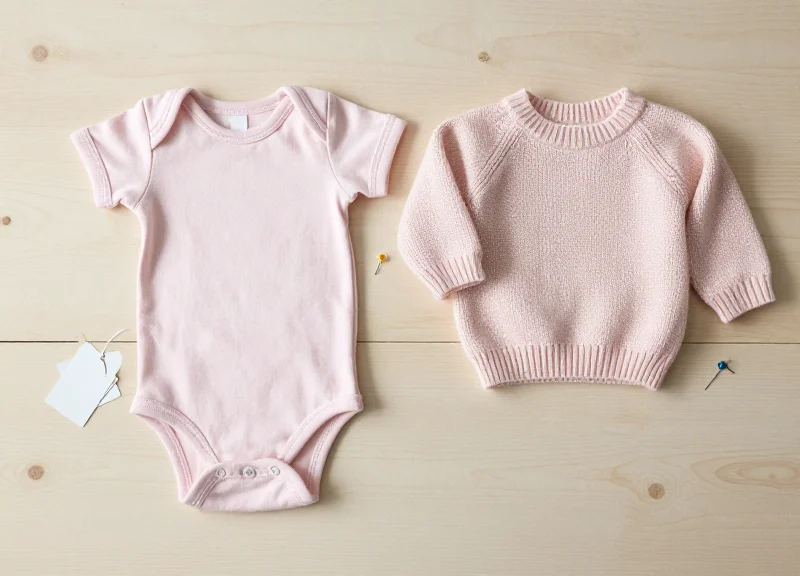
In the world of high-end fashion, the aesthetic and physical integrity of a garment are as valuable as the brand name itself. Traditional security measures often present a dilemma: how do you protect expensive inventory from theft and mismanagement without leaving unsightly holes or snags in delicate fabrics like silk, cashmere, and fine lace? The answer lies in the strategic implementation of non-damaging RFID pins and discreet tagging systems. This comprehensive guide provides a veteran's perspective on modernizing your luxury boutique's inventory processes, ensuring that every piece of designer apparel is tracked with precision while remaining in pristine condition for the discerning customer.
The Evolution of Luxury Inventory Management

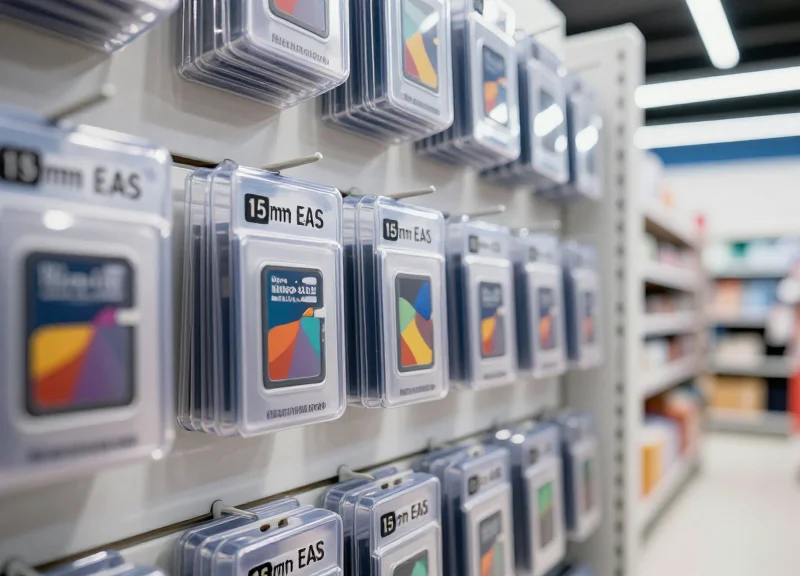
The evolution of luxury inventory management represents a fundamental shift from reactive loss prevention to proactive asset intelligence. In the high-end apparel sector, this transition has been driven by the need to balance 99% inventory accuracy with the 'sanctity of the stitch'—the requirement that tracking hardware must never compromise the physical integrity of delicate materials like silk, lace, or fine cashmere. Modern systems have moved beyond traditional Electronic Article Surveillance (EAS) toward non-damaging RFID (Radio Frequency Identification) solutions that provide real-time data visibility without the risk of leaving permanent pinholes or snags.
| Feature | Legacy Systems (Manual/EAS) | Modern Luxury RFID |
|---|---|---|
| Primary Goal | Theft Deterrence | Omnichannel Inventory Visibility |
| Fabric Impact | High risk of pinholes/snags | Zero-impact, non-damaging pins |
| Data Capacity | None (On/Off state) | Unique ID, SKU, and Provenance |
| Tagging Aesthetic | Bulky, visible 'ink tags' | Discreet, luxury-branded or hidden |
Expert Insight: In my two decades observing Silicon Valley's impact on retail, the most significant breakthrough isn't just the miniaturization of chips, but the emergence of 'Invisible Logistics.' For a legacy fashion house, a $0.50 security tag that ruins a $5,000 gown represents a catastrophic failure of brand equity. The industry is currently pivoting toward tags that support the circular economy; non-damaging RFID pins allow for seamless authentication during resale, preserving the garment's secondary market value by ensuring the fabric remains pristine from the first point of sale.
Why did luxury brands resist traditional RFID for so long?
Initial RFID implementations relied on thick, industrial pins designed for denim or heavy wool. These caused 'mechanical wounding' in delicate weaves, leading to high damage rates and markdown losses that outweighed the inventory benefits.
How does 'discreet tagging' differ from standard tagging?
Discreet tagging integrates the RFID inlay into the brand's existing care labels or uses magnetic, non-piercing attachments. This ensures the technology is functionally present but aesthetically invisible to the client.
What is the 'Single Version of Truth' in modern retail?
It refers to the real-time synchronization of floor stock and warehouse inventory, enabled by RFID, which allows luxury retailers to fulfill online orders from store stock without the risk of 'ghost inventory' cancellations.
Why Traditional Tagging Fails High-End Apparel
Traditional security tagging systems were engineered for 'big box' retail where the primary goal is theft deterrence at the expense of garment aesthetics. In the luxury sector, this approach is fundamentally flawed. Standard EAS (Electronic Article Surveillance) tags rely on thick, industrial-grade steel pins that create permanent structural voids in delicate weaves. When a 1.5mm pin is forced through a 12-momme silk blouse or a high-gauge cashmere knit, it doesn't just pass through; it severs micro-fibers, resulting in irreparable 'pin-hole memory' that survives even professional steaming and diminishes the item's resale value.
| Damage Category | Traditional EAS Tags | Non-Damaging RFID Pins |
|---|---|---|
| Fiber Displacement | Permanent holes and severed threads | Smooth-bore needles part fibers safely |
| Weight Stress | 15g - 25g (causes fabric drag) | 3g - 8g (ultra-lightweight) |
| Application Area | Visible seams only | Discreet placement anywhere |
| Long-term Storage | Asymmetrical silhouette stretching | No impact on garment drape |
Beyond the physical damage, the 'hidden cost' of traditional tagging manifests in your bottom line. Luxury consumers expect perfection; a single visible pin-hole discovered during a fitting can terminate a multi-thousand dollar sale and tarnish the brand's reputation for quality. This creates a conflict between loss prevention and merchandise integrity.
- The 'Gravitational Shear' Effect: A unique insight from 20 years in high-end retail: Heavy tags exert constant 'shear stress' when garments are hung. Over months, this weight pulls the fabric grain out of alignment, causing permanent hemline drops and shoulder distortion that can never be corrected.
- Markdown Inefficiency: Retailers often lose 20-50% of an item's margin when forced to sell 'damaged by tag' inventory in clearance outlets.
- Customer Trust Erosion: Modern luxury shoppers are highly attuned to detail; seeing a bulky, industrial plastic tag on a couture piece creates a psychological disconnect from the luxury experience.
Can't I just put the tag on the care label?
While it protects the fabric, it is a high-security risk. Thieves can easily snip a care label. Furthermore, the weight of a traditional tag on a care label often causes the label itself to tear or pull at the side seam.
What makes a pin 'non-damaging'?
Non-damaging pins use a 'tapered-tip' geometry and a high-polish finish. Unlike standard pins which are punched out of steel, these are precision-machined to ensure they slide between the warp and weft of the fabric rather than cutting through them.
Selecting the Right Non-Damaging RFID Pins
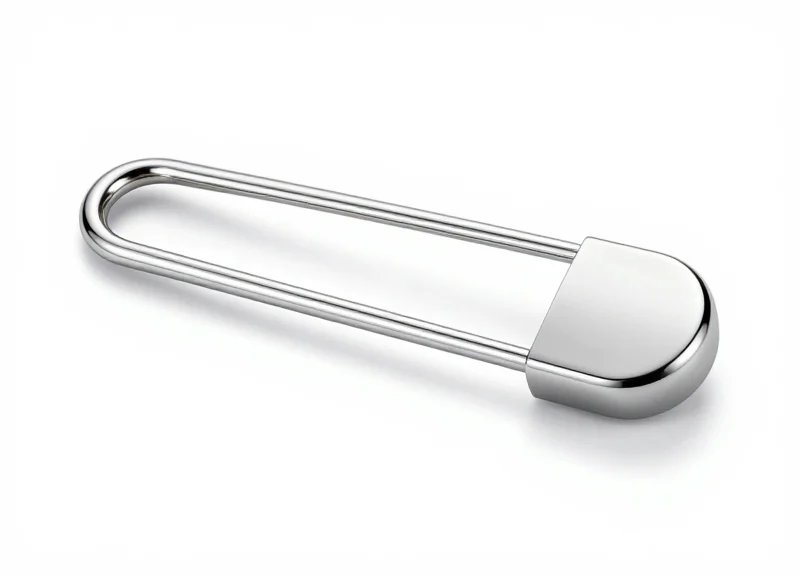
Selecting the right non-damaging RFID pins involves choosing hardware specifically engineered with ultra-fine, polished needles (typically 0.6mm to 0.8mm) and conical tips that glide between fabric fibers rather than cutting through them. For designer apparel, these pins must combine high-frequency (UHF) tracking capabilities with a lightweight, ergonomic housing that prevents fabric sagging or 'pinhole' stretching during long-term storage or floor display.
| Feature | Standard Retail Pin | Luxury RFID Pin |
|---|---|---|
| Needle Diameter | 1.2mm - 1.5mm | 0.6mm - 0.8mm |
| Tip Geometry | Chisel or Beveled | Smooth Conical |
| Surface Finish | Nickel Plated | Medical-Grade Polished Steel |
| Fabric Impact | Permanent fiber breakage | Temporary fiber displacement |
- Audit Fabric Sensitivity: Categorize your inventory by GSM (grams per square meter) and weave density. Ultra-fine pins are mandatory for fabrics under 100 GSM, such as silk chiffon, organza, or fine lace.
- Verify Needle Tip Profile: Ensure the manufacturer specifies a 'conical' tip. Unlike chisel tips that act like tiny knives, conical tips part the weave, allowing the fabric to 'self-heal' once the pin is removed.
- Evaluate Housing Weight: Select a lightweight RFID tag housing (ideally under 5 grams) to prevent gravitational pull on delicate shoulders and collars, which can lead to permanent garment distortion.
- Calibrate Locking Tension: The locking mechanism must be firm enough to prevent unauthorized removal but calibrated to avoid 'compression bruising'—a common issue when tagging velvet or suede.
Expert Insight: The 'Micro-Burr' Protocol. In my 20 years of high-end logistics, I have seen $5,000 gowns ruined by invisible manufacturing defects. Before deploying a new batch of RFID pins, perform a 'Micro-Burr Test': Drag the needle tip across a pair of high-denier silk stockings. If it snags even slightly, the manufacturing polish is insufficient. Only use pins that pass this tactile friction test to ensure 100% fabric safety.
What is the best needle gauge for silk?
For silk and high-twist wool, a gauge of 0.6mm to 0.7mm is the gold standard for non-damaging entry.
Are these pins reusable across different collections?
Yes, but they must be inspected every cycle. Even stainless steel can develop micro-scratches over time that can catch on fine threads.
Do thinner needles affect the RFID read range?
No. The read range is determined by the tag's internal antenna and the reader's power; the physical pin is merely the fastener and does not interfere with the UHF signal.
Phase 1: Pre-Implementation Planning and Audit
Phase 1 of RFID implementation is the strategic foundation where luxury retailers categorize inventory by fabric fragility and map the store's physical radio-frequency (RF) environment. This stage moves beyond simple counting to establish 'Fabric Sensitivity Tiers' and identify 'Shadow Zones'—areas with heavy marble, metal, or glass fixtures that can interfere with RFID signal propagation. By auditing these factors before deployment, you ensure that non-damaging pins are applied to the correct seams and that read rates remain at 99.9% across the entire boutique floor.
In my two decades working with high-growth retail tech in Silicon Valley, the most common failure I’ve seen isn't the hardware; it's the lack of a 'Fabric-First' audit. High-end apparel requires a different signal-to-noise ratio strategy than fast fashion because the materials themselves (like metallic embroidery or heavy silk) can impact the RFID tag's performance. You aren't just tagging a product; you are integrating a digital identity into a delicate asset.
- Inventory Sensitivity Tiering: Group your current stock into three categories: Ultra-Delicate (silk, lace, chiffon), Structured (blazers, denim, leather), and Accessories. This dictates which gauge of non-damaging needle is required for each group.
- The 'Discreet Placement' Mapping: Determine standardized tagging locations for every garment type. For designer apparel, this is typically the left-side interior seam near the waist or the brand label, ensuring the tag is invisible to the customer but accessible to handheld readers.
- RF Environment Survey: Identify potential interference sources such as security pedestals, point-of-sale terminals, and metal-heavy display racks. This helps in calibrating reader sensitivity levels.
| Fabric Tier | Material Example | Pin Gauge Recommendation | Placement Priority |
|---|---|---|---|
| Tier 1: Ultra-Fragile | Chiffon, Tulle, Fine Silk | 0.6mm - 0.8mm (Ultra-Fine) | Hidden Seam / Care Label |
| Tier 2: Premium Wear | Cashmere, Fine Wool, Satin | 0.8mm - 1.0mm | Interior Side Seam |
| Tier 3: Structured | Denim, Leather, Heavy Cotton | 1.2mm (Standard Security) | Waistband or Yoke |
Why is a fabric audit more important for RFID than EAS?
Electronic Article Surveillance (EAS) is only for security. RFID is for data accuracy. If a tag is placed poorly and shielded by heavy fabric or metal hardware, it won't be read, leading to 'ghost' inventory discrepancies that plague luxury boutiques.
How do I ensure the tags remain discreet during fittings?
Our recommended strategy is 'In-Seam Integration.' During the audit, identify the intersection of the side seam and the lining. Placing the tag here ensures it remains flush against the garment, preventing it from bulging or irritating the client's skin during a try-on.
Should I audit my back-stock storage differently than the floor?
Yes. Back-stock typically has higher 'tag density,' which can cause signal collisions. Your audit should account for how closely items are packed on the racks to determine if you need specialized 'shielded' antennas in the stockroom.
Step-by-Step Implementation: The Tagging Process
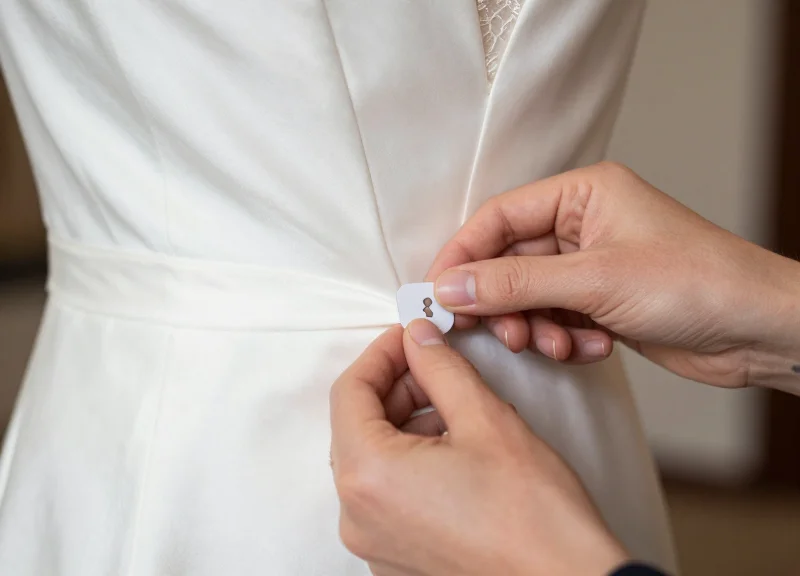
Implementing RFID tagging for designer apparel requires a surgical approach where precision outweighs speed. The process involves utilizing ultra-fine-gauge needles (typically 0.6mm or smaller) and specialized non-damaging pins that penetrate fabric fibers rather than cutting through them. By focusing on structural anchor points and discreet placement, retailers can maintain the 'boutique' aesthetic while achieving 99.9% inventory accuracy.
- Fiber Alignment and Inspection: Before insertion, inspect the garment’s weave. For delicate silks or satins, gently massage the fibers to ensure a clear path for the needle. Always tag at a reinforced seam or where the care label is attached to provide additional structural support for the pin's weight.
- Precision Needle Insertion: Using a pneumatic or ergonomic manual applicator, insert the non-damaging pin at a 90-degree angle to the seam. Avoid piercing the main body of the fabric; instead, aim for the seam allowance where the material is doubled or tripled in thickness.
- Locking and Tension Calibration: Engage the locking mechanism. The tag should be secure enough to prevent sliding—which can cause friction damage—but not so tight that it pinches or puckers the luxury textile.
- Discreet Placement Verification: Verify that the tag is hidden from the external view and doesn't disrupt the garment's natural 'drape.' For evening gowns, this often means placement within the inner lining of the back zip or the underarm seam.
| Garment Category | Optimal Tag Location | Needle Gauge Recommendation |
|---|---|---|
| Silk & Chiffon Gowns | Inner zipper tape or care label seam | Ultra-Fine (0.5mm) |
| Structured Blazers | Inside the shoulder pad or interior pocket | Standard Fine (0.8mm) |
| Cashmere & Fine Knits | Underarm seam junction (double-layer) | Specialized Ball-Point |
| Leather & Suede | Pre-existing perforation or label stitching | N/A (Adhesive RFID recommended) |
Expert Insight: The Seam-Shadow Technique. A common mistake in luxury tagging is ignoring the 'shadow' of the garment. High-end lighting in boutiques can cast shadows that make bulky tags visible through light fabrics. By utilizing 'Seam-Shadowing'—placing the RFID chip directly behind the thickest part of a structural seam—you eliminate the visual profile of the hardware, ensuring the customer sees only the design, never the security measure.
Will these pins leave 'memory holes' in the fabric?
No. When using high-tapered, non-damaging needles, the fibers are temporarily displaced rather than broken. A quick steam treatment after tag removal will return the fibers to their original orientation.
Can the tags be sensed through metal embellishments?
Yes, provided you use 'on-metal' optimized RFID chips or ensure the tag is placed at least 1cm away from heavy metallic sequins or hardware to prevent signal detuning.
The Power of Discreet Tagging for Brand Experience
Discreet tagging in luxury retail is the strategic integration of RFID technology into a garment's architecture in a way that minimizes visual and tactile disruption. Unlike traditional, bulky security tags that scream theft prevention, discreet tagging focuses on maintaining the brand's 'Invisible Luxury'—ensuring that the technology remains hidden from the customer's sight while providing 99.9% inventory accuracy behind the scenes. This approach preserves the garment's natural drape, hand-feel, and aesthetic value, which are the cornerstones of the designer apparel experience.
| Feature | Traditional Security Tagging | Discreet RFID Tagging |
|---|---|---|
| Visual Impact | Obtrusive; interrupts garment design | Nearly invisible; hidden in seams or pockets |
| Customer Perception | Signals distrust/theft prevention | Signals high-tech, seamless service |
| Tactile Experience | Heavy; creates fabric drag | Lightweight; preserves original drape |
| Fitting Room Flow | Interferes with try-on/aesthetic | Allows for frictionless smart-mirror interaction |
In the world of high-end fashion, the customer's emotional connection to a piece is fragile. A heavy plastic tag clipped to a delicate silk collar can instantly break the spell of exclusivity. By utilizing ultra-slim RFID pins and placing them in low-visibility zones—such as within the lining of a pocket or along the interior seam of a hem—retailers can maintain the 'uninterrupted silhouette.' This ensures that when a client looks in the mirror, they see the designer's vision, not a security device. This preservation of brand prestige is directly correlated to higher conversion rates in the fitting room.
Does discreet tagging affect the accuracy of inventory counts?
Not at all. RFID signals are omnidirectional and can easily penetrate fabric layers. As long as the tag is not encased in metal or conductive foil, it can be read accurately from several meters away, even if hidden deep within a garment's structure.
How does this impact the unboxing experience for luxury e-commerce?
Discreet tags can be left on for shipping without affecting the presentation. This allows for seamless 'buy-online-return-in-store' (BORIS) workflows, as the inventory is already tracked without the customer needing to remove a bulky security device before use.
Can discreet tags be used to trigger interactive store elements?
Yes. One of the greatest benefits is the ability to trigger 'Smart Mirrors' in fitting rooms. Because the tag is discreet, the customer experiences the magic of the mirror identifying their item and suggesting pairings without the 'creepy' factor of seeing a large security tag.
Expert Insight: From a marketing psychology perspective, the shift to discreet tagging moves the technology from a 'Negative Friction' (prevention of theft) to a 'Positive Utility' (personalization of service). When your staff can locate a specific size in the backroom using a handheld RFID reader without ever leaving the customer's side, the technology isn't just protecting the item; it's augmenting the human relationship that defines luxury retail. The tag becomes a silent concierge, rather than a loud security guard.
Software Integration: Connecting RFID to Your ERP
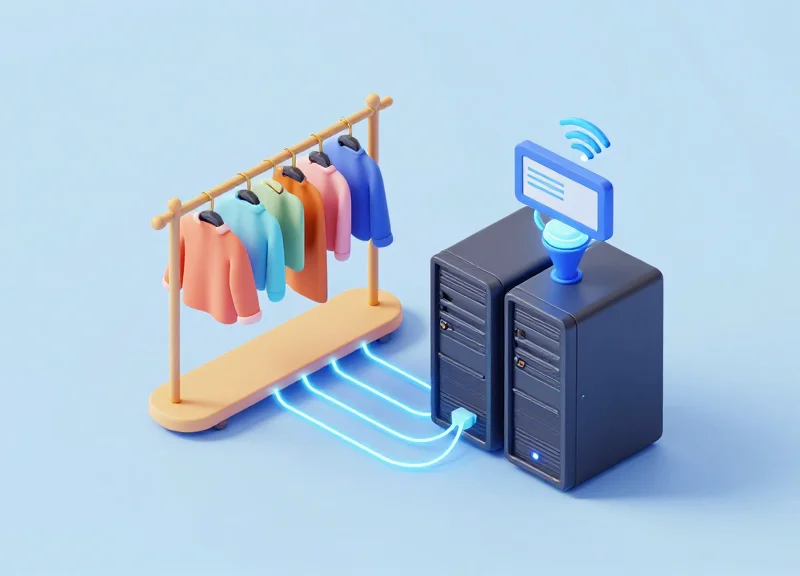
Integrating RFID hardware with an Enterprise Resource Planning (ERP) system transforms physical inventory into a dynamic digital stream. This connection acts as the 'digital nervous system' of a luxury boutique, where every discreet tag interaction is instantly translated into actionable data. By utilizing middleware to map Electronic Product Codes (EPC) to specific Stock Keeping Units (SKUs), retailers achieve a live view of stock levels, preventing the 'lost sale' phenomenon common in high-end apparel where items are often misplaced but technically in stock.
- Select the Middleware Layer: Implement a robust RFID middleware that filters raw 'noise' from readers, ensuring only clean, validated tag data reaches your ERP.
- Map EPC to SKU Data: Establish a one-to-one mapping protocol. Unlike barcodes, each RFID tag has a unique serial number, allowing you to track the specific history of a single Hermès scarf rather than just the generic SKU.
- API Configuration and Webhooks: Configure RESTful APIs or Webhooks to trigger ERP updates the moment a non-damaging pin passes through a portal or is scanned by a handheld reader.
- Synchronization and Conflict Resolution: Set up logic to handle multi-location data sync, ensuring that an item sold in a New York flagship is instantly reflected as 'unavailable' for a London stylist's request.
| Integration Method | Data Latency | Best Use Case | Complexity |
|---|---|---|---|
| Direct API Push | Near Real-Time | High-volume flagship stores | High |
| Cloud Middleware | 1-5 Seconds | Multi-boutique global networks | Medium |
| Batch Upload | Scheduled | Low-traffic showroom environments | Low |
Expert Insight: In the luxury sector, the greatest risk isn't just theft, but 'inventory drift'—the gap between what the computer says and what is actually on the hanger. A unique strategy I call the 'Ghost Buffer' involves setting your ERP to automatically flag any item that hasn't been detected by a floor-wide RFID sweep in 48 hours. This proactive alert allows staff to find misplaced designer pieces before a customer asks for them, maintaining the 'frictionless' service expected in high-end retail.
Can RFID integration handle 'Reserved' items for VIP clients?
Yes. By tagging an item as 'Reserved' in the ERP, the RFID system can trigger an alert if that specific item is moved toward the exit or back-of-house, ensuring VIP inventory remains protected.
Will I need to replace my existing ERP?
Usually, no. Most modern ERPs like NetSuite, SAP, or Microsoft Dynamics have open APIs that can accept RFID data via a third-party connector or custom middleware.
What happens if the internet goes down at the boutique?
Modern RFID middleware should include 'Store-and-Forward' capabilities, which cache the tag reads locally and syncs them to the ERP once connectivity is restored, ensuring no data loss.
Staff Training and Best Practices for Handling Luxury RFID
Staff training for luxury RFID implementation is the bridge between sophisticated hardware and a flawless customer experience. Unlike standard retail environments, luxury boutiques require a 'White Glove' approach where the technology remains invisible and the garment's integrity is never compromised. Successful training programs empower sales associates to handle ultra-fine RFID pins with precision, ensuring that the act of scanning or removing a tag is as sophisticated as the garment itself. By prioritizing fabric-specific handling and discreet scanning workflows, retailers can maintain 99.9% inventory accuracy without sacrificing the tactile luxury their clients expect.
| Feature | Standard Retail Approach | Luxury RFID Best Practice |
|---|---|---|
| Tag Placement | Uniform visibility for speed. | Discreet placement in seams or under labels. |
| Removal Tool | Fixed magnetic detacher at POS. | Handheld, cushioned magnetic removers for ergonomic control. |
| Fabric Handling | Generic piercing of any area. | Fiber-separation technique (weaving between threads). |
| Customer Interaction | Focus on loss prevention. | Focus on availability and personalized service. |
- The Fiber-Separation Technique: Train staff to never 'punch' a pin through a garment. Instead, they should gently wiggle the ultra-fine needle between the weave of the fabric to avoid breaking threads, especially in high-gauge silks and fine knits.
- Multi-Point Integrity Check: Implement a mandatory check during both tagging and removal. Associates must inspect the insertion point for any signs of 'pulling' or distortion before the item returns to the floor or is handed to the client.
- Discreet Scanning Etiquette: Utilize handheld RFID readers at a distance of 12-18 inches to avoid physical contact during cycle counts, ensuring the 'curated' look of the showroom remains undisturbed by bulky equipment.
- The 'Second Look' Protocol: Before bagging a sold item, the associate performs a final visual sweep of the pin site under high-intensity POS lighting to guarantee the fabric has 'healed' (returned to its original state).
Expert Tip: I recommend implementing a 'Tagging Tier' system. Not all garments should be tagged the same way. Categorize your inventory into 'Structure-Resilient' (leathers, heavy wools) and 'High-Fragility' (chiffon, lace). Use different pin gauges for each category to ensure the lightest possible touch for your most delicate pieces.
What should an associate do if a pin feels 'stuck'?
Never force the removal. Staff should be trained to use a specialized lubricant pen on the pin shaft or seek a senior manager to use a high-strength precision detacher to avoid tearing the fabric.
How do we handle RFID tags during a VIP fitting?
For top-tier clients, use the 'Temporary Silence' method: remove the RFID tags prior to the fitting to enhance the garment's drape and aesthetic, then re-tag immediately after the session using the same pin holes.
Can RFID scanning interfere with electronic medical devices?
Standard passive UHF RFID readers used in retail are low-power and safe, but staff should be trained to maintain a 12-inch clearance from clients as a standard professional courtesy.
Measuring ROI: Shrinkage Reduction and Efficiency Gains

Measuring the Return on Investment (ROI) for luxury RFID implementation involves quantifying two distinct pillars: Loss Prevention (reducing physical shrinkage and fabric damage) and Operational Velocity (drastic reduction in labor hours for stocktaking). For designer apparel, a successful ROI calculation must account for the high unit value of goods, where preventing the theft or damage of just five $2,000 silk gowns can pay for an entire floor's RFID hardware in a single quarter.
| Metric | Traditional Security Tags | Non-Damaging RFID Pins |
|---|---|---|
| Inventory Accuracy | 65% - 75% | 99.5% - 99.9% |
| Stocktake Time (1k items) | 8 - 12 Labor Hours | 15 - 20 Minutes |
| Fabric Damage Rate | 1% - 3% (Punctures/Snags) | <0.01% (Precision Needles) |
| Shrinkage Reduction | Moderate (Visible Deterrent) | High (Real-time Gate Alerts) |
To accurately capture the gains, retailers should utilize a multi-dimensional formula that looks beyond simple theft prevention. In the luxury sector, 'efficiency' translates directly into client-facing time. When a sales associate spends 20 minutes instead of 8 hours on inventory, those recovered hours are redirected toward high-touch clienteling, which typically increases the Average Transaction Value (ATV).
- Establish the Baseline: Document your current shrinkage rates (including internal theft and 'mysterious disappearances') and the average cost of markdowns caused by traditional thick-pin damage.
- Calculate Labor Cost Reclamation: Multiply the hourly wage of staff by the hours saved during weekly cycle counts. In high-end boutiques, this often results in a 90% reduction in inventory-related labor costs.
- Audit Damage-Related Write-offs: Track the reduction in damaged-out luxury items. Non-damaging pins eliminate the 'perforation scars' often found on delicate fabrics like organza or lambskin leather.
- Analyze Sales Uplift: Measure the increase in sales resulting from 'Stock Availability'—ensuring that when a VIP client asks for a specific size, the system's 99% accuracy ensures it is actually on the floor.
Expert Insight: The Residual Value Multiplier. Unlike fast fashion, designer apparel often retains significant value in the secondary market or for brand archives. Conventional tags leave permanent holes that can decrease a garment's resale or archival value by up to 40%. By using non-damaging pins, you are essentially protecting the 'asset integrity' of your inventory, ensuring that even if a piece doesn't sell at full price, its liquidation or outlet value remains maximized.
How long does it typically take to see a positive ROI?
Most luxury retailers see a full return on investment within 12 to 18 months, driven primarily by the prevention of high-value loss and the drastic reduction in labor for inventory auditing.
Does the cost of RFID tags outweigh the savings for lower-priced accessories?
While the tag-to-item cost ratio is higher for accessories, the efficiency gains in tracking small, high-theft items like wallets or scarves usually justify the cost through improved stock accuracy.
What is the biggest hidden cost in ROI calculation?
The biggest hidden cost is often the 'Integration Debt'—the time spent syncing RFID data with legacy ERP systems. Planning for seamless software integration upfront is critical to maintaining high ROI.