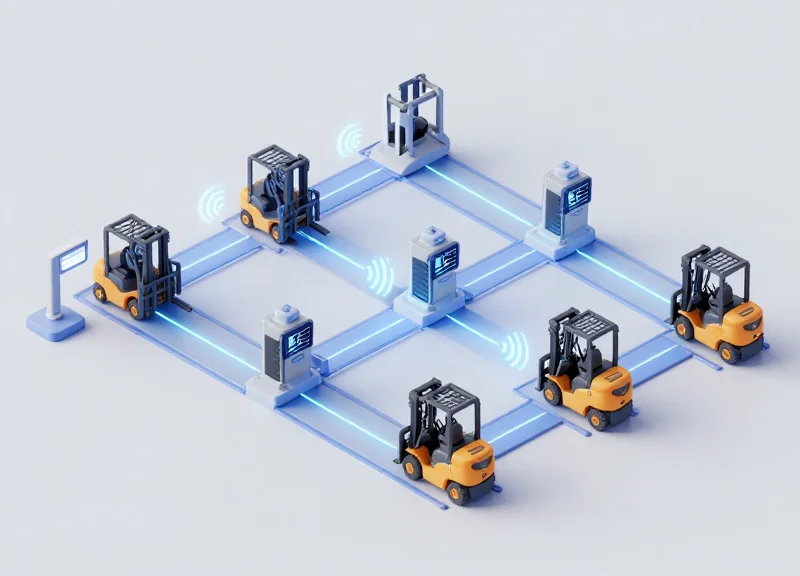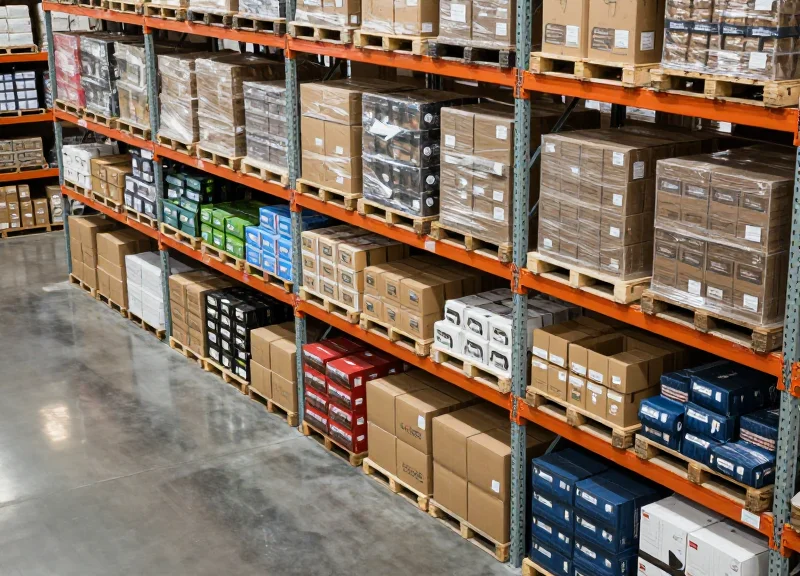
As industrial safety standards evolve toward 2026, the management of hazardous materials (Hazmat) is undergoing a digital revolution. Traditional barcode systems, once the gold standard, are increasingly viewed as high-risk due to their requirement for close-range, line-of-sight scanning. Enter RFID technology: the backbone of the 'Zero-Contact' safety movement. By enabling remote, bulk data capture without exposing personnel to toxic substances, RFID is setting new benchmarks for operational efficiency and worker protection. This article examines the shift toward automated tracking and why it’s become a non-negotiable for modern industrial safety.
The Evolution of Hazmat Management: Moving Toward 2026

The evolution of Hazmat management toward 2026 is defined by a paradigm shift from 'Reactive Manual Logging' to 'Predictive Autonomous Oversight.' Driven by stricter global ESG mandates and a zero-tolerance approach to industrial accidents, organizations are moving away from manual barcode scanning which requires proximity to hazardous substances. Instead, 2026 marks the adoption of 'Zero-Contact' safety protocols, where RFID and IoT-enabled sensors provide continuous, long-range visibility into chemical stability and location without human intervention.
| Feature | Legacy Management (2010-2023) | The 2026 Standard |
|---|---|---|
| Data Capture | Line-of-Sight Barcode Scanning | Omnidirectional RFID / Sensor Fusion |
| Human Risk | High (Active contact required) | Zero (Remote monitoring) |
| Update Frequency | Manual / Periodic | Real-Time / Streaming |
| Compliance | Self-Reported Audits | Algorithmic Automated Compliance |
A critical driver for this evolution is the emergence of 'Latency-Induced Risk.' In traditional systems, the time gap between a chemical leak and its detection by a human operator with a barcode scanner can be fatal. By 2026, the industry is prioritizing systems that eliminate this gap. Expert tip: The true value of 2026 Hazmat tech is not just 'tracking,' but 'situational awareness'—knowing the temperature, pressure, and orientation of a barrel miles away from the nearest worker.
Why is 'Zero-Contact' becoming the regulatory gold standard?
Regulators are increasingly viewing manual scanning as an unnecessary exposure risk. Zero-contact systems like RFID allow for inventory and safety checks to be performed through walls or from safe distances, drastically reducing OSHA-recordable incidents.
How does 2026 technology address the 'Dark Data' problem in Hazmat?
Most legacy warehouses have 'dark spots' where materials are lost between manual scans. 2026 systems use mesh networks and passive RFID to ensure 100% of the inventory is visible 100% of the time, eliminating the risks of expired or misplaced hazardous assets.
The 'Zero-Contact' Safety Mandate: Why Proximity is a Liability
The 'Zero-Contact' Safety Mandate is an emerging industrial regulatory framework that prioritizes human distance from hazardous substances by eliminating the need for physical interaction during data capture. In modern hazmat management, physical proximity is no longer just a logistical requirement; it is a measurable liability. By transitioning from line-of-sight barcode scanning—which requires workers to be within inches of potentially volatile chemicals—to long-range RFID systems, enterprises can establish a critical 'Safety Buffer' that significantly reduces the probability of acute exposure incidents.
| Safety Metric | Legacy Barcode Scanning | Modern RFID 'Zero-Contact' |
|---|---|---|
| Required Distance | 0.5 - 2 Feet (Direct Contact) | 10 - 30+ Feet (Remote Detection) |
| Scanning Velocity | Manual, Item-by-Item | Bulk, Simultaneous Scanning |
| PPE Dependency | High (Worker must approach risk) | Low (Worker remains in safe zone) |
| Human Error Risk | High (Manual positioning required) | Negligible (Automated data capture) |
Why is proximity now viewed as a liability? In the volatile environments of 2026, even seconds of exposure to hazardous fumes or the risk of a container puncture during a manual scan can lead to catastrophic insurance claims and OSHA violations. Barcode systems force personnel to physically handle or stand adjacent to hazardous drums, gas cylinders, or bio-waste. Every inch of proximity increases the 'Exposure Window.' RFID technology effectively closes this window by allowing sensors to register data from behind blast shields or from across a warehouse floor, turning 'Safe Distance' into an automated operational standard.
Does Zero-Contact eliminate the need for PPE?
No, but it significantly lowers the 'Hazard Frequency Score.' While PPE remains a final line of defense, RFID ensures workers aren't required to enter high-risk zones solely for administrative tasks like inventory audits.
How does RFID reduce environmental liability?
By automating tracking from a distance, the risk of accidental drops, spills, or container damage during manual scanning is virtually eliminated, preventing environmental contamination events.
Is 'Zero-Contact' applicable to all hazmat classes?
Yes, it is particularly vital for Class 1 (Explosives), Class 6 (Toxic/Infectious), and Class 7 (Radioactive) materials where proximity increases health risks exponentially.
Expert Insight: The 'Exposure Buffer Metric' (EBM). Forward-thinking safety officers in 2026 are moving beyond simple injury rates to EBMs. This metric calculates the total time workers spend within the 'Danger Radius' of hazardous assets. While barcode-heavy operations often show high EBM scores due to manual scanning requirements, RFID-enabled facilities are achieving near-zero EBMs, which is becoming a prerequisite for securing lower industrial insurance premiums in the current market.
The Technical Limitations of Barcodes in Hazardous Environments
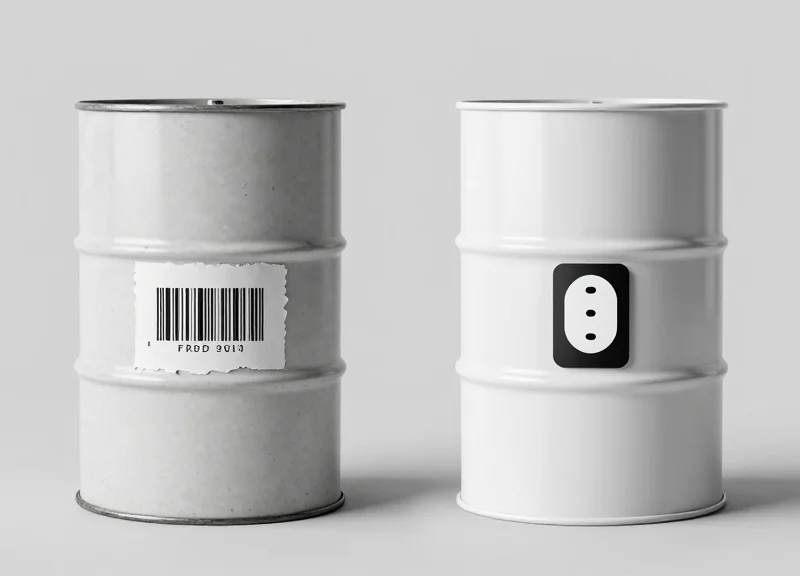
The fundamental flaw of barcode technology in hazardous management is its reliance on a perfect optical link. For a barcode to function, a scanner must have an unobstructed, clean line-of-sight to a pristine label. In industrial 'Zero-Contact' environments, this requirement is a structural liability; the very act of positioning a worker close enough to wipe a label or aim a scanner introduces unnecessary physical risk and slows down critical safety protocols. As we move toward 2026, the 'read-one-at-a-time' limitation of barcodes is being recognized not just as an inefficiency, but as a primary point of data failure.
| Failure Category | Technical Root Cause | Operational Impact in Hazmat |
|---|---|---|
| Environmental Degradation | Chemical abrasion or UV fading of thermal ink. | Labels become unreadable, requiring manual data entry near toxins. |
| Line-of-Sight Dependency | Scanner requires 100% visibility of the symbology. | Workers must physically rotate or move drums, increasing spill risk. |
| Manual Scanning Fatigue | One-by-one sequential scanning via human trigger. | Bottlenecks at containment zones; high human-error potential. |
| Physical Obstruction | Frost, condensation, or chemical residue buildup. | Zero-Contact goals are voided as workers must clean labels manually. |
Is the 'Zero-Contact' mandate compatible with barcodes?
Strictly speaking, no. Barcodes require a maximum distance of a few feet and a direct angle. Achieving a true 10-meter safety buffer—standard for modern Hazmat protocols—is impossible with traditional 1D or 2D optical markers.
How does chemical vapor affect barcode reliability?
Corrosive atmospheres can micro-erode the contrast between bars and spaces. Even if a label looks legible to the human eye, the scanner's laser or image sensor may fail to resolve the edge contrast, leading to 'no-reads' during critical inventory counts.
What is the 'Hidden Cost' of barcode maintenance?
Beyond the hardware, the labor cost of replacing damaged labels in high-risk zones is significant. Every time a worker enters a zone to replace a label, the facility incurs insurance risk and operational downtime.
Expert Insight: In my two decades of industrial tech auditing, I’ve observed the 'Entropy of Information' in chemical plants. Barcodes represent a static data point in a dynamic, destructive environment. Unlike RFID, which uses electromagnetic waves that can penetrate grease, ice, or several layers of protective wrap, barcodes are essentially 'brittle' data. If the surface is compromised, the data is deleted. In a 2026 regulatory environment, losing a data point on a hazardous container isn't just an inconvenience—it is a compliance violation that can trigger a full-site shutdown.
- Surface Preparation Failures: Barcodes must be applied to flat or specific curved surfaces. In hazmat, container bulging or denting renders the barcode unreadable by standard scanners.
- Scanning Throughput Limits: A pallet of 40 chemical canisters takes roughly 4 minutes to scan individually via barcode. RFID can process the same pallet in under 3 seconds without moving a single item.
- Data Capacity Ceiling: Barcodes typically point to a database record. If the network is down in a remote bunker, the barcode tells the worker nothing. RFID tags can store 'on-chip' safety data sheets (SDS) that are accessible offline.
How RFID Revolutionizes Hazmat Tracking: Speed, Safety, and Scale
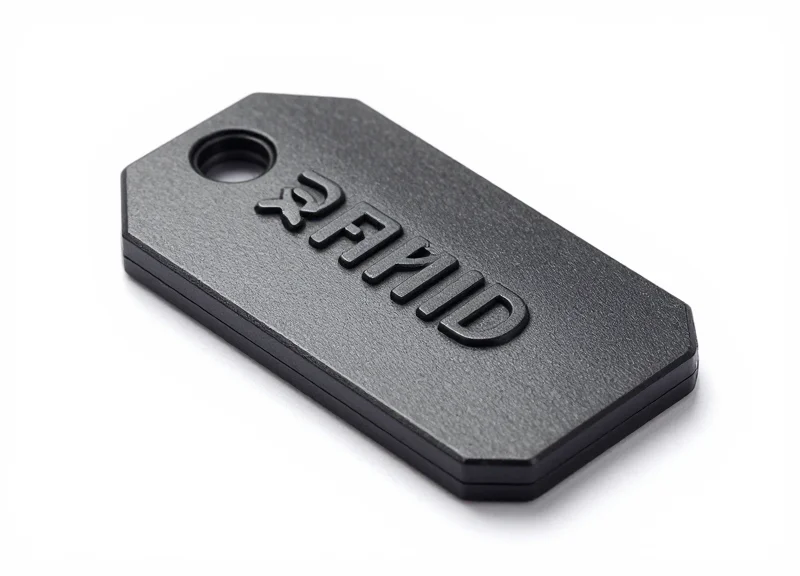
RFID technology revolutionizes hazmat tracking by enabling "non-line-of-sight" data capture, allowing safety officers to inventory entire shipments of hazardous materials through walls, containers, or shelving from up to 30 feet away. Unlike legacy systems, RFID tags are interrogated via radio waves, facilitating simultaneous bulk scanning that reduces manual labor by up to 80% and ensures workers maintain a safe distance from volatile or corrosive substances, effectively creating a zero-contact audit trail.
| Feature | Barcode Limitation | RFID Revolution |
|---|---|---|
| Scanning Velocity | 1 item per 3-5 seconds (Manual) | 700+ items per second (Automated) |
| Visibility | Requires direct line-of-sight | Scans through wood, plastic, & glass |
| Worker Proximity | Must be within inches | Operational distance of 10-30+ feet |
| Data Integrity | Static; prone to damage/dirt | Dynamic; read/write capable & ruggedized |
The transition to RFID is not just a hardware upgrade; it is a shift in operational scale. In large-scale industrial environments, the ability to perform a 'mass-read' allows a forklift operator to pass through a portal and instantly verify the contents of a pallet without stopping. This eliminates the 'human-in-the-loop' bottleneck, where workers were previously required to manually locate and scan individual 2D codes—a process that is both time-consuming and dangerously invasive in chemical storage zones.
Can RFID scan through metal drums?
Yes. While standard tags struggle with metal, specialized 'on-metal' RFID tags utilize a physical spacer or a built-in antenna design that leverages the metal surface to actually improve signal range, ensuring hazmat drums are tracked accurately.
Does moisture or chemical spray interfere with the signal?
Modern UHF (Ultra High Frequency) RFID systems are designed to penetrate environmental interference. Ruggedized tags are encapsulated in chemical-resistant resins (like PEEK or Epoxy) that protect the chip from the very substances they are tracking.
Is the scanning range adjustable for safety?
Absolutely. Systems can be calibrated to a 'short-range' for precise tool-tracking or 'long-range' (up to 100 meters with active RFID) for monitoring perimeter breaches or exclusion zone entries.
Expert Insight: Eliminating the 'Hazmat Latency Gap'. In traditional barcode-based warehouses, there is often a 15-to-45 minute delay between a chemical being moved and its location being updated in the ERP. I call this the 'Latency Gap.' In an emergency, this gap is life-threatening. RFID closes this gap to sub-second intervals. By 2026, the standard for 'safe' will no longer be knowing where your chemicals were an hour ago, but knowing where they are right now with zero human intervention.
Real-Time Compliance: Meeting EPA and OSHA Standards Automatically
Real-time compliance in hazmat management is the shift from manual, periodic inspections to autonomous, sensor-driven data capture that aligns with OSHA and EPA record-keeping requirements. By leveraging RFID, industrial facilities can generate an immutable digital paper trail—a 'Digital Chain of Custody'—that logs movement, shelf-life, and storage conditions without requiring workers to physically scan containers. This 'zero-contact' approach ensures that facilities remain in a state of continuous audit-readiness, eliminating the panic and inaccuracies associated with traditional paper-based or barcode-reliant compliance checks.
| Compliance Metric | Barcode (Manual) | RFID (Automated) |
|---|---|---|
| Data Entry Speed | 5-10 seconds per item | Sub-second (Multiple items) |
| Human Error Rate | High (Transcription/Missed scans) | Near Zero (Passive capture) |
| Audit Prep Time | Days or Weeks | Instant (Dashboard-driven) |
| EPA RCRA Tracking | Point-in-time check-ins | Continuous location history |
Meeting OSHA’s 29 CFR 1910 series standards for hazardous materials handling requires rigorous documentation of employee exposure and material movement. RFID automation removes the 'compliance drift' that occurs when workers, under pressure, skip manual scans. In an RFID-enabled facility, the very act of moving a drum past a portal gateway creates a timestamped event that is more reliable than any manual log.
- Initialize Digital Identity: Assign unique Electronic Product Codes (EPC) to every hazardous unit, linking them to Safety Data Sheets (SDS) and regulatory profiles.
- Deploy Passive Interrogation Zones: Install RFID readers at critical transition points—storage room entrances, loading docks, and waste disposal areas—to capture data automatically.
- Configure Real-Time Alerting: Set logic-based triggers for EPA violation risks, such as incompatible chemicals stored in the same zone or containers exceeding storage time limits.
- Generate Auto-Populated Manifests: Use the captured data to instantly populate EPA Uniform Hazardous Waste Manifests, ensuring error-free reporting to state and federal agencies.
Expert Tip: To truly outperform competitors, implement 'Passive Compliance Monitoring' (PCM). By integrating RFID with IoT environmental sensors, you can prove to regulators not just where a chemical was, but that it was stored at the exact temperature and humidity required by its SDS, creating a 'Golden Record' of safety that is virtually impossible to challenge during an inspection.
Does RFID compliance data hold up in an OSHA inspection?
Yes. Digital records are generally preferred by inspectors as they are timestamped and less susceptible to the 'pencil-whipping' or retrospective data entry common in manual logs.
How does RFID handle EPA RCRA waste tracking?
RFID monitors 'cradle-to-grave' movements, automatically logging when waste reaches an accumulation point and notifying managers before the 90-day storage limit is breached.
Can RFID automate Safety Data Sheet (SDS) management?
While it doesn't replace the SDS, it ensures that when an RFID tag is read, the worker’s handheld device instantly pulls up the correct, current SDS for that specific material.
Durability and Resilience: RFID Tags in Extreme Industrial Conditions

Unlike traditional barcodes that rely on visual clarity and surface-level integrity, specialized industrial RFID tags are engineered for 'zero-failure' performance in hazardous environments. These devices utilize high-performance polymers like PEEK or ceramic housings to shield the internal antenna and microchip from corrosive agents, extreme temperatures ranging from -40°C to over 200°C, and heavy physical vibration. Because RFID technology uses radio waves rather than light, these tags remain fully functional and readable even when submerged in liquids, covered in opaque grime, or subjected to intense UV radiation—conditions that would render a barcode useless within minutes.
| Environmental Factor | Standard Barcode (Synthetic) | Industrial RFID (2026 Ruggedized) |
|---|---|---|
| Temperature Tolerance | -10°C to 60°C (Adhesive failure) | -50°C to 230°C (Heat-stabilized polymers) |
| Chemical Resistance | Low (Ink dissolves/smudges) | High (Resistant to acids, alkalis, and fuels) |
| Surface Contamination | Fails if obscured by dirt/grease | 100% Readability through debris |
| Mechanical Impact | Easily scratched or torn | Shock-resistant (IK10 rated housings) |
| Lifespan in Field | 3–12 months | Up to 10 years (Passive tags) |
A significant 2026 trend is the move toward 'Integrated Asset Identity.' Leading Hazmat container manufacturers are now over-molding RFID transponders directly into the walls of High-Density Polyethylene (HDPE) drums and composite Intermediate Bulk Containers (IBCs). This 'embedded' approach means the tag is physically inseparable from the container itself. For safety managers, this eliminates the primary risk factor in Hazmat logistics: the 'orphaned' chemical container that has lost its identification label due to harsh cleaning cycles or rough transit. By embedding the intelligence into the vessel, the data becomes as durable as the hardware.
Can RFID tags be used in ATEX/explosive zones?
Yes. Modern 'Intrinsically Safe' (IS) RFID tags are specifically designed for Zone 0, 1, and 2 environments. They operate without the risk of generating thermal or electrical sparks, making them the gold standard for tracking volatile chemicals and gases.
Do chemicals interfere with the signal frequency?
While certain liquids can absorb RF energy, specialized tag designs and 'on-metal' spacers ensure that the signal remains strong even when the tag is mounted on metal drums or surrounded by dense chemical compounds.
What is the importance of an IP69K rating for Hazmat tags?
An IP69K rating ensures the tag can withstand high-pressure, high-temperature washdowns (common in chemical decontamination) without water ingress or component failure.
Integrating RFID with IoT for Predictive Hazard Mitigation

Integrating RFID with the Internet of Things (IoT) transforms hazardous material management from a reactive tracking process into a proactive 'Predictive Hazard Mitigation' system. While RFID provides the unique identity and precise location of a chemical container, IoT sensors—measuring temperature, pressure, humidity, and gas concentration—provide the real-time physical context. By layering these data streams, industrial facilities can utilize machine learning algorithms to identify 'pre-incident' patterns, such as a localized temperature spike in a volatile substance rack, allowing for automated intervention before a leak or combustion event occurs.
| Feature | Legacy RFID/Barcode (Reactive) | Integrated RFID + IoT (Predictive) |
|---|---|---|
| Detection Type | Post-incident reporting | Real-time anomaly detection |
| Data Trigger | Manual or gated scan | Continuous environmental stream |
| Safety Action | Evacuation/Cleanup | Automated cooling/Pressure venting |
| Risk Profile | Static (based on history) | Dynamic (based on current state) |
A unique insight into this 2026 trend is the shift toward 'Active Inventory Contextualization.' In this model, the RFID tag acts as a digital twin anchor. If an IoT gas sensor detects a minor vapor trail, the system cross-references the RFID location data to instantly identify exactly which canisters are in the vicinity, their chemical compatibility, and their expiration dates. This eliminates the 'search and identify' phase during an alarm, reducing emergency response times by up to 70%.
- Sensor Fusion Layering: Deploying IoT gateways that aggregate both the 'Who/Where' from RFID and the 'Condition' from sensors.
- Threshold Automation: Setting software-defined limits that trigger alerts if an RFID-tagged corrosive material is exposed to out-of-spec humidity.
- Predictive Analytics: Using historical sensor data to predict the degradation rate of containers and scheduling 'Zero-Contact' inspections.
How does IoT improve RFID's accuracy in hazmat zones?
IoT sensors can monitor the health of the RFID readers themselves, ensuring that 'blind spots' are identified and corrected automatically in high-interference metal environments.
Can these systems prevent chemical cross-contamination?
Yes. If an RFID-tagged container of an oxidizer is moved into an IoT-monitored zone containing flammables, the system can trigger an immediate 'Proximity Violation' alarm to prevent reactive mixing.
What is the primary benefit of 'Zero-Contact' predictive mitigation?
It removes the need for human technicians to enter high-risk areas to check gauges or scan labels, relying instead on the digital data mesh to report status updates.
Cost-Benefit Analysis: The Long-Term ROI of Switching from Barcodes
While the initial capital expenditure for RFID infrastructure—including readers, active or passive tags, and middleware integration—is higher than traditional barcode systems, the long-term Return on Investment (ROI) is driven by the elimination of 'shadow labor' and the mitigation of high-stakes industrial liabilities. In a hazmat environment, the ROI of RFID is typically realized within 18 to 24 months through a combination of 80% faster inventory cycles, a significant reduction in human error-related fines, and lower insurance premiums facilitated by superior data veracity.
| Metric | Traditional Barcode System | Advanced RFID System (2026) | Financial Impact |
|---|---|---|---|
| Inventory Labor | Manual 'Point-and-Shoot' scanning; 20-30 mins per pallet. | Bulk, zero-contact scanning; < 30 seconds per pallet. | 85-90% reduction in operational labor costs. |
| Data Accuracy | 92-95% (prone to missed scans and human error). | 99.9% (automated, real-time verification). | Elimination of 'lost' high-value chemical assets. |
| Liability Risk | Lagging indicators; audit-heavy compliance. | Leading indicators; automated, audit-ready records. | Significant reduction in EPA/OSHA non-compliance fines. |
| Asset Lifespan | High replacement due to tag degradation. | Durable tags last 5-10 years in harsh environments. | Lower total cost of ownership (TCO) over 5 years. |
Expert Insight: The Insurance 'Data Dividend'. A unique financial advantage emerging in 2026 is the 'Insurance Data Dividend.' Many industrial underwriters are now beginning to offer tiered premium discounts (ranging from 5% to 15%) for facilities that can provide verifiable, real-time telemetry of hazardous material movement. Because RFID provides an immutable digital trail, it acts as a 'black box' for safety, lowering the perceived risk profile of the facility and directly padding the bottom line in a way that static barcodes never could.
Is the high initial cost of RFID tags worth it for low-value chemicals?
Yes, because the cost of the tag is negligible compared to the cost of a disposal error or a mismatched chemical reaction. ROI is found in the prevention of safety incidents, not just the value of the material itself.
How does RFID affect 'Shadow Labor' costs?
Shadow labor refers to the hidden time employees spend looking for misplaced containers or manually correcting log errors. RFID eliminates this by providing the exact location of every asset, reclaiming hundreds of productive hours per year.
What is the primary driver of ROI in the first year?
The primary driver is usually the reduction in manual inventory labor and the avoidance of 'expedited replacement' costs for items that were in the facility but could not be located using barcode methods.
To maximize ROI, organizations should adopt a phased deployment, starting with high-risk 'Red Zone' materials where the cost of failure is highest. By the time the system scales to general inventory, the labor savings alone often cover the expansion costs, creating a self-funding safety ecosystem.
Implementing RFID in Your Facility: A 2026 Strategy Guide

Transitioning to an RFID-based 'Zero-Contact' safety environment in 2026 involves shifting from manual, point-and-click data collection to an autonomous, ambient intelligence ecosystem. By deploying fixed-point gateways at high-risk entry and exit points, facilities can achieve 100% visibility of hazardous materials without requiring workers to physically handle or even approach dangerous containers. This strategic implementation not only streamlines operations but serves as the backbone for predictive safety analytics and real-time regulatory reporting.
| Infrastructure Component | Legacy Barcode Setup | 2026 RFID Standard |
|---|---|---|
| Data Capture Method | Line-of-sight manual scanning | Ambient automated detection |
| Personnel Exposure | High (Manual proximity required) | Zero (Remote sensing up to 100ft) |
| Data Latency | Batch updates (end-of-shift) | Real-time stream (sub-second) |
| System Integration | Standalone spreadsheets/ERPs | Cloud-native, API-first Digital Twins |
- Hazard Zone Mapping & Frequency Selection: Perform a signal audit to identify interference sources like metal shielding or high-voltage equipment. Select UHF (Ultra-High Frequency) for bulk storage monitoring and active RFID for high-value, high-risk assets requiring persistent heartbeat signals.
- Substrate-Specific Tag Selection: Not all tags are created equal. Use 'On-Metal' RFID tags for chemical drums and specialized 'Flag-Tags' for liquid-filled containers to prevent signal attenuation and ensure 99.9% read accuracy in industrial environments.
- API-First Middleware Integration: Connect RFID readers to your EHS (Environment, Health, and Safety) software via modern APIs. This ensures that as a tag passes a gateway, the system automatically cross-references the Digital Twin for compatibility and safety protocol verification.
- The 'Dark' Pilot Phase: Run the RFID system in parallel with existing barcodes for 30 days. During this 'dark' phase, collect data without altering workflows to identify gaps in signal coverage or tag durability before removing manual checkpoints.
- Zero-Contact Workflow Deployment: Fully automate the logging process. Personnel now move through checkpoints with hazmat assets while the system triggers automated gates, safety alerts, and compliance timestamps without a single physical scan.
Expert Insight: In 2026, the most successful facilities are utilizing 'Ambient Intelligence Gateways'—a specialized hardware configuration that uses directional beam-forming to track the vector of a chemical asset. This allows the system to distinguish between a drum being moved into a safe storage zone versus one accidentally approaching a restricted loading dock, triggering preemptive audio-visual warnings before a safety breach occurs.
Can RFID tags survive corrosive chemical leaks?
Yes. 2026-spec industrial tags are encapsulated in IP69K-rated housings (like PPS or epoxy), making them resistant to concentrated acids, bases, and high-pressure steam cleaning.
How does RFID handle the 'Metal/Liquid' interference problem?
Modern tags use spacer technology or specialized antenna designs that leverage the metal surface as a reflector to actually boost the signal range rather than block it.
What is the typical ROI timeline for a facility-wide rollout?
Most industrial facilities see a full return on investment within 14 to 18 months, primarily through the elimination of 'lost asset' costs and the reduction of insurance premiums associated with automated compliance.