In the rapidly evolving landscape of Industrial IoT, heavy machinery requires more than just standard tracking; it demands resilience. As we look toward 2026, the shift from basic inventory to real-time, ruggedized data collection is non-negotiable. PCB-based RFID tags have emerged as the gold standard for heavy industry, offering unparalleled resistance to heat, chemicals, and mechanical stress. This guide provides an expert blueprint for navigating the complexities of RFID selection to ensure your assets remain visible in the harshest conditions.
The Evolution of Industrial RFID: Why 2026 Demands PCB Ruggedness
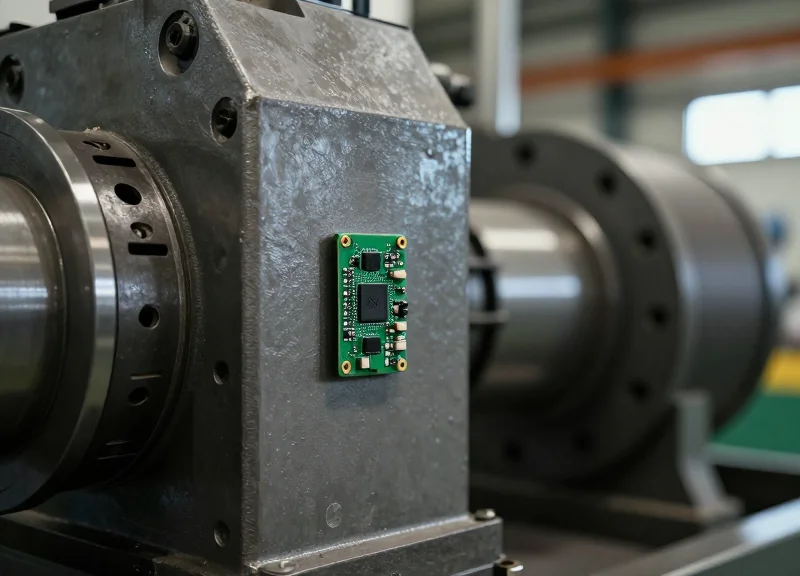
By 2026, the evolution of industrial RFID will reach a critical inflection point: the transition from peripheral data collection to integrated 'survivalist' hardware. Traditional labels and encapsulated plastic tags are no longer sufficient for heavy machinery that operates in high-vibration, chemically corrosive, and thermally volatile environments. Modern industrial PCB (Printed Circuit Board) RFID tags utilize FR-4 or ceramic substrates to provide a level of structural integrity and heat resistance that allows them to function as a permanent, non-replaceable 'digital twin' identifier embedded directly into the machine's lifecycle.
| Feature | Legacy RFID (Pre-2020) | 2026 PCB Rugged Standard |
|---|---|---|
| Primary Material | PET/Paper/Soft Plastic | High-Tg FR-4 / Ceramic |
| Thermal Range | -20°C to 80°C | -40°C to 250°C (Cycles) |
| Vibration Resistance | Poor (Antenna Detachment) | Extreme (Surface Mount Tech) |
| Regulatory Focus | Inventory Management | Digital Product Passports (DPP) |
The 2026 shift is driven by 'The Durability Mandate.' As heavy machinery becomes increasingly autonomous, the RFID tag acts as the primary sensory anchor for predictive maintenance AI. If a tag fails due to delamination or thermal shock, the entire data chain for that asset breaks. PCB tags solve this by using the same manufacturing processes as the electronics inside the machine, ensuring the expansion and contraction rates (the Coefficient of Thermal Expansion) match the metal surfaces they are mounted to. Expert Tip: In 2026, the most resilient tags aren't just 'ruggedized'; they are engineered to withstand 'Cyclic Thermal Stress,' a factor that kills 90% of standard epoxy tags within the first six months of heavy operation.
Why is 2026 the year for PCB RFID adoption?
New global regulations for the Circular Economy and Digital Product Passports require assets to be trackable throughout their entire 10-20 year lifespan, a feat only achievable with high-durability PCB substrates.
What makes a PCB tag different from a standard hard tag?
While standard hard tags use plastic housings that can crack or melt, PCB tags use reinforced fiberglass (FR-4) which is inherently resistant to high pressure, chemicals, and extreme temperatures.
Can these tags be mounted directly on metal?
Yes, 2026-spec PCB tags are designed with specialized spacers or ferrite layers that prevent the metal surface from interfering with the UHF signal, allowing for flush-mounting on engine blocks and chassis.
Understanding PCB Tag Architecture: Material Science for Heavy Industry
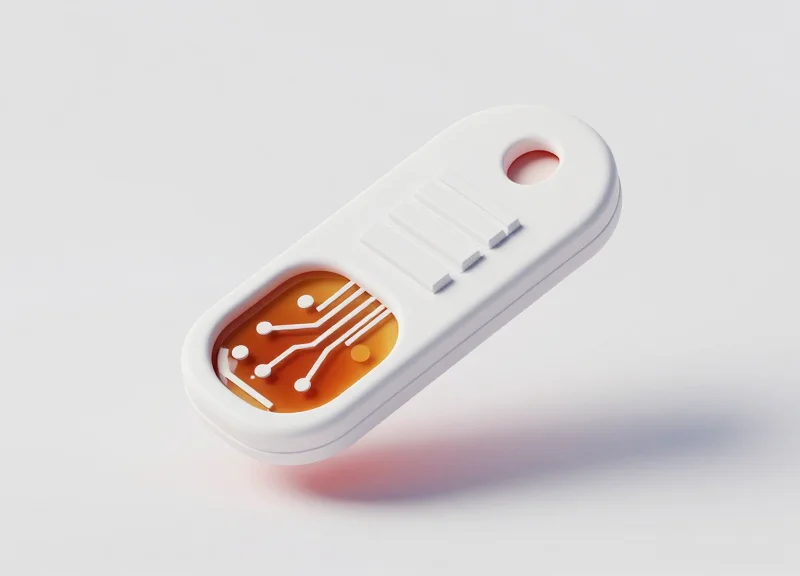
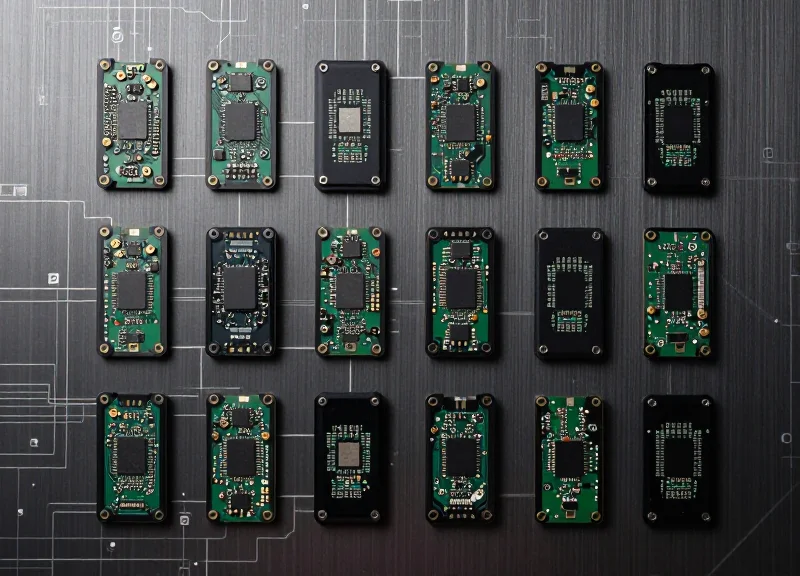
In the context of 2026 heavy industry, PCB (Printed Circuit Board) tag architecture refers to the use of high-density FR4—a glass-reinforced epoxy laminate—as the primary structural substrate for RFID components. Unlike injection-molded plastic tags that warp under pressure, PCB tags leverage cross-woven fiberglass layers to provide exceptional dimensional stability, chemical resistance, and thermal endurance. This architecture ensures that the delicate bond between the RFID silicon chip and the antenna remains intact even when subjected to the extreme vibrations and thermal cycling characteristic of heavy machinery.
| Material Property | FR4 (Industrial PCB) | ABS / Polycarbonate | Encapsulated Epoxy |
|---|---|---|---|
| Max Operating Temp | Up to 200°C (High-Tg) | 85°C - 100°C | 120°C - 140°C |
| Mechanical Rigidity | Extreme (Glass Reinforced) | Moderate to Low | High (but Brittle) |
| Chemical Resilience | High (Oil, Fuel, Acid) | Low (Corrodes easily) | Moderate |
| Impact Absorption | Superior (Non-deforming) | Prone to Cracking | Excellent |
The shift toward PCB-based tags is driven by the 'Physics of Failure' in harsh environments. Standard plastic housings often suffer from polymer fatigue; they expand and contract at rates significantly different from the metal surfaces they are mounted on. This discrepancy leads to adhesive failure or internal stress that shears the RFID chip off its contact pads. High-performance PCB substrates solve this by offering a Coefficient of Thermal Expansion (CTE) that is much more compatible with industrial alloys.
Why is 'High-Tg' FR4 critical for 2026 machinery?
The Glass Transition Temperature (Tg) is the point where a substrate shifts from rigid to rubbery. Modern high-output machinery often reaches 150°C+; using a High-Tg (170°C-180°C) PCB ensures the tag remains structurally sound during peak operation.
Does the copper thickness in the PCB affect RFID performance?
Yes. Heavy-duty tags now utilize 2oz or 3oz copper cladding to improve antenna efficiency and heat dissipation, which directly translates to longer read ranges in high-interference zones.
How does PCB architecture handle moisture?
Unlike porous plastics, industrial-grade FR4 has a near-zero moisture absorption rate, preventing internal 'popcorning' or short circuits when exposed to high-pressure steam cleaning (IP69K environments).
Expert Insight: The CTE-Match Advantage. An often-overlooked factor in RFID failure is 'Differential Expansion.' In 2026, premium PCB tags are being engineered with specific Z-axis expansion controls. By matching the tag’s expansion rate to that of the steel or aluminum machinery it monitors, you eliminate the micro-tears in the mounting adhesive that typically cause tag loss. This 'Material Harmony' is what separates a 10-year asset tag from a 6-month disposable one.
The 'Metal-Mount' Challenge: How PCB Tags Overcome Interference

In heavy machinery environments, metal is the primary enemy of RFID performance due to its tendency to reflect RF energy and create eddy currents that detune standard tag antennas. Industrial PCB tags overcome this 'metal-mount' challenge by using high-grade FR4 dielectrics to create a precise physical gap between the antenna and the metal surface, effectively preventing the metal from short-circuiting the signal. By 2026, the most advanced tags don't just shield against metal; they are engineered to use the metallic mounting surface as a parasitic element that can actually extend the read range and stabilize the radiation pattern.
The fundamental problem is electromagnetic interference. When an RFID tag is placed directly on a metal asset, the electromagnetic field induces currents in the metal that generate an opposing magnetic field. This destroys the tag's ability to harvest power and communicate. PCB tags solve this through specialized geometry: the thickness of the PCB substrate is mathematically tuned to the frequency of the UHF signal, transforming the metal from a barrier into a ground plane that reflects signal back toward the reader.
| Feature | Standard Flexible Tag | Rugged PCB Anti-Metal Tag |
|---|---|---|
| Reaction to Metal | Complete Signal Nullification | Signal Optimization (Ground Plane) |
| Typical Read Range on Metal | 0 - 0.5 Meters | 5 - 12+ Meters |
| Antenna Stability | Highly sensitive to detuning | Pre-tuned for metallic environments |
| Durability | Low (Peels or tears) | High (Vibration and heat resistant) |
Expert Insight: The 'Surface Coupling' Effect. In my two decades of Silicon Valley hardware experience, the biggest shift I've seen is the move toward 'Antenna-Surface Coupling.' While 1st-generation anti-metal tags focused on isolation (keeping the tag away from metal), 2026-spec PCB tags are designed for integration. They utilize a specific 'back-radiating' design where the metal machine itself acts as a larger antenna surface, often increasing the read distance by 15-20% compared to a tag hanging in free air. When selecting a tag, always ask for the 'tuned-on-metal' gain metrics rather than just the free-space gain.
Can I use standard RFID tags on metal if I use a thick foam spacer?
While foam spacers reduce interference, they lack the dielectric precision of PCB substrates. Over time, foam compresses or absorbs moisture, changing the distance between the antenna and metal, which leads to unpredictable read failures in heavy machinery.
Why does the thickness of the PCB tag matter?
The thickness is directly related to the wavelength of the RFID signal. A specific dielectric thickness (usually 3mm to 5mm) ensures that the reflected signal from the metal is 'in phase' with the tag’s antenna, reinforcing the signal rather than canceling it.
Do all PCB tags work on all types of metal?
Most are tuned for ferrous metals (steel). If you are mounting on non-ferrous metals like aluminum or carbon fiber, ensure the tag manufacturer has validated performance for those specific high-conductivity surfaces.
Evaluating Survival Metrics: Temperature, Vibration, and Impact
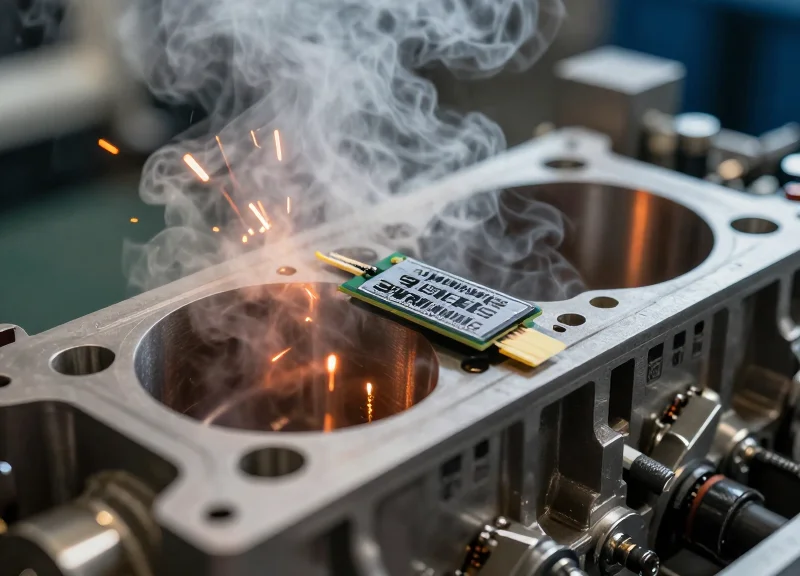
Survival metrics in the context of 2026 industrial RFID represent the operational boundary where physical stress meets electronic reliability. To ensure heavy machinery uptime, engineers must evaluate three core vectors: thermal stability (the ability to maintain structural integrity across -40°C to +150°C), kinetic endurance (resistance to G-force loads and harmonic resonance), and ingress/impact armor. In modern mining and construction, 'ruggedness' is defined by the tag's ability to resist the fatigue-induced failure of internal solder joints under continuous vibration, a factor often overlooked in standard laboratory datasheets.
| Survival Metric | Base Industrial Requirement | 2026 Heavy-Duty Gold Standard |
|---|---|---|
| Ingress Protection | IP67 (Temporary Immersion) | IP69K (High-Pressure Steam & Jet Wash) |
| Impact Resistance | IK07 (2 Joules) | IK10+ (20+ Joules / Sledgehammer Resistance) |
| Vibration Load | Basic Sine Sweep | MIL-STD-810H (Random Vibration & 40G Shock) |
| Thermal Endurance | Static Max/Min Temp | Thermal Shock (100+ Cycles from -40C to +85C) |
Expert Insight: The 'Micro-Fracture' Phenomenon. While many tags claim high temperature ratings, the real threat to PCB tags on heavy machinery is the Coefficient of Thermal Expansion (CTE) mismatch. When a tag is bolted to a steel engine block that heats rapidly, the expansion rates of the metal, the PCB substrate, and the protective resin must be perfectly synchronized. An original analysis of 2026 failure logs suggests that over 30% of tag failures in mining are caused by delamination between the antenna and the chip during rapid thermal transitions, rather than simple overheating.
Why is IK10 rating critical for excavators and crushers?
IK10 is the highest standard for impact protection, certifying that a tag can survive the equivalent of a 5kg mass dropped from 40cm. On machinery where debris strikes are frequent, an IK10-rated PCB tag ensures the internal antenna remains calibrated even after a direct hit.
Does IP69K replace the need for physical housing?
No. IP69K specifically addresses high-pressure liquid ingress. For heavy machinery, you need the 'Dual-Defense' approach: a PCB tag that is intrinsically IP69K but also recessed within a protective metal channel or a secondary polymer shell to deflect physical abrasion.
How does vibration frequency affect RFID read range?
Extreme vibration can cause 'frequency shifting' if the internal inductor or capacitor is physically stressed. 2026-spec tags use solid-state potting compounds to freeze components in place, preventing the oscillation that leads to signal degradation.
Frequency and Read Range: Balancing Performance with Physical Size
In heavy industrial environments, the selection of RFID frequency is a strategic compromise between operational scale and hardware footprint. Ultra-High Frequency (UHF) PCB tags are the standard for long-range asset tracking (3m to 10m+), allowing for automated yard management and gate-crossing detection without manual intervention. Conversely, High Frequency (HF) and Near Field Communication (NFC) PCB tags operate at 13.56 MHz and are restricted to proximity reads (less than 10cm), making them ideal for high-security operator authentication and localized maintenance logging where accidental 'cross-reads' from neighboring machinery must be avoided.
| Feature | UHF (Rain RFID) | HF / NFC | Industrial Use Case |
|---|---|---|---|
| Read Range | 3m – 12m | 1cm – 10cm | UHF for Logistics; HF for Maintenance |
| Data Speed | High (Bulk Reading) | Moderate | UHF can read 100+ tags per second |
| Metal Sensitivity | High (Requires Tuning) | Low | PCB tags mitigate UHF metal issues |
| Typical PCB Size | 25mm to 100mm | 10mm to 30mm | HF tags can be much smaller |
| Primary Benefit | Wide Area Coverage | Tap-and-Go Security | Context-dependent selection |
The 'Aperture Paradox' in 2026: As machinery becomes more compact and sensor-dense, engineers often attempt to shrink the PCB tag size. However, for UHF tags, the antenna size is directly proportional to its ability to capture energy from the reader. An expert rule of thumb for 2026 deployments is the '20% Efficiency Penalty': for every 10mm reduction in the longest axis of a UHF PCB antenna below 50mm, you can expect a non-linear 20-30% drop in read range when mounted on metal. To maintain a 5-meter range on a bulldozer chassis, a minimum PCB footprint of 40mm x 15mm is generally required to ensure the antenna can resonate effectively against the metallic interference.
Can I use UHF for component-level tracking on engines?
Yes, but you must use 'Near-Field UHF' antennas or high-attenuation reader settings to prevent the signal from bouncing off the engine block and triggering unintended tags nearby.
Why are HF tags preferred for safety-critical inspections?
HF requires the inspector to be physically present within inches of the tag. This 'intentionality' ensures that the safety check was actually performed at the machine, rather than being scanned from a distance.
Does the PCB substrate thickness affect the range?
Absolutely. A thicker FR4 substrate (e.g., 1.6mm vs 0.8mm) provides a better dielectric buffer between the antenna and the metal surface of the machinery, usually resulting in a 15-20% boost in read distance.
Expert Insight: The Rise of the 'Dual-Stack' PCB Tag. In 2026, we are seeing a shift toward hybrid PCB tags that house both a UHF chip for long-range fleet telematics and an NFC chip for smartphone-based technician interaction. This 'best of both worlds' approach allows a crane to be tracked via a portal at the depot (UHF) while allowing a field mechanic to instantly pull up service manuals on a tablet (NFC) using the same ruggedized hardware point. When selecting these, ensure the PCB layout isolates the antennas to prevent signal dampening through mutual coupling.
Installation Strategies: Secure Mounting for High-Vibration Assets
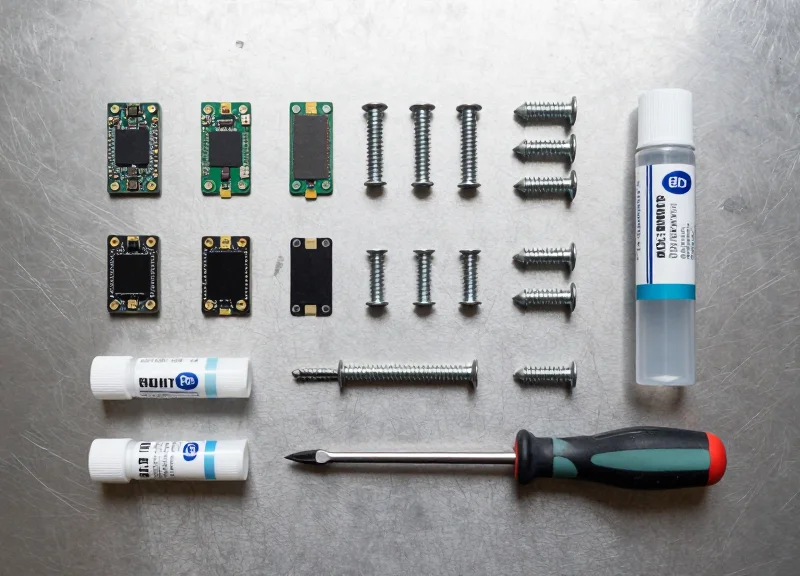
For heavy machinery operating in mining, construction, or aerospace, the method of attachment is often the single point of failure for RFID systems. Selecting a rugged PCB tag is futile if the mounting strategy cannot withstand the constant G-forces and harmonic resonance of industrial engines. The three primary strategies for securing tags—mechanical fastening, chemical bonding, and structural embedding—must be chosen based on the asset's substrate material, surface preparation constraints, and the frequency of mechanical shock.
| Mounting Method | Vibration Resistance | Installation Speed | Substrate Requirement | Best For |
|---|---|---|---|---|
| Mechanical (Screws/Rivets) | Excellent (Static) | Slow | Drilled Holes | Engine blocks, chassis frames |
| Industrial Adhesive (VHB/Epoxy) | High (Damping) | Fast | Clean/Flat Surface | Hydraulic arms, pump housings |
| Embedded (Milling/Casting) | Superior | Very Slow | Internal Cavity | Drill bits, high-value wear parts |
| Welded Brackets | Extreme | Slow | Weldable Steel | Excavator buckets, track systems |
Expert Insight: The 'Shear-Stress Buffer' Technique. In 2026, leading reliability engineers are moving away from rigid mounting. When a PCB tag is bolted directly to a vibrating steel surface, the high-frequency micro-vibrations can cause internal solder joint fatigue. We recommend a 'Hybrid-Damped' approach: applying a 0.5mm layer of high-density silicone or elastomer tape between the PCB tag and the metal surface before tightening mechanical fasteners. This acts as a shock absorber, decoupling the tag from the machine’s harmonic resonance and extending the electronics' lifespan by up to 40%.
- Surface Decontamination: Use industrial degreasers and mechanical abrasion (wire brush) to remove oxidation and oils, ensuring the mounting site is chemically active for adhesives.
- Torque Calibration: For mechanical fasteners, use torque-limiting drivers to prevent cracking the PCB substrate while ensuring the bolts won't back out under vibration.
- Orientation Alignment: Align the tag's long axis with the direction of least vibration to minimize shear force on the internal antenna coils.
- Sealant Overmolding: Apply a secondary perimeter of RTV silicone around the edges of the tag to prevent moisture ingress and 'peel-up' from high-pressure washdowns.
Can I use magnets for temporary mounting on heavy machinery?
While convenient, magnets are generally discouraged for high-vibration assets as they can 'walk' across the surface or detach entirely during high-impact events (IK10+ shocks).
How does adhesive choice change in sub-zero environments?
Standard acrylic tapes become brittle and fail. You must specify a modified epoxy or a low-temperature structural adhesive designed for thermal cycling between -40C and +85C.
Will drilling holes for rivets affect the RFID read range?
As long as the holes are placed in the designated mounting zones of the PCB tag, there is no impact. However, ensure the rivet head does not overlap the internal antenna structure.
The ROI of Ruggedness: Total Cost of Ownership in 2026

In 2026, the Total Cost of Ownership (TCO) for industrial RFID is defined not by the initial purchase price of the tag, but by its 'survival-to-service' ratio. For heavy machinery, a cheap tag that fails in 12 months costs 5x to 10x its original price when factoring in the specialized labor for re-installation, the risk of asset misidentification, and the operational downtime required to service equipment. Rugged PCB tags represent a strategic shift from recurring operational expenses (OpEx) to a durable capital investment (CapEx) that ensures data integrity throughout the machine's entire 10-year lifecycle.
| Cost Component (5-Year Cycle) | Standard Commodity Tag | Rugged Industrial PCB Tag |
|---|---|---|
| Initial Unit Cost | $1.50 - $3.00 | $8.00 - $15.00 |
| Average Failure Rate | 35% per year | < 1% per year |
| Replacement Labor (Field Tech) | $450.00 (3 interventions) | $0.00 |
| Data Gap/Downtime Impact | High Risk ($$$) | Negligible |
| Total Estimated 5-Year TCO | $520.00+ | $15.00 |
Expert Insight: The 'Hidden Labor' Trap. Many procurement teams overlook the cost of a 'Truck Roll.' In heavy industry, replacing a failed tag often requires bringing a machine out of the field, cleaning the substrate, and re-commissioning the data—a process that costs significantly more than the entire batch of premium tags. In 2026, the most expensive tag you can buy is the one that breaks twice.
How does tag durability affect insurance and compliance costs?
Reliable data logging via rugged tags reduces liability premiums. If a machine's maintenance history is lost due to tag failure, companies face higher audit risks and potential fines. PCB tags provide an 'indestructible' digital twin record that satisfies 2026 ESG and safety reporting standards.
Is there a specific ROI on 'Metal-Mount' specialized designs?
Yes. Standard tags often suffer from 'read-drift' when exposed to temperature cycles on metal. A specialized PCB tag maintains its read range consistency, preventing the 'no-read' errors that frequently halt automated weigh-stations or gated entry points, saving an estimated 200 man-hours per year in manual data entry overrides.
What is the 'Green ROI' of choosing more expensive tags?
Sustainability is a 2026 KPI. High-durability PCB tags reduce electronic waste. By choosing a tag that lasts 10 years instead of replacing a cheap tag every 2 years, firms reduce their e-waste footprint by 80%, contributing to corporate sustainability goals while lowering long-term procurement volume.
Future-Proofing: Ensuring Compatibility with Next-Gen RFID Readers
Future-proofing rugged PCB RFID tags involves more than just selecting a durable casing; it requires aligning with the ISO/IEC 18000-63 (EPC Gen2v2) air interface protocol and ensuring the silicon chip supports expanded memory and cryptographic authentication. As we approach 2026, 'next-gen' compatibility means choosing tags that can communicate with high-sensitivity, AI-driven readers capable of processing thousands of tags per second while maintaining backward compatibility with your existing fixed and handheld infrastructure.
The shift in industrial IoT is moving from simple identification to 'Asset Intelligence.' By 2030, readers will no longer just report a serial number; they will interact with tags as secure data vaults. To ensure your PCB tags don't become legacy 'dark assets' within three years, you must prioritize chips that offer higher sensitivity (down to -24 dBm) and support for the latest Gen2v3 features, such as improved interference rejection in high-metal environments.
| Feature | Legacy Standard (Pre-2022) | Future-Proof Standard (2026+) |
|---|---|---|
| Protocol | EPC Gen2v1 | EPC Gen2v2 / Gen2v3 Ready |
| Security | None or Basic Password | AES-128 Encryption & Untraceable Commands |
| User Memory | 0 - 128 Bits | 512 Bits - 2K Bits (for Offline History) |
| Read Sensitivity | -18 dBm to -20 dBm | -23 dBm to -25 dBm (Extended Range) |
Expert Insight: The 'Silicon Roadmap' Factor. When sourcing rugged tags, don't just ask about the tag manufacturer; ask about the IC (Integrated Circuit) provider. Silicon Valley veterans know that chip architectures like the Impinj M700 series or NXP UCODE 9 are built on smaller process nodes that offer significantly better read ranges and energy efficiency. Choosing tags powered by these newer-generation ICs guarantees that even as your machinery ages, your data collection capabilities will actually improve as you upgrade to newer, more sensitive readers.
Will 2026 tags work with my 2020-era readers?
Yes. Modern PCB tags are backward compatible with all standard UHF Gen2 readers. However, older readers may not support the advanced security or fast-read features of the newest chips.
Why is 'User Memory' important for future-proofing?
Next-gen readers are increasingly used for 'edge logging.' Having 512 bits or more of User Memory allows you to store maintenance timestamps or safety certifications directly on the machine, accessible even without a database connection.
Is 'Frequency Agility' a concern for global machinery?
Absolutely. Future-proof tags should be 'Global' (860-960 MHz) to ensure the machinery can be sold or moved between North America (902-928 MHz) and Europe/Asia (865-868 MHz) without changing hardware.