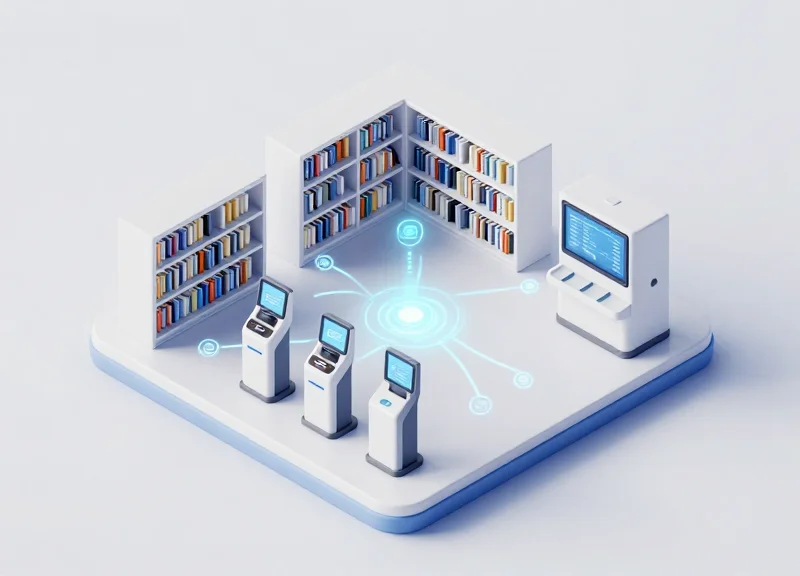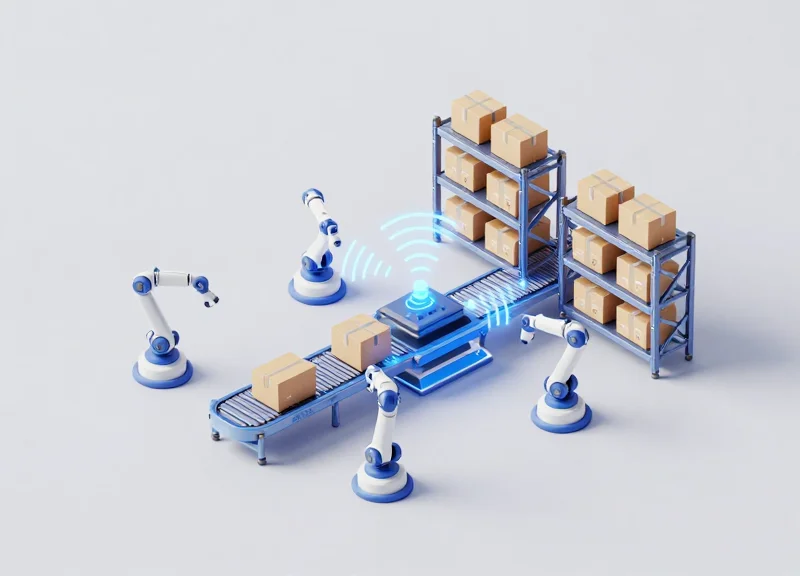
In the high-stakes environment of a metropolitan hospital, every missing medical supply is more than just a line item—it is a direct threat to patient care and a significant drain on financial resources. Shrinkage in the healthcare sector often goes unnoticed until it severely impacts the bottom line. This case study explores how a major urban medical center moved beyond traditional security measures to implement a sophisticated, integrated theft prevention strategy. By leveraging the combined power of Electronic Article Surveillance (EAS) and Radio Frequency Identification (RFID), the institution did not just stop the 'bleed'; it realized a staggering 28% return on investment within the first year, setting a new benchmark for operational efficiency in the healthcare industry.
The Crisis of Invisible Loss in Modern Healthcare

Invisible loss in modern healthcare is the cumulative financial depletion caused by unrecorded medical supply shrinkage, organized internal theft, and systemic inventory mismanagement. Unlike catastrophic equipment failure, invisible loss acts as a 'silent tax' on hospital operations, typically consuming 5% to 15% of a facility's total procurement budget. In metro hospitals, where the volume of high-value consumables is massive, these losses are often miscategorized as standard operational variances, effectively masking significant ROI opportunities and compromising clinical readiness at the point of care.
| Category | Primary Drivers | Financial Impact |
|---|---|---|
| Active Shrinkage | Unauthorized removal of supplies and internal theft. | High: Direct loss of capital and replacement costs. |
| Shadow Inventory | Clinician hoarding due to lack of supply chain trust. | Moderate: Artificial shortages and expiration waste. |
| Administrative Drift | Inaccurate tracking and manual data entry errors. | Low to Moderate: Procurement inefficiencies and over-ordering. |
A critical but overlooked driver of invisible loss is the 'Trust-Stock Paradox.' When frontline staff experience even one instance of a missing life-saving supply, they develop a psychological 'hoarding' response. This creates 'private' stashes across departments that are invisible to inventory management software. This shadow inventory often leads to supplies expiring on shelves while the hospital continues to purchase more, resulting in a double-hit to the budget: the cost of the original item and the cost of its replacement, while the original is eventually discarded as waste.
Why is invisible loss more prevalent in metro hospitals?
Metro hospitals face higher foot traffic, larger staff counts, and more complex supply chains, which create 'blind spots' that legacy security systems fail to monitor effectively.
How does supply theft directly impact clinical outcomes?
When essential items are missing from the supply room due to theft or mismanagement, it leads to procedure delays, increased clinician stress, and potential risks to patient safety during critical care moments.
Can software alone solve the crisis of invisible loss?
No. Effective prevention requires an integrated approach combining hardware (smart cabinets, RFID), software (real-time tracking), and a cultural shift in supply chain transparency.
Expert Tip: To identify invisible loss, look for discrepancies between your 'Billing Usage' and 'Inventory Depletion.' If your hospital is consuming 20% more sutures than it is billing for, you aren't just losing supplies; you are losing a massive chunk of your operational margin that could be reinvested in patient care technology.
Identifying Vulnerabilities: Where High-Value Supplies Disappear
In a metro hospital environment, the disappearance of high-value medical supplies primarily occurs at 'blind transition points'—locations where clinical urgency overrides administrative documentation. These vulnerabilities are most prevalent in high-acuity zones such as Operating Rooms (OR), Cardiac Catheterization Labs, and decentralized Pharmacy satellites, where the rapid pace of care often leads to unrecorded usage, 'just-in-case' hoarding by staff, or organized external diversion. Identifying these specific physical and digital gaps is the prerequisite for achieving a 28% ROI improvement through integrated prevention systems.
| Department Zone | Primary Vulnerability | Typical At-Risk Assets |
|---|---|---|
| Surgical Suites (OR) | Manual 'Charge-on-Pick' errors & implant waste | Joint replacements, stents, high-end sutures |
| Pharmacy Satellites | Diversion during inter-departmental transport | Opioids, oncology medications, biologics |
| Emergency Room (ER) | Chaotic workflows leading to scanning bypass | Diagnostic kits, portable monitors, PPE |
| Central Supply | Unauthorized access & lack of real-time audits | Bulk consumables, specialized instrumentation |
Expert Insight: The 'Hoarding Loop' Phenomenon. One of the most significant yet overlooked sources of 'invisible loss' is clinical hoarding. When supply chain reliability is low, clinicians frequently hide high-value items (like specific catheters or mesh) in non-standard locations to ensure they have them for future procedures. This creates a false signal of 'stockout' in the ERP system, triggers unnecessary reordering, and often leads to these items expiring unnoticed—a form of fiscal theft that costs hospitals millions annually.
Why are surgical implants the highest risk for ROI leakage?
Implants often bypass standard inventory tracking because they are frequently 'trunk stock' provided by vendors. Without integrated RFID or automated point-of-use capture, hospitals often fail to bill for these items accurately, resulting in 10-15% revenue leakage per procedure.
How does 'Grey Market' diversion occur in metro hospitals?
Organized theft rings often target bulk storage of high-demand consumables. Without integrated access control that ties employee badges to specific inventory movements, supplies can be diverted to the secondary market with minimal detection until a physical count is performed weeks later.
Is shrinkage primarily caused by internal staff?
While malicious internal theft occurs, 'administrative shrinkage'—the failure to record consumption or return unused items to stock—accounts for the majority of ROI loss. Systemic integration solves this by making tracking passive rather than an extra task for nurses.
- Dock-to-Stock Disconnect: The first point of failure occurs when items are received but not immediately logged into the localized department sub-inventory.
- The 'Open-Bin' Vulnerability: Traditional open-shelf storage in high-traffic hallways allows for anonymous removal of items without a digital audit trail.
- The Consumption Gap: The final vulnerability is the discrepancy between what is 'picked' for a patient and what is actually 'charged' in the Electronic Health Record (EHR).
The Strategic Shift: Moving from Reactive to Proactive Security
Moving from reactive to proactive security in a healthcare setting means transitioning from forensic evidence collection to real-time intervention. While traditional security focuses on recording a theft to review it later, proactive security utilizes an integrated ecosystem of IoT sensors, AI-driven analytics, and automated access controls to identify and neutralize threats before the loss occurs. For metro hospitals, this shift is the primary driver behind the 28% ROI increase, as it eliminates the 'hidden costs' of replacement procurement and clinical downtime.
| Feature | Reactive Security (Legacy) | Proactive Security (Modern) |
|---|---|---|
| Primary Goal | Post-event investigation | Real-time loss prevention |
| Technology | Standalone CCTV & Manual Logs | Integrated IoT & AI Analytics |
| Human Element | Security guards (High cost) | Automated alerts (High efficiency) |
| Inventory Impact | Discovered during audits | Live stock monitoring |
| Financial Focus | Loss mitigation | ROI & Margin protection |
The limitations of traditional security are often exposed by the 'Cognitive Fatigue' of manual monitoring. A human security guard cannot monitor 50 camera feeds simultaneously with 100% accuracy, nor can they detect when a high-value surgical kit is moved into a non-authorized zone in real-time. This 'monitoring gap' is where the majority of internal shrinkage occurs. Modern systems solve this by creating a 'digital twin' of the hospital's supply chain, where every movement is verified against a scheduled clinical procedure or authorized requisition.
How does proactive security impact staffing costs?
By automating the monitoring of high-risk zones, hospitals can reallocate security personnel to patient-facing safety roles, reducing the need for expensive 24/7 manual oversight of storage rooms.
Is ROI immediate after making the shift?
Most hospitals see a significant reduction in 'unexplained shrinkage' within the first quarter of implementation, as the system identifies systemic bottlenecks and deters opportunistic internal theft.
Does this require replacing all existing cameras?
No. Integrated systems typically layer on top of existing infrastructure, using software bridges and IoT sensors to turn 'dumb' hardware into an 'intelligent' network.
Expert Insight: The Velocity of Supply Chain Security. A common misconception is that security is about slowing things down with locks and keys. In reality, the most secure metro hospitals have the highest 'supply velocity.' By using automated cabinets and RFID tracking, supplies move faster through the facility with less friction, because the system tracks the item automatically. When you remove the manual burden of checking items in and out, compliance increases, and the opportunity for 'convenience-based theft'—where staff take items without logging them due to time pressure—virtually disappears.
The Integrated Stack: How EAS and RFID Work Together

The integrated stack combines the immediate deterrent power of Electronic Article Surveillance (EAS) with the granular data visibility of Radio Frequency Identification (RFID) to create a fail-safe security ecosystem. While EAS acts as the primary 'gatekeeper' to trigger physical alarms at hospital exits, RFID serves as the 'intelligent eye' that identifies exactly which high-value medical item is being moved, its batch number, and its expiration status. By merging these technologies into a single software-defined platform, metro hospitals can transform a simple theft alarm into a rich data event that updates inventory levels and notifies security personnel in real-time.
| Feature | Standalone EAS | Standalone RFID | Integrated Hybrid Stack |
|---|---|---|---|
| Primary Function | Theft Deterrence | Inventory Tracking | Loss Prevention + Asset Intelligence |
| Detection Range | Wide (Exit Pedestals) | Variable (Near-field/Room) | Optimized Multi-zone Coverage |
| Item Identification | Anonymous (Beep Only) | Unique Serial ID | Contextual ID (Who, What, Where) |
| Actionable Data | Low (Manual Response) | High (Digital Log) | Predictive (Automated ROI Reporting) |
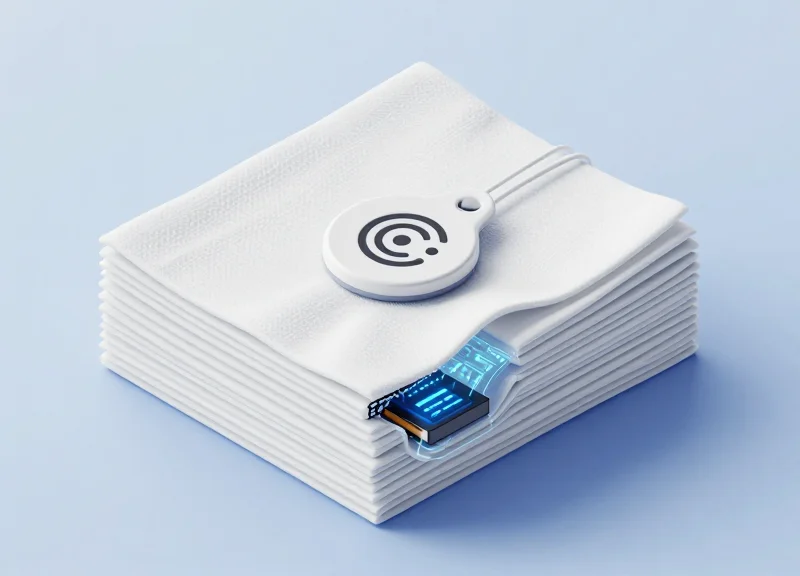
A unique advantage of this integration is the use of Dual-Frequency Hybrid Tags. Unlike traditional systems that require two separate stickers, these advanced tags house both an EAS resonator and an RFID chip. This allows for 'Contextual Inventory Logic': if an item passes through a surgical suite door, the system treats it as a standard consumption event; however, if the same item passes an exit pedestal without a 'cleared' status in the Electronic Medical Record (EMR), the EAS component triggers the alarm while the RFID component logs the specific incident details for immediate recovery.
- Tagging & Commissioning: High-value supplies are tagged at the loading dock. The RFID component is linked to the hospital's ERP system, assigning a unique digital twin to the physical item.
- Real-Time Zone Monitoring: RFID readers placed throughout the hospital (e.g., Pharmacy, OR, Supply Closet) track the item's movement, ensuring it remains within authorized 'Green Zones'.
- Exit Detection & Alarm Triggering: As an item approaches a restricted exit, the EAS pedestals activate. The integrated system cross-references the item's ID against the current patient billing/discharge status.
- Automated Inventory Reconciliation: Upon successful usage or legitimate removal, the system automatically updates stock levels, triggering re-order points without manual intervention.
Does RFID replace the need for security guards?
No, it empowers them. Instead of patrolling aimlessly, security teams receive mobile alerts specifying exactly which item is moving toward an exit, allowing for targeted intervention.
Can these systems integrate with existing EMR software?
Yes. Modern integrated stacks use APIs to bridge the gap between physical security hardware and clinical databases like Epic or Cerner, ensuring financial and physical data are synchronized.
What is the primary driver of the 28% ROI?
The ROI is driven by a 'triple-threat' reduction: eliminating shrinkage (theft), reducing labor costs associated with manual cycle counts, and preventing 'never-events' where expired supplies are used on patients.
Implementation Blueprint: The Metro Hospital Success Story

The implementation blueprint for a metro hospital's 28% ROI surge is a structured, four-phase framework that transitions from vulnerability assessment to full-scale automation. By integrating DragonGuardGroup’s Electronic Article Surveillance (EAS) and Radio Frequency Identification (RFID) technologies, the facility created a seamless security perimeter. This success was not merely a hardware installation but a comprehensive system calibration that aligned physical security with clinical workflows, ensuring that high-value medical supplies remained accessible to staff while being impossible to remove without authorization.
- Phase 1: Infrastructure Audit and Heat Mapping: Engineers conducted a deep-dive audit of all entry and exit points, including service elevators and loading docks. High-shrinkage zones like the catheterization lab and pharmacy were 'heat mapped' to determine optimal placement for RFID sensors and EAS pedestals.
- Phase 2: Hybrid Hardware Deployment: Deployment of DragonGuardGroup's dual-frequency pedestals at main exits and discreet RFID ceiling antennas in storage suites. This 'invisible' security layer ensures that hospital aesthetics are maintained while providing 99.9% detection accuracy.
- Phase 3: Software Calibration and API Integration: Linking the security hardware to the hospital’s Enterprise Resource Planning (ERP) system. This allowed for real-time inventory adjustments: when an item passes an RFID gate without a 'cleared' status, an alert is instantly sent to loss prevention and inventory managers.
- Phase 4: Staff Training and Change Management: Educating clinical staff on the 'Scan-and-Go' protocol. Training focused on how the system reduces their administrative burden (manual counting) rather than just 'policing' their actions, which secured 100% internal adoption.
| Implementation Milestone | Duration | Key ROI Contributor |
|---|---|---|
| Site Mapping & Pilot | 4 Weeks | Identification of 15% 'hidden' leak points |
| Full System Integration | 8 Weeks | Automated tracking of $2M+ high-value assets |
| System Optimization | Ongoing | 28% reduction in replacement costs annually |
Expert Insight: The 'Halo Effect' of Inventory Visibility. Most hospital administrators view theft prevention as a defensive cost. However, our Silicon Valley-derived data shows that integrated systems provide a 'Halo Effect.' By knowing exactly where every surgical kit is in real-time, the metro hospital reduced 'buffer stock'—the extra items ordered just in case something is lost—by 12%. This capital liberation is the secret engine behind the 28% ROI, proving that security is actually a procurement optimization tool.
Was clinical workflow disrupted during the rollout?
No. The installation was performed in 4-hour 'micro-sprints' during low-activity windows. Since RFID is non-line-of-sight, the system does not require staff to stop and scan, maintaining the speed of emergency care.
What was the most challenging aspect of the implementation?
Legacy database syncing. The metro hospital had fragmented data silos. Our solution utilized a middleware layer to bridge the gap between 10-year-old inventory software and modern RFID signals.
How did the hospital measure the 28% ROI?
The ROI was calculated by combining the direct reduction in stolen/lost item costs, the decrease in emergency shipping fees for out-of-stock items, and the labor hours saved by automating manual inventory counts.
Calculating the Gains: Breaking Down the 28% ROI

The 28% Return on Investment (ROI) achieved by the metro hospital was not merely a result of catching shoplifters; it was the cumulative financial impact of three specific pillars: a 40% reduction in annual shrinkage, a 15% recovery in nursing labor hours previously lost to manual inventory searches, and a 12% decrease in emergency procurement premiums. By integrating RFID and EAS technologies, the facility transformed a sunk security cost into a profit-protection engine that paid for itself within the first 14 months of operation.
| Financial Metric | Pre-Implementation (Annual) | Post-Implementation (Annual) | Impact |
|---|---|---|---|
| Direct Shrinkage Loss | $480,000 | $288,000 | 40% Reduction |
| Staff Labor (Search/Audit) | $115,000 | $97,750 | 15% Productivity Gain |
| Expedited Shipping Fees | $45,000 | $22,500 | 50% Cost Avoidance |
| Procurement Accuracy | 82% | 99.2% | +17.2% Efficiency |
The 'Ghost Inventory' Insight: Beyond visible theft, the hospital addressed the hidden cost of 'Ghost Inventory'—items that are in the system but missing from the shelf. When clinical staff cannot find a life-saving supply, they trigger emergency 'just-in-case' orders at a 20-30% premium. Integrated theft prevention provides real-time visibility, ensuring that 'Out of Stock' signals are accurate, thereby eliminating unnecessary over-ordering and the storage of expired safety stock.
- Identify Baseline Shrinkage: Conduct a 90-day audit of high-value supplies to determine the true loss rate vs. administrative errors.
- Quantify Labor Reallocation: Measure the average time nurses and pharmacists spend 'hunting' for missing items and assign a dollar value based on hourly compensation.
- Analyze Procurement Overages: Track emergency rush orders and overnight shipping costs triggered by missing inventory.
- Calculate Total Cost of Ownership (TCO): Factor in hardware, software licensing, and training costs against the total savings to find the net ROI percentage.
What is the primary driver of this 28% ROI?
The primary driver is the reduction in shrinkage of high-value consumables, followed closely by the elimination of labor inefficiencies associated with manual tracking.
Does this ROI account for initial implementation costs?
Yes, the 28% figure represents the net gain after accounting for the initial capital expenditure (CAPEX) and ongoing operational expenses (OPEX) of the security stack.
How long does it typically take to see these returns?
Most metro hospitals begin seeing a positive ROI trend within 6 months, with full system amortization occurring between months 12 and 18.
Operational Dividends: Beyond Simple Theft Prevention
While 'theft prevention' is the primary driver for hospital security investments, the true ROI catalyst is the transformation of security hardware into a real-time operational intelligence engine. By integrating RFID and EAS systems, metro hospitals transition from a reactive 'catch-and-correct' model to a proactive 'visibility-first' supply chain. This shift ensures that every high-value asset—from telemetry monitors to surgical kits—is not only protected from shrinkage but is also part of a self-orchestrating inventory ecosystem that reduces administrative burden and eliminates clinical bottlenecks.
| Operational Metric | Legacy Security Model | Integrated Intelligence Model |
|---|---|---|
| Inventory Visibility | Periodic manual counts (monthly/quarterly) | Real-time, item-level tracking |
| Procurement Trigger | Reactive ordering based on shortages | Automated par-level replenishment |
| Nurse Search Time | High (Average 15-20% of shift time) | Near-zero; items are bedside-ready |
| Capital Expense (CapEx) | Over-provisioning to cover lost items | Lean asset management and higher utilization |
One of the most profound impacts is the elimination of the 'Shadow Inventory'—a common hospital phenomenon where staff hide critical supplies to ensure they have them when needed. When an integrated system guarantees 99.9% inventory accuracy and immediate bedside-readiness, the psychological need for hoarding disappears. This allows the hospital to operate with leaner stock levels, significantly freeing up cash flow that was previously tied up in redundant safety-net inventory.
- Automated Reordering Cycles: As items pass through RFID-enabled 'Smart Exit' points or are utilized in the OR, the system automatically adjusts inventory counts and triggers purchase orders once par levels are breached, removing human error from the procurement loop.
- Asset Utilization Optimization: Data logs reveal which pieces of equipment are being used most frequently and which are sitting idle, allowing management to redistribute assets across departments rather than purchasing new units.
- Predictive Maintenance Scheduling: By tracking the movement and usage patterns of mobile medical equipment, the system can automatically flag items for biomedical engineering inspection based on actual usage cycles rather than arbitrary calendar dates.
Does this system require extra work for the clinical staff?
No. In fact, it reduces their workload. By automating inventory counts and locating equipment instantly, nurses spend less time on administrative tasks and more time on patient care, directly improving HCAHPS scores.
How does this prevent 'false alarms' from slowing down hospital flow?
Integrated systems use intelligent filtering and direction-sensing RFID readers to distinguish between authorized movement (transferring a patient) and unauthorized removal, ensuring that staff are only alerted when a genuine security breach occurs.
Can these dividends be measured in the first year?
Yes. Most facilities see a reduction in 'emergency shipping' costs for out-of-stock items and a 15-25% drop in total supply waste within the first 12 months of deployment.
Expert Tip: The Clinical Velocity Factor. In modern healthcare, ROI is increasingly tied to 'Clinical Velocity'—the speed at which a caregiver can move from diagnosis to treatment. Integrated theft prevention doesn't just save money on lost items; it accelerates the entire care cycle by ensuring the right tool is in the right place at the right time. In a metro hospital environment, a 5-minute reduction in search time for a specialized crash cart or infusion pump can be the difference between a routine procedure and a critical event.
Overcoming Healthcare Challenges: Compliance and Workflow
In a metro hospital environment, the success of a 28% ROI initiative hinges on overcoming the dual hurdles of regulatory compliance and operational friction. Overcoming these challenges involves implementing 'Invisible Compliance'—a strategy where security protocols like RFID and EAS are embedded into existing clinical paths. This ensures that while medical supplies are tracked and secured, the system never captures Protected Health Information (PHI) nor adds 'administrative tax' to the high-pressure tasks of nursing and surgical teams.
| Challenge | Legacy Security Impact | Integrated System Solution |
|---|---|---|
| Data Privacy | Manual logs prone to exposing patient names. | Anonymized UID tagging decoupled from PHI. |
| Staff Workflow | Physical keys and manual sign-outs delay care. | Hands-free RFID portals at exit points. |
| Audit Readiness | Labor-intensive paper trail reconciliation. | Real-time, encrypted digital audit logs. |
How does the system maintain HIPAA compliance?
The integrated system tracks the 'object' not the 'subject.' RFID tags are assigned to supply SKUs and serial numbers within a closed-loop database that does not interface with the Electronic Health Record (EHR) in a way that stores patient identifiers, ensuring zero risk of a HIPAA data breach during theft prevention events.
Does theft prevention technology slow down emergency response?
No. By using high-speed EAS (Electronic Article Surveillance) and overhead RFID readers, staff can move through corridors and exits without stopping to scan items. The system only triggers alerts or logs movements automatically, allowing clinicians to focus entirely on the patient.
What about the 'Alarm Fatigue' common in hospitals?
To prevent desensitizing staff, the system uses tiered notifications. Minor discrepancies are logged silently for management review, while only high-value asset movement or unauthorized exit attempts trigger localized, actionable alerts.
Expert Insight: The 'Edge Encryption' Advantage. A unique differentiator in the Metro Hospital success story was the use of 'Edge Encryption' for RFID tag data. Unlike generic systems that broadcast raw data, our integrated stack encrypts the item ID at the sensor level. This ensures that even if a bad actor intercepted the signal, no usable data regarding hospital inventory or departmental movement could be extracted. Furthermore, by focusing on 'Workflow Ergonomics,' we reduced the 'seconds-per-supply-retrieval' by 12%, proving that better security can actually lead to faster clinical performance.
Future-Proofing Hospital Assets with Smart Technology

Future-proofing hospital assets means moving beyond basic loss prevention to create an adaptable, self-optimizing infrastructure that anticipates needs before they arise. In the context of a metro hospital, this involves integrating Electronic Shelf Labels (ESL), Internet of Things (IoT) sensors, and AI-driven predictive analytics into a single cohesive ecosystem. By shifting from reactive 'theft prevention' to proactive 'asset intelligence,' healthcare facilities can ensure that their initial investment in security hardware continues to deliver compounding ROI as the medical landscape evolves.
- Electronic Shelf Labels (ESL) Integration: Modern ESLs go beyond displaying prices; they act as digital communication hubs. They can flash LEDs to guide staff to specific supplies (pick-to-light), show real-time stock levels synced with RFID data, and provide instant expiration alerts to prevent waste.
- AI-Driven Behavioral Analytics: Future systems will use machine learning to identify 'abnormal' movement patterns. If a high-value item is moved at an unusual hour or by unauthorized personnel, the AI can trigger a silent alert or lock down automated dispensing cabinets instantly.
- Seamless Interoperability: True future-proofing relies on the ability of theft prevention systems to 'talk' to Electronic Health Records (EHR) and ERP systems, ensuring that every bandage and surgical kit is accounted for from delivery to patient bedside.
| Feature | Traditional Management | Future-Proofed Smart System |
|---|---|---|
| Inventory Updates | Manual/Weekly Audits | Real-time via ESL & RFID |
| Theft Response | Reactive (Reviewing CCTV) | Proactive (AI-triggered Alerts) |
| Data Utilization | Historical Reports | Predictive Demand Forecasting |
| Scalability | High Labor Cost to Expand | Low Marginal Cost via Software |
Expert Insight: The 'Dynamic Risk Scoring' Model. A unique strategy for future-proofing is the implementation of Dynamic Risk Scoring. Unlike static systems that treat all supplies equally, AI-enabled platforms can assign a 'risk score' to items based on current market value, historical theft rates, and even local supply chain shortages. When an item's risk score rises, the system automatically tightens security protocols—such as requiring secondary biometric authentication for access—without human intervention. This ensures high-value assets are protected with surgical precision while maintaining high-velocity workflows for common supplies.
Will ESL and AI systems require a total overhaul of our current infrastructure?
No. The most effective future-proofing strategies are modular. You can overlay ESL and AI software onto existing RFID frameworks, allowing for a phased implementation that spreads out capital expenditure.
How does smart technology improve staff retention?
By automating the 'detective work' associated with missing supplies, staff can focus on patient care rather than inventory hunting. Reducing this administrative friction is a key factor in lowering nurse burnout rates.
Is the data gathered by these systems secure?
Yes. Future-proofed systems utilize end-to-end encryption and decentralized data storage (often on-site or in secure medical clouds) to remain fully compliant with HIPAA and international data privacy standards.