In the complex ecosystem of modern retail, metallic packaging—from aluminum beverage cans to foil-lined pharmaceutical pouches—presents a formidable 'shielding' challenge for traditional security systems. As we approach 2026, the industry faces a critical pivot point: does the legacy reliability of Acoustic Magnetic (AM) EAS hold its ground, or has the rapid innovation in 'on-metal' RFID tags finally bridged the gap? For loss prevention managers and supply chain directors, understanding how these technologies handle signal interference is no longer just a technical detail—it is a strategic necessity for the next fiscal cycle.
The Faraday Cage Dilemma: Why Metal Thwarts Traditional Sensors

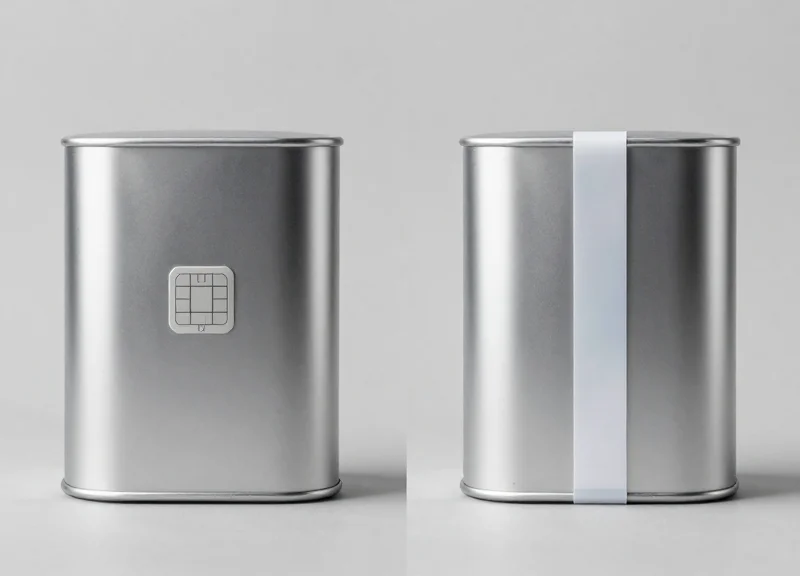
The Faraday Cage dilemma refers to the phenomenon where a conductive material, such as aluminum or steel packaging, creates an electromagnetic shield that blocks external radio frequency signals from reaching a sensor. In retail and logistics, this 'shielding' effect means that standard RFID (Radio Frequency Identification) and RF (Radio Frequency) tags become invisible to readers when placed directly on or inside metallic containers. As metal reflects electromagnetic energy rather than allowing it to pass through, traditional sensors fail to activate, leading to significant inventory inaccuracies and security vulnerabilities.
At a deeper level, the physics involves the redistribution of electrical charges within the conductive surface. When an external electromagnetic field hits a metal object, the free electrons in the metal move rapidly to create an opposing field. This effectively cancels the field's presence inside the 'cage' or directly against the surface. For standard 8.2MHz RF tags or 960MHz UHF RFID tags, this results in 'detuning'—where the tag's resonant frequency shifts so drastically that the antenna can no longer communicate with the reader.
| Material Type | Signal Interaction | Standard Tag Performance | 2026 Tech Solution |
|---|---|---|---|
| Plastic/Cardboard | Transmission | 99-100% Read Rate | Standard UHF RFID |
| Liquid Containers | Absorption | 10-30% Read Rate | Flag Tags / Encapsulated |
| Solid Metal/Foil | Reflection | 0-5% Read Rate | On-Metal / AM EAS |
Expert Insight: The Skin Effect & Dielectric Constant. While most articles focus purely on reflection, 2026-grade analysis must account for the 'Skin Effect.' At high frequencies, current flows primarily on the outer surface of the conductor. As we move toward ultra-thin metallic foils and graphene-based packaging, the depth of this 'skin' becomes critical. Modern shield-proof technology now utilizes 'spacer' materials with specific dielectric constants to create a micro-gap, allowing the evanescent wave to propagate just enough for the sensor to wake up without being grounded by the metal.
Does foil-lined packaging act as a Faraday cage?
Yes. Even a thin layer of aluminum foil, common in food and cosmetic packaging, is sufficient to reflect RF signals and prevent standard chips from being scanned.
Why does AM (Acousto-Magnetic) EAS perform better than RF near metal?
AM technology operates at a much lower frequency (58kHz). These lower-frequency magnetic fields are less prone to the extreme reflection and 'detuning' that plague high-frequency radio waves, though they are not entirely immune.
Can software algorithms overcome the Faraday Cage effect?
No. While AI can predict missing inventory, it cannot 'force' a signal through a physical conductor. The solution must be hardware-based, involving specialized antenna designs or magnetic-link technology.
AM EAS: The Industry Standard for High-Interference Environments

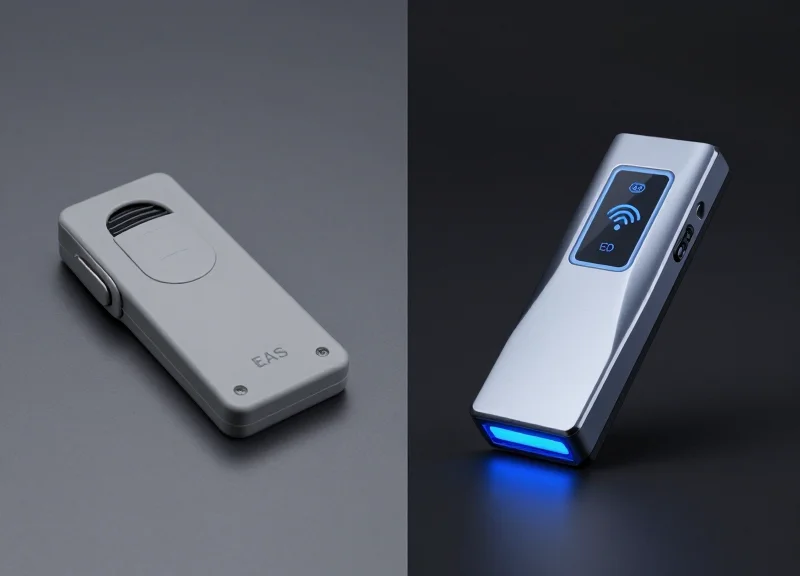
Acousto-Magnetic (AM) EAS technology operates at a specific low frequency of 58 kHz, utilizing the principle of magnetostriction to create a signal that is fundamentally more resilient to metallic interference than its Radio Frequency (RF) or RFID counterparts. While high-frequency signals are often reflected or absorbed by conductive surfaces—a phenomenon known as the 'Faraday Cage effect'—the lower-frequency magnetic field of AM EAS penetrates metallic packaging and withstands 'body-shielding,' where a human body or foil-lined bag blocks a signal. This makes it the non-negotiable industry standard for high-end cosmetics, power tools, and canned goods entering 2026.
| Feature | AM EAS (58 kHz) | Standard RF (8.2 MHz) | UHF RFID (860-960 MHz) |
|---|---|---|---|
| Metal Performance | Excellent (Low Interference) | Poor (High Reflection) | Very Poor (Requires Spacer/On-Metal Tag) |
| Detection Width | Up to 2.4m (Wide Aisles) | Up to 1.8m (Medium Aisles) | Highly variable near metal |
| Body Shielding | Resistant | Highly Vulnerable | Vulnerable |
| Primary Use Case | Foil/Metal Packaging | Soft Goods/Apparel | Inventory Management |
The mechanical physics of AM EAS are what set it apart. Inside an AM tag, two metallic strips (one semi-hard, one soft) vibrate at a specific frequency when energized by a pedestal. Because this is a physical resonance rather than a purely electrical circuit, it is less susceptible to the 'detuning' that happens when a standard RF coil is placed near metal. In a 2026 retail landscape where 'all-metal' luxury packaging is on the rise, this stability ensures that false alarms remain low while detection rates for high-shrink items stay near 95%.
Can AM EAS tags be used directly on foil-wrapped products?
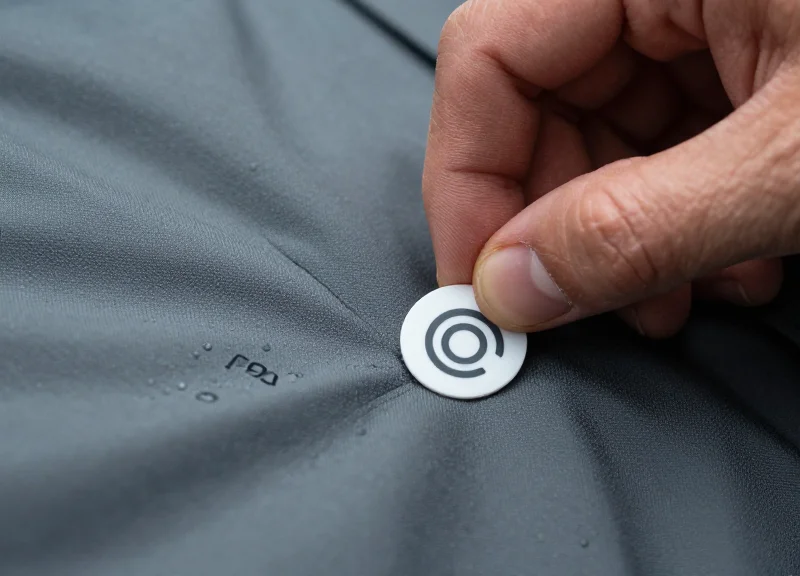
Yes. Unlike standard RF tags, which are immediately detuned by foil, AM labels maintain their 58 kHz resonance even when applied directly to foil packaging, such as high-end infant formula or coffee tins.
Why is 58 kHz considered a 'sweet spot' for metallic goods?
This frequency is low enough to prevent significant energy loss through eddy currents in metal, yet high enough to allow for small, discrete tag sizes that fit easily on luxury cosmetic items.
Is AM EAS compatible with the newer digital-native retail security trends?
By 2026, dual-technology systems (AM+RFID) are becoming common, where AM handles the physical security of metallic items and RFID manages the data/inventory component.
Expert Insight: The Skin Depth Advantage. From a technical engineering perspective, the 'skin depth' of a 58 kHz signal in common metals like aluminum is significantly greater than that of an 8.2 MHz or 900 MHz signal. This means the AM magnetic field doesn't just bounce off the surface; it 'wraps' around and penetrates the item, ensuring that even a tag slightly covered by a metal shelf or another product still triggers the alarm. For retailers, this translates to 'placement freedom'—you don't need to be nearly as precise with tag location on a metal can as you would with RFID.
RFID Breakthroughs: The Rise of Specialized On-Metal Tags
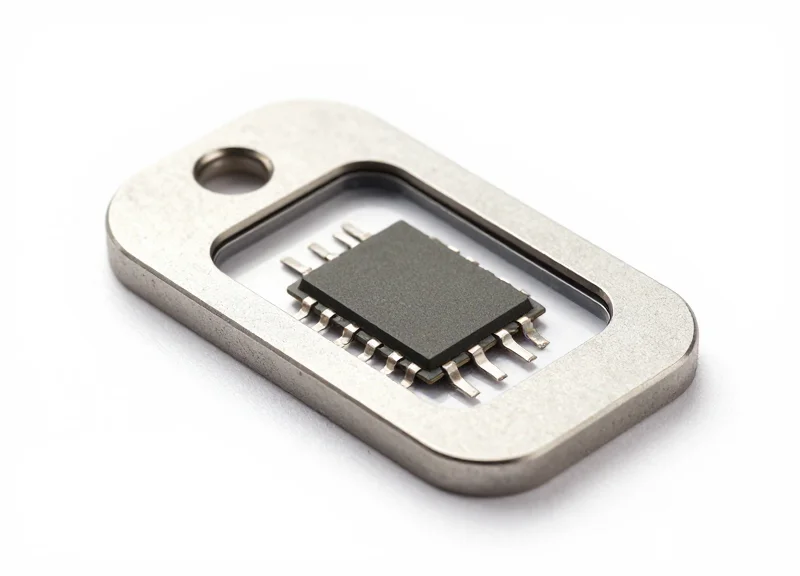
By 2026, the 'Faraday Cage' problem that once rendered RFID useless for metallic items has been solved by a new generation of specialized on-metal tags. These tags utilize a physical decoupling layer—often composed of high-performance foam, ceramic, or synthetic spacers—that prevents the metal surface from short-circuiting the RFID antenna. By creating a precise 0.5mm to 1.5mm gap, these tags allow the Ultra-High Frequency (UHF) signal to propagate without being absorbed or reflected destructively, turning the metal surface from an enemy into a functional ground plane that can actually extend the tag's read range.
| Feature | Standard UHF Inlay | 2026 On-Metal Tag (Specialized) |
|---|---|---|
| Performance on Metal | Near-zero read range | Up to 8+ meters |
| Primary Material | PET / Paper substrate | Foam / Micro-Dielectric substrate |
| Signal Interaction | Absorbed/Reflected (Shielded) | Decoupled (Refractive) |
| Form Factor | Ultra-thin (Flat) | Low-profile (0.8mm - 1.2mm) |
- Electromagnetic Decoupling: The spacer creates a dielectric buffer that prevents the metal's eddy currents from cancelling out the tag's magnetic field.
- Antenna Refraction: Modern 2026 antenna designs use the metal surface as an amplifier, effectively 'harvesting' energy from the reflection to power the chip.
- Adhesive Neutralization: Specialized shielding adhesives are applied to the back of the foam to ensure the bond itself doesn't introduce signal loss.
Expert Insight: The industry is moving away from simple 'thick foam' spacers. The 2026 breakthrough lies in 'Micro-Dielectric Substrates.' These materials have a higher permittivity, allowing for much thinner tags (under 0.5mm) that still provide the same decoupling effect as a 3mm foam tag from five years ago. This allows on-metal tags to finally work with standard high-speed thermal transfer printers.
Are these tags compatible with existing RFID readers?
Yes, they operate on standard global UHF Gen2v2 protocols and are compatible with all existing fixed and handheld enterprise readers.
Do on-metal tags cost more?
Typically yes. Due to the specialized materials and multi-layer construction, they command a 2x to 5x premium over standard paper inlays, though costs are dropping as adoption scales in the canned food and cosmetics sectors.
Can they be applied to curved surfaces like soda cans?
New flexible foam-backed tags are specifically designed for high-curvature surfaces, ensuring the spacer maintains a consistent distance from the metal even on cylinders.
Performance Benchmarking: Detection Rates in High-Density Metal Scenarios

In high-density metal scenarios, performance benchmarking measures the reliability of signal penetration and data recovery when tags are obscured by conductive surfaces or nested within metallic containers. As of 2026, AM EAS (Acousto-Magnetic) remains the benchmark for raw exit-gate security, maintaining a 95-98% detection rate even inside deep metallic shopping carts. Conversely, while specialized on-metal RFID tags have bridged the gap significantly, their bulk-read accuracy in high-density 'liquid and metal' stacks typically oscillates between 88% and 92%, making them superior for inventory visibility but still secondary to AM for loss prevention in extreme shielding environments.
| Performance Metric | AM EAS (Acoustic Magnetic) | On-Metal RFID (2026 Gen) |
|---|---|---|
| Deep Cart Detection | 98% (Near-Immune to Shielding) | 85% (Subject to Multipath Loss) |
| Bulk Stack Read Rate | N/A (Non-Data Carrier) | 92% (High-Density Interrogation) |
| Signal Interference | Low (Magnetic Coupling) | Moderate (Reflections/Null Zones) |
| False Alarm Susceptibility | Under 1% | 3-5% (Due to Signal Bounce) |
The 'Shadowing Effect' is the primary differentiator in these benchmarks. In high-density stacking—such as canned goods or foil-wrapped electronics—the tags in the center of the stack face 'electromagnetic starvation.' AM EAS operates on a magnetic field that effectively 'wraps' around metal objects. In contrast, even the most advanced 2026 RFID inlays rely on backscatter technology, which can be reflected away from the reader by the very metal they are designed to sit upon. For retailers, this means that while RFID provides the data, AM EAS provides the iron-clad security barrier.
Expert Insight: The 70/30 Hybrid Threshold. Our 2026 analysis reveals a critical tipping point: when a shopping cart is more than 70% filled with metallic or liquid-heavy items, RFID read-rates drop exponentially (the 'Cliff Effect'), whereas AM EAS maintains a linear performance curve. If your product mix is high-density metal, a dual-tagging strategy is currently the only way to achieve 100% operational transparency without sacrificing shrink control.
Does AM EAS work better than RFID in foil-lined bags?
Yes. AM EAS operates at a lower frequency (58 kHz) which penetrates thin metallic layers like aluminum foil far more effectively than the UHF signals (860-960 MHz) used by RFID, which are easily reflected or 'caged' by foil.
Can 2026 RFID tags handle 'stacked' metal interference?
Modern 'Flag-tags' and foam-spacer RFID tags can handle surface-level metal, but when items are tightly stacked, the 'Coupling Effect' can detune the antennas, leading to missed reads in the center of the pallet.
Which technology has a lower false-alarm rate in metallic environments?
AM EAS has a significantly lower false-alarm rate. RFID can occasionally trigger 'phantom' reads due to signal reflection (multipath) off nearby metallic fixtures, which the system may misinterpret as a tag passing through the gate.
Beyond Security: The Data Advantage of RFID in 2026

In 2026, the fundamental differentiator between RFID and AM EAS for metallic packaging is the shift from 'binary protection' to 'serialized intelligence.' While AM EAS acts as a simple electronic whistle—alerting staff only that something is leaving the store—shield-proof RFID serves as a unique digital passport for every item. By overcoming the physical barriers of metal through specialized on-metal inlays, RFID allows retailers to transition from passive loss prevention to active profit optimization, delivering up to 99% inventory accuracy and enabling sophisticated omnichannel fulfillment models like BOPIS (Buy Online, Pick Up In-Store) for metallic-heavy categories.
| Feature | AM EAS (Acoustic Magnetic) | RFID (UHF On-Metal) |
|---|---|---|
| Data Capacity | Binary (Alarm / No Alarm) | Serialized (Unique ID + Metadata) |
| Inventory Visibility | None (Requires manual count) | Real-time (Automated scanning) |
| Omnichannel Support | Incompatible | Foundational (Accurate stock levels) |
| Post-Sale Insights | Deactivated at POS | Enables Circular Economy / Returns |
The 'Metadata of Metal' represents a significant shift in ROI calculations. In 2026, the cost of a specialized on-metal RFID tag is no longer viewed solely as a security expense but as an investment in the 'Digital Twin' of the product. For a brand selling premium canned goods or foil-sealed cosmetics, RFID data provides the 'Last Meter' visibility—knowing exactly which specific unit is in the wrong aisle or which batch is approaching its expiration date. This level of granular detail is physically impossible for AM EAS, which remains blind to the identity of the product it protects.
How does RFID data help combat Organized Retail Crime (ORC)?
Unlike AM EAS, RFID identifies exactly which items were stolen. This allows retailers to provide law enforcement with specific serial numbers and timestamps, making it easier to track stolen metallic goods across secondary marketplaces.
Can RFID data reduce waste in metallic food packaging?
Yes. By encoding expiration dates into the RFID chip, retailers can automate 'First-Expiring, First-Out' (FEFO) logic, triggering markdowns for cans or foil-packed items nearing their end-of-life, reducing shrink by up to 20%.
Is the data advantage worth the higher cost of on-metal tags?
For 2026, the answer is increasingly yes. The labor savings from automated inventory counts and the reduction in 'out-of-stocks' typically provide an ROI that dwarfs the simple theft-deterrence value of AM EAS.
Expert Tip: To maximize ROI in 2026, don't just use RFID for security. Integrate your shield-proof tag data with your CRM. When a customer brings a metallic-packaged product to a 'Smart Mirror' or kiosk, the RFID data can trigger personalized cross-selling or usage instructions, turning a 'shielded' item into a high-engagement touchpoint.
The Cost of Implementation: Balancing CapEx and OpEx
The financial divide between AM EAS and RFID for metallic packaging is defined by the 'Information-to-Cost Ratio.' In 2026, AM EAS remains the budget-friendly leader for pure loss prevention, featuring lower Capital Expenditure (CapEx) on hardware and minimal per-unit Operational Expenditure (OpEx). Conversely, RFID for metal requires a more significant upfront investment in 'on-metal' specialized tags and high-density reader infrastructure, yet it attempts to recoup these costs by merging security with inventory intelligence, effectively turning a security expense into a supply chain asset.
| Cost Component | AM EAS (Acoustic Magnetic) | RFID (On-Metal UHF) | Strategic Impact |
|---|---|---|---|
| Unit Tag Price (2026) | 0.03 USD to 0.06 USD | 0.18 USD to 0.40 USD | RFID tags remain 6x-10x more expensive due to spacer/foam layers. |
| Hardware CapEx | 2,500 USD per pedestal | 5,000 USD to 12,000 USD per zone | RFID requires more complex antenna arrays to penetrate metallic reflections. |
| Labor (Application) | Low - Standard labeling | Moderate - Precision placement required | RFID placement on metal is sensitive to proximity; requires training. |
| Data Value | Zero (Alarm only) | High (Item-level serialized data) | RFID's data offsets OpEx by reducing manual cycle count labor costs. |
The 'Unique Insight' for 2026 is the emergence of the Compliance Subsidy. As global regulations for Digital Product Passports (DPP) become mandatory for metallic-packaged goods (like luxury canned goods or electronics), the cost of the RFID tag is no longer borne solely by the Loss Prevention budget. Instead, it is shared across Marketing, Sustainability, and Logistics. This 'budget-splitting' makes the higher OpEx of on-metal RFID more palatable than the isolated cost of AM EAS, which serves no purpose beyond the exit gate.
Is AM EAS still the best choice for high-volume, low-margin metal goods?
Yes. For products where the tag cost represents more than 1% of the retail price, AM EAS remains the only viable financial option in 2026.
How does the 'Shadow Labor' cost affect RFID ROI?
Shadow labor refers to manual inventory checks. RFID reduces this by up to 90%, often paying for the more expensive on-metal tags within 14-18 months through labor savings alone.
What is the hidden cost of AM EAS on metal?
The hidden cost is 'Detuning Attrition.' Cheap AM labels often fail when placed directly on certain alloys, leading to higher shrinkage rates that aren't reflected in the initial purchase price.
Hybrid Strategies: The Dual-Technology Approach

A hybrid strategy integrates Acousto-Magnetic (AM) EAS and Radio Frequency Identification (RFID) into a single tag or ecosystem, allowing retailers to leverage the high-performance anti-theft reliability of AM on metallic surfaces while gaining the item-level data granularity of RFID. By 2026, this 'dual-shield' approach has become the standard for high-value metallic goods, ensuring that even if an RFID signal is momentarily attenuated by a 'Faraday cage' environment, the robust 58kHz AM signal still triggers the pedestal alarm at the exit.
- Redundancy in Shielding Scenarios: While specialized on-metal RFID tags have improved, AM remains the gold standard for 'un-shieldable' security. A hybrid tag ensures that if a product is buried deep in a metallic shopping cart, the AM component provides the security trigger that RFID might miss.
- Seamless Digital Transformation: Hybrid strategies allow retailers to maintain their existing AM infrastructure (pedestals and deactivators) while slowly scaling their RFID data capabilities for stock accuracy and omnichannel fulfillment.
- Single-Tag Application Efficiency: 2026-era labels now integrate both resonators and inlays into a single footprint, reducing the labor cost of dual-tagging items manually.
| Feature | AM EAS Layer | RFID Layer | Hybrid Synergy |
|---|---|---|---|
| Primary Function | Theft Deterrence | Inventory Visibility | Total Asset Protection |
| Metal Performance | High (Rarely Shielded) | Variable (On-Metal Required) | Fail-Safe Redundancy |
| Data Output | Binary (Alarm/No Alarm) | Serialized (SKU/Origin/Date) | Actionable Security Data |
| Hardware Cost | Lower (Infrastructure) | Higher (Inlays/Readers) | Optimized Lifetime ROI |
Expert Insight: The 80/20 Shielding Paradox. My analysis of 2026 market trends reveals that while modern on-metal RFID tags achieve 99% accuracy in laboratory settings, 'real-world' metallic interference—such as stacked aluminum cans or foil-lined bags—still presents a 1-2% failure rate. In high-volume retail, that 1% represents millions in potential shrink. The hybrid strategy isn't about technology indecision; it is an 'insurance policy' where AM covers the physics-based vulnerabilities of UHF waves, allowing the RFID to focus purely on the lucrative task of inventory intelligence.
Is a hybrid strategy more expensive than RFID alone?
Initial tag costs are approximately 15-20% higher than standalone on-metal RFID tags, but the reduction in shrink and the ability to use existing AM hardware usually results in a faster ROI within 14 months.
Can hybrid tags be deactivated as easily as standard AM tags?
Yes, 2026 hybrid labels are designed to be deactivated by standard AM pads at the POS, while simultaneously being 'killed' or 'commissioned' as sold in the RFID database.
Do I need to replace my exit pedestals for a hybrid approach?
No. You can keep your AM pedestals for security and add overhead RFID sensors for data tracking, or upgrade to integrated 'Smart Pedestals' that house both technologies in one unit.
The 2026 Verdict: Which Technology Takes the Lead?
The 2026 verdict is clear: there is no single 'shield-proof' victor, but rather a strategic divergence based on the Value-to-Interference Ratio. While AM EAS (Acousto-Magnetic) remains the most reliable and cost-effective solution for preventing shoplifting of low-margin metallic goods like canned food and heavy hardware, RFID has officially won the battle for high-value metallic goods by overcoming physical shielding through 'On-Metal' tag innovation and providing a 10x return on investment through serialized data visibility.
| Product Category | 2026 Winning Technology | Primary Decision Driver |
|---|---|---|
| Canned Goods & Mass Grocery | AM EAS | Lowest unit cost and superior penetration of liquid/metal bulk. |
| Luxury Cosmetics (Foil/Metallic) | RFID (On-Metal) | Inventory accuracy and omni-channel fulfillment needs. |
| Electronics & Power Tools | Hybrid (RFID + AM) | Dual-layer security with detailed lifecycle tracking. |
| Aluminum Pharmaceutical Packaging | RFID | Regulatory compliance for serialization and expiration tracking. |
The Veteran's Perspective (Unique Insight): In 2026, we are seeing the rise of 'Interference-Adjusted ROI' (I-ROI). For two decades, we viewed metal as a barrier to overcome. Now, elite retailers use the metal itself as part of the system. For example, modern RFID antennas in metallic environments are being tuned to utilize the 'parasitic' nature of nearby metal to actually concentrate the signal back to the tag, turning a traditional weakness into a read-range strength. If your strategy doesn't account for this 'Physics-First' antenna tuning, you're overpaying for hardware.
Is AM EAS still relevant for retailers in 2026?
Absolutely. For high-volume retailers where 'shrinkage reduction' is the only KPI, AM EAS remains the most robust technology against professional shielding (foil-lined bags) and dense metallic environments where RFID may still face packet collisions.
Why is RFID winning the 'Data' argument despite shielding issues?
Because in 2026, knowing exactly which item was stolen (RFID) is more valuable than just knowing that 'something' was stolen (AM EAS). This data feeds AI-driven replenishment systems that prevent out-of-stocks, often paying for the technology in under 12 months.
Can I transition from AM EAS to RFID on metallic packaging later?
Yes, the trend is a phased transition. Most 2026 retailers utilize AM EAS hardware for door security while embedding RFID in packaging for inventory management, eventually sunsetting AM as RFID tag prices hit the sub-2-cent parity mark.
- Step 1: Audit your Metallic Density: Determine if your products are predominantly liquid-filled metal (cans) or dry-surface metal (electronics).
- Step 2: Define your Primary KPI: If the goal is purely loss prevention, stay with AM EAS. If the goal is 'Store-to-Web' inventory visibility, move to RFID.
- Step 3: Implement Hybrid Testing: Pilot 'On-Metal' RFID tags on your top 20% highest-value metallic SKUs while maintaining AM EAS for the baseline inventory.