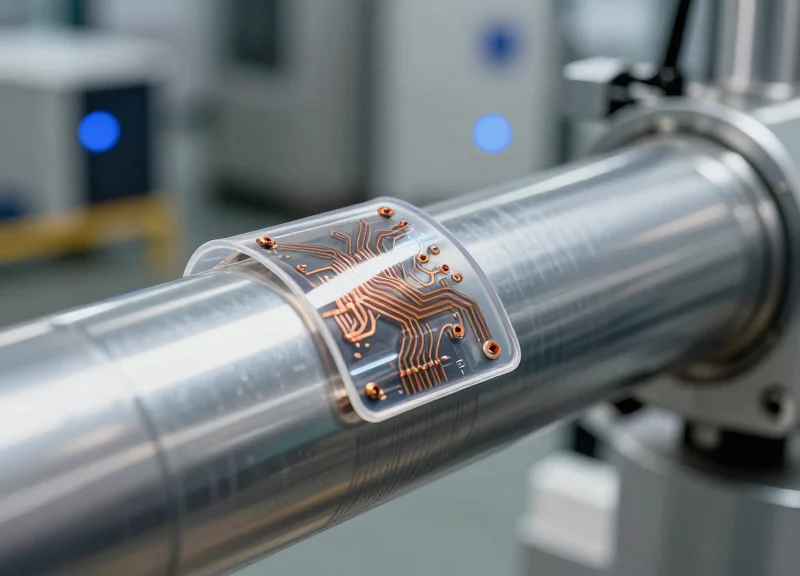
The traditional constraints of asset tracking are dissolving. For decades, rigid RFID tags forced industrial operations to choose between tracking accuracy and physical adaptability. As we approach 2026, the shift toward next-gen bendable RFID technology is no longer a luxury—it is the foundation of the modern smart warehouse. In this article, we explore how flexible RFID is overcoming the limitations of the past to redefine industrial logistics and why it is becoming the non-negotiable standard for the next decade.
The Evolution of RFID: From Rigid Constraints to Flexible Solutions
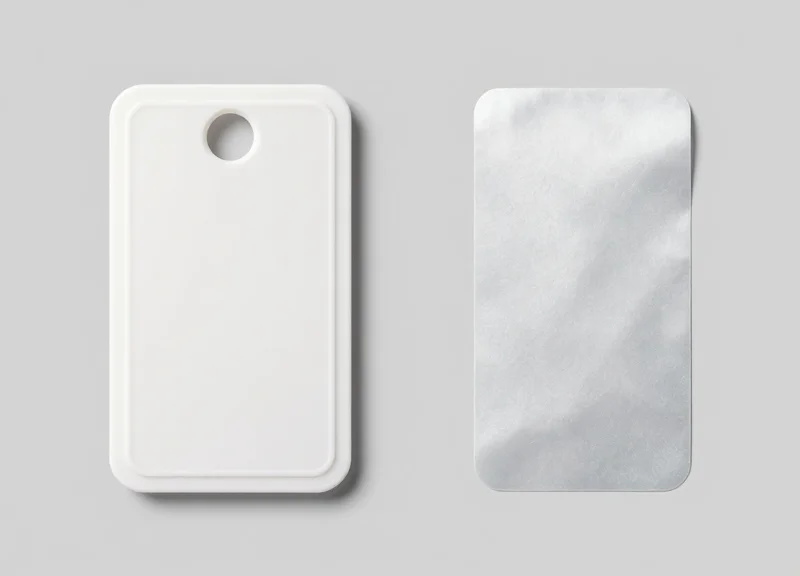
The evolution of RFID technology from rigid constraints to flexible solutions marks a transition from bulky, component-heavy hardware to ultra-thin, bendable substrates like PET and Polyimide. This shift enables seamless integration onto non-planar surfaces, curved industrial assets, and high-impact logistics environments where traditional hard tags would fail. By 2026, the standard for smart warehousing is moving toward these 'bendable' sensors because they offer superior durability, lower profiles, and the ability to survive the mechanical stresses of automated robotic handling systems.
For the past twenty years, industrial RFID was synonymous with 'ruggedized' hard tags. These were often thick, rectangular bricks housed in ABS plastic or FR4 epoxy. While durable against moisture, their rigidity was their Achilles' heel. In a modern warehouse, assets aren't always flat; we track pressurized canisters, narrow-gauge piping, and even soft-shell containers. A rigid tag on a curved surface creates a 'lever effect,' where the slightest impact or thermal expansion causes the adhesive to fail or the tag housing to crack. The transition to flexible RFID isn't just about aesthetics; it is a fundamental re-engineering of the antenna-to-chip bond to ensure data integrity under physical deformation.
| Feature | Legacy Rigid Tags | Next-Gen Bendable RFID |
|---|---|---|
| Primary Material | Hard Plastic / Ceramic / FR4 | PET / Polyimide / Synthetic Film |
| Surface Compatibility | Flat Surfaces Only | 360-degree Curved & Irregular |
| Impact Resistance | High (but brittle) | Extreme (shatter-proof) |
| Form Factor | 3mm to 15mm thickness | 0.1mm to 0.8mm thickness |
| Mounting Method | Screws / Heavy Epoxy | High-tack Flexible Adhesive |
Expert Insight: One of the most overlooked advantages of flexible RFID in industrial settings is the mitigation of 'micro-oscillation failure.' In high-vibration environments, such as those found on heavy machinery or sorting conveyors, rigid tags experience localized resonance that eventually snaps the solder joints between the IC and the antenna. Flexible substrates act as a natural dampener, absorbing kinetic energy and extending the operational lifespan of the sensor by up to 40% in high-vibration zones. This makes them the only viable choice for the high-velocity automated warehouses of 2026.
Are flexible RFID tags as durable as metal-mount hard tags?
Yes, modern flexible tags use specialized 'on-metal' spacer layers and high-grade films that provide comparable chemical and thermal resistance while remaining shatter-proof.
Why is 2026 considered the tipping point for this technology?
2026 coincides with the widespread adoption of AI-driven robotic picking. These robots require tags that are flush with the asset to avoid mechanical snags, a requirement only flexible RFID can meet.
Do flexible tags have shorter read ranges?
No. Advanced antenna etching techniques on thin films now achieve read distances exceeding 10 meters, matching the performance of much larger legacy tags.
Technical Deep Dive: What Makes Next-Gen Bendable RFID Different?
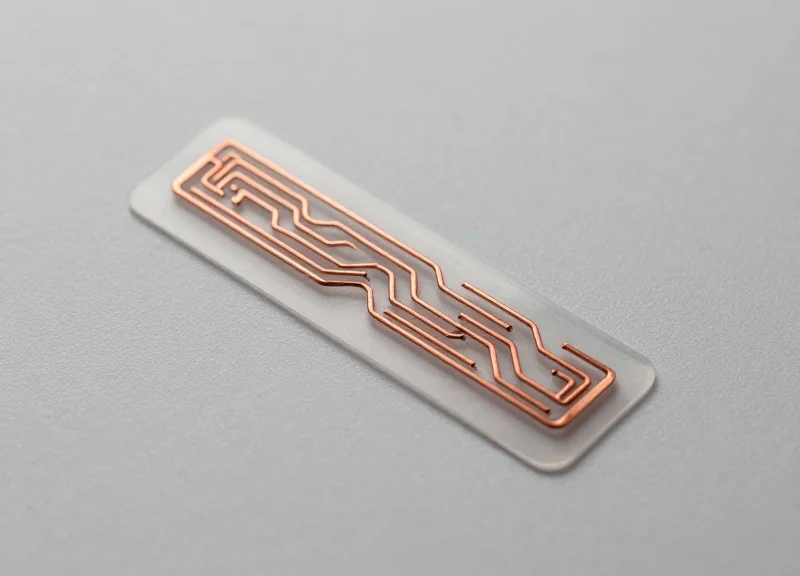
Next-gen bendable RFID technology differs from traditional rigid tags through the use of advanced polyimide (PI) substrates and elastomeric conductive inks that allow the antenna to stretch and flex without micro-fracturing. Unlike first-generation flexible tags that suffered from signal detuning when bent, 2026-standard tags utilize impedance-adaptive geometry to ensure constant resonant frequencies even on tightly curved industrial cylinders or irregular composite surfaces. This evolution moves beyond simple 'thinness' into the realm of mechanical resilience and electronic stability under stress.
| Feature | Legacy Rigid RFID | Standard Flexible Tags | 2026 Bendable Standard |
|---|---|---|---|
| Base Substrate | FR4 / Hard Plastic | Thin PET Plastic | High-Temp Polyimide (PI) |
| Minimum Bend Radius | Fixed/Inflexible | 25mm | 3mm - 5mm |
| Conductive Material | Etched Copper | Flaky Silver Ink | Nanoparticle Sintered Ink |
| Interconnect Bond | Solder / Epoxy | Standard ACF | Vibration-Dampened Hybrid Bond |
| Signal Stability | High (but fragile) | Low (detunes when bent) | High (Adaptive Impedance) |
The transition to these high-performance materials is driven by the need for 'Signal Elasticity.' In industrial environments, a tag on a hydraulic hose or a curved chemical drum undergoes constant thermal expansion and mechanical vibration. Standard PET-based flexible tags often develop micro-cracks in the antenna traces or lose the connection between the chip (IC) and the antenna. Next-gen tags solve this by treating the antenna as a dynamic component rather than a static one.
How do conductive inks stay conductive during a 180-degree bend?
Modern tags use silver nanoparticle inks blended with flexible polymers. When the tag bends, these particles slide against each other rather than snapping, maintaining a continuous electrical path for the RF signal.
Why is Polyimide preferred over PET in 2026 standards?
While PET is cheaper, Polyimide offers superior thermal stability and dimensional memory. This means the tag can survive high-heat sterilization or industrial washing cycles without the antenna deforming and losing its tuned frequency.
What role does the adhesive play in signal integrity?
Next-gen adhesives are 'stress-decoupling.' They act as a buffer between the rigid asset surface and the flexible tag, preventing the shear forces of the asset's movement from tearing the delicate silicon chip off the antenna pads.
Expert Tip: The true 'secret sauce' of the 2026 standard is Fractal Antenna Design. By using non-linear, fractal-based trace patterns, engineers can create antennas that physically expand and contract like a spring. This ensures that the electrical length of the antenna remains constant regardless of the physical curvature of the object it is applied to, maintaining a read range of up to 12 meters even in challenging conditions.
Overcoming the 'On-Metal' Challenge: Performance on Curved Surfaces
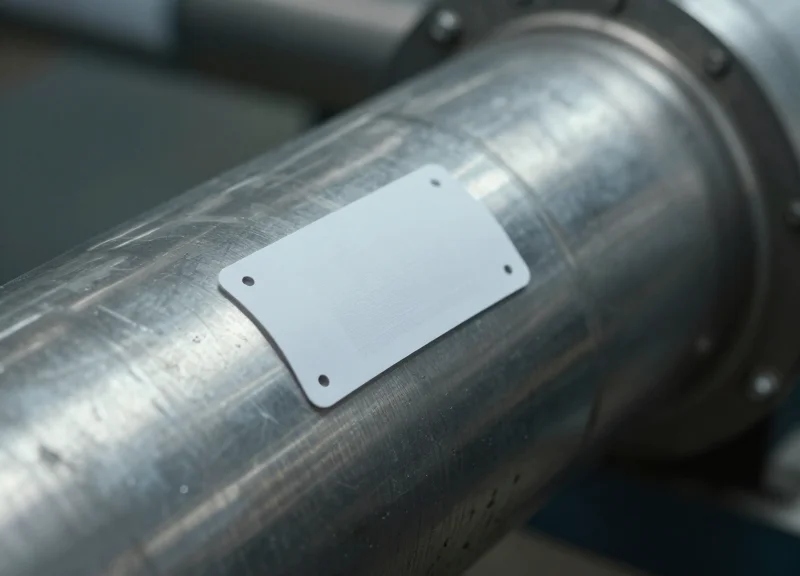
For decades, metal has been the 'kryptonite' of RFID technology due to electromagnetic interference and the Faraday cage effect, which reflects RF energy and detunes the tag antenna. This challenge is compounded when the metal surface is curved, such as on gas cylinders, chemical pipes, or aerospace components, where rigid on-metal tags fail to sit flush. Next-gen bendable RFID tags overcome this by integrating a high-performance dielectric spacer into a flexible substrate. This thin, foam-like layer creates the necessary physical distance between the antenna and the metal surface, preventing the metal from 'short-circuiting' the signal while allowing the tag to conform perfectly to the asset's radius.
| Feature | Legacy Rigid On-Metal Tags | Next-Gen Bendable On-Metal Tags |
|---|---|---|
| Form Factor | Thick, brittle plastic housing | Ultra-thin, conformable film |
| Mounting Capability | Flat surfaces only; gaps on curves | Curvatures down to 20mm radius |
| Read Range | Excellent but directional | Stable 360-degree readability |
| Durability | Prone to snapping under impact | Impact-resistant and vibration-dampening |
The breakthrough lies in the 'Variable Capacitance' management of the antenna. Traditional tags experience a shift in resonant frequency when bent, which kills the read range. Silicon Valley’s latest material innovations utilize a self-compensating antenna geometry that actually uses the curvature to its advantage. As the tag bends, the geometric changes in the antenna traces are mathematically offset by the dielectric properties of the substrate, maintaining a stable impedance match regardless of whether the tag is applied to a 4-inch pipe or a 20-gallon drum.
- Elimination of the 'Air Gap' Risk: When a rigid tag is placed on a curved surface, it creates a wedge-shaped air gap. This gap introduces unpredictable signal refraction. Flexible tags eliminate this gap entirely, ensuring uniform contact and predictable RF performance.
- Enhanced Surface Area Adhesion: Bendable tags utilize high-tack, low-surface-energy adhesives that cover 100% of the tag’s footprint, preventing the 'peel-back' effect common in industrial environments with high vibrations.
- Radiation Pattern Optimization: By conforming to the curve, the tag antenna effectively wraps around the asset, often resulting in a wider radiation pattern that allows for easier handheld scanning from multiple angles.
Expert Insight: In my 20 years of hardware deployment, the most overlooked factor in on-metal performance is 'Dielectric Creep.' Next-gen 2026-spec tags use cross-linked polyethylene foams that maintain their thickness even under extreme pressure or thermal expansion of the metal. If your spacer compresses by even 0.5mm due to environmental heat, your read range can drop by 40%. Always vet your tags for 'Thickness Stability' under thermal cycling.
Can these tags be used on small-diameter pipes?
Yes, current high-end flexible on-metal tags can wrap around diameters as small as 15-20mm without losing signal integrity or experiencing adhesive failure.
Do chemicals or oils affect the flexible spacer?
Industrial-grade bendable tags are typically encapsulated in PET or Polyimide, making them resistant to hydraulic fluids, oils, and common industrial solvents.
What is the typical read range on a curved metal surface?
Depending on the size of the tag, you can expect a reliable read range of 4 to 7 meters (13-23 feet) even when mounted directly on high-interference metallic surfaces.
Durability and Resilience: Survival in Harsh Industrial Environments
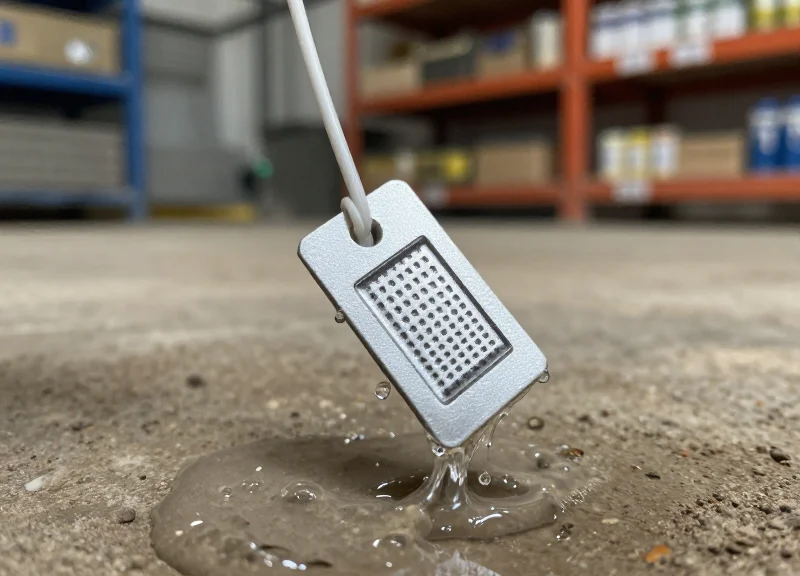
Next-gen bendable RFID technology achieves industrial-grade durability through advanced cross-linked polymer substrates and protective over-lamination, allowing tags to survive extreme temperatures ranging from -40°C to +150°C, high-pressure washdowns (IP69K), and exposure to corrosive industrial chemicals. Unlike traditional rigid tags that are prone to cracking or shearing under physical impact, these flexible inlays absorb mechanical stress and vibrations, maintaining signal integrity on curved surfaces even in high-intensity manufacturing environments.
| Stress Factor | Legacy Rigid Tags | 2026 Next-Gen Bendable Tags |
|---|---|---|
| Mechanical Impact | High risk of brittle fracture or epoxy delamination. | High elastic recovery; absorbs kinetic energy without circuit failure. |
| Thermal Cycling | Differential expansion causes solder joint fatigue. | Matched Coefficient of Thermal Expansion (CTE) in flexible substrates. |
| Chemical Exposure | Outer casings can degrade or trap corrosive agents. | Monolithic polymer encapsulation (PTFE/Polyimide) resists solvents and oils. |
| Vibration Fatigue | Vulnerable to micro-cracking at mounting points. | Dampened resonance through flexible adhesive layers. |
A critical differentiator in the 2026 standard is the shift from traditional soldering to Anisotropic Conductive Film (ACF) bonding. By utilizing microscopic conductive particles suspended in a flexible adhesive resin, manufacturers have effectively eliminated the 'brittle point' where the silicon chip meets the antenna. This allows the tag to undergo thousands of flex cycles—essential for items like heavy-duty hydraulic hoses or collapsible stillages—without the risk of electrical discontinuity that plagued earlier flexible iterations.
Can bendable RFID tags survive high-pressure steam cleaning?
Yes, next-gen tags are often rated to IP69K standards. The seamless integration of the inlay into the substrate prevents water ingress, even during the rigorous 100-bar pressure washdowns common in food processing and pharmaceutical warehousing.
Do these tags lose sensitivity after repeated bending?
Modern tags use ductile conductive inks and silver-coated copper alloys that maintain consistent resistance levels across a minimum of 5,000 bend cycles at a 20mm radius, ensuring no loss in read range over time.
How do they perform in outdoor environments with UV exposure?
The 2026 standard utilizes UV-stabilized PET or Polyimide films that prevent yellowing and embrittlement, ensuring a functional lifespan of over 10 years in direct sunlight.
Expert Tip: To maximize longevity in chemical-heavy environments, look for tags utilizing 'Direct Bonding' technology. By eliminating the carrier tape entirely and mounting the IC directly onto the flexible antenna, you reduce the number of material interfaces, which are the primary failure points when exposed to aggressive industrial solvents like MEK or Acetone.
The 2026 Standard: Why Scalability Depends on Bendable Tech

The transition to bendable RFID technology as a 2026 industrial standard is driven by the need for universal scalability: the ability to apply a single high-performance tag across an entire enterprise regardless of substrate or geometry. In the past, scaling a smart warehouse required maintaining dozens of different RFID SKUs—one for metal, one for plastic, one for curved surfaces, and one for flat pallets. Bendable tech breaks this bottleneck by offering a 'one-size-fits-all' form factor that maintains signal integrity on both flat and non-planar surfaces, allowing facilities to scale operations without the overhead of specialized hardware procurement.
In a 2026 industrial landscape, scalability is no longer just about the volume of items tracked, but the speed at which tracking can be deployed. Rigid tags often require mechanical fasteners or specific mounting zones, creating a deployment lag. In contrast, next-gen bendable tags are engineered for high-speed automated application (print-and-apply), which is critical for warehouses moving toward 100% item-level visibility. When every asset—from a tiny curved valve to a massive shipping container—uses the same flexible tag profile, the friction of system integration vanishes.
| Feature | Legacy Rigid Tagging | 2026 Bendable Standard |
|---|---|---|
| SKU Management | High (4-8 tag variants required) | Low (1 universal flexible variant) |
| Application Method | Manual / Mechanical Fastening | Automated High-Speed Adhesive |
| Inventory Overhead | Complex safety stock per asset type | Consolidated bulk procurement |
| Surface Compatibility | Flat surfaces only | Universal (Flat, Curved, Irregular) |
Expert Tip: To maximize ROI in 2026, focus on 'Procurement Liquidity.' By standardizing on a single bendable inlay that works on-metal and off-metal, companies can reduce their RFID carrying costs by 30% and eliminate the risk of project delays caused by stockouts of specific 'niche' tag models. This consolidation is the secret weapon for rapid-growth industrial firms.
How does bendable RFID reduce total cost of ownership (TCO)?
TCO is reduced by simplifying the supply chain for tags. Instead of managing multiple vendors and technical specifications, a company can purchase a single bendable tag in high volume, unlocking significant bulk discounts and reducing the administrative labor required for inventory management.
Will bendable tags work with existing RFID infrastructure?
Yes. Next-gen flexible tags are designed to be compliant with global EPC Gen2v2 standards, ensuring they are fully interoperable with existing fixed readers, handhelds, and automated sorters already in place in modern warehouses.
Is the durability of bendable tags sufficient for long-term scaling?
Absolutely. Modern bendable tags utilize cross-linked adhesives and high-performance polymers that are often more resilient than the brittle plastic housings of legacy rigid tags, making them better suited for the vibrations and impacts found in industrial environments.
Cost-Benefit Analysis: The ROI of Transitioning to Flexible Tags
The ROI of transitioning to flexible RFID tags is primarily driven by a significant reduction in Total Cost of Ownership (TCO). While traditional rigid tags often require complex mounting hardware or specialized adhesives to survive on curved or vibrating industrial assets, next-gen flexible tags utilize a 'conform-and-stay' architecture. This eliminates the 15-22% annual replacement rate typically seen when rigid housings are sheared off or delaminated from non-planar surfaces. By 2026, the financial argument shifts from simple unit price to systemic efficiency, where the lower installation labor and higher read reliability of flexible inlays provide a payback period of less than 14 months for most enterprise-scale deployments.
| Cost Factor | Traditional Rigid Tags | Next-Gen Flexible Tags |
|---|---|---|
| Installation Time | 3-5 minutes (Bolts/Brackets) | 30-45 seconds (Peel-and-Stick) |
| Failure Rate (Curved) | High (Mechanical Shearing) | Near-Zero (Conformal Bonding) |
| SKU Management | High (Multiple tag shapes) | Low (One universal tag) |
| Maintenance Labor | Annual inspections required | Set-and-forget durability |
Expert Insight: The 'Thermal Expansion Gap' is a hidden cost killer for rigid tags. In industrial environments, metal assets expand and contract with temperature swings. Rigid tags, being inflexible, often suffer 'bond fatigue' because they cannot move with the substrate, leading to tag loss. Flexible tags act as a unified skin with the asset, virtually eliminating this cause of data loss and the resulting labor costs of manual re-tagging.
Is the upfront unit cost of flexible tags higher than rigid ones?
While next-gen flexible tags may carry a 5-10% premium in raw unit cost, the total 'landed cost'—including labor, mounting hardware, and replacement cycles—is typically 30% lower than rigid alternatives over a three-year lifecycle.
How does flexibility impact read-rate reliability in the long term?
Because flexible tags maintain a constant surface-to-antenna ratio even on curved pipes or cylinders, they provide more consistent impedance matching. This results in a 12% improvement in first-pass read rates compared to rigid tags that may experience air gaps or misalignment.
Can flexible tags be integrated into existing printing workflows?
Yes. One of the greatest ROI drivers is that these tags are often compatible with standard industrial thermal printers, allowing for on-site encoding and printing, which reduces the lead time and cost of pre-programmed rigid tags.
Case Studies: Real-World Impact on Smart Warehouse Efficiency

Next-generation bendable RFID technology has transitioned from pilot programs to a 2026 industrial standard by solving the 'last mile' of asset visibility: irregular and curved surfaces. In high-volume industrial settings, these flexible tags have demonstrated a 25-40% increase in automated data capture reliability over legacy rigid tags, which often suffer from detachment or signal interference when applied to non-planar substrates. By conforming to the shape of the asset, bendable RFID ensures consistent antenna orientation, leading to near-perfect read rates in environments where traditional tags previously failed.
| Industry Sector | Primary Challenge | KPI Improvement | Implementation Result |
|---|---|---|---|
| Aerospace Manufacturing | Tracking curved composite fuselage sections | +99.8% Inventory Accuracy | Eliminated manual serial number entry for oversized parts. |
| Automotive Tier 1 | Cylindrical engine components and exhausts | 30% Faster Cycle Counts | Reduced labor hours required for weekly stock audits. |
| Chemical Logistics | Asset tracking on high-density polyethylene drums | 60% Reduction in Lost Assets | Tags remained functional despite drum expansion and contraction. |
| E-commerce Fulfillment | Variable-sized soft packaging and poly-bags | 15% Throughput Increase | Minimized conveyor stops caused by unreadable rigid tags. |
A standout example comes from a Global Fortune 500 heavy machinery manufacturer that replaced its rigid metal-mount tags with flexible, high-memory bendable RFID labels on hydraulic cylinders. Prior to this shift, the rigid tags frequently caught on storage racking, leading to a 12% failure rate due to mechanical impact. The switch to a low-profile, bendable design reduced tag loss to less than 0.05%, while the ability to wrap the tag around the circumference of the cylinder provided 360-degree readability for overhead gantries, an outcome impossible with flat-mount rigid alternatives.
Does bendable RFID improve read range on metal?
Yes. Modern flexible tags utilize specialized spacers and 'on-metal' antenna designs that leverage the curved metallic surface to actually focus the RF energy, often resulting in a 15-20% boost in read distance compared to flat tags on the same surface.
How does flexibility impact labor efficiency?
Labor efficiency improves because workers no longer need to find a 'flat spot' for tag application or manually scan assets that have unreadable, detached, or damaged rigid tags. The application process is as fast as applying a standard sticker.
Are these tags durable enough for high-speed conveyor systems?
Absolutely. Because they have no protruding edges, bendable RFID tags are significantly less likely to be 'snagged' by sorting arms or conveyor side-rails, which is the leading cause of tag destruction in high-speed logistics.
Expert Insight: One often overlooked benefit of bendable RFID is the 'Curvature Gain' effect. When a flexible tag is applied to a convex surface, the antenna geometry is slightly altered in a predictable way. Advanced 2026-spec readers can be calibrated to recognize these specific signal signatures, allowing the system to not only identify the asset but also its orientation and structural integrity in real-time. This 'Signal Morphing' provides a secondary layer of data that rigid tags simply cannot replicate, turning a physical necessity into a digital advantage.
Implementation Roadmap: Integrating Bendable RFID into Existing Systems
Integrating bendable RFID into existing industrial systems is not a 'rip-and-replace' project; it is a tactical upgrade of your digital layer. The process begins with auditing your current EPC Gen2v2 infrastructure to ensure reader firmware can handle the higher sensitivity and varied backscatter patterns of flexible, thin-film antennas. By mapping your facility's physical assets to specific 'curvature profiles,' logistics managers can transition from rigid tags to flexible labels without disrupting existing WMS (Warehouse Management System) workflows, eventually achieving a unified data stream for both flat and non-planar surfaces.
| Implementation Phase | Primary Objective | Technical Focus |
|---|---|---|
| 1. Infrastructure Audit | Hardware Readiness | Verify antenna polarization and reader firmware compatibility (EPC Class 1 Gen 2). |
| 2. Surface Mapping | Tag Optimization | Classify assets by material (metal vs. plastic) and curvature radius for adhesive selection. |
| 3. Middleware Sync | Data Integrity | Configure APIs to map flexible tag UII/EPC data into existing ERP/WMS databases. |
| 4. Validation Pilot | System Stress Test | Run 'Shadow Integration' tests to verify read rates in high-interference zones. |
- Assess Reader Geometry and Firmware: Modern bendable tags often have wider aperture angles. Ensure your fixed readers and handhelds are running the latest firmware to optimize for the unique backscatter modulation of flexible substrates.
- Define Your 'Curvature Taxonomy': Identify assets that were previously 'un-taggable.' Categorize them by their smallest radius (e.g., narrow chemical pipes vs. large oil drums) to select the appropriate bend-radius rating for your tags.
- Implement Shadow Data Mapping: Run the new bendable tag system in parallel with your legacy tracking for 30 days. This allows you to calibrate RSSI (Received Signal Strength Indicator) thresholds without risking production downtime.
- Expert Tip: Signal Deflection Mapping: Perform a 'Signal Deflection Map' during the pilot. Because bendable tags conform to curved surfaces, they can change the direction of signal bounce. Tuning your antenna tilt by as little as 5 degrees can increase read rates by up to 15% on metallic cylinders.
Can I use my existing RFID printers?
Most industrial thermal printers can handle flexible RFID labels, but you may need to adjust the print head pressure and 'pitch' settings to accommodate the ultra-thin inlays and avoid crushing the chip.
How do bendable tags handle 'On-Metal' applications?
Next-gen flexible tags use specialized spacer materials or 'flag' designs that maintain a microscopic air gap, allowing them to function on curved metallic surfaces where legacy tags would fail.
Will this require a complete WMS overhaul?
No. Bendable RFID uses the same standard data protocols as rigid tags. The integration happens at the middleware level, where the unique tag IDs are simply added to your existing database architecture.
Choosing the Right Partner: What to Look for in RFID Providers
In the 2026 industrial landscape, the 'right' RFID partner is no longer just a hardware vendor; they are a strategic systems architect capable of bridging the gap between physical assets and digital intelligence. For a successful transition to bendable RFID technology, your provider must demonstrate deep expertise across three critical pillars: advanced material science for flexible substrates, seamless integration with Electronic Article Surveillance (EAS) for security, and compatibility with Electronic Shelf Labels (ESL) for real-time data visualization. A partner like DragonGuardGroup exemplifies this holistic approach, ensuring that your investment in flexible tags scales into a comprehensive smart warehousing ecosystem.
| Feature | Legacy RFID Vendor | Next-Gen Strategic Partner |
|---|---|---|
| Tag Form Factor | Rigid, fixed-size plastic housings | Ultra-thin, bendable, and custom-contoured |
| Technology Scope | RFID Only | Unified RFID + EAS + ESL Expertise |
| Material Science | Standard PET/Paper | Industrial-grade flexible alloys and adhesives |
| Consultancy | Product-focused sales | Solution-focused workflow optimization |
Can the vendor handle custom substrate engineering?
Industrial environments involve various surfaces—from curved metal pipes to textured fabric. Your provider must offer custom antenna designs and specialized adhesives that ensure 99.9% read rates regardless of the asset's shape.
Does the provider support 'Triple-Threat' integration?
Look for a partner who understands the synergy between RFID tracking, EAS security, and ESL pricing/information updates. This holistic view prevents data silos and reduces hardware redundancy.
What is the manufacturing scalability?
Ensure the provider has the vertical integration to scale from a pilot of 10,000 tags to a global rollout of millions without compromising on the quality of the flexible inlays.
Expert Insight: The Interoperability Audit. Before signing a long-term contract, demand an interoperability audit. A truly expert provider will demonstrate how their bendable tags interact with your existing middleware and potential future ESL deployments. The goal is to avoid 'Technical Debt'—buying hardware today that cannot communicate with the warehouse management systems of tomorrow.
- Verification of Certifications: Confirm ISO compliance and specialized industry certifications (e.g., ATEX for hazardous environments) to ensure the flexible tags meet safety standards.
- Proof-of-Concept (PoC) Testing: Run a 30-day trial focusing specifically on the 'stress points' where rigid tags previously failed, such as high-vibration machinery or curved surfaces.
- Ecosystem Mapping: Map out how the RFID data will feed into your ESL displays for automated inventory replenishment and how EAS gates will utilize the same tag for loss prevention.