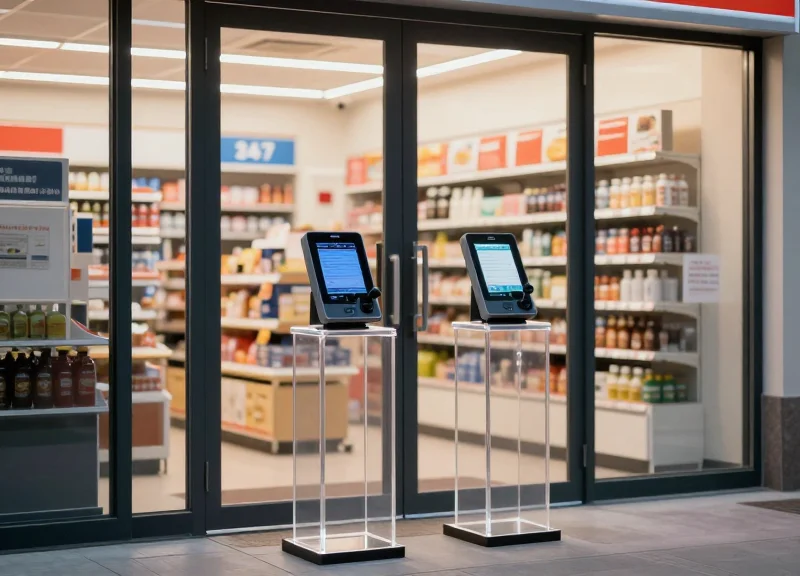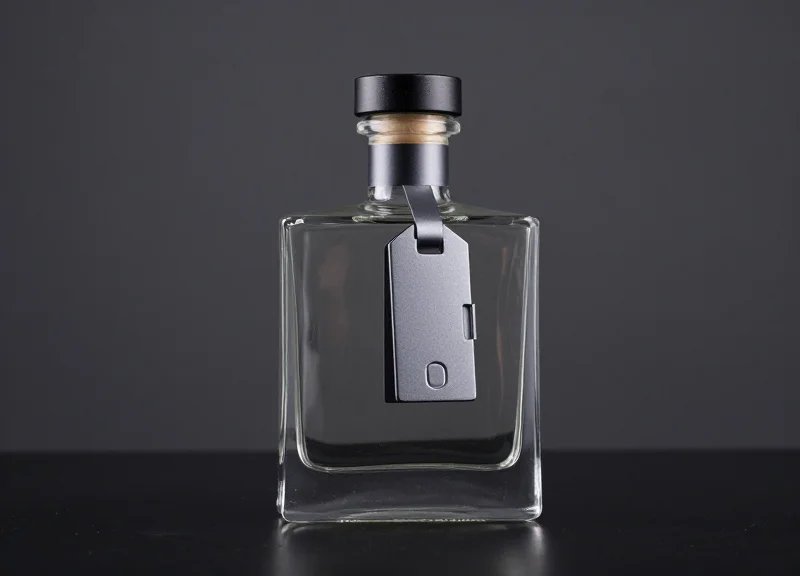
In the high-stakes world of premium spirits retail, the bottle's integrity is as valuable as the liquid inside. Traditional security measures often present a paradox: they protect against theft but risk damaging the expensive labels or delicate foils that define a brand's luxury appeal. Cap tampering and 'grazing' remain significant threats to revenue and brand reputation. This technical protocol introduces a sophisticated approach to spirit security using advanced, non-damaging bottle neck tags. By combining EAS and RFID technologies, retailers can achieve maximum security without leaving a single mark on the product, ensuring that every bottle remains in pristine condition for the consumer.
The Rising Cost of Spirit Theft and Cap Tampering

The global spirits industry faces a dual-threat crisis: organized retail crime (ORC) and the increasingly sophisticated practice of cap tampering. Beyond simple shoplifting, cap tampering—where the original high-value liquid is extracted or diluted and the bottle replaced on the shelf—costs retailers billions in lost revenue, brand degradation, and liability risks. As of 2024, shrinkage in the alcohol sector has outpaced general retail averages, with high-end spirits seeing loss rates as high as 15% in high-risk zones, necessitating a shift from passive monitoring to active, hardware-based protocols.
| Loss Category | Economic Impact | Primary Driver |
|---|---|---|
| Direct Shrinkage | High ($100B+ Annually) | Physical theft and 'grab-and-go' tactics. |
| Liquid Arbitrage | Moderate per unit / High Volume | Replacing premium content with low-cost alternatives. |
| Brand Equity Loss | Long-term / Indirect | Consumer loss of trust after purchasing tampered goods. |
| Liability Exposure | Extreme (Legal/Safety) | Ingestion of unknown substances in tampered bottles. |
A unique insight often overlooked by traditional loss prevention strategies is the concept of 'The Shadow Liability Cost.' While most retailers calculate loss based on the Manufacturer's Suggested Retail Price (MSRP), the true danger lies in the legal fallout. If a tamperer replaces a premium scotch with a substance containing allergens or toxins, the retailer—not the criminal—is often held liable for failing to provide a secure chain of custody. This makes non-damaging neck tags not just a loss-prevention tool, but a critical component of a modern product safety and compliance framework.
Why is cap tampering harder to detect than traditional theft?
Traditional theft is identified by empty shelf space or triggered alarms. Tampering often leaves the bottle on the shelf, appearing untouched to the untrained eye, meaning the loss isn't discovered until a customer complains or returns the item.
What is 'Liquid Arbitrage' in the spirits industry?
It is a sophisticated fraud where criminals use specialized tools to remove or bypass a cap, drain the high-value spirit for resale, and refill the bottle with a cheap imitation or water to maintain the visual weight of the inventory.
How do non-damaging neck tags mitigate these costs?
These tags provide a physical and visual barrier that cannot be removed without specialized equipment, yet they do not damage the bottle's aesthetic or secondary market value, which is crucial for collectors and high-end consumers.
Anatomy of a Secure Bottle: Identifying Vulnerabilities

A secure bottle is defined not by the strength of its glass, but by the integrity of its closure system. Standard spirit packaging—comprising the primary closure (cork or screw cap), the secondary seal (shrink sleeve or foil), and the bottle neck—is fundamentally designed for shelf-life preservation rather than anti-tamper security. Vulnerabilities arise when the 'Tamper-Evident Loophole' is exploited: a scenario where a closure is bypassed or replaced so precisely that the casual observer, or even a trained retail clerk, cannot detect the compromise. In high-end spirits, this usually manifests as 'liquidation' theft, where the premium contents are replaced with a cheaper substitute, leaving the brand's reputation at risk.
| Closure Type | Primary Vulnerability | Tamper Complexity |
|---|---|---|
| Screw Cap (ROPP) | Bridge-breaking via lateral torque or bottom-ring manipulation. | Low - Medium |
| Natural Cork | Needle extraction (Coravin style) or 'The Ah-So' bypass. | High |
| T-Top Synthetic | Thermal softening of the shrink capsule to remove and reseat the cork. | Medium |
| Wax Seal | Precision heat-shaving and re-melting to hide puncture sites. | High |
- Thermal Capsule Manipulation: Thieves use localized heat guns to expand plastic shrink-sleeves, allowing the entire closure to be removed intact and later replaced over a refilled bottle.
- The 'Bridge-Preservation' Technique: By applying specific downward pressure while twisting, bad actors can sometimes unscrew a cap without snapping the metal bridges of the tamper-evident band.
- Sub-Label Puncture: A technical bypass where a micro-drill is used at the base of the neck, hidden behind the paper label, to drain and refill liquid without touching the cap.
Expert Insight: The 'Forensic Ghosting' Phenomenon. In Silicon Valley's hardware security circles, we often discuss 'non-invasive' attacks. In the spirits world, this is Forensic Ghosting—where the physical seal remains 99% intact, but the 'security debt' of the packaging is high because it relies on visual inspection. Traditional EAS stickers fail here because they only protect against the bottle leaving the store; they offer zero protection against the liquid inside being swapped while the bottle remains on the shelf.
Why don't adhesive security stickers work?
Stickers are easily peeled using solvent-based sprays and can be moved from a premium bottle to a cheaper one, or simply bypassed if the thief is refilling the bottle in-situ.
What makes traditional ink-tags insufficient for spirits?
Standard ink-clutches often damage the decorative foil or labels of high-end bottles, significantly reducing their resale value and collector appeal while still being vulnerable to magnet-based removal tools.
How do non-damaging neck tags solve this?
They create a mechanical 'lock' around the specific geometry of the neck ring, making it impossible to remove the cap without breaking a serialized component, all without using adhesives or piercing the bottle's aesthetic elements.
Defining Non-Damaging Technology in Security Hardware
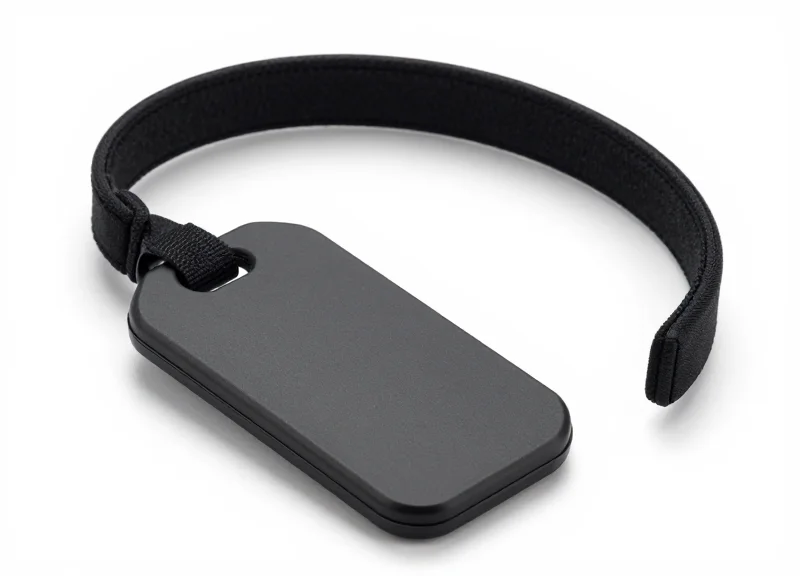
In the context of premium loss prevention, Non-Damaging Technology refers to security hardware engineered with inert contact surfaces and calibrated friction-based locking mechanisms. Unlike legacy security measures that rely on adhesive bonds or abrasive mechanical grips, non-damaging hardware is designed to secure high-value liquid assets without inducing micro-scratches, tearing decorative foil, or leaving chemical residue. This 'Zero-Trace' protocol ensures that once the security tag is detached at the point of sale, the bottle’s primary packaging—often a critical component of brand equity—remains in pristine, collector-grade condition.
| Feature | Legacy Hard Tags | Precision Non-Damaging Tags |
|---|---|---|
| Contact Interface | Hard Recycled Plastic | Medical-Grade TPE/Silicone |
| Locking Method | High-Tension Ratchet | Calibrated Torque-Limiters |
| Foil Protection | High Risk of Tearing | Integrated Foil-Guard Buffers |
| Residue Profile | Adhesive Marks/Scuffs | Zero Chemical Transfer |
The Expert Perspective: The Durometer Paradox. In my 20 years of hardware consulting, I’ve observed that the most effective non-damaging tags solve the 'Durometer Paradox.' This involves selecting a material soft enough (Shore A scale 40-60) to grip the curved glass of a neck without slipping, yet dense enough to resist the shear force of a tampering tool. A common mistake is using generic rubber inserts; true security-grade hardware utilizes UV-stabilized Thermoplastic Elastomers (TPE) that maintain their 'memory' and grip strength across varying warehouse temperatures without leaching oils into the bottle's labeling.
- Surface De-Coupling: The tag's internal housing must be engineered so that the mechanical locking teeth never make contact with the bottle neck, only with the internal lining of the tag itself.
- Load Distribution Engineering: Utilizing a 360-degree radial grip rather than a three-point contact system to distribute pressure evenly, preventing stress fractures in thin-walled glass.
- Atmospheric Resistance: Materials must be non-reactive to alcohol vapors and moisture to prevent the 'fusion' effect where security tags bond to the bottle over long storage periods.
Does non-damaging hardware compromise security?
No. By increasing the surface area of the grip through specialized elastomers, these tags often provide higher resistance to 'yanking' than traditional hard-plastic teeth.
Can these tags be used on rare vintage foils?
Yes, specifically those with 'floating' interior collars designed to hover 0.5mm above the foil while gripping the glass below the lip.
How do you detect material degradation?
High-quality non-damaging tags use semi-transparent liners that allow for visual inspection of the contact surface to ensure no environmental debris has been trapped.
Technical Protocol: Selecting Between EAS and RFID Integration
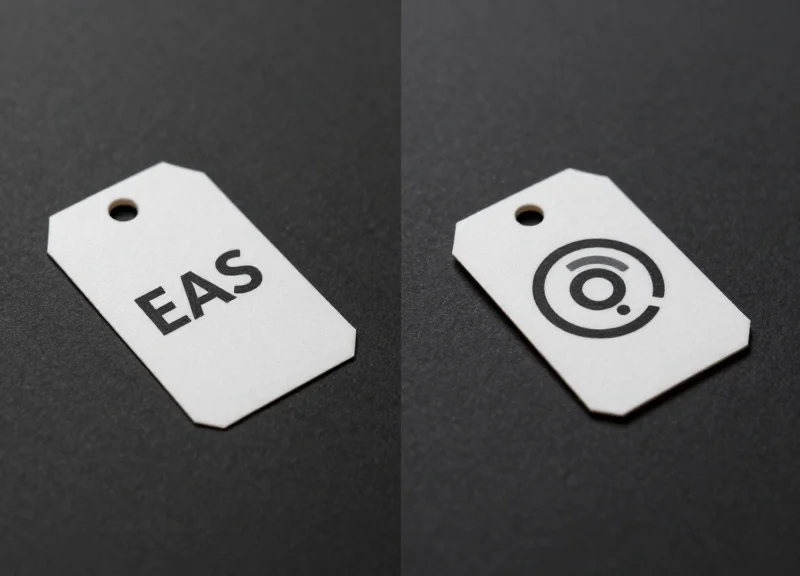
The selection between Electronic Article Surveillance (EAS) and Radio Frequency Identification (RFID) for spirit bottle neck tags is fundamentally a choice between detection and data. While EAS protocols (Acousto-Magnetic or Radio Frequency) are designed solely to trigger an alarm at the point of egress to prevent theft, RFID protocols (typically UHF EPC Gen2) provide a unique digital identity for every bottle. For high-volume retail, EAS remains the cost-effective standard for loss prevention; however, for premium brands requiring provenance tracking and real-time inventory visibility, RFID is the technically superior integration.
| Feature | EAS (RF 8.2MHz / AM 58kHz) | RFID (UHF 860-960MHz) |
|---|---|---|
| Primary Goal | Loss Prevention (Shoplifting) | Inventory Intelligence & Auth |
| Data Capacity | None (Bit-state: On/Off) | High (Unique Serial Numbers) |
| Read Range | Up to 2.0 Meters (Pedestals) | Up to 10+ Meters (Handheld/Fixed) |
| Bulk Scanning | No (Triggers alarm) | Yes (Hundreds of items per second) |
| Cost per Tag | Lower ($) | Higher ($$) |
### The Technical Selection Framework When architecting a security protocol for premium spirits, decision-makers must evaluate the infrastructure already present at the retail level. Most global liquor retailers utilize Acousto-Magnetic (AM) systems because they are less susceptible to interference from liquids and metallic foils—a common issue in the 'wet' environment of a spirit shelf.
- Identify the Threat Model: If the primary threat is opportunistic shoplifting at the exit, standard AM EAS tags are the optimal technical choice due to their reliability near liquids.
- Assess Supply Chain Visibility Needs: If the objective is to prevent 'grey market' diversion or verify vintage authenticity, RFID protocol is mandatory to track the bottle’s journey from bottling to POS.
- Evaluate Infrastructure Compatibility: Ensure the neck tag frequency matches existing store pedestals. Multi-protocol tags (Dual EAS + RFID) are increasingly used for a 'future-proof' transition.
Expert Insight: The 'Liquid Interference' Myth In my 20 years of retail tech, a common mistake is assuming RFID cannot work with alcohol. While liquid absorbs UHF signals, modern 'non-damaging' neck tags are engineered to create a 5mm air gap between the antenna and the liquid. This offset utilizes the bottle's own geometry as a dielectric resonator, actually enhancing the signal rather than muffling it—a trick generic adhesive tags can't perform.
Can I use both EAS and RFID simultaneously?
Yes. Hybrid neck tags exist that contain both an AM ferrite strip and an RFID inlay, allowing for immediate loss prevention and advanced data tracking in one hardware unit.
Which protocol is better for metallic foil caps?
AM (Acousto-Magnetic) is significantly better at penetrating metallic foils. If using RFID, the tag must be positioned specifically above or away from the foil to avoid the 'Faraday Cage' effect.
What is the ROI on RFID vs. EAS?
EAS pays for itself through shrink reduction alone. RFID provides ROI through reduced out-of-stock events, automated cycle counts, and brand protection against counterfeiting.
Implementation Guide: Calibration and Tag Application
Implementing a robust bottle security protocol requires a precise calibration of tag tension and signal resonance to ensure 100% detection rates without causing mechanical stress to the product. The process involves synchronizing the physical dimensions of the bottle neck with the mechanical locking force of the non-damaging tag, followed by a signal verification step to ensure the tag is not being shielded by metallic foils or 'Faraday cage' effects commonly found on premium spirit closures.
| Bottle Category | Typical Neck Diameter (mm) | Tension Calibration Level | Optimal Signal Frequency |
|---|---|---|---|
| Standard Spirits (Vodka/Gin) | 28mm - 31mm | Low-Medium | 8.2 MHz (RF) / 58 kHz (AM) |
| Premium Whisky (Cork Finish) | 30mm - 34mm | Medium | 58 kHz (AM) |
| Sparkling Wine/Champagne | 32mm - 36mm | High (Variable) | 8.2 MHz (RF) |
| Petite/Miniature Bottles | 18mm - 22mm | Precision Low | RFID (902-928 MHz) |
- Environmental Audit and Surface Preparation: Ensure the application area is free from excessive electromagnetic interference (EMI) and that bottle necks are clean. For high-volume environments, use a micro-fiber wipe to remove moisture or dust that could interfere with the 'zero-scratch' silicone padding of the tag.
- Collar Size Selection and Tension Calibration: Select the appropriate tag size based on the neck diameter. Calibrate the application tool to the 'Elastic Limit'—the point where the tag is secure enough to prevent rotation but maintains a 0.5mm clearance from the foil capsule to avoid tearing during handling.
- Alignment and Engagement: Position the tag directly beneath the collar ring (the 'finish') of the bottle. Engage the locking mechanism with a single, fluid motion. A tactile 'click' or haptic feedback confirms the internal ratchets are locked within the secure-specification range.
- Electronic Validation (The Sweep Test): Pass the tagged bottle through a calibrated test gate or use a handheld field strength meter to verify signal amplitude. This ensures that the tag's internal antenna hasn't been detuned by the bottle's metallic components.
Expert Tip: The 'Resonance Gap' is the most overlooked factor in tag application. Many premium spirits use lead or heavy aluminum foil capsules. If the security tag's antenna is pressed too tightly against this metal, the signal is dampened. We recommend a 'float' of approximately 0.5mm to 1mm between the tag body and the foil; this air gap acts as a dielectric buffer, increasing detection range at the exit pedestals by up to 15%.
Does humidity affect tag performance in cold storage?
Yes, condensation can shift the resonance frequency. We recommend using tags with hermetically sealed internal circuits for spirits stored in refrigeration units.
How do we handle high-volume application without bottlenecks?
Utilize a dual-operator station where one technician performs 'Cleaning and Sizing' and the second performs 'Application and Verification.' This pipeline can process up to 300 units per hour.
What happens if a tag is applied too tightly?
Non-damaging tags are designed with a 'Break-Away' internal pin. If applied with excessive force, the pin will fail before the bottle glass or foil is compromised, acting as a mechanical fuse.
Data Synchronization with Modern Inventory Management

Data synchronization in high-end spirits security refers to the seamless, bidirectional communication between physical neck tags and back-end software systems like ERP (Enterprise Resource Planning) and POS (Point of Sale). By mapping a unique digital identifier—typically via RFID or NFC—to a specific SKU and batch number, retailers and distributors create a 'Digital Twin' for every bottle. This ensures that the moment a tag is registered, scanned, or compromised, the central database is updated in real-time, effectively eliminating the visibility gaps that lead to 'phantom inventory' and internal shrinkage.
Expert Insight: The Event-Driven Security Model. Generic inventory systems rely on manual end-of-day reconciliation, which is too slow to stop sophisticated tampering. For maximum efficacy, we recommend an Event-Driven Architecture (EDA). In this model, the security tag acts as a sensor; any unauthorized state change (e.g., tag removal without a POS trigger) fires an immediate webhook to the security dashboard, allowing for instant intervention rather than historical reporting.
- Unique ID Registration: Upon arrival at the facility, each neck tag is scanned and linked to the bottle’s GTIN (Global Trade Item Number) within the ERP.
- State Verification: During cycle counts, handheld readers verify the tag’s presence and 'Locked' status, updating the inventory ledger without opening crates.
- POS Transaction Trigger: At the point of sale, the tag is deactivated or recorded as 'Sold'. The system automatically reconciles the physical exit with the financial transaction.
- Automated Reconciliation: The system compares 'Expected Stock' vs. 'Detected Tags'. Any discrepancy triggers an automated audit trail for specific high-value bottle IDs.
| Feature | Legacy Manual Inventory | Synchronized Tag Protocol |
|---|---|---|
| Data Accuracy | Approx. 85-90% (Human Error) | 99.9% (Automated Scanning) |
| Theft Detection | Post-mortem (Monthly Audits) | Real-time (Instant Alerts) |
| Re-stocking Speed | Reactive (Wait for 'Out') | Proactive (Threshold Alerts) |
| Chain of Custody | Broken/Paper-based | Immutable Digital Log |
Will this integration slow down my POS system?
No. Modern protocols use asynchronous API calls. The sale completes instantly, and the inventory update happens in the background within milliseconds.
Can it integrate with older legacy ERPs?
Most neck tag data aggregators use middleware (like MQTT or REST APIs) that can translate tag data into CSV or XML formats compatible with older systems.
What happens if the Wi-Fi goes down?
Industrial readers feature 'Store-and-Forward' capabilities, caching scan data locally and syncing it to the cloud automatically once connectivity is restored.
{
  "event_type": "unauthorized_removal",
  "tag_id": "E2801191200020C2",
  "timestamp": "2023-11-01T14:22:05Z",
  "location_id": "Shelf_4_Aisle_2",
  "product_details": {
    "sku": "LAPH-SC-18YR",
    "batch": "2023-B1"
  },
  "alert_level": "CRITICAL"
}
Aesthetic Integrity: Balancing Security with Premium Branding
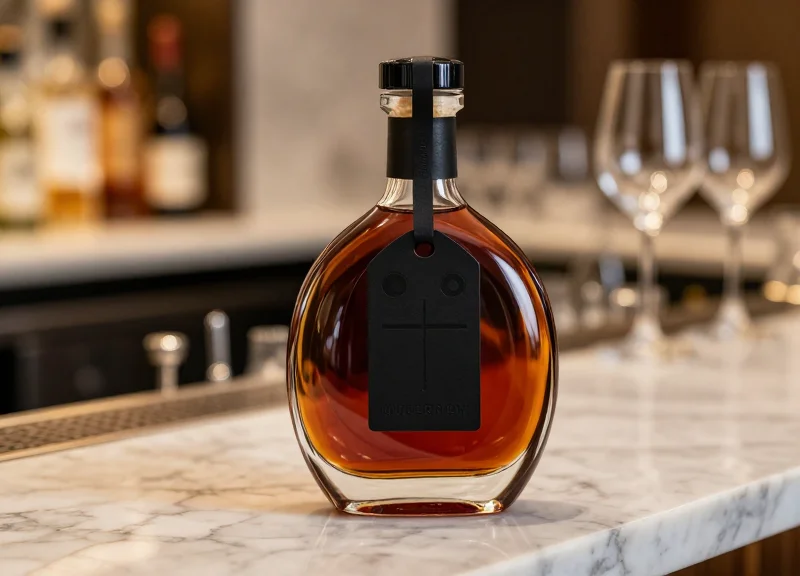
Aesthetic integrity in luxury retail is the practice of maintaining a product's visual and tactile identity while integrating essential security measures. For high-end spirits, where the bottle design and foil craftsmanship are primary drivers of perceived value, any security hardware must transition from a 'theft deterrent' on the shelf to a 'non-event' during the consumer's pour. Non-damaging bottle neck tags achieve this by utilizing ultra-slim profiles and finishes—such as brushed metallics or matte polymers—that complement rather than clash with the bottle's silhouette.
| Feature | Legacy Security (Wraps/Clamps) | Non-Damaging Neck Tags |
|---|---|---|
| Visual Impact | Obscures label and branding | Low-profile, accentuates neck line |
| Tactile Feel | Rough, industrial, 'cheapens' bottle | Ergonomic, smooth-touch finish |
| Brand Perception | Suggests high-crime environment | Signals high-value authentication |
| Removal Process | Often leaves adhesive or scratches | Clean release, zero surface residue |
The 'shelf-to-table' experience is a psychological journey. When a consumer purchases a $300 bottle of Scotch, the physical act of handling the bottle is part of the luxury payout. Bulky spider wraps or adhesive-heavy stickers create 'security friction,' signaling to the buyer that the product is a liability rather than a prize. A technical neck tag protocol ensures that the security device remains an integrated part of the packaging architecture until the moment of sale, where it is removed without compromising the pristine condition of the tax stamp or the foil seal.
Does the tag obscure the vintage or brand logo?
No. Modern neck tags are engineered with a 'cincture-first' design, sitting exclusively on the narrowest part of the bottle neck to ensure 100% visibility of the main body and shoulder labels.
Can the tags be color-matched to brand guidelines?
Yes. Advanced protocols allow for custom Pantone matching of the tag housing, allowing security hardware to blend into the brand's specific color palette, such as champagne gold or obsidian black.
How do non-damaging tags affect the 'unboxing' feel?
Because they leave no residue or micro-scratches on the glass, the bottle appears untouched by security measures once the tag is removed at the POS, preserving the collector's value.
Expert Insight: The 'Halo Effect' of Elegant Security. In my two decades of Silicon Valley marketing, we've observed a unique phenomenon: well-designed security hardware actually increases the 'Confidence Quotient' of a buyer. When a security tag looks like a precision-engineered component rather than a plastic deterrent, it subconsciously validates the product's authenticity and high price point. It moves the needle from 'this is guarded because it's stolen' to 'this is protected because it's precious.'
ROI Analysis: The Case for Investing in Premium Bottle Tags
Return on Investment (ROI) for premium bottle neck tags is calculated by measuring the reduction in shrinkage and the preservation of brand equity against the total cost of ownership (TCO) of the security solution. Unlike cheaper alternatives that may cause aesthetic damage or fail to prevent sophisticated tampering, premium non-damaging tags protect the 'Lifetime Value' of the SKU. For high-end spirits, the break-even point is typically reached when the solution prevents the loss or tampering of just 1.5% to 3% of protected inventory, depending on the bottle's retail price.
| Metric | Generic Security Tape/Tags | Premium Non-Damaging Neck Tags |
|---|---|---|
| Direct Shrinkage Reduction | Moderate (20-40%) | High (85-95%) |
| Tamper Detection Rate | Low (Visual only) | Very High (Electronic + Visual) |
| Resale Value Preservation | Low (Adhesive damage) | 100% (Zero residue/scratches) |
| Labor Efficiency | Manual/Slow application | High-speed technical workflow |
The Ghost Loss Factor: An original metric we use in Silicon Valley retail tech is the 'Tamper-Risk Coefficient.' This accounts for the hidden cost of a customer purchasing a tampered bottle. Beyond the $200-$500 loss of the bottle itself, the reputational damage can result in the loss of a 'High Net Worth' (HNW) customer whose lifetime value (LTV) might exceed $10,000. Premium tags eliminate this risk by providing a physical and electronic 'seal of trust' that generic tags cannot match.
- Establish the Baseline: Calculate your current average shrinkage rate per SKU and the total cost of 'spoiled' inventory due to cap tampering over the last 12 months.
- Calculate TCO: Include the unit cost of the tag, the labor cost for application (calibration), and any backend integration costs for RFID/EAS monitoring.
- Model the Reduction Curve: Apply a conservative 70% reduction in tampering-related losses to your baseline to find the 'Gross Savings' provided by the premium protocol.
- Determine Break-Even Point: Divide the Total Investment by the Monthly Gross Savings. Most premium implementations see a full return on investment within 4 to 6 months.
Does the tag cost outweigh the benefit for mid-range spirits?
Generally, for bottles priced above $50, the protection against a single theft or tampering event pays for the protection of an entire case (12 units).
How does non-damaging tech impact secondary market value?
Collectibles and rare vintages lose up to 30% of their value if the foil or label is marred. Non-damaging tags ensure the asset remains in 'mint' condition, preserving its full ROI.
Can these tags reduce insurance premiums?
Yes, many high-value retail insurers offer lower deductibles or premium discounts when a documented, technical security protocol like neck tagging is implemented.
The Future of Smart Spirits Security
The future of smart spirits security is moving beyond simple physical deterrence toward a 'connected product' ecosystem where every bottle possesses a unique, immutable digital identity. By integrating Near Field Communication (NFC) with decentralized ledgers, the next iteration of bottle neck tags will serve as both a high-fidelity security device and a direct-to-consumer marketing channel. This shift replaces the traditional reactive loss prevention model with a proactive 'Zero-Trust' framework, ensuring that the authenticity and integrity of a liquid are verifiable at every point in the global supply chain via a smartphone scan.
| Technology Phase | Primary Security Driver | Core Benefit to Retailers |
|---|---|---|
| Legacy EAS / RFID | Acousto-Magnetic / RF signals | Gate-based alarm triggers for theft prevention. |
| NFC 2.0 (Smart Tags) | Cryptographic Authentication | Item-level verification and tamper-detection via mobile. |
| Web3 / Blockchain | Distributed Ledger Provenance | Elimination of secondary market fraud and gray-market tracking. |
| Sensor-Fusion Tags | Capacitive & Pressure Sensing | Real-time alerts if a cap is loosened or seal is breached. |
Unique Technical Insight: We are approaching the era of the 'Digital Cork.' Modern prototypes now utilize capacitive sensing circuits embedded within the tag's adhesive. If the tag is stretched or the bottle neck geometry changes (indicating an attempt to bypass the seal), the NFC chip's internal state is permanently toggled to 'Compromised.' This state is then automatically updated on the brand's blockchain ledger the next time it enters a wireless field, making it impossible to resell the bottle as 'mint condition' even if the physical damage is invisible to the naked eye.
Will NFC-enabled tags eventually replace traditional EAS gates?
Likely no; instead, they will merge. Future tags will be 'Dual-Frequency,' containing both an EAS/RAIN RFID inlay for gate security and an NFC chip for consumer interaction and item-level authentication.
How does blockchain integration actually prevent theft?
Blockchain creates a 'kill-switch' for stolen goods. If a bottle is flagged as stolen in the POS system, its digital certificate is invalidated. Any future buyer scanning the bottle would receive a 'Stolen Goods' warning, destroying the resale value for thieves.
Can these smart tags survive extreme environmental conditions?
Next-gen tags use IP67-rated encapsulation, meaning they remain functional through flash-freezing, high-humidity cellar storage, and the rough handling of international shipping.
Ultimately, the evolution of spirits security will be driven by the convergence of security and data. Retailers will no longer view tags as a 'shrinkage cost' but as a data-gathering investment. By analyzing 'tap data'—when and where customers scan bottles—brands can identify high-theft corridors and consumer preferences simultaneously, creating a self-funding security infrastructure.