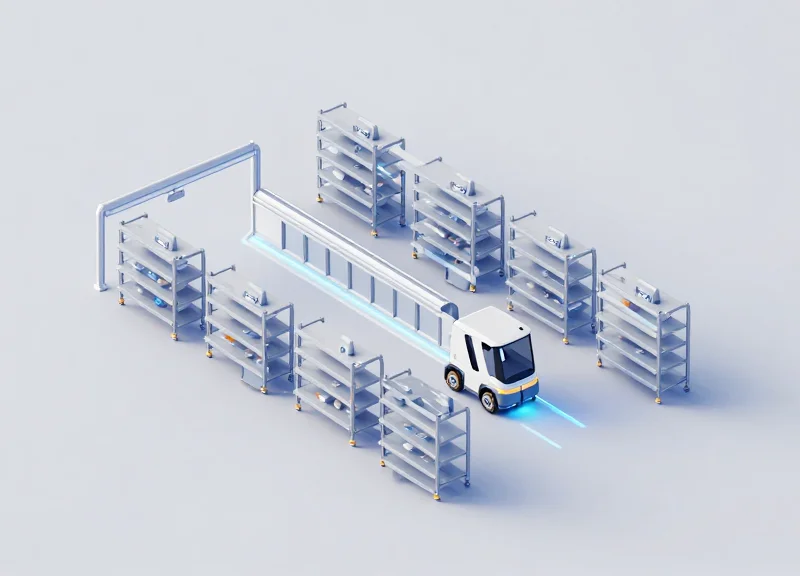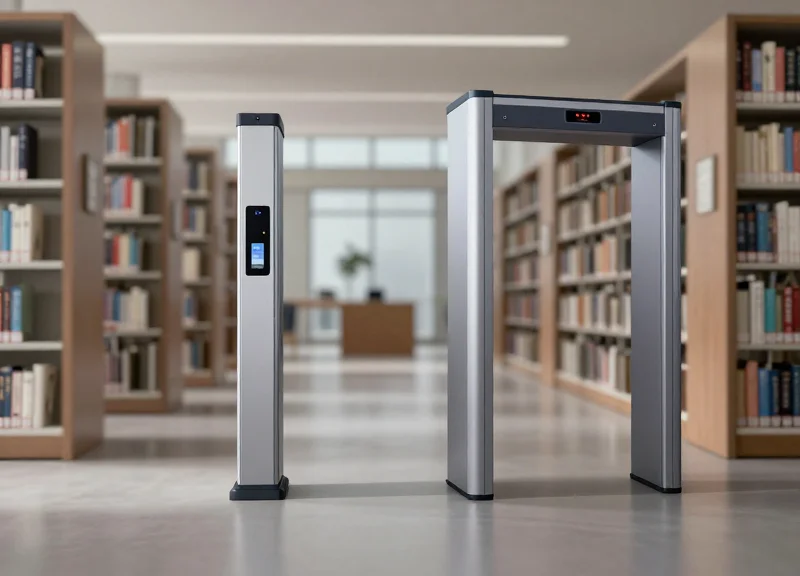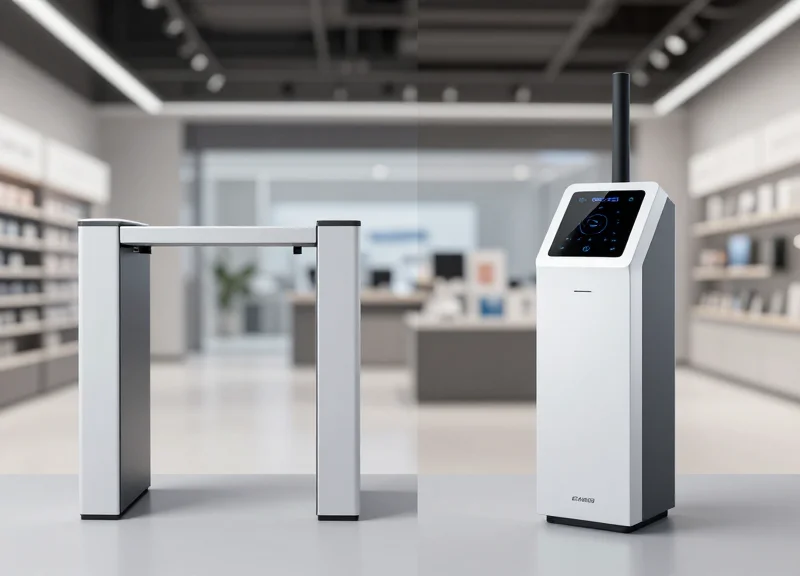
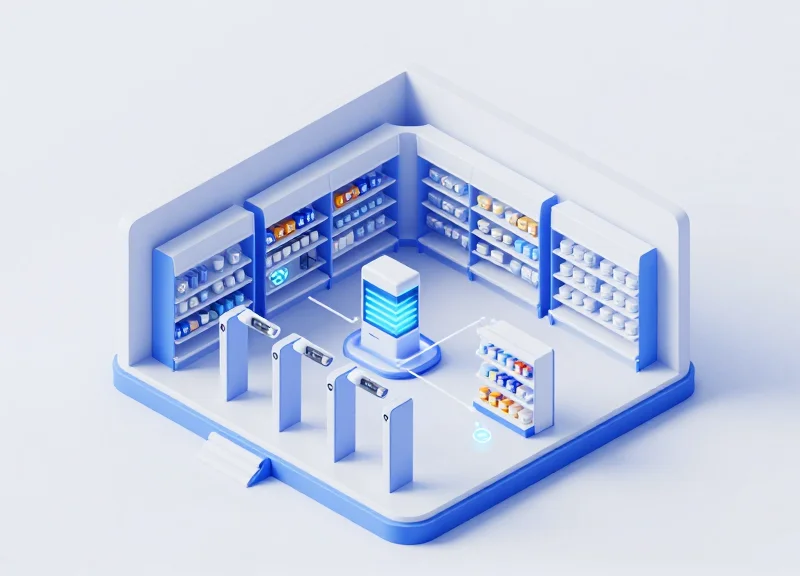
The rise of staff-less and autonomous retail has transformed the shopping experience, but it has also introduced unprecedented challenges in loss prevention. As we look toward 2026, the reliance on traditional security measures is no longer sufficient for unmanned environments where no physical oversight exists. Retailers now face a critical choice: the proven reliability of Electronic Article Surveillance (EAS), the data-rich capabilities of Radio Frequency Identification (RFID), or the synergistic power of a hybrid system. This guide provides an authoritative roadmap for decision-makers to secure their investments while maintaining a seamless, friction-free customer journey.
The Evolution of Staff-Less Retail: Security Challenges in 2026
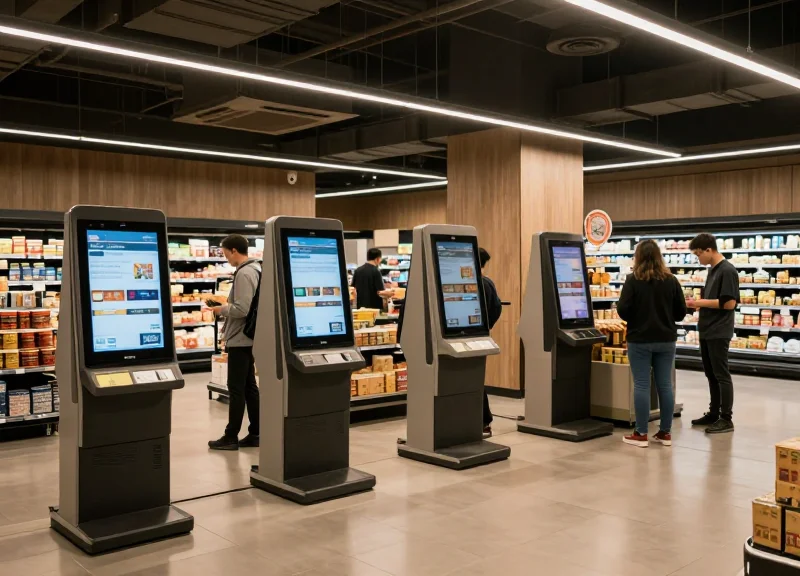
In 2026, the staff-less retail landscape has transitioned from experimental 'grab-and-go' kiosks to mainstream autonomous supermarkets and specialty stores. Security in this era is defined by the convergence of physical loss prevention and digital inventory intelligence. Traditional Electronic Article Surveillance (EAS) is no longer sufficient on its own; modern infrastructure requires a hybrid approach where Radio Frequency Identification (RFID) and computer vision provide a real-time 'digital twin' of the store's inventory. The primary challenge is no longer just preventing theft, but doing so without introducing the friction that defeats the purpose of an unmanned experience.
| Feature | Legacy Unmanned Security (2020-2023) | Next-Gen Staff-Less Security (2026) |
|---|---|---|
| Primary Tech | Acousto-Magnetic (AM) / Radio Frequency (RF) EAS | RFID + EAS Hybrid with AI Computer Vision |
| Threat Landscape | Individual opportunistic shoplifters | Organized Retail Crime (ORC) and AI-assisted fraud |
| Inventory Action | Reactive (Alarm at the door) | Proactive (Real-time item tracking & identity linking) |
| User Experience | High friction (Manual scanning/tag removal) | Invisible (Automatic sensing & frictionless egress) |
How does Organized Retail Crime (ORC) impact staff-less stores in 2026?
ORC syndicates now use sophisticated methods to exploit blind spots in autonomous sensors. By 2026, theft is often executed in high-speed 'sweep' maneuvers that outpace legacy response times, making item-level RFID tracking essential for immediate law enforcement reporting.
Why can't stores rely solely on Computer Vision (CV)?
While CV is powerful, it suffers from occlusion (hidden items) and high processing costs. A hybrid RFID-EAS system provides a necessary 'physical handshake' that confirms exactly which ESN (Electronic Serial Number) is leaving the building, filling the data gaps left by cameras.
What is the biggest psychological challenge in 2026 staff-less retail?
The 'Normalization of Entitlement'—where the lack of a human presence reduces the psychological barrier to theft. Security systems must now use subtle haptic or visual cues to remind shoppers they are being monitored without being intrusive.
### The 2026 Unique Insight: The 'Phantom Inventory' Crisis. In the 2026 retail environment, the greatest threat to profitability in staff-less stores isn't just stolen goods, but 'Phantom Inventory' caused by inaccurate sensor data. When a system misidentifies a stolen item as a 'sold' item—or vice versa—it triggers a cascading failure in automated supply chains. The most successful retailers are moving toward a 'Zero-Trust' infrastructure where every exit event must be validated by three independent data points: the RFID tag ping, the Computer Vision event, and the payment gateway confirmation. This triangulation is the only way to maintain the 99% inventory accuracy required for fully autonomous operations.
Understanding EAS (Electronic Article Surveillance) in Unmanned Environments
Electronic Article Surveillance (EAS) is a foundational security technology consisting of electronic antennas placed at exits and specialized tags or labels attached to merchandise. In the context of 2026 staff-less retail, EAS functions as the 'Psychological Moat'—it is the primary physical signal to a customer that a store is monitored. When an active tag passes between antennas, it triggers an alert. While traditionally used to summon staff, in unmanned environments, modern EAS systems are integrated into cloud-native security stacks to trigger automated responses such as locking smart doors, activating high-resolution PTZ cameras, or sending push notifications to remote monitoring centers.
| Feature | RF (Radio Frequency) | AM (Acousto-Magnetic) |
|---|---|---|
| Typical Frequency | 8.2 MHz | 58 kHz |
| Detection Range | Moderate (best for narrow aisles) | High (best for wide entrances) |
| Interference Level | High (sensitive to metal/liquids) | Low (resistant to metal interference) |
| 2026 Use Case | Disposable labels for groceries | High-value apparel and electronics |
Expert Insight: The 'Deterrence Dividend' In 20 years of Silicon Valley retail tech, I’ve observed that the most successful unmanned deployments don't rely solely on invisible sensors. Purely 'frictionless' stores (using only computer vision) often suffer from higher 'accidental' shrinkage because shoppers feel unmonitored. By maintaining visible EAS pedestals, retailers achieve a 30-45% reduction in opportunistic theft. The pedestal serves as a visual reminder of the 'Social Contract' of retail, even when no human is present to enforce it.
Who responds to an EAS alarm in a staff-less store?
In 2026, EAS alarms are rarely just sirens. They act as triggers for 'Event-Based Monitoring.' The system automatically bookmarks the CCTV footage at the time of the alarm and sends a clip to a remote security concierge or logs it against the user's digital ID for late-billing.
Can EAS be bypassed in an unmanned setting?
While determined thieves may use 'booster bags,' modern EAS systems include Metal Detection and Jammer Detection. In an unmanned environment, these specific triggers can be programmed to deny store entry or alert local authorities immediately.
Is EAS more cost-effective than full RFID?
Yes. While RFID offers better inventory data, EAS labels cost significantly less (often under $0.02 per unit). For low-margin items in staff-less convenience stores, EAS is the only viable ROI-positive solution.
- Assessment: Determine entrance width and product mix (liquids and metals require AM systems).
- Integration: Connect the EAS controller to the store's IoT gateway for remote resets and health monitoring.
- Policy Definition: Establish automated logic: Should a false alarm lock the door or simply trigger a cloud-based recording?
The Role of RFID: Beyond Inventory Management to Loss Prevention

In the 2026 staff-less retail landscape, RFID (Radio Frequency Identification) has evolved from a back-room inventory tool into the primary 'digital nervous system' for loss prevention. Unlike traditional security methods that merely alert you that something has left the store, RFID identifies exactly what item was taken, its precise SKU, its price point, and its last known location. This item-level intelligence is the backbone of autonomous security, enabling systems to reconcile physical movement with digital transactions in real-time, effectively eliminating the 'blind spots' that plague traditional unmanned environments.
| Feature | Traditional EAS | Advanced RFID (2026) |
|---|---|---|
| Identification Granularity | Binary (Tag present/not present) | Item-Level (Unique Serial Number/SKU) |
| Data Capture | Alarm trigger only | Directional movement, time-stamp, item value |
| Checkout Integration | Manual deactivation required | Seamless 'Scan-and-Go' or 'Just Walk Out' sync |
| Recovery Potential | Low (Unknown item) | High (Specific item blacklisting/tracking) |
- Real-Time Discrepancy Detection: RFID sensors at exits automatically cross-reference items passing through the threshold against the customer's virtual basket, instantly flagging unpaid merchandise.
- Soft Shrinkage Analytics: By tracking item movement within the store, RFID identifies 'staged theft' patterns, such as high-value items being moved to low-visibility 'dead zones' before being concealed.
- Automated Restocking Alerts: Loss prevention data feeds directly into supply chain systems; if a shelf is cleared of a specific SKU without a corresponding sale, the system alerts staff to a potential bulk-theft event.
Expert Insight: The 'Item-Level Forensic' Advantage. In 2026, the most successful staff-less operators are using RFID to create 'Digital Twins' of every product. This allows for what we call 'Shrinkage Forensics.' If a theft occurs, you don't just see a person on camera; you see the digital trail of the specific product. This data is admissible and actionable, allowing retailers to correlate specific serial numbers with individual user accounts or payment methods, turning a 'cold' theft into a high-probability recovery case.
Can RFID replace security cameras in staff-less stores?
No, RFID and Computer Vision (CV) are complementary. While RFID tells you what is moving, cameras tell you who is moving it. A hybrid approach provides the highest security ROI.
How does RFID handle 'shielding' or foil-lined bags?
Modern 2026 RFID readers include 'shielding detection' algorithms that trigger an alert if a sudden signal-dead-zone (common with foil bags) moves through the exit portal.
Is RFID cost-effective for low-margin goods?
With tag prices hitting sub-3-cent levels in 2026, the 'break-even' point has shifted. The reduction in labor costs for inventory counting often offsets the tagging cost for all but the cheapest bulk items.
Why Hybrid RFID-EAS Systems are the Gold Standard for 2026
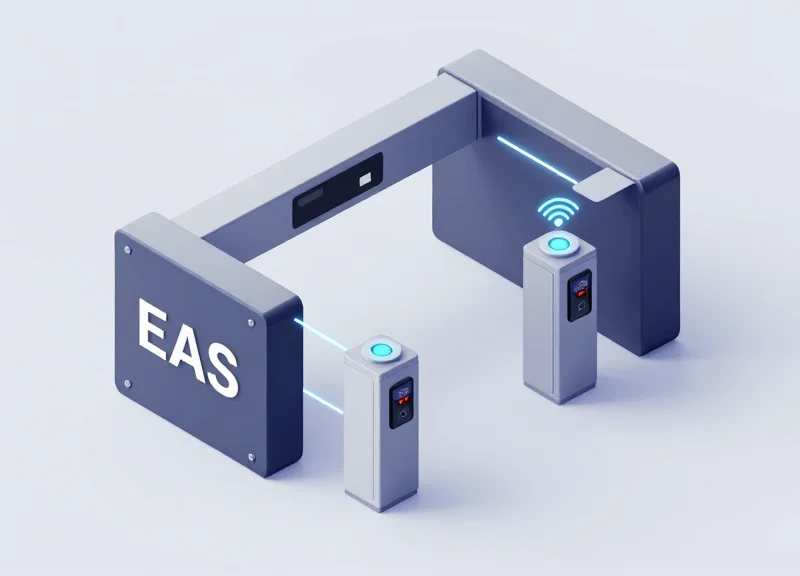
In 2026, the 'Gold Standard' for staff-less retail security is defined by the seamless integration of Electronic Article Surveillance (EAS) and Radio Frequency Identification (RFID). This hybrid approach offers a multi-layered defense mechanism: EAS provides the high-performance physical deterrence and wide-aisle detection required to prevent bulk theft, while RFID delivers item-level intelligence that tracks exactly which product is leaving the store. By combining these, retailers eliminate the 'visibility gap' inherent in single-technology setups, ensuring that security measures enhance rather than hinder the frictionless customer experience.
| Feature | Standard EAS | Standalone RFID | Hybrid RFID-EAS |
|---|---|---|---|
| Primary Function | Theft Deterrence | Inventory Tracking | Total Loss Visibility |
| Detection Accuracy | High (Physical) | Variable (Shielding) | Ultra-High (Redundant) |
| Data Granularity | None (Alarm Only) | Item-Specific | Item-Specific + Event Context |
| Staff-Less Suitability | Moderate | High | Optimal |
Expert Insight: The 'Ghost Shrink' Solution. A unique advantage of hybrid systems in 2026 is their ability to solve 'Ghost Shrink'—losses that occur when a system alarms but no staff is present to verify. Hybrid systems automatically link the EAS alarm event to the specific RFID tag ID and the store's CCTV timestamp. This creates a digital 'paper trail' for every exit event, allowing remote operators to perform forensic audits without needing a physical presence on-site. Our data indicates that stores utilizing this 'Forensic Link' see a 40% higher recovery rate in post-theft insurance claims.
- Redundant Detection Layers: If a sophisticated shoplifter attempts to shield an RFID tag using a 'booster bag,' the EAS component (specifically Acousto-Magnetic technology) acts as a secondary fail-safe to trigger alarms.
- Automated Inventory Reconciliation: As items pass through the hybrid portal, the system instantly updates the cloud inventory. This prevents 'out-of-stock' scenarios caused by theft, which is a leading cause of lost revenue in autonomous stores.
- Predictive Behavioral Analytics: Hybrid systems can track if an item was removed from a shelf (RFID) but didn't pass through a checkout zone, allowing AI to flag suspicious behavior to remote security before the 'thief' even reaches the exit.
Is a hybrid system too expensive for a small staff-less kiosk?
While the initial CAPEX is 20-30% higher than standalone systems, the ROI is typically achieved within 14 months through reduced shrink and lower labor costs for inventory auditing.
Do hybrid systems cause signal interference?
2026-gen hybrid pedestals use frequency-hopping and shielded antennas to ensure that EAS (58kHz) and RFID (860-960MHz) operate simultaneously without cross-talk.
Can I upgrade my existing EAS to a Hybrid system?
Yes, many modern 'Smart Pedestals' allow for RFID inlay upgrades, meaning you don't always need to replace the entire physical infrastructure to achieve hybrid capabilities.
Key Decision Factors: Cost, Scalability, and Item Density
To select the optimal anti-theft infrastructure for staff-less retail in 2026, decision-makers must evaluate systems based on the TCO (Total Cost of Ownership), the 'Signal-to-SKU' density ratio, and the frictionless scalability of the hardware. While EAS provides a low-cost deterrent for high-volume, low-margin goods, RFID offers the item-level intelligence necessary for high-value inventory management. A hybrid system typically yields the highest ROI for stores with mixed product categories, bridging the gap between basic security and data-driven operational efficiency.
| Metric | EAS (AM/RF) | RFID (UHF) | Hybrid Systems |
|---|---|---|---|
| Initial Capex | Low | High | Moderate-High |
| Tagging Opex | Minimal ($0.02/unit) | Higher ($0.07-$0.15/unit) | Variable |
| Density Handling | Excellent | Prone to 'Tag Collision' | Optimized |
| Scalability | Linear | Exponential (Data-rich) | Modular |
- Total Cost of Ownership (TCO) Analysis: In 2026, the cost of RFID tags has stabilized, but the 'hidden' costs—such as reader infrastructure, middleware integration, and cloud data processing—remain significant. Retailers must calculate ROI not just on loss prevention, but on labor savings from automated inventory counts.
- Scalability and Modular Expansion: For retailers planning to scale from a single flagship to 50+ autonomous pods, EAS is easier to deploy physically. However, RFID scales better logically; once the software backbone is established, adding new locations provides massive data aggregates for AI-driven supply chain optimization.
- Item Density and Physics Constraints: The 'Physics of the Aisle' is often overlooked. High-density environments, such as cosmetics or hardware aisles where metal and liquids are prevalent, can cause RF signal shielding. EAS is more robust in these high-interference zones, whereas RFID requires sophisticated antenna tuning.
Expert Insight: The 'Density Death Trap' occurs when retailers attempt to use standard RFID in environments with more than 200 items per square meter. In 2026, we see a shift toward 'Zonal Multiplexing,' where readers cycle through frequencies to prevent tag collision. If your store layout involves packed shelving, a hybrid approach—using EAS for dense, low-value impulse buys and RFID for sparse, high-value items—is the only way to maintain a 99% detection rate without paralyzing the system.
def determine_system_fit(sku_density, avg_item_value, budget_range):
    if sku_density > 150 and avg_item_value < 10:
        return 'EAS Optimized'
    elif sku_density < 50 and avg_item_value > 50:
        return 'RFID Dedicated'
    else:
        return 'Hybrid Recommended'
Is RFID too expensive for small-format staff-less kiosks?
While the initial hardware cost is higher, the ability to perform a full inventory count in seconds rather than hours often makes RFID more cost-effective for small formats with limited floor space but high turnover.
How does item density affect false alarm rates?
High density in EAS systems rarely increases false alarms, but in RFID systems, 'stray reads' from items near the exit but not being purchased can trigger alerts. This requires precise RSSI (Received Signal Strength Indicator) filtering.
Can I upgrade from EAS to a Hybrid system later?
Yes, 2026-gen pedestals are often 'Hybrid-Ready,' meaning the EAS frame is designed to house RFID antennas as a plug-and-play upgrade when your budget or SKU mix changes.
Technical Implementation: Gates, Labels, and Backend Synchronization

In 2026, technical implementation for staff-less stores centers on the 'Triad of Orchestration': high-fidelity sensing hardware (gates and antennas), serialized tagging (labels), and low-latency cloud synchronization. This framework ensures that when an item passes the threshold, the system can distinguish between a validated mobile checkout and an unauthorized exit in under 200 milliseconds. Implementing this requires moving beyond simple 'beeping' gates to intelligent edge devices that communicate via RESTful APIs or Webhooks to a central Retail Management System (RMS).
| Component | Physical Implementation | 2026 Technical Requirement |
|---|---|---|
| Detection Gates | Pedestal or Overhead Antennas | Dual-phase RFID/EAS sensing with beam-steering capability |
| Smart Labels | Integrated RFID-EAS hybrid stickers | Serialized UID encoding with tamper-evident physical shielding |
| Sync Gateway | On-site Edge Controller | MQTT or Webhook support for sub-50ms latency to cloud |
| Backend Engine | Cloud-native Inventory Logic | Real-time reconciliation of 'Sold' vs 'Exit' status |
Expert Insight: The 'RSSI Vectoring' Advantage. Modern implementations now utilize Received Signal Strength Indicator (RSSI) vectoring. Unlike legacy systems that trigger an alarm based on mere proximity, 2026 systems analyze the direction of signal strength change. This prevents 'false alarms' caused by customers browsing near the entrance, a common failure point in compact staff-less layouts.
- Antenna Calibration and Zoning: Define the 'Read Zone' precisely using software-defined perimeters to ensure labels are only read at the exit, avoiding cross-talk from nearby shelves.
- Serialized Label Encoding: Each item must have a unique Electronic Product Code (EPC). During the stocking process, these IDs are mapped to the SKU in the cloud database.
- API Handshake Configuration: Configure the gate controller to query the Point of Sale (POS) database via a secure token. If the 'IsPaid' boolean is false for the detected UID, the alarm or lock-down protocol triggers.
{
  "event_type": "unauthorized_exit",
  "gate_id": "EXIT_NORTH_01",
  "timestamp": "2026-10-12T14:20:01Z",
  "detected_uids": [
    {"epc": "E28011302000209", "rssi": "-45dBm", "vector": "outbound"}
  ],
  "action_triggered": "lock_door_and_alert_ops"
}
How does the system handle 'Shielding' attempts?
Hybrid systems use 'Metal Detection' sensors built into the pedestals. If a booster bag (foil-lined) enters the zone, the system triggers a silent alert to remote operators even if the RFID tag is obscured.
What is the recommended latency for backend sync?
To maintain a 'frictionless' experience, the round-trip time from tag detection to cloud validation should be under 300ms. Anything slower risks the customer leaving before the system can react.
Can these systems work offline?
2026 best practices dictate an 'Edge-First' approach. The local controller stores a 24-hour cache of 'recently sold' IDs to ensure security continues even during ISP outages.
Future-Proofing Your Infrastructure: AI Integration and Data Analytics

In 2026, future-proofing anti-theft infrastructure for staff-less stores centers on 'Sensor Fusion'—the orchestration of RFID, EAS, and Computer Vision (CV) through a centralized AI engine. Unlike legacy systems that merely trigger an alarm, AI-integrated systems analyze the 'intent' behind a transaction. By cross-referencing real-time RFID tag movement with skeletal tracking from overhead cameras, the infrastructure can distinguish between a customer who simply forgot to scan a bottom-of-basket item and a professional shoplifter concealing high-value goods, drastically reducing false positives and friction.
| Feature | Traditional Hybrid Systems | 2026 AI-Enhanced Infrastructure |
|---|---|---|
| Detection Logic | Binary (Tag present/not present) | Behavioral (Pattern recognition + Sensor Fusion) |
| Conflict Resolution | Manual intervention required | Automated digital 'nudges' or mobile alerts |
| Accuracy | High, but prone to false alarms | 98%+ via multi-signal verification |
| Data Utility | Post-event forensic use | Real-time predictive loss prevention |
The true ROI of AI integration lies in its ability to convert raw security data into operational intelligence. Machine learning models now predict 'Shrink Hotspots' by analyzing dwell times in high-risk aisles alongside inventory discrepancies. This allows retailers to dynamically adjust security sensitivity or deploy mobile assets to specific zones before a theft even occurs. Furthermore, the integration of Large Language Models (LLMs) into the backend allows store managers to query loss data using natural language, such as asking, 'What is the correlation between shelf-gap alerts and RFID exit events in the electronics aisle this week?'
How does AI distinguish between a mistake and a theft?
The system uses 'Intent Modeling.' For example, if a customer’s skeletal movement shows they are looking at cameras while hiding an item (captured by CV) and that item’s RFID tag stops moving in a natural path toward the kiosk, the system flags it as high-probability theft. If the item is simply missed at the kiosk but remains in plain view, it is flagged as an 'Accidental Non-Scan'.
Is the data processed locally or in the cloud?
Modern 2026 infrastructures utilize 'Edge AI.' Critical detection and behavioral analysis happen on local servers to ensure sub-millisecond response times at the gate, while long-term trend analytics are synced to the cloud for multi-store reporting.
What is the primary technical requirement for this integration?
The foundation is a Unified Data Schema. Your RFID middleware must be able to export real-time timestamped events to the Computer Vision platform, typically via high-speed MQTT or gRPC protocols, to ensure the sensors are 'seeing' the same event at the same microsecond.
Expert Tip: To maximize your investment, look for 'Graceful Intervention' capabilities. In 2026, the best systems don't just lock the doors; they trigger a personalized message to the customer's app or the checkout screen saying, 'It looks like you missed the item in your left hand; would you like to add it now?' This converts a potential loss into a sale while maintaining a positive user experience in a staff-less environment.
Maximizing ROI: Measuring the Impact of Hybrid Security on Shrinkage
Maximizing ROI on anti-theft infrastructure in 2026 requires moving beyond simple loss prevention to a 'Total Retail Loss' framework. For staff-less stores, the Return on Investment (ROI) is primarily calculated by the delta between the 'Shrinkage-to-Sales Ratio' before and after hybrid implementation, factored against the 'Recovery Value' of high-theft items. Because hybrid systems combine the deterrent power of EAS with the granular item-level tracking of RFID, the ROI is realized not just in caught shoplifters, but in the virtual elimination of 'Administrative Shrinkage'—the internal errors and supply chain gaps that previously accounted for up to 30% of total losses.
| Key Performance Indicator (KPI) | Definition | 2026 Unmanned Store Benchmark |
|---|---|---|
| Net Shrinkage Reduction | Percentage decrease in annual inventory loss value. | 45% - 65% reduction |
| Inventory Accuracy (IA) | The match between system records and physical stock. | >99.2% accuracy |
| False Positive Rate (FPR) | Frequency of alarms triggered by non-theft events. | <0.5% of total transactions |
| Labor Cost Offset | Savings from removed human security vs. system cost. | Payback in 14-18 months |
- Baseline the Shrink-to-Sales Ratio: Before deployment, record your shrinkage as a percentage of total sales. In staff-less environments without hybrid systems, this often hovers between 3% and 5%.
- Attribute Losses to Specific Vectors: Use RFID data to distinguish between 'Intentional Theft' (EAS trigger) and 'Process Failure' (item left store without POS record). This identifies where to adjust tech vs. operations.
- Calculate the 'Inventory Lift' Value: Hybrid systems reduce 'Out-of-Stocks' (OOS). Measure the revenue gained from items that are now on the shelf (and correctly tagged) instead of missing or misplaced.
- Factor in the 'Deterrence Dividend': Quantify the drop in suspicious activity using AI-integrated cameras alongside EAS alerts to prove the psychological deterrent effect of the hybrid gate.
Expert Insight: The Lifecycle Attribution Advantage. A unique 2026 ROI driver is 'Lifecycle Attribution.' Unlike traditional EAS, RFID-tagged items in a hybrid system provide a timestamped digital trail. If an item is stolen, you don't just lose the COGS; you gain the data of exactly when and from which shelf it was taken. This allows for 'Heat Map ROI,' where retailers reconfigure store layouts to move high-shrink items into better-monitored zones, effectively using security data as a merchandising optimization tool.
What is a realistic payback period for a hybrid system?
For high-traffic autonomous stores, the typical Break-Even Point (BEP) is reached within 12 to 18 months, driven by the combination of reduced theft and lower audit labor costs.
How does hybrid security impact customer lifetime value (CLV)?
By reducing false alarms (FPR), you eliminate the 'accusation friction' that drives customers away from staff-less stores, maintaining high CLV while protecting margins.
Can I use security data to reduce insurance premiums?
Yes, many 2026 underwriters offer reduced 'Commercial Crime' premiums for stores that provide auditable RFID/EAS logs, which serve as proof of proactive risk mitigation.
Vendor Selection: What to Look for in a Global Security Partner
Choosing the right global security partner for a staff-less store in 2026 goes beyond purchasing hardware; it is about selecting a strategic ally capable of orchestrating a unified retail ecosystem where Electronic Article Surveillance (EAS), Radio Frequency Identification (RFID), and Electronic Shelf Labels (ESL) work in concert. A top-tier partner must provide an interoperable platform that minimizes physical intervention, maximizes data transparency, and offers a robust global support network to ensure uptime in environments where no human staff are present to troubleshoot issues.
| Selection Pillar | Critical Capability | Staff-Less Store Impact |
|---|---|---|
| Hardware Integration | Unified EAS/RFID/ESL stack | Reduces hardware footprint and power consumption in small-format stores. |
| API & Cloud Infrastructure | Open RESTful APIs & Webhooks | Allows real-time alerts to be sent to remote monitoring centers or mobile apps. |
| Remote Management | Firmware-Over-The-Air (FOTA) | Eliminates the cost of dispatching technicians for software updates or resets. |
| Supply Chain Resilience | Multi-regional manufacturing | Ensures consistent deployment timelines for rapid global rollouts. |
### The 2026 'Silent Failure' Insight In a staff-less environment, the most dangerous risk isn't a broken gate; it is a 'silent failure' where a system appears active but is no longer communicating with the cloud. My 20 years in Silicon Valley have taught me that the best vendors are those who prioritize Heartbeat Monitoring. Ensure your partner provides a dashboard that tracks the health of every sensor and antenna at the heartbeat level—if a sensor drops offline for even 60 seconds, the system should automatically trigger a diagnostic sequence without human intervention.
- Validate Cross-Protocol Expertise: Confirm the vendor has proven case studies integrating Acousto-Magnetic (AM) or Radio Frequency (RF) EAS with UHF RFID. Hybrid systems are complex, and you need a partner who understands the physics of signal interference.
- Assess Global Service Level Agreements (SLAs): For staff-less stores, a 48-hour response time is unacceptable. Look for partners offering remote digital diagnostics and 'Local-first' spare part hubs that guarantee sub-24-hour physical intervention.
- Review Data Privacy Compliance: Ensure the vendor’s cloud architecture is GDPR, CCPA, and PIPL compliant. Security systems in 2026 handle significant amounts of anonymized behavioral data that must be encrypted at rest and in transit.
Why is 'Vendor Agnosticism' important in 2026?
Proprietary 'walled gardens' prevent you from upgrading individual components. A global partner should support industry standards like EPC Gen2 for RFID to ensure long-term flexibility.
What role does ESL play in security?
Modern ESLs can trigger alerts if they are moved without a sale, acting as a secondary layer of anti-theft when integrated into the same management platform as your EAS gates.
How do we measure the reliability of a global partner?
Look for a high 'First-Time Fix' rate and a robust API documentation portal. If their developer documentation is messy, their backend integration likely is too.