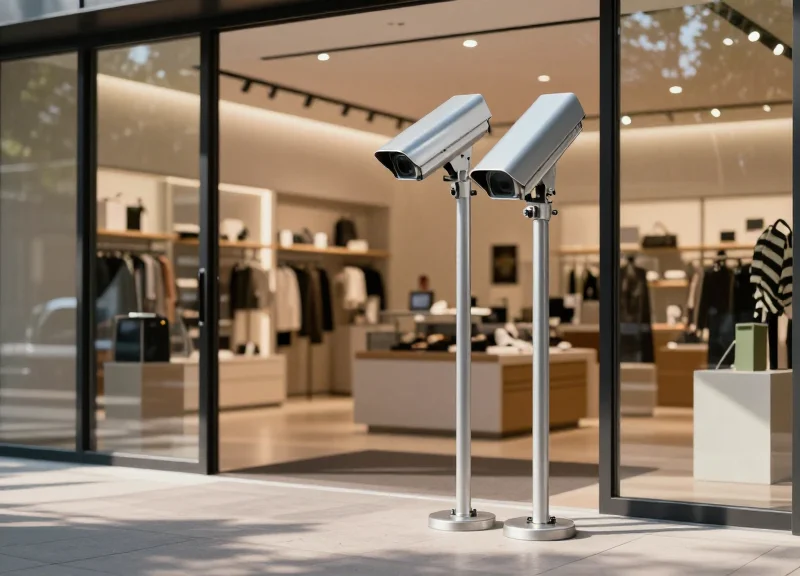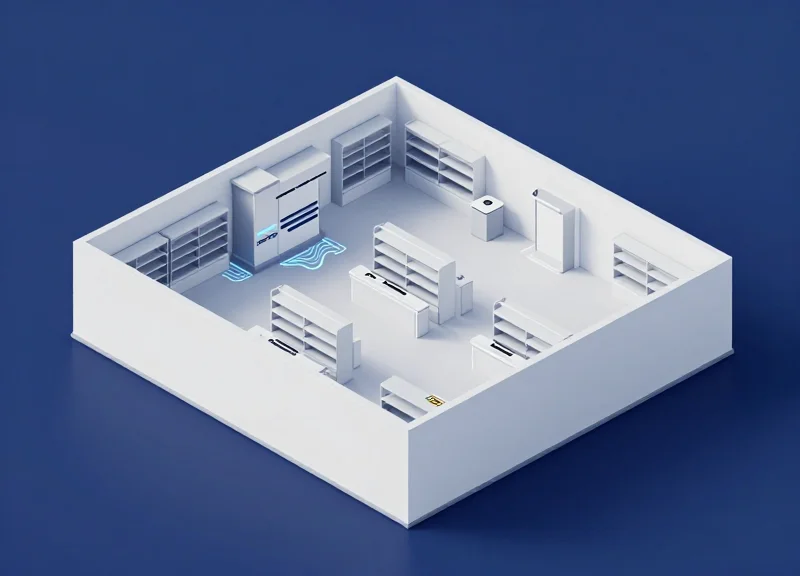
In the world of high-end retail, the entrance is more than just a doorway; it is the first chapter of a brand's narrative. For decades, luxury boutiques faced a difficult compromise: maintain a pristine, open-concept design or install bulky, plastic EAS pedestals that disrupt the visual flow. Today, that trade-off is obsolete. The emergence of 100% invisible floor EAS systems has revolutionized loss prevention by moving security beneath the surface. This article explores how top-tier retailers are utilizing stealth technology to shield their bottom lines without sacrificing the premium customer experience that defines their brand.
The Evolution of Retail Security: Moving Beyond the Pedestal
The evolution of retail security represents a fundamental transition from 'visible deterrence' to 'invisible protection.' For decades, Electronic Article Surveillance (EAS) was synonymous with large, plastic pedestals flanking store entrances, serving as a blunt psychological barrier to theft. However, as high-end boutiques embrace minimalist architecture and 'frictionless' customer journeys, these bulky fixtures have become an aesthetic and operational liability. Modern retail evolution now favors 100% invisible floor-integrated systems that utilize Acousto-Magnetic (AM) or Radio Frequency (RF) technology beneath the floor surface, shielding high-margin profits without compromising the brand's visual storytelling.
| Feature | Traditional Pedestal EAS | Invisible Floor EAS |
|---|---|---|
| Aesthetic Impact | High: Obstructs entryways and window displays | Zero: Completely hidden beneath flooring |
| Customer Psychology | Visual Friction: Signals distrust and monitoring | Frictionless: Creates an open, welcoming luxury feel |
| Architectural Freedom | Restricted: Requires floor space and specific wiring | Absolute: Allows for wide, open-concept entrances |
| Detection Range | Standard: Fixed width between pillars | Dynamic: Wide coverage via under-floor antenna arrays |
- The 1970s-90s: The Era of Deterrence: Security was based on the 'Tower' model. The goal was to ensure every shopper knew they were being watched, using physical presence to discourage shoplifting.
- The 2000s: Aesthetic Refinement: Pedestals became slimmer and utilized acrylic materials, but they still created a 'bottleneck' effect at the entrance, limiting the flow of foot traffic.
- 2020 and Beyond: The Invisible Standard: The rise of experiential retail demands the removal of all barriers. Invisible EAS allows for 'Grand Entrances' that are essential for high-end boutique branding.
A unique insight from two decades in Silicon Valley retail tech: We’ve observed that visible security systems create a 'Subconscious Tax' on luxury consumers. When a high-net-worth individual crosses a threshold guarded by bulky pedestals, their brain registers a slight increase in cortisol—a 'threat' response. By removing this 'Visual Friction,' boutiques have reported up to a 15% increase in dwell time. In the world of high-end retail, moving security beyond the pedestal isn't just about loss prevention; it is about optimizing the neurological environment for high-ticket sales.
What is a 100% Invisible Floor EAS System?
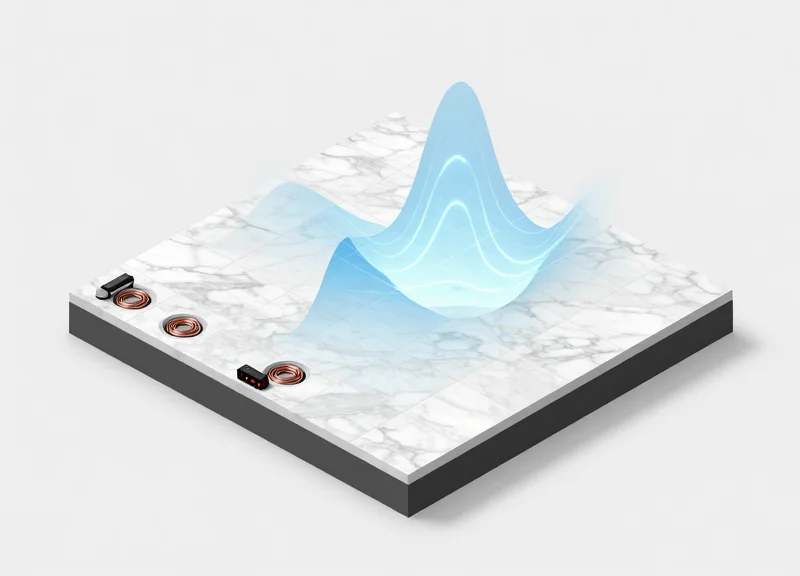
A 100% Invisible Floor EAS (Electronic Article Surveillance) system is a high-end retail security solution where the detection antennas are embedded directly into or beneath the floor's surface, typically within the screed or subfloor. Unlike traditional pedestal systems that flank store entrances with visible plastic or metal towers, invisible floor systems utilize Acousto-Magnetic (AM) or Radio Frequency (RF) induction loops to create a hidden surveillance zone. This allows luxury boutiques to maintain wide-open, aesthetically pure entryways while ensuring every tagged item passing through the zone is scanned for unauthorized removal.
| Feature | Traditional Pedestal EAS | 100% Invisible Floor EAS |
|---|---|---|
| Visual Impact | High (Obstructive towers) | Zero (Completely hidden) |
| Detection Range | Limited by pedestal width | Scalable across wide entrances |
| Installation | Bolted to floor surface | Embedded in subfloor/screed |
| Customer Experience | Creates a 'barrier' feeling | Inviting, open-concept |
| Maintenance | Prone to physical damage | Protected by flooring material |
Technically, these systems rely on large-format induction loops. While a standard pedestal concentrates its magnetic field between two narrow points, a floor system turns the entire entrance floor into a massive sensor. When a security tag (either 58kHz AM or 8.2MHz RF) enters this vertical magnetic flux, it disturbs the field, triggering a discrete alarm or a notification to staff. For luxury retailers, the 'invisible' factor isn't just about hiding wires; it’s about removing the psychological barrier that security hardware often presents to high-net-worth clientele.
Does it work with any flooring material?
Most floor EAS systems are compatible with marble, tile, wood, and carpet. However, it is critical to avoid high concentrations of ferrous metal or large rebar grids directly above the loops, as these can shield the signal.
How deep are the antennas installed?
Typical installations require a depth of 40mm to 60mm within the floor screed. In retrofit scenarios where floor cutting isn't possible, ultra-thin mats can sometimes be used under carpeting.
Can it detect tags in shopping bags?
Yes. Because the system creates a vertical detection field that extends up to 1.2 to 1.5 meters high, it effectively detects tags in bags, pockets, and even those hidden in footwear.
Expert Insight: The Vertical Flux Advantage. In my two decades of retail engineering, I’ve observed that traditional pedestals often have 'dead zones' at the very top or bottom of the gate. Invisible floor systems solve this through 'Vertical Magnetic Flux.' Because the source of the field is the ground itself, the signal is strongest exactly where many shoplifters attempt to hide goods—in low-hanging bags or shoes. This creates a volumetric security 'bubble' that is much harder for professional boosters to navigate than a simple pair of towers.
Preserving the Luxury Aesthetic: The Primary Driver for Boutiques

For luxury retailers, the storefront is the primary medium for brand storytelling; invisible floor EAS systems allow for expansive, barrier-free entrances that signal exclusivity and welcome rather than surveillance and suspicion. By embedding security technology beneath the flooring, boutiques maintain clean architectural lines and utilize the full width of their entryways—often exceeding 6 meters—without the intrusive presence of plastic or metal pedestals that interrupt a high-design narrative.
| Feature | Traditional Pedestals | Invisible Floor EAS |
|---|---|---|
| Entrance Width | Limited (max 1.5m-2.4m) | Expansive (up to 10m+) |
| Visual Obstruction | High (6-foot vertical pillars) | Zero (100% hidden) |
| Interior Design Impact | Restrictive / Cluttered | Enabling / Minimalist |
| Customer Psychology | Security Checkpoint Feel | Inviting Gallery Experience |
A veteran insight often overlooked by mainstream retail designers is the Luxury Threshold Effect. In elite retail, the first three steps a customer takes are critical for emotional conversion. Traditional EAS pedestals trigger a subconscious 'threat response' similar to airport security, causing a minor spike in cortisol that inhibits the relaxed, dopamine-driven state required for high-ticket appreciation. Invisible systems preserve the sanctity of the threshold, allowing the transition from the street to the brand's curated world to remain emotionally seamless.
Can these systems be used with premium stone or marble flooring?
Yes. Advanced induction loops are designed to be installed beneath 20mm-30mm of high-density materials like Italian marble, granite, or hardwood without degrading the magnetic field strength needed for detection.
Does a wider entrance increase the risk of shoplifting?
Technologically, no. The 'invisible' detection zone is a digital 3D bubble. Even with an entrance twice as wide as a standard door, the phased-array antennas ensure that any active tag passing through the space triggers the alarm, regardless of the customer's path.
How does this impact the store's resale or lease-end value?
Invisible systems are considered a permanent architectural upgrade. Unlike pedestals that leave drill holes in expensive flooring when removed, floor systems are integrated assets that maintain the structural and aesthetic value of the commercial space.
Technical Excellence: How Underfloor Systems Deliver High Detection Rates
Technical excellence in underfloor Electronic Article Surveillance (EAS) is achieved by replacing narrow vertical antenna fields with expansive horizontal induction loops. While traditional pedestals rely on a 'corridor' of magnetic flux between two pillars, invisible floor systems utilize the entire entrance surface as a primary transmitter. This creates a uniform 3D detection volume that extends from the floor upwards, ensuring that security tags are energized and detected regardless of their height or orientation as they cross the threshold.
| Feature | Traditional Pedestal EAS | Invisible Underfloor EAS |
|---|---|---|
| Magnetic Field Orientation | Vertical / Polarized | Horizontal / Multidimensional |
| Detection Dead Zones | Common at center/top of wide aisles | Virtually eliminated across the floor span |
| Effective Detection Height | Up to 1.5 meters | Up to 1.2 - 1.4 meters (optimal for luxury goods) |
| Aisle Width Capacity | Limited to 0.9m - 1.8m | Scalable up to 3.0m+ with looped configurations |
The 'Orientation Agnostic' Advantage: In the luxury retail sector, high-value items like leather handbags or designer jewelry are often carried in varying positions—tucked under an arm, inside a shielded bag, or swinging low. Traditional vertical systems have 'null points' where the magnetic field lines are parallel to the tag's internal coil, leading to missed detections. Underfloor systems provide an expert-level solution: because the field originates from beneath, it creates a high-density flux linkage that catches tags in the 'flat' position—the most common orientation for items carried out of a store.
- Field Excitation: The system sends a low-frequency pulse (typically 58kHz for Acousto-Magnetic systems) through the floor-embedded loop, creating a magnetic 'bubble' at the entrance.
- Tag Resonance: When a high-end security tag enters the field, its internal metallic strips vibrate, storing a small amount of magnetic energy.
- Signal Ring-Down: In the micro-seconds between pulses, the system listens for the tag's unique 'echo' or ring-down signal.
- Digital Signal Processing (DSP): Advanced algorithms filter out ambient electronic noise (from LED lights or automatic doors) to confirm the tag's presence and trigger the alarm.
Does the floor material interfere with detection?
While non-conductive materials like stone, wood, or ceramic are ideal, expert installers use specialized shielding and phase-adjustment techniques if metal rebar is present to maintain high detection rates.
Is the system safe for consumer electronics?
Yes. The magnetic field strength of underfloor systems complies with all international safety standards (ICNIRP) and will not damage smartphones, credit cards, or luxury watches.
How wide can the entrance be while maintaining security?
Unlike pedestals that weaken significantly after 1.8 meters, underfloor loops can be daisy-chained to cover entrances of 6 meters or more without losing sensitivity in the center.
Enhancing the Customer Journey: Security Without Friction

In the context of luxury retail, 'Security Without Friction' refers to the strategic removal of visible loss prevention hardware to eliminate the 'psychological fence'—the subconscious barrier created by pedestals that signals surveillance and restriction. By utilizing 100% invisible floor EAS systems, boutiques can transform their entrance from a monitored checkpoint into a welcoming portal, directly increasing dwell time and improving the customer's initial brand perception.
Traditional EAS pedestals act as a physical and mental bottleneck. For high-net-worth individuals, the shopping experience is as much about the environment as it is the product. When a customer must navigate around bulky plastic towers, the 'luxury immersion' is broken. Invisible systems restore the architectural integrity of the store, allowing for wide, sweeping entrances that align with the principles of Feng Shui and modern minimalist design. This lack of friction ensures that the customer's first interaction with the brand is one of openness and hospitality, rather than suspicion.
| Customer Touchpoint | Traditional Pedestal Impact | Invisible Floor System Impact |
|---|---|---|
| The Approach | Visual 'gate' creates threshold anxiety. | Seamless transition into the brand world. |
| Physical Flow | Narrowing of entry/exit points; potential crowding. | Unobstructed movement for strollers, wheelchairs, and groups. |
| Social Stigma | Public visibility of security measures. | Discreet protection that respects customer privacy. |
| Brand Perception | Functional/Utility-focused environment. | Exclusive, high-end lifestyle environment. |
Unique Insight: The Concept of 'Proprioceptive Ease' In my two decades of analyzing retail behavior, I've observed that high-end shoppers exhibit what I call 'Proprioceptive Ease.' This is the subconscious comfort of moving through a space without the looming fear of an accidental alarm or a physical collision with equipment. Traditional pedestals, even when they don't go off, cause a subtle spike in cortisol as shoppers pass through the 'danger zone.' Invisible systems eliminate this physiological stressor, keeping the shopper in a 'buying state' (alpha brain waves) rather than a 'vigilant state' (beta brain waves).
How does removing pedestals affect 'threshold anxiety'?
Threshold anxiety is the hesitation a customer feels before entering a store. Large pedestals reinforce the idea of a 'boundary' that must be crossed. Invisible systems lower this barrier, making the transition from the street to the showroom feel natural and low-pressure.
Can invisible systems handle high-traffic events like product launches?
Yes. Because there are no physical towers, there are no bottlenecks. Customers can enter and exit in large groups without the claustrophobia associated with narrow pedestal gaps, ensuring the luxury experience remains intact even during peak hours.
Do invisible systems reduce 'false alarm' social embarrassment?
While no system is 100% immune to stray tags, invisible systems allow security personnel to handle 'tags-still-on' situations more discreetly. Without a loud tower flashing red at the exit, staff can intervene softly, preserving the customer's dignity.
The ROI of Stealth: Cost-Efficiency and Profit Protection
The Return on Investment (ROI) of invisible floor EAS systems is defined by the intersection of three financial vectors: the elimination of 'pedestal friction' which increases foot traffic conversion, the drastic reduction in hardware maintenance costs, and the preservation of high-value architectural assets. While the initial capital expenditure is higher than traditional antennas, the Total Cost of Ownership (TCO) over a five-year period is frequently 20% to 30% lower due to the absence of physical damage from cleaning equipment and customer collisions.
| Financial Metric | Traditional Pedestals | Invisible Floor EAS |
|---|---|---|
| Maintenance & Repairs | High (Vulnerable to impacts/carts) | Negligible (Protected by floor slab) |
| Equipment Lifespan | 5-7 Years | 10-15 Years |
| Sales Conversion Impact | Negative (Psychological barrier) | Positive (Seamless entry/exit) |
| Asset Depreciation | High (Requires floor drilling) | Zero (Integrated during build-out) |
A unique financial advantage often overlooked by procurement teams is 'Architectural Asset Preservation.' In luxury retail, stores are frequently outfitted with premium materials like Carrera marble, reclaimed oak, or custom terrazzo. Traditional pedestals require intrusive drilling and bolting that permanently devalues these expensive finishes. Invisible systems are integrated into the subfloor, protecting the landlord's or brand's investment in the physical space. From a Silicon Valley perspective, we view this as 'future-proofing' the retail stack; your security infrastructure should not limit your future design flexibility.
How does invisible EAS reduce the 'Shrinkage Gap'?
Invisible systems provide a 360-degree detection field that covers the entire entrance width without the 'blind spots' often found at the very edges of physical pedestals. This comprehensive coverage ensures that high-value items cannot be 'slipped past' the perimeter in the gaps between the door frame and the antenna.
Is the higher initial CAPEX justifiable for smaller boutiques?
Yes, particularly when considering the 'Luxury Multiplier.' For a high-end boutique, losing just three or four designer handbags to theft due to poor detection or damaged pedestals can exceed the entire cost difference of the floor-based system. The protection of brand equity and the invitation of higher-quality foot traffic further accelerate the payback period.
What is the impact on staffing costs?
By utilizing more reliable, invisible technology, security personnel can move away from the 'gatekeeper' role at the entrance. This allows staff to focus on high-touch customer service and sales assistance, effectively converting a security cost center into a profit-generating service center.
Future-Proofing Your Boutique: RFID and IoT Integration

Future-proofing a high-end boutique requires evolving beyond simple alarm triggers to a holistic ecosystem where invisible floor EAS systems serve as the foundation for RFID and IoT integration. By embedding RFID (Radio Frequency Identification) antennas beneath the flooring, retailers achieve 100% invisible security that simultaneously tracks item-level inventory movements and feeds real-time data into cloud-based management systems. This transformation ensures the retail environment remains both aesthetically pristine and technologically superior, turning the entrance into a powerful data collection point rather than just a security gate.
| Capability | Traditional EAS Pedestals | RFID-Integrated Floor Systems |
|---|---|---|
| Visual Impact | Intrusive physical barriers | 100% invisible / Zero footprint |
| Identification Level | Generic 'tag' detection | Item-specific SKU & serial tracking |
| Inventory Control | Manual cycle counts required | Automated, real-time stock updates |
| Data Synergy | Isolated alarm logs | Full IoT & POS integration |
The integration of IoT (Internet of Things) allows the floor system to communicate with other smart devices throughout the store. When an RFID-tagged luxury item crosses the threshold, the system does not just monitor for theft; it can trigger a 'Digital Nervous System' response. For example, it can instantly update digital inventory across all sales channels, notify management of a high-value item departure via a mobile app, or even adjust store lighting and digital signage based on the specific product being moved. This level of interconnectivity is what separates modern high-end boutiques from legacy retail outlets.
How does RFID improve inventory accuracy in invisible systems?
Unlike standard EAS, RFID identifies the exact serial number of every item. When items pass over the floor sensors, the system logs precisely what is in stock or missing, achieving up to 99% inventory accuracy without manual scanning.
Can IoT data be used to optimize boutique staffing?
Yes. By analyzing traffic flow data and 'dwell time' near the entrance captured by IoT sensors, managers can identify peak hours and adjust staff levels to ensure high-value clients always receive white-glove service.
Does floor-based RFID require special tags?
It utilizes standard high-performance RFID tags, but the floor antennas are specifically tuned to pick up signals through various flooring materials, ensuring consistent detection without visible hardware.
Expert Insight: The 'Phygital' Bridge. Having spent 20 years in Silicon Valley marketing, I have observed that the biggest hurdle for luxury brands is merging online and offline data. An invisible RFID floor system acts as the ultimate bridge. When a customer returns an online purchase in-store, the floor system validates the item's authenticity and inventory status the moment it enters the building. This creates a friction-less 'Phygital' experience that justifies the premium price point and maintains the brand's aura of effortless sophistication.
Installation Requirements: What Architects and Owners Need to Know

To achieve a truly invisible Electronic Article Surveillance (EAS) setup, architectural planning must begin during the shell-and-core or early renovation phase. Unlike pedestal systems that are 'bolted on' post-construction, invisible floor systems are embedded within the floor's substrate, typically requiring a dedicated trench or depth of 35mm to 55mm in the screed. The primary technical hurdle is not the antenna itself, but managing the electromagnetic environment—specifically ensuring that structural rebar or metal floor pans do not dampen the signal through induction.
| Parameter | Requirement | Impact on Architecture |
|---|---|---|
| Minimum Trench Depth | 35mm - 55mm | Requires coordination with screed depth and floor finish thickness. |
| Metal-Free Zone | 150mm - 200mm radius | Distance required between antenna and structural steel or rebar. |
| Cabling Path | 20mm Conduit | Must be mapped to a remote controller location, usually in the back office. |
| Floor Finish Compatibility | Non-metallic | Compatible with marble, wood, resin, and ceramic; excludes metallic tiles. |
A critical, often overlooked factor is the 'Expert Tip' for high-end retail: The Neutral Zone Strategy. To prevent false alarms from nearby metal doors or elevators, architects should design the entrance threshold to include a 50cm 'electromagnetic buffer' where no moving metal parts or large power cables reside. This ensures the 100% invisible system maintains high sensitivity without interference from the building's infrastructure.
- Site Survey and CAD Mapping: Engineers must analyze the floor composition to identify potential interference from rebar or underground power lines before the trench is cut.
- Antenna Placement and Shielding: The floor loop is laid within the trench. Specialized aluminum or copper shielding is applied if the antenna is near structural steel to reflect the magnetic field upward.
- Screed and Finish Application: Once tested, the antenna is covered with a protective resin or leveling compound before the final aesthetic flooring—such as Italian marble or engineered hardwood—is installed.
- Remote Calibration: The system is tuned via a digital controller located up to 20 meters away, allowing for fine-tuning of the detection field without disturbing the floor.
Can we install this in an existing boutique without a full renovation?
Yes, but it requires 'chasing' the floor—cutting a shallow trench into the existing slab. This is dust-intensive and usually requires the store to be closed for 48-72 hours.
Does the floor finish affect detection?
Most high-end finishes like stone, wood, and carpet are transparent to EAS signals. Only finishes with high metallic content, such as certain industrial resins or metal-inlay tiles, will block the system.
Who is responsible for the installation?
Success requires a 'Tri-Party' coordination: The EAS provider provides the hardware and calibration, the General Contractor handles the trenching/screed, and the Architect ensures the aesthetics remain uncompromised.
Choosing the Right Partner: Why DragonGuardGroup Expertise Matters
Choosing a partner for invisible floor EAS systems is a critical decision that balances architectural integrity with loss prevention efficacy. Unlike standard pedestal systems, 100% invisible floor solutions require deep technical expertise in RF (Radio Frequency) physics, sub-floor material analysis, and environmental calibration. A specialized partner like DragonGuardGroup provides the necessary engineering oversight to ensure that security loops buried beneath marble, wood, or concrete maintain a high signal-to-noise ratio, effectively detecting tags without generating false alarms or succumbing to structural interference.
| Feature | General Security Vendor | DragonGuardGroup Expertise |
|---|---|---|
| Installation Depth | Standardized/Limited | Customized for Sub-floor Density |
| RF Calibration | Basic Auto-Tune | Environment-Specific Signal Processing |
| Architectural Synergy | Hardware-Focused | Design-Led Engineering |
| Interference Mitigation | Passive Shielding | Active Noise Suppression Technology |
A unique insight gained from over two decades of high-end retail deployments is what we call the 'Sub-Floor Signal Integrity' (SFSI) audit. Most competitors overlook the impact of rebar density and under-floor HVAC conduits until the system is already buried. DragonGuardGroup utilizes proprietary diagnostic tools to map the electromagnetic profile of your floor before installation begins. This preemptive data-driven approach eliminates 'dead zones' and ensures that your investment provides 360-degree protection at the threshold, regardless of the boutique's structural complexity.
- Site-Specific RF Mapping: We conduct a comprehensive analysis of the store’s ambient noise and metal interference levels to determine the optimal placement of floor loops.
- Architectural Collaboration: Our engineers work directly with your design team to ensure the system is integrated into the floor plan during the early stages of construction or renovation.
- Precision Tuning: Post-installation, we use advanced digital signal processing (DSP) to fine-tune the detection sensitivity, ensuring it ignores static metal and only catches active tags.
- Global Support Network: With a footprint across major luxury hubs, we provide consistent maintenance and updates to keep your systems future-proofed against new retail challenges.
Can these systems be installed in existing stores?
Yes, while new construction is ideal, DragonGuardGroup specializes in retrofit solutions that utilize thin-profile loops requiring minimal floor excavation.
How does DragonGuardGroup handle metal interference from nearby escalators?
We utilize advanced phase-filtering technology that distinguishes the moving metal of an escalator from the specific frequency of an EAS tag, preventing false triggers.
What is the lifespan of an invisible floor system?
By using high-durability, moisture-resistant cabling and remote-access controllers, our systems are designed to last 10+ years with minimal on-site intervention.