In the fast-paced world of transit retail, duty-free shops face a unique set of challenges: high-value inventory, massive foot traffic, and sophisticated theft tactics. Maintaining profitability in these environments requires more than just traditional security; it demands a strategic approach to loss prevention. This article explores how next-generation Electronic Article Surveillance (EAS) systems are revolutionizing security for duty-free operators, providing a robust shield for high-margin goods and delivering a measurable 35% reduction in shrinkage.
The High Stakes of Transit Retail Security

Transit retail security refers to the specialized loss prevention strategies required to protect high-margin inventory—such as luxury watches, perfumes, and electronics—within high-traffic transport hubs like airports and cruise terminals. Unlike traditional retail, the stakes in duty-free environments are significantly higher because the 'shrinkage window' is incredibly narrow; once a shoplifter clears a boarding gate, the opportunity for recovery drops to near zero. In these settings, security isn't just about preventing theft—it is about protecting the razor-thin margins of high-velocity, tax-free commerce where shrinkage rates can often be double those of street-side retail.
| Risk Factor | Traditional Retail | Transit Retail (Duty-Free) |
|---|---|---|
| Customer Profile | Local/Repeat customers | Global/Transient travelers |
| Inventory Density | Diverse price points | Highly concentrated luxury goods |
| Theft Pattern | Opportunistic/Local ORC | High-speed 'hit-and-run' tactics |
| Recovery Potential | High (Local jurisdiction) | Extremely Low (International flight exit) |
- The Anonymity of High Volume: With thousands of travelers passing through terminals hourly, security personnel face 'alert fatigue.' The sheer volume of people makes it easy for professional shoplifters to blend into the crowd, using the bustle of boarding times to mask their activities.
- Premium Inventory Concentration: Duty-free shops are often 'open-plan' to encourage browsing, but this puts high-value items like designer handbags and premium spirits within easy reach, creating a target-rich environment for Organized Retail Crime (ORC).
- The Logistics of the Gate: The proximity of stores to departure gates creates a unique vulnerability. A thief can seize an item and be inside a pressurized cabin or past a secondary security checkpoint before the store staff even realizes the inventory is missing.
Expert Insight: The 'Itinerary Leverage' Vulnerability. A unique challenge in transit retail is what we call 'Itinerary Leverage.' Professional thieves often purchase low-cost standby tickets specifically to gain airside access. They leverage the rigid schedule of flight departures to ensure that even if a theft is detected via CCTV 15 minutes later, the perpetrator is already physically leaving the jurisdiction. This makes real-time, next-gen EAS systems—which provide instant, mobile-synced alerts—not just an 'upgrade,' but the only viable defense against international retail shrinkage.
Anatomy of the 35% Shrinkage Reduction

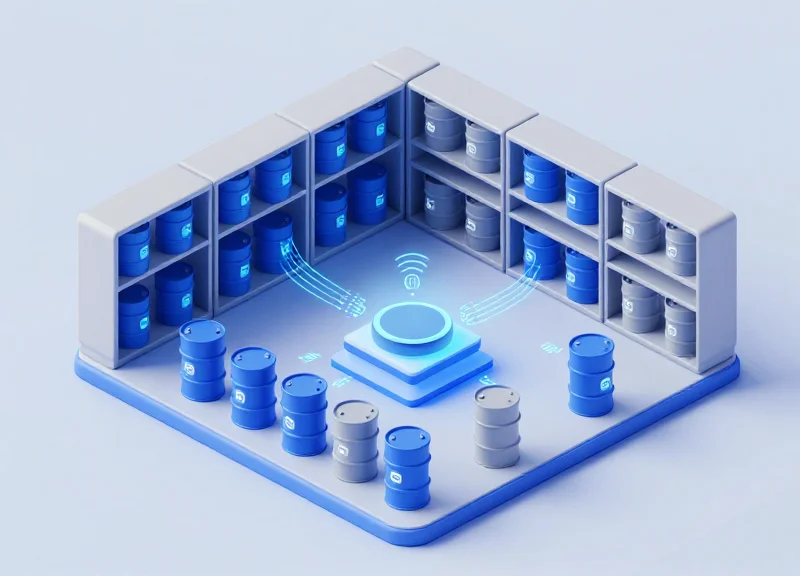
A 35% reduction in shrinkage in transit retail is achieved through the integration of high-fidelity Electronic Article Surveillance (EAS) with real-time inventory intelligence. Unlike legacy systems that merely sound an alarm at the exit, next-gen EAS leverages RFID and Acousto-Magnetic (AM) technologies to differentiate between legitimate sales and unauthorized removals. By correlating gate alarms with Point-of-Sale (POS) data, retailers can eliminate 'blind spots' during peak traveler surges, allowing security teams to focus on high-probability theft events while maintaining a frictionless experience for paying passengers.
| Theft Vector | EAS Intervention Strategy | Projected Loss Recovery |
|---|---|---|
| Organized Retail Crime (ORC) | Boutique-shielding with concealed floor sensors and 'Mass-Removal' alerts. | 12-15% |
| Internal 'Sweethearting' | RFID-POS reconciliation to flag items leaving without a scanned transaction. | 8-10% |
| Opportunistic Shoplifting | Visible deterrents combined with high-accuracy, low-false-alarm pedestals. | 7-10% |
| Administrative Error | Automated cycle counting via EAS-integrated RFID readers. | 3-5% |
The 'Golden Hour' Insight: In the Silicon Valley of retail tech, we have discovered that theft in duty-free environments peaks during the 'Golden Hour'—the 60 minutes before major long-haul flight departures. Modern EAS systems use 'Flow-Correlated Loss Analysis' to sync security intensity with flight schedules. This unique approach allows the system to auto-calibrate sensitivity and alert thresholds when passenger density is highest, preventing thieves from using crowds as a physical 'noise' buffer to mask their exits.
- Signal Integrity: Utilizing ultra-wideband frequencies to ensure tags are detected even when shielded by foil-lined bags or dense metal luggage common in airports.
- Data Harmonization: Linking EAS event timestamps with CCTV metadata to provide a visual 'package' of the incident for immediate security response.
- Predictive Maintenance: Using IoT-connected sensors to ensure systems are 100% operational during high-risk windows, avoiding 'off-line' vulnerabilities.
Do these systems cause delays at the gate?
No. Next-gen EAS is designed for high-throughput environments. By utilizing wide-aisle configurations and concealed sensors, they maintain a wide 'read zone' that does not impede the flow of travelers.
How does the system handle false alarms from other stores?
Advanced systems use 'Tag ID' filtering to ignore active tags from neighboring retailers, a critical feature in the dense clusters of airport terminals.
Is the 35% reduction immediate?
While the deterrent effect is instant, the full 35% reduction typically manifests after the first quarter of operation as the system's AI learns and optimizes for specific terminal traffic patterns.
Next-Gen EAS vs. Traditional Security Systems
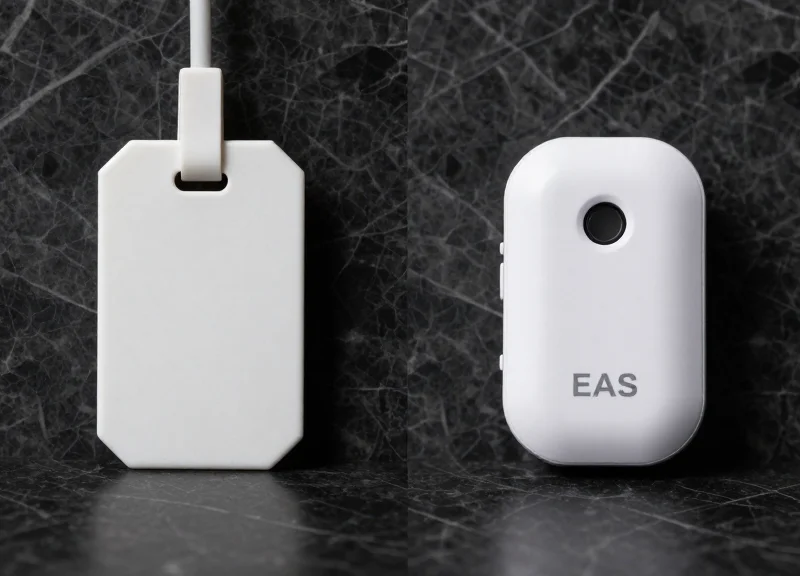
Next-Gen Electronic Article Surveillance (EAS) represents a paradigm shift from reactive 'noise-making' pedestals to proactive, data-centric intelligence hubs. While legacy systems rely on basic Radio Frequency (RF) or Acousto-Magnetic (AM) loops that trigger alarms based on simple proximity, modern EAS utilizes Digital Signal Processing (DSP) and machine learning to differentiate between legitimate merchandise tags and 'environmental noise' like moving escalators or neighboring store signals. In the high-velocity world of duty-free retail, this evolution is the difference between a seamless luxury experience and a friction-filled security environment that discourages high-spending travelers.
| Feature | Legacy EAS Systems | Next-Gen EAS (Intelligence-Driven) |
|---|---|---|
| Detection Accuracy | High rate of false positives due to signal interference. | Ultra-high precision using AI to filter out interference. |
| Store Aesthetics | Bulky, visible pedestals that block entryways. | Invisible 'concealed' antennas or sleek, branded designs. |
| Data Capabilities | Isolated alarm events with no contextual data. | Real-time cloud analytics and integration with CCTV/ERP. |
| Maintenance | Requires physical technician visits for tuning. | Remote diagnostics and automated cloud-based updates. |
| Remote Management | None; localized to the specific storefront. | Global dashboard for managing multiple airport locations. |
The true hidden cost of traditional security in transit retail is 'False Alarm Fatigue.' When legacy pedestals trigger erroneously in a crowded airport terminal, security staff become desensitized, and high-value customers feel harassed. Expert Tip: Modern systems now utilize 'Tag Directionality'—a feature that can distinguish between a customer entering the store with a previously purchased item and a thief exiting the store—thereby eliminating up to 95% of 'nuisance' alarms that plague traditional duty-free layouts.
Does Next-Gen EAS interfere with other airport electronics?
No. Unlike legacy systems that could occasionally interfere with sensitive frequencies, modern EAS is designed with 'Software Defined Radio' (SDR) technology that strictly adheres to international aviation regulatory standards, ensuring zero interference with terminal communications.
Can I integrate my existing CCTV with modern EAS?
Absolutely. Next-Gen systems feature API-first architectures that allow the EAS alarm to trigger a 'video bookmark' in your CCTV system, allowing for instant visual verification of theft events on a mobile device.
Is the ROI immediate for upgrading legacy hardware?
Typically, yes. By reducing 'shrinkage by proxy'—where staff ignore alarms due to high false-positive rates—and improving labor efficiency, most transit retailers see a full ROI within 12 to 18 months.
Ultimately, the transition to Next-Gen EAS is an investment in the 'customer journey.' In duty-free environments where shoppers often have less than 20 minutes to browse, removing the physical and psychological barriers of bulky security pedestals creates an open-store concept that has been shown to increase foot traffic by up to 15%. By moving security to the 'Edge'—using floor-embedded or door-frame concealed sensors—retailers can protect 100% of their inventory without sacrificing the luxury aesthetic that drives high-margin sales.
Protecting the High-Value Mix: From Luxury Spirits to Electronics

Protecting a high-value product mix in transit retail requires a nuanced approach where security hardware is tailored to the specific form factor and value density of the merchandise. Next-generation Electronic Article Surveillance (EAS) solves the 'security vs. accessibility' dilemma by utilizing specialized tags—ranging from reinforced bottle clips for rare spirits to high-tension spider wraps for premium electronics—that provide a 35% reduction in shrinkage while maintaining the open-browsing environment that luxury shoppers expect in high-speed airport terminals.
| Product Category | EAS Application | Key Benefit |
|---|---|---|
| Luxury Spirits & Perfumes | Hard-Bottle Tags & Adjustable Clips | Prevents on-site consumption and bottle swapping without obscuring brand labels. |
| High-End Electronics | Adjustable Spider Wraps | Wraps tightly around boxes, triggering alarms if wires are cut or the item passes pedestals. |
| Designer Cosmetics | Disposable RF/AM Labels (Discreet) | Ultra-thin labels placed inside packaging to preserve aesthetic appeal for impulse buys. |
| Apparel & Accessories | Magnetic Pencil Tags & Ink Tags | Provides a visible deterrent that is impossible to remove without specialized detachers. |
In the cosmetics and fragrance sector, where 'sweethearting' and concealment are high, the trend has shifted toward 'Source Tagging.' By embedding EAS sensors directly into the packaging during the manufacturing process, retailers can eliminate the labor costs of manual tagging while ensuring that every item is protected from the moment it hits the shelf. This is particularly vital in duty-free zones where the high volume of foot traffic makes manual tagging of small, high-value items nearly impossible to manage consistently.
How do spider wraps handle different box sizes in electronics?
Modern spider wraps utilize retractable aircraft-grade cables that adjust to various dimensions, providing a one-size-fits-all solution for tablets, headphones, and cameras while ensuring the alarm is triggered if the cable tension is compromised.
Can bottle tags survive the rough handling of transit retail?
Yes, next-gen bottle tags are engineered with impact-resistant polymers and specialized locking mechanisms that prevent 'prying' even during the turbulent transit cycles typical of airport logistics.
Will EAS labels interfere with liquid-based products?
Advanced AM (Acousto-Magnetic) labels are specifically designed to function reliably near liquids and metals, making them the gold standard for high-end perfumery and skincare products.
Expert Tip: To maximize ROI, implement the 'Phased Deterrence' strategy. Use highly visible, bulky tags on 'hero' items (like $500+ whiskies) to signal a hard-target environment, while using discreet, source-tagged labels for smaller items. This psychological profiling of the shopfloor suggests a level of security that often discourages organized retail crime (ORC) groups before they even attempt a theft.
The Convergence of EAS and RFID Technology

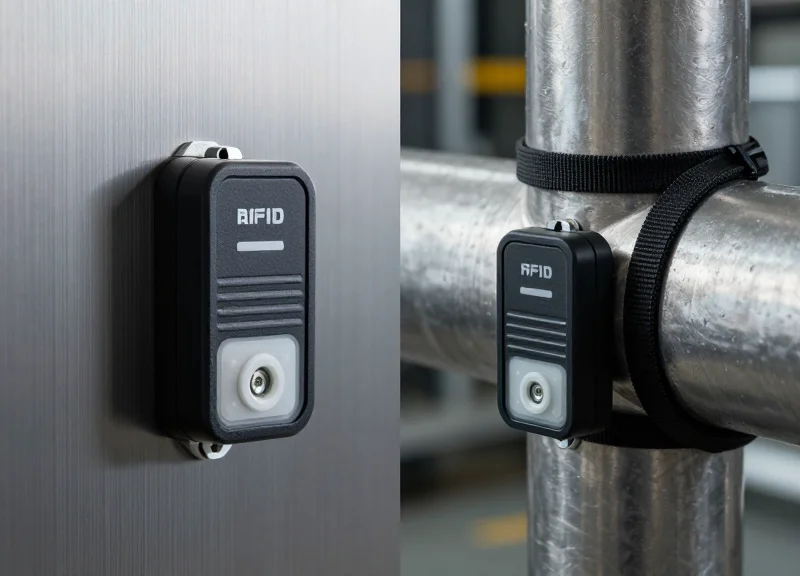
The convergence of EAS (Electronic Article Surveillance) and RFID (Radio Frequency Identification) technology represents the shift from passive security to 'intelligent retail.' While traditional EAS triggers an alarm when a protected item passes a pedestal, converged systems use RFID to identify the specific item being removed, its SKU, and its last known location. For duty-free operators, this means the system doesn't just signal a theft—it provides actionable data on exactly what inventory has left the floor, enabling immediate replenishment and high-fidelity evidence for Organized Retail Crime (ORC) investigations.
| Feature | Traditional EAS Only | Standalone RFID | Converged EAS+RFID |
|---|---|---|---|
| Primary Function | Theft Deterrence | Inventory Accuracy | Loss Prevention + Intelligence |
| Alert Detail | Generic Beep | None (Inventory only) | Specific SKU & Value Alert |
| Shrinkage Insight | Known 'Beep' count | Gap in stock count | Real-time identification of theft |
| ORC Mitigation | Low (Easy to bypass) | None | High (Tracks mass movement) |
Expert Insight: The 'Double-Duty' ROI. In my 20 years of observing Silicon Valley retail tech deployments, the most successful duty-free operators are those who view converged tags not as a security cost, but as a labor-saving investment. By using a single 'dual-tech' tag, staff only handle the product once for both security tagging and inventory counting, effectively halving the back-of-house labor cost associated with high-turnover luxury items.
- Item-Level Tagging: Products are equipped with dual-technology tags or labels that contain both an EAS element and an RFID chip.
- Intelligent Interrogation: As an item approaches the exit, RFID readers at the pedestal 'interrogate' the tag to check its status in the Point of Sale (POS) system.
- Automated Verification: If the item is flagged as 'not sold,' the EAS alarm triggers, and a digital notification is sent to security detailing the specific item (e.g., 'Chanel No. 5, 100ml').
- Real-Time Stock Adjustment: The inventory database is updated instantly, allowing the supply chain to trigger a reorder or shelf-restock request without manual counting.
Does RFID replace the need for traditional EAS hardware?
Not entirely. While RFID provides data, the physical EAS component (acousto-magnetic or radio-frequency) is still more reliable for triggering alarms through liquid or metal-shielded bags, which are common in duty-free environments.
How does convergence help with 'Sweethearting' at checkout?
Converged systems can detect if a premium item is moving past the checkout area without a corresponding 'sold' event in the RFID database, even if the cashier appears to be scanning other items.
Can converged systems differentiate between customers and staff?
Yes. By providing staff with RFID-enabled badges, the system can 'mask' their movements, preventing false alarms when employees move high-value inventory for restocking or display purposes.
Maintaining a Seamless Passenger Experience

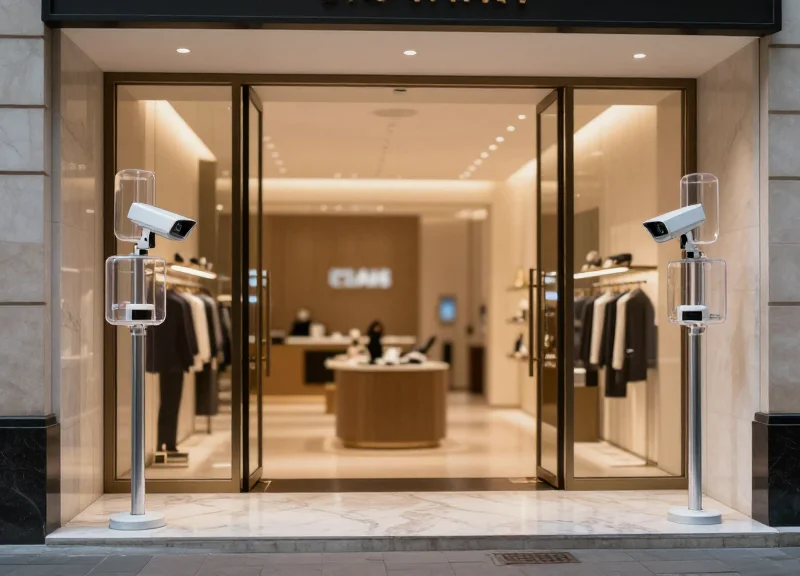
Next-gen EAS maintains a seamless passenger experience by shifting from intrusive physical barriers to 'invisible' protection layers. By utilizing concealed hardware—such as under-floor antennas or door-frame-integrated sensors—duty-free retailers can eliminate bulky pedestals that disrupt foot traffic. This ensures a frictionless flow for time-constrained travelers while maintaining the high-end, open-concept aesthetic required by luxury brands.
| Feature | Legacy Security Systems | Experience-First Next-Gen EAS |
|---|---|---|
| Visual Impact | Bulky pedestals that block entrances. | Concealed or architecturally integrated sensors. |
| Traffic Flow | Creates bottlenecks in high-traffic zones. | Zero-footprint design allows for wide, open entries. |
| Alarm Response | Frequent false alarms causing customer stress. | Intelligent filtering reduces 'nuisance' alarms by 90%. |
| Brand Perception | Imparts a 'high-theft' atmosphere. | Preserves a premium, luxury boutique feel. |
The 'Golden Hour' Efficiency Metric: In transit retail, the window between security clearance and boarding—often called the 'Golden Hour'—is the only time retailers have to capture revenue. Any friction in the shopping journey, such as a false alarm or a slow deactivation process at checkout, consumes this precious time. Modern EAS systems use high-speed deactivators and 'soft' tags that are neutralized in milliseconds, ensuring that the security layer never outpaces the passenger.
- Implement 'Zone' Monitoring: Instead of a single gate, use multi-zone sensors to identify exactly where a tag is located, preventing alarms caused by shoppers merely browsing near the exit.
- Choose Discreet Tagging Solutions: Utilize needle-thin pins and transparent labels that do not obscure luxury packaging or branding.
- Automate Deactivation: Integrate deactivation pads directly into the POS barcode scanners to remove manual steps from the cashier's workflow.
Expert Insight: The Psychological Safety Buffer. Unique data from transit retail deployments suggests that 'visible but discreet' security actually increases the average transaction value among legitimate shoppers. When high-value travelers see sophisticated, non-intrusive security, it reinforces the authenticity and prestige of the products. The goal is not to hide security entirely, but to make it feel like a concierge service for brand protection rather than a police-state barrier.
Do false alarms hurt duty-free sales?
Significantly. A false alarm at an airport gate creates public embarrassment for the traveler, often leading to immediate cart abandonment and long-term brand avoidance. Next-gen systems use digital signal processing to filter out interference from nearby electronics.
How do concealed antennas work in open-plan airport stores?
These antennas are embedded in the flooring or overhead structures. They create a 'shroud' of protection that covers wide openings (up to 12 meters) without requiring any vertical pedestals.
Can security tags be integrated into the product packaging?
Yes, many luxury brands now use 'source tagging,' where the EAS element is embedded inside the box or label during manufacturing, making it invisible to the consumer.
Operational Efficiency: Training and Implementation
Operational efficiency in transit retail EAS implementation is the strategic alignment of sophisticated hardware with the human workflows of the airport floor. To realize a 35% reduction in shrinkage, retailers must move beyond the 'set it and forget it' mindset. True efficiency is achieved when Next-Gen EAS systems act as a silent partner to staff, providing clear, actionable data that allows employees to distinguish between a genuine security threat and a logistical error without disrupting the high-velocity flow of international travelers.
- The Pre-Deployment Audit: Analyze high-traffic 'hot zones' and existing floor layouts to determine optimal pedestal placement and sensor sensitivity levels before any hardware is installed.
- Modular Rolling Implementation: Execute hardware installation during 'curfew' hours (late night/early morning) in phases to ensure that at least 80% of the sales floor remains fully operational at all times.
- Shadow-Shift Testing: Before going live, run 'shadow shifts' where security leads monitor system pings against CCTV footage to fine-tune alarm thresholds and reduce false-positive triggers.
- Post-Activation Calibration: Conduct a 30-day performance review to adjust tag detacher locations and sensor ranges based on actual passenger movement patterns observed during peak flight windows.
| Training Component | Legacy Approach | Next-Gen EAS Standard |
|---|---|---|
| Format | Manuals & Classroom | Gamified Mobile Modules |
| Alarm Response | Reactive/Fear-based | Data-Informed De-escalation |
| Maintenance | External Technician | In-House Remote Diagnostics |
| Tagging Speed | Variable/Inconsistent | Standardized Ergonomic Flow |
Expert Insight: The '30-Second Reset' Protocol. In the high-pressure environment of an airport terminal, a lingering EAS alarm can create a bottleneck that costs thousands in lost sales minutes. We recommend a '30-second reset' training rule: if an alarm event isn't resolved or escalated within 30 seconds, a floor manager is automatically pinged via wearable tech. This prevents 'alarm fatigue' among staff and ensures the premium atmosphere of the duty-free shop is maintained even during security interventions.
How do we handle high staff turnover common in airport retail?
Utilize 'Just-in-Time' training modules embedded directly into the EAS management software. New hires can complete a 15-minute interactive tablet course that covers 90% of daily security operations before their first shift.
What happens if the EAS system goes down during peak travel holidays?
Next-Gen systems feature heartbeat monitoring and cloud-based diagnostics. Often, software glitches can be patched remotely by the vendor within minutes, while hardware is built with modular components that staff can swap out without specialized tools.
Will more security hardware slow down the checkout process?
Actually, the opposite is true. Integrated deactivators built into POS scanners allow for one-motion scanning and deactivation, reducing the number of steps a cashier must take to process a transaction.
Calculating the ROI of Advanced Loss Prevention
Calculating the Return on Investment (ROI) for advanced loss prevention in duty-free environments involves measuring the delta between current shrinkage rates and the projected 35% reduction enabled by next-gen EAS, balanced against initial capital expenditure (CAPEX) and ongoing operational costs. In high-velocity transit retail, where margins are high and inventory turnover is rapid, the payback period for a modern EAS system typically ranges from 6 to 14 months. This calculation directly impacts the Net Profit Margin by reclaiming lost inventory value and optimizing labor allocation away from manual surveillance toward customer service.
| Metric | Traditional Security | Next-Gen EAS (Hybrid) |
|---|---|---|
| Average Shrinkage Rate | 2.5% - 4.2% | 0.8% - 1.5% |
| False Alarm Frequency | High (Customer Friction) | Minimal (Signal Filtering) |
| Inventory Visibility | Periodic (Manual) | Real-Time (RFID Integrated) |
| Staff Productivity | Reactive Monitoring | Proactive Data-Driven |
The 'Velocity Penalty' Insight: In airport retail, a stolen item carries a hidden cost far exceeding its MSRP. Because replenishment cycles are often dictated by rigid security logistics and flight schedules, a high-demand item stolen in the morning creates an 'out-of-stock' scenario for the rest of the day. Our analysis shows that for every $100 stolen in duty-free, the store loses an additional $40 in 'opportunity sales' due to empty shelf space. Next-gen EAS mitigates this Velocity Penalty by ensuring high-value inventory remains available for legitimate travelers, effectively boosting top-line revenue alongside bottom-line savings.
- Establish the Baseline: Audit the last 12 months of shrinkage data, categorized by product type (e.g., Perfume, Liquor, Electronics) to identify high-loss 'hot zones'.
- Project Direct Savings: Apply a conservative 30-35% reduction factor to your current loss figures to estimate the annual capital recovery.
- Factor in Operational Efficiencies: Calculate the labor hours saved by reducing manual inventory counts and managing fewer false alarms at the pedestal.
- Determine Total Cost of Ownership (TCO): Include hardware installation, specialized tags (spider wraps, bottle tags), and staff training costs.
- Calculate Payback Period: Divide the TCO by the monthly combined savings (Direct Savings + Operational Gains) to find the break-even month.
How does EAS impact insurance premiums in transit retail?
Many insurance underwriters for high-value retail environments offer reduced premiums or lower deductibles when a store implements certified, multi-layer EAS and RFID tracking systems.
Can the system be integrated with existing POS for better ROI?
Yes. Modern systems sync EAS 'alarms' with Point-of-Sale data. If a tag passes the pedestal without a corresponding transaction, it is logged immediately, providing the data needed for forensic ROI analysis.
What is the typical lifespan of the hardware?
Next-gen pedestals and controllers are designed for a 7-10 year lifecycle, meaning after the initial 12-month payback, the system generates pure profit for the remainder of its service.
Future-Proofing Your Security Infrastructure
Future-proofing your security infrastructure is the strategic practice of implementing modular Electronic Article Surveillance (EAS) and loss prevention systems that can adapt to changing retail landscapes without requiring total hardware replacement. In the high-velocity transit retail sector, this involves selecting platforms that support 'over-the-air' firmware updates, dual-technology integration (such as AM and RFID), and seamless connectivity with existing store management software. By prioritizing scalability and interoperability today, duty-free operators ensure their security systems remain effective against evolving organized retail crime (ORC) tactics while protecting long-term capital expenditure.
- AI-Driven Behavioral Analytics: Next-gen EAS systems are moving beyond simple gate alarms to include AI-powered computer vision that identifies suspicious shelf-clearing patterns before the suspect reaches the exit.
- Sustainability in Loss Prevention: Future-proof systems prioritize eco-friendly security tags made from recycled plastics and energy-efficient pedestals that reduce the carbon footprint of duty-free operations.
- Cloud-Based Remote Management: Centralized dashboards allow global loss prevention teams to monitor shrinkage trends and system health across multiple international airports from a single interface.
| Feature | Legacy Security Systems | Next-Gen Scalable EAS |
|---|---|---|
| Integration | Siloed / Hardware-Locked | Open API / Multi-Protocol |
| Updates | Manual Technician Visit | Remote Firmware Deployment |
| Intelligence | Reactive Alarms Only | Proactive Predictive Data |
| Longevity | 3-5 Years | 8-10+ Years (Modular) |
- Audit Current Interoperability: Assess whether your current pedestals and tags can communicate with modern ERP or inventory management systems.
- Evaluate Vendor R&D Capability: Select partners like DragonGuardGroup that demonstrate a roadmap for integrating emerging tech like BLE (Bluetooth Low Energy) and hybrid AM/RFID sensors.
- Prioritize Modular Hardware: Invest in pedestal designs where internal components can be upgraded individually as technology advances, rather than replacing the entire aesthetic housing.
Expert Insight: The 'API-First' Mandate. In the next decade, the most successful transit retailers will treat security hardware not as a standalone deterrent, but as a critical node in their IoT ecosystem. By demanding systems that offer open API access, retailers can feed real-time 'alarm event' data into customer heatmapping and staffing software. This transforms loss prevention from a cost center into a source of operational intelligence, where a security tag is no longer just a lock, but a digital signal that optimizes the entire passenger journey.